Demographics
-
event image card

This talk examines how age and generational differences shape smartphone adoption patterns in South Korea, one of the world's most rapidly aging societies. Using discrete-time hazard models, the analysis investigates whether digital divides reflect temporary life stage effects or persistent generational differences that accompany cohorts throughout their lives. Preliminary results reveal striking heterogeneity both across and within age cohorts, suggesting that neither age nor cohort membership alone fully explains adoption patterns. Motivated by these findings, the talk concludes by introducing an age-period-cohort framework designed to separate the distinct effects of aging, different formative experiences (cohort effect), and changing environment (period effect) on technology adoption.

Speaker:

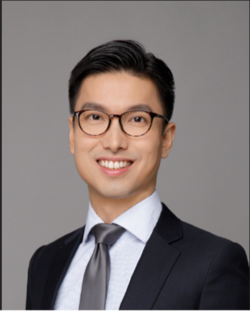
Jinseok Kim headshot

Jinseok Kim is a Visiting Postdoctoral Fellow at Stanford’s Shorenstein Asia-Pacific Research Center (APARC) and the Stanford Next Asia Policy Lab (SNAPL). His research examines economic decision-making and technology adoption through the lens of behavioral and applied microeconomics. Using econometric modeling and experimental approaches, he studies consumer behavior, innovation diffusion, and the interaction between policy, markets, and demographic change. His work contributes to understanding how psychological factors and institutional contexts shape economic choices and the adoption of new technologies.


Directions and Parking > 

Philippines Conference Room (C330)
Encina Hall, 3rd Floor
616 Jane Stanford Way, Stanford, CA 94305

Jinseok Kim, Visiting Postdoctoral Fellow, APARC, Stanford University
Seminars
Date Label
-
Yuli Xu Poster

Continuity of medical care is widely observed, but it is often difficult to disentangle patients’ intrinsic preferences from system-imposed switching costs. In this webinar, Dr. Yuli Xu discusses a study that uses the Chinese healthcare setting, where patients can freely choose physicians at each visit and flexibly switch across hospitals and departments, to isolate patients’ value of physician continuity.

Estimating a discrete choice model, the study shows that patients strongly prefer to see the same physician despite minimal institutional barriers to switching, indicating an intrinsic preference for continuity. The study also examines how physicians’ temporary leave affects patient behavior, using a stacked difference-in-differences design. A physician’s absence leads to significant reductions in patient visits, both within the physician’s department and across other departments in the same hospital, with no substitution toward other hospitals and no detectable effects on health outcomes. Patients return to their original physicians once they resume practice. Moreover, patients with more severe conditions incur higher spending when forced to see a new physician. Overall, the findings demonstrate that patients place substantial intrinsic value on physician continuity, even in a healthcare system with highly flexible provider choice.

Speaker:

Image
Yuli Xu

Yuli Xu joins the Walter H. Shorenstein Asia-Pacific Research Center (APARC) as Asia Health Policy Postdoctoral Fellow for the 2025-2026 academic year. She recently obtained her Ph.D. in Economics at the University of California, San Diego. Her research focuses on Labor and Health Economics, with particular interests in how female labor force participation and fertility decisions are influenced by labor market institutions and past birth experiences. In her thesis, "Gendered Impacts of Privatization: A Life Cycle Perspective from China," she demonstrates that the reduction in public sector employment has widened the gender gap in the labor market while narrowing the gender gap in educational attainment. She also finds that this structural shift has delayed marriage among younger generations.

In another line of research, Yuli examines the effects of maternity ward overcrowding. She finds that overcrowding reduces the use of medical procedures during childbirth without negatively impacting maternal or infant health. While it has no direct effect on subsequent fertility, she shows that mothers, especially those with a college degree, are more likely to switch to another hospital for subsequent births after experiencing overcrowding. During her time at APARC, Yuli will further investigate patient-physician relationships in the Chinese healthcare system, where patients have considerable flexibility in choosing their doctors at each visit. She will explore the persistence of these relationships and examine how patients respond when their regular doctors are temporarily unavailable.

Yuli also holds a B.A. in Economics from the University of International Business and Economics in China.


Zoom

Yuli Xu, Asia Health Policy Postdoctoral Fellow, APARC, Stanford University
Seminars
Image
Portrait of Sungchul Park
Date Label
-
Portrait of Sungchul Park

In February 2024, the South Korean government announced an expansion of medical school enrollment by 2,000 students to address physician shortages, prompting widespread opposition from the medical community. On February 19, 2024, over 90% of trainee doctors—representing approximately one-third of physicians at major teaching hospitals—resigned and launched a nationwide walkout that lasted until August 2025. This 18-month walkout constituted a major workforce shock in a universal, single-payer system and created a rare opportunity to evaluate effects on mortality, health care use, and spending. Hear from Prof. Park as he presents the results of a study on the impacts of the walkout.

Using a difference‑in‑differences design, the findings reveal significant increases in 30‑day and 90‑day in‑hospital mortality and in weekly all‑cause mortality. Health care utilization declined across inpatient and outpatient settings, with a greater relative reduction in hospital admissions. Hospitalizations dropped primarily for simple and general conditions, whereas admissions for complex conditions remained stable. Mean spending per hospitalization rose substantially, and spending per outpatient visit increased modestly. There was little evidence of systematic substitution of care from teaching hospitals to non‑teaching facilities or primary care settings. Overall, the nationwide trainee doctor walkout in South Korea was associated with higher mortality and lower health care utilization. These findings underscore the vulnerability of health systems to workforce disruptions and highlight the need for policies that strengthen staffing resilience, contingency planning, and communication mechanisms between the government and the medical workforce.

Speaker:

Image
Prof. Sungchul Park

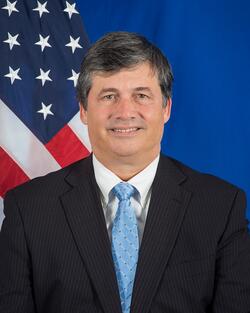
Sungchul Park is an Associate Professor in the Department of Health Policy and Management at Korea University (Republic of Korea). He previously held tenure-track faculty positions at Drexel University (United States) and Ewha Womans University (Republic of Korea). As a health economist and health services researcher, he studies how to design better health care systems that deliver high-quality care at a reasonable cost while ensuring equitable access. His research evaluates the value of health care by assessing both costs and patient and population health outcomes and investigates payment and care delivery reforms, with an emphasis on value-based care. He also analyzes how emerging technologies, including artificial intelligence and digital health, affect cost, quality, access, and efficiency in health care. In addition, he compares health system performance across high-income countries, particularly OECD members, to identify policies that improve care and well-being.


Zoom

Sungchul Park, Associate Professor, Korea University, South Korea
Seminars
Image
Portrait of Sungchul Park
Date Label
-
Prof. Jessica Chen Weiss

Beneath Xi Jinping’s grand slogans of a “Chinese dream” and a “shared future for humankind,” there are internal tensions, debates, and competing interests that continue to shape China’s approach to the world. Through the lens of domestic politics, nationalism, and regime insecurity in China, Weiss will examine the evolving and contested landscape of what “China” wants. The talk will conclude with policy implications for the United States, prospects for peaceful coexistence, and the future of international order.

Speaker:

Image
Prof. Jessica Chen Weiss 1

Jessica Chen Weiss is the David M. Lampton Professor of China Studies at Johns Hopkins University's School of Advanced International Studies and the inaugural faculty director of the Institute for America, China, and the Future of Global Affairs (ACF) at SAIS. From August 2021 to July 2022, she served as senior advisor to the Secretary's Policy Planning Staff at the U.S. State Department on a Council on Foreign Relations Fellowship for Tenured International Relations Scholars (IAF-TIRS). Weiss is the author of Powerful Patriots: Nationalist Protest in China’s Foreign Relations (Oxford University Press, 2014). Her research appears in International Organization, China Quarterly, International Studies Quarterly, Journal of Conflict Resolution, Security Studies, Journal of Contemporary China, and Review of International Political Economy. With commentary in the New York Times, Washington Post, Foreign Affairs, Los Angeles Times, and the Ezra Klein show, Weiss was profiled by the New Yorker and named one of Prospect Magazine's Top Thinkers for 2024. Weiss is also a nonresident senior fellow at the Asia Society Policy Institute Center for China Analysis and previously the Michael J. Zak Professor for China and Asia-Pacific Studies at Cornell University and an assistant professor at Yale University. She founded FACES, the Forum for American/Chinese Exchange at Stanford University. Born and raised in Seattle, Washington, she received her Ph.D. from the University of California, San Diego.


Directions and Parking > 

Philippines Conference Room (C330)
Encina Hall, 3rd Floor
616 Jane Stanford Way, Stanford, CA 94305

Jessica Chen Weiss, David M. Lampton Professor of China Studies Faculty Director, Institute for America, China, and the Future of Global Affairs Johns Hopkins School of Advanced International Studies
Seminars
Date Label
-
Portrait of Minyoung An on a flyer for her Jan 15, 2026 seminar, "Why Women Leave: Gendered Pathways of Global Talent."

This talk examines how gender and gender inequality shape global talent migration, with a focus on flows to the United States. Conceptualizing gender as both an individual attribute and a structural condition, An shows how macro-level inequalities and micro-level aspirations jointly organize migration pathways. Using South Korea as a case study, the analysis demonstrates that women migrating to the U.S. are more educationally selective than men, suggesting that gender inequality drives women's talents abroad. The talk also introduces comparative work on Korea and Taiwan that investigates gendered return patterns among U.S.-trained PhDs.

Speaker:

Image
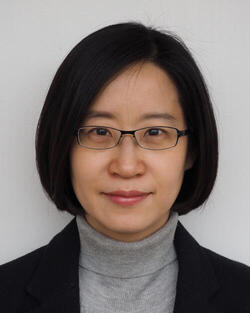
Photo of Korea Program postdoctoral fellow Minyoung An

Minyoung An is a Postdoctoral Fellow at Stanford’s Shorenstein Asia-Pacific Research Center and the Stanford Next Asia Policy Lab (SNAPL). Her research investigates how gender shapes global talent flows and the career trajectories of highly skilled workers. Using large-scale datasets and mixed methods, she examines educational selectivity, gendered return migration, and transnational academic linkages. Her work advances understanding of how gender inequality structures pathways of skilled migration and global talent circulation.


Directions and Parking > 

Philippines Conference Room (C330)
Encina Hall, 3rd Floor
616 Jane Stanford Way, Stanford, CA 94305

0
Korea Program Postdoctoral Fellow, 2025-2027
minyoung_an.jpg PhD

Minyoung An joins the Walter H. Shorenstein Asia-Pacific Research Center (APARC) as Korea Program Postdoctoral Fellow beginning July 2025 through 2027. She recently obtained her doctorate in Sociology from the University of Arizona. Her research lies at the intersection of gender, transnational migration, and knowledge production, combining statistical modeling, computational methods, and in-depth interviews.

Her dissertation analyzes gendered migration patterns in South Korea and among international PhD students in the U.S., revealing how gender inequality in countries of origin produces distinct selection effects and return migration dynamics. She also studies academic career trajectories and prestige hierarchies, exploring how gender and national origin affect integration into global academia.

At APARC, she will be involved with the Korea Program and the Stanford Next Asia Policy Lab (SNAPL) as she pursues two projects that extend this research agenda: one using computational analysis of social media data to examine gendered migration intent, and another investigating the academic trajectories and institutional reception of international scholars from East Asia. Through these projects, she aims to advance understanding of how transnational inequalities shape global mobility, opportunity, and inclusion.

Date Label
Minyoung An, Postdoctoral Fellow, APARC, Stanford University
Seminars
Date Label
0
Korea Program Postdoctoral Fellow, 2025-2027
minyoung_an.jpg PhD

Minyoung An joins the Walter H. Shorenstein Asia-Pacific Research Center (APARC) as Korea Program Postdoctoral Fellow beginning July 2025 through 2027. She recently obtained her doctorate in Sociology from the University of Arizona. Her research lies at the intersection of gender, transnational migration, and knowledge production, combining statistical modeling, computational methods, and in-depth interviews.

Her dissertation analyzes gendered migration patterns in South Korea and among international PhD students in the U.S., revealing how gender inequality in countries of origin produces distinct selection effects and return migration dynamics. She also studies academic career trajectories and prestige hierarchies, exploring how gender and national origin affect integration into global academia.

At APARC, she will be involved with the Korea Program and the Stanford Next Asia Policy Lab (SNAPL) as she pursues two projects that extend this research agenda: one using computational analysis of social media data to examine gendered migration intent, and another investigating the academic trajectories and institutional reception of international scholars from East Asia. Through these projects, she aims to advance understanding of how transnational inequalities shape global mobility, opportunity, and inclusion.

Date Label
Paragraphs

Abstract


Cover of the Journal of the Economics of Aging

Korea’s labor force shift toward older, female, and more educated workers has been even more dramatic than that of the United States in recent decades. This paper documents how Korean job characteristics vary by age and characterizes the “age-friendliness” of Korean employment from 2000 to 2020 by applying the Age-Friendliness Index (AFI) developed by Acemoglu, Mühlbach, and Scott to Korean occupational data. The AFI measures job characteristics—such as physical demands and job autonomy—based on occupational descriptions and worker preferences. Our primary empirical findings are that the age-friendliness of Korean jobs grew more slowly than in the United States, and that older Koreans were not the main beneficiaries of these jobs. Both findings reflect the demographic, labor market, and institutional differences between Korea and the United States. The slow growth of AFI can be partially explained by labor market rigidities, the role of large firms in Korea, and the flattening of managerial structures.

All Publications button
1
Publication Type
Journal Articles
Publication Date
Journal Publisher
Journal of the Economics of Ageing
Authors
Karen Eggleston
-
Event Flyer for Hyungjoon Park talk

The share of the South Korean population living alone has substantially increased over the last four decades, sparking public concerns about loneness and its broader effects on individuals and society. In this talk Dr. Hyunjoon Park analyzes trends in living alone in Korea from 1980 to 2020. Analyses show a divergence in solo living between those with more and less education in both younger and older age groups but in oppositive directions. Among young men and women aged 25-34, those with a bachelor’s degree or higher are increasingly more likely to live alone than their peers with a high school education or less. In contrast, among older adults aged 65-74, individuals with the lowest level of education are increasingly more likely to live alone. Dr. Park discusses the implications of solo living trends for family dynamics and inequality in Korea.

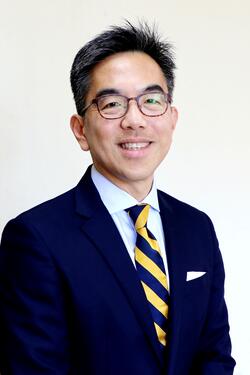
Hyunjoon Park's headshot

Hyunjoon Park is Korea Foundation Professor of Sociology and Director of the James Joo-Jin Kim Center for Korean Studies at the University of Pennsylvania. Park is interested in family and social stratification in cross-national comparative perspective, focusing on South Korea and other East Asian societies. He has studied changes in marriage, divorce, and living arrangements as well as consequences of demographic and economic trends for education, well-being, and socioeconomic outcomes of children, adolescents, and young adults in Korea. He was the director of the Korean Millennials Research Lab, a multiyear and multidisciplinary project team tasked with investigating the transition to adulthood among young adults in South Korea and Korean Americans in the US. His publications include the single-authored book Re-Evaluating Education in Japan and Korea: De-mystifying Stereotypes (Routledge, 2013); the coauthored book Diversity and the Transition to Adulthood in America (University of California Press, 2022), and the coedited volume Korean Families Yesterday and Today (University of Michigan Press, 2020). 

Directions and Parking > 

Philippines Conference Room (C330)
Encina Hall, 3rd Floor
616 Jane Stanford Way, Stanford, CA 94305

Hyunjoon Park, Korea Foundation Professor of Sociology, University of Pennsylvania
Seminars
Date Label
-
Flyer for the conference "Taiwan Forward." Image: aerial view of Taipei.

We have reached capacity for this event and registration has closed.


Organized by the Taiwan Program at Stanford University’s Walter H. Shorenstein Asia-Pacific Research Center (APARC)
Co-sponsored by National Taiwan University's Office of International Affairs

As Taiwan looks to develop comprehensive strategies to promote national interests, it faces challenges shared by other advanced economies. How can Taiwan leverage AI innovation and its semiconductor prowess to drive resilience and continued growth while promoting entrepreneurship and forging advantages in emerging industries? What regulatory and policy measures are needed to scale Taiwan’s role as a global leader in biomedical and healthcare advancements while ensuring patient trust and safety? How can it address the gaps posed by rapid family changes and population aging? And how do its historical and linguistic legacies shape present narratives and identities, within Taiwan and among the Taiwanese diaspora?

Join us for a conference that explores these questions and more, featuring panel discussions with scholars from Stanford University, National Taiwan University, and other universities in Taiwan, Japan, Korea, and Singapore, alongside Taiwanese industry leaders. We will examine Taiwan’s strategies for navigating modernization in a shifting global landscape — bridging technology, industry, culture, and society through interdisciplinary and comparative perspectives.


8:45 - 9:10 a.m.
Opening Session

Welcome Remarks

Shih-Torng Ding
Executive Vice President, National Taiwan University

Gi-Wook Shin
Director, Shorenstein APARC and the Taiwan Program, Stanford University

Congratulatory Remarks

Chia-Lung Lin
Minister of Foreign Affairs, Taiwan

Raymond Greene
Director, American Institute in Taiwan 


9:10-10:40 a.m.
Panel 1 — Advancing Health and Healthcare: Technology and Policy Perspectives     
    
Panelists 

Kuan-Ming Chen
Assistant Professor, Department of Economics, National Taiwan University

Lynia Huang
Founder and CEO, Bamboo Technology Ltd.

Ming-Jen Lin
Distinguished Professor, Department of Economics, National Taiwan University

Siyan Yi
Associate Professor, School of Public Health, National University of Singapore

Moderator
Karen Eggleston
Director, Asia Health Policy Program, Shorenstein APARC, Stanford University


10:40-10:50 a.m.
Coffee and Tea Break


10:50 a.m.-12:30 p.m.
Panel 2 — Innovation, Entrepreneurship, and Technology Leadership

Panelists 

Steve Chen
Co-founder, YouTube and Taiwan Gold Card Holder #1

Matthew Liu
Co-founder, Origin Protocol

Huey-Jen Jenny Su
Professor, Department of Environmental and Occupational Health and Former President, National Cheng Kung University

Yaoting Wang
Founding Partner, Darwin Ventures, Taiwan

Moderator
H.-S. Philip Wong
Willard R. and Inez Kerr Bell Professor in the School of Engineering, Stanford University


12:30-1 p.m.

Perspectives from Stanford and NTU Students

Tiffany Chang
BS Student in Engineering Management & Human-Centered Design, Stanford University

Liang-Yu Ko
MA Student in Sociology, National Taiwan University


1-2 p.m. 
Lunch Break


2-3:30 p.m.  
Panel 3 — Interwoven Identities: Exploring Chinese Languages, Taiwanese-american Narratives, and Japanese Colonial Legacies in Taiwan

Panelists 

Carissa Cheng
BA Student in International Relations, Stanford University

Yi-Ting Chung
PhD Candidate in History, Stanford University

Jeffrey Weng
Assistant Professor, Department of Sociology, National Taiwan University

Moderator
Ruo-Fan Liu
Taiwan Program Postdoctoral Fellow, Shorenstein APARC, Stanford University


3:30-3:45 p.m. 
Coffee and Tea Break


3:45-5:15 p.m.    
Panel 4 —  The Demographic Transformation: Lessons from Taiwan and Comparative Cases

Panelists

Yen-Hsin Alice Cheng
Professor, Institute of Sociology, Academia Sinica

Youngtae Cho
Professor of Demography and Director, Population Policy Research Center, Seoul National University

Setsuya Fukuda
Senior Researcher, National Institute of Population and Social Security Research, Japan

Moderator
Paul Y. Chang
Tong Yang, Korea Foundation, and Korea Stanford Alumni Association Senior Fellow, Shorenstein APARC, Stanford University


5:15-5:30 p.m.    
Closing Remarks

Gi-Wook Shin
Director, Shorenstein APARC and the Taiwan Program, Stanford University

THIS CONFERENCE IS HELD IN TAIPEI, TAIWAN, ON SUNDAY, MARCH 23, 2025, FROM 8:45 AM TO 5:30 PM, TAIPEI TIME

International Conference Hall, Tsai Lecture Hall
College of Law
National Taiwan University

No.1, Sec. 4, Roosevelt Road
Taipei City, 10617
Taiwan

Conferences
Date Label
Paragraphs
Cover of the book "The Four Talent Giants"

The Asia-Pacific region has seen extraordinary economic achievements. Japan's post-World War II transformation into an economic powerhouse challenging US dominance by the late 1980s was miraculous. China's rise as the world's second-largest economy is one of the 21st century's most stunning stories. India, now a top-five economy by GDP, is rapidly ascending. Despite its small population, Australia ranked among the top ten GDP nations in 1960 and has remained resilient. While cultivating, attracting, and leveraging talent has been crucial to growth in these countries, their approaches have varied widely, reflecting significant cultural, historical, and institutional differences.

In this sweeping analysis of talent development strategies, Gi-Wook Shin investigates how these four "talent giants'' achieved economic power and sustained momentum by responding to risks and challenges such as demographic crises, brain drain, and geopolitical tensions. This book offers invaluable insights for policymakers and is essential for scholars, students, and readers interested in understanding the dynamics of talent and economic growth in the Asia-Pacific region and beyond.

See also:

Sociologist Gi-Wook Shin Illuminates How Strategic Human Resource Development Helped Build Asia-Pacific Economic Giants
APARC website,  June 26, 2025

In the Media

Stanford Scholar Reveals How Talent Development Strategies Shape National Futures
The Korean Daily, July 13, 2025 (interview)
- English version
- Korean version


Reviews of The Four Talent Giants


Review by Barry Eichengreen, University of California, Berkeley 
Published in Foreign Affairs, December 16, 2025

"Scholars have offered multiple hypotheses, mostly emphasizing culture, history, and institutions, to explain the economic rise of countries in Asia. Shin focuses on human capital, analyzing the different ways Asian economies have developed their workforces. The four countries whose economies he focuses on—Australia, China, India, and Japan—have taken distinctive approaches to acquiring what he calls “talent portfolios.” Japan nurtured homegrown talent, while Australia attracted skilled immigrants. China sent students abroad, while India relied on its foreign diaspora and its advanced institutes of technology to train workers and impart needed skills. Although the approaches differ, each country successfully developed scientific, technical, and managerial talent in the quest for economic growth. Shin’s focus on talent competition is especially timely given the rapid increase in the number of students in China studying STEM subjects—science, technology, engineering, and math—and political attacks on higher education in the United States. Together, these trends raise questions about the ability of the United States to keep pace with China."

Review By Steven A. Mejia, Washington State University
Published in Social Forces, August 23, 2025

"The determinants of nation-state development is one of the most central questions in the comparative international social sciences. In The Four Talent Giants: National Strategies for Human Resource Development Across Japan, Australia, China, and India, Gi-Wook Shin joins these longstanding conversations in an ambitious work that may become a classic study. [...]

"There is much to praise about The Four Talent Giants. It makes sound theoretical inferences from analysis of expansive historical and quantitative data on major successes in the modern world economy, helping advance scientific understanding of the factors shaping development. These scholarly insights will also be crucial for policy makers at national, regional, and international levels. For example, countries seeking to foster their own development may invest in the forms of human and social capital emphasized in The Four Talent Giants. [...]

"Overall, The Four Talent Giants provides a groundbreaking theoretical innovation to help explain key empirical problems central to decades of comparative international social scientific work. This may in turn shape development policy that can then improve the quality of life for millions around the world. The Four Talent Giants will move comparative international social scientific conversations on development in important new directions."

Read the complete review via Social Forces.

Review by Anthony P. D'Costa, University of Melbourne
Published in The Developing Economies, November 2025

"Gi-Wook Shin has written an excellent book on talent development strategies [...] Shin's book is noteworthy for three key reasons: First, he has developed a novel framework to analyze the development and the international movement of talent and their mobilization by governments for national economic and technological development. Second, he covers an important region of the world that has significant players in talent portfolios and offers wide-ranging experiences for talent strategy. And third, it is a timely publication when anti-immigrant sentiments are running high. He has skillfully marshaled a wealth of data, including field interviews in these countries, to produce a coherent narrative of global talent [...]

"Gi-Wook Shin's skillfully argued book will inspire students and scholars to rethink talent migration, education inequality, and the future of Asian economic development."

Read the complete review via The Developing Economies.


Advance praise for The Four Talent Giants:

"The Four Talent Giants is a wonderful book, full of new ideas and, especially, comparative empirical research. Gi-Wook Shin's ambitious treatment of the topic of human capital, or 'talent,' in the context of a globalized economy is very important and reading it will be a rewarding exercise for scholars, politicians, corporate leaders, and many others."
—Nirvikar Singh, University of California, Santa Cruz

"The current scholarly literature offers multiple country-specific talent formation studies, including those on the transformative role of skilled migration. However, few authors have dared to attempt a thorough cross-national analysis, comparing the nature and impact of policies across highly variable geopolitical contexts. The Four Talent Giants achieves this goal triumphantly, and accessibly, assessing the global implications of national experimentation for effective talent portfolio management."
—Lesleyanne Hawthorne, University of Melbourne
 

All Publications button
1
Publication Type
Books
Publication Date
Subtitle

National Strategies for Human Resource Development Across Japan, Australia, China, and India

Authors
Gi-Wook Shin
Book Publisher
Stanford University Press
Subscribe to Demographics