Culture
Paragraphs

Kyai Haji Abdullah Gymnastiar, known affectionately by Indonesians as "Aa Gym" (elder brother Gym), rose to fame via nationally televised sermons, best-selling books, and corporate training seminars. In Rebranding Islam James B. Hoesterey draws on two years' study of this charismatic leader and his message of Sufi ideas blended with Western pop psychology and management theory to examine new trends in the religious and economic desires of an aspiring middle class, the political predicaments bridging self and state, and the broader themes of religious authority, economic globalization, and the end(s) of political Islam. 

At Gymnastiar's Islamic school, television studios, and MQ Training complex, Hoesterey observed this charismatic preacher developing a training regimen called Manajemen Qolbu into Indonesia's leading self-help program via nationally televised sermons, best-selling books, and corporate training seminars. Hoesterey's analysis explains how Gymnastiar articulated and mobilized Islamic idioms of ethics and affect as a way to offer self-help solutions for Indonesia's moral, economic, and political problems. Hoesterey then shows how, after Aa Gym's fall, the former celebrity guru was eclipsed by other television preachers in what is the ever-changing mosaic of Islam in Indonesia. Although Rebranding Islam tells the story of one man, it is also an anthropology of Islamic psychology.

This book is part of the Studies of the Walter H. Shorenstein Asia-Pacific Research Center series at Stanford University Press.

All Publications button
1
Publication Type
Books
Publication Date
Journal Publisher
Stanford University Press
Authors
James Hoesterey
Paragraphs

The neighboring north Indian districts of Jaipur and Ajmer are identical in language, geography, and religious and caste demography. But when the famous Babri Mosque in Ayodhya was destroyed in 1992, Jaipur burned while Ajmer remained peaceful; when the state clashed over low-caste affirmative action quotas in 2008, Ajmer's residents rioted while Jaipur's citizens stayed calm. What explains these divergent patterns of ethnic conflict across multiethnic states? Using archival research and elite interviews in five case studies spanning north, south, and east India, as well as a quantitative analysis of 589 districts, Ajay Verghese shows that the legacies of British colonialism drive contemporary conflict.

Because India served as a model for British colonial expansion into parts of Africa and Southeast Asia, this project links Indian ethnic conflict to violent outcomes across an array of multiethnic states, including cases as diverse as Nigeria and Malaysia. The Colonial Origins of Ethnic Violence in Indiamakes important contributions to the study of Indian politics, ethnicity, conflict, and historical legacies.

This book is part of the Studies of the Walter H. Shorenstein Asia-Pacific Research Center series at Stanford University Press.

All Publications button
1
Publication Type
Books
Publication Date
Journal Publisher
Stanford University Press
Authors
Ajay Verghese
Paragraphs

No nation is free from the charge that it has a less-than-complete view of the past. History is not simply about recording past events—it is often contested, negotiated, and reshaped over time. The debate over the history of World War II in Asia remains surprisingly intense, and Divergent Memories examines the opinions of powerful individuals to pinpoint the sources of conflict: from Japanese colonialism in Korea and atrocities in China to the American decision to use atomic weapons against Japan.

Rather than labeling others' views as "distorted" or ignoring dissenting voices to create a monolithic historical account, Gi-Wook Shin and Daniel Sneider pursue a more fruitful approach: analyzing how historical memory has developed, been formulated, and even been challenged in each country. By identifying key factors responsible for these differences, Divergent Memories provides the tools for readers to both approach their own national histories with reflection and to be more understanding of others.


"A well-written investigation on the legacy of World War II in Asia, greatly contributes to the field of cultural and military history.”Mel Vasquez, H-War

"This book is an important counterweight to prevailing tendencies that promote uncritical nationalism and is thus an invaluable resource for this generation’s Asian and American youth to gain a critical understanding of their national histories...[T]he authors’ non-judgmental approach, coupled with persistence in pursuing the multiple interpretations and experiences of these traumatic events, provoke a reconsideration of our notions of justice, equality, and humanity within our nationalist thinking."—Grace Huang, Journal of American-East Asian Relations, Vol. 26.2


This book is part of the Studies of the Walter H. Shorenstein Asia-Pacific Research Center series at Stanford University Press.

All Publications button
1
Publication Type
Books
Publication Date
Journal Publisher
Stanford University Press
Authors
Gi-Wook Shin
Paragraphs
The cover image of "Internationalizing Higher Education," which shows abstract students carrying books, moving in different directions.

Student mobility in Asia has reached unprecedented levels. Inbound and outbound student mobility creates opportunities for Asian societies but also challenges, such as growing diversity and brain drain. This book examines these and other related, timely issues for the case of South Korea, a major player in the internationalization of higher education in Asia, and draws on the comparative experiences of other key players in the Asia-Pacific region—Japan, China, Singapore, and the United States. By doing so, it offers critical perspectives on the internationalization of Korean higher education as well as innovative, policy-relevant solutions for Asian countries undergoing similar challenges.  It will be a valuable addition to the growing literature on comparative and international education in Asia and can aid university administrators and policymakers striving to internationalize their higher education systems to meet new challenges.

Desk, examination, or review copies can be requested through Stanford University Press.

 
All Publications button
1
Publication Type
Books
Publication Date
Subtitle

Challenges and Opportunities in Comparative Perspective

Authors
Gi-Wook Shin
Book Publisher
Shorenstein APARC
News Type
Commentary
Date
Paragraphs

Fifty years have passed since the beginning of China’s Cultural Revolution, a mass political movement led by Mao Zedong that lasted a decade and provoked widespread violence and social upheaval. Stanford sociologist Andrew Walder, a noted expert on contemporary Chinese society, offered his commentary and analysis to various media outlets, cited below.

In the years just following Mao’s death in 1976, the Communist Party showed an “incredible openness” toward addressing the horrors caused by the Cultural Revolution, he told The Guardian. The Communist Party denounced the Cultural Revolution and some within the Party led efforts to document the chaos and bloodshed under Mao’s tenure, Walder recounted on CNN International.

In the 1980s, however, young Chinese activists began to shift their attention from the legacy of the Cultural Revolution to the lack of government reform in China. The Tiananmen Square protests of 1989, despite being short-lived, disquieted the regime more than the Cultural Revolution did, he told The Guardian.

The Chinese government today, compared to the 1970s and early 80s, is much less inclined to discuss Mao’s historical record. Yet, when compared to other socialist regimes that experienced rebellion such as the Soviet Union, China has been much more open to confronting its dark historical past, Walder said in an interview with The Globe and Mail.

Walder is the author of China Under Mao: A Revolution Derailed and Fractured Rebellion: The Beijing Red Guard Movement (Harvard University Press, 2015 and 2009, respectively). He leads a research project focused on political movements in authoritarian regimes and recently published a journal article on transitions from state socialism and its economic impact.

Hero Image
mao soldier
A Chinese soldier stands near the portrait of Mao Zedong outside the gate of heavenly peace, Tiananmen Square, Beijing.
Flickr/Suivez-Nous.Asia
All News button
1
News Type
News
Date
Paragraphs

China and the United States have lately been characterized as geostrategic rivals and on a path toward inevitable conflict. But, according to Fu Ying, chairperson of China’s Foreign Affairs Committee of the National People’s Congress and former ambassador to the Philippines, Australia and the United Kingdom, this picture is incomplete and misrepresents a reality that is much more nuanced.

Fu discussed the current state of U.S.-China relations in a keynote speech at Stanford on Tuesday. Speaking to a full house in Encina Hall, she described different perspectives and shared challenges of China and the United States, and urged a new consensus between the world’s two largest economies.

“In the past thirty years, we’ve had friendly moments, but we were never very close. We had problems, but the relationship was strong enough to avoid derailing.

“Now we are at a higher level. If we work together now, we are capable of making big differences in the world. But if we fight, we will bring disasters – not only to the two countries, but to the world,” Fu said.

Fu’s visit was co-hosted by the China Program at the Shorenstein Asia-Pacific Research Center and the Center on Democracy, Development, and the Rule of Law, two centers in the Freeman Spogli Institute (FSI). Following her remarks, Thomas Fingar, a Shorenstein APARC Distinguished Fellow and former chairman of the National Intelligence Council, offered comments and took questions from the audience.

Fu opened her speech by saying she welcomed alternative views and “a debate.”

Misunderstandings, she said, afflict the U.S.-China relationship. Confusion shared between the two countries can largely be attributed to a “perception gap,” which, she said, is aggrandized through media reporting.

Concern on the American side over China, she said, is tied to its own doubts over its “constructive engagement” strategy. An approach held during the past eight U.S. administrations, the strategy was based on an assumption that supporting market-based reforms in China would lead to political change, she said. However, this has not occurred, and some in the U.S. are now urging the construction of another “grand strategy.”

The United States, she said, also has “rising anxiety about what kind of a global role China is going to play,” and about the future direction of the Chinese economy after its growth slid to hover around seven percent in the last two years compared to its once double digit growth in the past decade.

China interprets the United States’ apprehension as misguided, Fu said. “We see it as a reflection of the United States’ fear of losing its own primary position in the world.”

On the other hand, China, she said, is “relatively more positive” about its overall engagement with the United States. The purpose of Chinese foreign policy, Fu said, is to improve the international environment and to raise the standard of living of its people without exporting its values or seeking world power. “We believe China has achieved this purpose,” she added.

The United States and others must also remember that the past can loom large in the minds of the Chinese people, Fu said.

In attempting to understand China, “one should not lose sight of the historical dimension,” she said. China at various times in the nineteenth to early twentieth century was under occupation by foreign powers, she said, and this is a reason why sovereignty is a closely held value in the Chinese ethos.

The overall “perception gap” between China and the United States has moved from misunderstanding to fear, and that, she said, is causing negative spillover effects for both countries.

Two manifestations of this fear, she cited, are the United States’ “reluctance to acknowledge China’s efforts to help improve the existing order,” such as the development of the Asian Infrastructure Investment Bank and ‘One Belt, One Road’ initiative, and the U.S.’ “growing interference” in South China Sea issues.

“Will it lead to a reckless urge to ‘throw down the gauntlet’?” Fu asked.

She acknowledged that collision is a concern. China is focused on addressing its challenges with the United States, including avoiding potential incidents and finding ways “to adapt to and participate in adjustment in international order,” Fu said.

Yet, she cautioned that the two countries be realistic in their aims and know that China is not seeking to emulate the United States. China and the United States, unlike Japan and South Korea, do not have a formal strategic or security alliance, and they need not have one, Fu said.

“China is not an ally, and it should not be an enemy either,” she said.

“Can we accept and respect each other, and build new consensus?” she asked. She then stated, “I want to end my speech with a question mark as a salute to Stanford University which is renowned for its capability of addressing difficult questions.”

Fingar gave a brief response to Fu’s address.

Calling it largely “fictional,” he challenged the notion that there is high “American anxiety” about China. Instead, he noted, “Americans do not think very much about China,” as reflected in the multitude of polls taken recently during the primary campaigns. Thus, “there isn’t a lot of public drive to do things differently with China.”

Among U.S. academics, however, there is “puzzlement,” Fingar suggested. Puzzlement, he explained, borne less from any kind of loss of confidence in U.S. policy of constructive engagement but rather from China’s seeming departure from a trajectory that it had set for itself over the last 40 years. At the moment China’s reforms appear “bogged down;" its leaders, slow to take the critical steps necessary for economic growth; and its engagement with the outside world, increasingly unpredictable. “The puzzlement about China,” therefore, and “concern about policy has at least as much to do with concern that China may be stumbling as it does about a rising China,” he added. Debunking the zero-sum notion of international relations, Fingar emphasized instead that the United States has “done very well as a nation” in part because of its active engagement with and because of China’s success. “We welcome the rise of China, the rise of others,” he stated.

Fingar concluded with his opinion that the debacle in the South China Sea does not pose a serious threat to the relationship. Instead, “the world needs more examples of joint U.S.-Chinese cooperation and leadership” as was the case with recent breakthroughs in climate change between the United States and China. Otherwise, he added, other countries will not commit their resources for fear of a veto or objection from either the United States or China.

Later that day, Fu met with faculty members of FSI and Hoover.

Related links:

Photo gallery from the event

Hero Image
fu fingar headline
Fu Ying, chairperson of China's Foreign Affairs Committee at the National People's Congress, speaks with Thomas Fingar about U.S.-China relations at Stanford, May 10.
Adam Martyn
All News button
1
Authors
Lisa Griswold
News Type
News
Date
Paragraphs

China has historically been the “most divisive element” in the U.S.-Japan relationship, Yoichi Funabashi, a former editor-in-chief of the Asahi Shimbun, told a Stanford audience last Friday at a panel discussion hosted by the Shorenstein Asia-Pacific Research Center (APARC).

Funabashi said in his keynote speech that despite the past, “we are in a much, much better position now” as tensions between Japan and the United States have been contained lately. However, misperceptions between Washington and Tokyo over their approaches to China could challenge the positive trajectory we see now, Funabashi warned.

The discussion titled, “Continuity and Change in the U.S.-Japan Alliance,” was part of the Shorenstein Journalism Award ceremonies at the Freeman Spogli Institute, an annual honor that recognizes an accomplished journalist who is committed to critical reporting, and who has helped unravel the complexities of Asia through his or her writing. Fourteen journalists have received the prestigious award since its founding in 2002.

Funabashi, the 2015 award recipient, was joined by a distinguished panel of Japan experts. Susan Chira, a deputy executive editor at the New York Times, and Michael Armacost, a Stanford distinguished fellow and former U.S. ambassador to Japan, provided comments to Funabashi’s remarks, and Daniel Sneider, associate director for research at Shorenstein APARC, moderated the discussion.

The United States views Japan’s approach to China as “too balance-oriented,” while Japan thinks the U.S. administration under Barack Obama is “more engage-oriented,” Funabashi said. This disjuncture has caused some observers to describe China’s relationship with the West as having already entered a “new Cold War,” he said.

Funabashi quickly dismissed that idea, saying, “I do not think [we’ve] entered into a new Cold War,” and recognized that Japan, the United States and others around the world must identify ways of working with China despite differences.

Funabashi said Japan “can offset the prospect or danger of China and Russia ganging up against Japan” through its strategic engagement with both countries, but that the United States would require some reassurance and understanding of how Japan views its relationship with Moscow and Beijing.

“The approach to China will remain the most crucial factor to managing the U.S.-Japan relationship,” he said.

Chira later added that the U.S.-Japan alliance has been the beneficiary of the shift in focus to a “rising China.” She said it had both “diminished American concern” over the once-heightened economic friction between Japan and the United States in the 1980s, and “underlined the importance of the U.S.-Japan security relationship.”


Image
funabashi yoichi journalism headline


Funabashi also predicted that the U.S.-Japan alliance “could be very much affected by the U.S. presidential election.” Tendering another warning, he said that the 2016 presidential election cycle “may not be political business as usual.”

Candidates have adopted strong positions on foreign policy early on and have been coupling it with harsh rhetoric. “It will have ramifications beyond their actions” and could have a “long-term impact on the U.S. relationship with the Asia-Pacific,” he said.

Over the past eight years, the Obama administration has been leading its “rebalance” policy in Asia that has both symbolized a pulling-away from Europe and the Middle East, and carried a layer of economic and strategic reassurance for the region. Funabashi said Asian leaders are now “deeply concerned” about what will happen to America’s staying power under the next U.S. president.

Part of the success of the rebalance strategy hangs on the outcome of the Trans-Pacific Partnership’s passage through the U.S. Congress. Funabashi said it “will make or break issues,” and yet, each candidate currently running does not support the 12-nation trade pact. Funabashi characterized trade politics during campaign season as challenging. Armacost later said he agreed.

“The chance of ratifying something between now and the election is somewhere between negligible and nil,” said Armacost, who held a 24-year career in the U.S. government. Attempting approval during the lame duck session is very problematic, he said.

Funabashi also addressed whether President Obama should make a trip to the atomic bombing site at Hiroshima on the periphery of the G7 summit later this month.

He said he hoped that such a trip would not “backfire” on the U.S.-Japan relationship, and relations with China and Korea. A visit by Obama could create an expectation for a Japanese prime minister to visit Pearl Harbor, and for Japanese political leaders to make a trip to the site of the Nanjing Massacre in China.

Funabashi also emphasized that a reconciliation process between Japan and the United States already exists and harkened back to the San Francisco Peace Treaty. Ratified in 1952, the treaty reset Allied powers and Japan on a path toward friendly relations and to settle questions of war.

“We have proved [our ability] to reconcile on a working level, on a day-to-day level, so we don’t necessarily have to convince the public on both sides.

“Nonetheless, I think that this visit could be seen as a furthering of the reconciliation process,” Funabashi said.

“I hope the president does visit,” Sneider added. Acknowledgement of the bombing by the United States is “long overdue” and could set “a certain moral example,” he said.

Following the panel discussion, later that evening, Funabashi received the journalism award among many colleagues and friends.

Orville Schell, a director at the Asia Society New York and a member of the jury that selects the award recipient, described Funabashi as a leading “exemplar” of someone who “thinks clearly and writes extremely well.”

Related links:

Shorenstein Journalism Award 2015 Acceptance Speech: Yoichi Funabashi

Former editor-in-chief of the Asahi Shimbun to receive 2015 Shorenstein Journalism Award

Stanford scholar explores how the US election system shapes foreign policy

Should President Obama visit Hiroshima?

Divided Memories and Reconciliation research project

Hero Image
funabashi yoichi journalism headline top
Yoichi Funabashi speaks on the U.S.-Japan alliance at a panel discussion in conjunction with the Shorenstein Journalism Award ceremonies, May 6.
Rod Searcey
All News button
1
Date Label
-

South Korea has relied on its export-oriented development model to become an economic powerhouse, but has now reached the limits of this model. Indeed, Korea’s phenomenal growth has incubated the seeds of its own destruction. Learning from the Korean developmental experience, China has adopted key elements of the Korean development model and has become a potent competitor in electronics and the heavy industries. Meanwhile, the organizational and institutional legacies of late industrialization have constrained Korean efforts to move into technology entrepreneurship and the service sector. These strategic challenges are compounded by a demographic bomb, as social development has led to collapsing birthrates in Korea, much like other developed countries in Europe and Asia. Within the next few years, the Korean workforce will start diminishing in size and aging rapidly, straining the country’s resources and curtailing its growth. In this seminar, Joon Nak Choi, 2015-16 Koret Fellow at Stanford's Shorenstein Asia-Pacific Reserach Center, will discuss innovations in business strategy, educational policy and social structure that are directly relevant to these problems, and that would alleviate or perhaps even reverse Korea’s economic malaise.

Image
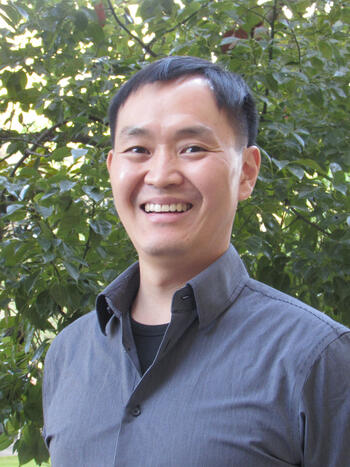
joon nak choi 7 cropped
A Stanford graduate and sociologist by training, Choi is an assistant professor of management at the School of Business and Management, Hong Kong University of Science and Technology. His research and teaching areas include economic development, social networks, organizational theory, and global and transnational sociology, within the Korean context. He coauthored Global Talent: Skilled Labor as Social Capital in Korea (Stanford University Press, 2015).

This public event is made possible through the generous support of the Koret Foundation.

Shorenstein APARC
Encina Hall
Stanford University
Stanford, CA 94305-6055

0
joon_nak_choi_7_cropped.jpg

Joon Nak Choi is the 2015-2016 Koret Fellow in the Korea Program at Stanford University's Walter H. Shorenstein Asia-Pacific Research Center (Shorenstein APARC). A sociologist by training, Choi is an assistant professor at Hong Kong University of Science and Technology. His research and teaching areas include economic development, social networks, organizational theory, and global and transnational sociology, within the Korean context.

Choi, a Stanford graduate, has worked jointly with professor Gi-Wook Shin to analyze the transnational bridges linking Asia and the United States. The research project explores how economic development links to foreign skilled workers and diaspora communities.

Most recently, Choi coauthored Global Talent: Skilled Labor as Social Capital in Korea with Shin, who is also the director of the Korea Program. From 2010-11, Choi developed the manuscript while he was a William Perry postdoctoral fellow at Shorenstein APARC.

During his fellowship, Choi will study the challenges of diversity in South Korea and teach a class for Stanford students. Choi’s research will buttress efforts to understand the shifting social and economic patterns in Korea, a now democratic nation seeking to join the ranks of the world’s most advanced countries.
 
Supported by the Koret Foundation, the Koret Fellowship brings leading professionals to Stanford to conduct research on contemporary Korean affairs with the broad aim of strengthening ties between the United States and Korea. The fellowship has expanded its focus to include social, cultural and educational issues in Korea, and aims to identify young promising scholars working on these areas.


2015-2016 Koret Fellow
Visiting Scholar
<i>2015-16 Koret Fellow, Shorenstein APARC, Stanford University</i>
Seminars
News Type
Commentary
Date
Paragraphs

In the wake of this month’s G7 Summit in Japan, U.S. President Barack Obama has an opportunity to make a presidential visit to Hiroshima. Such a visit would reinforce his vision of a nuclear-free world and solidify an important legacy of his foreign policy, Shorenstein APARC Director Gi-Wook Shin and Associate Director for Research Daniel Sneider write in an editorial for The Diplomat. The co-authors argue that the visit be framed in a way that would contribute to historical reconciliation in Northeast Asia and not undermine progress made between Japan and South Korea. 

Sneider wrote in an earlier Toyo Keizei editorial that while the White House has not yet announced a decision, the momentum for such a visit exists. And while issues of divided historical memory cannot be ignored, the occasion would not include an apology. The editorial can be viewed online in English and Japanese.

Sneider also contributed to Public Radio International's podcast series "Whose Century Is It?" and two articles on the Huffington Post Japan website. The first article, written in Japanese, examines how the history of atomic bombings are taught in the United States, and the second article, written in English, explores the question of acceptability of President Obama's visit to Hiroshima by the Japanese people.

During the visit, Obama delivered a speech that outlined the threat of nuclear weapons and the need for a world free from them. Writing for Nippon.com, Sneider said the speech and overall visit was well-received by many, but also had its critics. "The best judgment of the impact of Obama's Hiroshima visit may be what follows in Northeast Asia, where the task of postwar reconciliation remains unfinished," he wrote. The editorial can be viewed online in English and Japanese.

Shin and Sneider lead a decade-long research project that examines historical reconciliation in Asia, and are co-authors of the forthcoming book, Divergent Memories, about elite opinion and wartime memory in Asia.

Hero Image
hiroshima visit
During a break in the G7 Ministerial Meetings in Japan, a delegation visits the Hiroshima Peace Memorial on April 11, 2016 with U.S. Secretary of State John Kerry.
Flickr/U.S. Department of State
All News button
1
Subscribe to Culture