Economic Affairs
-

IMPORTANT EVENT UPDATE: 

In keeping with Stanford University's March 3 message to the campus community on COVID-19 and current recommendations of the CDC, the Asia-Pacific Research Center is electing to postpone this event until further notice. We apologize for any inconvenience this may cause, and appreciate your understanding and cooperation as we do our best to keep our community healthy and well. 


Data-intensive technologies such as AI may reshape the modern world. We propose that two features of data interact to shape innovation in data-intensive economies: first, states are key collectors and repositories of data; second, data is a non-rival input in innovation. We document the importance of state-collected data for innovation using comprehensive data on Chinese facial recognition AI firms and government contracts. Firms produce more commercial software and patents, particularly data-intensive ones, after receiving government public security contracts. Moreover, effects are largest when contracts provide more data. We then build a directed technical change model to study the state's role in three applications: autocracies demanding AI for surveillance purposes, data-driven industrial policy, and data regulation due to privacy concerns. When the degree of non-rivalry is as strong as our empirical evidence suggests, the state's collection and processing of data can shape the direction of innovation and growth of data-intensive economies.

Image
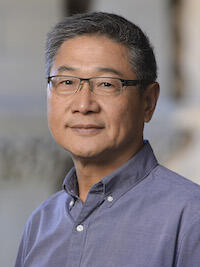
Portrait of David Yang
David Yang’s research focuses on political economy, behavioral and experimental economics, economic history, and cultural economics. In particular, David studies the forces of stability and forces of changes in authoritarian regimes, drawing lessons from historical and contemporary China. David received a B.A. in Statistics and B.S. in Business Administration from University of California at Berkeley, and PhD in Economics from Stanford. David is currently a Prize Fellow in Economics, History, and Politics at Harvard and a Postdoctoral Fellow at J-PAL at MIT. He also joined Harvard’s Economics Department as an Assistant Professor as of 2020.

David Yang Prize Fellow in Economics, History, and Politics; Department of Economics, Harvard University
Seminars
-

President Xi Jinping is scheduled to pay a state visit to Japan this spring. How have the relations between Japan and China been evolving during the last several years? How has the U.S.-China “trade war” been affecting the Japan-China relations? What is the best way for us to address China’s trade issues? The U.S. and Japan have been promoting cooperation under the Free and Open Indo Pacific (FOIP). Will Japan cooperate with China’s Belt and Road Initiative? How can the U.S. and Japan expand the cooperation under the FOIP?

Image
shitaka headshot

Speaker:

Noriyuki Shikata, Former Envoy Extraordinary and Minister Plenipotentiary, Deputy Chief of Mission, Embassy of Japan in Beijing

Bio:

Noriyuki Shikata holds a B.A. in Law from Kyoto University and Master of Public Policy (MPP) from Harvard Kennedy School of Government. Most recently, he was the Envoy Extraordinary and Minister Plenipotentiary, Deputy Chief of Mission, Embassy of Japan in China. His other prior positions include: Deputy Director General, Asian and Oceanian Affairs Bureau; Director, Economic Treaties Division, International Legal Affairs Bureau; and Director, Second North America Division, North America Bureau. Mr. Shikata has also been a Visiting Professor at Kyoto University’s Graduate School of Law/Public Policy. He is currently at Harvard conducting research on an emerging U.S. policy toward China and the Indo-Pacific region. His Twitter handle is: @norishikata.

Noriyuki Shikata, Former Envoy Extraordinary and Minister Plenipotentiary, Deputy Chief of Mission, Embassy of Japan in Beijing
Seminars
-

This event is made possible by generous support from the Korea Foundation and other friends of the Korea Program.

Asia has made remarkable progress over the past decades and is now at the forefront of the global economy in growth terms. That said, there are several near-term risks that could derail Asia’s growth momentum, including trade tensions and too-low-for-long global interest rates. In this talk, Changyong Rhee will discuss the Asian economic outlook, focusing on Korea in the context of regional and global challenges.

Image
Changyoung Rhee

Rhee is the Director of the Asia and Pacific Department at the International Monetary Fund (IMF), where he oversees the Fund’s work on the region, including its lending operations and bilateral and multilateral surveillance of economies ranging from China, Japan, and India to the Pacific Islands. Prior to joining the IMF in 2014, Rhee was Chief Economist of the Asian Development Bank (ADB); Secretary General and Sherpa of the Presidential Committee for the 2010 G-20 Seoul Summit; Vice Chairman of the Financial Services Commission (FSC) and Chairman of the Securities and Futures Commission of Korea; professor of economics at Seoul National University and the University of Rochester. He has also been a frequent policy advisor to the government of Korea, including in the Office of the President, the Ministry of Finance and Economy, the Bank of Korea, the Korea Securities Depository, and the Korea Development Institute. Rhee has published widely in the fields of macroeconomics, financial economics, and on the Korean economy. He holds a PhD from Harvard University and an undergraduate honors degree from Seoul National University, both in economics.


Changyong Rhee <i>Director, Asia and Pacific Department, IMF</i>
Seminars
-

Moon Jae-in administration increased South Korea’s minimum wage by nearly 30 percent in 2018 and 2019 under its political slogan of "income-led growth." The idea was that the higher minimum wage would boost low-wage earners’ earnings, thus the income inequality would be reduced while promoting economic growth with increased labor income and expenditure of low-wage workers and their households. This idea was, however, heavily criticized by those who argued that the minimum wage could not be a tool for economic growth and there could be a negative effect on employment.

Lee will discuss empirical findings from his research on the Korean minimum wage including the effect of the recent wage hikes. Using employer-employee matched data and longitudinal data on the universe of establishments, he estimated the effect of the minimum wage on net job growth and tried to decompose the effect into job creation and destruction by existing establishments as well as by establishment entry and exit. He found a significant negative effect of the minimum wage on employment growth; and also that ignoring the minimum wage’s effect on the self-employed could underestimate the adverse effect on total employment. To explain the mechanism, he focuses on the Korean labor market's unique feature—a high share of the self-employed in the workforce and their financial marginality. His findings demonstrate that the minimum wage’s effect and its channels should differ across countries depending on labor market institutions and structure.

Image
Jungmin Lee
Jungmin Lee is a professor of economics at Seoul National University in Korea, and also a Research Fellow at the Institute for the Study of Labor in Germany and at the Center for Research & Analysis of Migration at University College London in UK. Previously, he was an assistant professor at University of Arkansas and Florida International University, and an associate professor at Sogang University in Korea. His current research focuses on Korean labor market and education policies, interactions between health and labor market outcomes, and North Korean refugees. He has been a member of editorial board of many economics journals in Korea. He was the chief editor for the Korean Journal of Labor Economics and he is currently a Co-Editor for the Korean Economic Review; and was a member of the committee on youth employment of the Korea Tripartite Commission. He has published more than 50 papers in academic journals, mostly about the Korean economy. He received a bachelor’s degree in international economics from Seoul National University and PhD in economics from the University of Texas at Austin.

Jungmin Lee <i>Professor of Economics, Seoul National University</i>
Seminars
-

WE HAVE REACHED VENUE CAPACITY AND ARE NO LONGER ACCEPTING RSVPS


Image
Portrait of Nicholas Lardy
China has grown faster for longer than any country in recorded history.  Is it market-oriented reform, state industrial policy, or some sophisticated blend of the two that explains this success?  In this talk, Dr. Nicholas Lardy will also further examine what might explain China’s slowdown of recent years.  Is China falling into the frequently fatal middle-income trap?  Or have domestic policy choices led to the slowdown?  Have trade frictions with the United States also contributed to China’s slowing growth?  In addition, what should U.S. policy stance be towards China?  Should the United States continue to ramp up restrictions on two-way flows of technology to try to further slow China’s growth?  How successful is such a strategy likely to be and what costs to the United States would be inherent in such an approach?

Nicholas R. Lardy is the Anthony M. Solomon Senior Fellow at the Peterson Institute for International Economics.  He joined the Institute in March 2003 from the Brookings Institution, where he was a senior fellow from 1995 until 2003.  Before Brookings, he served at the University of Washington, where he was the director of the Henry M. Jackson School of International Studies from 1991 to 1995.  From 1997 through the spring of 2000, he was also the Frederick Frank Adjunct Professor of International Trade and Finance at the Yale University School of Management.  He is an expert on the Chinese economy.  Lardy's most recent books are The State Strikes Back: The End of Economic Reform in China? (2019), Markets over Mao: The Rise of Private Business in China (2014), Sustaining China's Economic Growth after the Global Financial Crisis (2012), The Future of China's Exchange Rate Policy (2009), and China's Rise: Challenges and Opportunities (2008). 


Image of red flag over the Shanghai Bund

This event is part of the 2020 Winter/Spring Colloquia series, The PRC at 70: The Past, Present – and Future?, sponsored by APARC's China Program.


Nicholas Lardy Anthony M. Solomon Fellow Peterson Institute for International Economics
Seminars
-

Japan faces a rapid population decrease and aging. Workers’ aging is negatively associated with labor productivity. For instance, a 10% increase in the fraction of workers aged 55 and above is associated with a 3% decrease in labor productivity. Kawaguchi will present his recent research that assesses the impact of population aging on labor productivity. He will also address whether the adoption of a new technology, such as purchases of industrial robot or information and communications technology (ICT) equipment, can mitigate the negative impact of worker’ aging on labor productivity and what impact, if any, it has on Japan moving forward in addressing its aging population, adoption of new technology, and increasing labor shortage.

SPEAKER

Image
Portrait of Daiji Kawaguchi

Daiji Kawaguchi is Professor of Economics at the University of Tokyo. Dr. Kawaguchi graduated from Waseda University (B.A., 1994), Hitotsubashi University, (M.A., 1996) and Michigan State University (Ph.D., 2002). In addition to his position at U of Tokyo, Kawaguchi is a Research Associate of Tokyo Center for Economic Research. Before joining University of Tokyo faculty in 2016, Kawaguchi was Assistant Professor of Economics at Osaka University (2002-03) and University of Tsukuba (2003-05), and Associate and full Professor at Hitotsubashi University (2005-2016).

Daiji Kawaguchi, Professor of Economics, University of Tokyo
Seminars
-

The demographics of Japan’s aging society has galvanized a wide range of corporate efforts, supported both directly and indirectly by the government, to aggressively develop artificial intelligence-driven technologies and IT systems to perform work for which labor shortages are accelerating. We are beginning to see concrete corporate offerings to address shortages of specific types of skilled and unskilled labor, as well as numerous efforts underway to develop systems to cope with sparsely populated, elderly geographic regions and the logistics surrounding eldercare more generally.

In this talk, based on a forthcoming book chapter, Kushida examines specific corporate cases and government strategies suggesting how Japan’s population aging and shrinking has led to three primary interrelated drivers of significance to shaping technological trajectories: 1) Demographics as market opportunity of an entirely unprecedented scale to serve the needs of a rapidly aging society; 2) demographic change creating an acute labor shortage; and 3) favorable political and regulatory dynamics for pursuing the development and diffusion of new technological trajectories to solve social and economic challenges caused by demographic change. A critical implication is that if technologies developed or deployed within Japan to solve domestic demographic problems are applicable elsewhere, then Japan’s demographic challenge can be an opportunity to cultivate competitive products and services in global markets.

SPEAKER

Image
kushida profile 9 2015 cropped 2

Kenji E. Kushida is a Japan Program Research Scholar at the Walter H. Shorenstein Asia-Pacific Research Center and an affiliated researcher at the Berkeley Roundtable on the International Economy. Kushida’s research interests are in the fields of comparative politics, political economy, and information technology. He has four streams of academic research and publication: political economy issues surrounding information technology such as Cloud Computing; institutional and governance structures of Japan’s Fukushima nuclear disaster; political strategies of foreign multinational corporations in Japan; and Japan’s political economic transformation since the 1990s. Kushida has written two general audience books in Japanese, entitled Biculturalism and the Japanese: Beyond English Linguistic Capabilities (Chuko Shinsho, 2006) and International Schools, an Introduction (Fusosha, 2008). Kushida holds a PhD in political science from the University of California, Berkeley. He received his MA in East Asian studies and BAs in economics and East Asian studies, all from Stanford University.

PARKING

Please note there is significant construction taking place on campus, which is greatly affecting parking availability and traffic patterns at the university. Please plan accordingly. Nearest parking garage is Structure 7, below the Graduate School of Business Knight School of Management.

0
Former Research Scholar, Japan Program
kenji_kushida_2.jpg MA, PhD
Kenji E. Kushida was a research scholar with the Japan Program at the Walter H. Shorenstein Asia-Pacific Research Center from 2014 through January 2022. Prior to that at APARC, he was a Takahashi Research Associate in Japanese Studies (2011-14) and a Shorenstein Postdoctoral Fellow (2010-11).
 
Kushida’s research and projects are focused on the following streams: 1) how politics and regulations shape the development and diffusion of Information Technology such as AI; 2) institutional underpinnings of the Silicon Valley ecosystem, 2) Japan's transforming political economy, 3) Japan's startup ecosystem, 4) the role of foreign multinational firms in Japan, 4) Japan's Fukushima nuclear disaster. He spearheaded the Silicon Valley - New Japan project that brought together large Japanese firms and the Silicon Valley ecosystem.

He has published several books and numerous articles in each of these streams, including “The Politics of Commoditization in Global ICT Industries,” “Japan’s Startup Ecosystem,” "How Politics and Market Dynamics Trapped Innovations in Japan’s Domestic 'Galapagos' Telecommunications Sector," “Cloud Computing: From Scarcity to Abundance,” and others. His latest business book in Japanese is “The Algorithmic Revolution’s Disruption: a Silicon Valley Vantage on IoT, Fintech, Cloud, and AI” (Asahi Shimbun Shuppan 2016).

Kushida has appeared in media including The New York Times, Washington Post, Nihon Keizai Shimbun, Nikkei Business, Diamond Harvard Business Review, NHK, PBS NewsHour, and NPR. He is also a trustee of the Japan ICU Foundation, alumni of the Trilateral Commission David Rockefeller Fellows, and a member of the Mansfield Foundation Network for the Future. Kushida has written two general audience books in Japanese, entitled Biculturalism and the Japanese: Beyond English Linguistic Capabilities (Chuko Shinsho, 2006) and International Schools, an Introduction (Fusosha, 2008).

Kushida holds a PhD in political science from the University of California, Berkeley. He received his MA in East Asian Studies and BAs in economics and East Asian Studies with Honors, all from Stanford University.
Research Scholar, Shorenstein APARC Japan Program
Seminars
Shorenstein APARC Stanford University Encina Hall E301 Stanford, CA 94305-6055
0
2019-2020 Shorenstein Postdoctoral Fellow in Contemporary Asia
hannah_kim.jpg Ph.D.

Hannah June Kim joined the Walter H. Shorenstein Asia-Pacific Research Center (Shorenstein APARC) as Shorenstein Postdoctoral Fellow in Contemporary Asia for the 2019-20 academic year.  She researches public opinion, political behavior, theories of modernization, economic development, and democratic citizenship, focusing on East Asia.

Dr. Kim completed her doctorate in the Department of Political Science at the University of California, Irvine, in 2019.  Her dissertation examined how and why people view democracy in systematically different ways in six countries: China, Japan, Korea, Singapore, Taiwan, and Vietnam. Developing unique categories of democratic citizenship that measure the cognitive, affective, and behavioral patterns of individuals, she found that state-led economic development limited the growth of cultural democratization among middle class groups in all three dimensions. The results implied that the classic causality between modernization and democratization may not be universally applicable to different cultural contexts.

At Shorenstein APARC, Hannah worked on developing her dissertation into a book manuscript and making progress on her next project exploring democratization and gender empowerment in East Asia. Hannah received an MA in International Studies from Korea University and a BA from UCLA. Her work has been published, or is forthcoming, in The Journal of Politics, PS: Political Science & Politics, and the Japanese Journal of Political Science.

Shorenstein APARC Stanford University Encina Hall E301 Stanford, CA 94305-6055
0
Visiting Scholar, 2019-20
yunxiao_xu.jpg Ph.D.

Yunxiao Xu joined the Walter H. Shorenstein Asia-Pacific Research Center (Shorenstein APARC) for the 2019-2020 academic year as visiting scholar from Peking University, where she serves as Associate Professor at the School of Economics.  Her research focuses on public finance and governmental budgeting. She obtained her Ph.D. in Economics from Peking University in 2002.

Subscribe to Economic Affairs