


The Next Phase of China’s Health System Reforms
-
In spring 2009, China’s leadership announced ambitious national health reforms. Have the five stated goals of the first three years of reform been met? What policies will China pursue in the next phase? As a prominent advisor to China's State Council Health Reform Office, Liu will discuss progress and prospects for reforms—especially the role of the private sector within the health system—within the context of China’s 2012 leadership transition.
Gordon Liu is a professor of economics at Peking University's (PKU) Guanghua School of Management, and director of PKU's China Center for Health Economic Research. Previously, he served as a tenured associate professor at the University of North Carolina at Chapel Hill (2000–2006), and as an assistant professor at the University of Southern California (1994–2000).
Liu's primary research interests include health and development economics, health policy and reform, and pharmaceutical economics. His current research is funded by the State Council Health Reform Office, the National Science Foundation, UNICEF, and the China Medical Board.
Liu currently serves on the State Council Health Reform Advisory Commission, and the Expert Panel for the State Ministry of Human Resource and Social Security. He serves as co-editor for the journal Value in Health, and as editor-in-chief for China Journal of Pharmaceutical Economics. He sits on the editorial boards for the European Health Economic Review, Global Handbook for Health Economics, and Chinese Journal of Health Economics.
He received his PhD in Economics from the City University of New York Graduate School while working as a graduate research fellow at the National Bureau of Economic Research under the supervision of Michael Grossman (1986–1991). He obtained post-doctoral training at Harvard University with William Hsiao (1992–1993). Liu has served as the president for the Chinese Economists Society, and chair for the Asian Consortium for the International Society for Pharmacoeconomics and Outcomes Research.
Philippines Conference Room
Gordon Liu
Professor of Economics
Speaker
Peking University Guanghua School of Management
Seminars
The Spillover Effect of National Health Insurance on Household Consumption Patterns in Taiwan
Related Multimedia

China provides universal health insurance at a fraction of the cost
News Type
Q&As
Date
Paragraphs
China’s demographic landscape is rapidly changing, and the government has responded by launching ambitious social and health service reforms to meet the changing needs of the country’s 1.3 billion people. This week, officials approved a five-year plan to develop a comprehensive nationwide social security network.
Karen Eggleston, the Asia Health Policy Program (AHPP) director and a Stanford Health Policy fellow, discusses the success of China’s health care reforms—including its recently established universal health care system—and the long road still ahead.
Why is the overall health and wellbeing of China’s population important globally?
There are many reasons why the health of China’s citizens matters within a larger global context. On the most basic level, China represents almost 20 percent of humanity. But it is also a major player in the world economy and it depends on having a healthy workforce, especially now that its population is aging more. The government’s ability to meet the needs of its underserved citizens contributes to a more productive and stable China, and works towards closing the huge gaps we see in human wellbeing across the world.
China also potentially offers a model for other developing countries, such as India, that may want to figure out how to make universal health coverage work at a tenth of the income of most of the countries that have put it into place before.
What are some of the biggest changes in China’s health care system since 1949?
One of the most significant changes is that China has achieved very basic universal health insurance coverage in a relatively short period of time.
Throughout the Mao period (1949–1978) there was a health care system linked to the centrally planned economy, which provided a basic level of coverage via government providers with a lot of regional variation. When economic reform came in 1980, large parts of the system—particularly financing for insurance—collapsed. The majority of China’s citizens were uninsured during the past few decades of very rapid social and economic development.
China’s overall population is changing quite dramatically, which means it has different health care needs, such as treating chronic disease and caring for an increasingly elderly population. The central government is trying to establish a system of accessible primary care—a concept that China’s barefoot doctors helped to pioneer but that fell into disarray—and health services that fit these new needs.
How does China’s basic health care system work? Are there segments of the population still not receiving adequate coverage and care?
China has had a system where people can select their own doctors. Patients usually want to go to clinics attached to the highest-reputation hospitals, but of course, when you are not insured you almost always by default go to where you can afford the care. “It is difficult to see the doctor, and it is expensive” has been the lament of patients in China, so an explicit goal of the health care reforms has been to address this.
The term “universal coverage” has different definitions. China initially put in place a form of insurance that only covers 20 or 30 percent of medical costs for the previously uninsured population, especially in rural areas. Benefits have expanded, but remain limited. As with the previous system, disparities in coverage still exist across the population. China not only has a huge population with huge economic differences, but within that there is a large migrant worker population. It is a challenge to figure out how to cover these citizens and how to provide them with access to better care. The government is quite aware there are segments of the population not receiving equal coverage, and it continues to strive to resolve the issue.
What are the greatest innovations in China’s health care system in recent years?
One of the most remarkable things China has achieved is really its new health insurance system. Even if the current coverage is not particularly generous it is nearly universal, and mechanisms are put in place each year to provide more generous coverage. China is also working on strengthening its primary care and population health services, infusing a huge sum of government money into these efforts. It is the only developing country of its per-capita income that has achieved such results so far.
Interestingly, a lot of people assume China achieved its universal coverage by mandate, while in fact the central government did so by subsidizing the cost for local governments and individuals. This reduces the burden, for example, on poorer rural governments and residents, and is one innovative way China is trying to eliminate the disparity in access to care.
Eggleston has recently published a working paper on China’s health care reforms since the Mao era on the AHPP website, as well as an article in the Milken Institute Review.
Gordon Liu, a Chinese government advisor on health care and the executive director of Peking University’s Health Economics and Management Institute, spoke at Stanford on May 29 on the future of China’s health care system.
Hero Image

All News button
1
Modes of Governance in the Chinese Bureaucracy: A 'Control Rights' Theory
-
Abstract:
The Chinese bureaucracy presents a set of anomalies that need to be explained: In the presence of a strong central authority, why do we observe widespread collusive behaviors at the local level? Why are violations and problems uncovered in the inspection processes are left unaddressed? Why is performance evaluation conducted by the higher authorities is subsequently ignored by the local authorities? We develop a theoretical model on authority relationships in the Chinese bureaucracy by conceptualizing the allocation of control rights in goal setting, inspection and incentive provision among the principal, supervisor and agent. Variations in the allocation of control rights give rise to different modes of governance and entail distinct behavioral implications among the parties involved. The proposed model provides a unified framework and a set of analytical concepts to examine different governance structures, varying authority relationships, and behavioral patterns in the Chinese bureaucracy. We illustrate the proposed model in a case study of authority relationships and the ensuing behavioral patterns in the environmental protection arena over a 5-year policy cycle.
About the speaker:
Xueguang Zhou is the Kwoh-Ting Li Professor in Economic Development, a professor of sociology, and a Freeman Spogli Institute for International Studies senior fellow. His main area of research is on institutional changes in contemporary Chinese society, focusing on Chinese organizations and management, social inequality, and state-society relationships. Zhou's research topics are related to the making of markets, village elections, and local government behaviors. His recent publications examine the role of bureaucracy in public goods provision in rural China (Modern China, 2011); interactions among peasants, markets, and capital (China Quarterly, 2011); access to financial resources in Chinese enterprises (Chinese Sociological Review, 2011, with Lulu Li); multiple logics in village elections (Social Sciences in China, 2010, with Ai Yun); and collusion among local governments in policy implementation (Research in the Sociology of Organizations, 2011, with Ai Yun and Lian Hong; and Modern China, 2010) .
Philippines Conference Room
Xueguang Zhou
Shorenstein APARC
Stanford University
Encina Hall, E301
Stanford, CA 94305-6055
0
xgzhou@stanford.edu
Senior Fellow at the Freeman Spogli Institute for International Studies
Kwoh-Ting Li Professor in Economic Development
Professor of Sociology
Faculty Affiliate at the Stanford Center on China's Economy and Institutions
Xueguang Zhou is the Kwoh-Ting Li Professor in Economic Development, a professor of sociology, and a Freeman Spogli Institute for International Studies senior fellow. His main area of research is on institutional changes in contemporary Chinese society, focusing on Chinese organizations and management, social inequality, and state-society relationships.
One of Zhou's current research projects is a study of the rise of the bureaucratic state in China. He works with students and colleagues to conduct participatory observations of government behaviors in the areas of environmental regulation enforcement, in policy implementation, in bureaucratic bargaining, and in incentive designs. He also studies patterns of career mobility and personnel flow among different government offices to understand intra-organizational relationships in the Chinese bureaucracy.
Another ongoing project is an ethnographic study of rural governance in China. Zhou adopts a microscopic approach to understand how peasants, village cadres, and local governments encounter and search for solutions to emerging problems and challenges in their everyday lives, and how institutions are created, reinforced, altered, and recombined in response to these problems. Research topics are related to the making of markets, village elections, and local government behaviors.
His recent publications examine the role of bureaucracy in public goods provision in rural China (Modern China, 2011); interactions among peasants, markets, and capital (China Quarterly, 2011); access to financial resources in Chinese enterprises (Chinese Sociological Review, 2011, with Lulu Li); multiple logics in village elections (Social Sciences in China, 2010, with Ai Yun); and collusion among local governments in policy implementation (Research in the Sociology of Organizations, 2011, with Ai Yun and Lian Hong; and Modern China, 2010).
Before joining Stanford in 2006, Zhou taught at Cornell University, Duke University, and Hong Kong University of Science and Technology. He is a guest professor at Peking University, Tsinghua University, and the People's University of China. Zhou received his Ph.D. in sociology from Stanford University in 1991.
The Institutional Foundations of the Chinese Bureaucratic State
Learn moreCV
Document
zhou_cv2020_aparc.pdf
(226.36 KB)
Hide publication sections
Off
Francis Fukuyama
Olivier Nomellini Senior Fellow
Moderator
Stanford University
Seminars
The Spillover Effect of National Health Insurance on Household Consumption Patterns in Taiwan
-
One of the major aims of implementing a national health insurance program in Taiwan in 1995 was to provide financial risk protection to the country's 23 million citizens. Households may differ in how they allocate the resources freed up and available to them as a result of health insurance. This study presented by Jui-fen Rachel Lu aims to evaluate the impact of social insurance on household consumption patterns.
About the Speaker
Jui-fen Rachel Lu, ScD, is a professor in the Department of Health Care Management and dean of the College of Management at Chang Gung University in Taiwan, where she teaches comparative health systems, health economics, and health care financing. Her research focuses on equity issues in Taiwan's health care system; the impact of the National Health Insurance program on the health care market and household consumption patterns; and comparative health systems in the Asia-Pacific region. She earned her BS from National Taiwan University, and her MS and ScD from Harvard University.
Lu has served as a member of various government committees dealing with health care issues in Taiwan, and is the recipient of various awards. She is the author of Health Economics, and has published papers in journals including Health Affairs, Medical Care, and Journal of Health Economics. Her detailed CV can be found online.
Daniel and Nancy Okimoto Conference Room
Jui-fen Rachel Lu
Professor, Department of Health Care Management
Speaker
Chang Gung University, Taiwan
Seminars
Phoenix Rising from the Ashes: Japan's Response After the Tohoku Disaster
-
Prior to March 11, 2011, many observers had all but written Japan's economy off; after all, it was said, Japan produced only 10 percent of global manufacturing output. Four days later, the world realized that a good portion of that 10 percent sits at a critical upstream spot in the global supply chain, in many products that we not only like (such as the iPad) but also need (e.g., fine chemicals for lithium-ion batteries, silicon wafers, or microcontrollers). In some cases, more than half of global output in critical input materials was located in the Tohoku region. Remarkably, by May 2011, most of the factories not located in the radiation zone had repaired the earthquake damage and resumed operations.
This presentation explores Japan's role in producing components and materials that are critical in global manufacturing, and then zooms in to analyze the speedy efforts at reconstruction by Japanese business after the Tohoku disaster. It argues that Japan is unlikely to relinquish its leading role in supplying critical components due to this shock, precisely because these "New Japan" companies are competitive, nimble, and fast.
Ulrike Schaede studies Japan’s corporate strategy, business organization, management, financial markets, and regulation. Her book Choose and Focus: Japanese Business Strategies for the 21st Century (Cornell UP, 2008) argues that Japan’s business organization has undergone a strategic inflection so fundamental that our knowledge of Japanese business practices from the 1980s and 1990s is no longer adequate. Her current research looks at “New Japan” companies that have assumed global supply chain leadership in materials and components. She also works on projects regarding corporate restructuring, changing human resource practices, and entrepreneurship in Japan.
Schaede holds an MA from Bonn University, and a PhD from the Philipps-Universtät in Marburg, Germany. She is trilingual and has spent a total of more than eight years of research and study in Japan. She has been a visiting scholar at the research institutes of the Bank of Japan, Japan's Ministry of Finance, and the Ministry of Economy, Trade and Industry, and at the Development Bank of Japan. Before joining the University of California, San Diego in 1994, Schaede held academic positions in Germany (Philipps-Universtät Marburg) and Japan (Hitotsubashi University, Tokyo), and she was a visiting professor at the business schools of UC Berkeley and Harvard.
Philippines Conference Room
Ulrike Schaede
Professor of Japanese Business
Speaker
University of California, San Diego
Seminars
The Fallout From the Bo Xilai Affair
-
The fall of Bo Xilai is the most serious political crisis in China since Tiananmen in 1989. The leadership succession process was nearly derailed and a deep rift has opened up at the top of the Communist Party. While many critical details of this power struggle remain unknown, the effects of this incident are certain to be far-reaching. Many key questions have been raised, including: How will the fall of Bo affect the new leadership line-up and its policies? How will the rift affect the party's ability to maintain control over a society showing growing signs of defiance and tensions? What does the incident tell us about the systemic corruption at the core of the party's leadership? Professor Minxin Pei will address these and other issues during this timely seminar.
About the Speaker
Minxin Pei joined Claremont McKenna College in 2009. Prior to that he was a senior associate and the director of the China Program at the Carnegie Endowment for International Peace in Washington, DC.Image
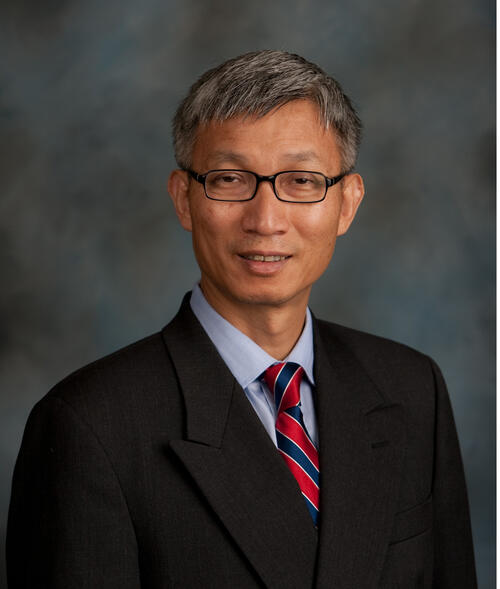
Pei's research focuses on democratization in developing countries, economic reform and governance in China, and U.S.-China relations. He is the author of From Reform to Revolution: The Demise of Communism in China and the Soviet Union (Harvard University Press, 1994) and China’s Trapped Transition: The Limits of Developmental Autocracy (Harvard University Press, 2006). Pei’s research has been published in Foreign Policy, Foreign Affairs, The National Interest, Modern China, China Quarterly, Journal of Democracy, and many edited books.
He is a frequent commentator for BBC World News, Voice of America, and National Public Radio; his op-eds have appeared in the Financial Times, the New York Times, the Washington Post, Newsweek International, the International Herald Tribune, and other major newspapers.
Pei received his PhD in political science from Harvard University. He was on the faculty at Princeton University from 1992 to 1998, and he has received numerous prestigious fellowships, including the National Fellowship at the Hoover Institution at Stanford University, the McNamara Fellowship at the World Bank, and the Olin Faculty Fellowship of the Olin Foundation.
Philippines Conference Room
Minxin Pei
Tom and Margot Pritzker ’72 Professor of Government and Director of the Keck Center for International and Strategic Studies
Speaker
Claremont McKenna College
Xueguang Zhou
Shorenstein APARC
Stanford University
Encina Hall, E301
Stanford, CA 94305-6055
0
xgzhou@stanford.edu
Senior Fellow at the Freeman Spogli Institute for International Studies
Kwoh-Ting Li Professor in Economic Development
Professor of Sociology
Faculty Affiliate at the Stanford Center on China's Economy and Institutions
Xueguang Zhou is the Kwoh-Ting Li Professor in Economic Development, a professor of sociology, and a Freeman Spogli Institute for International Studies senior fellow. His main area of research is on institutional changes in contemporary Chinese society, focusing on Chinese organizations and management, social inequality, and state-society relationships.
One of Zhou's current research projects is a study of the rise of the bureaucratic state in China. He works with students and colleagues to conduct participatory observations of government behaviors in the areas of environmental regulation enforcement, in policy implementation, in bureaucratic bargaining, and in incentive designs. He also studies patterns of career mobility and personnel flow among different government offices to understand intra-organizational relationships in the Chinese bureaucracy.
Another ongoing project is an ethnographic study of rural governance in China. Zhou adopts a microscopic approach to understand how peasants, village cadres, and local governments encounter and search for solutions to emerging problems and challenges in their everyday lives, and how institutions are created, reinforced, altered, and recombined in response to these problems. Research topics are related to the making of markets, village elections, and local government behaviors.
His recent publications examine the role of bureaucracy in public goods provision in rural China (Modern China, 2011); interactions among peasants, markets, and capital (China Quarterly, 2011); access to financial resources in Chinese enterprises (Chinese Sociological Review, 2011, with Lulu Li); multiple logics in village elections (Social Sciences in China, 2010, with Ai Yun); and collusion among local governments in policy implementation (Research in the Sociology of Organizations, 2011, with Ai Yun and Lian Hong; and Modern China, 2010).
Before joining Stanford in 2006, Zhou taught at Cornell University, Duke University, and Hong Kong University of Science and Technology. He is a guest professor at Peking University, Tsinghua University, and the People's University of China. Zhou received his Ph.D. in sociology from Stanford University in 1991.
The Institutional Foundations of the Chinese Bureaucratic State
Learn moreCV
Document
zhou_cv2020_aparc.pdf
(226.36 KB)
Hide publication sections
Off
Seminars
Education And Employment Among Muslims In India - An Analysis Of Patterns And Trends
-
After the submission of the Sachar Committee Report, several studies have undertaken data-based analysis of the socioeconomic and educational conditions of Muslims in India. Many researchers, policy makers, and Muslims believe that education can be the only mechanism to enhance their socioeconomic status and enter into better-paid jobs, businesses, and professions. This seminar will review the available evidence on the patterns of Muslim participation in education and workforce outcomes. Comparing the estimates derived from the most recent round of the National Sample Survey for the year 2009–2010 with the earlier years, it will assess how these patterns have changed in recent years. To the extent feasible the correlates of these changes will also be explored.
Rakesh Basant's current teaching and research interests focus on firm strategy, innovation, public policy, and regulation. His recent work has focused on capability building processes in industrial clusters; FDI in R&D; innovation-internalization linkages; competition policy; inter-organizational linkages for technology development (especially academia-industry relationships); strategic and policy aspects of intellectual property rights; linkages between public policy and technological change; economics of strategy; and the small-scale sector in India. His sectoral focus of research in these areas has been on the pharmaceutical, IT, electronics, and suto-component industries. Basant was a member of the Indian Prime Minister’s High-Level Committee (also known as Sachar Committee) to write a report on the social, economic, and educational conditions of Muslims in India. In continuation of this work, part of his current research focuses on issues relating to affirmative action, especially in higher education. Basant has also been a recipient of the of the Ford Foundation Post-Doctoral Fellowship in Economics, and has spent two years at the Economic Growth Center at Yale University as a visiting research fellow. In addition, he has worked as a consultant to several international organizations.
This seminar series is co-sponsored by the South Asia Initiative,
Image

Image

Image

Philippines Conference Room
Rakesh Basant
Professor of Economics & Chairperson
Speaker
Center for innovation, Incubation & Entrepreneurship, Indian Institute of Management, Ahmedabad
Seminars