History
0
APARC Predoctoral Fellow, 2020-2021
anna_zhang.jpg

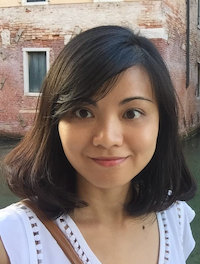
Anna Zhang joined the Walter H. Shorenstein Asia-Pacific Research Center (APARC) as APARC Predoctoral Fellow for the 2020-2021 academic year. She is a PhD candidate at the political science department. Her research interests include civil conflict, state building, and internal migration. Her dissertation studies China's institutional solution to the challenges of territorial control. 

Shorenstein APARC Encina Hall E301 Stanford University
0
Shorenstein Postdoctoral Fellow in Contemporary Asia, 2020-2021
weng_resize_copy.png Ph.D.

Jeffrey Weng joined the Shorenstein Asia-Pacific Research Center as the Shorenstein Postdoctoral Fellow in Contemporary Asia for the 2020-2021 academic year.  His research focuses on the evolution of language, ethnicity, and nationalism in China. At Shorenstein APARC, Weng continued to publish papers based on his doctoral research while reworking his dissertation into a book manuscript.

Jeffrey's dissertation examined language in the context of Chinese nation-building. Mandarin Chinese was artificially created about a century ago and initially had few speakers. Now, it is the world’s most-spoken language. How did this transition happen? Weng's research shows how the codification of Mandarin was done with the intention to match existing practices closely, but not exactly. Top-down efforts by the state to spread the new language faced enormous difficulties, and ultimately its wide-spread adoption may have been catalyzed more by economic growth and urban migration. By investigating how these monumental social and political changes occurred, Weng’s work deepens the understanding of societal shifts, past and present, in one of the world’s predominant nations, while also contributing more broadly to scholarship on class, the educational reproduction of privilege, and the construction and reconstruction of race, ethnicity, and nation.

He completed his Ph.D. in sociology at the University of California, Berkeley. He holds a BA in political science from Yale University, and his work has appeared in the Journal of Asian Studies and Theory and Society.

Paragraphs
Cover of the book 'Being in North Korea'

** See our dedicated book page for more information about the book, including praise, reviews, and author commentary. **

In 2010, while working on a PhD in South Korea, Andray Abrahamian visited the other Korea, a country he had studied for years but never seen. He returned determined to find a way to work closely with North Koreans. Ten years and more than thirty visits later, Being in North Korea tells the story of his experiences helping set up and run Choson Exchange, a non-profit that teaches North Koreans about entrepreneurship and economic policy.

Abrahamian was provided a unique vantage into life in North Korea that belies stereotypes rampant in the media, revealing instead North Koreans as individuals ranging from true believers in the system to cynics wishing the Stalinist experiment would just end; from introverts to bubbly chatterboxes, optimists to pessimists. He sees a North Korea that is changing, invalidating some assumptions held in the West, but perhaps reinforcing others.

Amid his stories of coping with the North Korean system, of the foreigners who frequent Pyongyang, and of everyday relationships, Abrahamian explores the challenges of teaching the inherently political subject of economics in a system where everyone must self-regulate their own minds; he looks at the role of women in the North Korean economy, and their exclusion from leadership; and he discusses how information is restricted, propaganda is distributed and internalized, and even how Pyongyang’s nominally illicit property market functions. Along with these stories, he interweaves the historical events that have led to today’s North Korea.

Drawing on the breadth of the author’s in-country experience, Being in North Korea combines the intellectual rigor of a scholar with a writing style that will appeal to a general audience. Through the personal elements of a memoir that provide insights into North Korean society, readers will come away with a more realistic picture of the country and its people, and a better idea of what the future may hold for the nation.

This book is part of APARC's in-house series, distributed by Stanford University Press. Desk, examination, or review copies can be requested through Stanford University Press.

About the Author

Andray Abrahamian is a non-resident fellow at the Korea Economic Institute, a visiting scholar at George Mason University Korea, and a senior adjunct fellow at Pacific Forum. During the 2018-19 academic year, he was the Koret Fellow in Korean Studies at Stanford University’s Shorenstein Asia-Pacific Research Center.

Andray was heavily involved in Choson Exchange, a nonprofit organization that trains North Koreans in economic policy and entrepreneurship, where he previously served as executive director and research director. That work, along with sporting exchanges and a TB project, has taken him to the DPRK over 30 times. He has also lived in Myanmar, where he taught at Yangon University and consulted for a risk management company. His research comparing the two countries resulted in the publication of North Korea and Myanmar: Divergent Paths (McFarland, 2018). His expert commentary on Korea and Myanmar has appeared in numerous outlets, including the New York Times, the Washington Post, Foreign Policy, and Reuters. 

Andray holds a PhD in international relations from the University of Ulsan, South Korea, and an MA from the University of Sussex, where he studied media discourse on North Korea and the U.S.-ROK alliance. He speaks Korean, sometimes with a Pyongyang accent.

All Publications button
1
Publication Type
Books
Publication Date
Authors
Andray Abrahamian
Book Publisher
Shorenstein APARC
News Type
News
Date
Paragraphs

APARC is pleased to announce that two young scholars, Jeffrey Weng and Nhu Truong, have been selected as our 2020-21 Shorenstein postdoctoral fellows on contemporary Asia. They will begin their appointments at Stanford in autumn 2020.

The Shorenstein Postdoctoral Fellowship on Contemporary Asia is open to recent doctoral graduates dedicated to research and writing on contemporary Asia, primarily in the areas of political, economic, or social change in the Asia-Pacific, or international relations in the region.

Fellows develop their dissertations and other projects for publication, present their research, and participate in the intellectual life of APARC and Stanford at large. Our postdoctoral fellows often continue their careers at top universities and research organizations around the world and remain involved with research and publication activities at APARC.

Meet our new postdoctoral scholars:


Image
Portrait of Jeffrey Weng
Jeffrey Weng
Shorenstein Postdoctoral Fellow on Contemporary Asia

Research focus: How does society shape language, and how does language shape society?

Jeffrey Weng is completing his Ph.D. in sociology at the University of California, Berkeley. He holds a BA in political science from Yale University, and his work has appeared in the Journal of Asian Studies and Theory and Society. His research focuses on the evolution of language, ethnicity, and nationalism in China.

Jeffrey's dissertation examines language in the context of Chinese nation-building. Mandarin Chinese was artificially created about a century ago and initially had few speakers. Now, it is the world’s most-spoken language. How did this transition happen? Weng's research shows how the codification of Mandarin was done with the intention to match existing practices closely, but not exactly. Top-down efforts by the state to spread the new language faced enormous difficulties, and ultimately its wide-spread adoption may have been catalyzed more by economic growth and urban migration. By investigating how these monumental social and political changes occurred, Weng’s work deepens the understanding of societal shifts, past and present, in one of the world’s predominant nations, while also contributing more broadly to scholarship on class, the educational reproduction of privilege, and the construction and reconstruction of race, ethnicity, and nation.

At Shorenstein APARC, Weng will continue to publish papers based on his doctoral research while reworking his dissertation into a book manuscript.


Image
Portrait of Nhu Truong
Nhu Truong
Shorenstein Postdoctoral Fellow on Contemporary Asia

Research focus: Why are some authoritarian regimes more responsive than others?

Nhu Truong is a Ph.D. candidate in comparative politics in the Department of Political Science at McGill University, with an area focus on China, Vietnam, and Southeast Asia. She received an MPA in International Policy and Management from the Wagner Graduate School of Public Service at New York University, an MA in Asian Studies from the University of Texas at Austin, and a BA in International Studies from Kenyon College. Prior to embarking on her doctoral study, she worked in international development in Vietnam and Cambodia, and with policy research on China.

Her research focuses on authoritarian politics and the nature of communist and post-communist regimes, particularly as it pertains to regime repressive-responsiveness, the dynamics of social resistance, repertoires of social contention, and political legitimation.
 
Nhu Truong’s dissertation explains how and why the communist, authoritarian regimes of China and Vietnam differ in their responsiveness to mounting unrest caused by government land seizures. Drawing on theory and empirical findings from 16 months of fieldwork and in-depth comparative historical analysis of China and Vietnam, Truong uses these two regimes as case studies to explore the nature of responsiveness to social pressures under communist and authoritarian rule and the divergent institutional pathways that responsiveness can take. She posits that authoritarian regimes manage social unrest by relying on raw coercive power and by demonstrating responsiveness to social demands. But not all authoritarian regimes are equally responsive to social pressures. Despite their many similarities, the Vietnamese communist regime has exhibited greater institutionalized responsiveness, whereas China has been relatively more reactive.
 
As a Shorenstein Fellow, Truong will develop her dissertation into a book manuscript. She plans to continue exploring the variable outcomes and knock-on effects of authoritarian responsiveness in places like Cambodia, which will further support her comparative research on China and Vietnam and lay the groundwork for her next project.

Hero Image
Announcement of Shorenstein APARC's 2020-21 Postdoctoral Fellows
All News button
1
Shorenstein APARCStanford UniversityEncina Hall E301Stanford, CA 94305-6055
0
Visiting Scholar at APARC
2019-2020 Lee Kong Chian NUS-Stanford Fellow on Contemporary Southeast Asia
rosalind_galt.jpg Ph.D.

Rosalind Galt joined the Walter H. Shorenstein Asia-Pacific Research Center (Shorenstein APARC) in Fall 2019 from King’s College London, where she is a professor of Film Studies.

Her research broadly addresses the relationships between world cinema and geopolitics, including European cinema’s responses to the end of the Cold War and the global financial crisis; colonialism’s impact on film aesthetics; and cinema’s engagement with sexual and gender dissidence as a mode of globalization. During her time at Shorenstein-APARC, Galt conducted research for a book on the role of the popular Malay figure of the pontianak, or female vampire, in cultures of decolonization in Malaysia and Singapore.

Galt is the author of Queer Cinema in the World, coauthored with Karl Schoonover (2016), Pretty: Film and the Decorative Image (2011), and The New European Cinema: Redrawing the Map (2006), and the coeditor of Global Art Cinema: New Theories and Histories (2010).

She holds a PhD in Modern Culture and Media from Brown University and an MA (Hons) in Film and Television Studies and English Literature from the University of Glasgow.
 

Paragraphs

By May 1966, just seventeen years after its founding, the People’s Republic of China had become one of the most powerfully centralized states in modern history. But that summer everything changed. Mao Zedong called for students to attack intellectuals and officials who allegedly lacked commitment to revolutionary principles. Rebels responded by toppling local governments across the country, ushering in nearly two years of conflict that in places came close to civil war and resulted in nearly 1.6 million dead.

How and why did the party state collapse so rapidly? Standard accounts depict a revolution instigated from the top down and escalated from the bottom up. In this pathbreaking reconsideration of the origins and trajectory of the Cultural Revolution, Andrew Walder offers a startling new conclusion: party cadres seized power from their superiors, setting off a chain reaction of violence, intensified by a mishandled army intervention. This inside-out dynamic explains how virulent factions formed, why the conflict escalated, and why the repression that ended the disorder was so much worse than the violence it was meant to contain.

Based on over 2,000 local annals chronicling some 34,000 revolutionary episodes across China, Agents of Disorder offers an original interpretation of familiar but complex events and suggests a broader lesson for our times: forces of order that we count on to stanch violence can instead generate devastating bloodshed.

The Stanford News Service spoke with Walder about the book. Read >> China’s Cultural Revolution was a power grab from within the government, not from without, Stanford sociologist finds

All Publications button
1
Publication Type
Books
Publication Date
Authors
Andrew G. Walder
Authors
Noa Ronkin
News Type
News
Date
Paragraphs

From political power in Britain, China, and New York City to robots and morality, APARC faculty draw inspiration for their work from a wide range of sources. Several of them share here what’s on their nightstand or e-book device this summer.


Image
Cover of the book The May Fourth Movement.

Thomas Fingar, Shorenstein APARC Fellow

I've decided to devote a portion of my summer reading to books on landmark developments in China being celebrated (or not), because 2019 is a major anniversary year. It marks the 100th anniversaries of the May Fourth Movement and of the establishment of the Kuomintang; the 70th anniversary of the establishment of the People’s Republic of China; the 40th anniversary of Reform and Opening plus normalization of U.S.-China relations; and the 30th anniversary of Tiananmen Square.

To mark the centennial of the May Fourth Movement, I will reread the pioneering book by Chow Tse-tung, The May Fourth Movement: Intellectual Revolution in Modern China.

Image
Cover of the book Working, by Robert Caro


David M. Lampton, Oksenberg-Rohlen Fellow

My recommendation is Working, by Robert Caro. A gem on the art of political interviewing and the study of political power. It is also substantively interesting on Robert Moses who literally built New York City. Short and good on many levels.


Image
Collage of the covers of four books recommended by Yong Suk Lee for summer 2019

Yong Suk Lee, SK Center Fellow at FSI and Deputy Director of the Korea Program at APARC

Here are a few books on my Kindle/nightstand for the summer:

I, Robot, by Isaac Asimov. 
Some of the futuristic novels of the early twentieth century are surprising relevant today. As robots and artificial intelligence have resurfaced in popular media and are the main subject of my current research, I wanted to read this iconic science fiction on robots.

Churchill: The Power of Words, by Winston Churchill and Martin Gilbert 
Churchill’s own account on the power of words. I wanted to revisit Churchill as words have become potentially more powerful and dangerous in today's social media-infused, polarized world.

Loving Frank, by Nancy Horan, and The Vision of Frank Lloyd Wright, by Thomas Heinz 
My more entertaining summer reads: a novel about Frank Lloyd Wright that takes the reader through his personal life, accompanied by one of the most thorough volumes on Wright's architecture.


Happy Summer from APARC!


Hero Image
Picnic basket with book and cup on beach
All News button
1
Paragraphs

The year 2019 is the centennial of several anti-colonialist movements that emerged in Asia, including the March First Movement of Korea, the first nationwide political protest in Korea under Japanese colonial rule. Although the movement failed to achieve national sovereignty, it left important legacies for Korea and other parts of Asia under foreign dominance. In this essay, Gi-Wook Shin and Rennie Moon discuss the origins of the March First Movement, its impact on colonial Korea and other parts of Asia that fought against imperialist dominance, and its implications for postcolonial and contemporary Korea, North and South.

All Publications button
1
Publication Type
Journal Articles
Publication Date
Journal Publisher
The Journal of Asian Studies
Authors
Gi-Wook Shin
Rennie Moon
Authors
Noa Ronkin
News Type
News
Date
Paragraphs

On the centennial of the March First Independence Movement of Korea, APARC Director Gi-Wook Shin and Rennie Moon, associate professor at Yonsei University’s Underwood International College and former Koret fellow in Korean studies at APARC, discuss the origins of the movement and its impact and legacy for anti-imperialist movements in Asia and beyond.

The year 2019 is the centennial of several anti-colonialist movements that emerged in Asia, including the March First Movement of Korea. On that day a century ago, protesters shouting “Mansei!” (“Long live Korean independence!”) gathered in Seoul and formed what would become the first nationwide political protest in Korea under Japanese colonial rule. Although the movement failed to achieve national sovereignty, it left important legacies for Korea and other parts of Asia under foreign dominance.

In a new essay for The Journal of Asian Studies,1919 in Korea: National Resistance and Contending Legacies,” APARC Director Gi-Wook Shin and Rennie Moon, associate professor at Yonsei University’s Underwood International College and former Koret fellow in Korean studies at APARC, discuss the origins of the March First Movement, its impact on colonial Korea and other parts of Asia that fought against imperialist dominance, and its implications for postcolonial and contemporary Korea, North and South. Their essay is part of the journal’s special forum entitled “Anti-colonialism in Asia: The Centenary of 1919,” which explains why 1919 was not only a single year of important events in Asia, but also a center point for the larger movements of anti-colonialism that emerged globally in the early decades of the twentieth century.

Korea became Japan's protectorate in 1905 and was “annexed” to Imperial Japan five years later. Soon after, Koreans experienced a decade of severe suppression and minimal rights under a brutal military colonial regime. In the aftermath of World War I, however, Shin and Moon write, the international geopolitical climate began to shift. Inspired by the Russian revolution of 1917 and by Wilsonian ideals of national self-determination, Korean intellectuals and leaders began secretly collaborating both inside Korea and abroad, with support from religious leaders and their nationwide mobilizing networks.

On March 1, 1919, twenty-nine leaders gathered in downtown Seoul and read aloud a declaration for Korean independence, sparking a movement that spread quickly from Seoul and Pyongyang throughout the country, with more than one million people protesting. The Japanese, who were caught by surprise, responded with brutal crackdown on protestors.

The March First Movement eventually did not achieve national independence from Japanese rule, but it forced Japan to shift from the earlier military rule to a colonial policy known as bunka seiji (cultural rule), which selectively accommodated Korean demands in nonpolitical spheres and gave rise to many cultural, educational, and media organizations and activities.

It also left Korean leaders divided over what to do next, leading to a schism between moderates, who were willing to work with the new cultural policy in preparation for future national independence, and the socialist radicals, who rejected compromise and went on to establish the Korean Communist Party in 1925. This bifurcation, note Shin and Moon, is seen by many scholars “as the primary origin of the postcolonial national division that would incite a civil war in 1950.”

South Korea recognizes the March First Movement as the basis of the founding of the republic, though conservatives and progressives still disagree about its founding date. When the Democratic People's Republic of Korea was established in the North, however, it downgraded and rewrote the movement in various ways to fit it into its own version of history that traces the legitimacy of the regime to an anti-imperialist, democratic revolution spearheaded by Kim Il-Sung, who became the leader of the DPRK after 1945.

Beyond Korea, explain Shin and Moon, the March First Movement influenced the rise of the anti-imperialist May Fourth Movement in China two months later, inspired the 1919 anti-imperialist resistance that took place in the Philippines and Egypt, and was an impetus that can be seen in the Satyagraha, or nonviolent resistance in India. “By considering the March First and other political movements of 1919 in other Asian countries from a comparative, transnational perspective,” Shin and Moon say, “we can recognize interrelationships and diffusion processes traditionally ignored in historical writings prior to the ‘historiographic revolution’ in the 1990s.”

Read the full article in The Journal of Asian Studies >>


Hero Image
Children look around cells at Seodaemun Prison, the former prison used to lock Independent fighters from 1908, on August 15, 2016 in Seoul, South Korea.
Children look around cells at Seodaemun Prison, the former prison used to lock Independent fighters from 1908, on August 15, 2016 in Seoul, South Korea. Korea was liberated from Japan's 35-year colonial rule on August 15, 1945 at the end of World War II.
Woohae Cho/Getty Images
All News button
1
Paragraphs

On November 1-2, 2018, the two-day conference "Future Visions: Opportunities and Challenges of Korean Studies in North America" was convened by Shorenstein APARC's Korea Program to examine the current state of Korean studies and consider the current challenges and opportunities. This report summarizes the discussions of the six panels on history, literature, the social sciences, language education, library collections and services, and the Korean Wave.

All Publications button
1
Publication Date
Subscribe to History