Society

FSI researchers work to understand continuity and change in societies as they confront their problems and opportunities. This includes the implications of migration and human trafficking. What happens to a society when young girls exit the sex trade? How do groups moving between locations impact societies, economies, self-identity and citizenship? What are the ethnic challenges faced by an increasingly diverse European Union? From a policy perspective, scholars also work to investigate the consequences of security-related measures for society and its values.

The Europe Center reflects much of FSI’s agenda of investigating societies, serving as a forum for experts to research the cultures, religions and people of Europe. The Center sponsors several seminars and lectures, as well as visiting scholars.

Societal research also addresses issues of demography and aging, such as the social and economic challenges of providing health care for an aging population. How do older adults make decisions, and what societal tools need to be in place to ensure the resulting decisions are well-informed? FSI regularly brings in international scholars to look at these issues. They discuss how adults care for their older parents in rural China as well as the economic aspects of aging populations in China and India.

News Type
News
Date
Paragraphs

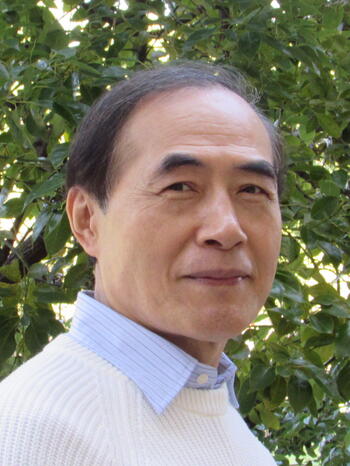
Andray Abrahamian will be the 2018-19 Koret Fellow in the Korea Program at Stanford’s Walter H. Shorenstein Asia-Pacific Research Center (APARC). Abrahamian has been Executive Director and Director of Research for Choson Exchange, a non-profit that has trained over 2000 North Koreans in entrepreneurship and economic policy since 2010. His work for Choson Exchange and other projects has taken him to North Korea 30 times. He has also lived in Myanmar, allowing him the ability to conduct field research for his new book, North Korea and Myanmar: Divergent Paths (2018, McFarland). Divergent Paths asks how Myanmar came to end its isolation, while North Korea has yet not. 

“When it comes to North Korea, Dr. Abrahamian has been very active both as an academic and on the ground. He has genuine hands-on experience of working with North Koreans from his numerous trips to the country. In this important period of flux for North Korea’s place on the world stage, we welcome Dr. Abrahamian as 2018-19 Koret Fellow, and look forward to his meaningful contributions to our activities.” “His experience and understanding of North Korea will be a great asset to our program,” Gi-Wook Shin, director of APARC said.

Image
andray abrahamian koret fellow pic
As the 2018-19 Koret Fellow, Abrahamian will research the economic relations of North Korea during changing geopolitical conditions as well as entrepreneurship in North Korea as it relates to communities of Koreans abroad. He also plans to write a general readership book that explains contemporary North Korean society. While at Stanford, he will teach a course on contemporary North Korean society and engage in public talks and conferences on Korea issues. During his fellowship, Abrahamian will also help organize the Koret Workshop, an international conference held annually at Stanford University.

Abrahamian is an Honorary Fellow at Macquarie University, Sydney, and an Adjunct Fellow at the Griffith Asia Institute. He is a frequent contributor to 38North.org, a website focused on North Korea analysis, and is a member of the US National Committee on North Korea. Andray holds a PhD from the University of Ulsan and an MA from the University of Sussex in International Relations. He has taught courses at Yangon University and Ulsan University. 

Supported by the Koret Foundation, the fellowship brings leading professionals to Stanford to conduct research on contemporary Korean affairs with the broad aim of strengthening ties between the United States and Korea.

Hero Image
andray abrahamian koret fellow pic
All News button
1
-

Gender inequality in the workplace is still a reality and an issue that must be tackled head-on in Silicon Valley and Japan. In 2017, the World Economic Forum reported for the first time in 10 years, a widening of the global gender gap. Numerous efforts to break this cycle have been announced and implemented to varying degrees of success in both countries making it clear that we must do more, together.

While women in the United States comprise 59% of the total workforce, they only make up 30% of major technology companies and only 11% of the executive positions in Silicon Valley are held by women. An industry that prides itself on innovative thinking and breakthroughs that can fundamentally improve quality of life has yet to find its way to disrupt gender inequality in its ranks. In recent years, Silicon Valley has been rocked by a number of high-profile sexual discrimination and harassment cases. In 2016, women tech leaders created the “Elephant in the Valley” survey to gather data on women’s experiences. The result was a bleak picture of Silicon Valley’s pervasive gender discrimination atmosphere but also the creation of a platform for women to share stories and build networks of support and activism based on shared experience.

As Japan faces a shrinking and aging population, it must pursue productivity growth to remain a wealthy nation. Women, long underutilized in Japan’s workforce, are receiving renewed attention with the Abe administration’s slogan of Womenomics as part of his Abenomics economic reform package. This political pledge has yielded some momentum with a number of concrete policy measures. Prime Minister Abe has even gone so far as to say “Abenomics is Womenomics.” There is still progress to be made. The Acceleration Program in Tokyo for Women (APT), spearheaded by Governor Yuriko Koike, the first female governor of Tokyo, aims to counter this narrative by providing opportunities for women entrepreneurs to build networks, receive mentoring, and become a focal point for dynamism.

The Break Through conference aims to create a dialogue that will spark innovative ideas for narrowing the gender gap by bringing together women thought leaders and entrepreneurs from Stanford, Silicon Valley and Japan to cultivate interpersonal support networks and collaboration.

This conference will:

  • Provide tools for branding and building support networks
  • Discuss progress and challenges in women’s advancement in Silicon Valley and Japan
  • Share practices and organizational features that better enable the hiring and retaining of women
  • Showcase Silicon Valley and Japanese women entrepreneurs

This conference is organized by Stanford University's Shorenstein Asia-Pacific Research Center (S-APARC) Japan Program thanks to the generous support of the Acceleration Program in Tokyo for Women (APT), Tokyo Metropolitan Government.

Image
tokyo 2193354 1920

Agenda

9:30-10:00       Registration

10:00-10:05     Opening & Welcome Remarks

10:05-10:35     Women Entrepreneurs in the United States

- Judy Gilbert, Chief People Officer, Zymergen   

10:35-11:00     Womenomics in Japan

- Yuko Osaki, Gender Equality Bureau, Cabinet Office, Japanese Government              

11:00-11:30     Fireside Chat 1

- Yoky Matsuoka, Chief Technology Officer, Nest

with Frances Colón, CEO, Jasperi Consulting

11:30-12:00     Fireside Chat 2

- Claire Chino, President & CEO, Itochu International Inc.

with Haruko Sasamoto, Assistant Manager Silicon Valley Branch, Mitsubishi Corporation (Americas)

12:00-13:00     Lunch

13:00-14:00     Start-up Showcase Group 1 (5 Japanese Startups)

14:00-14:15     Break

14:15-15:15     Start-up Showcase Group 2 (5 Silicon Valley Startups)

Feedback for both showcases given by:

- Allison Baum, Co-founder and Managing Partner, Fresco Capital

- Atsuko Jenks, Managing Direction-Japan, GSV Labs

- Jaclyn Selby, Research Scholar, Stanford University

15:15-16:15     Workshop: Leveraging Your Personal Brand to Effectively Lead

How others—from team members to board members—perceive you directly affects your ability to effectively lead and get results. For this reason, and especially for women entrepreneurs, it is crucial to understand your personal brand and carefully manage it. In this hands-on workshop, we will use Design Thinking as a framework to help you identify your strengths, skills and unique differentiators and how to effectively communicate these in your work environment.

Workshop Facilitator:

- Sylvia Vaquer, Co-founder and Chief Creative Officer, SocioFabrica

16:15     Closing Remarks 


Arrillaga Alumni Center, McCaw Hall

326 Galvez Street, Stanford, CA

Conferences
News Type
News
Date
Paragraphs

The Korea Program invites junior faculty, post-doctoral fellows, and graduate students to apply for travel awards to attend an upcoming two-day conference organized by the Korea Program at Stanford' Asia-Pacific Research Center. The workshop titled "Future Visions: Challanges and Possibilities of Korean Studies in North America" will be held on November 1st and 2nd, 2018 at Stanford University.

The awards will cover accepted applicants' lodging, domestic airfares, and/or ground transportation. To apply for the travel awards, please submit your CV and 2-page statement as a single file by July 15 here.

About the conference:

“Future Visions: Challenges and Possibilities of Korean Studies in North America,” is designed to bring together leading scholars in the fields of language education, literature, history, social sciences, and library studies. Each panel will consist of three-four scholars who will be tasked with presenting a report on the state of the field. The purpose of the panels is to generate discussion around some of the following questions: 

  • What are the research trends in each field?
  • What kinds of directions can we expect in the near future?
  • What are some of the disciplinary or other challenges in each field?
  • How does each field interact with related fields?
  • What are some of the limitations and possibilities around graduate student training?
  • How can faculty with graduate students cultivate supportive and critical scholarly communities?
  • ​How are junior faculty encouraged, and what institutional structures may offer better support?

Accepted applicants are expected to actively participate in discussion sessions and to engage in networking with other scholars during the 2-day conference.

Please direct questions on the conference to hjahn@stanford.edu.

Hero Image
encina columns
All News button
1
News Type
News
Date
Paragraphs


Group Photo 1

On May 24, Shorenstein APARC hosted the final three research presentations by this year’s Corporate Affiliate Visiting Fellows. What had been months in preparation was at last over; any indications of nervousness or anxiety now gave way to jubilant smiles and celebratory thumbs-ups for cameras. The journey that began for many nearly a year ago had come to a successful end.

Established in 1982, the Corporate Affiliates Program introduces personnel of Asian organizations that have become APARC corporate affiliates to American life and institutions. Over the span of a year, Corporate Affiliate Visiting Fellows have the opportunity to immerse in daily interaction with specialists, students, and scholars from Stanford and abroad. In turn, the practical experience and international perspectives that Visiting Fellows bring with them enrich and inform intellectual exchange at both Shorenstein APARC and Stanford at large. 

The 2017-2018 Visiting Fellows came to APARC from 14 different organizations including government agencies, state-owned enterprises, and private sector industry corporations from four countries: China, India, Japan, and Korea.


Academic Engagement

Group Photo 2The Corporate Affiliates Program is ideal for mid-career professionals looking to expand their knowledge and international experience. Visiting Fellows participate in a structured, yet individualized year of academic exploration. Elements of the program include creating individual research projects, auditing classes, attending exclusive seminars, and visiting local companies and institutions.

Following summer intensives and orientation, Visiting Fellows embark on their nine-month research projects under the guidance of an APARC faculty advisor. Fellows are matched with an advisor based on the research project subject and/or their professional background and region of employment.

“The best thing about this program is that I have one entire year to focus and to manage my own time,” observed a previous Visiting Fellow.

The months of thorough research culminate in a paper and its public presentation. Fellows present their research findings before an audience of APARC faculty and researchers, Stanford community members, and their “fellow Fellows.” Over the course of five days in May, audiences heard presentations on a wide variety of subjects ranging from the impact of U.S. Supreme Court decisions on the AI Industry to regulatory requirements for bio-similar products, and from the role of large industries in Urban Air Transport to the benefits of shifting a government’s focus from economic growth to people’s happiness.

Presentations were well received by APARC faculty, though not before standing up to the rigorous follow-up questions from a highly engaged audience.


University Enrichment

For Corporate Affiliates, the year was not exclusively about their research. Fellows found ample opportunities to take advantage of non-academic pursuits, both on-campus and in the greater Bay Area.

Group Photo 3One way to further encourage exploration was a team-based activity designed by the program. Fellows were broken up into groups of five, each tasked with coordinating an excursion to take the rest on. Facilitated trips included a hike to Stanford’s famous radio telescope (“the Dish”), an exploration of the Berkeley neighborhood and its local industries, and a visit to NASA’s Ames Research Center at Moffett Field.

Stanford Jazz OrchestraIn addition to their professional experiences, Fellows also enriched the Center and university community through their personal pursuits. Takahito Inoshita, for example, brought his musical talent to Stanford along with an extensive experience in engineering. While researching how cities could identify policy needs via natural language data, he also performed with the Stanford Jazz Orchestra as lead trombonist at a November performance at Stanford’s Bing Concert Hall.

Next year’s Visiting Fellows are scheduled to begin arriving in mid-June, and include personnel from government, SOEs and private industries, but also the military and non-profit sector as well. For now, however, the Center is still saying goodbye to the 2017-2018 Fellows as they leave to join a distinguished, ever-growing alumni network of government and private sector professionals throughout Asia.

Hero Image
Corporate affiliate 2017 2018 stanford pride
All News button
1
-


Fisher Conference Center
The Frances C. Arrillaga Alumni Center
326 Galvez St
Stanford, CA 94305

Paragraphs

Abstract: More than 60 million children in rural China are “left-behind”—both parents live and work far from their rural homes and leave their children behind. This paper explores differences in how left-behind and non-left-behind children seek health remediation in China’s vast but understudied rural areas. This study examines this question in the context of a program to provide vision health care to myopic rural students. The data come from a randomized controlled trial of 13,100 students in Gansu and Shaanxi provinces in China. The results show that without a subsidy, uptake of health care services is low, even if individuals are provided with evidence of a potential problem (an eyeglasses prescription). Uptake rises two to three times when this information is paired with a subsidy voucher redeemable for a free pair of prescription eyeglasses. In fact, left-behind children who receive an eyeglasses voucher are not only more likely to redeem it, but also more likely to use the eyeglasses both in the short term and long term. In other words, in terms of uptake of care and compliance with treatment, the voucher program benefitted left-behind students more than non-left-behind students. The results provide a scientific understanding of differential impacts for guiding effective implementation of health policy to all groups in need in developing countries.

Keywords: randomized controlled trial; rural China; left-behind children; healthcare

All Publications button
1
Publication Type
Journal Articles
Publication Date
Journal Publisher
International Journal of Environmental Research and Public Health
Authors
Scott Rozelle
Paragraphs

In a new article for Contemporary American Review, Shorenstein APARC Distinguished Fellow Thomas Fingar examines how, twenty-five years after the demise of the Soviet Union, Americans are still struggling to understand and adjust to the costs and consequences of success. Since 1991, diplomats, military professionals, and others showed an inclination towards the same approach to international affairs that brought success in the Cold War. The result was a foreign policy both stable and predictable. Under the Trump administration, however, this no longer appears to be the case.
 

For much of the world, and for many in the U.S., recents changes are unsettling. Some hope that U.S. foreign policy will soon return to the status quo; others believe the present to simply be indicative of an inescapabe decline in U.S. leadership. Professor Fingar argues that American foreign policy will once again become stable and predictable, but that it will not "simply revert to the policies of a now byone era."

All Publications button
1
Publication Type
Journal Articles
Publication Date
Authors
Thomas Fingar
News Type
News
Date
Paragraphs

A new SIEPR policy brief examines the growing life expectancy gap between low-income and high-income Americans. Coauthored by Victor R. Fuchs and APARC Deputy Director Karen Eggleston, the brief shows that life expectancy in the U.S. can be increased if health policy shifts towards preventing the leading causes of death for young people. READ MORE>>

Hero Image
unequal steps flickr.cc / Jon Southcoasting
All News button
1
-


Changes in technologies, together with increased labor mobility and aging, have major impacts on jobs and skills. Asian Development Bank’s analysis of employment changes shows that while emerging technologies such as artificial intelligence and robots displace jobs, it will not likely be pervasive in developing Asia as some predict. Rising domestic demand more than compensates for job losses associated with technological advances. However, new technologies cause firms and industries to alter skills requirements and adjust to new ways of producing and delivering services.

Developing Asia should respond to these challenges. This requires re-designing of the education and skills development system to promote skills like critical thinking, creativity, empathy, and complex problem solving. The question is how to develop these skills when many children in Asia are not able to master basic skills. Several recommendations are proposed for developing Asia. Since skills requirements are likely to change throughout one’s lifetime, enhancing learnability based on solid foundation skills should be key.  For this, governments should play an important role to create flexible and open learning environments and to establish lifelong learning systems going beyond school education and training.

Image
Sungsup Ra
SPEAKER
Mr. Sungsup Ra is Director, Human and Social Development Division, South Asia Department, Asian Development Bank (ADB). As Director, he is responsible for managing a portfolio of $3.3 billion. He is also Chair of the Education Sector Group in ADB. Mr. Ra has more than 20 years experience in development projects in a broad range of areas including education, health, energy, transport and agriculture and providing policy advice to developing countries. Prior to ADB, Mr. Ra worked with public and private entities such as Samsung and Korean National Pension. He was an economics professor at Korea University and International Christian University, Tokyo. He has regularly contributed to the development agenda in news media. He holds a Doctorate Degree in Economics from the University of Illinois at Urbana-Champaign, US.
 
Cookies, coffee and tea will be provided for this afternoon seminar.
 
 
Dr.
Sungsup Ra Director, Human and Social Development Division, South Asia Department, Asian Development Bank (ADB)
Seminars
Date Label
Subscribe to Society