Society

FSI researchers work to understand continuity and change in societies as they confront their problems and opportunities. This includes the implications of migration and human trafficking. What happens to a society when young girls exit the sex trade? How do groups moving between locations impact societies, economies, self-identity and citizenship? What are the ethnic challenges faced by an increasingly diverse European Union? From a policy perspective, scholars also work to investigate the consequences of security-related measures for society and its values.

The Europe Center reflects much of FSI’s agenda of investigating societies, serving as a forum for experts to research the cultures, religions and people of Europe. The Center sponsors several seminars and lectures, as well as visiting scholars.

Societal research also addresses issues of demography and aging, such as the social and economic challenges of providing health care for an aging population. How do older adults make decisions, and what societal tools need to be in place to ensure the resulting decisions are well-informed? FSI regularly brings in international scholars to look at these issues. They discuss how adults care for their older parents in rural China as well as the economic aspects of aging populations in China and India.

-

The demographics of Japan’s aging society has galvanized a wide range of corporate efforts, supported both directly and indirectly by the government, to aggressively develop artificial intelligence-driven technologies and IT systems to perform work for which labor shortages are accelerating. We are beginning to see concrete corporate offerings to address shortages of specific types of skilled and unskilled labor, as well as numerous efforts underway to develop systems to cope with sparsely populated, elderly geographic regions and the logistics surrounding eldercare more generally.

In this talk, based on a forthcoming book chapter, Kushida examines specific corporate cases and government strategies suggesting how Japan’s population aging and shrinking has led to three primary interrelated drivers of significance to shaping technological trajectories: 1) Demographics as market opportunity of an entirely unprecedented scale to serve the needs of a rapidly aging society; 2) demographic change creating an acute labor shortage; and 3) favorable political and regulatory dynamics for pursuing the development and diffusion of new technological trajectories to solve social and economic challenges caused by demographic change. A critical implication is that if technologies developed or deployed within Japan to solve domestic demographic problems are applicable elsewhere, then Japan’s demographic challenge can be an opportunity to cultivate competitive products and services in global markets.

SPEAKER

Image
kushida profile 9 2015 cropped 2

Kenji E. Kushida is a Japan Program Research Scholar at the Walter H. Shorenstein Asia-Pacific Research Center and an affiliated researcher at the Berkeley Roundtable on the International Economy. Kushida’s research interests are in the fields of comparative politics, political economy, and information technology. He has four streams of academic research and publication: political economy issues surrounding information technology such as Cloud Computing; institutional and governance structures of Japan’s Fukushima nuclear disaster; political strategies of foreign multinational corporations in Japan; and Japan’s political economic transformation since the 1990s. Kushida has written two general audience books in Japanese, entitled Biculturalism and the Japanese: Beyond English Linguistic Capabilities (Chuko Shinsho, 2006) and International Schools, an Introduction (Fusosha, 2008). Kushida holds a PhD in political science from the University of California, Berkeley. He received his MA in East Asian studies and BAs in economics and East Asian studies, all from Stanford University.

PARKING

Please note there is significant construction taking place on campus, which is greatly affecting parking availability and traffic patterns at the university. Please plan accordingly. Nearest parking garage is Structure 7, below the Graduate School of Business Knight School of Management.

0
Former Research Scholar, Japan Program
kenji_kushida_2.jpg MA, PhD
Kenji E. Kushida was a research scholar with the Japan Program at the Walter H. Shorenstein Asia-Pacific Research Center from 2014 through January 2022. Prior to that at APARC, he was a Takahashi Research Associate in Japanese Studies (2011-14) and a Shorenstein Postdoctoral Fellow (2010-11).
 
Kushida’s research and projects are focused on the following streams: 1) how politics and regulations shape the development and diffusion of Information Technology such as AI; 2) institutional underpinnings of the Silicon Valley ecosystem, 2) Japan's transforming political economy, 3) Japan's startup ecosystem, 4) the role of foreign multinational firms in Japan, 4) Japan's Fukushima nuclear disaster. He spearheaded the Silicon Valley - New Japan project that brought together large Japanese firms and the Silicon Valley ecosystem.

He has published several books and numerous articles in each of these streams, including “The Politics of Commoditization in Global ICT Industries,” “Japan’s Startup Ecosystem,” "How Politics and Market Dynamics Trapped Innovations in Japan’s Domestic 'Galapagos' Telecommunications Sector," “Cloud Computing: From Scarcity to Abundance,” and others. His latest business book in Japanese is “The Algorithmic Revolution’s Disruption: a Silicon Valley Vantage on IoT, Fintech, Cloud, and AI” (Asahi Shimbun Shuppan 2016).

Kushida has appeared in media including The New York Times, Washington Post, Nihon Keizai Shimbun, Nikkei Business, Diamond Harvard Business Review, NHK, PBS NewsHour, and NPR. He is also a trustee of the Japan ICU Foundation, alumni of the Trilateral Commission David Rockefeller Fellows, and a member of the Mansfield Foundation Network for the Future. Kushida has written two general audience books in Japanese, entitled Biculturalism and the Japanese: Beyond English Linguistic Capabilities (Chuko Shinsho, 2006) and International Schools, an Introduction (Fusosha, 2008).

Kushida holds a PhD in political science from the University of California, Berkeley. He received his MA in East Asian Studies and BAs in economics and East Asian Studies with Honors, all from Stanford University.
Research Scholar, Shorenstein APARC Japan Program
Seminars
Authors
News Type
News
Date
Paragraphs

On October 1st, with a massive National Day parade down Chang’an Avenue in Beijing, the People’s Republic of China celebrated the 70th anniversary of its establishment in 1949. Like a split-screen T.V., however, on the other side of the border in Hong Kong, black-clad protesters wearing gas masks and goggles undertook one of the most violent protests in Hong Kong SAR since the 1997 handover.

With those contrasting images still fresh on everyone’s minds, FSI, Shorenstein APARC, Stanford China Program, and the Center for East Asian Studies jointly sponsored a conference on October 2nd titled “Hong Kong: A City in Turmoil” to an overflow audience. Jean Oi, Director of the Stanford China Program who moderated the program opened the conference by quoting Stanford President Marc Tessier-Lavigne and Provost Persis Drell who, in a campus-wide message, had recently encouraged the university community to not shy away from difficult conversations. “We have an extraordinary opportunity [at Stanford],” she quoted from their email, “to learn from each other, to have our thinking challenged, to sharpen our arguments and to develop better ideas from a thoughtful debate.” Even while explicitly aware, therefore, that differing opinions rage on both sides of the debate regarding Hong Kong’s protests, but trusting that “there are thoughtful people on both sides of the debate,” she continued, “we have decided to organize this special event.”

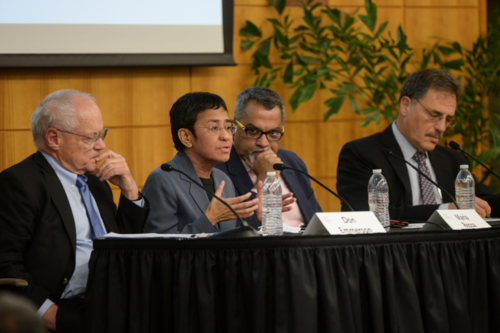
The former Chief Secretary for Administration of the Hong Kong Government (1993-2001) Anson Chan gave the keynote speech followed by a panel discussion featuring Harry Harding, University Professor and Professor of Public Policy, University of Virginia; David M. Lampton, Oksenberg-Rohlen Fellow, FSI, Stanford University; and Ming Sing, Associate Professor, The Hong Kong University of Science and Technology.

vlcsnap 2019 10 03 11h28m03s855 The Honorable Anson Chan speaks at Hong Kong: A City in Turmoil conference.

The Honorable Anson Chan gives the keynote speech at the "Hong Kong: A City in Turmoil" conference.

Keynote Speech

In her keynote, Anson Chan first recalled the handover ceremony in 1997, which she attended as Hong Kong SAR’s Chief Secretary, bridging the transition from British sovereignty to Chinese sovereignty. Chan spoke of her dawning realization at the time that the transition of sovereignty “would call Hong Kong people to forge a new identity” that “reconciled our community both with its past and future.” She noted “that many Hong Kong people, particularly the young, have indeed forged a new identity, but not as loyal, submissive Chinese patriots that Beijing had hoped for.” The central government had “singularly failed to win hearts and minds,” Chan added, especially of its young people. Hong Kong is, indeed, now at a crossroads and, she admitted, is a “city in turmoil.”

In Chan’s recollection, the central government exercised its power with “great restraint” following the handover. At first, the SAR government, too, was vigilant in protecting Hong Kong’s high degree of autonomy. Gradually, however, the city’s autonomy and civil liberties, she asserted, suffered increasing erosion. In particular, “[o]ver the past fifteen years, things changed drastically.” Describing the series of events that have caused Hong Kong’s residents increasing alarm -- including the forced abduction of Hong Kong-based booksellers; disappearance of a mainland Chinese billionaire from a luxury hotel in Hong Kong; Legislative Council members’ oath-taking controversy; the resulting disqualification of six legislative members; and the political screening of pro-democracy electoral candidates, etc. -- she further noted that the “snail’s pace of progress” in implementing full universal suffrage for the election of the Chief Executive and all members of the legislature promised in the Basic Law also brought on mounting popular frustration and despair.

“Was this progressive erosion of Hong Kong’s autonomy inevitable?” Chan asked. “I don’t think so,” she answered. Since 1997, Hong Kong SAR’s successive Chief Executives, she countered, have progressively failed to reassure the Hong Kong people that, first and foremost, they will do their utmost to uphold “one country, two systems,” and to defend Hong Kong’s autonomy. In an unsparing critique, she noted, they have instead increasingly come across as “mouthpieces of the central government, toeing the Beijing line.” Chan also suggested that “some years back, Beijing began to both lose confidence in the judgment and competence of the Hong Kong administration and to fear that growing sense of people’s identity as ‘Hong Kongers’ rather than Chinese citizens could pose a threat to the long-term, successful integration of Hong Kong into the motherland.” This growing distrust, then, proved catalytic to increasing tensions and difficulties in Hong Kong-PRC relations.

Characterizing 2003 as the first watershed moment when large public demonstrations – Hong Kong people’s “first taste of people power” -- forced the SAR government to withdraw its proposed bill under Hong Kong Basic Law Article 23, Chan recounted the failure of the constitutional reform consultation process in 2013-2014, the decision of the Standing Committee of the National People’s Congress on August 31, 2014 to set institutional limits on universal suffrage, and the resulting 2014 Occupy Movement, which later morphed into the Umbrella Movement. These popular movements failed to yield genuine universal suffrage, however, and this failure, Chan stated, “left wounds that went unhealed and festered quietly.”

The million-strong protests on June 9th and 16th to register popular opposition to Hong Kong SAR government’s introduction of its extradition bill “broke all records,” Chan noted. Recounting the five demands of the current protesters, Chan voiced support for the establishment of an independent commission with “carefully crafted terms of reference” that could objectively examine the handling of the current unrests. Such a commission could go a long way towards pacifying the protesters, she suggested, and “[s]top the violence, at least for the time being.” She also urged the reopening of broad-based consultation on political reforms, lain dormant since the collapse of the Umbrella Movement in 2014; and to even consider a measure of amnesty to exonerate a subset of both the protesters and the police. Recognizing how problematic such a recommendation might be in the face of spiraling violence and vandalism, she noted, “we are in an unprecedented crisis, and for society to heal, unprecedented measures such as an amnesty applying to certain actions by the protesters and the police force may well prove to be necessary.”

Calling herself an “unrepentant optimist” even against formidable odds, Chan highlighted how Hong Kong has come through many challenges before and after the handover. She sought to emphasize how “[t]he majority [of Hong Kong people] are not anti-China and accepts that Hong Kong is a part of China.” However, she continued, “they are also proud of their Hong Kong identity and fiercely protective of the rights and freedoms they enjoy and which are guaranteed by the Joint Declaration and the Basic Law.” Condemning the violence committed by both the police and the protesters, Chan ended her speech with the following words.

So, on this seventieth anniversary of the founding of the People’s Republic of China, we in Hong Kong recognize the huge progress that our country has made in a breathtakingly short time, lifting hundreds of millions out of poverty, improving living standards and achieving economic growth and social advancement that are the envy of the world. We are proud of the unique contribution that Hong Kong has made to our nation’s spectacular achievements and modernization. But we are distressed that the central government feels it necessary to be increasingly repressive towards its Hong Kong subjects. I urge the Beijing leadership to act with greater confidence and to trust us more completely with stewardship of our own future by allowing us to elect our own leaders. In these troubled times, we ask Beijing respectfully to listen with greater understanding to the voices of Hong Kong’s upcoming generations, to recognize and respond to their fears and aspirations and, above all, to harness their talent, their energy and commitment for the benefit of the city we all love and for the benefit of our nation as a whole.

Panel Commentary

Harry Harding, University Professor and Professor of Public Policy, University of Virginia, next spoke from the panel. He applauded the clear and concise rendering that Chan provided of how Hong Kong arrived at the current crisis but noted that his was “a more pessimistic forecast” of Hong Kong’s future. With “one country, two systems” due to expire in 2047, he surmised that Beijing will further whittle away at Hong Kong’s key institutions, such as the judiciary, the press, and universities, and, perhaps, even the freedom of expression of its business community. With respect to Taiwan, Harding noted the increasing urgency in President Xi Jinping’s call for Taiwan to be reunified with the motherland. Yet, Harding noted, the developments in Hong Kong have made “one country, two systems” increasingly unpalatable to even those traditionally favorably disposed towards Beijing. For the U.S., the recent protests have enabled Hong Kong to take center stage with legislative action around the Hong Kong Human Rights and Democracy Act, the PROTECT Hong Kong Act, and debates surrounding the Hong Kong Policy Act. The recent unrest has also contributed to declining favorability ratings for the PRC from all sectors of the United States, he noted.

vlcsnap 2019 10 03 11h42m03s260 Harry Harding, one of the panelists at the conference, gives his thoughts on the situation in Hong Kong.

Harry Harding, one of the panelists for the conference, gives his thoughts on the situation in Hong Kong.

Ming Sing, Associate Professor, The Hong Kong University of Science and Technology, first delineated the increasing levers of political and economic controls imposed by the PRC government upon Hong Kong SAR since 2003; and the corresponding rise in intensity of political protests in Hong Kong. He then provided a fine-grained analysis of the different phases of the 2019 protests, which began as a peaceful mobilization of public resistance, then grew in violence and counter-violence. He further presented a number of surveys that showed how the majority of the protesters are, indeed, well-educated and young with many of the frontline protesters being university and secondary students. Despite media reports that have suggested that economic discontent lies at the heart of protesters’ grievances, Sing presented survey data that the demonstrators’ grievances are, in fact, mainly political, including Hong Kong’s lack of universal suffrage and central government intervention, among others. Such data, he concluded, further highlights the gaping distrust between Hong Kong’s youth and the central government. 

vlcsnap 2019 10 03 11h31m56s922 Ming Sing speaks during the Hong Kong: A City in Turmoil conference.

Ming Sing explains the information presented in his slides.  

David M. Lampton Oksenberg-Rohlen Fellow, FSI, Stanford University, characterized himself as “hopeful but worried” about the situation in Hong Kong. Raising five observations in particular, Lampton noted the first worrying sign: i.e., neither the outside world nor the SAR have a “road map to the future” with the PRC. Neither the Basic Law nor the Joint Declaration of 1984 can now serve as such a “roadmap,” Lampton asserted, and without a “shared vision,” he stated, “[i]t’s hard to be optimistic.” Secondly, in this “leaderless” protest movement, Lampton asked whether anyone can authoritatively negotiate with and enforce upon its followers any agreement reached with Beijing, should any transpire, so that it can lead to an effective resolution. Thirdly, as evidenced by the PRC’s mass display of “muscular nationalism” on October 1st, Lampton questioned whether Xi Jinping has any incentives to accommodate Hong Kong protesters’ demands, especially when Beijing’s leadership may have its own worries about domestic stability in the PRC. Fourth, with constitutional crises engulfing both the U.S. and Great Britain, Lampton noted, Western democracies are also hampered from effectively and responsibly addressing the situation in Hong Kong. And lastly, Lampton acknowledged how, in the policy vacuum left by the Trump White House with respect to Hong Kong, U.S. Congress was speeding towards adopting punitive legislation against the PRC. But Lampton again expressed doubts as to whether sanctions and threats are effective tools to extract concessions from the PRC government under Xi Jinping.

vlcsnap 2019 10 03 11h40m01s747 David M. Lampton shares his viewpoint with the other panelists.

David M. Lampton shares his viewpoint with the other panelists.

Image
vlcsnap 2019 10 03 11h36m19s963

The Honorable Anson Chan gives summarizing remarks to close out the "Hong Kong: A City in Turmoil" conference.


Watch the entire conference below. You can also listen to the audio version below, selecting individual tracks.


Hero Image
vlcsnap 2019 10 03 11h43m51s724
Professor Thomas Fingar (left) introduces the "Hong Kong: A City in Turmoil" conference keynote speaker, The Honorable Anson Chan.
All News button
1
-

This seminar will present empirical evidence about policies to promote healthy lifestyles in China from a professor and a policymaker from the PRC.

As a result of economic growth, urbanization, lifestyle change, and population aging, Noncommunicable Diseases (NCDs) have become China’s leading cause of death, accounting for 86.6% of annual deaths. Almost two-thirds of NCDs can be prevented by reducing unhealthy lifestyle choices such as tobacco use, physical inactivity, harmful use of alcohol, and unhealthy diets. In particular, dietary risk factors and insufficient physical activity increasingly contribute to the surging burden of obesity in China and globally.

In 2016, President Xi Jinping announced the “Healthy China 2030” Blueprint. Three years later, a corresponding action plan was released and encompassed 15 goals, including reducing obesity, increasing overall physical activity, and preventing NCDs. The presenters will discuss results of research on the determinants of healthy diet, physical activity, obesity, and noncommunicable diseases, and provide evidence for implementation of Healthy China 2030. Their research includes aspects on (1) unhealthy food and beverage marketing to children; (2) the link between green space, physical activity, and health outcomes; (3) a strategy to involve government and non-health sectors in the prevention and control of NCDs in China; and (4) preventive vaccinations and primary care management for individuals living with NCDs like diabetes.

Image
bai di
Juan Zhang is Associate Professor at School of Public Health, Peking Union Medical College (PUMC) & China Academy of Medical Science (CAMS). She conducts research on risk factors of noncommunicable disease (NCD), such as obesity, hypertension, diabetes, nutrition, physical activity, using policy, socio-ecological, and behavioral approaches. She currently is principal investigators to (1) assessing mass media (mainly television) food advertisement, (2) investigate underlying family environment, school policy and environment of preschool children overweight and obesity, (3) evaluate the implementation and impact of government-led programs to prevent and control NCD. Prior to joining PUMC, Dr. Zhang has had diverse working experience over 10 years across national government agency, WHO, academic institutions, and multinational pharmaceutical company.

Dr. Juan ZHANG holds a Ph.D. in Health Behavior from the Indiana University Bloomington. She has published in the areas of chronic disease epidemiology, economic cost and behavioral determinants of obesity, and public health program evaluation. She serves as members of several professional societies, like Committee of Diabetes Prevention and Control of Chinese Preventive Medicine Association (CPMA), Committee of NCD Disease Prevention and Control of CPMA, Committee of Health Communication of China Health Education Association, and Committee of Student Nutrition and Health, Chinese Student Nutrition and Health Promotion Federation.

Image
photo of xiangyuchen 4x6
Xiangyu Chen is a working staff from Non-communicable Disease (NCDs) Control and Prevention Department in Zhejiang Provincial Center for Disease Control and Prevention. He is a public health physician and his ongoing areas of research include development of risk prediction models using health check-up data, and cost-effectiveness evaluation for flu shots among the diabetes. He completed his MS in Epidemiology and BA in Preventive Medicine at Soochow University.

Juan Zhang Associate Professor, School of Public Health, Peking Union Medical College (PUMC) & China Academy of Medical Science (CAMS)
Xiangyu Chen Non-communicable Disease (NCDs) Control and Prevention Department, Zhejiang Provincial Center for Disease Control and Prevention
Seminars
-

This event is at full capacity and we are no longer accepting registrations.

China, U.S. Universities and the U.S. Science and Technology Workforce

The US is presently searching for the wisest policies relevant to the relationships between US universities and China.  China is the only country that can supplant the United States as the economic, scientific, technological, military and ideological world leader.  Consciousness of that, coupled with reports of serious misappropriations of US intellectual property, have led federal leaders to propose and, in some cases, to implement serious limits on collaborations between US and Chinese scientists and engineers in “strategic” research fields as well as to introduce serious impediments to the education of Chinese nationals by US higher education institutions.  These actions are aimed at  protecting US intellectual property and scientific ideas.  In this talk, the proposals are briefly summarized.  Analyses of scientific R&D, international scientific collaboration and the US scientific workforce are then presented.  These analyses indicate that the limitations and impediments could very well weaken US capabilities and standing in some of the fields the nation is most anxious to protect unless those limitations and impediments are very carefully crafted.  Some policy recommendations are provided.


Image
bienenstock photo
Arthur Bienenstock is co-chair, with Peter Michelson, of the American Academy of Arts and Sciences’ Committee on International Scientific Partnerships.  He has also been a member of the National Science Board, the governing body of the National Science Foundation, since 2012.  From November, 1997 to January, 2001, he was Associate Director for Science of the White House Office of Science and Technology Policy.  At Stanford, he is Special Assistant to the President for Federal Research Policy,  Associate Director of the Wallenberg Research Link and a professor emeritus of Photon Science, having joined the faculty in 1967.  He was Vice Provost and Dean of Research and Graduate Policy during the period September 2003 to November 2006, Director of the Stanford Synchrotron Radiation Lightsource from 1978 to 1977 and Vice Provost for Faculty Affairs from 1972 to 1977. 

Philippines Conference Room
616 Jane Stanford Way
Encina Hall, Central, 3rd Floor
Stanford, CA 94305


Arthur Bienenstock <br><i>Co-chair, American Academy of Arts and Sciences’ Committee on International Scientific Partnerships; Professor of Photon Science, Emeritus, Stanford University</i><br><br>
Lectures
Authors
Noa Ronkin
News Type
Q&As
Date
Paragraphs

As the People’s Republic of China marks the 70th anniversary of its founding while Hong Kong prodemocracy protests intensify, Andrew Walder, the Denise O'Leary and Kent Thiry Professor and senior fellow at the Freeman Spogli Institute for International Studies, reflects on some of the changes in Chinese society and domestic policy, discusses his new book that offers a new interpretation of the Cultural Revolution, and shares details about his current research project.

Q: China is celebrating the 70th anniversary of the Chinese Communist Party’s rule, and of course the strategic shifts in Chinese foreign policy throughout the years are much more visible than the shifts in domestic policy. What have been some of the changes in that regard under Xi Jinping’s leadership?

Since Xi Jinping took office as president of the People’s Republic of China in 2013 he has changed the tone of the leadership, refocusing it on its survival. Now this is a regime that has seen nearly 30 years of 9 or 10 percent economic growth, has raised 400 million people out of poverty, and has generated significant upward mobility for very large swaths of the population, especially urban populations that have enjoyed a level of prosperity never experienced before. Yet Xi Jinping and the top Communist Party leadership seem to be driven by a strong concern for their survival.

So Xi has done three things. First, he has recentralized decision-making power and made himself a very powerful executive. Second, he has been cracking down ideologically on all talk about political reform – cracking down on universities, the media, human rights lawyers. That's actually led to significant alienation among educated populations. Third, he has launched a draconian anti-corruption campaign, arresting and imprisoning many people, including very high-ranking individuals.

Corruption in China isn’t as obvious as in a country like Russia and we, as foreigners, don't see it. But it’s likely that there are justified worries about the impact of corruption and the generation of wealth among the families of high-level officials, which seriously undermine the coherence and discipline of the Communist Party.

One interpretation of Xi’s actions is that he sees a lot of decay and observes the risks posed by the Chinese society’s openness to the outside world. He realizes that among the second generation – in his own family, in the families of other Party leaders, and among the best and brightest of China’s young, educated people – the Party really has no standing in terms of ideology. And he knows that most of the economic activity in China is generated in the private sector by people who are neither Party members nor under the subordination of the Party.

Xi’s actions could therefore be explained as a combination of conservatism and nationalism. But it could also be the case that Xi is perceptive and honest, observing cracks in the system that aren't yet visible to outsiders.

[Get stories like this delivered to your inbox by signing up for APARC newsletters]

Q: What is your assessment of China’s economic policy choices? How can China sustain robust economic growth over the coming years?

I believe Xi’s ultimate worry is about China’s economic growth. He recognizes that China is a variant of the East Asian “miracle economies” – South Korea, Taiwan, Japan – that all experienced much lower rates of economic growth after their huge takeoff periods. China has reached a certain level of GDP per capita, but to continue to raise that and truly be competitive with the other advanced economies they need to do things differently, including becoming more efficient in the use of capital and addressing their heavy debt burden.

I see China’s leadership as stuck in a dilemma similar to that of the Soviet Union in the 1970s. That is, they've had a model that worked well – China is now the world's second largest economy, a superpower – but there’s no agreement on how to continue from here. One school of thought resists change, while a more progressive school recognizes that this model isn’t going to work forever and that it’s necessary to be more efficient and creative – downsize the state-owned enterprise sector, give private enterprises a more level playing field, etc. The argument against such progressive economic liberalization, however, is that it will cause the Party to lose control over the leading sectors of the economy. So far, Xi appears to represent this view.

Q: Last year, Xi enshrined his ideology, “Xi Jinping Thought on Socialism with Chinese Characteristics for a New Era,” in China’s constitution. Can this system promote the supremacy of the Communist Party to today’s Chinese, who are fundamentally different from the workers who were the soul of the Communist Revolution?

No. It's very hard to get the toothpaste back in the tube, if you will. I spend a lot of time in China, teaching and giving talks in Beijing and elsewhere, and I can say that Chinese students are far more savvy and critical than we might think, asking tough questions about issues such as state ownership of assets, the banking system, the rule of law. Obviously they react negatively when they hear foreigners criticizing their country and preaching to them about China’s lack of democracy or human rights abuses. I think Americans might similarly react to criticisms about our homelessness crisis or the Southern border crisis, though we know these are real problems.

Many young Chinese are much more critical of the leadership than portrayed by Western news media. This is a dynamic situation, and Xi seems to be trying to ward off something that he sees as real danger. Whether he's right or whether he's simply holding back progress in China I couldn’t say. However, as I do always tell people in China, Xi is certainly creating the conditions for strong support of the next leader who might want to take China to a more liberal direction.

Q: China is celebrating 70 years of Chinese Communist Party rule amid uncertainty that is testing its authority like never before. In particular, the relentless prodemocracy demonstrations in Hong Kong appear to have caught the Xi administration off guard. What are China’s options in dealing with the unrest in Hong Kong?

It’s hard to assess the situation in Hong Kong. I understand why it’s happening – over the last five or six years, most of the people I know in Hong Kong (students, academics, professionals) have been very worried about the erosion of rights and independence. But I'm surprised at how widespread the dissatisfaction is, how militant the protesters are, how there's no real connection between them and the elite Legislative Council prodemocracy camp, and how the unrest is not dissipating. The disagreement between China and the United States about what's happening and China’s accusations that the US is behind it all are very worrisome.

The Chinese leadership practically ruled out most of the effective response options. They clearly don't want to be seen as giving in and are worried about contagion to other cities in mainland China. But China’s political system isn’t good at responding to popular mobilized dissent and the leadership doesn’t truly understand free societies. They don't understand the concerns of people in Taiwan or Hong Kong, who have a way of life and freedoms that will be taken away by integration with the mainland under its current political system. Beijing cannot get away with applying in Hong Kong the type of intimidation and bullying it applies to its own society. I don't think the current leadership is imaginative or flexible enough to think creatively about how to get out of this situation.

Q: As the Chinse Community Party trumpets China’s stunning economic and military success, it aims to keep its history of catastrophic, often cruel policies and tragic events from its people. You have long studied the Cultural Revolution, a period rife in persecution, violence, and death, and have a new book about that, coming out next week. Tell us about it.

The book, Agents of Disorder: Inside China’s Cultural Revolution (Harvard University Press), charts the violence in China from 1966 to 1969. By May 1966, just seventeen years after its founding, the People’s Republic of China had become one of the most powerfully centralized states in modern history. But that summer everything changed. Mao Zedong called for students to attack intellectuals and officials who allegedly lacked commitment to revolutionary principles, and rebels responded by toppling local governments across the country. The book, which is the outcome of a long research project, Political Movements in an Authoritarian Hierarchy, aims to answer the question: Why did the Chinese party state collapse so quickly after the onset of the Cultural Revolution?

My answer to this question is based on analysis of a data set collated from over 2,000 local annals chronicling some 34,000 revolutionary episodes across China from 1966 to 1971. That research unveils two major findings.

The first is a new interpretation of what happened during that period. Standard accounts depict a revolution instigated from the top down and escalated from the bottom up through power seizures by rebel groups. But if you read the local histories and look at the scope of rebel activity and protest in the last half of 1966 through the beginning of 1967, it turns out there really wasn’t that much going on outside of a few major cities. Yet within that short period counties all over China had their governments overthrown. What happened was that low-ranking government officials overthrew their superiors, setting off a chain reaction of violence. Then army units sent to quell the disorders gave arms to those rebels that they supported, ushering in nearly two years of conflict that in various places came close to civil war.

The second finding is what I believe to be a fairly accurate estimate of the casualties during this entire period: how many people died, when, and how. My estimate is that 1.6 million people died, mostly when they tried to rebuild the government. Only a small percentage was killed by student Red Guards, which is what everyone thinks of in relation to the Cultural Revolution. In fact, every organization eventually had a campaign looking for class enemies and, ultimately, the repression that ended the disorder was worse than the violence it was meant to contain.

The other thing I do in the book is compare this period in China’s history to other infamous periods of state violence – Bosnia in the 1990s, the Soviet Great Terror of the late 1930s, the Indonesian massacres of suspected leftists in 1965, El Salvador's civil war, the Pol Pot regime in Cambodia, and Rwanda in 1994. I show that, in terms of total numbers of casualties, the Cultural Revolution comes second on the list, topped by Cambodia, which has almost the same number of killings. However, if you consider the rate of killing as a percentage of the population, then the Cultural Revolution ranks at the bottom of all the comparison cases and the worst case by far is Cambodia. If the intensity of the violence in China had been the same as in Cambodia then 150 million people would have been killed.

Beyond the story of the violence and bloodshed in the Cultural Revolution, there’s a big story here about how many people were persecuted yet survived. The Cultural Revolution put many, many people through hell, but many survived and regained positions of authority and power, leading the country in the 1980s, which is why they wrote about what happened in their localities.

Q: Could you share some details about your current research project?

My current project, Political Violence and State Repression, analyzes unusually detailed internal investigation reports compiled by the government of a Chinese province that experienced some of the most severe level of violence and highest death tolls during the Cultural Revolution. There were 90,000 casualties in that province that had a population of about 24 million – a death rate much higher than the average we talked about before. The question is why this happened in that particular province.

The available investigation reports contain close to 5,000 political events and associated casualties, for all 86 cities and counties in the province. For the last three years I've been working with research assistants to code this massive body of information into a data set, which is now almost ready for analysis. The quality, level of detail, and comprehensive coverage of the materials makes it possible to analyze state collapse and political violence with an unusual degree of precision and depth.

Hero Image
Chinese 100 yuan bills
Thanakorn Phanthura / EyeEm / Getty Images
All News button
1
-

Sponsored by Shorenstein Asia-Pacific Research Center and Center on Democracy, Development and the Rule of Law

WE HAVE REACHED VENUE CAPACITY AND ARE NO LONGER ACCEPTING RSVPS

NOTE: THIS EVENT IS CLOSED TO THE MEDIA 

Registration required for admission.  No walk-ins.

No audio, video recording or photography will be permitted.  

News regarding increasing numbers of camps and detention facilities in Xinjiang Uyghur Autonomous Region in northwest China have grabbed the headlines since mid-2017. China’s deployment of high-tech surveillance and police tactics have spread throughout the region, and approximately ten million Muslim minorities in the region are under tight, top-down control. Over one million Uyghurs and other Turkic Muslims have allegedly disappeared into these internment camps, which the Chinese government and media characterize as vocational training centers. Although Beijing has recently claimed that most of the detainees have been released, evidence for this is still difficult to verify. Information dissemination regarding the region to the outside world has been closely guarded.

To gain a better understanding of what is happening in Xinjiang, a panel of experts from various scholarly disciplines will analyze the current crisis and, as importantly, do what academics do best -- provide historical context and critical social scientific analysis that broaden and deepen our understanding of the events unfolding in that region. 


Speakers

Image
bovingdon gardener 2017
Gardner Bovingdon is Associate Professor of Central Eurasian Studies at the Hamilton Lugar School of Global and International Studies at Indiana University. Bovingdon researches politics in contemporary Xinjiang as well as Xinjiang’s modern history. He is also an expert in historiography in China, as well as nationalism and ethnic conflict. He is the author of The Uyghurs: Strangers in Their Own Land (Columbia University Press, 2010); “Politics in Modern Xinjiang,” in Introduction to the Politics of China, ed. William Joseph (Oxford University Press, 2010); and “CCP Policies and Popular Responses in Xinjiang, 1949 to the present,” in Governing China’s Multiethnic Frontiers, ed. Morris Rossabi (University of Washington Press, 2004), among others.


Image
darren byler headshot 909x1200

Darren Byler received his Ph.D. from the Department of Anthropology at the University of Washington in 2018. His research focuses on Uyghur dispossession, culture work and "terror capitalism" in the city of Ürümchi, the capital of Xinjiang. He has published research articles in the Asia-Pacific Journal, Contemporary Islam, Central Asian Survey, the Journal of Chinese Contemporary Art and contributed essays to volumes on ethnography of Islam in China, transnational Chinese cinema and travel and representation. He has provided expert testimony on Uyghur human rights issues before the Canadian House of Commons and writes a regular column on these issues for SupChina. In addition, he has published Uyghur-English literary translations (with Mutellip Enwer) in Guernica and Paper Republic. He also writes and curates the digital humanities art and politics repository The Art of Life in Chinese Central Asia, which is hosted at livingotherwise.com.


Image
jim millward headshot 1 copy
James Millward is Professor of Inter-societal History at the Walsh School of Foreign Service, Georgetown University, teaching Chinese, Central Asian and world history. He is also an affiliated professor in the Máster Oficial en Estudios de Asia Oriental at the University of Granada, Spain. His specialties include Qing empire; the silk road; Eurasian lutes and music in history; and historical and contemporary Xinjiang. He follows and comments on current issues regarding the Uyghurs and PRC ethnicity policy.  Millward has served on the boards of the Association for Asian Studies (China and Inner Asia Council) and the Central Eurasian Studies Society, and was president of the Central Eurasian Studies Society in 2010. He edits the ''Silk Roads'' series for University of Chicago Press. His publications include The Silk Road: A Very Short Introduction (2013), Eurasian Crossroads: A History of Xinjiang (2007), New Qing Imperial History: The Making of Inner Asian Empire at Qing Chengde (2004), and Beyond the Pass: Economy, Ethnicity and Empire in Qing Central Asia (1998).  His articles and op-eds on contemporary China appear in The New York Times, The Los Angeles Review of Books, The New York Review of Books and other media.  


Image
thomasmullaney stanford 0
Thomas Mullaney is Professor of Chinese History at Stanford University, and Curator of the international exhibition, "Radical Machines: Chinese in the Information Age."  He is the author of The Chinese Typewriter: A History (MIT Press 2017), Coming to Terms with the Nation: Ethnic Classification in Modern China (UC Press, 2010), and principal editor of Critical Han Studies: The History, Representation and Identity of China’s Majority (UC Press, 2011). His writings have appeared in the Journal of Asian Studies, Technology & Culture, Aeon, Foreign Affairs, and Foreign Policy, and his work has been featured in the LA Times, The Atlantic, the BBC, and in invited lectures at Google, Microsoft, Adobe, and more. He holds a Ph.D. from Columbia University.


Image
lhedited2

Lauren Hansen Restrepo is Assistant Professor in Growth and Structure of Cities at Bryn Mawr College. She focuses on Chinese development planning and urbanization in Xinjiang, changes within urban Uyghur society, and state-society relations in Xinjiang’s cities. She also works on issues more broadly related to urban and economic development in conflict areas; urbanization in minority-majority regions; housing and slum upgrading; Chinese city planning; cross-border economic and development planning in Western China and Central Asia; development planning and practice in authoritarian states; gender and development.  Her book manuscript, Chinese Construction at the New Frontier: The Government of Uyghur Identity in Urban Xinjiang, combines ethnographic research with historical and policy analysis to assess the relationship between urban development, social control, and identity politics among upwardly mobile Uyghurs in Urumqi, the capital of Xinjiang.

Philippines Conference Room
616 Jane Stanford Way
Encina Hall, Central, 3rd Floor
Stanford, CA 94305


Gardner Bovingdon <br><i>Associate Professor, Central Eurasian Studies, Hamilton Lugar School of Global and International Studies, Indiana University</i><br><br>
Darren Byler <br><i>Post-Doctoral Lecturer, Department of Anthropology, University of Washington</i><br><br>
James Millward <br><i>Professor of Inter-societal History, Walsh School of Foreign Service, Georgetown University</i><br><br>
Thomas Mullaney (Moderator) <br><i>Professor of Chinese History, Stanford University</i><br><br>
Lauren Hansen Restrepo <br><i>Assistant Professor in Growth and Structure of Cities, Bryn Mawr College</i><br><br>
Panel Discussions
Shorenstein APARC Stanford University Encina Hall E301 Stanford, CA 94305-6055
0
2019-2020 Shorenstein Postdoctoral Fellow in Contemporary Asia
hannah_kim.jpg Ph.D.

Hannah June Kim joined the Walter H. Shorenstein Asia-Pacific Research Center (Shorenstein APARC) as Shorenstein Postdoctoral Fellow in Contemporary Asia for the 2019-20 academic year.  She researches public opinion, political behavior, theories of modernization, economic development, and democratic citizenship, focusing on East Asia.

Dr. Kim completed her doctorate in the Department of Political Science at the University of California, Irvine, in 2019.  Her dissertation examined how and why people view democracy in systematically different ways in six countries: China, Japan, Korea, Singapore, Taiwan, and Vietnam. Developing unique categories of democratic citizenship that measure the cognitive, affective, and behavioral patterns of individuals, she found that state-led economic development limited the growth of cultural democratization among middle class groups in all three dimensions. The results implied that the classic causality between modernization and democratization may not be universally applicable to different cultural contexts.

At Shorenstein APARC, Hannah worked on developing her dissertation into a book manuscript and making progress on her next project exploring democratization and gender empowerment in East Asia. Hannah received an MA in International Studies from Korea University and a BA from UCLA. Her work has been published, or is forthcoming, in The Journal of Politics, PS: Political Science & Politics, and the Japanese Journal of Political Science.

-

WE HAVE REACHED VENUE CAPACITY AND ARE NO LONGER ACCEPTING RSVPS

NOTE: THIS EVENT IS CLOSED TO THE MEDIA 

UPDATE: We will provide a live video stream of the conference on this link: https://youtu.be/5D5QSZi6u2w  Please check back at 2:25 PM on October 2 for the livestream.

RSVP required for admission.  No walk-ins.  Only one registration permitted per person. 
Stanford or government-issued photo ID must be presented for admission. 
No cameras, audio, video recording or flash photography will be permitted. 
No signs, flyer distribution, banners or posters will be allowed inside the venue.  
Please arrive 30 minutes early to check-in.  There will be no late seating.  

Sponsored by Freeman Spogli Institute for International StudiesShorenstein Asia-Pacific Research Center, Stanford China Program, and Center for East Asian Studies.

Prompted by the government’s introduction of the Fugitive Offenders and Mutual Legal Assistance in Criminal Matters Legislation (Amendment) Bill 2019, Hong Kong has been rocked by intense unrest, its most volatile since the handover in 1997. Millions have taken to the streets and violence has escalated on both sides. Beijing has likened Hong Kong’s demonstrations to the “color revolutions,” and has also condemned the disruptions as “near-terrorist acts.”

In this critical time, our conference will explore questions such as: What are the root causes of Hong Kong’s unremitting protests? Why has this extradition bill generated such intense and widespread reactions? Facing massive governance challenges, what will be the future of Hong Kong? Is there a viable future for “one country, two systems”? How should the U.S. and the international community best respond?


Speakers

Image
anson chan2

The Honorable Anson Chan retired as the Chief Secretary for Administration of the Hong Kong Government in 2001, after nearly forty years of service.  As Chief Secretary, she headed the 190,000-strong civil service.  She was the first woman and the first Chinese to hold the second-highest governmental position in Hong Kong.  During her career in the public service, she was responsible, amongst other things, for development of Hong Kong's economic infrastructure including the planning and construction of Hong Kong's new international airport, which opened in July 1998; port expansion and deregulation of the telecommunications market. Mrs. Chan is Convenor of Hong Kong 2020 - a think tank concerned with transparent and accountable Government, universal suffrage and protection of rights and freedoms enshrined in the "one country, two systems" concept that applies to Hong Kong.

Honors & Awards: 
-  Commander of the Most Excellent Order of the British Empire (1992) 
-  Grand Bauhinia Medal (1999): the Hong Kong Special Administrative Region’s highest honor 
-  Honorary Dame Grand Cross of the Most Distinguished Order of Saint Michael and Saint George (GCMG) conferred by Queen Elizabeth II of Great Britain (2002) 
-  Jean Mayer Global Citizenship Award, Tufts University (2005) 
-  Chevalier of the National Order of the Legion d’Honneur conferred by the President of France (2008) 
-  American Chamber’s Women of Influence Lifetime Achievement Award (2016) 
-  O’Connor Justice Prize Honoree (2018) 
-  Justice of the Peace


Image
harding squaredsc 91341

Harry Harding is University Professor and Professor of Public Policy at the University of Virginia, where he was the founding dean of the Frank Batten School of Leadership and Public Policy.  He is also Distinguished Adjunct Professor at National Chengchi University in Taiwan. Professor Harding has previously held appointments at Swarthmore College, Stanford University, The Brookings Institution, as Dean of the Elliott School of International Affairs at George Washington University, and visiting appointments at the Hong Kong University of Science and Technology and the University of Hong Kong.  A specialist on U.S.-China relations, his major publications on that topic include “Has U.S. China Policy Failed?” and A Fragile Relationship: The United States and China Since 1972. He is now writing a sequel, A Fraught Relationship: The United States and China from Partners to Competitors.


Image
lampton headshot

David M. Lampton is Oksenberg-Rohlen Fellow and Research Scholar at FSI and affiliated with Walter H. Shorenstein Asia-Pacific Research Center (Shorenstein APARC).  He also is the Hyman Professor of China Studies and Director of the China Studies Program at the Johns Hopkins School of Advanced International Studies (SAIS) Emeritus.  Professor Lampton's current book project is focused on the development of high-speed railways from southern China to Singapore.  He is the author of a dozen books and monographs, including Following the Leader: Ruling China, from Deng Xiaoping to Xi Jinping  (University of California Press, 2014, and second edition 2019) and The Three Faces of Chinese Power: Might, Money, and Minds (University of California Press, 2008).  He has testified at multiple congressional and commission sessions and published numerous articles, essays, book reviews, and opinion pieces in many venues, popular and academic, in both the western world and in Chinese-speaking societies, including Foreign Affairs, Foreign Policy, The American Political Science Review, The China Quarterly, The New York Times, and The Washington Post. 


Image
Jean Oi

Jean C. Oi is the William Haas Professor of Chinese Politics in the Department of Political Science and a Senior Fellow of the Freeman Spogli Institute for International Studies (FSI) at Stanford University.  She directs the China Program at the Walter H. Shorenstein Asia-Pacific Research Center in FSI and is the founding Lee Shau Kee Director of the Stanford Center at Peking University.  Professor Oi has published extensively on political economy and the process of reform in China.  Recent books include Zouping Revisited:  Adaptive Governance in a Chinese County, co-edited with Steven Goldstein (2018); and Challenges in the Process of China's Urbanization, co-edited with Karen Eggleston and Yiming Wang (2017).  Professor Oi also has an edited volume with Tom Fingar, Fateful Decisions: Choices that will Shape China's Future, Stanford University Press, forthcoming.  Recent articles include "Unpacking the Patterns of Corporate Restructuring during China's SOE Reform," co-authored with Xiaojun Li, Economic and Political Studies (2018); and “Reflections on Forty Years of Rural Reform,” in Jacques deLisle and Avery Goldstein, eds., To Get Rich is Glorious: Challenges Facing China’s Economic Reform and Opening at Forty, Brookings, 2019.  Current research is on fiscal reform and local government debt, continuing SOE reforms, and China’s Belt and Road Initiative.


Image
mingsingphoto2

Ming Sing is associate professor, Division of Social Science, The Hong Kong University of Science and Technology.  His research interests include the comparative study of democracy and democratization, political culture, civil society, quality of life, and Hong Kong politics. He obtained his D.Phil from Oxford University in sociology and has been the author or editor of four books and over thirty articles. His refereed publications can be found in the Journal of Politics, Journal of Democracy, Democratization, Government and Opposition, and Social Indicators Research, among others. He has been working on a book comparing Hong Kong’s Umbrella Movement and Taiwan’s Sunflower Movement.  He has also been an active commentator on Hong Kong politics, whose comments have been solicited by local and international media including BBC, CNN, Bloomberg, Financial Times, New York Times, and Wall Street Journal. He was awarded the Fulbright Scholarship for visiting the University of California, San Diego in 2007, and the POSCO Visiting Fellowship by the East-West Center, University of Hawaii in 2010.

Attendees should enter the campus via Galvez Street and park at the Galvez Lot or other designated, paid visitor parking. See also Stanford’s parking mapNo parking at the Stanford Oval is allowed.

For a summary, video, audio, photos and transcripts of the event, please see the following webpage:

https://aparc.fsi.stanford.edu/news/hong-kong-turmoil-former-chief-secretary-and-scholars-discuss-causes-implications-and-potential

The Honorable Anson Chan <br><i> GBM, GCMG, CBE, JP; Former Chief Secretary of Hong Kong SAR (1993-2001); member of Legislative Council of Hong Kong (2007-2008) </i><br><br>
Harry Harding <br><i>University Professor and Professor of Public Policy, Frank Batten School of Leadership and Public Policy, University of Virginia</i><br><br>
David M. Lampton <br><i>Oksenberg-Rohlen Fellow, Freeman Spogli Institute for International Studies (FSI), Stanford University</i><br><br>
Jean C. Oi (Moderator) <br><i>Director, Stanford China Program; William Haas Professor of Chinese Politics, Stanford University</i><br><br>
Ming Sing <br><i>Associate Professor, Division of Social Science, The Hong Kong University of Science and Technology</i><br><br>
Panel Discussions
Authors
Gi-Wook Shin
News Type
Commentary
Date
Paragraphs

Tension and discord in Japan-South Korea relations are nothing new, but the unfortunate, intensifying conflict between the two countries — a manifestation of right-wing Japanese nationalism and left-wing South Korean nationalism — seems headed toward a collision course. To understand the escalating friction between Tokyo and Seoul one must recognize the unique characteristics of Korean nationalism, and particularly its historical origins, development, and political role in shaping Korean attitudes toward Japan.

This is the focus of my article The Perils of Populist Nationalism, published in the September 2019 issue of the Korean magazine Shindonga (New East Asia). In this piece, which has received much attention in South Korea, I analyze the friction between Seoul and Tokyo and explain the attitude among Koreans toward Japan in contrast to their different attitude toward China. The anti-Japanese sentiment in Korea was forged amidst the rise of modern Japan. Through the experience of Japanese colonial rule, Korean nationalism took on an exclusionary form that emphasized one’s ancestry and the ethnic purity of the Korean people. The current tension between Seoul and Tokyo is rooted in this Korean nationalist sentiment.

It is time South Korea moved beyond its psychological complex toward Japan and recognized that ethnic nationalism is obsolete. Korean intellectuals, I argue, must play a critical role in a sustained effort to cultivate rational liberalism and prevent the excesses of nationalism if South Korea is to become a more open society — one that, in Popperian terms, accepts criticism and rejects a monopoly on truth.

The complete English translation of my article is now available.

Download Now >>

Hero Image
South Koreans hold anti-Japanese rally In Seoul.
South Korean protesters hold a placard reading "No Abe" during a rally against Japan's decision to remove South Korea from a "whitelist" of trusted trade partners, in front of the Japanese embassy in Seoul on August 2, 2019.
Chung Sung-Jun/Getty Images
All News button
1
News Type
News
Date
Paragraphs

David M. Lampton gave a talk titled “Chinese Power and Rail Connectivity in Southeast Asia” before the Stanford China Program audience on February 6th. He addressed three issues in particular: the scope of his research project, conducted in partnership with two co-authors based in Singapore and Malaysia; the long genesis of this railroad construction idea from Southeast Asia to China; and, third, the overarching question of whether China can effectively implement the gargantuan feat – technologically, financially, and politically. The high-and conventional-speed rail project will span seven Southeast Asian countries, plus China, Lampton highlighted.  This project is not only geographically forbidding, but the political terrain, and its socio-economic variety, is an even greater challenge.  Lampton’s talk comprised part of Stanford China Program’s 2019 Colloquia Series, “A New Cold War?: Sharp Power, Strategic Competition, and the Future of U.S.-China Relations.”

Lampton began by clarifying that the vision of rail connectivity through Southeast Asia into China is not the brainchild of either China’s leadership or Xi Jinping. This idea has a long history, he stated, beginning with the British and the French in the 19th century when they were occupying Burma and Indochina, respectively; and even during World War II when Japan further entertained building railroads from the Korean Peninsula to Singapore to advance their military ambitions. In contemporary times, ASEAN had articulated a plan in 1995 to develop a rail line from Singapore to Kunming city, P.R.C. In 2010, ASEAN again put forth a master connectivity plan for 2025 where railroad development comprised a prominent part. Only in the aftermath of these many plans and proposals did Xi Jinping, in 2013, officially announce China’s Belt and Road Initiative (BRI), an infrastructure initiative with a scope far greater than simply Southeast Asia. The idea of infrastructural connectivity in the region, in other words, has a long history that predates China entering the picture as a major actor. Only recently has China amassed the technological capacity and financial wherewithal to realize this enormous project, with economic, diplomatic, and strategic military implications.

Next he described the key role that Beijing’s industrial policy has played in the rapid development of China’s high-speed rail. From a nonexistent industry in 2001, China has built a sector that is now an international powerhouse in high-speed rail technology. As of 2014, China boasted four trunk lines, North and South; and four trunk lines, East and West, crisscrossing the P.R.C. China’s industrial policy has clearly delivered striking results (as well as some setbacks) not only with respect to high-speed rail but also in other industries.  In light of this, Lampton opined that China is not likely to yield to U.S. demands for major structural reforms in onoing trade talks with China. 

Lampton described the progress in high-speed and conventional-speed rail construction with partners in Southeast Asia (ASEAN) that the Chinese have made, with Laos and Thailand furthest along in implementation. Nonetheless, Beijing also has met with significant resistance due to the complicated political situation in various regions. Lampton described, for example, the drawn-out financial negotiations between Singapore and Malaysia with respect to the rail line connecting Singapore to Kuala Lumpur; and the jockeying among various heads of Malaysia’s federation of local states. The election of Mr. Mahathir in 2018 also put an at least temporary halt to the construction and planning of two rail projects for many reasons, including the corruption of the preceding regime of Najib in Kuala Lumpur. Although Lampton expressed overall confidence that the rail lines will get built to Kuala Lumpur and Bangkok, for example, in the not-too-distant future, the political complexities of the region and China’s ability to successfully navigate them are still open questions.

He also described the competing world views regarding infrastructure construction and economic development. There are powerful constituents in China – now backed by Xi Jinping himself – who believe that infrastructure development drives growth: i.e., “if you want to get rich, build a road.” By contrast, the U.S. and entities such as the World Bank are more cautious, seeing all the negative social and environment extenalities such massive projects create. They also want to see greater assurances of projected returns from these infrastructure projects before devoting resources. Having said this, both multilateral financial and development institutions, and the United States Government, are gradually adopting a more supportive posture on large infrastructure projects, in part not wishing to abandon the commercial and strategic battlegrounds of the future to the PRC.

Lastly, Lampton debunked the notion that the BRI is a unified, top-down “plan.” Rather, he described it as Beijing’s “umbrella policy” that “creates a predisposition [among Chinese entities] to build infrastructure.” It incentivizes “entrepreneurial SOEs, provinces, localities, overseas Chinese . . . to push their pet projects . . . onto . . . the national largesse.” This being the case, Lampton described the BRI as a dynamic, chaotic and, sometimes, even a rapacious process for the transit countries. Yunnan Province, for example, started a rail line even before the central government had approved it; and Guangdong Province began developing its own special economic zone and port construction in Malacca all without central approval. As Lampton stated, the “BRI isn’t just about Xi Jinping and Beijing . . . . [I]t’s about local initative, and how Beijing can or cannot control or . . . under what circumstances, it chooses to control [its local actors].”

The recording and transcript are available below.  

Hero Image
lampton photo 2
David M. Lampton, Oksenberg-Rohlen Fellow and Research Scholar at APARC, speaks at Stanford's China Program on February 6th, 2019.
All News button
1
Subscribe to Society