Society

FSI researchers work to understand continuity and change in societies as they confront their problems and opportunities. This includes the implications of migration and human trafficking. What happens to a society when young girls exit the sex trade? How do groups moving between locations impact societies, economies, self-identity and citizenship? What are the ethnic challenges faced by an increasingly diverse European Union? From a policy perspective, scholars also work to investigate the consequences of security-related measures for society and its values.

The Europe Center reflects much of FSI’s agenda of investigating societies, serving as a forum for experts to research the cultures, religions and people of Europe. The Center sponsors several seminars and lectures, as well as visiting scholars.

Societal research also addresses issues of demography and aging, such as the social and economic challenges of providing health care for an aging population. How do older adults make decisions, and what societal tools need to be in place to ensure the resulting decisions are well-informed? FSI regularly brings in international scholars to look at these issues. They discuss how adults care for their older parents in rural China as well as the economic aspects of aging populations in China and India.

-

This is a virtual event. Please click here to register and generate a link to the talk. 
The link will be unique to you; please save it and do not share with others.

The past decade has witnessed a great digital transformation in China. In 2006, China’s online retail sales were merely 3% of U.S. sales. China now hosts the world’s largest e-commerce retail market with a 40% share of global sales. Mobile pay has taken the country by storm so that even beggars are accepting alms through QR codes. What accounts for the leapfrog development in China’s e-commerce market? What are the larger implications of the rise of this 700-million-user online market? This talk will discuss the institutional foundation of China's giant e-commerce market, as well as its political and economic effects.

This event is part of Shorenstein APARC's winter webinar series "Asian Politics and Policy in a Time of Uncertainty."


Image
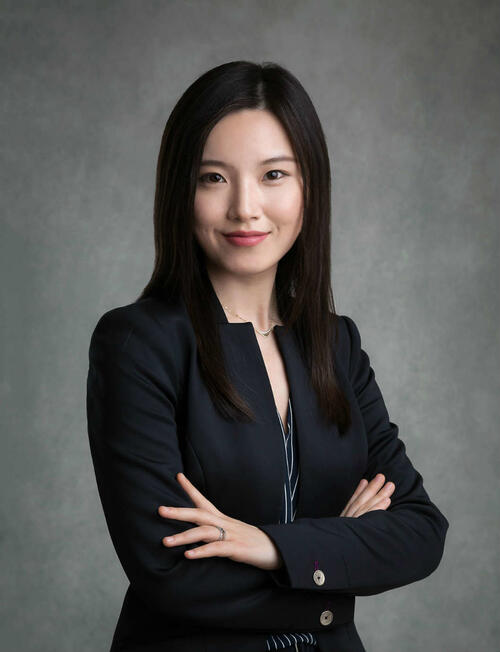
Portrait of Lizhi Liu
Lizhi Liu is an Assistant Professor in the McDonough School of Business and a faculty affiliate of the Department of Government. Her research specializes in the politics of trade, technology and innovation, and the political economy of China. Her work has been published by American Economic Review: Insights and Minnesota Law Review, and has been funded by numerous institutions, including the Bill and Melinda Gates Foundation, Weiss Family Program Fund, and the Stanford Institute for Innovation in Developing Economies. She received the 2020 Ronald H. Coase Best Dissertation Award from the Society for Institutional and Organizational Economics (SIOE), and the 2019 Best Dissertation Award in the area of Information Technology and Politics by American Political Science Association (APSA). 

Via Zoom Webinar. Register at: https://bit.ly/38yUFdn

Lizhi Liu Assistant Professor, McDonough School of Business, Georgetown University
Seminars
Authors
Kiyoteru Tsutsui
News Type
Commentary
Date
Paragraphs

This article by Kiyoteru Tsutsui was originally published by Nikkei Asia.


This was supposed to be the year that Japan would show the world that it is back.

The last few decades have seen Japan lose its prominence on the world stage, losing the lion's share of international attention to China. With the 2020 Summer Olympics as the focal point, however, Japan had planned on showcasing its technological advances, cultural assets, economic affluence, and social stability and efficiency, to dispel the notion that it has faded as an international power.

[Sign up for APARC's newsletters to stay up-to-date on our latest research.]

COVID-19 changed everything. The outbreak in the Diamond Princess cruise ship in early February alerted the Japanese public to the power of the virus, and then the death of the famous comedian Ken Shimura in late March brought home its lethal impact. The early COVID domino saw K-12 schools closing on Feb. 27 and the Olympics postponed on Mar. 24. Quickly, tourism declined and the economy slumped as supply chains and production lines were disrupted and consumers mostly stayed home following emergency declarations.

Somewhat surprisingly, the number of cases did not grow exponentially in Japan as it did in the U.S. and Europe. Initially, a conspiracy theory was floated that the government was manipulating the numbers to leave open the possibility for the Olympics to take place, and soon the dominant narrative was that long-standing hygiene practices in Japan of wearing face masks and washing hands were the main reasons for the low number of cases. Despite the recent surge, the number of new cases in Japan has remained two digits below that in the U.S., and the country has avoided the worst of the virus's impact.

Yet, the public gave the government little credit for Japan's relative success. While the legislative measures and guidelines likely helped contain the spread of the virus, some missteps in the distribution of face masks and the economic stimulus package -- confounded by public relations miscalculations -- shaped the public perception that the government does not get what needs to be done.

This, combined with political scandals involving infractions of rules around political funds and elections, put then Prime Minister Shinzo Abe on shaky ground by the summer. But it was the recurrence of the same health concern that ended the first Abe administration that forced him to step down again.

After Abe announced his resignation on Aug. 28, jockeying for his successor ensued, and quickly Yoshihide Suga, Abe's right-hand man as Chief Cabinet Secretary, emerged as a near consensus candidate, earning the support of most of the Liberal Democratic Party's major factions. On Sept. 16, Suga succeeded Abe.

Seen as a scrappy, self-made man belonging to no faction and who cares about regular folk, Suga started off with one of the highest approval ratings for any new prime minister. The air was filled with talk of a snap election, with the LDP poised to win big. In the face of continuing corona concerns, Suga decided against it, giving up his best chance of securing his position beyond next fall when he will face an LDP presidential ballot and a parliamentary Lower House election.

In the few months since, Suga has faced some criticisms: his rejection of the appointment of six scholars to the Science Council of Japan -- seen as retaliation for their earlier criticisms of the Abe administration -- drew the ire of the intellectual community, mostly on the left ideologically, and his foreign policy team appeared soft on China, raising concerns among the right-leaning public. Suga's popularity took a major hit in December when, in response to a surge in COVID cases, he was too slow to cancel his signature Go To Travel campaign that was intended to stimulate the economy by encouraging tourism. His approval ratings collapsed, and all of a sudden Suga finds himself fighting for survival.

While these have been the major events that the Japanese public will remember about 2020, what are the three most consequential events that will have a lasting impact on Japan in 2021 and beyond?

First, the end of the Abe era. Becoming the longest-serving prime minister in Japanese history is a major accomplishment in itself, but Abe was a transformative leader beyond his longevity. In foreign affairs, Abe strengthened the U.S.-Japan alliance, passing significant laws that enabled Japan to play a greater role and managing his relationship with U.S. President Donald Trump better than any major political leaders.

Furthermore, Abe formulated the concept of the free and open Indo-Pacific and developed the Quad, a quadrilateral grouping involving Japan, the U.S., Australia, and India, in the security realm, and the Comprehensive and Progressive Agreement for Trans-Pacific Partnership, and the Regional Comprehensive Economic Partnership trade agreements, all as a way to counter China's expansionist ambitions.

Seen at first as an anti-China hawk, Abe soon mended fences politically and established good economic relationships with Beijing, working to develop multilateral frameworks to manage China's peaceful rise. These efforts constituted the first time in its post-World War II history that Japan led the world with a vision to build a world order governed by the rule of law, freedom, and democracy, an important legacy that should live on in the post-Abe era.

In domestic politics, Abe completed the process started by the government formed by the Democratic Party of Japan from 2009 to 2012 to strengthen cabinet's power to execute policies. The era of bureaucrats shaping much of Japan's future has ended, and politicians now pursue their own policies with electoral successes as their mandate. The personnel decision-making capacity was the critical component, and Suga, who was the main architect of the new system, will likely entrench politician-led policymaking.

The recent investigations into Abe-era political scandals, for which Abe himself had to respond to prosecutors, demonstrate the downside of concentration of power in the Prime Minister's office. Yet, his legacies will live on in the institutional frameworks his administration developed.

The second consequential event was COVID, not just for the obvious health and economic impact, but also for the unexpected ways in which it expedited a much needed social transformation in Japan. With the stay-at-home order, many Japanese workers experienced for the first time an extended period of telework and realized that it can be even more effective to work remotely from home.

Most employers also realized that telework is a viable option, especially in utilizing the hidden talents, particularly among women and the elderly, who cannot work regular hours but have much to contribute to the economy. Given the widespread concerns about Japan's work-life balance prompted by major instances of death by overwork, this offers an opportunity for the nation to achieve what the government's work-style reform policies had sought to accomplish.

The changes that COVID-19 has forced on Japan will likely expedite Japan's digital transformation too. Suga's administration has promoted digital transformation to cut meaningless red tape -- symbolized by the requirement for hanko, a personal seal, for official documents -- and to bring a more productive and efficient social system that can handle Japan's inevitable population decline.

This new system will offer customized support for citizens, depending on their personal situations, not just on their standardized demographic backgrounds. For example, elderly citizens can now receive different kinds of care and work opportunities depending on their health and career backgrounds, while children's school records can be used to identify areas of concern such as bullying or domestic abuse. With fifth-generation, or 5G, wireless networks becoming accessible to many, Japan is poised to achieve these social transformations and offer a model to the world.

Third-most consequential, but still underrated, was the decision to postpone the Olympics by a year. Until it was announced on Mar. 20, various possibilities surfaced from simple cancellation to postponement for two years. Considering that there was no precedent for postponement, this was uncharted territory.

In the end, the 12-month postponement may have been the best-case scenario. It was a gamble, however, since there were serious concerns about the possibility of the world not being ready by the summer of 2021. Now that COVID vaccines have begun to be distributed, things are looking quite promising for the Olympics to take place next year in Tokyo.

Beyond the actual staging of the games and all that will bring to Japan, the Olympics are important for their long term economic and social impact. Recent studies about the impact of the Olympics on a host country document positive economic impacts that can last as long as 20 years after the actual event, especially in tourism.

Japan had already started betting on international tourism as a major national economic focus and succeeded in increasing tourists dramatically until COVID struck. The infrastructure development required for increased tourism has largely been accomplished and had the Olympics been canceled, much of that investment would have been for naught. The economic impact would have been devastating. With the Olympics likely to be held next summer, Japan can still hope to show the world that it is back after all, just as it hoped to do in 2020.

Kiyoteru Tsutsui 120820 crop 4X4

Kiyoteru Tsutsui

Kiyoteru Tsutsui is the Henri H. and Tomoye Takahashi Professor and Senior Fellow in Japanese Studies at Shorenstein APARC, the director of APARC's Japan Program, a senior fellow at FSI, and professor of sociology, all at Stanford.
Full Biography

Read More

A man wearing a face mask prays for the new year at Meiji Shrine in Tokyo, Japan.
Commentary

Japan's Challenges in the Next Year are Greater than its Opportunities

Surging coronavirus cases and ongoing political scandals have docked Suga's approval ratings, but successfully handling the upcoming Olympics and taking further strides with the United States, ASEAN, and South Korea may help him rebound.
Japan's Challenges in the Next Year are Greater than its Opportunities
Photos of China's Xi Jinping walking and Japan's Yoshihide Suga speaking at a podium
Commentary

How Japan's Suga Can Build an Alliance to Counter China

The strengths and weaknesses of the Quad
How Japan's Suga Can Build an Alliance to Counter China
A man walks past a digital screen showing images of President-elect Joe Biden in a news program.
Commentary

Japan's Role Could Redefine Asia-Pacific Relations Under Biden and Suga

President-elect Biden's early conversations with Japan's prime minister Yoshihide Suga seem to signal a renewed commitment to coordination on issues of security, environmentalism, human rights, and China's influence.
Japan's Role Could Redefine Asia-Pacific Relations Under Biden and Suga
Hero Image
The flag of Japan is displayed over the Olympic rings.
Carl Court, Getty Images
All News button
1
Subtitle

Abe's resignation, the COVID-19 pandemic, and delaying the 2020 Tokyo Summer Olympic games have disrupted Japan's efforts to re-establish itself as a strong leader, both domestically and internationally, but it still has a chance to launch a comeback moment.

Authors
Noa Ronkin
News Type
News
Date
Paragraphs

STANFORD, CA, December 3, 2020 — The Walter H. Shorenstein Asia-Pacific Research Center (APARC), Stanford University’s hub for interdisciplinary research, education, and engagement on contemporary Asia, invites nominations for the 2021 Shorenstein Journalism Award. The award recognizes outstanding journalists who have spent their careers helping audiences around the world understand the complexities of the Asia-Pacific region. The 2021 award will honor a journalist whose work has mostly been conveyed through Asian news media. The deadline for nomination submissions is Monday, February 15, 2021.

An annual tradition since 2002, the Shorenstein Journalism Award is sponsored by APARC and carries a cash prize of US $10,000. It honors the legacy of APARC benefactor, Mr. Walter H. Shorenstein, and his twin passions for promoting excellence in journalism and understanding of Asia. Over the course of its history, the award has recognized world-class journalists who push the boundaries of coverage of the Asia-Pacific region and help advance mutual understanding between audiences in the United States and their Asian counterparts. Recent honorees include Tom Wright, Maria Ressa, Anna Fifield, Siddharth Varadarajan, Ian Johnson, and Caixin Media.

The award alternates between recipients whose work has mostly been published through Asian news media and those whose work has mostly been conveyed through American news media. The 2021 award will recognize a recipient from the former category. “Media freedom has increasingly been under attack throughout Asia, and many countries in the region are becoming dangerous places for journalists to work in,” said APARC Director Gi-Wook Shin. “It is now more crucial than ever to stand against these assaults on press freedom and support independent journalism without fear or favor.”

For the award, the Asia-Pacific region is defined broadly to include Northeast, Southeast, South, and Central Asia and Australasia. Both individual journalists with a considerable body of work and journalism organizations are eligible for the award. Nominees’ work may be in traditional forms of print or broadcast journalism and/or in new forms of multimedia journalism. The Award Selection Committee, whose members are experts in journalism and Asia research and policy, presides over the judging of nominees and is responsible for the selection of honorees.

APARC is inviting 2021 award nomination submissions from news editors, publishers, scholars, journalism associations, and entities focused on researching and interpreting the Asia-Pacific region. The Center will announce the winner by April 2021 and present the award at a public ceremony at Stanford in the autumn quarter of 2021.

Nominations are accepted electronically through Monday, February 15, 2021, at 11:59 PM PST. For information about the nomination procedures and to submit nominations please visit the award nomination entry page.

Please direct all inquiries to aparc-communications@stanford.edu.

Read More

Gi-Wook Shin presents the 2020 Shorenstein Journalism Award to Tom Wright at a virtual event
News

Shorenstein Journalism Award Winner Tom Wright Recounts Story of Global Financial Scandal

Wright, who led the investigation that unveiled the Malaysian 1MDB scandal, one of the largest-ever financial frauds, highlighted how Western institutions enable global corruption and undermine democracy in foreign countries with poor rule of law.
Shorenstein Journalism Award Winner Tom Wright Recounts Story of Global Financial Scandal
View of building roof in the Forbidden City complex and the Beijing skyline in the background
News

New Fellowship on China Policy Seeks to Strengthen U.S.-China Relations

Stanford University’s Shorenstein Asia-Pacific Center invites applications for the inaugural 2021-22 China Policy Fellowship from experts with research experience on issues vital to the U.S. China policy agenda and influence in the policymaking process.
New Fellowship on China Policy Seeks to Strengthen U.S.-China Relations
Encina Hall
News

APARC Announces 2021-22 Postdoctoral Fellowships for Emerging Scholars in Contemporary Asia, Japan, and Korea Studies

The Center’s commitment to supporting young Asia scholars remains strong during the COVID-19 crisis.
APARC Announces 2021-22 Postdoctoral Fellowships for Emerging Scholars in Contemporary Asia, Japan, and Korea Studies
Hero Image
Stanford colonnade with text announcing open nominations for the 2021 Shorenstein Journalism Award by February 15.
All News button
1
Subtitle

Sponsored by Stanford University’s Shorenstein Asia-Pacific Research Center, the annual award recognizes outstanding journalists and journalism organizations for excellence in coverage of the Asia-Pacific region. News editors, publishers, scholars, and organizations focused on Asia research and analysis are invited to submit nominations for the 2021 award through February 15.

Paragraphs

Shorenstein APARC's annual overview for the academic year 2019-20 is now available.

Learn about the research, events, and publications produced by the Center's programs over the last twelve months. Feature sections look at how APARC has continued its mission amid COVID-19 restrictions and how our research has been adapted to factor in the impact of the pandemic. Learn about new talent at the Center, including new leadership of the Japan Program and an enhanced focus on South Asia research. Catch up on the Center's policy work, education initiatives, events, and outreach.

Read online:

All Publications button
1
Publication Type
Annual Reports
Publication Date
-
This is a virtual event. Please click here to register and generate a link to the talk. 
The link will be unique to you; please save it and do not share with others
.
 
 APARC South Asia research Initiative presents: Fall 2020 Colloquium Series on
India-China Strategic Competition
 

Washington DC time:  7:00pm-8:30pm, 9-Nov. 2020
Sydney, Australia time: 11:00am-12:30pm, 10-Nov. 2020 

Expectations of India’s rise have been dented in 2020. Amid lackluster economic performance and creeping socio-political illiberalism, India also suffered a major strategic setback. Chinese forces that crossed the Line of Actual Control in Ladakh remain encamped at several tactically-valuable points, and although talks continue, India has few visible options to force a return to the status quo ante. India now sees China is more clearly adversarial terms – but does it have what it takes to compete effectively? This conversation will conclude the APARC South Asia’s fall 2020 colloquium series on the India-China strategic competition with a wider and deeper look at India’s political and military power. We will discuss India’s ability to deter and balance China, its strategies to build national power and align with new partners, and the prospects for the competition in 2021 and beyond.
 

Ashley Tellis29kb Ashley Tellis29Kb
Ashley J. Tellis holds the Tata Chair for Strategic Affairs and is a senior fellow at the Carnegie Endowment for International Peace. Previously he was commissioned into the Foreign Service and served as senior adviser to the ambassador at the U.S. Embassy in New Delhi. While serving as the senior adviser to the Undersecretary of State for Political Affairs, he was intimately involved in negotiating the civil nuclear agreement with India. He also served on the National Security Council staff as special assistant to President George W. Bush and senior director for strategic planning and Southwest Asia. Prior to his government service, Tellis was senior policy analyst at the RAND Corporation and professor of policy analysis at the RAND Graduate School. He is a counselor at the National Bureau of Asian Research and serves as an adviser to the Chief of Naval Operations. He is the author of India’s Emerging Nuclear Posture (2001), co-author of Interpreting China’s Grand Strategy: Past, Present, and Future (2000), and co-editor of the sixteen latest annual volumes of Strategic Asia. He earned his PhD in political science from the University of Chicago.


Image
Arzan Tarapore
Arzan Tarapore is the South Asia research scholar at the Shorenstein Asia-Pacific Research Center at Stanford University, where he leads the newly-restarted South Asia research initiative. He is also a senior nonresident fellow at the National Bureau of Asian Research. His research focuses on Indian military strategy and contemporary Indo-Pacific security issues. He previously held research positions at the RAND Corporation, the Observer Research Foundation, and the East-West Center in Washington. Prior to his scholarly career, he served as an analyst in the Australian Defence Department, which included operational deployments as well as a diplomatic posting to Washington, DC. Tarapore holds a PhD in war studies from King’s College London.


via ZOOM Webinar
Register:  https://bit.ly/2IPGZjS

Ashley J. Tellis <br><i>Tata Chair for Strategic Affairs and Senior Fellow, Carnegie Endowment for International Peace</i><br><br>
Arzan Tarapore <br><i>South Asia Research Scholar, Shorenstein Asia-Pacific Research Center, Stanford University</i><br><br>
Seminars

In recent years, we have witnessed a worldwide trend of "democratic depression" in both young and established democracies, where the backsliding from democracy is facilitated by various forces such as populism, nationalism, partisan polarization, and post-truth. Korea is no exception. While the signs of democratic decline are subtle and disguised under the rule of law, they are producing piecemeal erosions of liberal democracy and pluralism in many corners of the Korean society. As a timely warning against the gradual decline of democratic norms and values, this 3-part conference seeks to examine the forces that endanger the Korean democracy and aims to offer some concrete policy prescriptions to remedy the existing and growing signs of democratic decline.

Topics Discussed:

Day 1: November 12, 2020 (4PM-7PM)

  • Political culture and polarization: Pitfall of political over-participation or “street-democracy"
  • Underdevelopment of party politics: Factionalism, weak institutionalization, and poor appreciation
  • Erosion in balance of power: Courts losing legitimacy and respect with politicization
  • Uses and misuses of nationalism in politics

Day 2: November 13, 2020 (4PM-6PM)

  • Two divergences in South Korea’s Economy: Regional and generational disparities
  • Challenges of post-truth: Politicization and polarization of the press, social media, disinformation
  • Education and its impact on civic value and generational gap

Day 3: November 19, 2020 (4PM-6:15PM)

  • Politicization of civil society: Losing function as watchdog of power, former democratic activists becoming new authoritarian leaders
  • How the rise of populist regime affects foreign policy
  • Korean democracy in comparative perspectives

The conference papers will be published as an edited volume.

Via Zoom

Conferences
-

This event is part of the Asia Health Policy Program (AHPP) 2020-21 Colloquium series "Health, medicine, and longevity: Exploring public and private roles"

A quarter century ago in a seminal paper, Hart, Shleifer and Vishny (NBER1996, QJE1997) developed a theory of the ‘Proper Scope of Government.’ In this webinar, Oliver Hart, 2016 Nobel Laureate, reflects on that framework and its place in economics, as well as the inspiration for his more recent work on norms and guiding principles, contracts as reference points, maximizing shareholder welfare, and exit versus voice. In discussion with Karen Eggleston, Hart answers questions posed by economists who have built upon that paper and offers insights on how the theory applies to understanding public and private roles in healthcare, education, and other publicly-financed services. With China, India, and many other emerging markets engaged in decades-long controversies about public and private roles in their health sectors, and international focus on public-private partnerships for COVID-19 response and harnessing innovation to address other global challenges, this is an opportune time to discuss how conceptually rigorous thinking can inform a sometimes divisive and ideological debate with vital implications for human welfare.


Image
Oliver Hart 021021
Oliver Hart is currently the Lewis P. and Linda L. Geyser University Professor at Harvard University, where he has taught since 1993. He is the 2016 co-recipient of the Sveriges Riksbank Prize in Economic Sciences in Memory of Alfred Nobel, a Fellow of the Econometric Society, the American Academy of Arts and Sciences, the British Academy, and the American Finance Association, a member of the National Academy of Sciences, a Distinguished Fellow of the American Economic Association, and has several honorary degrees. Hart works mainly on contract theory, the theory of the firm, corporate finance, and law and economics. His research centers on the roles that ownership structure and contractual arrangements play in the governance and boundaries of corporations. He has published a book (Firms, Contracts, and Financial Structure, Oxford University Press, 1995) and numerous journal articles. He has used his theoretical work on firms and contracts in several legal cases. He has been president of the American Law and Economics Association and a vice president of the American Economic Association.

This keynote is part of the Stanford Asia Health Policy Program colloquium series entitled:  Health, medicine, and longevity: Exploring public and private roles

Governmental agencies and non-state actors interact within health systems in complicated and sometimes controversial ways that are vital for health and well-being. These run the gamut from developing and distributing vaccines and therapeutics for COVID-19 and mitigating the social and economic impact of the pandemic, to achieving and sustaining universal health coverage, addressing the social determinants of health, mitigating disparities, and encouraging innovations for healthy longevity, to name but a few. From the conceptual foundations to the daily reality of practitioners, this colloquium series will explore the evidence and experience of the public-private nexus in health sectors across Asia, in comparative global perspective. With colloquia throughout the academic year, the series features a keynote on February 10, 2021 from Nobel Laureate Oliver Hart, “A quarter century of ‘The Proper Scope of Government’: Theory and Applications” (dating from the 1996 NBER working paper subsequently published in the Quarterly Journal of Economics, QJE).

https://www.youtube.com/watch?v=g9JRhGpXC2Y&feature=emb_title

Via Zoom Webinar.
Register https://bit.ly/3jAvFFQ

Oliver Hart Lewis P. and Linda L. Geyser University Professor, Harvard University
Seminars
Authors
Gi-Wook Shin
News Type
Commentary
Date
Paragraphs

This podcast conversation with Gi-Wook Shin was originally produced by CSIS.

South Korea may seem to be a mature democracy from the outside, but Gi-Wook Shin, director of APARC and the Korea Program, warns that internally, democratic norms in the ROK are starting to weaken and crumble. He joins Victor Cha and Andrew Schwartz on The Impossible State, a podcast by the Center for Strategic and International Studies (CSIS), to further discuss his recent Journal of Democracy article, "South Korea's Democratic Decay," and how democratic backsliding in the Moon administration is part of a broader trend of the global decline of democracy. Listen above to the full conversation.

[Subscribe to APARC's newsletters to stay updated on our latest research.]

Read More

President Moon Jae In of South Korea during his inauguration proceedings.
Commentary

Democracy in South Korea is Crumbling from Within

South Korea is following global trends as it slides toward a “democratic depression,” warns APARC’s Gi-Wook Shin. But the dismantling of South Korean democracy by chauvinistic populism and political polarization is the work of a leftist government, Shin argues in a ‘Journal of Democracy’ article.
Democracy in South Korea is Crumbling from Within
Opposing political rallies converge in South Korea
Commentary

Korean Democracy Is Sinking Under the Guise of the Rule of Law

Korean Democracy Is Sinking Under the Guise of the Rule of Law
(From left to right) Siegfried Hecker, Victor Cha, Oriana Mastro, Gi-Wook Shin, Robert Carlin
News

Experts Discuss Future U.S. Relations with North Korea Amid Escalations

Led by APARC, a panel of scholars hosted by the Freeman Spogli Institute weighs in on the implications of recent events on the Korean peninsula and the ongoing uncertainties in charting a future course with the DPRK.
Experts Discuss Future U.S. Relations with North Korea Amid Escalations
Hero Image
[Left] The Impossible State by CSIS; [Right] Director Gi-Wook Shin
[Left] The Impossible State by CSIS; [Right] Director Gi-Wook Shin
All News button
1
Subtitle

Gi-Wook Shin discusses the state of democracy in South Korea, and how democratic backsliding there fits into larger patterns of democratic decline underway across the globe.

-

This event is part of the Asia Health Policy Program (AHPP) 2020-21 Colloquium series "Health, medicine, and longevity: Exploring public and private roles"

Co-sponsored by the Asia Health Policy Program and the Southeast Asia Program

Jakarta time: Friday, October 30, 2020, 7:30am - 9:00am

Apart from the 1998 Asian Financial Crisis (AFC), the current COVID-19 economic crisis is Indonesia’s most serious economic calamity in half a century with adverse impact. In March 2020, Indonesia’s poverty rate increased from 9.41% to 9.78% year on year, the equivalent of 1.28 million new people entering poverty.  By the end of 2020, it is expected that poverty rates will increase above 10%, wiping out two years of Indonesia’s poverty alleviation achievements. Social protection is key for crisis recovery. Indonesia’s social protection system has continually become stronger since the AFC. Over the past two decades, Indonesia has significantly expanded its social protection programs and coverage buttressed by a robust social registry that covers the poorest 40% of the population. The COVID-19 crisis is pushing the system to its limits. Insufficient data on Indonesians vulnerable to falling into poverty (and above the poorest 40%), coupled with response programs with complicated delivery and eligibility mechanisms, has made it challenging to deliver response-focused social protection. Dr. Sumarto will discuss whether the current social protection system is strong enough to weather the storm, especially to protect those working in the informal sector and marginal groups. Today, Indonesian policymakers have the choice to keep on following the same path and continue investing on the same social protection system, or take a radical move to reform it and make it better equipped to face future challenges.

Image
Sudarno Sumarto 102920
Sudarno Sumarto is an economist specializing in poverty reduction, social protection, labor, health, education and political economy of public policy implementation. Before joining the TNP2K, he was previously a visiting scholar at the Shorenstein Asia Pacific Research Center (APARC) at Stanford University as well as Founder and Executive Director of The SMERU Research Institute. Well-versed in leading large-scale research projects, Sudarno also provides intellectual leadership to Indonesia’s RISE country team. His research has been widely published in high-impact journals such as the Journal of Political Economy, Journal of Development Economics, and World Bank Economic Review, and has extensively contributed to policy-making by the Government of Indonesia. Sudarno earned his doctoral and master’s degrees in economics from Vanderbilt University.


Via Zoom Webinar.
Register https://bit.ly/30vi2jJ

Sudarno Sumarto Policy Adviser, National Team for the Acceleration of Poverty Reduction (TNP2K), Senior Research Fellow, The SMERU Research Institute.
Seminars
Authors
Noa Ronkin
News Type
News
Date
Paragraphs

The Walter H. Shorenstein Asia-Pacific Research Center (APARC) invites applications for three types of postdoctoral fellowship in contemporary Asia studies for the 2021-22 academic year. Appointments for all three fellowship offerings are for one year beginning in fall quarter 2021.

APARC is committed to supporting junior scholars in the field of Asia studies to the greatest extent possible and that has become even more important during COVID-19, as graduate students are especially vulnerable to the adverse impacts of the pandemic, facing the loss of funding opportunities and access to field research.

The Center offers postdoctoral fellowships that promote multidisciplinary research on contemporary Japan, contemporary Korea, and contemporary Asia broadly defined. Learn more about each fellowship and its eligibility and specific application requirements:

Postdoctoral Fellowship on Contemporary Japan

The fellowship supports multidisciplinary research on contemporary Japan in a broad range of disciplines including political science, economics, sociology, law, policy studies, and international relations. The application deadline is January 4, 2021.

Korea Foundation-APARC Korea Program Postdoctoral Fellowship

The fellowship supports rising Korea scholars in the humanities and social sciences. The application deadline is January 20, 2021.

Shorenstein Postdoctoral Fellowship on Contemporary Asia

APARC offers two postdoctoral fellowship positions to junior scholars for research and writing on contemporary Asia. The primary research areas focus on political, economic, or social change in the Asia-Pacific region (including Northeast, Southeast, and South Asia), or international relations and international political economy in the region. The application deadline is January 4, 2021.

Read More

A young men sitting at a desk in front of computer monitors
News

Student Documentary Celebrates Transnational Brain Linkages

‘Brain Bridges,’ a documentary produced by senior Dexter Sterling Simpson, illustrates the positive gains of global talent flows.
Student Documentary Celebrates Transnational Brain Linkages
(Left) Yuen Yuen Ang; (Right) Congratulations Yuen Yuen Ang, Winner of the Theda Skocpol Prize from the American Political Science Association
News

Dr. Yuen Yuen Ang Awarded Theda Skocpol Prize for Emerging Scholars

Former China Program postdoc and Stanford Ph.D alumna Yuen Yuen Ang has received the Theda Skocpol Prize for Emerging Scholars from the American Political Science Association for her scholarship on China’s transformation into a global superpower.
Dr. Yuen Yuen Ang Awarded Theda Skocpol Prize for Emerging Scholars
Portrait of Oriana Skylar Mastro and a 3D cover of her book, 'The Costs of Conversation: Obstacles to Peace Talks in Wartime'
News

FSI Center Fellow Wins Best Book in Security Studies Award

The American Political Science Association recognizes Oriana Skylar Mastro for her work on military strategy and mediation.
FSI Center Fellow Wins Best Book in Security Studies Award
Hero Image
Encina Hall
All News button
1
Subtitle

The Center’s commitment to supporting young Asia scholars remains strong during the COVID-19 crisis.

Subscribe to Society