Democracy
Paragraphs
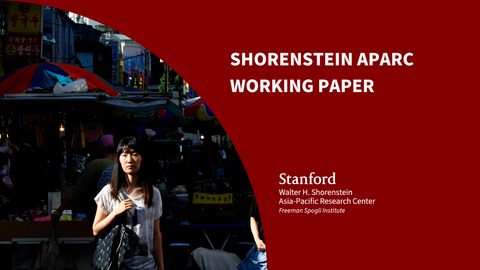
Woman shopping in an outdoor market in Seoul, Korea


South Korea’s two-decade effort to establish local human rights protection systems through municipal ordinances shows significant progress: all 17 metropolitan governments and 54 percent of basic local governments have enacted human rights ordinances by 2024. Yet implementation remains uneven, with stark urban-rural and regional disparities.

Three factors impede development: absence of national human rights legislation, narrow and conflicting understandings of human rights (particularly regarding sexual minorities), and weak social consensus. Political orientation heavily influences outcomes, with conservative forces often opposing ordinances while progressive governments advance them. Several cases demonstrate how ordinances were abolished or weakened following electoral shifts.

The author, seeing strengthening local democracy as crucial for human rights advancement, calls for measures including electing rights-conscious leaders, ensuring resident participation, establishing dedicated human rights institutions, and building social consensus around protection systems. Local human rights committees and specialized bureaus—mandated by many ordinances but poorly implemented—must function as genuine governance bodies rather than rubber-stamp mechanisms.

Local democracy and human rights protection must develop simultaneously in a mutually reinforcing relationship, with democratic processes enabling rights advancement and robust rights protections strengthening democratic institutions.

All Publications button
1
Publication Type
Working Papers
Publication Date
Subtitle

The Case of South Korea

Authors
Joong-Seop Kim
Authors
Gi-Wook Shin
Kerstin Norris
News Type
Commentary
Date
Paragraphs

This commentary first appeared in The Diplomat magazine.


In March 2025, one of the authors vividly observed hundreds of thousands of people filling downtown Seoul over President Yoon Suk-yeol’s impeachment. Reminiscent of the “candlelight protests” of 2017 but with greater intensity, these rallies began after the short-lived martial law declaration of last December, with some demanding Yoon’s immediate removal from office and others denouncing it as illegitimate. Even after the Constitutional Court’s unanimous decision to impeach him on April 4, rival protests continued through the June 3 snap elections.

Such rallies were hardly unprecedented in South Korea, given its rich history of civic engagement in politics. However, in the context of Yoon’s martial law declaration and subsequent impeachment, the protests illustrated a fragile democracy divided against itself. In fact, Yoon had justified his action as a necessary measure to remove “anti-state forces” in the face of the intensifying political fight with opposition forces, which controlled South Korea’s legislature throughout Yoon’s presidency.

Public opinion polls and election outcomes show how deeply divided the nation has been. A 2022 Pew survey found that 83 percent of South Koreans believed there were strong partisan conflicts, the highest among all 19 countries surveyed. Recent election results reflected such societal and political division. Yoon’s razor-thin 2022 victory over Lee Jae-myung and Lee’s narrow win in the 2025 snap election revealed a nation split down the middle.

In addition, mass protests, largely associated with progressives, have become common for conservatives too and spilled from plazas to online platforms. Politics has turned into “culture wars” and competing claims to be representative of “the people,” provoking moral charges and emotional responses. Polarization now cuts across gender and generational lines beyond political and ideological divisions of the past, standing alongside illiberalism and populism as a core threat to Korean democracy.

Continue reading via The Diplomat >

Sign up for APARC newsletters to receive our experts' insights >

Read More

Protesters demonstrate against the country's president as police stand guard on December 04, 2024 in Seoul, South Korea.
Commentary

Turmoil in South Korea After Brief Martial Law: Stanford’s Gi-Wook Shin Weighs In

As political chaos plays out in South Korea following President Yoon Suk Yeol's short-lived martial law attempt, Stanford sociologist Gi-Wook Shin, the director of APARC and its Korea Program, analyzes the fast-moving developments.
Turmoil in South Korea After Brief Martial Law: Stanford’s Gi-Wook Shin Weighs In
Anti-Yoon Suk Yeol protesters participate in a rally against impeached President Yoon Suk Yeol in Seoul, South Korea.
Q&As

Interview: Gi-Wook Shin on South Korea's Political and Institutional Crisis

The martial law episode — and all that followed — “reflects a broader global pattern of democratic erosion but also showcases Korea’s unique strengths," Stanford sociologist Gi-Wook Shin says in an interview with The Diplomat magazine.
Interview: Gi-Wook Shin on South Korea's Political and Institutional Crisis
Hero Image
Lawmakers and members of the South Korea's main opposition Democratic Party (DP) demonstrate against the country's president at the National Assembly on December 04, 2024 in Seoul, South Korea.
All News button
1
Subtitle

The country’s political polarization has metastasized. What can be done?

Date Label
-
Portrait of Byong-jin Ahn

South Korea, long seen as a rare success in adopting the American presidential system, recently weathered a martial law crisis and secured a democratic government. President Lee Jae-myung now must reinforce liberal constitutional democracy and navigate growing global uncertainty. Many abroad still misunderstand how his administration will address these challenges. Professor Byong-jin Ahn, a former member of Lee’s National Policy Planning Committee, offers an insider view on the administration’s priorities, Lee’s leadership style, and the role of technology alliances in the geopolitics of South Korea, the United States, and Northeast Asia.

Speaker:

headshot of Byoung-jin Ahn

Byong-jin Ahn is a 2025-26 Visiting Scholar at APARC and he is a professor at Kyung Hee University's Global Academy for Future Civilizations. He has recently served at the State Affairs Planning Committee, Lee's presidential transition team. He has appeared on major Korean media and newspapers on the U.S. presidential election specials and has been often quoted by the New York Times. His recent publications include a chapter, “Why Is Korean Democracy Majoritarian but Not Liberal?“ in the edited volume South Korea's Democracy In Crisis: The Threats of Illiberalism, Populism, and Polarization (Gi-Wook Shin and Ho-Ki Kim, Stanford University Press, 2022). He earned his Ph.D. in American politics from the New School for Social Research.


Directions and Parking > 

Philippines Conference Room (C330)
Encina Hall, 3rd Floor
616 Jane Stanford Way, Stanford, CA 94305

Byong-jin Ahn, Visiting Scholar, Shorenstein Asia-Pacific Research Center, Stanford University; Professor, Kyung Hee University
Seminars
Date Label
Paragraphs

Lee Jae-myung of the Democratic Party won South Korea’s June 3 presidential election with 49.4 percent of the vote. The outcome was widely anticipated, given a political climate that strongly favored the liberal camp in the aftermath of the impeachment of President Yoon Suk Yeol. Still, Lee’s victory was not as overwhelming as some might have expected. With 99.6 percent of the votes tallied, the two main conservative candidates — Kim Moon-soo and Lee Jun-seok — together garnered a slightly higher combined vote share of 49.5 percent (41.2 percent and 8.3 percent, respectively) Why, then, did Korean voters ultimately choose Lee Jae-myung but with a measured endorsement rather than a landslide victory, and what does it mean for Korean democracy?

This election followed a period of intense political turmoil that began with President Yoon’s declaration of martial law on December 3 of last year and his impeachment just two months ago. While the election results were expected, they still raise important questions about the future of Korean democracy. Do the last six months reflect the resilience of democratic institutions — capable of self-correction through legal and electoral processes — or, have these events exposed the fragility of Korea’s democracy, with its deep political divisions and public distrust in leadership?

In many ways, the answer is both. Civic engagement and a peaceful transfer of power during such a challenging episode suggest a strong democratic foundation. At the same time, the election outcome still shows a highly polarized electorate, underscoring the hurdles that lie ahead for Korean society and politics.

Continue reading the complete piece > 

All Publications button
1
Publication Type
Commentary
Publication Date
Subtitle

Despite his election victory, Lee faces a challenging road ahead, both personally and politically. It remains to be seen whether Lee’s administration can rise above partisan politics and rebuild public trust through meaningful reforms.

Journal Publisher
Journal of Democracy
Authors
Gi-Wook Shin
Paragraphs
Image
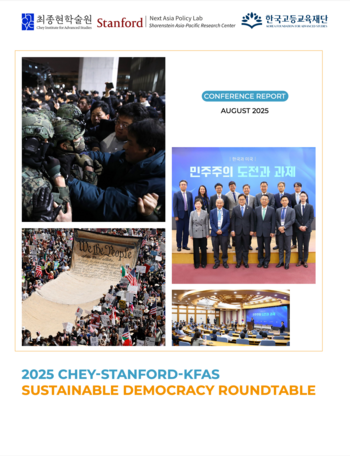
Report cover showing democracy demonstrations in South Korea

In partnership with the the Chey Institute and the Korea Foundation for Advanced Studies (KFAS), the Shorenstein Asia-Pacific Research Center (APARC) and the Stanford Next Asia Policy Lab (SNAPL) at Stanford University presented the third installment of the “Sustainable Democracy Roundtable” series in Seoul, South Korea, where experts diagnosed the current state of democracy, its threats, and possible prescriptions for democratic prosperity. The goal of the roundtable is to create a necessary platform and opportunity for scholars of various disciplines and ranks to identify core issues and propose unique solutions to globally pertinent policy issues. This year's roundtable went a step further by holding its public sessions at the National Assembly, where legislators joined scholars and civic leaders in the search for solutions to the democratic crisis.

The roundtable series is part of SNAPL's Democratic Crisis and Reform research track.

The roundtable was made possible thanks to the generous support and partnership with the Chey Institute and the  Korea Foundation for Advanced Studies (KFAS).

This report summarizes the discussions held at the roundtable using a modified version of the Chatham House Rule, only identifying speakers by their country of origin.


All Publications button
1
Publication Type
Reports
Publication Date
Authors
1
Visiting Scholar at APARC, Fall 2025
byongjin_ahn.jpg Ph.D.

Byongjin Ahn joined the Walter H. Shorenstein Asia-Pacific Research Center (APARC) as a visiting scholar for the 2025 fall quarter. He recently served at the State Affairs Planning Committee (equivalent to the transition team as President Lee had to assume his post immediately after his election in June).

He is currently a professor at Kyung Hee University's Global Academy for Future Civilizations. He has served as the Rector of the Global Academy for the Future of Civilizations at Kyung Hee University, Vice President of Kyung Hee Cyber University, Assistant Professor of International Relations at Changwon National University, and Lecturer at the City University of New York. Born in Daegu (1967), he earned a B.A. in sociology from Sogang University and an M.A. in political science from Seoul National University. He earned his Ph.D. in American politics from the New School for Social Research, founded by John Dewey. For his dissertation, he was awarded the Hannah Arendt Award.

His main specialty is the U.S. presidency and Korean politics, and he has appeared on numerous television programs and newspapers, including a panel on the U.S. presidential election specials on MBC and SBS and an interview with the New York Times. He has been a regular columnist for the JoongAng Ilbo, Kyunghyang Shinmun, and Hankyoreh, and a guest commentator for KBS. He is a co-author of South Korea's Democracy In Crisis: The Threats of Illiberalism, Populism, and Polarization (Gi-Wook Shin and Ho-Ki Kim Eds, Walter H. Shorenstein Asia-Pacific Research Center, 2022) and many other books and articles. 

Date Label
Authors
Gi-Wook Shin
News Type
Commentary
Date
Paragraphs

This commentary was first published in the Journal of Democracy.


Lee Jae-myung of the Democratic Party won South Korea’s June 3 presidential election with 49.4 percent of the vote. The outcome was widely anticipated, given a political climate that strongly favored the liberal camp in the aftermath of the impeachment of President Yoon Suk Yeol. Still, Lee’s victory was not as overwhelming as some might have expected. With 99.6 percent of the votes tallied, the two main conservative candidates — Kim Moon-soo and Lee Jun-seok — together garnered a slightly higher combined vote share of 49.5 percent (41.2 percent and 8.3 percent, respectively) Why, then, did Korean voters ultimately choose Lee Jae-myung but with a measured endorsement rather than a landslide victory, and what does it mean for Korean democracy?

This election followed a period of intense political turmoil that began with President Yoon’s declaration of martial law on December 3 of last year and his impeachment just two months ago. While the election results were expected, they still raise important questions about the future of Korean democracy. Do the last six months reflect the resilience of democratic institutions — capable of self-correction through legal and electoral processes — or, have these events exposed the fragility of Korea’s democracy, with its deep political divisions and public distrust in leadership?

In many ways, the answer is both. Civic engagement and a peaceful transfer of power during such a challenging episode suggest a strong democratic foundation. At the same time, the election outcome still shows a highly polarized electorate, underscoring the hurdles that lie ahead for Korean society and politics.

Sign up for APARC newsletters to receive our scholars' commentary and analysis >


2017 vs. 2025


This was the second time in a decade that Korea held a snap presidential election. The first occurred eight years ago, following the impeachment of President Park Geun-hye. In this regard, Koreans have grown familiar with the impeachment process and snap elections. In both instances, the impeached presidents — Park in 2017 and Yoon in 2025 — were conservatives, and both elections resulted in liberal victories, with Moon Jae-in (2017–22) and now Lee Jae-myung taking office.

The 2025 election, however, differs significantly from the 2017 contest, with important implications for Korean democracy.

First, the impeachment process this time was far more divisive. In 2017, liberal groups mobilized millions in mass protests demanding Park’s removal, and conservatives largely accepted the outcome without major resistance. In contrast, Yoon’s impeachment was extremely contentious, sparking counterprotests from conservative groups. Waving “Stop the Steal” signs, far-right movements gained strength, determined not to see a repeat of 2017, which not only led to defeat at the polls but also a brutal campaign of political retribution by the ensuing liberal government.

Second, this polarization profoundly influenced voting behavior. Even conservatives who criticized Yoon’s declaration of martial law ultimately rallied behind Kim, a candidate less critical of the controversial order. The left-right political divide had deepened during the Moon and Yoon administrations. In 2017, a centrist candidate like Ahn Cheol-soo could attract more than 20 percent of the vote. In 2025, however, such space for a centrist voice has all but vanished. The election became a fierce contest between liberals (Lee Jae-myung) and conservatives (Kim Moon-soo and Lee Jun-seok), reflecting the polarized electorate.

Third, the tense political atmosphere left little room for substantive policy debate. While important topics including artificial intelligence, energy, climate change, social reconciliation, and foreign policy were included in their campaign pledges, discussions around these issues remained superficial at best. Instead, the campaign was dominated by harsh personal attacks and negative rhetoric from all sides.

If Lee uses his consolidated executive and congressional power to settle political scores, the result will only deepen social divisions and facilitate democratic backsliding.
Gi-Wook Shin

Reformer or Strongman?


Given that this was a snap election, the new administration will assume office immediately on June 4 without the usual transition period. What can we expect from the new leader, particularly regarding Korea’s democratic future?

Lee’s appeal lies in his image as a pragmatic reformer, someone who speaks to economic struggles and social inequalities facing ordinary Koreans. His personal story itself resonates deeply: Born into poverty, he overcame significant hardship to become a human-rights lawyer, then rose through the political ranks as mayor of Seongnam, a city near Seoul, and later as governor of Gyeonggi Province, the most populous province in the country, before taking the Democratic Party leadership. This dramatic personal and political ascent has inspired many Korean citizens.

Yet Lee’s candidacy has not been without controversy. He remains under multiple criminal investigations and court trials related to charges of bribery, corruption, and breaking election laws, and his often-combative style has created the perception of a deeply polarizing figure. Many conservatives view Lee as a radical populist who shows insufficient regard for democratic norms and institutional checks.

Given the mixed perception and expectation surrounding President Lee, what kind of leadership can we expect from his administration? Two possible paths seem to lie ahead for the new leader still relatively unknown to the outside world: one resembling the approach of former president Moon Jae-in, and the other inspired by the legacy of Korea’s first liberal president, Kim Dae-jung (1998–2003). The direction Lee chooses will have major implications for the future of Korean democracy.

Lee may follow in the footsteps of Moon Jae-in, leading a campaign of political retribution that pushes Korea toward illiberal democracy. Lee has personal reasons for political resentment: He was aggressively investigated by the Yoon administration and still faces ongoing legal challenges. He has spoken publicly about the need to root out what he calls “forces of insurrection,” raising concerns that he might pursue a hardline campaign similar to Moon’s controversial efforts to “eradicate deep-rooted evils.”

Lee’s party has also pledged to advance judicial reforms that could weaken the Supreme Court, which on May 1 overturned an earlier acquittal by the Seoul High Court of Lee’s criminal charge of election-law violation. With his party now holding a parliamentary majority, traditional checks and balances could be on the line. If Lee uses his consolidated executive and congressional power to settle political scores, the result will only deepen social divisions and facilitate democratic backsliding. In such a scenario, he risks being viewed in Korea and elsewhere as yet another strongman leader in a world where such figures have been on the rise.

Alternatively, Lee could chart a course akin to that of former president Kim Dae-jung, who is widely considered a respected statesman and reformer. Kim overcame intense personal hardship, including a death sentence under a military regime, and yet chose reconciliation over revenge when he took power. He formed a coalition with conservative leader Kim Jong-pil and guided the country through the Asian financial crisis with a focus on national unity and pragmatic reform. Unlike Moon, who turned over power to the conservatives after five years, Kim effectively enabled a liberal succession.

Lee, often viewed as less ideological and more pragmatic than Moon, could take a similar path — one centered on cooperation, healing, and practical solutions. This possibility appears plausible given that his key advisors on both domestic and foreign affairs are not cut from the same cloth as Moon’s inner circle. By emulating Kim’s legacy, Lee could rise above political divides and earn broad national and international respect.

Ultimately, this election has been both a stress test and a reaffirmation of Korea’s democratic resilience. It highlights the urgent need for democratic renewal, while demonstrating that, even in times of deep political division, democratic institutions and norms can endure.
Gi-Wook Shin

What Lies Ahead?


The political drama of the last six months ended with this election, but its impact on Korea’s democracy will be enduring. On one hand, the peaceful resolution of a snap election, especially following the highly contentious impeachment process, demonstrates the strength and resilience of Korean democratic institutions. Voters remained highly engaged (turnout was 79.4 percent, the highest since 1997), and the electoral process held firm under pressure.

On the other hand, the deep partisan divides expose fissures in Korea’s democratic fabric. Mistrust in political elites, a divided society, and a highly polarized media environment often dominated by sensationalism continue to threaten constructive democratic dialogue. Moreover, the rise of populist rhetoric on both the left and right reflects an electorate increasingly driven by emotional appeals or identity politics rather than substantive policy debate or national vision. Without a concerted effort by both liberals and conservatives toward reconciliation, political polarization is likely to deepen. Bridging that divide will be one of the most critical and difficult tasks for Korean democracy.

Despite his election victory, Lee faces a challenging road ahead, both personally and politically. Since the Supreme Court overturned Lee’s acquittal of violating election law, the case is set to go back to the Seoul High Court for retrial on June 18. While the final ruling is likely to be delayed until after his term ends, the case may continue to cast a shadow over his integrity and credibility as the country’s top leader.

Lee also has the daunting task of delivering the institutional reforms promised during his campaign. In particular, he needs to follow up on his pledge to replace the current single five-year presidential term with a four-year term allowing for a subsequent reelection. This change could bring political stability, as presidents would have an incentive to perform well during their first term to secure a second one. Furthermore, a potential eight-year presidency would provide more time to implement long-term policies. Past presidents have made similar promises, but none have succeeded in realizing them. It remains to be seen whether Lee’s administration can rise above partisan politics and rebuild public trust through meaningful reforms.

Ultimately, this election has been both a stress test and a reaffirmation of Korea’s democratic resilience. It highlights the urgent need for democratic renewal, while demonstrating that, even in times of deep political division, democratic institutions and norms can endure. This lesson holds global relevance, particularly for the United States, where democracy is also being put to the test.


Gi-Wook Shin's Election Analysis in the Media


Lee Jae-myung begins his road to power. Can he fulfill his promises amid numerous challenges?
Caixin Media, June 6 (Chinese, subscription) quoted)

He survived a knife attack, stormed Parliament, and campaigned in a bulletproof vest. Now he's going to heal a country.
Politiken, June 4 (Danish, subscription) (quoted)

Lee Poised for Decisive Win in South Korea's Snap Election
AFP, June 3 (quoted)

New South Korean President Lee Takes Power After Resounding Election Win
AFP, June 3 (quoted)

The Challenges Facing South Korea's New Leader Lee
AFP, June 3 (quoted) 

Read More

Protesters opposed to impeached South Korean president Yoon Suk Yeol gather near the Constitutional Court on April 04, 2025, in Seoul, South Korea.
Q&As

Interview: Stanford Sociologist Gi-Wook Shin Analyzes South Korea’s Impeachment Crisis and the Dangers of Political Polarization

In an interview with the Chinese newspaper The Paper, Gi-Wook Shin, the director of APARC and the Korea Program, discusses the risks posed by South Korea’s division and polarization following President Yoon’s impeachment, the global trend of democratic decline, and actionable reforms to advance and secure South Korea’s democratic future.
Interview: Stanford Sociologist Gi-Wook Shin Analyzes South Korea’s Impeachment Crisis and the Dangers of Political Polarization
A man standing outside a building inspecting damage to a broken window.
Blogs

Korea’s Bumpy Road Toward Democracy

The historical and sociopolitical contexts of President Yoon’s declaration of martial law and its aftermath
Korea’s Bumpy Road Toward Democracy
Headshot of Gi-Wook Shin
News

Marking Twenty Years of Leadership at APARC

As he prepares to step down as APARC director, Professor Gi-Wook Shin reflects on two transformative decades at the center and the road ahead.
Marking Twenty Years of Leadership at APARC
Hero Image
Lee Jae-myung, the presidential candidate of the Democratic Party, and his wife Kim Hea-Kyung celebrate in front of the National Assembly on June 4, 2025 in Seoul, South Korea.
Lee Jae-myung, the presidential candidate of the Democratic Party, and his wife Kim Hea-Kyung celebrate in front of the National Assembly on June 4, 2025, in Seoul, South Korea.
Woohae Cho/ Getty Images
All News button
1
Subtitle

South Koreans have elected Lee Jae-myung president. Will he be a pragmatic democratic reformer? Or will he continue the polarizing political warfare of recent South Korean leaders?

Date Label
Authors
News Type
Q&As
Date
Paragraphs

This interview first appeared in The Paper on April 4, 2025. The following English version was generated using machine translation and subsequently edited for accuracy and clarity.


It has been 122 days since South Korean President Yoon Suk Yeol issued an "emergency martial law" order on December 3, 2024. On the morning of April 4, the Constitutional Court of Korea will issue a ruling on Yoon’s impeachment case. From the National Assembly’s motion to impeach to 11 court hearings and now the final verdict, 111 days have passed—far more than for former Presidents Roh Moo-hyun and Park Geun-hye. Over these four months, the divide between the ruling and opposition parties — and within Korean society — has become increasingly apparent. Whether the Constitutional Court can safeguard the Constitution and public trust has become a major focus of public opinion in South Korea.

"I’ve long believed in the resilience of South Korean democracy, but over the past two or three months, I’ve started to worry. In the face of this current political stalemate, I wonder whether Koreans can still accept decisions that contradict their positions," said Gi-Wook Shin, Professor of Sociology at Stanford University, founding director of the Korea Program, and Director of the Walter H. Shorenstein Asia-Pacific Research Center, in an interview with The Paper. He noted that there are no signs South Korea will escape its current political polarization anytime soon — and that the situation may worsen.

Shin entered Yonsei University’s Sociology Department in the late 1970s. In the early 2000s, he founded the Korea Program at Stanford, focusing on social movements and nationalism. In 2024, he published Korea’s Democracy in Crisis: The Threats of Liberalism, Populism, and Polarization, a book whose concerns — resurgent populism and societal polarization — are now vividly reflected in real life.

On December 3, 2024, Yoon declared a state of emergency and described his political opponents as "anti-state forces." The language he used in his televised emergency address was directly reminiscent of the Cold War era. Meanwhile, during Yoon’s administration, opposition parties submitted a record 29 motions for impeachment. These episodes highlight deep rifts in Korean politics, intensifying the fierce struggle between the left and right across all levels of society.

The roots of South Korea’s political divide trace back to the post-WWII era. Under global pressures, political elites on the Korean peninsula quickly split into left-wing, right-wing, and various centrist groups, each hoping to build the country according to their ideals. After the United States and Soviet Union occupied different parts of the peninsula, a sharp ideological confrontation emerged, and the left and right failed to unite to establish a single nation.

During the military rule in South Korea, U.S.-backed authoritarian strongmen governed the country, laying the groundwork for today’s conservative political parties. Meanwhile, leftist forces were strengthened by decades of street protests. Since democratization in 1987, South Korean politics have swung between the left and the right. Under President Yoon, this shift toward the right has become even more pronounced.

Amid the growing hostility between conservatives and progressives, Yoon’s martial law declaration and subsequent impeachment proceedings have amplified South Korea’s political polarization and left-right conflict. Yoon’s supporters have launched massive demonstrations. Conservative voices have grown louder, with many chanting U.S.-style slogans like “Stop the Steal” in homage to Trump’s MAGA movement. Shin warns that among Asian countries, South Korea may be the only one to experience a phenomenon akin to “Trumpism.” A recent survey by Korea’s Center for Conflict Resolution found that most South Koreans see ideological division as the country’s most pressing social issue.

Today’s political confrontation in South Korea is filled with resentment and hostility. That’s why compromise is so difficult. The two sides no longer see each other as legitimate political rivals but as enemies to be defeated at all costs.
Gi-Wook Shin

Conservative Voices Grow Louder, More Extreme


The Paper: From your observations, what changes has this political storm — from emergency martial law to the president’s impeachment — brought to South Korean society?

Gi-Wook Shin: Regarding presidential impeachment, Roh Moo-hyun’s case in 2004 was dismissed by the Constitutional Court, and Park Geun-hye was removed from office in 2017. Both previous cases strictly followed legal procedures with clear rules. But this time, the situation is far more chaotic, with fiercer partisan conflict. In a sense, we’re witnessing a threat to the rule of law.

On the other hand, mass mobilization by both the left and the right is very active, especially the anti-impeachment forces, whose scale and influence are significant. This shows that political polarization has deepened, and social division has worsened — developments that deeply concern me.

The Paper: In this wave of political turmoil, what is the core conflict between conservatives and progressives?

Shin: When martial law was declared, the right tried to assert control over state power and justified their actions with claims that pro-North Korean forces needed to be purged from the country. Their stance clearly supports the South Korea-U.S. alliance. In their protests, you’ll often see both Korean and American flags, as well as images of Trump and Yoon Suk-yeol side by side.

The left, by contrast, believes that this emergency declaration is essentially destroying the democracy that South Koreans fought so hard to achieve. They see the right not just as opponents, but as anti-state and anti-people forces.

Today’s political confrontation in South Korea is filled with resentment and hostility. It has become a kind of “identity politics.” That’s why compromise is so difficult. The two sides no longer see each other as legitimate political rivals, but as “evil forces” or enemies to be defeated at all costs.

The Paper: It’s been over three months since the martial law controversy began. As time passes, conservative voices have grown louder, the ruling People Power Party's approval ratings have rebounded, and anti-impeachment rallies are massive. Are we seeing signs of an expanding conservative base?

Shin: Large-scale protests aren’t new in South Korea. In the past, they were usually led by liberal or progressive groups. In recent years, however, right-wing and conservative forces have increasingly mobilized for protests. This is a new trend. You could already see this during the 2022 presidential election: it was extremely close, with Yoon and Lee Jae-myung separated by less than 1 percent of the vote. Conservatives realized the importance of mobilizing public support to counterbalance the left.

Indeed, conservative voices have grown louder and more extreme. We’re even seeing cases of storming courts and self-immolation. But that doesn’t necessarily mean their numbers are increasing. Overall, South Korea’s population is roughly divided into 30 percent liberals, 30 percent conservatives, and about 40 percent swing voters. Sometimes conservatives use “bluffing” to create the impression of overwhelming influence and suppress progressive mobilization.

The Paper: The far right is now active on the political frontlines, loudly supporting the conservative camp. Some far-right individuals even stormed the court. Right-wing YouTubers have become among Yoon’s most fervent defenders. In this context, will the People Power Party continue shifting further right, or even toward the far right?

Shin: What’s visible now is that the ruling People Power Party has some connection to the far-right forces in the current street protests. Especially in the wake of the martial law declaration and impeachment, the far right has taken the lead in organizing massive demonstrations, mobilizing hundreds of thousands every weekend.

There is latent cooperation between the ruling party and the far right. But now that the impeachment has triggered an early presidential election, the People Power Party must also appeal to a broader base, which means distancing itself from the far right — creating a dilemma.

If the People Power Party continues working with the far right, it may retain its base and ensure right-wing support. But elections are won by swing voters. Distancing from the far right helps avoid being labeled “extreme” and attracts moderates.

Given that the election will happen within 60 days of the impeachment, the ruling party has little time to adjust its campaign strategy. They must quickly decide how to handle their relationship with far-right street forces: should they continue cooperating or distance themselves? This will be a core political challenge in the coming weeks.

South Korea’s current democratic crisis is part of a global trend. [...But ] among Asian countries, it may be the only one to experience something like “Trumpism.”
Gi-Wook Shin

South Korea’s Democratic Crisis Reflects a Global Trend


The Paper: At conservative protests, many people carry signs with slogans like “Stop the Steal,” borrowed from Trump supporters. Trump had the “Make America Great Again” movement. Yoon has the Taegeukgi Budae movement (a far-right group of older conservatives, many of them fundamentalist Christians who strongly support Yoon). How do you see Trump’s influence on Korean politics?

Shin: It’s interesting. Among Asian countries, South Korea may be the only one to experience something like “Trumpism.” Two factors are worth noting.

First, there are organizational similarities between the Korean and American contexts. Yoon and Trump supporters share common traits, especially religious ones. That’s not the case in other Asian countries. For example, the Philippines is Catholic, others are predominantly Muslim or Buddhist. South Korea is the only Asian country where fundamentalist Christians have strong political influence. (Editor’s note: According to Yonhap, Korea’s Yoido Full Gospel Church is currently the largest Christian church in the world.) There seems to be a connection or sense of identification between American evangelicals and Korean Christian fundamentalists.

Second, ideologically, Korea’s right resembles America’s right. Their fondness for slogans like “Stop the Steal” reflects their belief in election fraud conspiracies. YouTube’s influence in Korea is possibly stronger than in most of the world, especially among the far right. It has become a vital tool for mobilization and organizing large-scale protests.

The Paper: South Korea’s democratization was closely tied to the U.S. export of democracy. After the Korean War, with U.S. support, South Korea adopted a democratic constitution and a relatively modern political framework. How has foreign influence shaped Korean democracy? Is it connected to the current democratic crisis?

Shin: U.S. influence on Korean democracy is complex. Until the 1980s, the United States supported South Korea’s military dictators like Park Chung-hee and Chun Doo-hwan. Only after 1987 did the United States back democratic development. But ultimately, it was the Korean people who fought for democracy. That’s why so many opposed the martial law declaration on December 3. They don’t want to give up hard-won freedoms. Many made great sacrifices for democracy.

South Korea has been democratic for over 40 years. What we see today may be tense or even extreme, but many places worldwide are also experiencing democratic backsliding. It’s unclear whether the United States is doing any better, especially in the Trump era. Many European countries — France, Italy, Hungary, the Netherlands, Spain — are facing similar crises.

South Korea’s current democratic crisis is part of a global trend. It’s just that the martial law announcement drew special attention. But populism, polarization, and identity politics are global issues.

The Paper: After democratization, South Korea again saw emergency martial law, fierce clashes between the president and law enforcement, and general chaos. Yet parliament quickly revoked the martial law order, the impeachment process followed legal procedure, and there were no bloodshed or full societal collapse. What has maintained this relative order?

Shin: South Korea has experienced many legal and political crises before. Also, civic engagement is very high: many LGBTQ+ and minority groups are highly politically active, perhaps even more than in the United States. That’s part of why political clashes are so intense, but it also shows a deep sense of civic participation.

Korea is a relatively well-governed country, with a strong bureaucratic system. I used to believe strongly in the resilience of Korean democracy, but over the past two or three months, I’ve started to worry. Can people still accept outcomes that contradict their positions?

In 2017, the Constitutional Court upheld Park Geun-hye’s impeachment, and most Koreans accepted it and moved on. But this time, it’s unclear whether Yoon’s supporters will accept a guilty verdict — they’re already challenging the court’s legitimacy. On the other hand, if the impeachment fails, opponents may also refuse to accept the result.

The political turbulence may persist for months, or even years.

There are no signs that Korea will overcome its political confrontation and polarization anytime soon. The divide may worsen. In the long term, I call for political reform. [...] What truly worries me is that in the next year or two, social division may grow even worse.
Gi-Wook Shin

How to Heal a Divided Society


The Paper: Beyond left-right ideology, what other messages are South Korean protesters trying to express? Also, Korean pop culture has entered these events: people are playing K-pop music and waving glowsticks. How do you see this unique cultural phenomenon?

Shin: Today, there are many legal disputes and procedural questions between the Constitutional Court, regular courts, the Corruption Investigation Office, prosecutors, and police. Sometimes the legal process is inconsistent or fragmented, which confuses the public and weakens faith in the legal system.

But Koreans have a long history of protest culture. They know how to demonstrate in an orderly way. Protests aren’t always serious or violent, sometimes they feel festive or recreational, with music, dancing, and food stalls. Some elderly people even travel from rural areas to Seoul for a day just to enjoy the atmosphere and social gathering.

Also, Korea is a highly centralized society — everything is concentrated in Seoul, and issues can quickly become national news.

The Paper: This political crisis has deepened Korea’s ideological rifts. A recent survey shows that ideological conflict is now seen as the most urgent social problem, even ahead of gender or wealth inequality. What can be done to prevent further division or begin healing?

Shin: There are no signs that Korea will overcome its political confrontation and polarization anytime soon. The divide may worsen. In the long term, I call for political reform.

Korea should adopt a parliamentary system. The current presidential system is “winner-takes-all,” so even if someone wins by less than 1 percent of the vote, they gain total control. A parliamentary system might encourage more cooperation and compromise. But I don’t think Korea currently has the political atmosphere to make that shift.

The electoral system also needs reform. Right now, each district elects just one representative — sometimes by a single vote — giving them total power.

Civic education is another area for reform. Koreans need to learn how to share and compromise. In Korean, “compromise” often carries a negative connotation. But in a democracy, compromise is essential. No one can get everything they want.

These are long-term reforms and there’s a long road ahead. What truly worries me is that in the next year or two, social division may grow even worse.

Read More

Anti-Yoon Suk Yeol protesters participate in a rally against impeached President Yoon Suk Yeol in Seoul, South Korea.
Q&As

Interview: Gi-Wook Shin on South Korea's Political and Institutional Crisis

The martial law episode — and all that followed — “reflects a broader global pattern of democratic erosion but also showcases Korea’s unique strengths," Stanford sociologist Gi-Wook Shin says in an interview with The Diplomat magazine.
Interview: Gi-Wook Shin on South Korea's Political and Institutional Crisis
A man standing outside a building inspecting damage to a broken window.
Blogs

Korea’s Bumpy Road Toward Democracy

The historical and sociopolitical contexts of President Yoon’s declaration of martial law and its aftermath
Korea’s Bumpy Road Toward Democracy
Hero Image
Protesters opposed to impeached South Korean president Yoon Suk Yeol gather near the Constitutional Court on April 04, 2025, in Seoul, South Korea.
Chung Sung-Jun/Getty Images
All News button
1
Subtitle

In an interview with the Chinese newspaper The Paper, Gi-Wook Shin, the director of APARC and the Korea Program, discusses the risks posed by South Korea’s division and polarization following President Yoon’s impeachment, the global trend of democratic decline, and actionable reforms to advance and secure South Korea’s democratic future.

Date Label
-
Can the Impeachment Crisis Lead to Political Reform in South Korea?

The abrupt declaration of martial law by South Korean President Yoon Suk Yeol triggered a political crisis marked by immediate and decisive legislative condemnation, public protests for and against the president, and general political instability due to the vacuum in leadership. South Korea's Constitutional Court has upheld Yoon's impeachment and removed him from office, and it was just announced that the country will hold a presidential election on June 3. Yet public opinion remains highly polarized, reflecting a deeply divided nation.

In this talk, Kim Jin-Pyo, former Speaker of the National Assembly of the Republic of Korea, takes stock of the current moment while providing clear and tangible suggestions for constitutional reforms designed to strengthen the foundations of South Korea's democracy.

portrait of Speaker Jin-Pyo Kim

Speaker Kim Jin-Pyo served 5 terms as a Member of National Assembly for two decades (2004-24). He previously served  as Deputy Prime Minister of Economy (2003-04) and Deputy Prime Minister of Education (2005-06), and had held various high-level government offices.

This talk event will be moderated by Gi-Wook Shin, William J. Perry Professor of Contemporary Korea and director of Shorenstein Asia-Pacific Research Center at Stanford University.

Directions and Parking > 

Gi-Wook Shin

Philippines Conference Room (C330)
Encina Hall, 3rd Floor
616 Jane Stanford Way, Stanford, CA 94305

Kim Jin-Pyo, former Speaker of the National Assembly of the Republic of Korea
Seminars
Date Label
Authors
News Type
Q&As
Date
Paragraphs

In the February 2025 issue of The Diplomat magazine, APARC and Korea Program Director Gi-Wook Shin, professor of sociology and the William J. Perry Professor of Contemporary Korea, discusses the political crisis in South Korea following President Yoon's ill-fated attempt to impose military rule and its implications for the country's future.

On January 26, 2025, the impeached and arrested Yoon was formally indicted on insurrection charges. Separately, the Constitutional Court has begun deliberations on whether to dismiss him as president or reinstate him. The national reaction to Yoon’s martial law declaration "underscores how South Koreans’ hard-won democracy is not taken for granted,” Shin, an expert on social movements and democracy in South Korea, says. "This episode highlights both the fragility and resilience of Korea’s young democracy."

In this interview with The Diplomat's Editor-in-Chief Shannon Tiezzi, Shin explains how sharp political polarization in Korea set the stage for the marital law episode of December 2024 and how the country can start bridging these gaps, how the prolonged political upheaval is impacting Korean economy and society, and what's ahead for the ruling People Power Party and the opposition Democratic Party.


How did South Korea’s history as a dictatorship – and past experiences of martial law – inform both Yoon’s decision to declare martial law and the public response?

South Korea’s painful history with dictatorship and martial law casts a long shadow over contemporary politics. I entered college in 1979, a year marked by the assassination of Park Chung Hee in late October and a period of intense political instability ensued under martial law. In fact, President Yoon Suk Yeol entered a college in the same year as me and it is hard to understand how he could forget these shared experiences and decided to declare martial law.

When Yoon declared martial law last December, it triggered an immediate and decisive public backlash, driven by a collective memory of decades of struggle against autocratic regimes. This reaction underscores how South Koreans’ hard-won democracy is not taken for granted. Civic groups, citizens, and lawmakers mobilized swiftly, reversing the martial law decision within six hours and passing the motion to impeach Yoon 10 days later. Despite recent backsliding, proactive civic engagement demonstrates that their experiences have informed strong commitment to safeguarding democratic principles.

Read the complete interview in The Diplomat magazine (subscription) >


Additional Media Commentary and Analysis

In recent weeks, Professor Shin has commented on and analyzed the evolving political situation in Korea via the following media outlets:

“For a United States that Remembers the Capitol Riots, Korea’s Turmoil Isn’t Someone Else’s Business”
Shindonga, January 8, 2025 (interview – Korean)

South Korea Needs to Move On from This Crisis
Bloomberg, January 8, 2025 (quoted)

It’s a Challenge for a Weakened Political Leadership in South Korea to Handle Trump Presidency
CNBC Squawk Box Asia, January 7, 2025 (interview)

South Koreans Adopt Trump's “Stop the Steal” Slogan for Impeached Yoon
AFP, January 6, 2025 (quoted)

South Korea: “The Crisis Risks Lasting Beyond the Next Presidential Election”
Les Echos, January 6, 2025 (interview)

South Korea Divided Over Yoon Standoff
BBC News - The Context, January 3,  2025 (interview)

Is South Korea a Beacon of Global Democracy?
The Korea Times, December 30, 2024 (author - Korean)

Read More

A man standing outside a building inspecting damage to a broken window.
Blogs

Korea’s Bumpy Road Toward Democracy

The historical and sociopolitical contexts of President Yoon’s declaration of martial law and its aftermath
Korea’s Bumpy Road Toward Democracy
Protesters demonstrate against the country's president as police stand guard on December 04, 2024 in Seoul, South Korea.
Commentary

Turmoil in South Korea After Brief Martial Law: Stanford’s Gi-Wook Shin Weighs In

As political chaos plays out in South Korea following President Yoon Suk Yeol's short-lived martial law attempt, Stanford sociologist Gi-Wook Shin, the director of APARC and its Korea Program, analyzes the fast-moving developments.
Turmoil in South Korea After Brief Martial Law: Stanford’s Gi-Wook Shin Weighs In
Gi-Wook Shin receiving the Korean American Achievement Award.
News

Gi-Wook Shin Honored with Korean American Achievement Award

The award recognizes Shin’s contributions to advancing Korean studies and strengthening U.S.-Korea relations through scholarship and bridge-building.
Gi-Wook Shin Honored with Korean American Achievement Award
Hero Image
Anti-Yoon Suk Yeol protesters participate in a rally against impeached President Yoon Suk Yeol in Seoul, South Korea.
Anti-Yoon Suk Yeol protesters participate in a rally against impeached President Yoon Suk Yeol on January 25, 2025, in Seoul, South Korea.
Chung Sung-Jun / Getty Images
All News button
1
Subtitle

The martial law episode — and all that followed — “reflects a broader global pattern of democratic erosion but also showcases Korea’s unique strengths," Stanford sociologist Gi-Wook Shin says in an interview with The Diplomat magazine.

Date Label
Subscribe to Democracy