
Democratic Crisis and Reform

Democratic Crisis and Reform
Our Books
The Adventure of Democracy
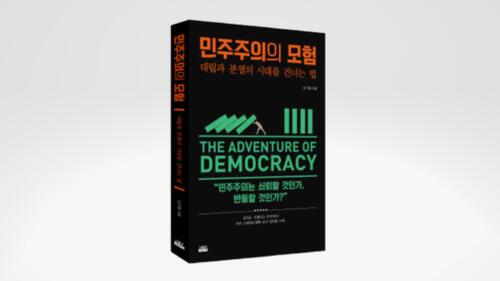
After a long fight, South Korea overcame an authoritarian government and achieved democracy. Nevertheless, maintaining democracy and its values today does not come without its difficulties. In The Adventure of Democracy ( 민주주의의 모험: 대립과 분열의 시대를 건너는 법), Professor Gi-Wook Shin examines major challenges of Korean democracy today, including the perils of polarization, populism, and illiberalism.
Based on a series of essays titled Shin’s Reflections on Korea and originally published in Shindonga, Korea’s oldest monthly magazine, this book also discusses why and how Korea can defend a liberal international order and embrace cultural diversity to spur innovation as well as promote tolerance and inclusiveness, and pursue global engagement to support sustainable development goals in a way that can make Korea a mature democracy.
South Korea's Democracy in Crisis

Barely thirty years after its emergence in 1987, democracy is in trouble in South Korea. In the volume South Korea's Democracy in Crisis: The Threats of Illiberalism, Populism, and Polarization (Shorenstein APARC, 2022), co-editors Professor Gi-Wook Shin and Professor Ho Ki Kim of Yonsei University assemble contributions from leading scholars who trace the sources of illiberalism in today’s Korea; examine how political polarization is plaguing its party system; discuss how civil society and the courts have become politicized; look at the roles of inequality, education, and social media in the country’s democratic decline; and consider how illiberalism has affected Korea’s foreign policy.
Related Events and Publications
Sustainable Democracy Roundtable

Liberal democracy is hard-earned but sometimes even harder to guard. The foundations of liberal democracy are being seriously challenged, leading to political decay and a decline in public trust in democratic systems and their values. With democratic backsliding threatening old and new democracies, Western democracies no longer serve as a guiding light.
Against this backdrop, the annual Sustainable Democracy Roundtable brings together scholars of diverse backgrounds to propose solutions to globally pertinent policy issues. In partnership with the Korea Foundation for Advanced Studies (KFAS), the Sustainable Democracy Roundtable offers a unique platform for scholars to present alternative solutions to global issues, social progress, and long-term development. Our goal is to spur research partnerships and produce publication deliverables with experts, scholars, and students from the United States and the Asia-Pacific region.
Explore the roundtable convenings and conference reports:
2025 KFAS-Stanford Sustainable Democracy Roundtable
Download the 2025 roundtable report >
2024 KFAS-Stanford Sustainable Democracy Roundtable
Download the 2024 roundtable report >
2023 KFAS-Stanford Sustainable Democracy Roundtable
Download the 2023 roundtable report >
In the media
2025 roundtable coverage by Asian media outlets:
Yonhap I >
Yonhap II >
The Fact via MSN >
2024 roundtable coverage:
Interview with Professors Gi-Wook Shin and Larry Diamond for Hankook Ilbo (in Korean) >