
SNAPL People

SNAPL People
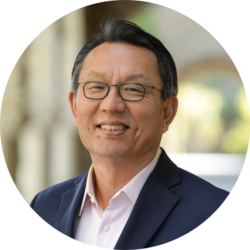
Gi-Wook Shin
Director and Principal Investigator
Gi-Wook Shin is the William J. Perry Professor of Contemporary Korea in Sociology; senior fellow at the Freeman Spogli Institute for International Studies; the director of the Walter H. Shorenstein Asia-Pacific Research Center since 2005; and the founding director of the Korea Program, all at Stanford University. As a historical-comparative and political sociologist, his research has concentrated on social movements, nationalism, development, democracy, and international relations. Profile >

Paul Y. Chang
Senior Fellow
Paul Y. Chang is the Tong Yang, Korea Foundation, and Korea Stanford Alumni Association Senior Fellow at Shorenstein APARC, Stanford University. A sociologist by training, Chang’s research on South Korean society has appeared in flagship disciplinary and area studies journals. He is the author of Protest Dialectics: State Repression and South Korea’s Democracy Movement, 1970-1979 (Stanford University Press) and co-editor of South Korean Social Movements: From Democracy to Civil Society (Routledge). His current work examines the diversification of family structures in South Korea. Profile >

Xinru Ma
Research Fellow
Xinru Ma’s research focuses on nationalism, great power politics, and East Asian security with a methodological focus on formal and computational methods. At SNAPL, Xinru leads the research group in collaborative projects that focus on U.S.-Asia relations. She also provides mentorship to student research assistants and research associates. Before joining SNAPL, Xinru was an assistant professor at the School of International Relations and Diplomacy at Beijing Foreign Studies University. Profile >

Minyoung An
Postdoctoral Fellow
Minyoung An recently obtained a doctorate in sociology from the University of Arizona. Her research lies at the intersection of gender, transnational migration, and knowledge production, combining statistical modeling, computational methods, and in-depth interviews.
Her dissertation analyzes gendered migration patterns in South Korea and among international doctoral students in the United States, revealing how gender inequality in countries of origin produces distinct selection effects and return migration dynamics. She also studies academic career trajectories and prestige hierarchies, exploring how gender and national origin affect integration into global academia.
At SNAPL, she will pursue two projects that extend this research agenda: one using computational analysis of social media data to examine gendered migration intent, and another investigating the academic trajectories and institutional reception of international scholars from East Asia. Through these projects, she aims to advance understanding of how transnational inequalities shape global mobility, opportunity, and inclusion. Profile >

Siyu Liang
Postdoctoral Fellow
Siyu Liang recently obtained her PhD in Political Science at the University of California, Los Angeles (UCLA). Her research lies at the intersection of political communication, public opinion, and computational social science, with a focus on how media and information environments shape political attitudes in both democratic and authoritarian contexts.
Her dissertation examines the role of media in shaping perceptions of China in contemporary U.S.–China relations. In particular, she studies foreign influencer propaganda and the downstream effects of U.S.–China competition on public opinion and intergroup relations. As a computational social scientist, she develops and applies natural language processing and machine learning methods to study political communication and international politics, with particular interests in stance detection, transfer learning, and soft-label modeling.
At the SNAPL, she will expand this research agenda by examining how digital media and geopolitical conflict shape public opinion and social exclusion, with a particular focus on U.S.–Asia relations. She will also pursue projects on nationalism and racism in East Asia. Together, these projects seek to advance a more global understanding of how international politics shapes social inclusion and group relations across the Asia-Pacific region. Profile >

Natalia Slavney
Research Associate
Natalia is a research associate with APARC. She earned a Master of Arts in International Relations from the Johns Hopkins University School of Advanced International Studies (SAIS), with concentrations in General International Relations and International Economics and a minor in Korea Studies. She also earned a Bachelor of Arts from the University of Wisconsin, Madison, majoring in Anthropology, Asian Studies, and International Studies, and studied abroad at Yonsei University in Seoul.
Natalia brings more than eight years of experience in international affairs, policy research, and program management, most recently serving as a Research Analyst and Assistant Editor with the Henry L. Stimson Center's 38 North and Korea Program. Profile >

Heather Ahn
Lab Manager
Heather Ahn is the program manager at the Korea Program at APARC. Before joining APARC, she worked in the computer industry, primarily in system software development. She also provided consulting for Korean high-tech firms in the U.S. She received a bachelor's degree in computer science from the University of Minnesota and in political science from Ewha University in Korea. Her graduate studies concentrated on information management systems. Profile >