FSI researchers work to understand continuity and change in societies as they confront their problems and opportunities. This includes the implications of migration and human trafficking. What happens to a society when young girls exit the sex trade? How do groups moving between locations impact societies, economies, self-identity and citizenship? What are the ethnic challenges faced by an increasingly diverse European Union? From a policy perspective, scholars also work to investigate the consequences of security-related measures for society and its values.
The Europe Center reflects much of FSI’s agenda of investigating societies, serving as a forum for experts to research the cultures, religions and people of Europe. The Center sponsors several seminars and lectures, as well as visiting scholars.
Societal research also addresses issues of demography and aging, such as the social and economic challenges of providing health care for an aging population. How do older adults make decisions, and what societal tools need to be in place to ensure the resulting decisions are well-informed? FSI regularly brings in international scholars to look at these issues. They discuss how adults care for their older parents in rural China as well as the economic aspects of aging populations in China and India.
To support Stanford students working in the area of contemporary Asia, the Shorenstein Asia-Pacific Research Center is offering up to ten research assistant internships for summer 2020 and up to three predoctoral fellowships for the 2020-21 academic year. The Center will review applications starting April 15 and expects to fill the positions by April 30, 2020.
Amid the fallout of the COVID-19 pandemic, students are facing summer internship cancelations and hiring freezes. They are left wondering about the long-term implications of the current crisis for their academic careers and their access to future jobs and valuable work experience.
At Shorenstein APARC, we want to do all we can to support Stanford students. That’s why we are announcing new internship and fellowship opportunities for current students working in the area of contemporary Asia: research assistant internships for the summer quarter of 2020 and predoctoral fellowships for the 2020-21 academic year.
The summer internships are all remote: research assistants will work as telecommuters. Regarding the predoctoral fellowships, we hope we can all have a normal 2020-21 academic year, in which case we expect the fellows to be in residence, but we will reassess the evolving COVID-19 situation closer to the appointment start dates and shift to flexible, online options as needed.
APARC will review applications for both opportunities on a rolling basis starting April 15, 2020. The Center will select up to ten research assistants and up to three predoctoral fellows by April 30, 2020.
Read on to learn more about these offerings and the application requirements, and follow the guidelines below to submit your candidacy.
Summer 2020 APARC Research Assistant Internships
Shorenstein APARC is seeking highly motivated and dedicated undergraduate and graduate students to join our team as paid research assistant interns for the summer quarter of 2020. Research assistants will work with assigned APARC faculty members on projects focused on contemporary Asia, studying varied issues related to the politics, economies, populations, security, foreign policies, and international relations of the countries of the Asia-Pacific region.
All positions will be for eight weeks starting late June or early July 2020. The hourly pay rate is $17 for undergraduate students, $25 for graduate students.
Research assistant positions are open to current Stanford students only. Undergraduate- and graduate-level students are eligible to apply.
Arrange for a letter of recommendation from a faculty to be sent directly to APARC. Please note: the faculty members should email their letters directly to Kristen Lee at kllee@stanford.edu.
We will consider only complete applications that include all the abovementioned supporting documents.
2020-21 Shorenstein APARC Predoctoral Fellowships
APARC is inviting applications from current Stanford students for the 2020-21 Shorenstein APARC Predoctoral Fellowship. The fellowship supports predoctoral students working within a broad range of topics related to contemporary Asia.
Up to three fellowships are available to Ph.D. candidates who have completed all fieldwork and are nearing the completion of their dissertation. The Center will give priority to candidates who are prepared to finish their degree by the end of the 2020-21 academic year.
Shorenstein APARC offers a stipend of $36,075 for the 2020-21 academic year, plus Stanford's Terminal Graduate Registration (TGR) fee for three quarters. We expect fellows to remain in residence at the Center throughout the year and to participate in Center activities.
A cover letter including a brief description of your dissertation (up to 5 double-spaced pages);
A copy of your transcripts. Transcripts should cover all graduate work and include evidence of recently-completed work.
Arrange for two (2) letters of recommendation from members of your dissertation committee to be sent directly to Shorenstein APARC. Please note: the faculty/advisors should email their letters directly to Kristen Lee at kllee@stanford.edu.
We will consider only complete applications that include all the abovementioned supporting documents.
There is a Korean expression that means “to become soaked by a drizzle without noticing.” This metaphor is a timely warning against the gradual decline of democratic norms. Though some of the changes underlying this global phenomenon are subtle, they are producing creeping, piecemeal erosions of democracy and pluralism. The signs of democratic backsliding are now emerging everywhere in South Korean society, and a failure to recognize and robustly counter their effects may create future costs that prove unbearable.
My new article, “Korean Democracy Is Sinking Under the Guise of the Rule of Law,” published in the April 2020 issue of the South Korean magazine Shindonga (New East Asia, the oldest monthly in Korea), examines how the Moon administration is sinking into a democratic recession and considers its actions as a case study with lessons for averting broader, global trends in democratic decline.
In all corners of the world, we witness freely elected leaders gradually dismantle democratic institutional safeguards, fuse political polarization with chauvinistic populism, and focus on narrow interpretations of the national interest just as China and Russia expand their scope of influence via “sharp power,” subversive means.
Image
South Korea is no exception to these currents. A politics of extreme confrontation and polarizing rhetoric of "us" and "them" are becoming the country’s new normal. The Moon administration’s aggressive assertion of a Manichean logic of good and evil that justifies their vitriolic attacks on perceived opposition is evidenced in its campaign of “eradicating deep-rooted evils” from Korean society and politics.
As my analysis shows, this crusading mindset has insinuated itself into more concrete actions by the Moon government, such as the calculated blurring of the separation of powers through political interference in the courts, deliberate changes to longstanding election laws that damage the spirit of democracy, and the blatant use of double standards and ideological loyalty in the execution of national policies. Similar patterns are taking hold in populist governments the world over, and – perhaps most disconcertingly – they transpire not through the strong-arming of a military coup or violent political disruption but through the legal procedures and policies meant to keep such canker in check.
To overcome its wave of democratic recession South Korea must cast away political polarization and demonstrate a firm resolve to act in accordance with democratic norms. The upcoming April 15 legislative election must sound a clear alarm against all actors who damage these core principles, regardless of their party affiliation and irrespective of their ideology.
Read the complete English translation of my article or the original Korean version here:
Korean readers may also be interested in my monthly column, “Korean Affairs Seen from the United States," which I write for the Korean paper Munhwa Ilbo. View it here.
Hero Image
Pro- and anti-Moon protests in Seocho-dong, South Korea – October 5, 2019. | Dong-a Ilbo, Shindonga
In this talk, Dr. Kenneth Dekleva presents a comparative leadership/political psychology analysis of North Korea's rulers since the country's founding — Kim Jong Un, Kim Jong-il, and Kim Il-sung. It is one of the first times that such a comparative analysis is offered in an academic setting. Dr. Dekleva will discuss how it can be of use to academic scholars, policymakers, and the national security community.
Image
Dr. Kenneth Dekleva is McKenzie Foundation Chair in Psychiatry I, Director of Psychiatry-Medicine Integration, and Associate Professor in the Dept. of Psychiatry, Peter J. O’Donnell Brain Institute, University of Texas Southwestern Medical School, Dallas, TX. Dr. Dekleva received his BA in History at UC Berkeley, and later undertook post-baccalaureate pre-medical studies at Columbia University, NY; he subsequently received his MD at UT Southwestern Medical School, Dallas, TX, and also completed post-graduate/residency training in psychiatry therein. After working in a variety of academic, clinical and forensic psychiatric settings in the DFW area, he served as a Regional Medical Officer/Psychiatrist and senior US diplomat during 2002-2016, largely overseas (Moscow; Vienna; London; New Delhi; Mexico City), except for a 2-year assignment as Director of Mental Health Services, US Dept. of State, Washington, DC during 2013-2015. He retired from the US Dept. of State in 2016 with the rank of Minister-Counselor. Dr. Dekleva has published and presented (at local, regional, national, and international conferences as well as US government settings) political psychology/leadership profiles of various world leaders since the mid-90s, including Radovan Karadzic, the late Slobodan Milosevic, the late Kim Jong Il, Vladimir Putin, Xi Jinping, and Kim Jong Un. His work has been published in the Journal of the American Academy of Psychiatryand the Law, The Hill, 38 North, The Diplomat, and the Cipher Brief; he has also given interviews to media outlets such as NPR, Background Briefing, Smerconish/Sirius XM, and CNN.
Kenneth B. Dekleva, MD
Associate Professor and Director of Psychiatry-Medicine Integration
Associate Professor, Dept. of Psychiatry, UTSW Peter J. O’Donnell Brain Institute
Around the world, democracy is in retreat. In its Freedom in the World 2019 report, the independent watchdog organization Freedom House records the 13th consecutive year of global declines in political rights and civil liberties. “More authoritarian powers are now banning opposition groups or jailing their leaders, dispensing with term limits, and tightening the screws on any independent media that remain,” and “even long-standing democracies have been shaken by populist political forces,” shows the annual study. Internet freedom, too, continues to decline globally amid the crisis of social media, unveils Freedom House’s newly released Freedom on the Net 2019 report. Social media platforms – once considered liberation technologies – have become a conduit for surveillance, disinformation, and electoral manipulation, and “are now tilting dangerously toward illiberalism, exposing citizens to an unprecedented crackdown on their fundamental freedoms.”
These troubling developments are also manifested throughout the Asia-Pacific, where continuous scaling back in U.S. engagement and leadership is raising doubts about American power and purpose in the region, thus empowering forces that undermine democratic norms and processes.
At Shorenstein APARC, we are committed to building a solid foundation of education, knowledge, and dialogue about the critical challenges facing Asian nations and U.S.-Asia relations. That’s why we are dedicating a major portion of our programming this fall quarter and throughout the entire year to elucidating the threats to rights and liberties in the Asia-Pacific region.
The Battle for Truth and Press Freedom in the Philippines
“This is an existential moment for global power structures, turned upside down by technology. When journalists globally are under attack, democracy is under attack.” With these words, the internationally-esteemed investigative journalist and press freedom champion Maria Ressa opened her keynote address upon receiving the 2019 Shorenstein Journalism Award.
As CEO and executive editor of Rappler, she has led the Philippine independent news platform in shining critical light on the Duterte administration's drug war and unprecedented number of killings in the country. President Duterte in turn has made no secret of his dislike for Ressa and Rappler, accusing the platform for carrying "fake news." Ressa has been arrested twice this year, accused of corporate tax evasion and of violating security laws, and slapped with charges of cyber libel for a report that was published before the libel law came into effect. Since Duterte’s election in summer 2016, the Philippine government has filed at least 11 cases and investigations against Ressa and Rappler. “And all because I’m a journalist,” she says.
Ressa detailed the devastating effects that disinformation has had on press freedom, democracy, and civic discourse in the Philippines. “Our dystopian present is your dystopian future if nothing significant is done,” she cautioned. She was joined on the 18th annual Journalism Award panel by Stanford’s Larry Diamond, senior fellow at FSI and the Hoover Institution, and Raju Narisetti, director of the Knight-Bagehot Fellowship in Economics and Business Journalism and professor of professional practice at Columbia Journalism School.
Watch Ressa’s keynote and the entire panel proceedings:
North Korea continues to be one of the world’s worst human rights violators, ranking at the bottom of Freedom House’s list of countries designated as Not Free with the worst aggregate scores for political rights and civil liberties. Although North Korea has experienced some degree of social and economic change in recent years, the Kim Jong Un regime continues to tightly control access to information, suppress all dissent, heavily surveil residents, and subject political prisoners to torture, forced labor, and other atrocities.
As momentum for U.S.-DPRK diplomatic negotiations has ebbed and flowed since summer 2018, all eyes have been on the questions surrounding the North Korean nuclear problem, while the human rights problem has received little attention. However, argues APARC’s Koret Fellow in Korean Studies Robert R. King, addressing the North Korean human rights problem is essential to moving the country on denuclearization and security issues.
Ambassador King, former special envoy for North Korean human rights issues at the Department of State, recently spoke at a seminar hosted by APARC’s Korea Program. Creating pressure on the North Korean government from within by its own people is the only way we’re going to make progress on the security front, he claimed. “If we can help generate greater interest on the part of the people in what is happening with their own government, we can create the kind of constraints that democracy imposes on its leadership […] and that is why we need to focus attention, as well as on negotiating with North Korea, on access to information and human rights.”
Listen to highlights from Ambassador King’s talk:
Hong Kong: City in Turmoil
In Hong Kong, millions of people have been protesting for months against rights violations and increasing interference by the Chinese government in local affairs. On October 1, while the People’s Republic of China celebrated its 70th anniversary with a massive National Day parade in Beijing, on the other side of the border, Hong Kong experienced one of its most violent and chaotic days.
With those contrasting images still fresh on everyone’s minds, APARC and the China Program, along with FSI And the Center for East Asian Studies, co-hosted an expert panel that explained the root causes of Hong Kong’s unremitting protests, examined the future of “one country, two systems,” and considered how the United States and the international community should best respond.
Former Chief Secretary for Administration of the Hong Kong Government (1993-2001), the Honorable Anson Chan, delivered a piercing keynote address, followed by a discussion featuring Harry Harding, Professor of Public Policy at the University of Virginia, David M. Lampton, APARC/FSI Oksenberg-Rohlen Fellow, and Professor Ming Sing of Hong Kong University of Science and Technology.
Since 1997, Chan asserted, Hong Kong SAR’s successive chief executives have progressively failed to reassure the Hong Kong people that they would do their utmost to uphold “one country, two systems” and to defend Hong Kong’s autonomy. Instead, she argued, they have increasingly come across as “mouthpieces of the central government, towing the Beijing line.” Chan also suggested that “some years back, Beijing began to both lose confidence in the judgment and competence of the Hong Kong administration and to fear that growing sense of people’s identity as ‘Hong Kongers’ rather than Chinese citizens could pose a threat to the long-term, successful integration of Hong Kong into the motherland.” She closed her speech urging the Beijing leadership “to act with greater confidence and to trust us more completely with stewardship of our own future by allowing us to elect our own leaders.”
China’s mass internment of Uighurs and other Muslims in “reeducation” camps and detention facilities and its deployment of high-tech surveillance and police tactics in Xinjiang Uyghur Autonomous Region have been interpreted as a superpower’s attempt to annihilate the distinct identities of minority groups. Approximately ten million Muslim minorities in the region are under tight control, and over one million Uyghurs and other Turkic Muslims have allegedly disappeared into internment camps. While Beijing characterizes the camps as vocational training centers and has claimed that most of the detainees have been released, evidence for these claims is difficult to verify, as information dissemination regarding the region to the outside world is closely guarded.
To shed light into the crisis in Xinjiang, APARC convened a multidisciplinary panel of experts who provided historical context and critical social scientific analysis of the events unfolding in the region.
Image
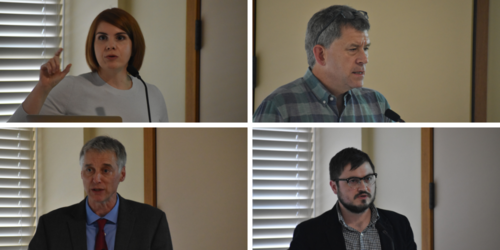
From top left, clockwise: Lauren Hansen Restrepo, James Millward,, Darren Byler and Gardner Bovingdon.
James Millward, professor of Inter-societal history at Georgetown University’s Walsh School of Foreign Service, reviewed the historical background for the PRC assault on non-Han or non-Chinese culture in Xinjiang. Beginning in the early 2000s, the assault has included the razing of old Kashgar; the discouraging and then illegalizing of Muslim symbols such as head gear, prayer, and fasting in Ramadan; the disappearance of Uyghur script; and the securitization of the province by using police patrol, surveillance technologies, facial recognition, and biodata monitoring. The PRC hasn’t applied a single, top-down ethnic policy in Xinjiang, said Millward, but rather has rolled out different tactics it experimented with on local levels in different areas.
Lauren Hansen Restrepo, assistant professor in growth and structure of cities at Bryn Mawr College and an expert on Chinese development planning and urbanization in Xinjiang, explained how we got to the current crisis in the region by connecting seemingly disparate phenomena. She described the shifts in state power in Xinjiang and how, since 2014, “regional planning has broken every logic of urban planning in China,” resulting in the isolation and subordination of Uyghur-dominated urban centers and in the ossification of cities, as control has been seized from local governments and given to socialist land masters.
Anthropologist Darren Byler, whose research focuses on Uyghur dispossession and "terror capitalism" in the city of Ürümchi, the capital of Xinjiang, explained how, amid mass migration of Han people into the resource-rich region, Uyghurs had mostly been excluded from the new economy and how their identity as contemporary Muslims supported a vibrant public sphere not controlled by the state. The Chinese state, in turn, has merged Islamism with radicalism extremism. From the Chinese state and industry perspective, Byler said, the repression of Xinjiang’s Muslims promises stability and the detention camps are used as carriers of economy and new sources of cheap labor.
Indiana University’s Gardner Bovingdon, whose research focuses on politics in contemporary Xinjiang and the region’s modern history, reverted to the question of how we got to the current crisis, which he characterized as “one of the great state-engineered human rights disasters of our time.” He argued that, in the case of Xinjiang, the Chinese party transported and exacerbated a set of policies that had previously been applied to dealing with the Tibet problem. These policies, Bovingdon suggested, “are signs of a flailing, terrified party that doesn’t know what to do with Uighurs, but also feels no constraints from the international community on its behavior. And so the biggest problem now is to find a way to put constraints on a system that has operated untrammeled with devastating consequences.”
The panel "Xinjiang’s Muslims and the PRC" was cosponsored with the Center for Democracy, Development and the Rule of Law.
Hero Image
Clockwise from upper left: Relatives of alleged extrajudicial killings wear veils as they take part in a protest versus the drug war killings outside the military and police headquarters on July 17, 2019 in Manila, Philippines (Photo credit: Ezra Acayan/Getty Image); Workers pass propaganda posters as they cycle through Hungnam Fertilizer Complex on February 4, 2019 in Hamhung, North Korea (Photo credit: Carl Court/Getty Images); Pro-democracy protesters react as police fire tear gas during a demonstration on October 20, 2019 in Hong Kong (photo credit: Anthony Kwan/Getty Images); A mix of ethnic Uyghur and Han shopkeepers hold large wooden sticks as they are trained in security measures on June 27, 2017 next to the old town of Kashgar, in the far western Xinjiang province, China (photo credit: Kevin Frayer/Getty Images).
Tension and discord in Japan-South Korea relations are nothing new, but the unfortunate, intensifying conflict between the two countries — a manifestation of right-wing Japanese nationalism and left-wing South Korean nationalism — seems headed toward a collision course. To understand the escalating friction between Tokyo and Seoul one must recognize the unique characteristics of Korean nationalism, and particularly its historical origins, development, and political role in shaping Korean attitudes toward Japan.
This is the focus of my article The Perils of Populist Nationalism, published in the September 2019 issue of the Korean magazine Shindonga (New East Asia). In this piece, which has received much attention in South Korea, I analyze the friction between Seoul and Tokyo and explain the attitude among Koreans toward Japan in contrast to their different attitude toward China. The anti-Japanese sentiment in Korea was forged amidst the rise of modern Japan. Through the experience of Japanese colonial rule, Korean nationalism took on an exclusionary form that emphasized one’s ancestry and the ethnic purity of the Korean people. The current tension between Seoul and Tokyo is rooted in this Korean nationalist sentiment.
It is time South Korea moved beyond its psychological complex toward Japan and recognized that ethnic nationalism is obsolete. Korean intellectuals, I argue, must play a critical role in a sustained effort to cultivate rational liberalism and prevent the excesses of nationalism if South Korea is to become a more open society — one that, in Popperian terms, accepts criticism and rejects a monopoly on truth.
The complete English translation of my article is now available.
South Korean protesters hold a placard reading "No Abe" during a rally against Japan's decision to remove South Korea from a "whitelist" of trusted trade partners, in front of the Japanese embassy in Seoul on August 2, 2019. | Chung Sung-Jun/Getty Images
The world is “graying” at an unprecedented rate. According to the UN’s World Population Prospects 2019, the number of persons over the age of 65 is growing the fastest and expected to more than double by 2050, then triple in another 50 years’ time.
Some Asian countries in particular, plagued by population aging, declining fertility, and gender imbalance, are facing a grim outlook for a demographic crisis. In Japan, one in five people is now 70 or older, birthrate has dropped to a historic level, and the population declined by more than a quarter of a million last year. Meanwhile, South Korea is aging more quickly than any other developed country: with seniors on the verge of making up 14% of the population, the country is on the cusp of becoming an “aged society.” The potential impact of population aging on the labor market and the fiscal pressures on the public systems of healthcare, pensions, and social protection schemes for older adults are some of the many problems that these and other countries must tackle.
Against this background, Shorenstein APARC recently held the third annual gathering of the Stanford Asia-Pacific Innovation project, a Center-led initiative that produces academic and policy-relevant research to promote innovation and entrepreneurship in East Asia. Held in Chuncheon, South Korea and organized jointly with Hallym University’s Institute for Communication Arts and Technology, this year’s conference focused on the intersection of aging, technological development, and innovation in the region.
(Gi-Wook Shin)
APARC Director Gi-Wook Shin opened the two-day session, introducing the conference’s themes. “What policies can promote innovation and entrepreneurship in aging populations?” Shin asked. “What opportunities do new technologies offer for addressing challenges posed by East Asia’s demographic shifts, and what are the threats involved in the adoption of these new technologies?”
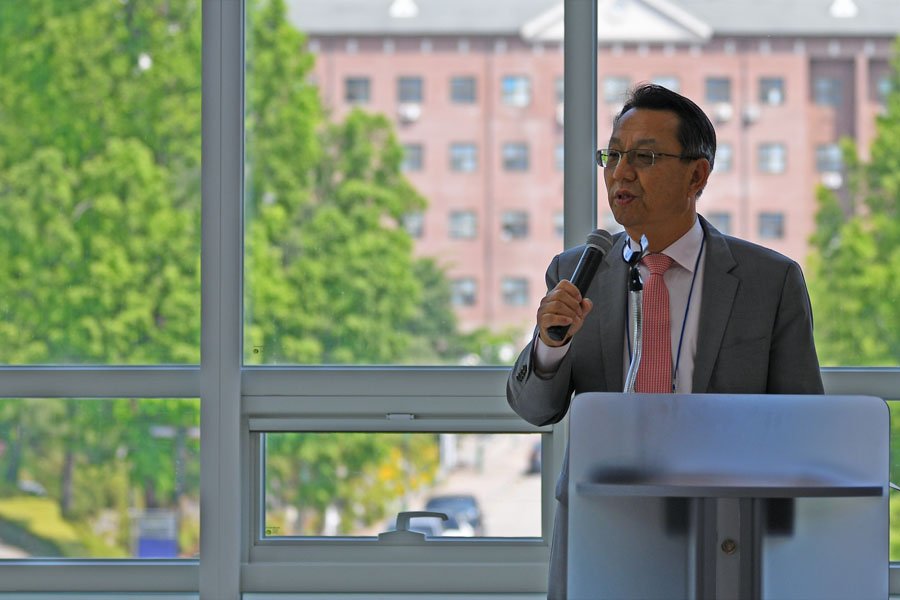
Joon-Shik Park, vice president of the Office of Vision and Cooperation at Hallym University, the conference host, noted that “East Asian countries are the most important testbeds on issues related to aging and innovation,” and that sharing meaningful research and implications from the region “will provide invaluable insights for all the societies around us.”
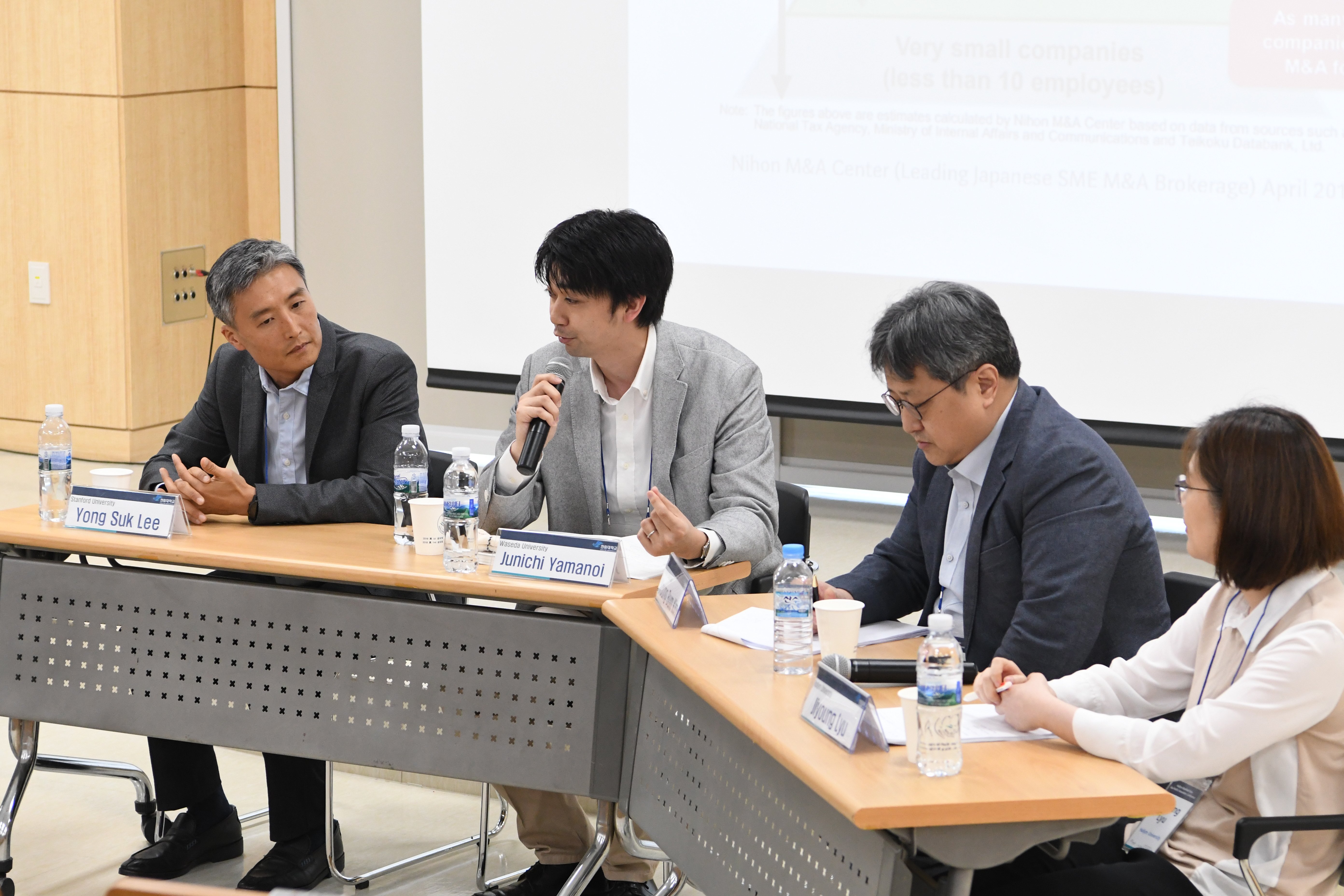
(From left to right, Yong Suk Lee , Junichi Yamanoi , Young-Bum Kim, and Jiyoung Liu)
Family Business Succession
Demographic forces and population aging at the macro level are altering family structures and assumptions at the micro level. For example, Junichi Yamanoi of Waseda University presented a study that examined how expectations around managerial succession at family firms had a significant impact on a firm’s long-term investments.
The study surveyed over 15,000 small and medium enterprises (SMEs) in the Tokyo metropolitan area. The participants were initially asked about their firm’s attributes, CEO demographics, and succession expectations. More than a year later (a time lag that eliminated reverse causality), a sampling of respondents was then asked about their current long-term investments (e.g., R&D, new product development, and internationalization activities).
Yamanoi and his coauthors found that, when a family business’ CEO was confident that a successor would follow, their firm was more likely to engage in long-term investment. Additionally, a CEO’s expectations that the successor would be someone other than their child resulted in an even greater likelihood of long-term investment.
As part of its policy propositions, the study recommends that government agencies and SME officers eager to increase investments by SMEs introduce external candidates to such firms. Moreover, family CEOs should be cautioned against investment decisions that are too short-term in orientation, as, due to inherent aversion to losses of socioemotional wealth for the family, they may unconsciously avoid long-term investments.
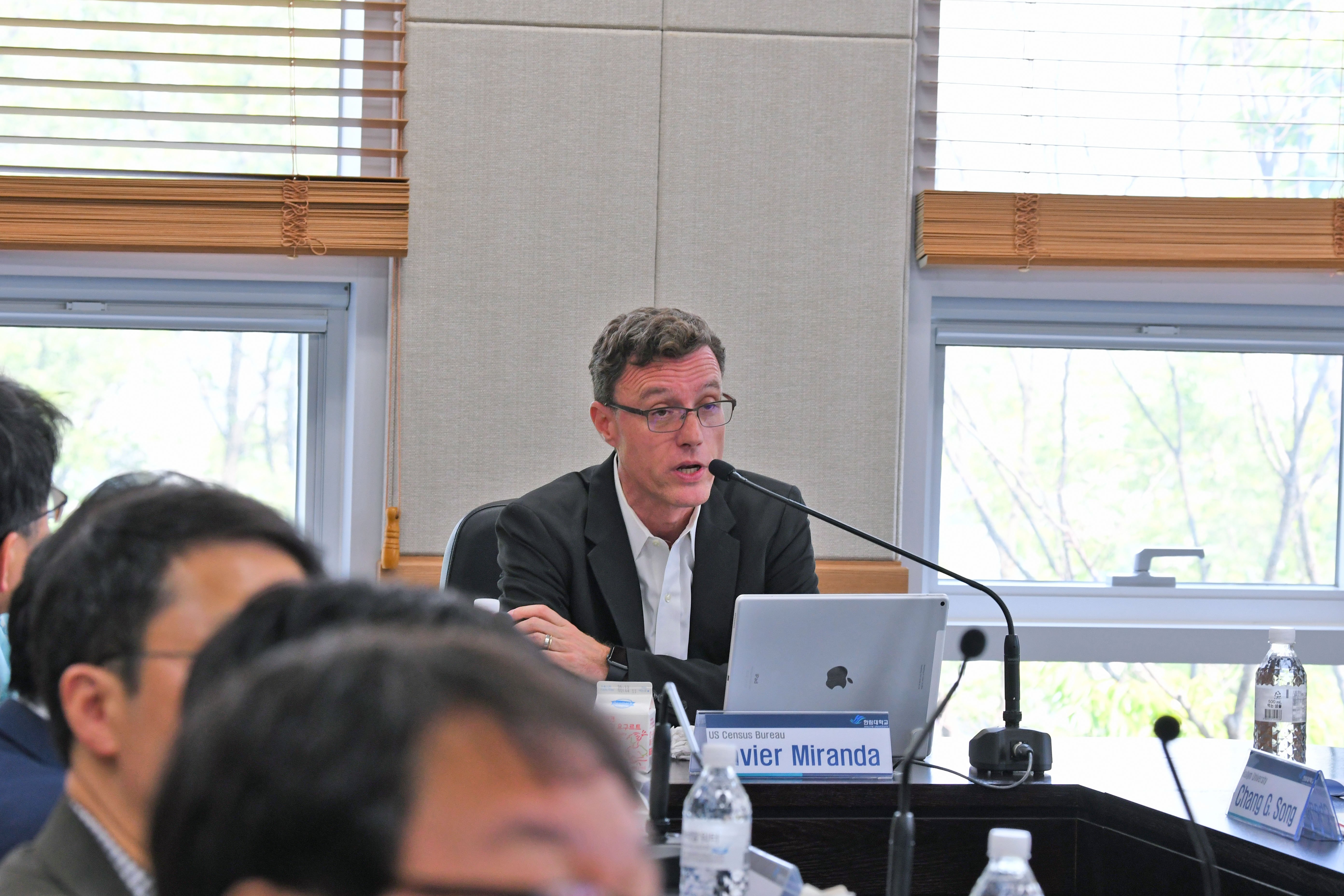
(Javier Miranda)
Rethinking Age and Entrepreneurship
At a luncheon keynote address, Javier Miranda, principal economist at the U.S. Census Bureau, shared insights into the correlations between age and high-growth entrepreneurship, considering when in life people start firms and when they start the most successful firms.
Miranda acknowledged that youth is often perceived as being crucial to entrepreneurial success, referring to Mark Zuckerberg’s dictum, “Young people are just smarter.” Venture capitalist (VC) activity seems to support this notion, said Miranda, citing a sample of 35 VC-backed “unicorns” that resulted in a mean founder age of 31. He explained that VCs' high regard of young entrepreneurs may be attributed to a belief in young people's greater deductive reasoning, transformative thinking, and higher energy, optimism, and confidence.
But does the statistical evidence support such a view? It would seem not. Miranda’s data showed that the mean age for founders of any type of firm is 41.9. Furthermore, the mean age for founders of the most successful firms (those ready for Initial Public Offering market) was 45, and a founder at age 50 was approximately twice as likely to experience successful exit or high growth compared to a founder 20 years their junior.
In fact, dependent on the starting of a firm, the probability of a founder’s success peaked in the age range of 45-59. Pointing directly to entrepreneurs like Jobs and Bezos, Miranda conceded that even extremely talented people, who may be talented enough to succeed when young, peaked in middle age.
The results of Miranda’s study seem at odds with VC attraction to younger entrepreneurs. Experience, Miranda concluded, appeared to overwhelm any potential age advantage, but more research was needed to unpack the underlying predictors of entrepreneurial success over one’s life cycle.
Role of Technology in an Aging Populace
Day two of the conference focused on the promising role technology may play as populations age. APARC Research Scholar Kenji Kushida detailed both the current and impending problems Japan faces as its population both ages and shrinks in size, and the solutions possible through technological advancement like robotics, AI, and wearable devices.
For example, Japan’s demographic shift has had a double knock-on effect on agriculture, with the percentage of farm workers age 65 or older steadily rising over the last five years and the total cultivated agricultural land decreasing each passing year. Kushida described how ICT-enabled bulldozers allow farm owners to more precisely flatten the ground in rice paddies, resulting in both greater yields and cost savings as much as 40%.
Healthcare is another significant area of concern in Japan, as healthcare costs for people over 65 are four times that of younger people and medical costs as a proportion of GDP have been increasing sharply, especially in rural areas. Shortage of physicians and diagnostic technicians is another challenge. Kushida gave an example of a technology healthcare resource that enables clinics and hospitals to upload patient medical images which are then diagnosed by medical doctors affiliated with the tool's startup developer. This low-cost solution allows smaller, rural hospitals to tap into a larger network of physicians and specialists online.
While Japan’s technological trajectory has been driven primarily by the private sector, Kushida pointed out the important role played by government actors. Specifically, within the “Abenomics” reforms of Prime Minister Shinzo Abe, several key performance indicators include support for digitizing medical records, adoption of robotics in nursing care, and extending “healthy” life expectancy.
Edited volumes collecting the papers from the annual Stanford Asia-Pacific Innovation conferences are forthcoming. These will serve as valuable references for scholars and policymakers. The first conference was held at Stanford in 2017, and examined the industrial organization of businesses and innovation clusters and how such environments affect entrepreneurship. The second conference, held in September of 2018 in Beijing, analyzed the impact of public education and financial policies pursued by East Asian countries to promote entrepreneurship.
On the centennial of the March First Independence Movement of Korea, APARC Director Gi-Wook Shin and Rennie Moon, associate professor at Yonsei University’s Underwood International College and former Koret fellow in Korean studies at APARC, discuss the origins of the movement and its impact and legacy for anti-imperialist movements in Asia and beyond.
The year 2019 is the centennial of several anti-colonialist movements that emerged in Asia, including the March First Movement of Korea. On that day a century ago, protesters shouting “Mansei!” (“Long live Korean independence!”) gathered in Seoul and formed what would become the first nationwide political protest in Korea under Japanese colonial rule. Although the movement failed to achieve national sovereignty, it left important legacies for Korea and other parts of Asia under foreign dominance.
In a new essay for The Journal of Asian Studies, “1919 in Korea: National Resistance and Contending Legacies,” APARC Director Gi-Wook Shin and Rennie Moon, associate professor at Yonsei University’s Underwood International College and former Koret fellow in Korean studies at APARC, discuss the origins of the March First Movement, its impact on colonial Korea and other parts of Asia that fought against imperialist dominance, and its implications for postcolonial and contemporary Korea, North and South. Their essay is part of the journal’s special forum entitled “Anti-colonialism in Asia: The Centenary of 1919,” which explains why 1919 was not only a single year of important events in Asia, but also a center point for the larger movements of anti-colonialism that emerged globally in the early decades of the twentieth century.
Korea became Japan's protectorate in 1905 and was “annexed” to Imperial Japan five years later. Soon after, Koreans experienced a decade of severe suppression and minimal rights under a brutal military colonial regime. In the aftermath of World War I, however, Shin and Moon write, the international geopolitical climate began to shift. Inspired by the Russian revolution of 1917 and by Wilsonian ideals of national self-determination, Korean intellectuals and leaders began secretly collaborating both inside Korea and abroad, with support from religious leaders and their nationwide mobilizing networks.
On March 1, 1919, twenty-nine leaders gathered in downtown Seoul and read aloud a declaration for Korean independence, sparking a movement that spread quickly from Seoul and Pyongyang throughout the country, with more than one million people protesting. The Japanese, who were caught by surprise, responded with brutal crackdown on protestors.
The March First Movement eventually did not achieve national independence from Japanese rule, but it forced Japan to shift from the earlier military rule to a colonial policy known as bunka seiji (cultural rule), which selectively accommodated Korean demands in nonpolitical spheres and gave rise to many cultural, educational, and media organizations and activities.
It also left Korean leaders divided over what to do next, leading to a schism between moderates, who were willing to work with the new cultural policy in preparation for future national independence, and the socialist radicals, who rejected compromise and went on to establish the Korean Communist Party in 1925. This bifurcation, note Shin and Moon, is seen by many scholars “as the primary origin of the postcolonial national division that would incite a civil war in 1950.”
South Korea recognizes the March First Movement as the basis of the founding of the republic, though conservatives and progressives still disagree about its founding date. When the Democratic People's Republic of Korea was established in the North, however, it downgraded and rewrote the movement in various ways to fit it into its own version of history that traces the legitimacy of the regime to an anti-imperialist, democratic revolution spearheaded by Kim Il-Sung, who became the leader of the DPRK after 1945.
Beyond Korea, explain Shin and Moon, the March First Movement influenced the rise of the anti-imperialist May Fourth Movement in China two months later, inspired the 1919 anti-imperialist resistance that took place in the Philippines and Egypt, and was an impetus that can be seen in the Satyagraha, or nonviolent resistance in India. “By considering the March First and other political movements of 1919 in other Asian countries from a comparative, transnational perspective,” Shin and Moon say, “we can recognize interrelationships and diffusion processes traditionally ignored in historical writings prior to the ‘historiographic revolution’ in the 1990s.”
Children look around cells at Seodaemun Prison, the former prison used to lock Independent fighters from 1908, on August 15, 2016 in Seoul, South Korea. Korea was liberated from Japan's 35-year colonial rule on August 15, 1945 at the end of World War II. | Woohae Cho/Getty Images
The volatile relationship between the United States and North Korea has left the American public questioning whether North Korea is a threat or not. Existing polls suffer from poor design and, thus, provide a confusing and often contradictory narrative of U.S. public opinion on North Korea. As a result, a number of critical questions remain unanswered: Are Americans willing to live with the North Korean nuclear threat? Under what conditions would the public support using military force to accomplish what sanctions and diplomacy have not? What are the characteristics of the individuals willing to risk war against North Korea today? Professor Scott D. Sagan will discuss the findings of a recent survey experiment and offer a unique perspective to the ongoing public debate.
Scott D. Sagan is the Caroline S.G. Munro Professor of Political Science, the Mimi and Peter Haas University Fellow in Undergraduate Education, and Senior Fellow at the Center for International Security and Cooperation and the Freeman Spogli Institute at Stanford University. Before joining the Stanford faculty, Sagan was a lecturer in the Department of Government at Harvard University. From 1984 to 1985, he served as special assistant to the director of the Organization of the Joint Chiefs of Staff in the Pentagon. Sagan has also served as a consultant to the office of the Secretary of Defense and at the Sandia National Laboratory and the Los Alamos National Laboratory. In 2017, he received the International Studies Association’s Susan Strange Award which recognizes the scholar whose “singular intellect, assertiveness, and insight most challenge conventional wisdom and intellectual and organizational complacency" in the international studies community. Sagan was also the recipient of the National Academy of Sciences William and Katherine Estes Award in 2015, for his pioneering work addressing the risks of nuclear weapons accidents and the causes of nuclear proliferation.
The winner of the Urban Land Institute Prize is selected by The Journal of Economic Geography (JoEG) Editors, Oxford University Press, and the Urban Land Institute. The prize is awarded annually to the author(s) of the best JoEG paper published online in the previous calendar year. Papers are evaluated on the basis of their creativity, quality of scholarship, and contribution to advancing understanding of the geographic nature of economic systems and global economic change.
Lee’s paper investigates whether entrepreneurship causes local employment and wage growth, and if so, how large the impact is. Empirical analysis of this question is difficult due to the joint determination of entrepreneurship and economic growth. Lee’s article uses two different sets of variables—the homestead exemption levels in state bankruptcy laws from 1975 and the share of metropolitan statistical area (MSA) overlaying aquifers—to instrument for entrepreneurship and examine urban employment and wage growth between 1993 and 2002. Lee’s research shows that the creation of small businesses indeed causes substantial employment and payroll growth in cities.
On the heels of the abrupt ending of the Hanoi summit between President Trump and North Korean leader Kim Jong Un, with the future of the diplomacy of denuclearization in question, the Korea Program at Shorenstein APARC convened the 11th Koret Workshop, appropriately titled this year “North Korea and the World in Flux.”
The workshop, an annual gathering made possible through generous funding from the Koret Foundation, brought together international experts in Korean affairs for a full day of panel discussions. Participants assessed the U.S.-DPRK summit diplomacy, examined the challenges and opportunities in media coverage related to the negotiations between the two countries, and considered the prospects and pitfalls for summitry with North Korea in the near term. A report on the workshop proceedings is forthcoming.
At a midday public keynote, General Vincent Brooks, U.S. Army (Ret.), spoke before a packed audience about the challenges and opportunities in Korea. Brooks, who recently retired from active duty as the four-star general in command of all U.S. Forces in Korea, provided his unique and very-timely assessment of the situation on the Korean peninsula, and offered his insights on where the diplomacy of denuclearization may go next.

 FSI researchers work to understand continuity and change in societies as they confront their problems and opportunities. This includes the implications of