Policy Analysis
Authors
Lisa Griswold
News Type
News
Date
Paragraphs

China has historically been the “most divisive element” in the U.S.-Japan relationship, Yoichi Funabashi, a former editor-in-chief of the Asahi Shimbun, told a Stanford audience last Friday at a panel discussion hosted by the Shorenstein Asia-Pacific Research Center (APARC).

Funabashi said in his keynote speech that despite the past, “we are in a much, much better position now” as tensions between Japan and the United States have been contained lately. However, misperceptions between Washington and Tokyo over their approaches to China could challenge the positive trajectory we see now, Funabashi warned.

The discussion titled, “Continuity and Change in the U.S.-Japan Alliance,” was part of the Shorenstein Journalism Award ceremonies at the Freeman Spogli Institute, an annual honor that recognizes an accomplished journalist who is committed to critical reporting, and who has helped unravel the complexities of Asia through his or her writing. Fourteen journalists have received the prestigious award since its founding in 2002.

Funabashi, the 2015 award recipient, was joined by a distinguished panel of Japan experts. Susan Chira, a deputy executive editor at the New York Times, and Michael Armacost, a Stanford distinguished fellow and former U.S. ambassador to Japan, provided comments to Funabashi’s remarks, and Daniel Sneider, associate director for research at Shorenstein APARC, moderated the discussion.

The United States views Japan’s approach to China as “too balance-oriented,” while Japan thinks the U.S. administration under Barack Obama is “more engage-oriented,” Funabashi said. This disjuncture has caused some observers to describe China’s relationship with the West as having already entered a “new Cold War,” he said.

Funabashi quickly dismissed that idea, saying, “I do not think [we’ve] entered into a new Cold War,” and recognized that Japan, the United States and others around the world must identify ways of working with China despite differences.

Funabashi said Japan “can offset the prospect or danger of China and Russia ganging up against Japan” through its strategic engagement with both countries, but that the United States would require some reassurance and understanding of how Japan views its relationship with Moscow and Beijing.

“The approach to China will remain the most crucial factor to managing the U.S.-Japan relationship,” he said.

Chira later added that the U.S.-Japan alliance has been the beneficiary of the shift in focus to a “rising China.” She said it had both “diminished American concern” over the once-heightened economic friction between Japan and the United States in the 1980s, and “underlined the importance of the U.S.-Japan security relationship.”


Image
funabashi yoichi journalism headline


Funabashi also predicted that the U.S.-Japan alliance “could be very much affected by the U.S. presidential election.” Tendering another warning, he said that the 2016 presidential election cycle “may not be political business as usual.”

Candidates have adopted strong positions on foreign policy early on and have been coupling it with harsh rhetoric. “It will have ramifications beyond their actions” and could have a “long-term impact on the U.S. relationship with the Asia-Pacific,” he said.

Over the past eight years, the Obama administration has been leading its “rebalance” policy in Asia that has both symbolized a pulling-away from Europe and the Middle East, and carried a layer of economic and strategic reassurance for the region. Funabashi said Asian leaders are now “deeply concerned” about what will happen to America’s staying power under the next U.S. president.

Part of the success of the rebalance strategy hangs on the outcome of the Trans-Pacific Partnership’s passage through the U.S. Congress. Funabashi said it “will make or break issues,” and yet, each candidate currently running does not support the 12-nation trade pact. Funabashi characterized trade politics during campaign season as challenging. Armacost later said he agreed.

“The chance of ratifying something between now and the election is somewhere between negligible and nil,” said Armacost, who held a 24-year career in the U.S. government. Attempting approval during the lame duck session is very problematic, he said.

Funabashi also addressed whether President Obama should make a trip to the atomic bombing site at Hiroshima on the periphery of the G7 summit later this month.

He said he hoped that such a trip would not “backfire” on the U.S.-Japan relationship, and relations with China and Korea. A visit by Obama could create an expectation for a Japanese prime minister to visit Pearl Harbor, and for Japanese political leaders to make a trip to the site of the Nanjing Massacre in China.

Funabashi also emphasized that a reconciliation process between Japan and the United States already exists and harkened back to the San Francisco Peace Treaty. Ratified in 1952, the treaty reset Allied powers and Japan on a path toward friendly relations and to settle questions of war.

“We have proved [our ability] to reconcile on a working level, on a day-to-day level, so we don’t necessarily have to convince the public on both sides.

“Nonetheless, I think that this visit could be seen as a furthering of the reconciliation process,” Funabashi said.

“I hope the president does visit,” Sneider added. Acknowledgement of the bombing by the United States is “long overdue” and could set “a certain moral example,” he said.

Following the panel discussion, later that evening, Funabashi received the journalism award among many colleagues and friends.

Orville Schell, a director at the Asia Society New York and a member of the jury that selects the award recipient, described Funabashi as a leading “exemplar” of someone who “thinks clearly and writes extremely well.”

Related links:

Shorenstein Journalism Award 2015 Acceptance Speech: Yoichi Funabashi

Former editor-in-chief of the Asahi Shimbun to receive 2015 Shorenstein Journalism Award

Stanford scholar explores how the US election system shapes foreign policy

Should President Obama visit Hiroshima?

Divided Memories and Reconciliation research project

Hero Image
funabashi yoichi journalism headline top
Yoichi Funabashi speaks on the U.S.-Japan alliance at a panel discussion in conjunction with the Shorenstein Journalism Award ceremonies, May 6.
Rod Searcey
All News button
1
Date Label
-

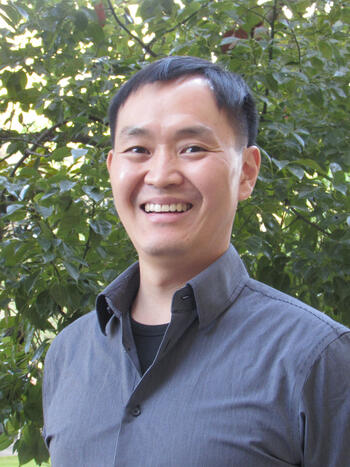
South Korea has relied on its export-oriented development model to become an economic powerhouse, but has now reached the limits of this model. Indeed, Korea’s phenomenal growth has incubated the seeds of its own destruction. Learning from the Korean developmental experience, China has adopted key elements of the Korean development model and has become a potent competitor in electronics and the heavy industries. Meanwhile, the organizational and institutional legacies of late industrialization have constrained Korean efforts to move into technology entrepreneurship and the service sector. These strategic challenges are compounded by a demographic bomb, as social development has led to collapsing birthrates in Korea, much like other developed countries in Europe and Asia. Within the next few years, the Korean workforce will start diminishing in size and aging rapidly, straining the country’s resources and curtailing its growth. In this seminar, Joon Nak Choi, 2015-16 Koret Fellow at Stanford's Shorenstein Asia-Pacific Reserach Center, will discuss innovations in business strategy, educational policy and social structure that are directly relevant to these problems, and that would alleviate or perhaps even reverse Korea’s economic malaise.

Image
joon nak choi 7 cropped
A Stanford graduate and sociologist by training, Choi is an assistant professor of management at the School of Business and Management, Hong Kong University of Science and Technology. His research and teaching areas include economic development, social networks, organizational theory, and global and transnational sociology, within the Korean context. He coauthored Global Talent: Skilled Labor as Social Capital in Korea (Stanford University Press, 2015).

This public event is made possible through the generous support of the Koret Foundation.

Shorenstein APARC
Encina Hall
Stanford University
Stanford, CA 94305-6055

0
joon_nak_choi_7_cropped.jpg

Joon Nak Choi is the 2015-2016 Koret Fellow in the Korea Program at Stanford University's Walter H. Shorenstein Asia-Pacific Research Center (Shorenstein APARC). A sociologist by training, Choi is an assistant professor at Hong Kong University of Science and Technology. His research and teaching areas include economic development, social networks, organizational theory, and global and transnational sociology, within the Korean context.

Choi, a Stanford graduate, has worked jointly with professor Gi-Wook Shin to analyze the transnational bridges linking Asia and the United States. The research project explores how economic development links to foreign skilled workers and diaspora communities.

Most recently, Choi coauthored Global Talent: Skilled Labor as Social Capital in Korea with Shin, who is also the director of the Korea Program. From 2010-11, Choi developed the manuscript while he was a William Perry postdoctoral fellow at Shorenstein APARC.

During his fellowship, Choi will study the challenges of diversity in South Korea and teach a class for Stanford students. Choi’s research will buttress efforts to understand the shifting social and economic patterns in Korea, a now democratic nation seeking to join the ranks of the world’s most advanced countries.
 
Supported by the Koret Foundation, the Koret Fellowship brings leading professionals to Stanford to conduct research on contemporary Korean affairs with the broad aim of strengthening ties between the United States and Korea. The fellowship has expanded its focus to include social, cultural and educational issues in Korea, and aims to identify young promising scholars working on these areas.


2015-2016 Koret Fellow
Visiting Scholar
<i>2015-16 Koret Fellow, Shorenstein APARC, Stanford University</i>
Seminars
Paragraphs

This article examines how different organizational structures in disaster aid delivery affect house aid quality. We analyze three waves of survey data on fishermen and fishing villages in Aceh, Indonesia, following the 2004 tsunami. We categorize four organizational structures based on whether and to whom donors contract aid implementation. Compared to bilateral contracting between donors and implementers, donors that vertically integrate and do their own implementation offer the highest-quality housing as rated by village heads and have fewer counts of faults, such as leaky roofs and cracked walls, as reported by fishermen. However, they shade in quality as they lose dominance as the leading aid agency in a village. Domestic implementers and the government agency that was responsible for significant portions of aid delivery provide significantly lower-quality aid. We also examine how the imposition of shared ownership, the primary social agenda for boat aid agencies, affects boat aid quality. We find that village and fishing leaders steer poor-quality boats toward those whom shared ownership was imposed upon, often lower-status fishermen.

All Publications button
1
Publication Type
Journal Articles
Publication Date
Journal Publisher
Economic Development and Cultural Change
Authors
Yong Suk Lee
Number
4
Paragraphs
China's rise has elicited envy, admiration, and fear among its neighbors. Although much has been written about this, previous coverage portrays events as determined almost entirely by Beijing. Such accounts minimize or ignore the other side of the equation: namely, what individuals, corporate actors, and governments in other countries do to attract, shape, exploit, or deflect Chinese involvement. The New Great Game analyzes and explains how Chinese policies and priorities interact with the goals and actions of other countries in the region.
 
To explore the reciprocal nature of relations between China and countries in South and Central Asia, The New Great Game employs numerous policy-relevant lenses: geography, culture, history, resource endowments, and levels of development. This volume seeks to discover what has happened during the three decades of China's rise and why it happened as it did, with the goal of deeper understanding of Chinese and other national priorities and policies and of discerning patterns among countries and issues.
All Publications button
1
Publication Type
Books
Publication Date
Journal Publisher
Stanford University Press
Authors
Thomas Fingar
-

Abstract:

The Wild Lily movement was a student demonstration in 1990 calling for democracy through direct election. 24 years later, the Sunflower movement was driven by a coalition of students and civic groups that were discontent with the Taiwanese government's handling of China relations. We discuss the general trajectory of student movements and the subsequent rise of numerous 'Third Force' parties that represent a new way for civic engagement in politics. 

Speaker Bio:

Dr. Fan Yun (范雲), PhD, is associate professor of sociology at the National Taiwan University. She is a politician, sociology scholar, feminist theorist, and former chairperson of the Social Democratic Party in Taiwan. After graduating from NTU with a B.A. and M.A. in Sociology, she received her PhD in Sociology from Yale University. She was president of the student association at NTU, assistant research fellow at Academia Sinica, commander for the Wild Lily student movement, and chairperson for the Awakening Foundation for women's rights. Her research interests include social movement, collective action, gender politics, identity politics, civil society and democracy. She has participated in social movement since the Wild Lily student movement in 1990, and was participant and witness to the trajectory of Taiwan’s transition into modern civil society and democracy.

Bechtel Conference Room

Encina Hall, 1st Floor

616 Serra St., Stanford, CA

Fan Yun Associate Professor of Sociology Keynote Speaker National Taiwan University
Lectures
News Type
News
Date
Paragraphs

The Walter H. Shorenstein Asia-Pacific Research Center (APARC), in pursuit of training the next generation of scholars on contemporary Asia, has selected three postdoctoral fellows for the 2016-17 academic year. The cohort includes two Shorenstein Postdoctoral Fellows and one Developing Asia Health Policy Fellow; they carry a broad range of interests from hospital reform to the economic consequences of elite politics in Asia.

The fellows will begin their year of academic study and research at Stanford this fall.

Shorenstein APARC has for more than a decade sponsored numerous junior scholars who come to the university to work closely with Stanford faculty, develop their dissertations for publication, participate in workshops and seminars, and present their research to the broader community. In 2007, the Asia Health Policy Program began its fellowship program to specifically support scholars undertaking comparative research on Asia health and healthcare policy.

The 2016-17 fellows’ bios and their research plans are listed below:


Shorenstein Postdoctoral Fellows


Image
aditya dasgupta   photo
Aditya "Adi" Dasgupta is completing his doctorate in the Department of Government at Harvard University. At Stanford, he will work on converting his dissertation on the historical decline of single-party dominance and transformation of distributive politics in India into a book manuscript. More broadly, his research interests include the comparative economic history of democratization and distributive politics in emerging welfare states, which he studies utilizing formal models and natural experiments. He received a Bachelor of Arts from Cambridge University and a Master of Science from Oxford University and has worked at the Public Defender Service in Washington D.C., his hometown.


Image
dong zhang photo2
Dong Zhang is a political scientist whose research interests include political economy of development, with focus on the economic consequences of elite politics, and on the historical origins of long-run economic development. His dissertation examines the political logic of sustaining state capitalism model in weakly institutionalized countries with a primary focus on China. At Stanford, Zhang will develop his dissertation into a book manuscript and pursue other research projects on comparative political economy and authoritarian politics. He will receive his doctorate in political science from Northwestern University in 2016. Zhang holds bachelor’s degrees in public policy and economics, and a master’s degree in public policy from Peking University, Beijing.


Developing Asia Health Policy Postdoctoral Fellow


Image
ngando pic
Ngan Do is strongly interested in health system related issues, especially health financing, human resources for health, and health care service delivery. Do implemented comparison studies at regional level as well as participated in fieldwork in Cambodia, Lao, the Philippines, Korea and Vietnam. At Stanford, she will work on the public hospital reforms in Asia, focusing on dual practice of public hospital physicians and provider payment reforms. Do achieved her doctorate in health policy and management at the College of Medicine, Seoul National University. She earned her master’s degree in public policy at the KDI School of Public Policy and Management in Seoul, and her bachelor’s degree in international relations at the Diplomacy Academy of Vietnam (previously the Institute for International Relations).


Hero Image
160105 3244
All News button
1
News Type
News
Date
Paragraphs

China Daily has featured a longstanding Stanford research project described as instrumental towards the normalization of U.S. relations with China during the Carter administration.

Led by late professor Michel Oksenberg, a China expert who also served on the U.S. National Security Council, the project sought to examine the workings of the local government, economy and social structure of Zouping, a county in northern China. Between 1987 and 1991, the project brought more than eighty U.S. academics to that area.

According to the Daily, it was “one of the most important academic exchanges of the 1980s,” which offered a symbol of reform and “helped the world gain greater and deeper understanding of China’s growing role on the global stage.”

Jean Oi, director of the China Program at the Shorenstein Asia-Pacific Research Center, was part of the cohort that traveled with Oksenberg, and has since revisited the area with her students to continue research efforts.

The full article can be accessed below.


APARC Event: 2018 Oksenberg Conference on Zouping County Research

Publication: Zouping Revisited: Adaptive Governance in a Chinese County

Hero Image
mike in crowd low res
Michel Oksenberg (center) meets with young people in China.
Lois Oksenberg
All News button
1
-

This event is co-sponsored by NHK WORLD, Global Agenda, and the Center on Democracy, Development, and the Rule of Law.

About NHK and Global Agenda

NHK WORLD is NHK's international broadcast service. NHK is Japan’s national public broadcasting corporation and operates international television, radio, and internet services; together, they are known as NHK WORLD.

The aims of NHK WORLD are:

  • To provide both domestic and international news to the world accurately and promptly
  • To present information on Asia from various perspectives, making the best use of NHK's global network
  • To serve as a vital information lifeline in the event of major accidents and natural disasters
  • To present broadcasts with great accuracy and speed on many aspects of Japanese culture and lifestyles, recent developments in society and politics, the latest scientific and industrial trends, and Japan's role and opinions regarding important global issues
  • To foster mutual understanding between Japan and other countries and promote friendship and cultural exchange

Global Agenda” is a new program within NHK WORLD TV where world opinion leaders discuss various issues facing Japan and the rest of the world today.

Symposium Overview

Innovation is essential for economic growth, especially in advanced economies. As the catch-up phase of economic growth is ending or has ended for many Asian economies, they face the challenge of transforming their economic systems to ones that encourage innovations and use those as the most important source for growth. The panel will discuss various issues surrounding the economic system that is favorable for innovations. Silicon Valley, where Stanford University is located, has an ecosystem that is conducive to innovations. The panel will pay special attention to implications for Japan and other Asian economies.

Panelists

William Barnnett, Professor of Business Leadership, Strategy, and Organizations, Stanford Graduate School of Business

Francis Fukuyama, Director, Center on Democracy, Development, and the Rule of Law, Freeman Spogli Insititute for International Studies

Takeo Hoshi, Director, Japan Program, Shorenstein Asia-Pacific Research Center

Kenji Kushida, Research Associate, Japan Program, Shorenstein Asia-Pacific Research Center

Note

This event will be recorded and broadcast worldwide. By registering to attend you hereby grant Stanford University and NHK World permission to use encode, digitize, copy, edit, excerpt, transmit, and display the audio or videotape of your participation in this event as well as use your name, voice, likeness, biographic information, and ancillary material in connection with such audio or videotape. You understand that this event will be broadcast worldwide, which will be available to the general public. This event may also be webcast over one or more websites. By registering to attend you grant, without limitations, perpetual rights for the use and transmission and display of audio or videotape of this event. This permission is irrevocable and royalty free, and you understand that the University and NHK will act in reliance on this permission.

RSVP

RSVP for this event is mandatory as seating is limited. Doors will open at 3:00pm and the event will begin promptly at 3:30pm. Since the event is being recorded, we ask that participants arrive on time.

William Barnnett Professor of Business Leadership, Strategy, and Organizations- Graduate School of Business
Francis Fukuyama Director, Center on Democracy, Development, and the Rule of Law- FSI
Takeo Hoshi Director, Japan Program- Shorenstein APARC
Kenji Kushida Research Associate, Japan Program- Shorenstein APARC
Symposiums
Subscribe to Policy Analysis