Policy Analysis
-
Flyer for a webinar about U.S.-China relations with portraits of speaker Laura Stone and moderator Jean Oi.

This event is part of APARC’s 2022 Fall webinar seriesAsian Perspectives on the US-China Competition.

The China Program brings Inaugural China Policy Fellow Laura Stone to provide on the ground views of what the U.S.-China competition means for the region. As Asia perspectives on U.S.-China competition and Chinese intentions in the region develop and change, Laura will give us insights into how Washington stakeholders’ understanding of these perspectives has shifted and evolved. In a complex iterative process, Chinese and U.S. actions — and the reactions from the countries and countries and entities in Asia — shape a dynamic policy process within the region.

Speaker

Image
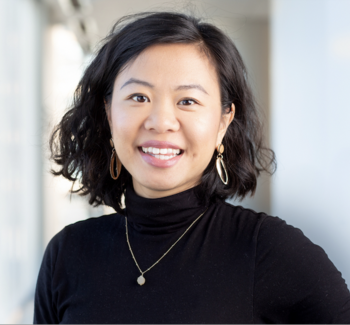
Laura Stone2
Laura Stone joins the Walter H. Shorenstein Asia-Pacific Research Center (Shorenstein APARC) as Visiting Scholar and Inaugural China Policy Fellow for the 2022-2023 academic year. She was formerly the Acting Deputy Assistant Secretary for China and Mongolia, the Director of the Office of Chinese and Mongolian Affairs, and the Director of the Economic Policy Office in the Bureau of East Asia and Pacific Affairs. She served three tours in Beijing as well as tours in Bangkok, Tokyo, the Public Affairs Bureau, the Pentagon Office of the Secretary of Defense, and the Bureau of Intelligence and Research. Most recently, she serves the U.S. Department of State as Deputy Coordinator for the Secretary's Office for COVID Response and Health Security. While at APARC, she will be conducting research with the China Program and Professor Jean Oi regarding contemporary China affairs and U.S.-China policy.

Jean C. Oi

Virtual event via Zoom

Laura M. Stone
Seminars
-
Adam Liu Poster

The Henan bank protest, the Evergrande crisis, and the ongoing local government debt issue in China all point to one thing: there’s something wrong with the country’s banking system. Beijing needs to better regulate the numerous small banks that are now intimately intertwined with much of China's economic challenges. 

They’re working on it, but there’s no easy solution.

Adam Y. Liu will tell us the origins of the dilemma, the increasing role of small banks in China and local development, and what tradeoffs China will likely have to make to prevent a run-away banking crisis.

Speaker

Image
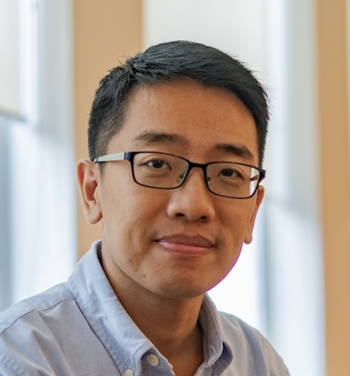
Adam Liu Headshot
Adam Y. Liu is assistant professor at the Lee Kuan Yew School of Public Policy, National University of Singapore. His main research interests include Chinese politics and political economy. He is currently working on a book project that explores how central-local politics drove the formation, expansion, and operation of what he calls a "state-owned market" in China's banking sector. The project is based on his dissertation, which won the 2020 BRICS Economic Research Award. He received his Ph.D. in political science from Stanford University and was a postdoctoral associate with the Leitner Program in International and Comparative Political Economy at Yale University. 

Jean C. Oi

Virtual event via Zoom

Adam Y. Liu
Seminars
1
Visiting Scholar at APARC, 2022-23, 2023-24
China Policy Fellow, 2022-23, 2023-24
Laura Stone.jpeg

Laura M. Stone joined the Walter H. Shorenstein Asia-Pacific Research Center (Shorenstein APARC) as Visiting Scholar and China Policy Fellow for the 2022-2023 and 2023-2024 academic years. She currently serves the U.S. Department of State, recently as Deputy Coordinator for the Secretary's Office for COVID Response and Health Security. While at APARC, she conducted research with the China Program and Professor Jean Oi regarding contemporary China affairs and U.S.-China policy.

Date Label

Shorenstein APARC
Stanford University
Encina Hall, E301
Stanford,  CA  94305-6055

0
Visiting Scholar at APARC, 2022-23
Ankhbayar_Begz.jpg

Dr. Ankhbayar Begz joined the Walter H. Shorenstein Asia-Pacific Research Center (APARC) as visiting scholar for the fall and winter quarter of the 2022-2023 academic year. Dr. Begz currently serves as researcher at Mongolian University of Science and Technology's Open Education Center. While at APARC, he conducted research regarding democracy, women’s political participation, higher education, and gender equality issues in Mongolia and Asia.

Authors
News Type
News
Date
Paragraphs

The Freeman Spogli Institute for International Studies (FSI) at Stanford University is pleased to announce that Stephen Kotkin has been appointed to the position of FSI Senior Fellow, effective September 1, 2022.

Kotkin is based at FSI’s Shorenstein Asia-Pacific Research Center (APARC), and is affiliated with FSI’s Center on Democracy, Development and the Rule of Law, as well. He holds a joint appointment with the Hoover Institution as the Kleinheinz Senior Fellow.

"Stephen is a remarkable academic and public intellectual whose work has transformed our understanding of Russian history and the historical processes that have shaped today’s global geopolitics,” said APARC Director Gi-Wook Shin. “We are proud to have him as our colleague at APARC and are excited to work together to expand the center’s scholarship on the role and impact of the Eurasian powers in the era of great-power competition."

Prior to joining FSI, Kotkin was the Birkelund Professor of History and International Affairs in what was formerly known as the Woodrow Wilson School at Princeton University, where he taught for 33 years. He now holds that title as emeritus. In addition to founding and running Princeton’s Global History Initiative, Kotkin directed the Princeton Institute for International and Regional Studies and served as the founding co-director of the Program in History and the Practice of Diplomacy. He chaired the editorial board of Princeton University Press.

“Joining the ranks of the phenomenal scholars at FSI is a dream come true,” Kotkin stated.

Stephen is a remarkable academic and public intellectual whose work has transformed our understanding of Russian history and the historical processes that have shaped today’s global geopolitics.
Gi-Wook Shin
Director of Shorenstein APARC

Kotkin’s scholarly contributions span the fields of Russian-Soviet, Northeast Asian, and global history. His publications include Stalin: Waiting for Hitler, 1929-1941, and Stalin, Vol. I: Paradoxes of Power, 1878-1928, part of a three-volume history of Russian power in the world and of Stalin’s power in Russia.

"I am thrilled to welcome Stephen to FSI this fall,” said FSI Director Michael McFaul. “He is an excellent addition to the cutting-edge research and teaching team at APARC, and I look forward to seeing the important impact he makes in his new role."

Kotkin writes reviews and essays for The Times Literary Supplement, Foreign Affairs, and The Wall Street Journal, among other publications. He was the business book reviewer for the New York Times Sunday Business Section for a number of years. He earned a bachelor’s degree at the University of Rochester in 1981 and received a Ph.D. at UC Berkeley in 1988, and during that time took a graduate seminar at Stanford.

Read More

Hero Image
Stephen Kotkin joins the Freeman Spogli Institute for International Studies as a senior fellow working at the Walter H. Shorenstein Asia-Pacific Research Center.
Stephen Kotkin, an expert in authoritarianism and geopolitics, joins the Freeman Spogli Institute for International Studies as a senior fellow working with the Walter H. Shorenstein Asia-Pacific Research Center.
All News button
1
Subtitle

Kotkin’s research interests include authoritarianism, geopolitics, global political economy, and modernism in the arts and politics.

-

Image
NKDB Korean translated version of North Korean Conundrum


The North Korean Conundrum: Balancing Human Rights and Nuclear Security 
북한의 난제: 인권과 핵안보의 균형
한국어 번역판 발간 행사 북토크

In association with the Database Center for North Korean Human Rights (NKDB), a book talk on the Korean translated version of The North Korean Conundrum: Balancing Human Rights and Nuclear Security is held in Seoul, Korea. 

For more information about the book, please visit the publication webpage.

<Consecutive Korean-English interpretation is provided at the book talk event>

Presenters:

Gi-Wook Shin, Director of Shorenstein Asia-Pacific Research Center, Stanford University

Robert R. King, former Special Envoy for North Korean Human Rights Issues

Joon Oh, former South Korean Ambassador to the UN

Minjung Kim, Associate Executive Director, Save North Korea

Discussants:

Yeosang Yoon, Chief Director, Database Center for North Korean Human Rights

Haley Gordon, Research Associate, Shorenstein Asia-Pacific Research Center, Stanford University

Sookyoung Kim, Assistant Professor, Hanshin University

In-Person event in Korea
June 8, 2PM-5PM, Korea Time
Schubert Hall, Hotel President, Seoul

Seminars
-
Banner card for the 2022 Oksenberg Conference

This year’s Oksenberg Conference, "Prospects for the New Sino-Russian Partnership,” explores the “why” and “so what” of this newly bolstered alliance that has been declared as a partnership “with no limits.” What does it mean for the U.S. and other non-autocratic states? Given Russia’s invasion of Ukraine and the unprecedented economic sanctions that the US and its allies have slapped on Russia in the wake of that attack, the more immediately important question is: What does this alliance mean for China? How strong is this new bond with Russia? China now finds itself in an extremely difficult position as it tries to protect its own economic relationships with the US and its allies in Europe and Asia. What can or will China do about Russia? How was this alliance sold to the domestic audience of each country?

A roundtable of experts on China and Russia, including those with extensive government experience, joins us to examine this critically important relationship and address the many questions that it raises. Each panelist will present 10-12 minutes of opening remarks before turning to a moderated discussion. During the last 20 minutes, the moderator will pose curated questions to the roundtable from the audience.

The Oksenberg Conference is held annually and honors the legacy of the late Stanford professor Michel Oksenberg (1938-2001), who was a Senior Fellow at Shorenstein APARC and the Freeman Spogli Institute for International Studies. Professor Oksenberg also served as a key member of the National Security Council when the U.S. normalized relations with China, and consistently urged that the U.S. engage with Asia in a more considered manner. In tribute, the Oksenberg Lecture recognizes distinguished individuals who have helped to advance understanding between the U.S. and the nations of the Asia-Pacific.

Panelists in alphabetical order:

Una Aleksandra Bērziņa-Čerenkova is a political scientist, China scholar, Head of Political Science Doctoral Programme and China Studies Centre at Rīga Stradiņš University, Head of the Asia program at the Latvian Institute of International Affairs, a member of the China in Europe Research Network (CHERN) and European Think Tank Network on China (ETNC). She has held a Senior visiting research scholar position at Fudan University School of Philosophy, Shanghai, China, and a Fulbright visiting scholar position at the Center for East Asian Studies, Stanford University. Bērziņa-Čerenkova publishes on PRC political discourse, contemporary Chinese ideology, EU-China relations, Russia-China, and BRI and her most recent monograph is Perfect Imbalance: China and Russia.

Thomas Fingar is the former first Deputy Director of National Intelligence for Analysis and Chairman of the National Intelligence Council, currently at Stanford as a Shorenstein APARC Fellow in the Freeman Spogli Institute for International Studies. From 2005-2008, he served as the first Deputy Director of National Intelligence for Analysis and, concurrently, as Chairman of the National Intelligence Council. Fingar previously served as Assistant Secretary of the State Department's Bureau of Intelligence and Research (2000-2001 and 2004-2005), Principal Deputy Assistant (2001-2003), Deputy Assistant Secretary for Analysis (1994-2000), Director of the Office of Analysis for East Asia and the Pacific (1989-1994), and Chief of the China Division (1986-1989). Fingar's most recent books are Uneasy Partnerships: China and Japan, the Koreas, and Russia in the Era of Reform (Stanford, 2017), Fateful Decisions: Choices that will Shape China’s Future, co-edited with Jean Oi (Stanford, 2020), and From Mandate to Blueprint: Lessons from Intelligence Reform (Stanford, 2021)

Alex Gabuev is a Senior Fellow at the Carnegie Endowment for International Peace. His research is focused on Russia's policy toward East and Southeast Asia, political and ideological trends in China, and China's relations with its neighbors—especially those in Central Asia. Prior to joining Carnegie, Gabuev was a member of the editorial board of Kommersant publishing house and served as deputy editor in chief of Kommersant-Vlast, one of Russia's most influential newsweeklies. He has previously worked as a nonresident visiting research fellow at the European Council on Foreign Relations (ECFR) and taught courses on Chinese energy policy and political culture at Moscow State University. Gabuev is a Munich Young Leader of Munich International Security Conference and a member of Council on Foreign and Defense Policy (Russia).

Michael McFaul is Director at the Freeman Spogli Institute for International Studies, the Ken Olivier and Angela Nomellini Professor of International Studies in the Department of Political Science, and the Peter and Helen Bing Senior Fellow at the Hoover Institution. McFaul is also an International Affairs Analyst for NBC News and a columnist for The Washington Post. He served for five years in the Obama administration, first as Special Assistant to the President and Senior Director for Russian and Eurasian Affairs at the National Security Council at the White House (2009-2012), and then as U.S. Ambassador to the Russian Federation (2012-2014). He has authored several books, most recently the New York Times bestseller From Cold War to Hot Peace: An American Ambassador in Putin’s Russia. Earlier books include Advancing Democracy Abroad: Why We Should, How We Can; Transitions To Democracy: A Comparative Perspective (eds. with Kathryn Stoner); Power and Purpose: American Policy toward Russia after the Cold War (with James Goldgeier); and Russia’s Unfinished Revolution: Political Change from Gorbachev to Putin.

Evan Medeiros is a Professor and Penner Family Chair in Asia Studies in the School of Foreign Service at Georgetown University and former top advisor on the Asia-Pacific in the Obama Administration, responsible for coordinating U.S. policy toward the Asia-Pacific across the areas of diplomacy, defense policy, economic policy, and intelligence. Prior to joining the White House, Medeiros worked for seven years as a senior political scientist at the RAND Corporation and served at the Treasury Department as a Policy Advisor-China to Secretary Hank Paulson Jr., working on the U.S.-China Strategic Economic Dialogue. Medeiros is a member of the Board of Directors of the National Committee on U.S.-China Relations, a member of the International Advisory Board of Cambridge University's Centre for Geopolitics, and a Life Member of the Council on Foreign Relations.

Jean Oi (Moderator) is the William Haas Professor of Chinese Politics in the Department of Political Science and a Senior Fellow of the Freeman Spogli Institute for International Studies (FSI) at Stanford University. She also directs the China Program at the Walter H. Shorenstein Asia-Pacific Research Center at FSI and is the founding Lee Shau Kee Director of the Stanford Center at Peking University. Oi has published extensively on political economy and the process of reform in China. Her books include State and Peasant in Contemporary China: The Political Economy of Village Government and Rural China Takes Off: Institutional Foundations of Economic Reform. Recent edited volumes include Zouping Revisited: Adaptive Governance in a Chinese County, co-edited with Steven Goldstein, and Fateful Decisions: Choices That Will Shape China's Future, co-edited with Thomas Fingar. 

Jean C. Oi

Via Zoom.

Una Aleksandra Bērziņa-Čerenkova

Freeman Spogli Institute for International Studies
Stanford University
Encina Hall, C-327
Stanford, CA 94305-6055

(650) 723-9149 (650) 723-6530
0
Shorenstein APARC Fellow
Affiliated Scholar at the Stanford Center on China's Economy and Institutions
tom_fingar_vert.jpg PhD

Thomas Fingar is a Shorenstein APARC Fellow in the Freeman Spogli Institute for International Studies at Stanford University. He was the inaugural Oksenberg-Rohlen Distinguished Fellow from 2010 through 2015 and the Payne Distinguished Lecturer at Stanford in 2009.

From 2005 through 2008, he served as the first deputy director of national intelligence for analysis and, concurrently, as chairman of the National Intelligence Council. Fingar served previously as assistant secretary of the State Department’s Bureau of Intelligence and Research (2000-01 and 2004-05), principal deputy assistant secretary (2001-03), deputy assistant secretary for analysis (1994-2000), director of the Office of Analysis for East Asia and the Pacific (1989-94), and chief of the China Division (1986-89). Between 1975 and 1986 he held a number of positions at Stanford University, including senior research associate in the Center for International Security and Arms Control.

Fingar is a graduate of Cornell University (A.B. in Government and History, 1968), and Stanford University (M.A., 1969 and Ph.D., 1977 both in political science). His most recent books are From Mandate to Blueprint: Lessons from Intelligence Reform (Stanford University Press, 2021), Reducing Uncertainty: Intelligence Analysis and National Security (Stanford University Press, 2011), The New Great Game: China and South and Central Asia in the Era of Reform, editor (Stanford University Press, 2016), Uneasy Partnerships: China and Japan, the Koreas, and Russia in the Era of Reform (Stanford, 2017), and Fateful Decisions: Choices that will Shape China’s Future, co-edited with Jean Oi (Stanford, 2020). His most recent article is, "The Role of Intelligence in Countering Illicit Nuclear-Related Procurement,” in Matthew Bunn, Martin B. Malin, William C. Potter, and Leonard S Spector, eds., Preventing Black Market Trade in Nuclear Technology (Cambridge, 2018)."

Selected Multimedia

CV
Date Label
Alex Gabuev
Evan Medeiros
Conferences
-
Decoupling: Gender Injustice in China's Divorce Courts event image

Using 'big data' computational techniques to scrutinize cases covering 2009–2016 from all 252 basic-level courts in two Chinese provinces, Henan and Zhejiang, Ethan Michelson reveals that women have borne the brunt of a dramatic intensification since the mid-2000s of a decades-long practice of denying divorce requests. This talk discusses key findings from his new book of the same name. Michelson's analysis of almost 150,000 divorce trials reveals routine and egregious violations of China's own laws upholding the freedom of divorce, gender equality, and the protection of women's physical security. Michelson takes the reader upstream to the institutional sources of China's clampdown on divorce and downstream to its devastating and highly gendered human toll, showing how judges in an overburdened court system clear their oppressive dockets at the expense of women's lawful rights and interests.


Image
Portrait of Ethan Michelson
Ethan Michelson is the James and Noriko Gines Department Chair in East Asian Languages and Cultures as well as Professor of Sociology and Law at Indiana University Bloomington, where he has been teaching courses on law and society, law and authoritarianism, and contemporary Chinese society since 2003. He has won several awards for his published research on China’s legal system.

Via Zoom

Ethan Michelson Professor of Sociology and Law, Hamilton Lugar School of Global and International Studies, Indiana University Bloomington
Seminars
-

Air pollution is a silent and invisible killer more lethal than violence, diseases, and smoking.  More than 95 percent of the global population lives in areas with unhealthy air by WHO standards.  Moreover, long-term exposure to polluted air can increase the probability of succumbing to COVID-19.  

Scientific solutions to contain air pollution are available, but limited progress has been made in implementing them.  Temporally, there has been an uneven success in reducing pollution even in the same locality over time, as exemplified by the exercise of political power to change the color of the sky leading up to the 2008 Beijing Olympics (aka Olympic Blue).  

In this talk, Professor Shen will discuss her new book, The Political Regulation Wave: A Case of How Local Incentives Systematically Shape Air Quality in China (Cambridge University Press, 2022).  Departing from extant works, which focus on air data manipulation or the effect of campaigns, the book asks, what explains the systematic temporal variation in actual and reported air quality after controlling for top-down implementation campaigns?  Making use of new data, approaches, and techniques from across social and environmental sciences, the book shows that local leaders ordered different levels of regulation over time based on what their political superiors desired, leading to the titular “waves” of regulation and pollution.  However, the effectiveness of their regulatory efforts depends on the level of ambiguity in controlling a particular pollutant.  When ambiguity dilutes regulatory effectiveness, having the right incentives and enhanced monitoring is insufficient for successful policy implementation.

You can read and download her book in pdf format here.

Image
Portrait of Shiran Victoria Shen
Shiran Victoria Shen forged her own path at Stanford University by simultaneously completing a Ph.D. in political science and an MS in civil and environmental engineering in five years after graduating Phi Beta Kappa, Sigma Xi, and with high honors from Swarthmore College. Her research explores the intersections of political science, public policy, environmental sciences, and engineering, with a particular understanding of how local politics influence environmental governance. Her first book, The Political Regulation Wave: A Case of How Local Incentives Systematically Shape Air Quality in China, was published by Cambridge University Press in March 2022.  In dissertation form, it was the recipient of two major association awards, the American Political Science Association’s Harold D. Lasswell Award and the Association for Public Policy Analysis and Management’s Ph.D. Dissertation Award. Earlier versions of its parts received the American Political Science Association’s Paul A. Sabatier Award for the best paper in science, technology & environmental politics and the Southern Political Science Association’s Malcolm Jewell Award for the best overall graduate student paper.

You can learn more about her work at http://svshen.com and follow her on Twitter @SVictoriaShen.

Via Zoom

Shiran Victoria Shen National Fellow, Hoover Institution, Stanford University; Assistant Professor of Environmental Politics, University of Virginia
Seminars
-

This is a virtual event. Please click here to register and generate a link to the talk. 
The link will be unique to you; please save it and do not share with others.


The fundamental reason for the extreme leverage today in China’s banks, enterprises and the state itself is found in the decentralized fiscal arrangements of highly self-reliant local governments. This problem has been compounded by the excessive stimulus lending over the past decade. As a result Beijing has promoted the creation of an extensive shadow banking system designed to protect the stability of the major state banks. Stepping back this has led to the state’s growing leverage. This presentation focuses on the impact of the shadow banking system on the state’s finances and compares the costs of China’s response to the global financial crisis with the US response.


Image
Portrait of Carl Walter

Carl Walter joins the Walter H. Shorenstein Asia-Pacific Research Center (Shorenstein APARC) as visiting scholar with the China Program for the 2021-2022 academic year. Prior to coming to APARC, he served as independent, non-executive Director at the China Construction Bank. He was also previously a visiting scholar with APARC during the winter and spring terms of the 2012–13 academic year after a career in banking spent largely in China. 

His research interests focus on China's financial system and its impact on financial and political organizations. During his time at Shorenstein APARC Walter will continue his book project on how fiscal reforms in China have impacted the banking system, the overall economy and the prospect for financial reform going forward. Walter has contributed articles to publications including Caijing, the Wall Street Journal and the China Quarterly. He is also the co-author of Red Capitalism: The Fragile Financial Foundations of China's Extraordinary Rise (2012) and Privatizing China: Inside China's Stock Markets (2005).

Walter lived and worked in Beijing from 1991 to 2011, first as an investment banker involved in the earliest SOE restructurings and overseas public listings, then as chief operation officer of China's first joint venture investment bank, China International Capital Corporation. Over the last ten years he was JPMorgan's China chief operating officer as well as chief executive officer of its China banking subsidiary.

Walter holds a PhD in political science from Stanford University, a certificate of advanced study from Peking University and a BA in Russian Studies from Princeton University.


Image
Chinese 100 yuan bills

This event is part of the 2022 Winter webinar series, The Future of China's Economy, sponsored by the APARC China Program.


Via Zoom Webinar. Register at: https://bit.ly/3rC581k

Carl Walter Visiting Scholar, Shorenstein Asia-Pacific Research Center, Stanford University
Seminars
Date Label
Subscribe to Policy Analysis