Environment

FSI scholars approach their research on the environment from regulatory, economic and societal angles. The Center on Food Security and the Environment weighs the connection between climate change and agriculture; the impact of biofuel expansion on land and food supply; how to increase crop yields without expanding agricultural lands; and the trends in aquaculture. FSE’s research spans the globe – from the potential of smallholder irrigation to reduce hunger and improve development in sub-Saharan Africa to the devastation of drought on Iowa farms. David Lobell, a senior fellow at FSI and a recipient of a MacArthur “genius” grant, has looked at the impacts of increasing wheat and corn crops in Africa, South Asia, Mexico and the United States; and has studied the effects of extreme heat on the world’s staple crops.

-

Co-sponsored by the Southeast Asia Program, Shorenstein Asia Pacific Research Center, Stanford University, with the Center for Southeast Asian Studies, University of Michigan

Shocking events obliterate context.  The coup in Myanmar on 1 February 2021 is a case in point.  Who could imagine the cruelty of the Burmese generals who on February 1st 2021 grabbed power and proceeded to retain it by arresting thousands and murdering hundreds of its local opponents?  Who expected that on February 2nd the country’s youth would launch a nonviolent Civil Disobedience Movement (CDM) and keep it going and growing against such massively intimidating odds?  In this webinar, two experts will provide the essential but all too often missing contexts—current and historical, domestic and foreign, political and socioeconomic—within which the crisis can be understood, its future projected, and its implications assessed.  To those ends, the on-the-ground knowledge, personal experience, and close observer’s insights of Burmese scholar Moe Thuzar will interact with the insights of American professor David Steinberg based on his Burmese experiences and scholarship dating back into the 20th century.

The webinar will consider in particular what the coup and its aftermath may imply for Southeast Asia and its relations with China.  Relevant in that regard is the involvement of all four panel members in a recent collection, The Deer and the Dragon: Southeast Asia and China in the 21st Century—Steinberg and Ciorciari as authors, Emmerson as editor, and ­­Thuzar as an analyst who is using the book in her own research. 

Image
David I Steinberg 4X4
David I. Steinberg is Distinguished Professor of Asian Studies Emeritus, Georgetown University, where he directed its Asian studies program (1997-2007). Other positions he has held include the presidency of the Mansfield Center for Pacific Affairs and Southeast Asia-related US foreign-policy posts as a member of the Senior Foreign Service. He has also represented The Asia Foundation in South Korea, Burma, Hong Kong, and Washington, D.C.  His 15 books and monographs include one translation, more than 150 articles, and several hundred op-eds.. Among these books are: Myanmar: The Dynamics of an Evolving Polity (ed., 2015); Burma/Myanmar: What Everyone Needs to Know (2013, 2nd edition); Modern China-Myanmar Relations: Dilemmas of Mutual Dependence (with Fan Hongwei, 2012); Turmoil in Burma: Contested Legitimacies in Myanmar (2006); Burma: The State of Myanmar (2001); and Burma’s Road to Development (1981). His expertise includes the two Koreas, about which he has written widely. Professor Steinberg was educated at the University of London’s School of Oriental and African Studies, Harvard University, Darmouth College, and Lingnan University in Canton (now Guangzhou), China.

Image
Moe Thuzar 4X4
Moe Thuzar joined the Institute of Southeast Asian Studies in Singapore in 2008. Her responsibilities there have included managing or co-managing its Myanmar Studies Programme, serving as a lead researcher in its ASEAN Studies Centre, and helping the Centre engage with Myanmar regarding its turn to chair ASEAN in 2014. She spent the 2019-2020 academic year as a Fox International Fellow at Yale University's MacMillan Center researching the socio-cultural underpinnings of Burma’s Cold War foreign policy for her National University of Singapore PhD. Earlier she worked for a decade at the ASEAN Secretariat, where she headed its Human Development Unit. Her many publications include, as co-author, the 2020 and 2019 editions of ISEAS’s widely read State of Southeast Asia: Survey Report. Other recent writing includes chapters and articles in ASEAN-EU Partnerships: The Untold Story (ed., 2020); the Journal of Southeast Asian Economies (2019); Southeast Asian Affairs (ed., 2019); Human Security Norms in East Asia (ed., 2019); and, as co-author, ASEAN’s Myanmar Dilemma (with Lex Rieffel, 2018). Earlier works include Myanmar: Life After Nargis (with Pavin Chachavalpongpun, 2009).

Co-moderated by John Ciorciari, Director, Weiser Diplomacy Center, University of Michigan, and Donald K. Emmerson, Director, Southeast Asia Program, Stanford University

Via Zoom Webinar
Register: https://bit.ly/3mdiwEY

David I. Steinberg Distinguished Professor of Asian Studies Emeritus, Georgetown University, Washington, DC
Moe Thuzar Fellow and Co-coordinator, Myanmar Studies Programme, ISEAS-Yusof Ishak Institute, Singapore
John Ciorciari Moderator Director, Weiser Diplomacy Center, University of Michigan
0
Senior Fellow Emeritus at the Freeman Spogli Institute for International Studies
Affiliated Faculty, CDDRL
Affiliated Scholar, Abbasi Program in Islamic Studies
aparc_dke.jpg PhD

At Stanford, in addition to his work for the Southeast Asia Program and his affiliations with CDDRL and the Abbasi Program in Islamic Studies, Donald Emmerson has taught courses on Southeast Asia in East Asian Studies, International Policy Studies, and Political Science. He is active as an analyst of current policy issues involving Asia. In 2010 the National Bureau of Asian Research and the Woodrow Wilson International Center for Scholars awarded him a two-year Research Associateship given to “top scholars from across the United States” who “have successfully bridged the gap between the academy and policy.”

Emmerson’s research interests include Southeast Asia-China-US relations, the South China Sea, and the future of ASEAN. His publications, authored or edited, span more than a dozen books and monographs and some 200 articles, chapters, and shorter pieces.  Recent writings include The Deer and the Dragon: Southeast Asia and China in the 21st Century (ed., 2020); “‘No Sole Control’ in the South China Sea,” in Asia Policy  (2019); ASEAN @ 50, Southeast Asia @ Risk: What Should Be Done? (ed., 2018); “Singapore and Goliath?,” in Journal of Democracy (2018); “Mapping ASEAN’s Futures,” in Contemporary Southeast Asia (2017); and “ASEAN Between China and America: Is It Time to Try Horsing the Cow?,” in Trans-Regional and –National Studies of Southeast Asia (2017).

Earlier work includes “Sunnylands or Rancho Mirage? ASEAN and the South China Sea,” in YaleGlobal (2016); “The Spectrum of Comparisons: A Discussion,” in Pacific Affairs (2014); “Facts, Minds, and Formats: Scholarship and Political Change in Indonesia” in Indonesian Studies: The State of the Field (2013); “Is Indonesia Rising? It Depends” in Indonesia Rising (2012); “Southeast Asia: Minding the Gap between Democracy and Governance,” in Journal of Democracy (April 2012); “The Problem and Promise of Focality in World Affairs,” in Strategic Review (August 2011); An American Place at an Asian Table? Regionalism and Its Reasons (2011); Asian Regionalism and US Policy: The Case for Creative Adaptation (2010); “The Useful Diversity of ‘Islamism’” and “Islamism: Pros, Cons, and Contexts” in Islamism: Conflicting Perspectives on Political Islam (2009); “Crisis and Consensus: America and ASEAN in a New Global Context” in Refreshing U.S.-Thai Relations (2009); and Hard Choices: Security, Democracy, and Regionalism in Southeast Asia (edited, 2008).

Prior to moving to Stanford in 1999, Emmerson was a professor of political science at the University of Wisconsin-Madison, where he won a campus-wide teaching award. That same year he helped monitor voting in Indonesia and East Timor for the National Democratic Institute and the Carter Center. In the course of his career, he has taken part in numerous policy-related working groups focused on topics related to Southeast Asia; has testified before House and Senate committees on Asian affairs; and been a regular at gatherings such as the Asia Pacific Roundtable (Kuala Lumpur), the Bali Democracy Forum (Nusa Dua), and the Shangri-La Dialogue (Singapore). Places where he has held various visiting fellowships, including the Institute for Advanced Study and the Woodrow Wilson International Center for Scholars. 


Emmerson has a Ph.D. in political science from Yale and a BA in international affairs from Princeton. He is fluent in Indonesian, was fluent in French, and has lectured and written in both languages. He has lesser competence in Dutch, Javanese, and Russian. A former slam poet in English, he enjoys the spoken word and reads occasionally under a nom de plume with the Not Yet Dead Poets Society in Redwood City, CA. He and his wife Carolyn met in high school in Lebanon. They have two children. He was born in Tokyo, the son of U.S. Foreign Service Officer John K. Emmerson, who wrote the Japanese Thread among other books.

Selected Multimedia

Date Label
Moderator Director, Southeast Asia Program, Stanford University
Seminars
-

Co-sponsored with the Bush China Foundation

Image
Bush China Foundation logo 4X1

This event is part of Shorenstein APARC's spring webinar series "The United States in the Biden Era: Views from Asia."

The coronavirus pandemic has reinforced the importance of investing in population health domestically and globally, and of public-private collaboration in innovation for health goals--from technology for healthy aging to poverty alleviation and addressing other social determinants of health disparities. China, as the first health system to experience the devastation of COVID-19 and to rebound from pandemic control, offers lessons relevant beyond its borders. What can we draw from China's progress on healthcare development and its aims for innovation and public-private collaboration? In this webinar, Chinese practitioners and experts from academia and government will share their views on post-pandemic health policy and draw lessons for cooperation in global health. Scholars who have worked in and studied both the PRC and US health systems will discuss the challenges facing both—from strengthening risk protection and aligning incentives for quality improvement, to promoting goals articulated in the US’ 5th iteration of population health ‘ten-year plans’ (“Healthy People 2030”) and the PRC’s more recent “Healthy China 2030” and broader 14th Five Year Plan. What will it take to implement these ambitious goals? What is the linkage between health and China's foreign policy objectives and its place in the world? PRC experts share their views in this webinar co-hosted by Stanford’s Asia Health Policy Program and the George H. W. Bush Foundation for U.S.-China Relations.

Panelists:

Image
Cao Ying 4X4
Ying Cao is the China country director at Vital Strategies, where she leads the team to strengthen local public health systems through Vital Strategies’ Resolve to Save Lives’ global cardiovascular health initiative, tobacco control program, road safety program and evidence-based communication and policy advocacy. Dr. Cao brings over 15 years of experience in designing, leading, implementing and monitoring projects in the field of health and nutrition. She has extensive experience managing complex programs in China, with a specific focus on government and community-based programs to address unbalanced resource allocations to underprivileged areas.  Prior to joining Vital Strategies, Dr. Cao served as the director of Program Operations in Save the Children in China. Prior to Save the Children, she spent six years working in health and development within the non-profit sector and five years as a senior physician specializing in diagnostic ultrasound at Shanghai Ruijin Hospital.  Dr. Cao holds a master’s degree in public health nutrition from Wageningen University in the Netherlands and a bachelor’s degree in medicine from Shanghai Second Medical University.

Image
Gordon Liu 4X4
Gordon Liu is a leading expert on health and development economics, health policy reform, and pharmaceutical economics in China. He is a key figure in Chinese health care reform efforts and sits on the China State Council Health Reform Advisory Commission. Dr. Liu currently serves as an associate editor for Health Economics and China Economic Quarterly (CEQ) journals and was a coeditor of Value in Health, the official journal of ISPOR, and the editor-in-chief of the China Journal of Pharmaceutical Economics. He is president of the Chinese Society for Pharmacoeconomics and Outcomes Research and served as president of the Chinese Economists Society (CES). Prior to joining Peking University, Dr. Liu was a tenured associate professor at the University of North Carolina at Chapel Hill and an assistant professor at the University of Southern California.

Image
Liang Xiaofeng 4X4
 Dr. Xiaofeng Liang received his medical degree at Shanxi Medical University in 1984 and a Master's degree in Public Health from the College of Public Health of Peking University of Medicine in 1995. From 1996 to 1998, he worked as a visiting scholar at the Department of Psychiatry and Behavioral Sciences, College of Medicine, University of Miami, Florida, USA.  After his return to China, he held the positions of Vice-Director of Epidemic Prevention Station of Gansu Province (1999-2000), Vice-Director of Institute of Epidemiology and Microbiology, CAPM (2000-2001), and the Director of Immunization Program (NIP) of China CDC (2001-2011), and deputy director of China CDC.  He is the winner of the 2013 Wu Jieping-Paul Janson Medicine and Pharmacy award and has been recognized as an outstanding contribution expert of the Ministry of Health China 2011-2012. He received the special allowance subsided by the State Council of China in 2010.  Since 2008, he has been a member of the Global Strategy Advisory Group of Experts (SAGE) on Immunization of the WHO. He served as the Vice Secretary-general of the Chinese Foundation of Hepatitis Prevention (2005). He was a member of the Chinese Committee Advisory of Immunization Practice, the Chinese Association of Community Health and the Branch of Biological Products, and the Chinese Association of Prevention Medicine. He was a member of the National Polio Eradication Certification Committee and a member of the National Measles Elimination Verification Committee.  His research in public health led to advances in immunization and vaccine-preventable disease control in China. As the principal investigator on the Key Programs for Science and Technology Development of China since 2004, his main scientific research has focused on the epidemiology regularity and prevention and control countermeasures of Hepatitis B. His current research is focused on non-communicable disease control and nutrition and tobacco control. He is the author of more than 30 articles in national and international journals, such as The Lancet and, The New England Journal of Medicine.

Via Zoom Webinar.
Register: https://bit.ly/3wed6hA

Ying Cao China country director, Vital Strategies’ Resolve to Save Lives global health initiatives
Gordon Liu Professor, Peking University
Liang Xiaofeng Executive Vice President and Secretary General of the Chinese Preventive Medicine Association
Seminars
-

This event is part of the Asia Health Policy Program (AHPP) 2020-21 Colloquium series "Health, medicine, and longevity: Exploring public and private roles"

We will hear from distinguished speakers on public-private collaborations in accelerating improvements in palliative care in Singapore and parts of South Asia, as well as informal care and technology-enabled self-management of chronic illness among Asian-Americans. Joining us from Singapore is Mr. Laurence Lian, Chairman of the Lien Foundation, sharing evidence about the impact of the Foundation’s work on end of life care, collaborating with the public sector in palliative care training, improving access to pain medication, and other initiatives. Dr. Ranak Trivedi of Stanford will discuss her work to address the stress management needs of patients and their families and to improve culturally concordant care for South Asian women with breast cancer and their caregivers.

Speakers:

Image
Laurence Lien 4X4
Laurence Lien is Co-Chair and CEO of the Asia Philanthropy Circle (APC), a membership-based platform for Asian philanthropists to exchange, learn and collaborate.  Laurence is also the Chairman of Lien Foundation, a family foundation that has become well-regarded for its forward-thinking and radical approach in the fields of education, eldercare and the environment, as well as the Chairman of Lien AID, the foundation humanitarian arm for enabling sustainable access to clean water and sanitation for Asia’s rural poor.

Laurence was the CEO of the National Volunteer & Philanthropy Centre in Singapore from 2008-2014, and was the Chairman of the Community Foundation of Singapore from 2013-2019.  Prior to his work in the non-profit sector, Laurence served in the Singapore Government.  Laurence holds degrees from Oxford University, the National University of Singapore, and Harvard University’s Kennedy School of Government.  He was also a Nominated Member of Parliament in Singapore from 2012-2014. 

Image
Ranak Trivedi 4X4
Dr. Ranak Trivedi is a clinical health psychologist, assistant professor in the Dept. of Psychiatry and Behavioral Sciences, Stanford University and an investigator at the Center for Innovation to Implementation at the VA Palo Alto Health Care System. She completed her PhD in clinical health psychology at Duke University. Her NIH, VA and foundation-funded studies are focused on improving outcomes for Veterans with mental health conditions, and improving the self-management of serious illnesses by enhancing the collaboration and coping of patients and their caregivers. Her studies have provided insights into how caregivers and chronically and seriously patients collaborate around their mutual health, understanding the impact of their interpersonal relationship on chronic illness self-management, and the individual, dyadic, and systems-level barriers that they encounter. These insights have been used to develop two technology-enabled dyadic self-management programs to address the stress management needs of both patients and their framily. Dr. Trivedi is a Sojourns Scholars Leader, and she is using this platform to improving culturally concordant care for South Asian women with breast cancer and their caregivers. Dr. Trivedi was selected for the year long Leadership Institute for Women in Psychology hosted by American Psychological Association in 2020. Dr. Trivedi serves as the Director of Training and Education at the Center for Innovation to Implementation at the VA Palo Alto Health Care System, site PI and Training Director for the Elizabeth Dole National Center of Excellence for Veteran and Caregiver Research, and the Director of Caregiving and Family Systems at the Stanford Center for Asian Health Research and Education (CARE).

Via Zoom Webinar.
Register https: https://bit.ly/3slcunI

Laurence Lien Co-Chair & CEO, Asia Philanthropy Circle
Ranak Trivedi Assistant Professor, Stanford University, and Director of Caregiving and Family Systems, Stanford Center for Asian Health Research and Education
Seminars
-

This event is co-sponsored with the generous support of the Japan External Trade Organization (JETRO), the Japan Society of Northern California, and the Japanese Chamber of Commerce of Northern California.

Simultaneous interpretation (English <=> Japanese) will be offered. 同時通訳があります。

Ten years have passed since the Great East Japan Earthquake devastated Japan’s northeast. As a country that has experienced a variety of natural disasters throughout its history, Japan has developed various preventive and remedial technologies and social mechanisms, especially since the 1995 Hanshin Earthquake and the 2011 Great East Japan Earthquake. California has had similar experiences with natural disasters, particularly earthquakes, and it has developed its own preventive measures. On the occasion of the tenth anniversary of the Great East Japan Earthquake, this conference features two keynote speakers who have directly dealt with the aftermaths of recent earthquakes in Japan – Makoto Iokibe, who was the Chairman of the Reconstruction Design Council in Response to the Great East Japan Earthquake and is the author of The Era of Great Disasters, and Ikuo Kabashima, who as the Governor of Kumamoto led the recovery efforts from a major earthquake in 2016 and flooding in 2020. The conference will also provide a forum for speakers from Japan and California to learn from each other the cutting-edge approaches toward reducing the damages of natural disasters. 

大災害の時代における防災の最前線:東日本大震災から10年を経て

東日本大震災が関東・東北地方に大被害をもたらしてからすでに10年が経とうとしている 。その歴史の中で、多くの自然災害を経験してきた日本は、特に1995年の阪神大震災と2011年の東日本大震災以来、様々な防災・減災のための技術やシステムの開発に取り組んできた。一方で、地震など同じような自然災害を多く経験してきたカリフォルニアでも、独自の災害対策が進められてきた。東日本大震災から10年の節目に当たって、このコンフェレンスでは、東日本大震災復興会議議長として、復興への道のりをリードしてきた五百旗頭真氏(近著「大災害の時代」)と、熊本県知事として、2016年の地震と2020年の水害という大きな災害からの復興を指揮してきた蒲島郁夫氏の二人に基調講演をお願いし、日本の災害と復興の歩みについてご報告いただく。さらには、日本とカリフォルニアそれぞれから防災・減災の最前線で活躍する識者を招き、双方の取り組みについての理解を深め、新たな災害対策の道筋を探ることを目指す。

AGENDA (Pacific Time)

4:00 – 4:15 PM Opening remarks and Greetings from Gi-Wook Shin (Director of Shorenstein APARC, Stanford University), Ambassador Eleni Kounalakis (Lieutenant Governor of California) and Toru Maeda (Consul General of Japan, San Francisco)

4:15 – 5:00 PM Presentation from Cal OES, Keidanren, Fujitsu Laboratories, Research Institute for Earth Science Visualization Technology and JETRO

5:00 – 6:30 PM Keynote speakers: Kumamoto Governor, Ikuo Kabashima

Talk title: Dreams in Adversity & Making the Impossible Possible: The Politics of Disaster Response. 逆境の中にこそ夢がある ~不可能を可能に 災害対応の政治~

Makoto Iokibe, Chairman of the Reconstruction Design Council in Response to the Great East Japan Earthquake

Talk title: On Reconstruction from the Great East Japan Earthquake. 東日本大震災の復興について

6:30 – 7:00 PM Q&A Session 

SPEAKERS

Image
Ikuo Kabashima
Ikuo Kabashima, previously a Professor of Law at the University of Tokyo, became the Governor of Kumamoto Prefecture in 2008 and is currently serving in his fourth term. He displayed his leadership and creative thinking skills when he led the recovery efforts following both the 2016 Kumamoto Earthquake and the 2020 Kyushu Flooding disasters. After graduating from high school in Kumamoto he worked at a local agricultural cooperative. Ikuo Kabashima moved to the United States in 1968 as an agricultural research student and enrolled in the faculty of agriculture at the University of Nebraska in 1971, where he researched preservation techniques for pig semen. He entered a Master’s program at the University of Nebraska in 1974. Following this he pursued a Ph.D in Political Economy at Harvard University. After returning to Japan he became a professor at the Institute of Policy and Planning Sciences at Tsukuba University, and eventually became a Professor of Law at the University of Tokyo in 1997 where he specialized in political process theory and quantitative methods in political science. He was named a Professor Emeritus of the University of Tokyo in 2008. Kabashima has also served as the chairman of the Japanese Association of Electoral Studies and the vice-president of the International Political Science Association (IPSA). Under the guidance of Samuel P. Huntington, he is also credited with achievements for his empirical research on voting behavior and political development theory surrounding political participation in the United States. 

2008年4月、東京大学法学部教授から熊本県知事に就任し、現在4期目。2016年の熊本地震、2020年の豪雨災害などで、災害対応の陣頭指揮を執り、創造的復興に手腕を発揮。熊本県の高校を卒業後、地元農協に勤務。1968年に農業研究生として渡米し、1971年ネブラスカ大学農学部に入学。豚の精子の保存方法を研究し、1974年、ネブラスカ大学大学院修士課程に進学。その後、ハーバード大学大学院博士課程に入学。政治経済学を研究し、博士号を取得。帰国後、筑波大学社会工学系教授などを歴任した後、1997年から東京大学法学部教授に着任。専門は、政治過程論、計量政治学。2008年、東京大学名誉教授。日本選挙学会理事長、世界政治学会副会長などを歴任。アメリカではサミュエル・ハンチントンなどの指導を受け、投票行動の実証的研究や政治参加に関する政治発展理論において業績をあげる。

Image
Iokibe
Makoto Iokibe is Chancellor of the University of Hyogo and President of the Hyogo Earthquake Memorial 21st Century Research Institute. He is also Professor Emeritus of Japanese political and diplomatic history, Kobe University and Former President of the National Defense Academy of Japan. After the 2011 Great East Japan Earthquake, Professor Iokibe was appointed Chairperson of the Reconstruction Design Council in Response to the Great East Japan Earthquake, a government-established advisory panel of scholars and experts for formulating governmental reconstruction guidelines. Following the 2016 Kumamoto Earthquake, he served as Chairperson of the Expert Group for Reconstruction and Recovery from the Kumamoto Earthquake. Among his many publications, his volume Nichibeikankeishi (Yuhikaku, 2008) has recently been translated by the Japan Library and published as “The History of US-Japan Relations: From Perry to the Present” (Palgrave Macmillan, 2017). His most recent book is “The Era of Great Disasters: Japan and Its Three Major Earthquakes” (University of Michigan Press 2020), a translation of Daisaigai no Jidai(Mainichi Shinbun Shuppan 2016).

1943年兵庫県西宮市生まれ。京都大学法学部卒業。同大学院法学研究科修士課程修了。法学博士。専門は日本政治外交史。神戸大学法学部教授、防衛大学校長、熊本県立大学理事長などを経て、現在(公財)ひょうご震災記念21世紀研究機構理事長、兵庫県立大学理事長。この間、日本政治学会理事長、政府の東日本大震災復興構想会議議長、くまもと復旧・復興有識者会議座長なども歴任。文化功労者。主な著書に「米国の日本占領政策」上下(中央公論社、サントリー学芸賞受賞)、「日米戦争と戦後日本」(講談社学術文庫、吉田茂賞受賞)、「大災害の時代」(毎日新聞出版)ほか多数。

PRESENTERS 

Image
Gi-Wook Shin
Gi-Wook Shin, (Stanford University), is the William J. Perry Professor of Contemporary Korea in Sociology and Senior Fellow at the Freeman Spogli Institute for International Studies.  He established Stanford’s Korea Program in 2001 and has been directing the Walter H. Shorenstein Asia-Pacific Research Center at Stanford since 2005.  His research concentrates on social movements, nationalism, development, and international relations, with focus on Korea and broader Asia. Shin is the author/editor of over 20 books and numerous articles, including Divergent Memories: Opinion Leaders and the Asia-Pacific WarOne Alliance, Two Lenses: U.S.-Korea Relations in a New EraCross Currents: Regionalism and Nationalism in Northeast Asia; and Ethnic Nationalism in Korea.  Shin’s current research initiatives include Global Talent Flows and Rise of Populism and Nationalism. Before coming to Stanford, Shin taught at the University of Iowa and the University of California, Los Angeles. He holds a B.A from Yonsei University in Korea and M.A and Ph.D from the University of Washington.

Image
Eleni-Kounalakis
Ambassador Eleni Kounalakis, (Lieutenant Governor of California) was sworn in as the 50th Lieutenant Governor of California by Governor Gavin Newsom on January 7th, 2019. She is the first woman elected to the post. From 2010 to 2013, Kounalakis served as US Ambassador to the Republic of Hungary and in 2015 published her acclaimed memoir, “Madam Ambassador, Three Years of Diplomacy, Dinner Parties and Democracy in Budapest” (The New Press). Prior to her service, Kounalakis spent 18 years as an executive at one of California’s most respected housing development firms, AKT Development. Throughout her career, she served on numerous boards and commissions including California’s First 5 Commission, the San Francisco War Memorial, San Francisco Port Commission and the Association of American Ambassadors. Eleni Kounalakis graduated from Dartmouth College in 1989, earned her MBA from U.C. Berkeley’s Haas School of Business in 1992 and holds an Honorary Doctorate of Laws from the American College of Greece. She is married to Dr. Markos Kounalakis and the couple has two teenage sons, Neo and Eon.

Image
Toru Maeda
Toru Maeda, (Consul General of Japan in San Francisco), began his career at the Ministry of Foreign Affairs of Japan in 1985 and has been in the foreign service for the last 35 years. Prior to his arrival in San Francisco in February 2020, he served as Minister / Deputy Chief of Mission of the Embassy of Japan in Myanmar. Over the past decade, he has held several senior positions in both overseas and domestic assignments, including Director General and subsequently Senior Vice President of the Japan International Cooperation Agency (JICA), Minister / Head of Chancery of the Permanent Mission of Japan in Geneva, and Minister in charge of economic affairs of the Embassy of Japan in Indonesia. His other postings in the Ministry of Foreign Affairs include Director positions in the International Cooperation Bureau and Intelligence and Analysis Service. He received his B.A. in Law from the University of Tokyo and M.S. in Foreign Service from Georgetown University.

Image
Ichiro Sone
Ichiro Soné, (Executive Vice President, JETRO), was appointed Executive Vice President of the Japan External Trade Organization in October 2019. Previously, Mr. Soné served as Director-General of JETRO Osaka, overseeing the Kansai and Hokuriku regions. Before Osaka, he served as Chief Executive Director of JETRO Chicago, where he oversaw the office’s activities designed to facilitate trade and investment between Japan and 12 Midwestern states. Mr. Soné  joined JETRO in 1988 after graduating Doshisha University in Kyoto with a bachelor’s degree in art and aesthetics. He has a deep knowledge in international business through working in the Trade Fair Department and Invest Japan Department at JETRO Headquarters in Tokyo, and the North America Bureau of the Ministry of Foreign Affairs. His previous overseas postings were JETRO offices in Los Angeles, San Francisco and Chicago.

Yasuhiro Uozumi, (Executive Director of Keidanren USA), 

Image
Yasuhiro Uozumi
has been Executive Director of Keidanren USA since June 2018. Mr. Uozumi joined Keidanren more than two decades ago. In the course of his career there, he is noted for his expertise on such issues as accounting, taxation, industrial policies, transportation and emerging markets, especially in Southeast Asia and Latin America. He also served as Secretary to the Keidanren Chairman. Mr. Uozumi earned his B.A. in Economics at the University of Tokyo and his MBA from Said Business School at the University of Oxford. He also conducted research on accounting at the Program on U.S.-Japan Relations of the Weatherhead Center for International Affairs at Harvard University. He is a Certified Public Accountant. Keidanren is committed to the realization of Society 5.0 for SDGs. 

Image
Lori Nezhura
Lori Nezhura, (Cal OES Deputy Director of Planning, Preparedness, and Prevention), has worked for the State of California since 2006. She is currently the Deputy Director of Planning, Preparedness, and Prevention, a role which includes oversite of the agency’s seismic hazards branch, dam safety, radiological preparedness, and statewide all-hazards emergency and continuity planning efforts. Additionally, she oversees the California Specialized Training Institute, a statewide enterprise with responsibility for supporting training, exercises, and education in wide variety of areas including, but not limited to, emergency management, public safety, homeland security, hazardous materials, disaster recovery, and crisis communications. Prior to her current role, Lori spent almost six years as the Legislative Coordinator at the California Governor’s Office of Emergency Services and nine years at the California Student Aid Commission as Legislative Director, Program Manager, and various Analyst roles. Lori received her baccalaureate degree from Arizona Christian University in Phoenix and her post-baccalaureate teacher certification at Arizona State University in Tempe. After receiving her teaching credential, she moved to Saitama Prefecture in Japan for two years to teach English as a Second Language. Upon her return to the United States, she taught elementary classes at Carden Christian Academy for ten years before going into state service.

Image
Akihiro Shibahara
Dr. Akihiko Shibahara, (CEO, Research Institute for Earth Science Visualization Technology Co.,), is a geologist, paleontologist, and 3D-CAM (computer-aided manufacturing) engineer. He received a Doctorate degree of Science from Tsukuba University, and he worked as a curator at the Geological Museum in AIST.  His recent research has focused on the visualization of earth science, such as underground data or hazard maps using 3D modeling techniques.  In 2016, he established the Institute for Earth Science Visualization Technology as an AIST Start-ups to implement his research activity. He is also working at the Institute of Dinosaur Research Investigation in Fukui Prefectural University as a Visiting Professor to visualize the spatial relationship between geology and paleontology. Earth Science Visualization Technology established several techniques of building up finely-detailed 3D miniatures to visualize geological information and hazard maps. 

Image
Yusuke Oishi
Dr. Yusuke Oishi​, (Fujitsu Laboratories LTD.), is a project director of Artificial Intelligence Laboratory at Fujitsu Laboratories LTD. Since 2014 he has also been a specially appointed associate professor of International Research Institute of Disaster Science (IRIDeS), Tohoku University. He joined Fujitsu Laboratories Ltd. in 2007 and has been engaged in research on simulation, high performance computing, and artificial intelligence. From 2010 to 2014, he was a visiting researcher at Imperial College London, where he was engaged in tsunami research using 3D fluid simulation. In collaboration with Tohoku University, the University of Tokyo, and Kawasaki City, he and his collaborators started a joint project in 2017 for disaster mitigation utilizing cutting-edge ICT such as artificial intelligence and supercomputing. The project aims to realize effective disaster mitigation by repeatedly implementing technology development, technology evaluation by citizens, and technology improvement.

MODERATOR 

Image
Kiyoteru Tsutsui
Kiyoteru Tsutsui, (Stanford University), is Henri H. and Tomoye Takahashi Professor and Senior Fellow in Japanese Studies at the Walter H. Shorenstein Asia-Pacific Research Center at Stanford University, where he is also Director of the Japan Program, a Senior Fellow of the Freeman Spogli Institute for International Studies, and a Professor of Sociology. He is the author of Rights Make Might: Global Human Rights and Minority Social Movements in Japan (Oxford University Press, 2018), co-editor of Corporate Responsibility in a Globalizing World (Oxford University Press, 2016) and co-editor of The Courteous Power: Japan and Southeast Asia in the Indo-Pacific Era (University of Michigan Press, forthcoming 2021). 

This event is being held virtually via Zoom. Please register for the webinar via the following link/登録はこちらから​: https://bit.ly/3s7hAnl


Ikuo Kabashima <br><I>Governor of Kumamoto Prefecture</i><br><br>
Makoto Iokibe <br><I>Chairman of the Reconstruction Design Council in Response to the Great East Japan Earthquake</i><br><br>
Gi-Wook Shin <br><I>Stanford University</i><br><br>
Ambassador Eleni Kounalakis <br><I>Lieutenant Governor of California</i><br><br>
Toru Maeda <br><I>Consul General of Japan, San Francisco</i><br><br>
Ichiro Sone <br><I>Executive Vice President, JETRO</i><br><br>
Yasuhiro Uozumi <br><I>Executive Director of Keidanren USA</i><br><br>
Lori Nezhura <br><I>Cal OES Deputy Director of Planning, Preparedness, and Prevention</i><br><br>
Akihiro Shibahara <br><I>Research Institute for Earth Science Visualization Technology</i><br><br>
Yusuke Oishi​ <br><I>Fujitsu Laboratories</i><br><br>
-


4:00-5:00pm California, 18-February 2021
7:00-8:00pm Washington DC, 18-February 2021
3:00-4:00am  Kenya, 19-February 2021
11:00am-12:00pm Sydney, Australia 19-February 2021


The Bay of Bengal, while split by national boundaries and even our concepts of distinct South and Southeast Asian regions, is re-emerging as a connected geographic and demographic space. Some of Asia’s most consequential transnational policy challenges will be most starkly presented here, across the borders of India, Bangladesh, and Burma – and traditional policy-making structures are already struggling to cope with environmental disasters, the mass movement of people, and the yawning need for economic connectivity. This webinar will examine these policy challenges, from the fragility of the Sundarbans ecosystem to the transnational implications of the Burma coup, and whether existing state and multilateral institutions are capable of addressing them.

SPEAKERS:

Image
Kelley Eckels Currie
Kelley Eckels Currie served as U.S. Ambassador-at-Large for Global Women’s Issues and the U.S. Representative at the United Nations Commission on the Status of Women.  Prior to her appointment, she led the Department of State’s Office of Global Criminal Justice (2019) and served under Ambassador Nikki Haley as the United States’ Representative to the UN Economic and Social Council and Alternative Representative to the UN General Assembly (2017-2018).  Throughout her career, Ambassador Currie has specialized in human rights, political reform, development and humanitarian issues, with a focus on the Asia-Pacific region. She has held senior policy positions with the Department of State, the U.S. Congress, the Project 2049 Institute, and several international and non-governmental human rights and humanitarian organizations.  Ambassador Currie holds a Juris Doctor from Georgetown University Law Center.

Image
Tanaya D Gupta
Tanaya Dutta Gupta is a PhD Candidate in Sociology at the University of California, Davis. Tanaya’s dissertation research focuses on climate change, (im)mobilities and borders in the Bengal delta region of Bangladesh and India. Her educational background includes MA in Sociology and Geography. As visiting researcher with the International Centre for Climate Change and Development and collaborator with the Observer Research Foundation, Tanaya participates in policy conversations through her research. Her research has been funded by the National Geographic Society and UC Davis Graduate Program Fellowships. 

Image
Constantin Xavier
Constantino Xavier is a Fellow in Foreign Policy and Security Studies at the Centre for Social and Economic Progress, in New Delhi, where he leads the Sambandh Initiative on regional connectivity. He is also a non-resident fellow in the Foreign Policy program at the Brookings Institution. His research and publications focus on India’s changing role as a regional power, and the challenges of security, connectivity and democracy across South Asia and the Indian Ocean. Dr. Xavier regularly lectures at various Indian, European and American universities, as well as at civilian and military training institutions in India. He holds a Ph.D. in South Asian studies from the Johns Hopkins University, School of Advanced International Studies, and an M.A. and M.Phil. from Jawaharlal Nehru University.  

MODERATOR:

Image
Arzan Tarapore
Arzan Tarapore is the South Asia research scholar at the Shorenstein Asia-Pacific Research Center at Stanford University, where he leads the newly-restarted South Asia research initiative. He is also a senior nonresident fellow at the National Bureau of Asian Research. His research focuses on Indian military strategy and contemporary Indo-Pacific security issues. He previously held research positions at the RAND Corporation, the Observer Research Foundation, and the East-West Center in Washington. Prior to his scholarly career, he served as an analyst in the Australian Defence Department, which included operational deployments as well as a diplomatic posting to Washington, DC. Arzan holds a PhD in war studies from King’s College London.


This event is co-sponsored by: Center for South Asia 


This is a virtual event via Zoom.  Please  Register at: https://bit.ly/3txBBVq
Kelley Eckels Currie former Ambassador-at-Large for Global Women's Issues
Tanaya Dutta Gupta University of California, Davis
Constantino Xavier Centre for Social and Economic Progress- New Delhi
Seminars
-

This event is part of Shorenstein APARC's winter webinar series "Asian Politics and Policy in a Time of Uncertainty."

Is demographics destiny as societies search for sustainable, innovation-led growth? Many analysts worry that population aging slows the socioeconomic engine of innovation. What can the older societies of East Asia do to remain innovative? Will younger South Asia inevitably eclipse East Asia as the South Asian population surges into the working ages, just as surely as India will soon overtake China as the most populous country in the world? In this webinar celebrating the publication of Demographics and Innovation in the Asia-Pacific, social scientists from across the region probe multiple aspects of these critical questions. Chinese economist and entrepreneur James Liang will offer insights regarding demography and innovation in China; economist James Feyrer probes the economics of demography and comparative productivity effects across the Asia-Pacific; sociologist Joon-Shik Park will discuss “Population Cliffs, Crisis of Local Society, and the Politics of Innovation Cities in South Korea”; and political scientist Kenji Kushida will focus on “How Japan’s Aging Demographics Have Affected Pathways of Technological Development.” Karen Eggleston, co-editor and author, will moderate the discussion.

Speakers:

Image
James Liang 4X4
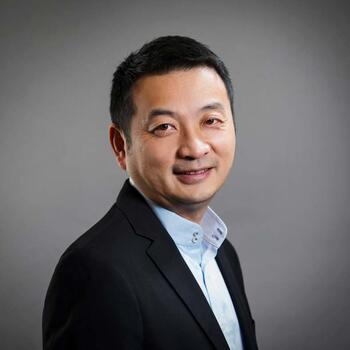
James Liang is one of the Co-founders and Executive Chairman of the Board of Trip.com Group Ltd. He was the Chief Executive Officer from 2000 to 2006 and from 2013 to 2016. Trip.com Group has grown to become one of the world’s largest online travel agencies. Currently, James serves as Co-Chairman of Tongcheng-eLong (HKSE:7080) and on the boards of a number of other Internet companies, including Sina (NASDAQ: SINA), and MakeMyTrip (NASDAQ: MMYT). He is also Research Professor of Economics at Peking University.

In addition to his expertise in the travel industry, James is also a leading scholar of demographics and social studies. He has played an important role in shaping China’s population policies in recent years and in generating public interest in issues such as education and urban planning. As a co-author of the book Too Many People in China?, James analyzed the impact of the one-child policy and the adverse effects of demographic changes on China’s economy. He is also the author of multiple other publications, including The Rise of the Network Society, and his latest book published in 2018, The Demographics of Innovation.

James received his Ph.D. degree from Stanford University and his master’s and bachelor’s degrees from Georgia Institute of Technology.

­­

Image
Feyrer, James 4X4
James Feyrer is an Associate Professor of Economics at Dartmouth College.  He received his Ph.D. from Brown University and his B.S. from Stanford University.  His work is primarily in applied macroeconomics. His work on the impacts of demographics and trade on growth have been influential in policy circles.  In particular his work on the impact of globalization on output has informed the Brexit debate. He has published articles in the Quarterly Journal of Economics, the American Economic Review, the Review of Economics and Statistics, the Journal of the European Economic Association, among other journals.

Image
Park Joon Shik 4X4
Joon-Shik Park is Professor in the Department of Sociology at Hallym University, Chuncheon, Korea. He got his Ph.D. degree at Yonsei University in Korea. His research focuses on employment and regional studies. Prof. Park began his academic career as a researcher on labor and employment issues in Korean society. Recently, Prof. Park has been interested in comparing social economy and local regeneration in the context of global social and economic crisis. He recently published several books, articles, and project reports on such issues as the impact of globalization on employment regimes and local societies; social dialogue and integration; creative innovations for sustainable local development. Prof. Park has served as President of the Korean Regional Sociological Association, Dean of the Social Science School at Hallym University. He is now a member of the Presidential Commission on Policy Planning of the Korean Government. He is leading the Inclusive Society Division in the Presidential Commission as the chair person. He is also serving as Vice President of Vision and Cooperation of Hallym University.

Image
Kenji Kushida 4X4
Kenji E. Kushida is a Research Scholar at the Shorenstein Asia-Pacific Research Center Japan Program at Stanford University. Kushida’s research streams include 1) Information Technology innovation, 2) Silicon Valley’s economic ecosystem, 3) Japan’s political economic transformation since the 1990s, and 4) the Fukushima nuclear disaster. He has published several books and numerous articles in each of these streams, including “The Politics of Commoditization in Global ICT Industries,” “Japan’s Startup Ecosystem,” “Diffusing the cloud: Cloud computing and implications for public policy,” “Leading without followers: how politics and market dynamics trapped innovations in Japan's domestic ‘Galapagos’ telecommunications sector” and others. He holds a PhD in political science from the University of California, Berkeley, an MA in East Asian studies and BAs in economics and East Asian studies, all from Stanford University.

Moderator:

Image
Karen Eggleston 4X4
Karen Eggleston is Senior Fellow at the Freeman Spogli Institute for International Studies (FSI) at Stanford University, and Director of the Stanford Asia Health Policy Program and Deputy Director of the Shorenstein Asia-Pacific Research Center at FSI. She is also a Fellow with the Center for Innovation in Global Health at Stanford University School of Medicine, and a Faculty Research Fellow of the National Bureau of Economic Research (NBER). Eggleston earned her PhD in public policy from Harvard University and has MA degrees in economics and Asian studies from the University of Hawaii and a BA in Asian studies summa cum laude (valedictorian) from Dartmouth College. Eggleston studied in China for two years and was a Fulbright scholar in Korea. Her research focuses on government and market roles in the health sector and Asia health policy, especially in China, India, Japan, and Korea; healthcare productivity; and the economics of the demographic transition. She served on the Strategic Technical Advisory Committee for the Asia Pacific Observatory on Health Systems and Policies, and has been a consultant to the World Bank, the Asian Development Bank, and the WHO regarding health system reforms in the PRC.

Via Zoom Webinar.
Register https://bit.ly/2YD0Rvk

James Liang Research Professor of Economics, Peking University.
James Feyrer Department of Economics, Dartmouth College.
Joon-Shik Park Department of Sociology, Hallym University.
Kenji Kushida Shorenstein APARC, Stanford University.

Shorenstein APARC
Stanford University
Encina Hall E301
Stanford, CA 94305-6055

(650) 723-9072 (650) 723-6530
0
Senior Fellow at the Freeman Spogli Institute for International Studies
Center Fellow at the Center for Health Policy and the Center for Primary Care and Outcomes Research
Faculty Research Fellow of the National Bureau of Economic Research
Faculty Affiliate at the Stanford Center on China's Economy and Institutions
karen-0320_cropprd.jpg PhD

Karen Eggleston is a Senior Fellow at the Freeman Spogli Institute for International Studies (FSI) at Stanford University and Director of the Stanford Asia Health Policy Program at the Shorenstein Asia-Pacific Research Center at FSI. She is also a Fellow with the Center for Innovation in Global Health at Stanford University School of Medicine, and a Faculty Research Fellow of the National Bureau of Economic Research (NBER). Her research focuses on government and market roles in the health sector and Asia health policy, especially in China, India, Japan, and Korea; healthcare productivity; and the economics of the demographic transition.

Eggleston earned her PhD in public policy from Harvard University and has MA degrees in economics and Asian studies from the University of Hawaii and a BA in Asian studies summa cum laude (valedictorian) from Dartmouth College. Eggleston studied in China for two years and was a Fulbright scholar in Korea. She served on the Strategic Technical Advisory Committee for the Asia Pacific Observatory on Health Systems and Policies and has been a consultant to the World Bank, the Asian Development Bank, and the WHO regarding health system reforms in the PRC.

Director of the Asia Health Policy Program, Shorenstein Asia-Pacific Research Center
Stanford Health Policy Associate
Faculty Fellow at the Stanford Center at Peking University, June and August of 2016
CV
Date Label
Shorenstein APARC, Stanford University.
Seminars
-

This event is part of the Asia Health Policy Program (AHPP) 2020-21 Colloquium series "Health, medicine, and longevity: Exploring public and private roles"

Non-state actors contribute to health systems in many ways that are vital for health and well-being, especially for those most vulnerable. We will hear from three distinguished speakers on non-government organizations and public-private collaborations in Asia: Dr. Karki, Executive Director of PHASE Nepal; Mr. Choub, Executive Director of KHANA, Cambodia; and Dr. Huntington of Johnson & Johnson, Singapore, prefaced by video interviews of many others. They will share about the trade-offs in contracting for health services in Asia and beyond, from the conceptual foundations to the daily reality of practitioners, and what COVID-19 has taught about “building back better” in the future.

Speakers:

Image
Jiban Karki 4X4
Dr Jiban Karki is a development professional with a PhD in Public Health, a master’s degree in Rural Development and bachelor’s degrees in Civil Engineering and Business Administration. He has over 20 years of experience in leading development organizations and managing projects in Nepal and over 9 years of experience in academic research in South Asia. He is currently working with the University of Sheffield. He also leads PHASE Nepal, an NGO he founded in 2006 in Nepal which works with multiple partners at the grassroot level in the health, education and livelihoods improvement sector where other organizations rarely go because of the remoteness of the areas.  His research interests range from community led primary health care to provision of Assistive Technology to Person with Disabilities. 


Image
Sok Chamreun Choub 4X4
Mr. Sok Chamreun Choub is the Executive Director of the Khmer HIV/AIDS NGO Alliance (KHANA) in the Kingdom of Cambodia, which focuses on prevention and treatment for HIV/AIDS, Tuberculosis, sexual reproductive health, other non-communicable diseases, as well as promoting human rights and health coverage for vulnerable populations in Cambodia. Chamreun’s professional background is in social science, but he has been devoted to public health work for 27 years in government, the UN and NGOs—more than two decades with KHANA, but also in many other roles. For example, he currently also serves as the Chief of Party for the five-year USAID-funded Community Mobilization Initiative to End TB (COMMIT); the Chair of the Steering Committee of the Health Action Coordinating Committee for the Cooperation Committee for Cambodia; Vice-Chair Civil Society Representative for The Global Fund Country Coordination Committee for Cambodia; Co-Chair of the Activists Coalition on TB for Asia and the Pacific; and the Developing Country NGOs Representative of the Stop TB Partnership Board.  

Image
Dale Huntington 4X4
Dr. Dale Huntington is currently Senior Director, Health Care Systems for Emerging Markets with Johnson and Johnson, based in Singapore where he serves as the primary Global Health Policy lead in Asia and the Pacific. In this role, he is responsible for developing and implementing a strategy to advance Johnson & Johnson’s Enterprise objectives and Government Affairs & Policy platform priorities – with a particular focus on shaping healthcare systems to expand access to quality healthcare in key emerging markets. Prior to joining Johnson and Johnson he was with the WHO, working as the Director of the Asia Pacific Observatory on Health Policy and Systems, based in the WHO Western Pacific Regional Office, Manila, and as a Scientist with the Department of Reproductive Health and Research in Geneva. Before joining WHO he was a Senior Health Specialist at the World Bank – focused on South and East Asia. He holds a Doctorate in Science degree from the Johns Hopkins University School of Hygiene and Public Health, specializing in health services research and evaluation. He has lived and worked in developing countries for over 25 years. He has an extensive publication record and is proficient in French.

Via Zoom Webinar.
Register: https://bit.ly/2KcO6DW

Jiban Karki Executive Director of PHASE Nepal, and Global Challenge Fellow at University of Sheffield
Sok Chamreun Choub Executive Director of KHANA, Phnom Penh, Cambodia
Dale Huntington Senior Director of Health Care Systems for Emerging Markets, Johnson & Johnson, Singapore
Seminars
-

This event is part of the Asia Health Policy Program (AHPP) 2020-21 Colloquium series "Health, medicine, and longevity: Exploring public and private roles"

A collaborating network of researchers summarize preliminary results from recent harmonized surveys on the impact of COVID-19 on individuals living with diabetes and hypertension, focusing on their access to medication and other care, loss of household income, (non)adherence to treatment, and worsening of symptoms. Researchers from China, India, Korea, and Thailand discuss empirical results from data gathered in the last few months. Understanding to what extent lapses in medication or other treatment have occurred, and whether telehealth or other options are associated with better outcomes, may enable locally tailored, evidence-based policy responses to help mitigate impacts on future morbidity and mortality.

Speakers
Nikhil Tandon, All India Institute of Medical Sciences
Kavita Singh, Public Health Foundation of India
Lijing Yan, Duke Kunshan University
Jianchao Quan, University of Hongkong
Daejung Kim, Korea Institute for Health and Social Affairs
Piya Hanvoravongchai, Chulalongkorn University
Wasin Laohavinij, Chulalongkorn University

Via Zoom Webinar.
Register: https://bit.ly/2H6oAhV

Nikhil Tandon All India Institute of Medical Sciences
Kavita Singh Public Health Foundation of India
Lijing Yan Duke Kunshan University
Daejung Kim Korea Institute for Health and Social Affairs
Piya Hanvoravongchai Chulalongkorn University
Shorenstein APARCStanford UniversityEncina Hall E301Stanford, CA 94305-6055
0
Visiting Scholar, 2019-20
wasin_laohavinij.jpg Ph.D.

Wasin Laohavinij joined the Walter H. Shorenstein Asia-Pacific Research Center (Shorenstein APARC) as visiting scholar with the Asia Health Policy Program for the fall quarter of 2019 from King Chulalongkorn Memorial Hospital and Chulalongkorn University, where he serves as physician and teaching assistant respectively. His research focuses on diabetes care and health service systems in Thailand.  Dr. Laohavinij received his doctorate of medicine from Chulalongkorn University in 2017.

Chulalongkorn University
Jianchao Quan University of Hong Kong
Seminars
-

This event is part of the Asia Health Policy Program (AHPP) 2020-21 Colloquium series "Health, medicine, and longevity: Exploring public and private roles"

Over the last decade, India has rapidly expanded government health insurance programs that entitle low-income households to free hospital care.  In a major policy shift away from direct public provision of healthcare, these programs contract private hospitals for service delivery. This constitutes a sizeable public subsidy delivered through private agents, but there is relatively little evidence on how private hospitals perform. Using a unique dataset on 6 million insurance claims and 15,000 patient surveys, this talk will present several key insights on the behavior of private hospitals within a large government insurance program. 1) Private hospitals manipulate coding to increase their revenues at the government's expense. 2) They also charge patients out-of-pocket for care that is supposed to be free under program rules. 3) When the government increases hospital reimbursement rates, patient charges decrease substantially. 4) However, hospitals capture approximately half the increased subsidy and this is driven by less competitive markets. The results demonstrate that hospital reimbursement rates are a key policy lever shaping hospital behavior with implications for program outcomes. Improving program performance requires a combination of stronger hospital monitoring and attention to reimbursement rates; focusing on one without the other may reduce the efficiency of public spending or worsen patient welfare. Lastly, market structure, a factor rarely taken into consideration in health policy in India, may play a role in the extent to which public subsidies benefit patients.

https://aparc.fsi.stanford.edu/asiahealthpolicy/news/postdoctoral-spotlight-radhika-jain

Image
Radhika Jain 4X4 022521
Radhika Jain is the Asia Health Policy Postdoctoral Fellow for 2019-2022 at the Walter H. Shorenstein Asia-Pacific Research Center (Shorenstein APARC).  Her research focuses on health care markets, the effectiveness of public health policy, and gender disparities in health.

She completed her doctorate in the Department of Global Health at Harvard University in 2019.  Her dissertation examined the extent to which government subsidies for health care under insurance are captured by private hospitals instead of being passed through to patients, and whether accountability measures can help patients claim their entitlements. Dr. Jain's research has been supported by grants from the Weiss Family Fund and the Jameel Poverty Action Lab (JPAL). She has worked on impact evaluations of health programs in India and on the implementation of HIV programs across several countries in sub-Saharan Africa. She also held a doctoral fellowship at the Center for Global Development.

At Shorenstein APARC, Radhika is starting new work on understanding the factors that contribute to poor female health outcomes and interventions to increase the effectiveness of public health insurance.

Via Zoom Webinar.
Register: https://bit.ly/37218gJ

Shorenstein APARC Stanford University Encina Hall E301 Stanford, CA 94305-6055
1
Asia Health Policy Postdoctoral Fellow, 2019-2022
radhika_jain.jpg Ph.D.

Radhika Jain was the Asia Health Policy Postdoctoral Fellow for 2019-2022 at the Walter H. Shorenstein Asia-Pacific Research Center (Shorenstein APARC).  Her research focuses on health care markets, the effectiveness of public health policy, and gender disparities in health.

She completed her doctorate in the Department of Global Health at Harvard University in 2019.  Her dissertation examined the extent to which government subsidies for health care under insurance are captured by private hospitals instead of being passed through to patients, and whether accountability measures can help patients claim their entitlements. Dr. Jain's research has been supported by grants from the Weiss Family Fund and the Jameel Poverty Action Lab (JPAL). She has worked on impact evaluations of health programs in India and on the implementation of HIV programs across several countries in sub-Saharan Africa. She also held a doctoral fellowship at the Center for Global Development.

At Shorenstein APARC, Radhika began new work on understanding the factors that contribute to poor female health outcomes and interventions to increase the effectiveness of public health insurance.

2019-2022 Asia Health Policy Postdoctoral Fellow
Seminars
Subscribe to Environment