Elections
-

On November 24, 2018, Taiwan's electorate will go to the polls to select thousands of ward chiefs, hundreds of council members, and dozens of mayors and county executives. This talk will cover the results of the election and discuss the implications for Taiwan's future, including party politics and cross-Strait relations.

Image
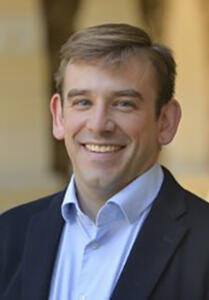
Kharis Templeman
Kharis Templeman is the Project Manager of the Taiwan Democracy and Security Project in the U.S.-Asia Security Initiative, and a social science research scholar at the Shorenstein Asia-Pacific Research Center (APARC) at Stanford University. His current research includes projects on party system institutionalization and partisan realignments, electoral integrity and manipulation in East Asia, the politics of defense spending in Taiwan, and the representation of Taiwan’s indigenous minorities.
 
His most recent publication is “When Do Electoral Quotas Advance Indigenous Representation?: Evidence from the Taiwanese Legislature,” in Ethnopolitics. He is also the editor (with Larry Diamond and Yun-han Chu) of Taiwan’s Democracy Challenged: The Chen Shui-bian Years (2016, Lynne Rienner Publishing). Other work has appeared in the Taiwan Journal of Democracy, Comparative Political Studies and APSA Annals of Comparative Democratization.
 

Philippines Conference Room
Encina Hall, 3rd Floor
616 Serra Mall, Stanford, CA 94305

Kharis Templeman <i>Project Manager, Taiwan Democracy & Security Project, U.S.-Asia Security Initiative, Stanford University</i>
Lectures
Paragraphs

Although democracy is, in principle, the antithesis of dynastic rule, families with multiple members in elective office continue to be common around the world. In most democracies, the proportion of such "democratic dynasties" declines over time, and rarely exceeds ten percent of all legislators. Japan is a startling exception, with over a quarter of all legislators in recent years being dynastic. In Dynasties and Democracy, Daniel M. Smith sets out to explain when and why dynasties persist in democracies, and why their numbers are only now beginning to wane in Japan—questions that have long perplexed regional experts.

Smith introduces a compelling comparative theory to explain variation in the presence of dynasties across democracies and political parties. Drawing on extensive legislator-level data from twelve democracies and detailed candidate-level data from Japan, he examines the inherited advantage that members of dynasties reap throughout their political careers—from candidate selection, to election, to promotion into cabinet. Smith shows how the nature and extent of this advantage, as well as its consequences for representation, vary significantly with the institutional context of electoral rules and features of party organization. His findings extend far beyond Japan, shedding light on the causes and consequences of dynastic politics for democracies around the world.
 
Daniel M. Smith is an associate professor in the Department of Government at Harvard University. During the 2012-13 academic year, he was a Shorenstein Postdoctoral Fellow at Shorenstein APARC.
All Publications button
1
Publication Type
Books
Publication Date
Authors
Number
978-1-503605-05-3
Paragraphs

Improving the quality of primary care may reduce avoidable hospital admissions. Avoidable admissions for conditions such as diabetes are used as a quality metric in the Health Care Quality Indicators of the Organization for Economic Cooperation and Development (OECD). Using the OECD indicators, we compared avoidable admission rates and spending for diabetes-related complications in Japan, Singapore, Hong Kong, and rural and peri-urban Beijing, China, in the period 2008–14. We found that spending on diabetes-related avoidable hospital admissions was substantial and increased from 2006 to 2014. Annual medical expenditures for people with an avoidable admission were six to twenty times those for people without an avoidable admission. In all of our study sites, when we controlled for severity, we found that people with more outpatient visits in a given year were less likely to experience an avoidable admission in the following year, which implies that primary care management of diabetes has the potential to improve quality and achieve cost savings. Effective policies to reduce avoidable admissions merit investigation.


All Publications button
1
Publication Type
Journal Articles
Publication Date
Journal Publisher
Health Affairs
Authors
Karen Eggleston
-

While much of the existing literature examines vote buying in the context of party systems, including both competitive and hegemonic party systems, this talk, based on a study coauthored by Professor Susan Whiting, addresses vote buying in a context in which no political party effectively structures electoral competition—village elections in China. This study argues that the lure of non-competitive rents explains variation over time and space in the phenomenon of vote buying. It tests this hypothesis, derived from an in-depth case study, in a separate sample of 1200 households in 62 villages in five provinces, using villagers’ reports of vote buying in elections and survey data on land takings as an indicator of available rents. While the literature views the introduction of elections as increasing accountability of village leaders to voters, vote buying likely undermines accountability. This study suggests that the regime has tolerated vote buying as a means of identifying and coopting influential economic elites in rural communities.


Image
susan whiting
Susan Whiting is Associate Professor of Political Science and Adjunct Associate Professor of Law and International Studies at the University of Washington in Seattle.  She specializes in Chinese and comparative politics, with particular emphasis on the political economy of development.  Her first book, Power and Wealth in Rural China: The Political Economy of Institutional Change, was published by Cambridge University Press in 2001.  She has contributed chapters and articles on property rights, fiscal reform, governance, contract enforcement and dispute resolution to numerous publications. She has done extensive research in China and has contributed to studies of governance, fiscal reform, and non-governmental organizations under the auspices of the World Bank, the Asian Development Bank, and the Ford Foundation, respectively.  She, along with colleagues in the law school, is participating in a project on access to justice and legal aid provision in rural China.  Professor Whiting’s current research interests include property rights in land, the role of the courts in economic transition, as well as the politics of fiscal reform in transition economies. Among her courses, she teaches Comparative Politics, Chinese Politics, Qualitative Research Methods, and Law, Development, & Transition, a course offered jointly in the Department of Political Science, the Jackson School of International Studies, and the Law, Societies and Justice Program.


Image
China Toolkit
This event is part of the 2018 Winter Colloquia; An Expanding Toolkit: The Evolution of Governance in China

China has undergone historic economic, social and cultural transformations since its Opening and Reform. Leading scholars explore expanding repertoires of control that this authoritarian regime – both central and local – are using to manage social fissures, dislocation and demands. What new strategies of governance has the Chinese state devised to manage its increasingly fractious and dynamic society? What novel mechanisms has the state innovated to pre-empt, control and de-escalate contention? China Program’s 2018 Winter Colloquia Series highlights cutting-edge research on contemporary means that various levels of the Chinese state are deploying to manage both current and potential discontent from below.

Susan Whiting <i>Associate Professor of Political Science, Adjunct Associate Professor of Law and International Studies, University of Washington</i>
Lectures
-

RSVPs are Closed for this Event

Sponsored by:
Center of Democracy, Development, and the Rule of Law, Center for East Asian Studies, China Program, Shorenstein APARC

Contact: Kelley Cortright


Two decades after its transformation from a British colony to become China’s Special Administrative Region, Hong Kong is an arena of tensions punctuated by local-mainland discord and mutual distrust. Highlighting the HKSAR’s “One Country, Two Systems” actualization challenges, four political leaders and six academics from Hong Kong will pinpoint the dynamics shaping their city of 7.2 million amid a contest between local liberal values and its party-state sovereign’s authoritarian orthodoxy.  Anchored in multidisciplinary approaches with divergent ideo-political perspectives, this one-day seminar engages the Stanford community with Hong Kong front-liners.

Schedule:

9:00 - 9:15 am Opening Remarks:

Chaofen SUN (Professor, EALC, Stanford), Gordon CHANG (Professor, History, Stanford)

9:20 - 10:50 am Keynote Speakers:

Moderator: Ming CHAN (Distinguished Practitioner, CEAS, Stanford)

  • Martin LEE (HK Democratic Party founding chair; HK Basic Law drafter; ex-HKSAR legislator)
  • Jasper TSANG (Democratic & Progressive Alliance for a Better HK founding chair, ex- HKSAR legislature president)
  • Cheong CHING (veteran journalist)
  • Zhenmin WANG (PRC Central Gov’t Liaison Office-HK, Law Dept. Director; ex-Dean Tsing Hua University Law School)

10:50 - 11:30 am Open Discussion

11:30 am - 1:00 pm Lunch Break

1:00 - 2:30 pm Academic Panel I: "HKSAR Political Dynamics"

  • “Ideologies and Factionalism in Beijing-HK Relations: Nationalism vs Localism,” Sonny LO (Deputy Director, SPACE, HKU)
  • “Party Under-Development in Arrested Democratization: 20 years after 1997 in Hong Kong,” Ngok MA (Associate Professor, Government & Public Administration, CUHK)
  • “Stages of the Democratic Movement in Hong Kong,” Benny TAI (Associate Professor, Law, HKU)

2:30 - 4:00 pm Academic Panel II: "HKSAR Socio-Economic Dimensions"

  • “HKSAR’s Role in PRC Financial Globalization,” Vic Y. W. LI (HKEdU)
  • “Constitutive Censorship: A New Face of Newsroom Control in Hong Kong,” Allan AU (CUHK)
  • “State-Society interface--Policing HKSAR Popular Protests, 1997-2017,” Lawrence HO (HKEdU)

4:15 - 5:30 pm Closing Roundtable
Lynn WHITE (Professor, Politics & International Affairs, Princeton)
Larry DIAMOND (Senior Fellow, CDDRL, Stanford)


Philipppines Conference Room
 Encina Hall, 3rd Floor
 616 Serra Street
 Stanford, CA 94305

Symposiums
News Type
News
Date
Paragraphs

In October's Journal of Democracy, Shorenstein Asia-Pacific Research Center director Gi-Wook Shin and 2016-17 Koret Fellow Rennie Moon examine Park Geun Hye's fall from power and impeachment, the challenges facing President Moon and the Democratic Party, and what it all spells for the future of Korean democracy.

Hero Image
park protests south korea
Demonstrators in Seoul call for the impeachment of President Park Geun Hye, December 24, 2016.
Flickr/Ken Shin (CC BY-NC 2.0)
All News button
1
News Type
Commentary
Date
Paragraphs

Prime Minister Shinzo Abe called for a snap election in Japan on October 22, in a bid to seal his coalition's majority in the lower house.

But, as Shorenstein APARC's Daniel Sneider suggests, Abe may not have taken into account Tokyo governor Yuriko Koike's opposition and growing support.

Read the full article at Reuters.

Hero Image
Shinzo Abe
Japanese prime minister Shinzo Abe speaks in London in June 2013
Flickr/Chatham House (CC BY 2.0)
All News button
1
Authors
Gi-Wook Shin
Rennie Moon
News Type
Commentary
Date
Paragraphs

As expected, Moon Jae-in has been elected as South Korea’s 19th president. In a five-way contest, Moon garnered 41.1 percent of the vote, with strong support from those in their 20s to 50s, winning most of the regions in the country. 

South Koreans’ longing for change had been expressed through the now-famous candlelight demonstrations that lasted for almost twenty consecutive weekends culminating in the impeachment of now former president Park Geun-hye. It was also reflected in the highest voter turnout in two decades, at 77.2 percent.

Just hours after his decisive victory, Moon began his five-year term without the usual practice of a transition team. Moreover, he took office during turbulent times — domestically and internationally — perhaps even more so than when former president Kim Dae-jung took office in 1998 when the nation was struggling with the Asian financial crisis.

First and foremost, Moon must deal with the mounting social and economic challenges that the country is facing. Having entered a period of low-growth coupled with an aging population, the economy confronts a host of difficult issues, including high levels of youth unemployment, income inequality, household debt, elderly poverty and rising social welfare expenditures.

The Moon administration immediately established a ‘job creation committee’ and pledged to create 810,000 jobs in the public sector. But it will not be easy to amass the financial resources needed by a government already struggling with serious budget deficits. Most agree that ‘economic democratisation’ is needed, but the details of how to achieve that — including reforming the chaebol — remain unclear.

Economic uncertainties have been a key factor contributing to social unrest. Words in vogue among South Koreans in their 20s and 30s reflect the social discontent with youth unemployment and inequality that ultimately erupted in the demonstrations.

‘Hell Joseon’ captures a sentiment of what it means to live in South Korea’s hellish reality. ‘Golden Spoons Dirt Spoons’ levels the charge that one’s life course is decided for good by one’s family background. ‘Gapjil’ refers to acts of impunity by the powerful against the weak, while the ‘Sampo generation’ is a generation forced to give up three things: courtship, marriage and children. If Moon fails to live up to the expectations of the country’s youth, a bloc that widely supported him, social discontent and symptoms of unrest will likely return.

Moon also faces daunting tasks in national security matters. North Korea has continued to develop weapons of mass destruction and relations have been all but completely severed. As controversy over the deployment of THAAD (Terminal High Altitude Area Defense) has shown, South Korea remains caught in the middle of a hegemonic struggle between the United States and China.

If that wasn’t enough, South Korea made a deal with Japan on the comfort women issue in late 2015 but the public now demands its renegotiation. South Korean–Russian relations are also at their grimmest. To top it all off, Moon must deal with a formidable set of nationalist and populist leaders — Donald Trump, Xi Jinping, Shinzo Abe, Kim Jong-un and Vladimir Putin — all known for their very strong characters, in stark contrast to Moon’s nice-guy, everyman personality.

The most urgent but also most challenging task is managing inter-Korean relations. As Pyongyang steps up its nuclear and missile programs, Seoul must reaffirm to the international community that it will continue its efforts to denuclearise the North. At the same time, relations between the two Koreas must be improved to strengthen South Korea’s strategic position in the region as well as reduce tensions on the peninsula.

Trump has been sending out confusing messages probably because he has no suitable plan to deal with Pyongyang. As such, if Seoul were to bring to the table a persuasive policy of engagement, Washington would be receptive unless it weakens US efforts towards denuclearisation. Both Beijing (pressured by Washington to solve the North Korean nuclear issue) and Pyongyang (concerned about becoming overly dependent on China) would welcome Seoul taking the initiative to improve inter-Korean relations.

Some pundits at home and abroad worry that the Moon administration might follow in the footsteps of the Roh administration (2003–2008), whose outcomes lagged too far behind its good will to bring about reform. Moon served as Roh’s chief of staff and the two administrations overlap in manpower. But Moon and his team have also learned many lessons from the trial and error of the Roh administration, preparing themselves over the past ten years of conservative rule.

With the new administration in place, political turmoil over the last six months has finally ended. Moon’s first moves as president, including key appointments in the Blue House and opening up communication channels with the public, have been well received. A public poll conducted by Gallup Korea one week after the inauguration showed that 87 percent of the respondents expected him to do well. Despite mounting challenges, South Koreans remain hopeful that their new leader can take the nation to the next level.

This piece was originally carried by East Asia Forum on May 23, 2017, and reposted with permission.

Hero Image
moon jae in wave
South Korean President Moon Jae-In waves to his supporters as he leaves an event on May 10, 2017, in Seoul, South Korea.
Getty Images/Pool
All News button
1
Subscribe to Elections