Health and Medicine

FSI’s researchers assess health and medicine through the lenses of economics, nutrition and politics. They’re studying and influencing public health policies of local and national governments and the roles that corporations and nongovernmental organizations play in providing health care around the world. Scholars look at how governance affects citizens’ health, how children’s health care access affects the aging process and how to improve children’s health in Guatemala and rural China. They want to know what it will take for people to cook more safely and breathe more easily in developing countries.

FSI professors investigate how lifestyles affect health. What good does gardening do for older Americans? What are the benefits of eating organic food or growing genetically modified rice in China? They study cost-effectiveness by examining programs like those aimed at preventing the spread of tuberculosis in Russian prisons. Policies that impact obesity and undernutrition are examined; as are the public health implications of limiting salt in processed foods and the role of smoking among men who work in Chinese factories. FSI health research looks at sweeping domestic policies like the Affordable Care Act and the role of foreign aid in affecting the price of HIV drugs in Africa.

-

This event is part of the Asia Health Policy Program (AHPP) 2020-21 Colloquium series "Health, medicine, and longevity: Exploring public and private roles"

Non-state actors contribute to health systems in many ways that are vital for health and well-being, especially for those most vulnerable. We will hear from three distinguished speakers on non-government organizations and public-private collaborations in Asia: Dr. Karki, Executive Director of PHASE Nepal; Mr. Choub, Executive Director of KHANA, Cambodia; and Dr. Huntington of Johnson & Johnson, Singapore, prefaced by video interviews of many others. They will share about the trade-offs in contracting for health services in Asia and beyond, from the conceptual foundations to the daily reality of practitioners, and what COVID-19 has taught about “building back better” in the future.

Speakers:

Image
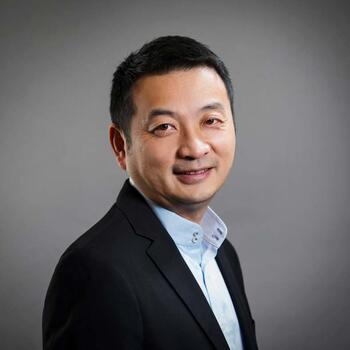
Jiban Karki 4X4
Dr Jiban Karki is a development professional with a PhD in Public Health, a master’s degree in Rural Development and bachelor’s degrees in Civil Engineering and Business Administration. He has over 20 years of experience in leading development organizations and managing projects in Nepal and over 9 years of experience in academic research in South Asia. He is currently working with the University of Sheffield. He also leads PHASE Nepal, an NGO he founded in 2006 in Nepal which works with multiple partners at the grassroot level in the health, education and livelihoods improvement sector where other organizations rarely go because of the remoteness of the areas.  His research interests range from community led primary health care to provision of Assistive Technology to Person with Disabilities. 


Image
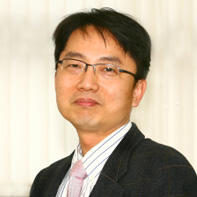
Sok Chamreun Choub 4X4
Mr. Sok Chamreun Choub is the Executive Director of the Khmer HIV/AIDS NGO Alliance (KHANA) in the Kingdom of Cambodia, which focuses on prevention and treatment for HIV/AIDS, Tuberculosis, sexual reproductive health, other non-communicable diseases, as well as promoting human rights and health coverage for vulnerable populations in Cambodia. Chamreun’s professional background is in social science, but he has been devoted to public health work for 27 years in government, the UN and NGOs—more than two decades with KHANA, but also in many other roles. For example, he currently also serves as the Chief of Party for the five-year USAID-funded Community Mobilization Initiative to End TB (COMMIT); the Chair of the Steering Committee of the Health Action Coordinating Committee for the Cooperation Committee for Cambodia; Vice-Chair Civil Society Representative for The Global Fund Country Coordination Committee for Cambodia; Co-Chair of the Activists Coalition on TB for Asia and the Pacific; and the Developing Country NGOs Representative of the Stop TB Partnership Board.  

Image
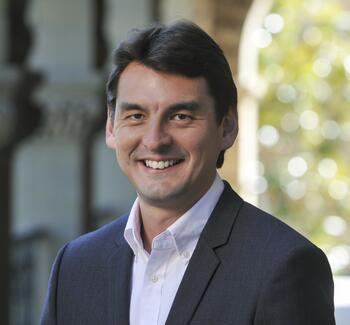
Dale Huntington 4X4
Dr. Dale Huntington is currently Senior Director, Health Care Systems for Emerging Markets with Johnson and Johnson, based in Singapore where he serves as the primary Global Health Policy lead in Asia and the Pacific. In this role, he is responsible for developing and implementing a strategy to advance Johnson & Johnson’s Enterprise objectives and Government Affairs & Policy platform priorities – with a particular focus on shaping healthcare systems to expand access to quality healthcare in key emerging markets. Prior to joining Johnson and Johnson he was with the WHO, working as the Director of the Asia Pacific Observatory on Health Policy and Systems, based in the WHO Western Pacific Regional Office, Manila, and as a Scientist with the Department of Reproductive Health and Research in Geneva. Before joining WHO he was a Senior Health Specialist at the World Bank – focused on South and East Asia. He holds a Doctorate in Science degree from the Johns Hopkins University School of Hygiene and Public Health, specializing in health services research and evaluation. He has lived and worked in developing countries for over 25 years. He has an extensive publication record and is proficient in French.

Via Zoom Webinar.
Register: https://bit.ly/2KcO6DW

Jiban Karki Executive Director of PHASE Nepal, and Global Challenge Fellow at University of Sheffield
Sok Chamreun Choub Executive Director of KHANA, Phnom Penh, Cambodia
Dale Huntington Senior Director of Health Care Systems for Emerging Markets, Johnson & Johnson, Singapore
Seminars
Paragraphs

Shorenstein APARC's annual overview for the academic year 2019-20 is now available.

Learn about the research, events, and publications produced by the Center's programs over the last twelve months. Feature sections look at how APARC has continued its mission amid COVID-19 restrictions and how our research has been adapted to factor in the impact of the pandemic. Learn about new talent at the Center, including new leadership of the Japan Program and an enhanced focus on South Asia research. Catch up on the Center's policy work, education initiatives, events, and outreach.

Read online:

All Publications button
1
Publication Type
Annual Reports
Publication Date
-

This event is part of the Asia Health Policy Program (AHPP) 2020-21 Colloquium series "Health, medicine, and longevity: Exploring public and private roles"

A collaborating network of researchers summarize preliminary results from recent harmonized surveys on the impact of COVID-19 on individuals living with diabetes and hypertension, focusing on their access to medication and other care, loss of household income, (non)adherence to treatment, and worsening of symptoms. Researchers from China, India, Korea, and Thailand discuss empirical results from data gathered in the last few months. Understanding to what extent lapses in medication or other treatment have occurred, and whether telehealth or other options are associated with better outcomes, may enable locally tailored, evidence-based policy responses to help mitigate impacts on future morbidity and mortality.

Speakers
Nikhil Tandon, All India Institute of Medical Sciences
Kavita Singh, Public Health Foundation of India
Lijing Yan, Duke Kunshan University
Jianchao Quan, University of Hongkong
Daejung Kim, Korea Institute for Health and Social Affairs
Piya Hanvoravongchai, Chulalongkorn University
Wasin Laohavinij, Chulalongkorn University

Via Zoom Webinar.
Register: https://bit.ly/2H6oAhV

Nikhil Tandon All India Institute of Medical Sciences
Kavita Singh Public Health Foundation of India
Lijing Yan Duke Kunshan University
Daejung Kim Korea Institute for Health and Social Affairs
Piya Hanvoravongchai Chulalongkorn University
Shorenstein APARCStanford UniversityEncina Hall E301Stanford, CA 94305-6055
0
Visiting Scholar, 2019-20
wasin_laohavinij.jpg Ph.D.

Wasin Laohavinij joined the Walter H. Shorenstein Asia-Pacific Research Center (Shorenstein APARC) as visiting scholar with the Asia Health Policy Program for the fall quarter of 2019 from King Chulalongkorn Memorial Hospital and Chulalongkorn University, where he serves as physician and teaching assistant respectively. His research focuses on diabetes care and health service systems in Thailand.  Dr. Laohavinij received his doctorate of medicine from Chulalongkorn University in 2017.

Chulalongkorn University
Jianchao Quan University of Hong Kong
Seminars
-

This event is part of the Asia Health Policy Program (AHPP) 2020-21 Colloquium series "Health, medicine, and longevity: Exploring public and private roles"

Over the last decade, India has rapidly expanded government health insurance programs that entitle low-income households to free hospital care.  In a major policy shift away from direct public provision of healthcare, these programs contract private hospitals for service delivery. This constitutes a sizeable public subsidy delivered through private agents, but there is relatively little evidence on how private hospitals perform. Using a unique dataset on 6 million insurance claims and 15,000 patient surveys, this talk will present several key insights on the behavior of private hospitals within a large government insurance program. 1) Private hospitals manipulate coding to increase their revenues at the government's expense. 2) They also charge patients out-of-pocket for care that is supposed to be free under program rules. 3) When the government increases hospital reimbursement rates, patient charges decrease substantially. 4) However, hospitals capture approximately half the increased subsidy and this is driven by less competitive markets. The results demonstrate that hospital reimbursement rates are a key policy lever shaping hospital behavior with implications for program outcomes. Improving program performance requires a combination of stronger hospital monitoring and attention to reimbursement rates; focusing on one without the other may reduce the efficiency of public spending or worsen patient welfare. Lastly, market structure, a factor rarely taken into consideration in health policy in India, may play a role in the extent to which public subsidies benefit patients.

https://aparc.fsi.stanford.edu/asiahealthpolicy/news/postdoctoral-spotlight-radhika-jain

Image
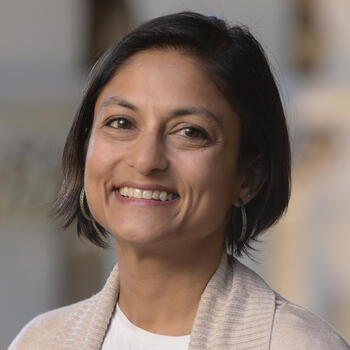
Radhika Jain 4X4 022521
Radhika Jain is the Asia Health Policy Postdoctoral Fellow for 2019-2022 at the Walter H. Shorenstein Asia-Pacific Research Center (Shorenstein APARC).  Her research focuses on health care markets, the effectiveness of public health policy, and gender disparities in health.

She completed her doctorate in the Department of Global Health at Harvard University in 2019.  Her dissertation examined the extent to which government subsidies for health care under insurance are captured by private hospitals instead of being passed through to patients, and whether accountability measures can help patients claim their entitlements. Dr. Jain's research has been supported by grants from the Weiss Family Fund and the Jameel Poverty Action Lab (JPAL). She has worked on impact evaluations of health programs in India and on the implementation of HIV programs across several countries in sub-Saharan Africa. She also held a doctoral fellowship at the Center for Global Development.

At Shorenstein APARC, Radhika is starting new work on understanding the factors that contribute to poor female health outcomes and interventions to increase the effectiveness of public health insurance.

Via Zoom Webinar.
Register: https://bit.ly/37218gJ

Shorenstein APARC Stanford University Encina Hall E301 Stanford, CA 94305-6055
1
Asia Health Policy Postdoctoral Fellow, 2019-2022
radhika_jain.jpg Ph.D.

Radhika Jain was the Asia Health Policy Postdoctoral Fellow for 2019-2022 at the Walter H. Shorenstein Asia-Pacific Research Center (Shorenstein APARC).  Her research focuses on health care markets, the effectiveness of public health policy, and gender disparities in health.

She completed her doctorate in the Department of Global Health at Harvard University in 2019.  Her dissertation examined the extent to which government subsidies for health care under insurance are captured by private hospitals instead of being passed through to patients, and whether accountability measures can help patients claim their entitlements. Dr. Jain's research has been supported by grants from the Weiss Family Fund and the Jameel Poverty Action Lab (JPAL). She has worked on impact evaluations of health programs in India and on the implementation of HIV programs across several countries in sub-Saharan Africa. She also held a doctoral fellowship at the Center for Global Development.

At Shorenstein APARC, Radhika began new work on understanding the factors that contribute to poor female health outcomes and interventions to increase the effectiveness of public health insurance.

2019-2022 Asia Health Policy Postdoctoral Fellow
Seminars
-

This event is part of the Asia Health Policy Program (AHPP) 2020-21 Colloquium series "Health, medicine, and longevity: Exploring public and private roles"

A quarter century ago in a seminal paper, Hart, Shleifer and Vishny (NBER1996, QJE1997) developed a theory of the ‘Proper Scope of Government.’ In this webinar, Oliver Hart, 2016 Nobel Laureate, reflects on that framework and its place in economics, as well as the inspiration for his more recent work on norms and guiding principles, contracts as reference points, maximizing shareholder welfare, and exit versus voice. In discussion with Karen Eggleston, Hart answers questions posed by economists who have built upon that paper and offers insights on how the theory applies to understanding public and private roles in healthcare, education, and other publicly-financed services. With China, India, and many other emerging markets engaged in decades-long controversies about public and private roles in their health sectors, and international focus on public-private partnerships for COVID-19 response and harnessing innovation to address other global challenges, this is an opportune time to discuss how conceptually rigorous thinking can inform a sometimes divisive and ideological debate with vital implications for human welfare.


Image
Oliver Hart 021021
Oliver Hart is currently the Lewis P. and Linda L. Geyser University Professor at Harvard University, where he has taught since 1993. He is the 2016 co-recipient of the Sveriges Riksbank Prize in Economic Sciences in Memory of Alfred Nobel, a Fellow of the Econometric Society, the American Academy of Arts and Sciences, the British Academy, and the American Finance Association, a member of the National Academy of Sciences, a Distinguished Fellow of the American Economic Association, and has several honorary degrees. Hart works mainly on contract theory, the theory of the firm, corporate finance, and law and economics. His research centers on the roles that ownership structure and contractual arrangements play in the governance and boundaries of corporations. He has published a book (Firms, Contracts, and Financial Structure, Oxford University Press, 1995) and numerous journal articles. He has used his theoretical work on firms and contracts in several legal cases. He has been president of the American Law and Economics Association and a vice president of the American Economic Association.

This keynote is part of the Stanford Asia Health Policy Program colloquium series entitled:  Health, medicine, and longevity: Exploring public and private roles

Governmental agencies and non-state actors interact within health systems in complicated and sometimes controversial ways that are vital for health and well-being. These run the gamut from developing and distributing vaccines and therapeutics for COVID-19 and mitigating the social and economic impact of the pandemic, to achieving and sustaining universal health coverage, addressing the social determinants of health, mitigating disparities, and encouraging innovations for healthy longevity, to name but a few. From the conceptual foundations to the daily reality of practitioners, this colloquium series will explore the evidence and experience of the public-private nexus in health sectors across Asia, in comparative global perspective. With colloquia throughout the academic year, the series features a keynote on February 10, 2021 from Nobel Laureate Oliver Hart, “A quarter century of ‘The Proper Scope of Government’: Theory and Applications” (dating from the 1996 NBER working paper subsequently published in the Quarterly Journal of Economics, QJE).

https://www.youtube.com/watch?v=g9JRhGpXC2Y&feature=emb_title

Via Zoom Webinar.
Register https://bit.ly/3jAvFFQ

Oliver Hart Lewis P. and Linda L. Geyser University Professor, Harvard University
Seminars
-

This event is part of the Asia Health Policy Program (AHPP) 2020-21 Colloquium series "Health, medicine, and longevity: Exploring public and private roles"

Co-sponsored by the Asia Health Policy Program and the Southeast Asia Program

Jakarta time: Friday, October 30, 2020, 7:30am - 9:00am

Apart from the 1998 Asian Financial Crisis (AFC), the current COVID-19 economic crisis is Indonesia’s most serious economic calamity in half a century with adverse impact. In March 2020, Indonesia’s poverty rate increased from 9.41% to 9.78% year on year, the equivalent of 1.28 million new people entering poverty.  By the end of 2020, it is expected that poverty rates will increase above 10%, wiping out two years of Indonesia’s poverty alleviation achievements. Social protection is key for crisis recovery. Indonesia’s social protection system has continually become stronger since the AFC. Over the past two decades, Indonesia has significantly expanded its social protection programs and coverage buttressed by a robust social registry that covers the poorest 40% of the population. The COVID-19 crisis is pushing the system to its limits. Insufficient data on Indonesians vulnerable to falling into poverty (and above the poorest 40%), coupled with response programs with complicated delivery and eligibility mechanisms, has made it challenging to deliver response-focused social protection. Dr. Sumarto will discuss whether the current social protection system is strong enough to weather the storm, especially to protect those working in the informal sector and marginal groups. Today, Indonesian policymakers have the choice to keep on following the same path and continue investing on the same social protection system, or take a radical move to reform it and make it better equipped to face future challenges.

Image
Sudarno Sumarto 102920
Sudarno Sumarto is an economist specializing in poverty reduction, social protection, labor, health, education and political economy of public policy implementation. Before joining the TNP2K, he was previously a visiting scholar at the Shorenstein Asia Pacific Research Center (APARC) at Stanford University as well as Founder and Executive Director of The SMERU Research Institute. Well-versed in leading large-scale research projects, Sudarno also provides intellectual leadership to Indonesia’s RISE country team. His research has been widely published in high-impact journals such as the Journal of Political Economy, Journal of Development Economics, and World Bank Economic Review, and has extensively contributed to policy-making by the Government of Indonesia. Sudarno earned his doctoral and master’s degrees in economics from Vanderbilt University.


Via Zoom Webinar.
Register https://bit.ly/30vi2jJ

Sudarno Sumarto Policy Adviser, National Team for the Acceleration of Poverty Reduction (TNP2K), Senior Research Fellow, The SMERU Research Institute.
Seminars
-

This event is part of the Asia Health Policy Program (AHPP) 2020-21 Colloquium series "Health, medicine, and longevity: Exploring public and private roles"

Hong Kong time: Friday, October 16, 2020, 8:00am - 9:15am

Gabriel Leung, one of Asia’s leading epidemiologists and Dean of Medicine at the University of Hong Kong, provides an update on the global pandemic and policy responses in Asia. Leung’s presentation draws on his deep experience in research and policy, including research that defined the epidemiology of three novel viral epidemics, namely SARS in 2003, influenza A(H7N9) in 2013 and most recently COVID-19. Leung also served as Hong Kong's first Under Secretary for Food and Health (2008-11) and fifth Director of the Chief Executive's Office (2011-2).

Image
Gabriel Leung 101520
Gabriel Leung is the fortieth Dean of Medicine (2013-), inaugural Helen and Francis Zimmern Professor in Population Health and holds the Chair of Public Health Medicine at the University of Hong Kong (HKU). He was the last Head of Community Medicine (2012-3) at the University as well as Hong Kong's first Under Secretary for Food and Health (2008-11) and fifth Director of the Chief Executive's Office (2011-2) in government.

Leung is one of Asia's leading epidemiologists and global health exponents, having authored more than 500 scholarly papers with an h-index of 66 (Scopus). His research defined the epidemiology of three novel viral epidemics, namely SARS in 2003, influenza A(H7N9) in 2013 and most recently COVID-19. He led Hong Kong government's efforts against pandemic A(H1N1) in 2009. He was founding co-director of HKU's World Health Organisation (WHO) Collaborating Centre for Infectious Disease Epidemiology and Control (2014-8) and currently directs the Laboratory of Data Discovery for Health at the Hong Kong Science and Technology Park (2020-).

Leung regularly advises national and international agencies including the World Health Organisation, World Bank, Asian Development Bank, Boao Forum for Asia, Institut Pasteur, Japan Center for International Exchange and China Centers for Disease Control and Prevention. He is an Adjunct Professor of Peking Union Medical College Hospital and Adjunct Professorial Researcher of the China National Health Development Research Center.

He edited the Journal of Public Health (2007-14), was inaugural co-editor of Epidemics, associate editor of Health Policy and is founding deputy editor-in-chief of China CDC Weekly. He currently serves on the editorial boards of seven journals, including the British Medical Journal.    

He is an elected member of the US National Academy of Medicine.

Via Zoom Webinar

Register at https://bit.ly/33jLhGO

Gabriel Leung Dean of Medicine, University of Hong Kong
Seminars
Paragraphs

To explore how business leaders and entrepreneurs in China responded to the COVID-19 lockdown and how they’re planning for the future, the China Program conducted a survey in coordination with the Stanford Center at Peking University and Stanford Business School alumni Christopher Thomas and Xue (Xander) Wu. Though taken from a small sample, the results are one of the best samples to date of how businesses in China are responding to the uncertain geopolitical environment the pandemic and current U.S.-China relations are creating.

The survey reveals mixed progress in reopening different sectors of China's economy, but also shows that many business leaders in China are planning for some level of decoupling as access to global technology and supply chains remains uncertain.

All Publications button
1
Publication Type
Commentary
Publication Date
Authors
Jean C. Oi
Authors
Noa Ronkin
News Type
News
Date
Paragraphs

The world’s population is aging at a faster rate and in larger cohorts than ever before. In countries like Japan that have low fertility rates and high life expectancy, population aging is a risk to social sustainability. Developing policies and healthcare infrastructure to support aging populations is now critical to the social, economic, and developmental wellbeing of all nations. As the COVID-19 pandemic has repeatedly shown, accurate projections of future population health status are crucial for designing sustainable healthcare services and social security systems.

Such projections necessitate models that incorporate the diverse and dynamic associations between health, economic, and social conditions among older people. However, the currently available models – known as multistate transition microsimulation models – require high-quality panel data for calibration and meaningful estimates. Now a group of researchers, including APARC Deputy Director and Asia Health Policy Program Director Karen Eggleston, has developed an alternative method that relaxes this data requirement.

In a newly published paper in Health Economics, Eggleston and her colleagues describe their study that proposes a novel approach using more readily-available data in many countries, thus promising more accurate projections of the future health and functional status of elderly and aging populations. This alternative method uses cross‐sectional representative surveys to estimate multistate‐transition contingency tables applied to Japan's population. When combined with estimated comorbidity prevalence and death record information, this method can determine the transition probabilities of health statuses among aging cohorts.

In comparing the results of their projections against a control, Eggleston and her colleagues show that traditional static models do not always accurately forecast the prevalence of some comorbid conditions such as cancer, heart disease, and stroke. While the sample sets used to test the new methodology originate in Japan, the proposed multistate transition contingency table method has important applications for aging societies worldwide. As rapid population aging becomes a global trend, the ability to produce robust forecasts of population health and functional status to guide policy is a universal need.

Read the full paper in Health Economics.

Learn more about Eggleston’s research projects >>

Read More

A communications robot named Pepper by Softbank
Q&As

Robots May Be the Right Prescription for Struggling Nursing Homes

Karen Eggleston and Yong Suk Lee speak to the Oliver Wyman Forum on how robotics and advancing technologies are helping staff in Japanese nursing homes provide better and safer care to their patients.
Robots May Be the Right Prescription for Struggling Nursing Homes
Portrait of Young Kyung Do, Winner of the 2020 Rothman Epidemiology Prize
News

Asia Health Policy Program Alum Wins Rothman Epidemiology Prize

Dr. Young Kyung Do, an expert in health policy and management at the Seoul National University College of Healthy Policy and the inaugural postdoctoral fellow in Asia health policy at APARC, has been awarded the 2020 prize for his outstanding publication in the journal Epidemiology last year.
Asia Health Policy Program Alum Wins Rothman Epidemiology Prize
Cover image of the book "Healthy Aging in Asia", showing a smiling elderly Chinese woman with a cane standing in a small village.
News

New Book Highlights Policy Initiatives and Economic Research on Healthy Longevity Across Asia

Asia health policy expert Karen Eggleston’s new volume, ‘Healthy Aging in Asia,’ examines how diverse Asian economies – from Singapore and Hong Kong to Japan, India, and China – are preparing for older population age structures and transforming health systems to support patients who will live with chronic disease for decades.
New Book Highlights Policy Initiatives and Economic Research on Healthy Longevity Across Asia
Hero Image
An elderly individual travels in a cart up a street.
Galen Crout, Unsplash
All News button
1
Subtitle

Asia Health Policy Director Karen Eggleston and her colleagues unveil a multistate transition microsimulation model that produces rigorous projections of the health and functional status of older people from widely available datasets.

Subscribe to Health and Medicine