Governance

FSI's research on the origins, character and consequences of government institutions spans continents and academic disciplines. The institute’s senior fellows and their colleagues across Stanford examine the principles of public administration and implementation. Their work focuses on how maternal health care is delivered in rural China, how public action can create wealth and eliminate poverty, and why U.S. immigration reform keeps stalling. 

FSI’s work includes comparative studies of how institutions help resolve policy and societal issues. Scholars aim to clearly define and make sense of the rule of law, examining how it is invoked and applied around the world. 

FSI researchers also investigate government services – trying to understand and measure how they work, whom they serve and how good they are. They assess energy services aimed at helping the poorest people around the world and explore public opinion on torture policies. The Children in Crisis project addresses how child health interventions interact with political reform. Specific research on governance, organizations and security capitalizes on FSI's longstanding interests and looks at how governance and organizational issues affect a nation’s ability to address security and international cooperation.

0
Former Henri H. and Tomoye Takahashi Senior Fellow in Japanese Studies at the Freeman Spogli Institute for International Studies
Former Professor, by courtesy, of Finance at the Graduate School of Business
takeo_hoshi_2018.jpg PhD

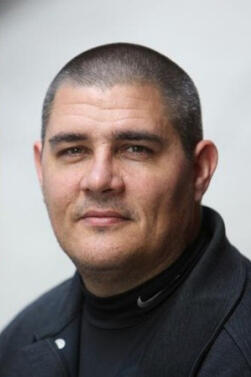
Takeo Hoshi was Henri and Tomoye Takahashi Senior Fellow at the Freeman Spogli Institute for International Studies (FSI), Professor of Finance (by courtesy) at the Graduate School of Business, and Director of the Japan Program at the Shorenstein Asia-Pacific Research Center (APARC), all at Stanford University. He served in these roles until August 2019.

Before he joined Stanford in 2012, he was Pacific Economic Cooperation Professor in International Economic Relations at the Graduate School of International Relations and Pacific Studies (IR/PS) at University of California, San Diego (UCSD), where he conducted research and taught since 1988.

Hoshi is also Visiting Scholar at Federal Reserve Bank of San Francisco, Research Associate at the National Bureau of Economic Research (NBER) and at the Tokyo Center for Economic Research (TCER), and Senior Fellow at the Asian Bureau of Finance and Economic Research (ABFER). His main research interest includes corporate finance, banking, monetary policy and the Japanese economy.

He received 2015 Japanese Bankers Academic Research Promotion Foundation Award, 2011 Reischauer International Education Award of Japan Society of San Diego and Tijuana, 2006 Enjoji Jiro Memorial Prize of Nihon Keizai Shimbun-sha, and 2005 Japan Economic Association-Nakahara Prize.  His book titled Corporate Financing and Governance in Japan: The Road to the Future (MIT Press, 2001) co-authored with Anil Kashyap (Booth School of Business, University of Chicago) received the Nikkei Award for the Best Economics Books in 2002.  Other publications include “Will the U.S. and Europe Avoid a Lost Decade?  Lessons from Japan’s Post Crisis Experience” (Joint with Anil K Kashyap), IMF Economic Review, 2015, “Japan’s Financial Regulatory Responses to the Global Financial Crisis” (Joint with Kimie Harada, Masami Imai, Satoshi Koibuchi, and Ayako Yasuda), Journal of Financial Economic Policy, 2015, “Defying Gravity: Can Japanese sovereign debt continue to increase without a crisis?” (Joint with Takatoshi Ito) Economic Policy, 2014, “Will the U.S. Bank Recapitalization Succeed? Eight Lessons from Japan” (with Anil Kashyap), Journal of Financial Economics, 2010, and “Zombie Lending and Depressed Restructuring in Japan” (Joint with Ricardo Caballero and Anil Kashyap), American Economic Review, December 2008.

Hoshi received his B.A. in Social Sciences from the University of Tokyo in 1983, and a Ph.D. in Economics from the Massachusetts Institute of Technology in 1988.

Former Director of the Japan Program at the Shorenstein Asia-Pacific Research Center
CV
News Type
Q&As
Date
Paragraphs

KSP associate director David Straub joined a panel organized by The Korea Society on February 28 to discuss the opportunities and challenges facing the new South Korean government of President Park Geun-hye.

Hero Image
ParkGH LOGO
President-elect Park Geun-hye of South Korea spoke at the Walter H. Shorenstein Asia-Pacific Research Center in 2009. | Rod Searcey
All News button
1
Authors
News Type
News
Date
Paragraphs

United Nations Secretary-General Ban Ki-moon will present a free public talk at Stanford on Thursday, Jan. 17.

Ban, who is the eighth secretary-general of the UN, will speak about the UN's role in creating opportunities out of the challenges posed by today's rapidly transitioning world.
"Times of transition are times of profound opportunity," he recently said during his acceptance speech for the Seoul Peace Prize. "The decisions we make in this period will have an impact for generations to come.”

Ban's initiatives as UN secretary-general have focused on promoting sustainable development; empowering women; supporting countries in crisis or instability; generating new momentum on disarmament, arms control, and nonproliferation; and strengthening the UN. Among his many activities as secretary-general, he has successfully raised major pledges and financing packages for aid and crisis response, established the agency UN Women, and introduced new measures to promote UN transparency and efficiency.

"I grew up in war," Ban has said, "and saw the United Nations help my country to recover and rebuild. That experience was a big part of what led me to pursue a career in public service. As secretary-general, I am determined to see this organization deliver tangible, meaningful results that advance peace, development, and human rights."

Ban was born in the Republic of Korea in 1944, and he served for 37 years with the ROK Foreign Ministry, in roles including that of minister of foreign affairs and trade, foreign policy adviser to the president, and chief national security adviser to the president. He took office as UN secretary-general in January 2007, and was re-elected for a second term by the UN General Assembly in June 2011. Ban will serve as secretary-general until December 2016.

"We are deeply honored to have UN Secretary-General Ban Ki-moon visit Stanford," said Gi-Wook Shin, a professor of sociology and director of the Walter H. Shorenstein Asia-Pacific Research Center (Shorenstein APARC). "There are few people who understand global trends and dynamics more deeply than he does."

Ban's Jan. 17 talk will take place at 4:30 p.m. in Stanford's Dinkelspiel Auditorium, 471 Lagunita Drive. Tickets for the event, which are required for admission, will become available through the Stanford Ticket Office on Monday, Jan. 7.

Shorenstein APARC and the Freeman Spogli Institute for International Studies are co-sponsoring the event. Ban's talk, part of the Asia-Pacific Leaders Forum, will kick off a series of activities commemorating Shorenstein APARC's thirtieth anniversary.

Founded in 2005, Shorenstein APARC's Asia-Pacific Leaders Forum regularly convenes senior leaders from across Asia and the Pacific to exchange ideas on current political, economic, and social dynamics in the region.

Hero Image
UNFlags2 LOGO
Member country flags fly in front of the United Nations building in Geneva. | Flickr user tompagenet
All News button
1
-

North Korea, arguably the most isolated country in the world, poses unique challenges for journalists. Access to the country is severely limited and even when a journalist is able to gain entry, the secretive and repressive nature of the state significantly limits what can be learned. Still, despite these difficult conditions, the realities of North Korean life are increasingly finding their way into various media, from newspaper reporting and on-line media to thinly fictionalized accounts.

This panel will take a multi-faceted look at the coverage of North Korea through the journalist (represented by 2012 Shorenstein Journalism Award winner Barbara Demick), the editor, the development/relief worker, and the novelist.

Panelists include:

Image
Barbara Demick
Barbara Demick, has been Beijing bureau chief for the Los Angeles Times since 2008. She has focused on human trafficking, corruption, and minorities, as well as North Korea. Demick is the author of two books -- Nothing to Envy: Ordinary Lives in North Korea and Logavina Street: Life and Death in a Sarajevo Neighborhood. Her work has won awards from the Asia Society, the Overseas Press Club, the American Academy of Diplomacy, among others. Her North Korea book, which has been translated into more than 20 languages, recently won the International Book Award on Human Rights. She is a graduate of Yale and taught a seminar on coverage of repressive regimes at Princeton University. She lives in Beijing with her son Nicholas.

Image
Susan Chira
Susan Chira, was named assistant managing editor for news for the New York Times in September 2011. Previously, she had served as foreign editor (since January 2004), and as editorial director of book development (since September 2002). Before that, Chira was the editor of the "Week in Review" section at the Times (since October 1999), after having served as deputy foreign editor of the newspaper (since February 1997). Earlier, she served in a variety of reporting positions including national education correspondent, Tokyo correspondent (from October 1984 until February 1989), metropolitan reporter in the Albany and Stamford bureaus, and reporter for the "Business Day" section.
 

Image
Katharina Zellweger
Katharina Zellweger, a Pantech Fellow, joined the Korean Studies Program at the Walter H. Shorenstein Asia-Pacific Research Center after five years of living in Pyongyang where she has served as the North Korea country director for the Swiss Agency for Development and Cooperation (SDC). Through her SDC and earlier work, she has witnessed modest economic and social changes not visible to most North Korea observers. Her research at the Center has drawn on her over 15 years of humanitarian work in North Korea and explore how aid intervention can stimulate positive sustainable change there


Image
Adam Johnson
Adam Johnson is an associate professor of English, with emphasis in creative writing, at Stanford University. A Whiting Writers’ Award winner, his fiction has appeared in Esquire, Harper's, Playboy, Paris Review, Granta, Tin House, and Best American Short Stories. He is the author of Emporium, a short-story collection, and the novel Parasites Like Us, which won a California Book Award. His novel The Orphan Master's Son, a novel set in North Korea, has just been published by Random House. His books have been translated into sixteen languages. Johnson was a 2010 National Endowment for the Arts Fellow.

Bechtel Conference Center

Conferences
-

United Nations Secretary-General Ban Ki-moon presented a free public talk at Stanford on Thursday, Jan. 17.

Ban, who is the eighth secretary-general of the UN, will speak about the UN's role in creating opportunities out of the challenges posed by today's rapidly transitioning world.
"Times of transition are times of profound opportunity," he recently said during his acceptance speech for the Seoul Peace Prize. "The decisions we make in this period will have an impact for generations to come.”

Ban's initiatives as UN secretary-general have focused on promoting sustainable development; empowering women; supporting countries in crisis or instability; generating new momentum on disarmament, arms control, and nonproliferation; and strengthening the UN. Among his many activities as secretary-general, he has successfully raised major pledges and financing packages for aid and crisis response, established the agency UN Women, and introduced new measures to promote UN transparency and efficiency.

Ban was born in the Republic of Korea in 1944, and he served for 37 years with the ROK Foreign Ministry, in roles including that of minister of foreign affairs and trade, foreign policy adviser to the president, and chief national security adviser to the president. He took office as UN secretary-general in January 2007, and was re-elected for a second term by the UN General Assembly in June 2011. Ban will serve as secretary-general until December 2016.

The Walter H. Shorenstein Asia-Pacific Research Center (Shorenstein APARC) and the Freeman Spogli Institute for International Studies are co-sponsoring the event. Ban's talk, part of the Asia-Pacific Leaders Forum, will kick off a series of activities commemorating Shorenstein APARC's thirtieth anniversary.

Founded in 2005, Shorenstein APARC's Asia-Pacific Leaders Forum regularly convenes senior leaders from across Asia and the Pacific to exchange ideas on current political, economic, and social dynamics in the region.

RELATED Resources

Speech transcript

Stanford News Service

San Jose Mercury News

Stanford Daily

U.N. News Centre


Dinkelspiel Auditorium
471 Lagunita Drive
Stanford Campus

Ban Ki-moon Secretary-General of the United Nations Speaker
Conferences
Authors
News Type
News
Date
Paragraphs

May 2013 marks the thirtieth anniversary of the Walter H. Shorenstein Asia-Pacific Research Center. Over the three decades of the Center’s existence, immense change has taken place in the Asia-Pacific.

The early 1980s were a time for tremendous, transformative ripples of social, political, and economic change in many Asian countries; many of those changes set in motion trends, institutions, and events that are prominent aspects of the Asian landscape today.

In Northeast Asia, China embraced market reforms and opened its doors to foreign investment and trade, setting the stage for its role as a contemporary global leader. Japan experienced the peak of its post-war boom, consolidating its role as a pioneer in technology and manufacturing. South Korea underwent a dramatic transformation that, paired with its rapid economic growth, created a regional powerhouse. Southeast Asia emerged from the shadow of war to become a region of economic tigers and emerging powers.

At Stanford, the Northeast Asia-United States Forum on International Policy and the Center for International Security and Arms Control (CISAC) were established in May 1983 as independent, but complementary, entities. The Northeast Asia-United States Forum later grew into the Asia/Pacific Research Center and, in 2005, was endowed as the Walter H. Shorenstein Asia-Pacific Research Center (Shorenstein APARC). The two centers still closely collaborate on research and events. In the ensuing three decades, Shorenstein APARC expanded its reach beyond core expertise on Northeast Asia to the fast-developing region of Southeast Asia and to South Asia, which has emerged as a new center of power in the Asia-Pacific. The Center has focused increasingly on the crosscurrents of growing economic, cultural, and institutional integration in the region alongside a troubling rise of tensions driven by intensifying nationalism.

Today, Shorenstein APARC boasts five vibrant programs focusing on contemporary Asia and engaged in policy-oriented research, training, and publishing: the Asia Health Policy Program, Japan Studies Program, Korean Studies Program, Southeast Asia Forum, and the Stanford China Program. It also takes great pride in its unique Corporate Affiliates Program, whose alumni roster of over 300 Asian business, government, and media professionals continues to expand. Rounding out Shorenstein APARC’s Asia expertise, its South Asia Initiative has produced many important publications and events for over a decade.

On May 2, 2013, Shorenstein APARC will celebrate its anniversary with a special public symposium exploring Asia’s transformation over the past three decades, developments in U.S.-Asia relations, and the trajectory of Shorenstein APARC’s own history. You are invited to join us in marking this historic occasion.

Hero Image
EncinaFRESCO LOGO
Encina Hall, a Stanford University landmark and home to Shorenstein APARC.
All News button
1
Authors
News Type
News
Date
Paragraphs
Activists in Wukan, in Guangdong province, have discovered there are limits to grassroots democracy. New research by Jean C. Oi, showing a high percentage of upper-level government overseers in China's villages, highlights the boundaries of the power of local elected officials.
Hero Image
Wukan LOGO
Students in Wukan's downtown area, June 2012. | Flickr user Remko Tanis
All News button
1
Subscribe to Governance