Governance

FSI's research on the origins, character and consequences of government institutions spans continents and academic disciplines. The institute’s senior fellows and their colleagues across Stanford examine the principles of public administration and implementation. Their work focuses on how maternal health care is delivered in rural China, how public action can create wealth and eliminate poverty, and why U.S. immigration reform keeps stalling. 

FSI’s work includes comparative studies of how institutions help resolve policy and societal issues. Scholars aim to clearly define and make sense of the rule of law, examining how it is invoked and applied around the world. 

FSI researchers also investigate government services – trying to understand and measure how they work, whom they serve and how good they are. They assess energy services aimed at helping the poorest people around the world and explore public opinion on torture policies. The Children in Crisis project addresses how child health interventions interact with political reform. Specific research on governance, organizations and security capitalizes on FSI's longstanding interests and looks at how governance and organizational issues affect a nation’s ability to address security and international cooperation.

-

Image
nayan portrait jun252010
The dramatic victory of the Narendra Modi-led BharatiJanata Party – the biggest single-party majority in thirty years in the national election – has shaken up South Asia’s diplomatic scene. Inviting leaders from neighboring South Asia to his inauguration, visiting Brasilia, Tokyo, and Washington, before welcoming Chinese president Xi Jinping – all within four months of taking power  - Modi has imparted a new dynamism in Indian foreign policy.  His second summit with President Obama within four months when Obama was invited as chief guest at India’s Republic Day parade and their joint statement implicitly critical of China has stirred concern and enthusiasm about an Indo-US alliance. In this presentation, Dr. Chanda will examine the direction of India’s relations with China in the new global context.


For nearly thirty years before he joined Yale University, Mr. Chanda was with the Hong Kong-based magazine the Far Eastern Economic Review as its editor, editor-at-large and correspondent. In 1989-90 Chanda was a Senior Fellow at the Carnegie Endowment for International Peace in Washington. From 1990-1992 Chanda was editor of the Asian Wall Street Journal Weekly, published from New York. He is the author of Bound Together: How Traders, Preachers, Adventurers and Warriors Shaped Globalization. He is also the author of Brother Enemy: The War After the War and co-author of over a dozen books on Asian politics, security and foreign policy including Soldiers and Stability in Southeast Asia and The Political Economy of Foreign Policy In Southeast Asia and The International Relations of Asia. He co-edited with Strobe Talbott The Age of Terror: America and the World After September 11.

Chanda writes a fortnightly column 'Bound Together' in India's BusinessWorld magazine and Singapore Straits Times. He is an occasional contributor to the opinion page of the International Herald Tribune and is a member of the editorial board of GlobalAsia , New Global Studies journal. He is a member of the Advisory Council for the Center for Northeast Asian Policy Studies at the Brookings Institution. He is the recipient of the Shorenstein Journalism Award for 2005.

Nayan Chanda Director of Publications and the Editor of YaleGlobal Online Magazine at the Yale Center for the Study of Globalization
Lectures
Date Label
-

Stanford Summer Juku on Japanese Political Economy (SSJ-JPE)

August 11-14, 2014

Oksenberg Conference Room

Stanford Japan Program at Shorenstein Asia-Pacific Research Center

The Japan Program at the Walter H. Shorenstein Asia-Pacific Research Center (S-APARC) at Stanford University started Stanford Summer Juku (SSJ) in 2014.  In SSJ, researchers on Japanese politics and Japanese economy get together and discuss their research in a relaxed setting. The second annual meeting is held at Stanford on August 11-14, 2014.  The first two days again focus on research in political science/political economy and international relations, and the latter two days focus on research in economics and business.

Takeo Hoshi, Kenji E. Kushida, Phillip Lipscy


Program

8/11/2013

8:30-9:00    Breakfast

9:00-10:15  Session I:

"Japan's Abandoned Partisans: Realignment after Electoral Reform", Kenneth McElwain (University of Michigan)

Discussants:
Daniel M. Smith (Harvard University)
Karen Jusko (Stanford University)
 

10:15-10:45  Break

10:45-12:00  Session II:

"Political Dynasties and the Selection of Cabinet Ministers: The Legacy Advantage in Japan and Ireland" Daniel M. Smith (Harvard University), Shane Martin (University of Leicester)

Discussants:
Gary Cox (Stanford University)
Kenneth McElwain (University of Michigan)

12:00-1:00  Lunch

1:00-2:15    Session III:

"Running the Right Race: The Impact of Electoral Rules on Celebrity Candidate Entry", Justin Reeves (University of California, San Diego)

Discussants:
Ikuo Kume (Waseda University)
Kenneth McElwain (University of Michigan)
 

2:15- 3:30   Session IV:

"Chasing the Median Voter: A Legislator Experiment on Support for Agricultural Protectionism", Megumi Naoi (University of California, San Diego)

Discussants:
Kenneth Scheve (Stanford University)
Kay Shimizu (Columbia University)


8/12/2013

8:30-9:00   Breakfast

9:00-10:15 Session I:

"Inside the Castle Gates: The Political Strategies of Foreign Multinational Corporations and Institutional Change in Japan", Kenji E. Kushida (Stanford University)

Discussants:
William Grimes (Boston University)
Masahiko Aoki (Stanford University)

10:15-10:45  Break

10:45-12:00  Session II:

"Institions and Central Bank Norm Diffusion: Abenomics and the Delayed Break with the Monetary Orthodoxy", Gene Park (Loyola Marymount University), Saori Katada (University of Southern California), and Giacomo Chiozza (Vanderbilt University)

Discussants:
William Grimes
(Boston University)
Phillip Lipscy (Stanford University)

12:00-1:00  Lunch

1:00-2:15    Session III:

"Guns and Trades: How Realist Rhetoric Mobilizes Mass Support for Trade Agreements", Ikuo Kume (Waseda University)

Discussants:
Daniel M. Smith (Harvard University)
Steve Vogel (University of California, Berkeley)

2:15-3:30    Session IV:

"Japan Agriculture (JA) and the Institional Parameters of Local Agricultural Innovation", Patricia Maclachlan (University of Texas) and Kay Shimizu (Columbia University)

Discussants:
Megumi Naoi (University of California, San Diego)
Kenji E. Kushida (Stanford University)


6:30        Group Dinner


8/13/2013

8:30-9:00    Breakfast

9:00-10:15  Session I:

"The Impact of Japan on Western Management: Theory and Practice", Christina L. Ahmadjian (Hitotsubashi University) and Ulrike Schaede (University of California, San Diego)

Discussants:
Mariko Sakakibara (University of California, Los Angeles)
Robert Cole (University of California, Berkeley)

10:15-10:45  Break

10:45-12:00  Session II:

"Does Unconventional Monetary Policy Affect Inequality? Evidence from Japan", Ayako Saiki (De Nederlandsche Bank) and Jon Frost (De Nederlandsche Bank)

Discussants:
Helen Popper (Santa Clara University)
Brad DeLong (University of California, Berkeley)

12:00-1:00  Lunch

1:00-2:15    Session III:

"Do Risk Preferences Change? Evidence from Panel Data Before and After the Great East Japan Earthquake", Chie Hanaoka(Kyoto Sangyo University), Hitoshi Shigeoka (Simon Fraser University), Yasutora Watanabe (Northwestern University)

Discussants:
Chiaki Moriguchi (Hitotsubashi University)
Takeo Hoshi (Stanford University)

2:15-3:30    Session IV:

"The Economics of Attribute-Based Regulation: Theory and Evidence from Fuel-Economy Standards", Koichiro Ito (Boston University) and James M. Sallee (University of Chicago)

Discussants:
Hiroyuki Kasahara (University of British Columbia)
Junjie Zhang (University of California, San Diego)


8/14/2013

8:30-9:00    Breakfast

9:00-10:15  Session I:

"Abenomics: Preliminary Analysis and Outlook", Joshua K. Hausman (University of Michigan) and Johannes F. Wieland (University of California, San Diego)

Discussants:
Michael Hutchison (University of California, Santa Cruz)
Takatoshi Ito (University of Tokyo)

10:15-10:45  Break

10:45-12:00  Session II:

"The Effect of Bank Recapitalization Policy on Corporate Investment: Evidence from a Banking Crisis in Japan", Hiroyuki Kasahara (University of British Columbia), Yasuyuki Sawada (University of Tokyo), and Michio Suzuki (University of Tokyo)

Discussants:
David Vera (Fresno State University)
Mark Spiegel (Federal Reserve Bank of San Francisco)

12:00-1:00  Lunch

1:00-2:15    Session III:

"Lending to Unhealthy Firms in Japan during the Lost Decade: WTF", Suparna Chakraborty (University of San Francisco) and Joe Peek(Federal Reserve Board)

Discussants:
Ayako Yasuda (University of California, Davis)
Satoshi Koibuchi (Chuo University)


-

Stanford Summer Juku on Japanese Political Economy (SSJ-JPE)

August 19-22, 2013

Oksenberg Conference Room

Shorenstein Asia-Pacific Research Center, Stanford University

The Japan Studies Program at the Walter H. Shorenstein Asia-Pacific Research Center (S-APARC) at Stanford University is starting an exciting new program called Stanford Summer Juku (SSJ).  In SSJ, researchers on Japanese politics and Japanese economy get together and discuss their research in a relaxed setting.  In addition to presentation and discussion of research papers that is standard for any academic conference, SSJ is distinctive by setting aside ample time for informal discussions and interactions.  We believe you will find this an excellent opportunity to expand your network of researchers on Japan in both political science and economics.  We also hope that the interactions at SSJ will lead to some future collaboration among the participants.

Our inaugural meeting will be held at Stanford on August 19-22, 2013.  The first two days will focus on research in political science/political economy and international relations, and the latter two days will focus on research in business and economics. 

Finally, a little bit about the name of this program;  Juku here does not refer to modern Japanese cram schools.  What we have in mind is the private schools at the end of Edo period, which attracted young motivated students and ended up producing numerous leaders in the Meiji period.  Our goal is to attract many young researchers who will go on to become leaders in the studies of Japanese politics and Japanese economy in the near future.  We look forward to welcoming you to Stanford this summer.

Takeo Hoshi, Kenji E. Kushida, Phillip Lipscy


Report - Stanford Summer Juku 2013


Program


8/19/2013

8:30-9:00    Breakfast

9:00-9:15    Welcome: Gi-Wook Shin, (Director, Shorenstein APARC, Stanford University)

9:15-10:25  Session I:

"America's Role in Making Japan's Economic Miracle: New Evidence for a Landmark Case", Yusaku Horiuchi (Dartmouth College), Michael Beckley (Tufts University), and Jennifer M. Miller (Dartmouth College)

Discussants:
Amy Catalinac (Australian National University)
William Grimes (Boston University)
 

10:25-10:50  Break

10:50-12:00  Session II:

"The Electoral Politics of Energy", Phillip Lipscy (Stanford University)

Discussants:
Greg Noble (University of Tokyo)
Yusaku Horiuchi (Dartmouth College)

12:00-1:00  Lunch

1:00-2:10    Session III:

"Pork to Policy: The Rise of National Security in Elections in Japan", Amy Catalinac (Australian National University)

Discussants:
Saori Katada (University of Southern California)
Christiana Davis (Princeton University)


8/20/2013

8:30-9:15   Breakfast

9:15-10:25 Session I:

"The Politics of Commoditization in Information Communications Technology: Lessons from Japan's 'Galapagos' ICT Sector", Kenji E. Kushida (Stanford University)

Discussants:
Greg Noble (University of Tokyo)
Ulrike Schaede (University of California, San Diego)

10:25-10:50  Break

10:50-12:00  Session II:

"Private Money as Public Funds: Distributive Politics Under Austerity", Kay Shimizu (Columbia University)

Discussants:
Steve Vogel (University of California, Berkeley)
Jonathan Rodden (Stanford University)

12:00-1:00  Lunch

1:00-2:10    Session III:

"Asian Designs: Rising Powers and the Shaping of International Governance", Saadia Pekkanen (University of Washington)

Discussants:
William Grimes (Boston University)
Christina Davis (Princeotn University)

6:30        Group Dinner


8/21/2013

8:30-9:15    Breakfast

9:15-10:25  Session I:

"Trading Corporate Assets in Japan: An Event Study of Subsidiary Trades Among Listed Companies", Ulrike Schaede (University of California, San Diego) and Tatsuo Ushijima (Aoyama Gakuin University)

Discussants:
Robert Eberhart (Santa Clara University)
Ayako Yasuda (University of California, Davis)

10:25-10:50  Break

10:50-12:00  Session II:

"School Entry Cutoff Dates and the Timing of Births", Hitoshi Shigeoka (Simon Fraser University)

Discussants:
Karen Eggleston (Stanford University)
Toshiaki Iizuka (University of Tokyo)

12:00-1:00  Lunch

1:00-2:10    Session III:

"New Management at the Bank of Japan, End of the 'Independent' Bank of Japan and Implications for the Cencept of Central Bank Independence", Thomas F. Cargill (University of Nevada) and Jennifer Holt-Dwyer (Hunter College)

Discussants:
Helen Popper (Santa Clara University)
Ken Kuttner, (Williams College)


8/22/2013

8:30-9:15    Breakfast

9:15-10:25  Session I:

"Using Dynamic Electricity Pricing to Address Energy Crises: Evidence from Randomized Field Experiements", Koichiro Ito (Stanford University), Takanori Ida (Kyoto University), and Makoto Tanaka (GRIPS)

Discussants:
Masahiko Aoki (Stanford University)
Matthew Kahn (University of California, Los Angeles)

10:25-10:50  Break

10:50-12:00  Session II:

"Choice of Invoicing Currency: New evidence from a questionnaire survey of Japanese export firms", Satoshi Koibuchi (Chuo University), Takatoshi Ito (RIETI), Kiyotaka Sato (Yokohama National University), Junko Shimizu (Gakushuin University)

Discussants:
Katheryn Russ (University of California, Davis)
Mark Spiegel (Federal Reserve Bank of San Francisco)

12:00-1:00  Lunch

1:00-2:10    Session III:

"Banks restructuring sonata: How capital injection triggered labor force rejuvenation in Japanese banks", David Vera (California State University, Fresno), Kazuki Onji (Australian National University), Takeshi Osada (Bunri University of Hospitality)

Discussants:
Masami Imai (Wesleyan University)
Kelly Wang (Federal Reserve Board)

-

The Stanford Silicon Valley-New Japan Project
Public Forum Series with Networking


Abstract:

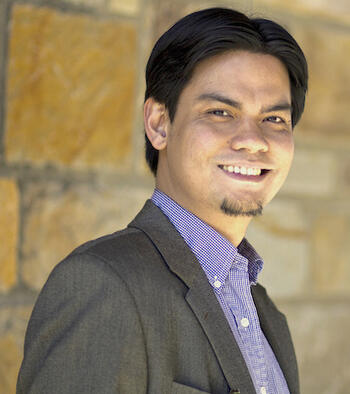
As Silicon Valley continues to be a global center of innovation, companies from all over the world expanding into Silicon Valley face a variety of opportunities and challenges, with a wide range of lessons learned for Japanese firms as they make use of the Silicon Valley ecosystem. DeNA provides an interesting case. Founded in 1999, achieved explosive growth through a series of different business models, with particular success in mobile games and especially with the “mobage” mobile social gaming platform. DeNA entered Silicon Valley in 2008 and expanded its operation through the acquisition of San Francisco-based  smartphone gaming company, ngmoco, for $300M in 2010. Mr. Dai Watanabe has been navigating DeNA's period of transition to build a strong business base in the West. Dai will talk about DeNA's effort in Silicon Valley and his experience.


Speaker:

Image
daiwatanabe1 145x150
Mr. Dai Watanabe is VP of Strategy and Corporate Development since the acquisition of ngmoco. He has also served as President of DeNA Global, Inc. since its establishment in 2008 as the U.S. subsidiary of DeNA Co., Ltd.. Dai has been in charge of DeNA’s global expansion strategy and execution since 2005. Prior to his US assignment, he served as President of DeNA Beijing. Dai began his career in Sumitomo Mitsui Banking Corporation right after graduation from Kyoto University with a bachelor degree in Archaeology.


Tuesday, February 17, 2015
5:00 – 5:30 pm Networking
5:30pm - 7:00pm Lecture
Cypress Semiconductor Auditorium (CISX Auditorium)

Public Welcome • Light Refreshments

The Silicon Valley - New Japan Project

Cypress Semiconductor Auditorium (CISX Auditorium)
Paul G. Allen Building, Stanford University
330 Serra Mall, Stanford CA 94305
**Entrance is the Serra Mall side of the building**
https://www.google.com/maps?q=CISX+Cypress+Semiconductor+Auditorium@37.4295793,-122.1748332

Dai Watanabe Vice President of Strategy and Corporate Development, DeNA
Seminars
Paragraphs
Cover of the book "Crossing Heaven's Border," showing a defector looking at North Korea across the border with China.

From 2007 to 2011 South Korean filmmaker and newspaper reporter Hark Joon Lee lived among North Korean defectors in China, filming an award-winning documentary on their struggles. Crossing Heaven’s Border is the firsthand account of his experiences there, where he witnessed human trafficking, the smuggling of illicit drugs by North Korean soldiers, and a rare successful escape from North Korea by sea.

As Lee traces the often tragic lives of North Korean defectors who were willing to risk everything for their hopes, he journeys to Siberia in pursuit of hidden North Korean lumber mills; to Vietnam, where defectors make desperate charges into foreign embassies; and along the 10,000-kilometer escape route for defectors stretching from China to Laos and to Thailand. 
 

Desk, examination, or review copies can be requested through Stanford University Press.

All Publications button
1
Publication Type
Books
Publication Date
Authors
Book Publisher
Shorenstein APARC
-

In China’s and Vietnam’s latest party congresses, the candidates for promotion with the highest public profiles failed to advance. In China, neither the “populist” Bo Xilai nor the “liberal” Wang Yang won a seat in the Politburo Standing Committee. In Vietnam, the charismatic Da Nang party secretary Nguyen Ba Thanh also failed to win a new position. Dr. Schuler will present a theory with evidence showing that the link between these candidates’ visibility and non-promotion was not accidental. His finding that the public profile of a candidate has an independent effect on his or her chance of advancement improves an analytic debate hitherto focused mainly on loyalty and performance.

Paul Schuler will be an assistant professor in government and public policy at the University of Arizona starting this fall. His publications have appeared in the American Political Science Review, the Legislative Studies Quarterly, and the Journal of East Asian Studies among other places. His researches focuses on institutions, elite politics, and public opinion in authoritarian regimes, particularly Vietnam. His 2014 PhD in political science is from the University of California, San Diego.

Philippines Conference Room

Encina Hall 3rd Floor Central

616 Serra Street

Stanford, CA 94305

Paul Schuler 2014-15 Shorenstein Postdoctoral Fellow in Contemporary Asia, APARC
Seminars
-


Image
img 0049 lankov
Now beginning his fourth year as North Korea’s leader, Kim Jong-un is putting his own stamp on the country, including an emerging policy of economic reform. Andrei Lankov, one of the world’s foremost experts on North Korea, will analyze Kim’s motivations, the obstacles he faces, and the likely evolution of his economic and security policies in the coming months and years. Lankov will also suggest how the international community should respond.

Andrei Lankov was born in Leningrad (now Petersburg) and completed his undergraduate and graduate studies at Leningrad State University, obtaining a PhD in 1989. He taught Korean history at the Australian National University from 1996 to 2004. Since 2004 he has been teaching at Kookmin University in Seoul where he is currently a professor at the college of social science. His major research interest is in North Korean history and society. Professor Lankov's English-language publications on North Korea include From Stalin to Kim Il Sung: The Formation of North Korea, 1945-1960 (Rutgers University Press, 2003); Crisis in North Korea: the Failure of De-Stalinization, 1956 (Universiy of Hawaii Press, 2004); North of the DMZ: Essays on Daily Life in North Korea (McFarland and Company, 2007); and The Real North Korea (Oxford University Press, 2013). He has published numerous academic articles, and contributed to major international media including the Wall Street Journal, New York Times, Financial Times, and Newsweek.

Philippines Conference Room

Encina Hall, 3rd Floor

Stanford University

Andrei Lankov <i>Professor, Kookmin University, Korea</i>
Seminars
News Type
Commentary
Date
Paragraphs

Writing for Democratization, Kyong Jun Choi at the University of Washington reviewed New Challenges for Maturing Democracies in Korea and Taiwan (Stanford University Press, 2014), a co-edited book by Stanford professors Larry Diamond and Gi-Wook Shin.

“Among the most notable strengths of this volume is its analysis of new phenomena that have rarely been addressed in existing literature,” Choi writes.

The book seeks to illustrate different characteristics of the evolution of democracy in Taiwan and South Korea. The two countries share similar economic and political directions since industrialization took place in the 1960s and transition toward democracy began in the 1980s.

Choi says that the book “certainly stands as a stepping stone for research on new democracies struggling to consolidate democracy.”

“New Challenges” is one outcome of a multiyear research project at the Walter H. Shorenstein Asia-Pacific Research Center, and a conference co-hosted with the Center on Democracy, Development and the Rule of Law in 2011.

The review is featured in Democratization’s vol. 21, issue 7. Information about accessing the review can found by clicking here.

Hero Image
rtx6qo4
Demonstrators in Seoul commemorate the historic June 10 mass pro-democracy movement of 1987.
Reuters/Jo Yong-Hak
All News button
1
News Type
News
Date
Paragraphs

In Nikkei Shimbun, Takeo Hoshi examines 2015 to enter the implementation stage for the Abenomics growth strategy.  The revised New Growth Strategy released last year has narrowed the “third arrow” to ten reforms.  Out of the ten, Hoshi suggests to focus on four key reforms: 1) Accelerating industrial restructuring and venture businesses, 2) Promotion of innovation, 3) Enhancing women's participation and advancement, 4) Attracting talent from overseas.

Hero Image
abe Flickr: President of the European Council's Photostream
All News button
1
Paragraphs

The thirteenth session of the Korea-U.S. West Coast Strategic Forum, held in Seoul on December 11, 2014, convened senior South Korean and American policymakers, scholars and regional experts to discuss North Korea policy and recent developments in the Korean peninsula. Hosted by the Korea Program at the Walter H. Shorenstein Asia-Pacific Research Center at Stanford University, the Forum is also supported by the Korea National Diplomatic Academy.

All Publications button
1
Publication Type
Policy Briefs
Publication Date
Subscribe to Governance