Governance

FSI's research on the origins, character and consequences of government institutions spans continents and academic disciplines. The institute’s senior fellows and their colleagues across Stanford examine the principles of public administration and implementation. Their work focuses on how maternal health care is delivered in rural China, how public action can create wealth and eliminate poverty, and why U.S. immigration reform keeps stalling. 

FSI’s work includes comparative studies of how institutions help resolve policy and societal issues. Scholars aim to clearly define and make sense of the rule of law, examining how it is invoked and applied around the world. 

FSI researchers also investigate government services – trying to understand and measure how they work, whom they serve and how good they are. They assess energy services aimed at helping the poorest people around the world and explore public opinion on torture policies. The Children in Crisis project addresses how child health interventions interact with political reform. Specific research on governance, organizations and security capitalizes on FSI's longstanding interests and looks at how governance and organizational issues affect a nation’s ability to address security and international cooperation.

-

The United States faces a formidable set of international challenges, from emboldened terrorist organizations, weakening democratic norms, and continued uncertainty within the global financial system. However, there is some light coming out of South Asia.  The deepening ties between the United States and India can have a profound and positive impact on global security and prosperity. The relationship is developing in the context of a growing global debate on the ability of constitutional democracies to address 21st century security and development challenges—maritime security, territorial disputes, economic inclusivity, and climate change. And it is developing in the context of an Indian debate about whether and how India will assume its natural place as a leading power in the world. A successful U.S.-India strategic partnership can deliver a decisive response to these questions. If two countries with very different economic, cultural, and geographic situations can achieve a level of strategic collaboration that safeguards prosperity, peace, and stability both within and beyond their own borders, it will demonstrate that principles of participatory governance remain relevant and vital to the global good.


Image
amb  verma

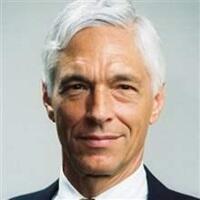
Richard Verma serves as the 25th United States Ambassador to India. He was nominated by President Obama on September 18th, 2014, and was confirmed by the U.S. Senate and sworn in by Secretary of State John Kerry in December 2014. Ambassador Verma oversees one of the largest U.S. Missions in the world, including four consulates across India and nearly every agency of the U.S. government.

As a former Assistant Secretary of State for Legislative Affairs in the Obama Administration, he led the State Department’s efforts on Capitol Hill and served as a senior member of Secretary Hillary Rodham Clinton’s team.

Ambassador Verma previously worked in the Senate as the Senior National Security Advisor to the Senate Majority Leader, Harry Reid. He also worked in the House of Representatives for longtime Chairman of the Defense Appropriations Committee, Jack Murtha. He is veteran of the U.S. Air Force, where he served on active duty as a Judge Advocate. Rich was also a country director for the National Democratic Institute for International Affairs in Eastern Europe.

Richard Verma 25th U.S. Ambassador to India
Seminars
Date Label
Paragraphs

The fourteenth session of the Korea-U.S. West Coast Strategic Forum, held Stanford University on June 25, 2015, convened senior South Korean and American policymakers, scholars and regional experts to discuss North Korea policy and recent developments on the Korean Peninsula. Hosted by the Korea Program at the Walter H. Shorenstein Asia-Pacific Research Center at Stanford University, the Forum is also supported by the Korea National Diplomatic Academy.

All Publications button
1
Publication Type
Policy Briefs
Publication Date
-

Image
img mk park
Myoung-kyu Park is a professor of sociology and director of the Institute for Peace and Unification Studies (IPUS) at Seoul National University. Professor Park is one of South Korea's leading scholars of the North Korea problem, Korean identity and nationalism, and popular attitudes toward Korean unification. He is an FSI-Humanities Center International Visitor at Stanford for the fall 2015.

In this talk, Professor Park will examine South Koreans' perception of North Korea-related issues: denuclearization, human rights, security, cooperation, and unification. Based on data from annual surveys conducted by IPUS during 2007-2015, Professor Park will discuss South Korean psychological attitudes, the generational gap, and general trends and policy orientation regarding North Korea.
Myoung-kyu Park Professor of Sociology, Seoul National University
Seminars
-

Image
david straub 2014
Americans think of South Korea as one of the most pro-American of countries, but in fact many Koreans hold harsh and conspiratorial views of the United States. If not, why did a single U.S. military traffic accident in 2002 cause hundreds of thousands of Koreans to take to the streets for weeks, shredding and burning American flags, cursing the United States, and harassing Americans? Why, too, the death threats against American athlete Apolo Ohno and massive cyberattacks against the United States for a sports call made at the Utah Winter Olympics by an Australian referee? These are just two of the incidents detailed in David Straub’s recently published book, Anti-Americanism in Democratizing South Korea, the story of an explosion of anti-Americanism in South Korea from 1999 to 2002.

Straub, a Korean-speaking senior American diplomat in Seoul at the time, reviews the complicated history of the United States’ relationship with Korea and offers case studies of Korean anti-American incidents during the period that make clear why the outburst occurred, how close it came to undermining the United States’ alliance with Korea, and whether it could happen again.

David Straub has been associate director of the Korea Program at Stanford University’s Walter H. Shorenstein Asia-Pacific Research Center (APARC) since 2008, following a thirty-year diplomatic career focused on U.S. relations with Korea and Japan.

For more information about this topic, click here.

No longer in residence.

0
Associate Director of the Korea Program
david_straub_cropped.jpg

David Straub was named associate director of the Korea Program at the Walter H. Shorenstein Asia-Pacific Research Center (Shorenstein APARC) on July 1, 2008. Prior to that he was a 2007–08 Pantech Fellow at the Center. Straub is the author of the book, Anti-Americanism in Democratizing South Korea, published in 2015.

An educator and commentator on current Northeast Asian affairs, Straub retired in 2006 from his role as a U.S. Department of State senior foreign service officer after a 30-year career focused on Northeast Asian affairs. He worked over 12 years on Korean affairs, first arriving in Seoul in 1979.

Straub served as head of the political section at the U.S. embassy in Seoul from 1999 to 2002 during popular protests against the United States, and he played a key working-level role in the Six-Party Talks on North Korea's nuclear program as the State Department's Korea country desk director from 2002 to 2004. He also served eight years at the U.S. embassy in Japan. His final assignment was as the State Department's Japan country desk director from 2004 to 2006, when he was co-leader of the U.S. delegation to talks with Japan on the realignment of the U.S.-Japan alliance and of U.S. military bases in Japan.

After leaving the Department of State, Straub taught U.S.-Korean relations at the Johns Hopkins University's School of Advanced International Studies in the fall of 2006 and at the Graduate School of International Studies of Seoul National University in spring 2007. He has published a number of papers on U.S.-Korean relations. His foreign languages are Korean, Japanese, and German.

Associate Director of Korea Program, APARC, Stanford University
Kathleen Stephens Panelist <i>Panelist</i>; former US ambassador to South Korea; William J. Perry Distinguished Fellow, APARC, Stanford University
Daniel Sneider Moderator <i>Moderator</i>; Associate Director for Research, APARC, Stanford University
Seminars
News Type
Commentary
Date
Paragraphs

Doctors, nurses and other medical staff in Myanmar are wearing black ribbons to protest the appointments of military personnel in the Ministry of Health.

“The Black Ribbon Movement Myanmar 2015,” which began on Facebook in early August, quickly amassed over 42,000 followers, and on Aug. 12, led the minister for health to drop plans to appoint military personnel to over 300 management positions within the ministry.

Writing for The Diplomat, Stanford visiting scholar Phyu Phyu Thin Zaw said the movement shows the dissatisfaction shared among her fellow doctors about the incursion of the military in the healthcare sector. She said it's also representative of greater injustices seen across Myanmar. 

Four years have passed since the country transitioned from military rule toward democratization, and the Ministry of Health among other civic organizations still see the military exert influence over its operations.

Thin Zaw said she remains optimistic, though, and views the movement as a sign of the reemergence of a proactive civil society. The movement continues on this Facebook page.

The article published in The Diplomat can be found by clicking here.

Hero Image
myanmar health profession wearing black ribbon to participate in black ribbon movement myanmar 2015
All News button
1
Paragraphs

Writing for the National Bureau of Asian Research, Daniel Sneider examines Prime Minister Shinzo Abe’s recent attempts to revise Japan’s defense guidelines. He considers how these attempts may affect the Japanese domestic political landscape and the implications that Abe’s actions may have for key issues in the U.S.-Japan alliance, including the Trans-Pacific Partnership and U.S. military interests in Okinawa.

All Publications button
1
Publication Type
Policy Briefs
Publication Date
Journal Publisher
The National Bureau of Asian Research
Authors
Paragraphs

Distrust between the United States and China continues to grow in Northeast Asia. Among many contributing factors, the North Korea issue is one of the most important, as illustrated by the controversy over the possible deployment of the United States’ THAAD missile defense system in South Korea. Thus, resolving or mitigating the Korea problem, a significant goal in its own right to both the United States and China, is also essential to reducing U.S.-PRC (People's Republic of China) strategic distrust. China and the United States share long-term interests vis-à-vis the Korean peninsula. The question is how its resolution might be achieved. U.S. efforts to induce North Korea to abandon its nuclear and missile programs by offering incentives and imposing sanctions have failed, and Chinese attempts to encourage Pyongyang to adopt PRC-style economic reforms have not fared much better. With Washington, Beijing, and Pyongyang unlikely to change their approaches, the hope for any new initiative must rest with Seoul. South Korea’s special relationships with the North, the United States, and the PRC, along with its status as a dynamic middle power, give it the potential to play a larger leadership role in dealing with North Korea. In doing so, South Korea should consult with the United States and China on a long-term strategy for inter-Korean reconciliation that would, for now, finesse the nuclear issue. Such a strategy would require U.S. and Chinese support of the South Korean leadership in addressing the Korea problem. The process of working together with Seoul to formulate and implement this strategy would allow both powers to ensure that their long-term interests on the peninsula are respected. Although there is no guarantee that such an effort will succeed, the worsening situation on and around the Korean peninsula and the U.S. and PRC’s lack of progress all argue for this new approach, as do the potential benefits to the U.S.-PRC relationship.

All Publications button
1
Publication Type
Journal Articles
Publication Date
Journal Publisher
China Quarterly of International Strategic Studies
Authors
Gi-Wook Shin
David Straub
News Type
Commentary
Date
Paragraphs

North Korea today threatened military action against South Korea if it did not end its propaganda broadcasts along the Demilitarized Zone (DMZ) within 48 hours. The broadcasts against the North are being systematically blared by loudspeakers over the border.   

South Korea resumed the broadcasts earlier this week after an 11-year hiatus, in retaliation for North Korea’s planting landmines just outside a South Korean DMZ guard post that crippled two South Korean soldiers on Aug. 4.

David Straub, associate director of the Korea Program at the Walter H. Shorenstein Asia-Pacific Research Center and a former Korean affairs director at the U.S. Department of State, offers insights on the situation. Straub also spoke on PRI's "The World" radioshow on Aug. 20, the audioclip and summary can be accessed by clicking here.

What’s behind the current tensions on the Korean Peninsula?

Fundamentally, the current situation is just another symptom of the underlying problem, which is the division of Korea into two competing states, with one of them—North Korea—having a Stalinist totalitarian system and a Maoist-style cult of personality. Since North Korea can’t compete with the South economically and diplomatically, it uses the threat of force or the actual use of it to try to intimidate South Korea. The North Koreans know that South Korea tends to “blink first” and step back because it is democratic and its leaders are concerned about civilian casualties.

The current situation is also related to the leadership transition in North Korea, with leader Kim Jong Un succeeding his father Kim Jong Il three years ago. Kim Jong Un still feels insecure, which is clearly evidenced by his execution of his powerful uncle Jang Seong-taek in 2013 and many other leaders there as well. To solidify support for his rule, he also manufactures a South Korean threat to rally his people behind him.

What does North Korea want?

North Korea’s immediate demand is that South Korea stop its propaganda broadcasts across the DMZ. The South Korean broadcasts criticize the North Korean system and its leaders, which is something that the North, with its cult of personality, can’t accept. But the South resumed the broadcasts only because the North Koreans recently snuck into the South Korean side of the DMZ and viciously planted landmines just outside a South Korean guard post. These were clearly intended to maim South Korean soldiers. They did just that, blowing the legs off two young men.

The North Korean regime’s long-term aim is not just to survive but also to get the upper hand on South Korea, and eventually try again to reunify the peninsula on its own terms. That explains why North Korea behaves as it does, rather than reform its system and reconcile with the South.

The North also demands an end to all U.S. and South Korean military exercises on the peninsula—even though the North has a much larger military than the South and U.S. forces there combined and is developing nuclear weapons and other weapons of mass destruction. Ultimately, the North wants to end the U.S.-South Korean alliance and see U.S. forces withdrawn from the peninsula, in the belief that it will open the way to eventual victory over the South.

Why did the South resume the broadcasts? Was it a good idea?

South Korea resumed the loudspeaker broadcasts in retaliation for the maiming of two of its soldiers on August 4th. Rather than retaliate by attacking militarily, the South resumed the loudspeaker broadcasts because the South Korean military knows that North Korean leaders hate them.

The South Korean military believes that North Korean leaders hate the broadcasts because they are effective in educating young North Korean soldiers and civilians in earshot about the nature of the regime and its leaders. The South Korean military seems to assume that the broadcasts are effective in that regard because they anger the North Korean leaders so much. But I think the reason the broadcasts anger the North Korean leaders is due to the cult of personality. The North Korean system can’t accept the idea of its leaders being criticized.

So I don’t think it was necessarily a wise step on the part of the South Korean military to resume the broadcasts. On the other hand, politically, by crippling two South Korean soldiers, the North Koreans had left South Korea with no option but to respond in some way. After the North Koreans killed fifty South Koreans in two separate sneak attacks five years ago, the South Korean government warned that it was not going to sit back the next time. The resumption of the broadcasts has further raised tensions but, frankly, given the danger of war on the peninsula, the South doesn’t have a lot of good ways to respond to North Korean provocations.

How serious is the situation?

North Korea has now threatened military action in 48 hours if South Korea doesn’t end the propaganda broadcasts. The North often makes threats. Usually, it doesn’t carry them out, but sometimes it does.

The United States and South Korea are conducting an annual military exercise together in the South until the end of August—something else that the North Koreans are demanding an end to. Most experts feel that the North is unlikely to launch a major provocation while the American presence is bolstered and the U.S. and South Korean militaries are paying full attention. The North Korean leaders know they are weaker than our side, so they usually avoid frontal assaults and instead engage in sneak attacks, at times and places and in ways of their own choosing.

There is more uncertainty in recent years because of the aggressive and threatening behavior thus far of Kim Jong Un, who is young and inexperienced. He seems anxious about his position in the North and prepared to take risks to bolster it, including rallying the people behind him by raising tensions with the South. We also don’t know if the North feels freer to engage in major provocations because it has developed at least a handful of nuclear devices since its first nuclear test in 2006.

So I myself wouldn’t be afraid to visit Seoul now but the situation bears even closer watching than usual.

Hero Image
dmz flickr stephan
North Korean soldiers stand guard at the Demilitarized Zone, 2008.
Flickr/(stephan)
All News button
1
Authors
Lisa Griswold
News Type
News
Date
Paragraphs

Marking seventy years since the end of World War II, Japanese Prime Minister Shinzo Abe expressed “profound grief” on Friday for his country’s actions. While pointing to short comings in the statement, the Stanford scholars said the prime minister’s words represented a genuine effort to reflect on the past and provided opportunities to improve relations in the region.

The highly anticipated statement, issued on behalf of the Japanese cabinet, was closely followed by its East Asian neighbors who have raised concerns over Japan’s views of the wartime era.

Leaders of South Korea and China have said Japan has not apologized fully for crimes committed during WWII and each dispute historical narratives seen in the others’ textbooks, popular culture and other domains.

Advancing historical reconciliation in East Asia is a key research area of the Walter H. Shorenstein Asia-Pacific Research Center. The center leads a research project, Divided Memories and Reconciliation, which has produced numerous articles and books, including a ground breaking comparative study of high school history textbooks in China, Japan, South Korea, Taiwan and the United States.

In May 2014, the center convened an international conference “Pathways to Reconciliation” on historical issues, co-sponsored by the Trilateral Cooperation Secretariat, the governmental organization promoting Japan-China-South Korea trilateral cooperation.

Earlier this year, the Japan Program asked Stanford scholars to write their own version of the 70th anniversary statement as if they were the prime minister of Japan. The scholars’ statements were compiled into a report, published in May 2015.

Eight scholars contributed to the exercise in an effort “to understand the diversity of reasonable views on the issue of Japan’s responsibility for the cruel and violent war and Japan’s role in building a peaceful and prosperous world,” the introduction stated.

Themes that emerged in the report included a need for Abe to show heartfelt remorse about Japan’s actions during WWII and its desire to work toward a peaceful future.

Three noted Japan experts who contributed to that report offered their analysis of the prime minister’s statement issued yesterday in Tokyo.


Below are brief summaries of their analysis, you may click on each link to expand in full.


Image
Response by Peter Duus

Duus recognizes that Abe’s statement offers a reiteration of the statements made by Prime Ministers Murayama and Koizumi by including four key words – aggression, colonial rule, apology and remorse. Unlike past statements, however, Abe’s begins by putting war in the historical context and offers a more explicit statement of the victims of the war, not only the three million Japanese but also citizens of China, Southeast Asia and the Pacific islands. The statement can be viewed as “a small but important step toward a truce in the history wars that have raged in East Asia for the last three decades,” he says. However, Abe's attempt at reconciliation will have little effect if he does not rein in contrary actions by neo-nationalists in his own party.

Peter Duus is the William H. Bonsall Professor of Japanese History, emeritus; and a senior fellow, by courtesy, Hoover Institution, Stanford University.


Image

Response by Takeo Hoshi

Hoshi notes that Abe’s statement mentions past apologies expressed by the Japanese government, but has no explicit apology from the current administration. He says there are two surprising elements about the statement. The first is the length – it is much larger than predecessors Murayama and Koizumi at 1,664 words in English and 3,970 characters in Japanese. The second is the emphasis on history rather than on forward-looking components. He says it is commendable that Abe provided an expanded view of history. Hoshi notes that it is nearly impossible to satisfy everyone’s views in such a statement, as scholars witnessed firsthand when working on the Japan Program project.

Takeo Hoshi is the Henri H. and Tomoye Takahashi Senior Fellow in Japanese Studies in the Freeman Spogli Institute for International Studies; a professor (by courtesy) of finance at the Graduate School of Business; and director of the Japan Program at the Shorenstein Asia-Pacific Research Center, Stanford University.


Image
Response by Daniel Sneider

Sneider says Abe’s statement must be judged on following criteria: that it is a valid effort to draw lessons from Japan’s wartime past and that it contributes to the improvement of relations in Northeast Asia. He says the statement advances these goals, but there remain a few caveats. Sneider says the version of history communicated “will not satisfy many people, including many historians,” but that it does move away from the idea that revisionist Japan was in a war of self-defense not aggression. To move Japan, China and South Korea toward reconciliation, the prime minister and his cabinet must embrace the spirit of the statement in full and open the door to convening a long-delayed trilateral summit.

A version of this essay was also published by Nippon in Japanese and English.

Daniel Sneider is the associate director for research at the Shorenstein Asia-Pacific Research Center, Stanford University.

Hero Image
abe flickr csis
Shinzo Abe, Prime Minister of Japan.
Flickr/CSIS
All News button
1
Authors
Gi-Wook Shin
News Type
News
Date
Paragraphs

Japan has been actively pursuing internationalization of its higher education, and recruiting foreign students has been a major part of this endeavor. In 1983, Japan announced its plan to recruit 100,000 foreign students by the year 2000, and in 2008 instituted a plan to recruit 300,000 foreign students by 2020. Subsequent government-led projects such as the Global 30 (2009-2014) and the Top Global University (2014-2023) projects have also stipulated international student recruitment as a major requirement.

As a result, the number of foreign students in Japanese universities has increased significantly from 10,428 in 1983 to 139,185 in 2014. Likewise, foreign faculty numbers have grown from just 418 (0.8% of total faculty) in 1994 to 6,034 (6.8%) in 2014. Although the figures are still relatively low compared with those in Europe and North America, they bring a potentially powerful force for social change to a country marked by high ethnic homogeneity.

In particular, the influx of foreign students and faculty to Japanese universities creates more culturally diverse campuses, often cited as a desirable result of and a key motive for pursuing internationalization. In the U.S. and Europe, such changes have led to significant discursive and programmatic efforts to create a culture of respect for diversity and inclusion. For example, Europe has, despite its critics, consistently articulated the value of "interculturality," diversity, and respect for cultural differences as a broader discourse for European higher education.

However, this is not the case with Japan and most other Asian nations. One major reason is that Japanese universities primarily attract foreign students as a means to particular ends, such as enhancing university prestige, creating "education hubs," filling the gap in the declining college student population and improving international higher education rankings. As a result, Japanese campuses have become much more diverse than in the past. However, appreciation of the intrinsic educational value of a culturally diverse student and faculty body has not been embraced.

Our study shows a noticeable disjuncture between structural, educational and interpersonal levels of diversity. That is, Japanese universities have accepted more and more students of varying racial and ethnic backgrounds (structural diversity), but the curriculum still offers limited opportunities for students to think more deeply about assumptions concerning race, ethnicity and other individual/group differences (educational diversity).

In particular, our interviews with more than 50 students at top Japanese institutions, including the University of Tokyo, Waseda University and Kyushu University, reveal low levels of cross-cultural interaction between Japanese and foreign students (interpersonal diversity). Foreign students often report that Japanese students are very friendly and polite to them but nonetheless find it very difficult to become friends with them. One male undergraduate student from Nepal we interviewed said, "Japanese students are very nice. If I need help finding a building on campus, for example, I can just stop any Japanese student and they will be very polite and try to help me." Another student from Sri Lanka agreed, saying, "Everybody is very polite. I mean, sometimes they are overwhelmingly polite."
 

However, despite the politeness of the Japanese, many of the respondents indicated that making friends with Japanese students is difficult, with some pointing this out to be "the hardest part about being in Japan." One foreign student seemed puzzled: "Making real friends is hard. But I don't know why." One South Korean student we interviewed provided a clue: "People here are very individualistic and very independent, I think. In my laboratory, I will be the one who will approach my lab mates, especially the Japanese. They are very helpful but I have to be the one who starts the conversation."

The Japanese government and universities have worked closely to attract foreign students but due to the lack of interpersonal interaction between Japanese and foreign students, Japan is missing out on crucial opportunities in its higher education internationalization efforts.

First, international students gain many opportunities to interact with each other and learn intercultural skills for global citizenship while Japanese students much less so. As one foreign student said, "It's a very diverse environment because we all come from different countries. We can communicate different ways of thinking and share different ideas." Yet, most Japanese students are hesitant to interact with foreign students, missing the chance to learn intercultural skills. As the number of young Japanese going abroad to study has been on the decline in recent years (82,945 in 2004 to 60,138 in 2012), the contribution of foreign students to global education in Japanese colleges will be all the more important.

Second, diversity is instrumental in promoting innovation, and Japan should take advantage of the diversity that foreign students bring to its society. Much research demonstrates the positive effects of diversity on various academic and social outcomes (ability to form out-group friendship networks, increased cultural awareness, acquiring global citizenship skills, improving the campus climate, innovation, etc.). Facilitating diversity and recognizing their long-term effects for innovation and development should be a major goal of higher education in Japan.

Finally, foreign students can be valuable social capital for Japan, especially playing the role of transnational bridges between Japan and their home countries. Many come to Japan to learn about Japanese society and economy, with plans to become a bridge between Japan and their home countries after graduation. However, due to the lack of interpersonal interaction with Japanese students, foreign students often end up interacting primarily among themselves. Thus, they are also likely to bridge among themselves, rather than with Japanese, and that is a loss, given that Japan has invested so much in attracting foreign students.

Japan wants to make its top universities "super global," but they should first realize that this requires more than simply recruiting foreigners. What is most urgent is producing "global citizens" with inter-cultural skills and that can be achieved through the creation of a campus environment and culture that appreciates and respects diversity. It should also better appreciate the value of foreign students as transnational bridges with Japan.

To achieve such goals, Japanese universities need to establish institutional frameworks or programs to promote interaction between Japanese and foreign students. For example, they should offer more courses that both Japanese and foreign students can take together. Rather than just focusing on teaching Japanese languages and cultures to foreign students, Japanese students should be encouraged to take more courses in English and also those on other cultures and societies, ideally together with foreign students. These courses can instill values of cultural diversity in higher education in Japan. Japanese universities also need to ensure that structural segregation, either between programs, courses, dormitories and campuses, isn't an obstacle for promoting greater interaction between foreign and local students.

Our focus group interviews with Japanese students show that foreign and Japanese students misunderstand each other to a great extent. Foreign students are disappointed that not many Japanese are willing to approach them, but Japanese students are afraid to inconvenience their foreign visitors with their "poor" English. Foreign students are tired from guessing what their Japanese counterparts really feel and think, or their honne, but Japanese students think it is impolite to be too frank and direct even with other Japanese, let alone towards foreign students. To reduce these and other misgivings and gaps in cultural understanding, Japanese universities need to put in place more cross-cultural programs and opportunities for both sides to come into natural contact.

In short, internationalization efforts by Japanese universities should not stop at recruiting foreigners to their campuses. Rather, fostering a tolerant, inclusive university culture where foreigners are considered full, valued members should be considered an important step toward making Japanese universities truly international.

Stanford professor Gi-Wook Shin and Yonsei University professor Rennie J. Moon lead the research project, Diversity and Tolerance in Korea and Asia. This Nikkei Asian Review article was originally carried on July 16 and reposted with permission.

Hero Image
rennie 2
Japanese university students are interviewed by Rennie Moon (front), a lead researcher on cultural diversity in Asian higher education.
Rennie Moon
All News button
1
Subscribe to Governance