Governance

FSI's research on the origins, character and consequences of government institutions spans continents and academic disciplines. The institute’s senior fellows and their colleagues across Stanford examine the principles of public administration and implementation. Their work focuses on how maternal health care is delivered in rural China, how public action can create wealth and eliminate poverty, and why U.S. immigration reform keeps stalling. 

FSI’s work includes comparative studies of how institutions help resolve policy and societal issues. Scholars aim to clearly define and make sense of the rule of law, examining how it is invoked and applied around the world. 

FSI researchers also investigate government services – trying to understand and measure how they work, whom they serve and how good they are. They assess energy services aimed at helping the poorest people around the world and explore public opinion on torture policies. The Children in Crisis project addresses how child health interventions interact with political reform. Specific research on governance, organizations and security capitalizes on FSI's longstanding interests and looks at how governance and organizational issues affect a nation’s ability to address security and international cooperation.

-

Bureaucrats become powerful when they stage emotionally calibrated performances as “servants” before state principals, earn their trust, and carve out space for action through “whispering,” “propagating,” cultivating patrons, and building coalitions behind the scenes and on the sidelines of official interaction. These servant performances involve what sociologist Arlie Hochschild calls “emotional labor,” that is, the management of feelings when fulfilling the requirements of a job. Prof. Nair will develop a theory of emotional labor in international bureaucracies that explains why bureaucrats perform such work and how, if skilfully done, it can empower them. He will test the theory with an ethnography of the Secretariat of the Association of Southeast Asian Nations (ASEAN) in Jakarta—a “hard” case that does not fit prevailing theorizations of bureaucratic power. Prof. Nair will also show how his theory can be applied to other, Euro-American bureaucracies.

Image
deepak 4x5
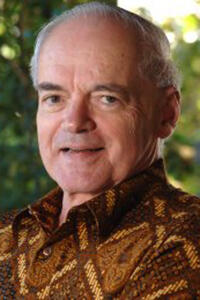
Deepak Nair researches the everyday practices and performances that produce international relations. His writings include ASEAN-related articles in journals such as International Political Sociology on topics that include golf, sociability, and diplomacy; on the practices of face-saving in diplomacy in the European Journal of International Relations; and on institutions, norms, and crisis in Asian Survey and Contemporary Southeast Asia. He earned his PhD and BA at the London School of Economics and Political Science and Delhi University, respectively.

Deepak Nair Assistant Professor of Political Science, National University of Singapore
Seminars
-

Second Conference on "The Political Economy of Japan under the Abe Government"

March 1 - 2, 2019

Philippines Conference Room

Sponsored by: Japan Society for Promotion of Science, Japan Foundation Center for Global Partnership, and Freeman Spogli Institute for International Studies (Stanford University)

Organizers: Takeo Hoshi and Phillip Lipscy


Program

3/1/2019

8:45am   Breakfast

9:05am    Welcome Remark     Toru Tamiya (JSPS San Francisco Office)
                                                   Osamu Honda (Japan Foundation Center for Global Partnership)

9:15am  "Abenomics and Japan's Entrepreneurship and Innovation: Is the Third Arrow Pointed in the Right Direction for Global Competition in the Silicon Valley Era?", Kenji Kushida (Stanford University)

Discussant:
Yong Suk Lee (Stanford University)

10:15am  Break

10:30am  "Abe’s Womanomics Policy: Did it have Effect on the closing of Gender Gap in Managers?", Nobuko Nagase (Ochanomizu University)

Discussant:
Curtis Milhaupt (Stanford University)

11:30am  Move to SIEPR Building for Lunch and Keynote Speech

11:45am  Lunch to conference participants

12:15pm  Lunch and Panel Discussion on Abenomics at SIEPR Building

Moderator: Takeo Hoshi
Panelists: Joshua Hausman
                   Takatoshi Ito
                  Nobuko Nagase
                  Steve Vogel

1:45pm   Panel ends and walk back to Encina Hall

2:00pm    "Abenomics, the Exchange Rate, and Markup Dynamics in Japanese Industries", Kyoji Fukao (Hitotsubashi University) and Shuichiro Nishioka (West Virginia University)

Discussant:
Yuhei Miyauchi (Stanford University and Boston University)

3:00pm  Break

3:30pm   "Abe's Reverse Course: How a Labor Shortage Transformed Labor Politics and Policy", Steven Vogel (University of California, Berkeley)

Discussant:
Kenji Kushida (Stanford University)


4:30pm   "The Crisis that Wasn’t: How Japan Has Avoided a Bond Market Panic", Mark T. Bamba and David E. Weinstein (Columbia University)

Discussant:
Johannes Wieland (University of California, San Diego)

5:30pm     Adjourn


3/2/2019

8:30am   Breakfast

9:00am   Welcome Remark
                 Moto Ono (Japan Foundation Center for Global Partnership)

9:10am   "The Enduring Challenges of History Issues", Mary McCarthy (Drake Univesity)

Discussant:
Phillip Lipscy (Stanford University)

10:10am  Break

10:25am "Expansion of the Prime Minister's Power in the Japanese Parliamentary System", Harukata Takenaka (National Graduate Institute for Policy Studies)

Discussants:
Patricia Maclachlan (University of Texas)

11:25pm  "Abenomics: Est. in 2013, or 2007?", Takatoshi Ito (Columbia University)

                   Discussants:
                  Takeo Hoshi (Stanford University)

12:25pm  Lunch

1:30pm  "Abenomics, Monetary Policy, and Consumption", Joshua Hausman (University of Michigan), Takashi Unayama (Hitotsubashi University), and Johannes Wieland (University of California, San Diego)

Discussant:
Thuy Lan Nguyen (Santa Clara University)

2:30pm   "The Great Disconnect: The Decoupling of Wage and Price Inflation in Japan", Takeo Hoshi (Stanford University) and Anil Kashyap (University of Chicago)

Discussant:
Takashi Unayama (Hitotsubashi University)

3:30pm  Break

4:00pm   "Introduction", Takeo Hoshi (Stanford University) and Phillip Lipscy (Stanford University)

5:30pm  Adjourn


Conferences
-


EMERGING ISSUES IN CONTEMPORARY ASIA

A Special Seminar Series


RSVP required by Friday, May 10, 2019

RSVP Now


ABSTRACT: Many commentators and scholars declare that Tokyo is shedding its postwar pacifism, and the Japanese nationalism is on the rise. To assess these claims, we analyze Japan’s military assertiveness and nationalism. Using public opinion and other data, we measure and compare these to two baselines both over time and across space (relative to seven other countries).  We find that (1) Japan’s military assertiveness remains very low in some ways, but has grown in others. The cross-national comparison shows that Japan remains the least assertive of the comparison countries. As for Japan’s national identity, (2) we distinguish theoretically between “nationalism” and a more benign “patriotism.” Patriotism is strong and stable over time. Public opinion shows some evidence of nationalistic sentiment. Other data reflect growing self-criticism and empathy. Evidence thus contradicts the claim of Japanese resurgence. These findings have important theoretical implications for the nationalism literature and for scholarly debates about Japan, and they shed light on policy questions related to the nascent U.S. balancing effort in East Asia. To the extent that the Japanese could be convinced to be a more active regional partner, it would be a responsible one.
 
Image
Jennifer Lind
PROFILE: 
Jennifer Lind is Associate Professor in the Department of Government at Dartmouth, a Faculty Associate at the Reischauer Institute for Japanese Studies at Harvard University, and a Research Associate at Chatham House, London. Professor Lind is an expert on East Asian international relations and US foreign policy toward the region. She is the author of Sorry States: Apologies in International Politics, which examines the effect of war memory on international reconciliation (Cornell University Press, 2008). She has also written numerous scholarly articles in journals such as International Security and International Studies Quarterly, and often writes for wider audiences in Foreign Affairs and National Interest. Her commentary is regularly quoted in The New York Times, Washington Post, The Wall Street Journal, and National Public Radio.
 
Philippines Conference RoomEncina Hall, 3rd Floor, Central616 Serra MallStanford, CA 94305
Jennifer Lind Associate Professor of Government, Dartmouth University
Authors
Donald K. Emmerson
News Type
Commentary
Date
Paragraphs

Indonesia’s latest and current experiment with democracy is twenty years old. The fifth national election to be held during that period is set to occur on 17 April 2019. More than 190 million Indonesians are eligible to vote. Those who do will elect the country’s president and vice-president and legislators at four different levels—national, provincial, district, and municipal. Since the collapse of General Suharto’s authoritarian regime in 1998, there have been no coups, and the process of campaigning and balloting every five years has proven to be peaceful with remarkably few and small exceptions.  So far so good. 

Regarding the top slot, this fifth election is a re-run of the fourth.  In 2014, Joko Widodo (“Jokowi”) ran for president against Prabowo Subianto and won.  The two men face each other again.  For the 2019 race, Jokowi picked Mar’uf Amin to be his vice-president; Prabowo picked Sandiaga Uno to be his.  All four men are Muslims.

Compared with Prabowo, Jokowi is a man of the people.  Jokowi is the first-ever Indonesian president with a non-elite background.  His first career was not in politics, and not in Indonesia’s megalopolis and capital, Jakarta, but in small business in Central Java.  He made and sold wood furniture in Surakarta, a city a fraction of Jakarta’s size.  He benefited from having begun his political career as Surakarta’s first directly elected mayor.  That post afforded him face-to-face contact with his constituents and gained him popularity based on his success in reforming governance, reducing corruption, and improving public services. 

Jokowi burnished that reputation as the elected governor of Jakarta.  Among his accomplishments on that larger scale were socioeconomic betterment and attention to public transportation.  Construction of Indonesia’s very first subway system began in Jakarta on Jokowi’s watch.  To his political advantage, the project’s first phase—ten miles of underground and elevated track—was completed and opened to the public in March 2019 mere weeks before the national election in April.

Prabowo’s father was a leading figure in Indonesia’s economy, diplomacy, and politics.  Prabowo was schooled in Europe before returning to Indonesia to embark upon a 24-year career in the army.  He rose to the rank of a lieutenant general, but his record was marred by association with violence and insubordination.  Especially brutal were his roles in crushing movements for independence from coercive Indonesian rule in East Timor and Papua and in the abusive repression of democracy activists during riots in Jakarta in 1998. When Indonesia transitioned to democratic rule later that year, he was, in effect, dishonorably discharged.  In 2000 he was denied an American visa, apparently on human rights grounds.  Upon leaving the military, Prabowo began a lucrative career in business. He lost the 2014 presidential election to Jokowi, 47-to-53 percent.

ndonesian Presidential candidate Prabowo Subianto addresses to his supporters at the Kridosono stadium during election campaign rally on April 8, 2019 in Yogyakarta, Indonesia. Photo by Ulet Ifansasti/Getty Images Indonesian Presidential candidate Prabowo Subianto addresses to his supporters at the Kridosono stadium during election campaign rally on April 8, 2019 in Yogyakarta, Indonesia. Photo by Ulet Ifansasti/Getty Images

Muslims account for an estimated 87 percent of the 269 million people who live in Indonesia, the world’s fourth largest country and the third largest democracy after India and America.  It is mathematically understandable that majoritarian Muslim faith and sentiment might drive the country’s politics.  But Indonesia is not an Islamic state.  Its leaders have, more or less effectively, curated an ethno-religiously plural national identity that legitimates not only Islam but, in theory, Buddhist, Catholic, Confucian, Hindu, and Protestant beliefs as well. 

When Jokowi ran for governor of Jakarta in 2012, his running mate was Basuki Tjahaja Purnama, an ethnic-Chinese Christian Indonesian better known by his nickname “Ahok.”  When the ticket won, Ahok became vice-governor.  A man of probity and candor with a background in business and science, Ahok quickly earned kudos for his efforts to curb poverty, corruption, and traffic congestion, among other ills of the metropolis.  In 2014, when Jokowi took a leave of absence to run for president, Ahok replaced him as the acting governor of Jakarta. When Jokowi defeated Pabowo to become president later that year, Ahok became governor in his own right—the first-ever ethnic Chinese and the first non-Muslim in half a century to fill that position. Sinophobia has a long history in Indonesia. In the context of the economic and political crises that obliged Suharto to resign in 1998, for example, anti-Chinese mobs ran riot in Jakarta.  Prabowo, Suharto’s son-in-law at the time, may have been at least indirectly involved in that outbreak of racial violence.

In a speech in September 2016, Ahok made an unscripted reference to the possibility that, were he to run again, some Muslims might not vote for him.  But all he said was that voters should not believe those who intentionally lie about—misinterpret—verse 51 in Al-Ma’idah, a chapter in the Qur’an that seems to advise Muslims against becoming allies of Jews and Christians.  Some Islamists had indeed glossed that verse as an obligation for Muslims not to vote for a non-Muslim to occupy public office.  An edited version of the video made it sound as though Ahok were not accusing some people of lying about what the verse meant, but was instead blaming the falsehood on the Qur’an itself—Allah’s own words.

The altered video went viral. Extreme Islamist organizations pressed for Ahok’s arrest and imprisonment for having violated Indonesia’s law on the Misuse and Insult of Religion.  He was tried, sentenced, and incarcerated in May 2017.

A man is draped with a flag showing the images of Indonesian President Joao Widodo and his Vice Presidential running mate Ma'ruf Amin at a concert and political rally for President Joko Widodo.
A man is draped with a flag showing the images of Indonesian President Joao Widodo and his Vice Presidential running mate Ma'ruf Amin at a concert and political rally for President Joko Widodo. Photo by Ed Wray/Getty Images

Ahok regained his freedom in January 2019. When he was released, Jokowi’s and Prabowo’s presidential campaigns had already begun. Six months before, Jokowi’s partisan allies, knowing how closely associated with Ahok their candidate had been, had persuaded him to strengthen his Islamic appeal by choosing Mar’uf Amin to fill the vice-presidential slot on his ticket.  At the time, Amin chaired Indonesia’s if not the world’s largest independent Islamic organization, Nahdlatul Ulama. Amin also headed a state-supported Indonesian Ulama Council that issues rulings ( fatwa ) on Islamic matters.  Under Amin’s leadership in November 2016, the Council had gone so far as to insist, in a statement he signed on the Council’s behalf, that verse 51 in Al-Ma’idah really does forbid Jews and Christians from becoming leaders and does obligate Muslims to choose to be led only by Muslims—and that to deny this is to insult the Qur’an, the ulama, and the Muslim community.  Yet there is nothing in Indonesia’s constitution or its laws that endorses, let alone requires, prejudicial voting—ballot-box communalism—of this kind.

Beyond boosting Jokowi’s image in the eyes of illiberal Muslims, Amin was an attractive choice for two other reasons as well:  NU’s demographic strength, notably in the heavily populated provinces of East and Central Java; and the hoped-for gravitas of Amin’s age and wisdom that some voters might read into his being 76 years old on election day—seventeen more than Jokowi’s 58.

In choosing Sandiago (“Sandi”) Uno for the vice-presidential slot on his ticket, Prabowo may also have taken age into account, but in the reverse direction.  Sixty-seven years old on election day, Prabowo may have chosen his running mate hoping to benefit from the image of relatively youthful energy and savvy modernity that Sandi, eighteen years younger, might evoke in voters’ minds.  Not to mention Sandi’s money.  Forbes Magazine ranked him 27 th among the 40 richest Indonesians in 2010, although he has since fallen off that list.  Sandi’s proven ability to attract support, having been elected vice-governor of Jakarta in 2017, likely also favored his selection. 

Sandi has an MBA from George Washington University. Whatever he learned about good business practices while there, however, did not prevent his name from surfacing in the “Paradise Papers” and in research by the International Consortium of Investigative Journalists, sources that linked him to shell companies registered in Panama, the British Virgin Islands, and other tax-haven locations.

Sandiaga Uno, Vice-Presidential candidate and running mate of Indonesian Presidential candidate Prabowo Subianto Waves to supporters
Sandiaga Uno, Vice-Presidential candidate and running mate of Indonesian Presidential candidate Prabowo Subianto Waves to supporters after giving a speech at the National Stadium on April 7, 2019 in Jakarta, Indonesia. Photo by Ed Wray/Getty Images.

Prabowo did not excel in his televised debates with Jokowi.  The many polls conducted again and again during the campaign showed Jokowi ahead of Prabowo in the public’s opinion by as much as twenty percent.  As election day neared, the gap between the two men may have narrowed.  But that evidence may have been tainted by unreliable polls that Prabowo’s camp may have incentivized to exaggerate his support. [1]

Prabowo has in the past cultivated relations with Islamist figures and groups. A question to be settled on 17 April is whether Jokowi’s supporters among softer-line, mainstream Muslims and their associations will outvote the harder-line Islamist and more Sinophobic voters to whom Prabowo has appealed.  Relevant, too, is the credulity of voters regarding fake news on social media, including hoaxes designed to stoke fears of Chinese immigration.  One viral claim blamed Jokowi for welcoming investments from China to the point of making Indonesians compete for jobs with an influx of as many as ten million China-born workers. If official Indonesian data are accurate, of 95,335 foreign workers in the country in 2018, only 32,000 were from China. [2]

In the past, Indonesia has been lauded for exemplifying the compatibility of Islam and democracy and for cultivating ethnic tolerance as well.  For democracy to survive and succeed, however, as Americans are learning, it must be continually safeguarded and reconfirmed.  One of the concepts that will crucially affect the further institutionalization of democracy in Indonesia is the extent to which its large and ethnically Malay Muslim majority will be accountable to the country as a whole and not be demagogued into violating minority rights and freedoms.  A populist who inflames his partisan base should not enjoy immunity from oversight. Crucial, too, is the notion of a loyal opposition whose leader is willing and able to reaffirm allegiance to a system in which it has just lost an election fairly.  Additionally essential to the implementation of these core ideas, as polarized Americans are being reminded, is the empathy necessary to bridge identity-based cleavages by imagining oneself in the shoes or sandals of “the other.” 

In any event, one can hope for the best: that the fifth electoral testing of Indonesia’s two-decades-long experiment with democratic rule in 2019, and the 59th American presidential election in 2020, including their respective aftermaths, will reinvigorate the purpose and power of democratic principles as inoculations against the risks, in both countries, of authoritarian division from within.

Donald K. Emmerson last visited Indonesia in December 2018 to speak at the 11th  Bali Democracy Forum.  Without implicating them in the above, he is grateful to Bill Liddle, Wayne Forrest, and Lisa Lee for helpful comments on its first draft.


[1] Compare Seth Soderberg, “Indonesia: How the Polls are Performing,” 15 April 2019, New Mandala , https://www.newmandala.org/indonesia-how-the-polls-are-performing/ , with Malvyandie Haryadi, “Hasil Survei Pilpres Terbaru: 7 Lembaga Survei Menangkan Jokowi, 4 Lembaga Unggulkan Prabowo,” (Latest Presidential Election Surveys: 7 Surveyers Show Jokowi Winning, 4 Surveyers Put Prabowo on Top), Tribunnews.com , 10 April 2019, http://www.tribunnews.com/pilpres-2019/2019/04/10/hasil-survei-pilpres-terbaru-7-lembaga-survei-menangkan-jokowi-4-lembaga-unggulkan-prabowo .

[2] Amy Chew, “‘Let’s Copy Malaysia’: Fake News Stokes Fears for Chinese Indonesians,” South China Morning Post , 7 April 2019, https://www.scmp.com/week-asia/politics/article/3004909/indonesia-election-anti-beijing-sentiments-spread-will-chinese .


Hero Image
Joko Widodo Campaigns Ahead Of Indonesia's Presidential Election
SOLO, INDONESIA - APRIL 09: Indonesian incumbent Presidential candidate Joko Widodo, addresses his supporters at the Sriwedari stadium during election campaign rally on April 9, 2019 in Solo, Central Java, Indonesia. Indonesia's general elections will be held on April 17 pitting incumbent President Joko Widodo against Prabowo who he defeated in the last election in 2014.
Ulet Ifansasti/Getty Images
All News button
1
-

EMERGING ISSUES IN CONTEMPORARY ASIA

A Special Seminar Series


RSVP required by Wednesday, April 17, 2019

RSVP Now

ABSTRACT: Why does success in combat sometimes fail to produce a stable and durable peace settlement? In the 1965 war, India successfully repelled a Pakistani invasion of the disputed territory of Kashmir, captured new territory, and launched a massive counter-offensive – but it did not improve the long-term security of Kashmir or deter future Pakistani aggression. This presentation offers an explanation that shows how war can help to establish deterrence between enduring rivals. I argue combat success is important, but must be paired with costly signals of resolve. In 1965, India achieved combat success but failed to deliver such signals of resolve: it did not permanently retain the Kashmiri territory it captured, and it deliberately limited the strategic threat posed by its counter-offensive. As a result, India defended against invasion without establishing post-war deterrence. India’s current military strategy continues to favor ineffective and potentially destabilizing concepts of deterrence. This carries implications not only for regional security, but also U.S. strategy, which increasingly depends on India to maintain a favorable and stable regional balance of power.
 
Image
Arzan Tarapore
PROFILE:
Arzan Tarapore is a nonresident fellow at the National Bureau of Asian Research, an adjunct defense analyst at the RAND Corporation, and from Fall 2019, an adjunct assistant professor at Georgetown University. His research lies at the intersection of South Asian politics and military strategy. His current book project explains the concept of strategic effectiveness, drawing on in-depth historical case studies of India’s war-fighting experience since 1965. Prior to his scholarly career, Arzan served for 13 years in the Australian Defence Department, which included operational deployments and a diplomatic posting to Washington, DC. He holds a PhD in war studies from King’s College London.


Philippines Conference RoomEncina Hall, 3rd Floor, Central616 Serra Street, Stanford, CA 94305
Arzan Tarapore Nonresident fellow at the National Bureau of Asian Research
-

U.S.-China relations has reached a watershed moment.  Even as both nations reassess the trajectory of their bilateral relationship, James Green, who recently served as Minister Counselor for Trade Affairs at the U.S. Embassy in Beijing, takes a close look at critical points in the history of U.S.-China negotiations: from anti-Soviet coordination to nonproliferation, from the Tiananmen crackdown to cyber theft, from China's WTO accession to G20 summits.  James Green is the creator of Georgetown University’s new initiative, the U.S.-China Dialogue Podcast and has conducted in-depth interviews with two dozen former U.S. cabinet secretaries, ambassadors and senior officials regarding pivotal events in U.S.-China relations.  Mr. Green will explore how U.S. Administrations from Carter to Trump have dealt with a rising China; what motivated them, and what the lessons are for future administrations.  Based on his time as the senior official in China from the Office of the United States Trade Representative (USTR), furthermore, Mr. Green will also speak about the prospects for future trade friction with China.

Image
james green

James Green has worked for over two decades on U.S.-Asia relations. For the last five years, Mr. Green was the Minister Counselor for Trade Affairs at the U.S. Embassy in Beijing.  As the senior official in China from the Office of the United States Trade Representative (USTR), Mr. Green was deeply involved in all aspects of trade negotiations, trade enforcement, and in reducing market access barriers for American entities.  In prior government service, Mr. Green worked on the Secretary of State’s Policy Planning Staff and at the State Department’s China Desk on bilateral affairs. He also served as the China Director of the White House’s National Security Council.  In the private sector, Mr. Green was a senior vice president at the global strategy firm founded by former Secretary of State Madeleine Albright and was the founding government relations manager at the American Chamber of Commerce in Shanghai, Asia’s largest AmCham.  Currently, Mr. Green is a Senior Research Fellow at Georgetown University's Initiative for U.S.-China Dialogue on Global Issues and hosts a U.S.-China Dialogue Podcast.   

Philippines Conference RoomEncina Hall, 3rd Floor616 Serra Mall, Stanford, CA 94305
James Green <i>Georgetown University</i><br><br>
Seminars
-

The 3rd Asia-Pacific Geo-Economic Strategy Forum
 

May 2, 2019

Hauck Auditorium, Hoover Institution, Stanford University

Sponsored and organized by Nikkei Inc., The Hoover Institution, and the Freeman Spogli Institue of International Studies (FSI)


RSVP REQUIRED: https://www.global-nikkei.com/19apgeo/
(RSVP starts from April 10)


Agenda

1:00pm - 1:05pm
Welcome Remark:
Adm. Gary Roughead, Hoover Institution, Stanford University


1:005pm - 1:25pm
Keynote Speech:
Itsunori Onodera, Former Minister of Defense, Japan
 

1:30pm - 2:20pm
Panel I: Indo-Pacific Strategy vs Belt & Road Initiative

Chair: Akihiko Tanaka, President, National Graduate Institute for Policy Studies

Panelists:
Masahisa Sato, State Minister for Foreign Affairs of Japan
Akio Takahara,  Tokyo University
Donald Emmerson, Freeman Spogli Institue for International Studies, Stanford University
 

2:20pm - 2:30pm
Coffee Break


2:30pm - 2:50pm
Special Speech
:
Gen. H.R. McMaster,
Hoover Institution


2:55pm - 3:50pm
Panel Discussion II: US-Japan Strategic Collaboration: Technology, Trade and Economics

Chair: Satoru Mori, Hosei University

Panelists:
Kenji Wakamiya, Former State Minister of Defense, Japan
Hideaki Watanabe, Former Commissioner of Acquisition, Technology & Logistics Agency (ATLA)
Janis Pamiljans, President, Northrop Grumman Aerospace Systems
Nelson Pedeiro, Vice President, Advanced Technology Center, Lockheed Martin
 

3:50pm - 4:00pm
Coffee Break


4:05pm - 4:55pm
Panel Discussion III: Japan`s Defense/Security Strategy

Chair: Satoshi Morimoto, Former Minister of Defense of Japan

Panelists:
Gen Nakatani, Former Minister of Defense, Japan
Itsunori Onodera, Former Minister of Defense, Japan
James Fearon, Freeman Spogli Institute for International Studies, Stanford University
 

4:55pm - 5:00pm
Closing Remark:

Adm. Gary Roughead, Hoover Institution, Stanford University


Everett and Jane Hauck Auditorium
David and Joan Traitel Building of Hoover Institution
435 Lasuen Mall, Stanford, CA 94305
Stanford University


Symposiums
-
Image
Stanford University landscape with Memorial Church and the Main Quad at the center.

The JIIA-Stanford Symposium

"The Past, Present, and Future International Order in East Asia"

May 10, 2019

Bechtel Conference Center, Encina Hall, Stanford University

Sponsored and organized by the Japan Institute for International Affairs (JIIA) and Japan Program and the US-Asia Security Initiative of the Walter H. Shorenstein Asia-Pacific Research Center (APARC) of the Freeman Spogli Institue of International Studies (FSI) at Stanford University 
 

Interstate relations in East Asia are at a critical juncture.  The post-World War II regional order, shaped by the San Francisco Treaty of 1951, underpinned by a common commitment to a liberal trade system, and led by the United States, is under stress.  The end of the Cold War, rise of China, and recent changes in America’s foreign policy orientation have transformed the environment that sustained “the San Francisco System.”  It is unclear if this system will be maintained, and if not, what will replace it.  The lineage of the San Francisco System itself reaches back to the post-World War I Versailles-Washington System.  An examination of the success and shortcomings of each of these systems can offer insights on the rise and fall of international systems, especially in an Asian context.  In this symposium, we explore the circumstances that shaped the establishment and evolution of the East Asian political, economic, and security architectures from post-WWI to present; discuss the forces that built and undermined the past and existing architecture; and debate possible regional futures.  We will emphasize the perspectives and roles of the U.S., Japan, and China, and focus on major influencing factors including historical legacies, the changing distribution of global power, alliance structures, and political ideologies.


Agenda

9:00am - 9:30am 
Registration and Breakfast 
 

9:30am - 9:45am 
Welcome Remarks: 
Gi-Wook Shin, Director, APARC, Stanford University 
Kenichiro Sasae, President, JIIA 
Takeo Hoshi, Director, Japan Program, APARC, Stanford Univeristy 
 

9:45am - 11:30am 
Panel I: Comparing “the Versailles-Washington System” and “San Francisco System”: Lessons from the Rise and Fall of International Orders in East Asia

Chair: Daniel Sneider, FSI, Stanford University

Panelists: 
Shin Kawashima, University of Tokyo 
Masaya Inoue,  Seikei University 
Lin Hsiao-ting, Hoover Institution, Stanford University 
David Kennedy, Center for International Security and Cooperation (CISAC), FSI, Stanford University 
 

11:30am - 1:15pm 
Lunch 

Keynote Speaker: Ambassador Michael Armacost


1:15pm - 3:00pm 
Panel Discussion II: Japanese, U.S. and Chinese Interests and Security

Chair: Kenichiro Sasae, JIIA 

Panelists: 
Ken Jimbo, Keio University 
Tetsuo Kotani, JIIA 
Mike Lampton, APARC, Stanford University 
Jim Schoff, Carnegie Endowment for International Peace (CEIP) 
 

3:00pm - 3:30pm 
Coffee Break 
 

3:30pm - 5:15pm 
Panel Discussion III: Alternative Future East Asia Systems

Chair: Phillip Lipscy, FSI, Stanford University 

Panelists: 
Jim Fearon, FSI, Stanford University 
Ryo Sahashi, University of Tokyo 
Kenichiro Sasae, President, JIIA 
Tom Christensen, Columbia University 
 

5:15pm - 5:35pm 
Rapporteurs' review of symposium discusisons 
 

5:35pm - 5:45pm 
Closing Remarks: 
Karl Eikenberry, Director, US-Asia Security Initiative, APARC, Stanford University 
Kenichiro Sasae, President, JIIA 
 

5:45pm - 6:30pm 
Reception (Encina Lobby)

Bechtel Conference Center
616 Serra Mall
Encina Hall, Central, 1st Floor
Stanford, CA 94305

Symposiums
Paragraphs

Promotion of inward foreign direct investment (FDI) into Japan has been an important policy in the Abenomics growth strategy. This paper examines if we observe positive impacts of the policy in the data. We first estimate a gravity model of bilateral FDIs using data for 35 OECD countries as destination countries. In estimating the model, we handle zero values for FDI stock explicitly. The model includes (origin and destination) country-specific effects as well as destination-country specific time trends. We take the model prediction as a reasonable counterfactual and compare that to the actual inward FDI stock for Japan. Although the actual inward FDI stock has been growing and is likely to achieve the goal of 35 trillion yen by 2020, the growth under the Abe administration has been comparable to or slightly lower than the counterfactual suggested by the estimated model. We also estimate the model without Japan as a destination country and use the estimated model to calculate the counterfactual level of Japan's inward FDI. Although we expect the gap between the counterfactual and the actual become narrower if Abenomics policy has been successful, we fail to find that. These results cast a doubt on the effectiveness of the Abenomics policies to encourage inward FDI at least as of 2015.

All Publications button
1
Publication Type
Journal Articles
Publication Date
Journal Publisher
Journal of the Japanese and International Economies
Authors
Takeo Hoshi
Number
52
-

RSVPs for this event are now closed. This event is open only to the Stanford community; a valid Stanford ID will be required to enter. 

NOTE: THIS EVENT IS CLOSED TO THE MEDIA

Image
Kaohsiung Mayor Han Kuo-yu

Han Kuo-yu was elected Mayor of Kaohsiung, Taiwan, in November 2018, becoming the first member of the Kuomintang (KMT) to hold that office since 1998. He served as a member of the Legislative Yuan from Taipei County from 1993-2002, and later became the general manager of the Taipei Agricultural Products Marketing Corporation. 

Mr. Han graduated from Soochow University (Taipei) with a degree in English literature, and earned a master’s degree in law from National Chengchi University’s Graduate Institute of East Asian Studies.
 
This event is co-sponsored by the Hoover Institution and the Taiwan Democracy and Security Project, part of the U.S.-Asia Security Initiative
 

Philippines Room
616 Serra Mall
Encina Hall, 3rd Floor, Central (C330)
Stanford, CA 94305

Han Kuo-yu Mayor of Kaohsiung, Taiwan
Subscribe to Governance