The Political Economy of Engagement: The North Korean Case
We have ample examples of efforts to "engage" adversaries, from Willy Brandt’s Ostpolitik to Kissinger’s conception of détente and Kim Dae Jung’s Sunshine policy. Yet much more attention has been given to understanding the logic of sanctions than the logic of inducements. Drawing an array of new sources of information on the North Korean economy, from the direction of its foreign trade to two firm‐level surveys of Chinese and South Korean firms doing business in the country, we consider the political and economic logic of engagement. Like sanctions, the conditions under which engagement strategies are likely to work are subject to a number of constraints. Target governments appear well aware of the risks of engagement and there is only mixed evidence for claims that such engagement has transformative effects.
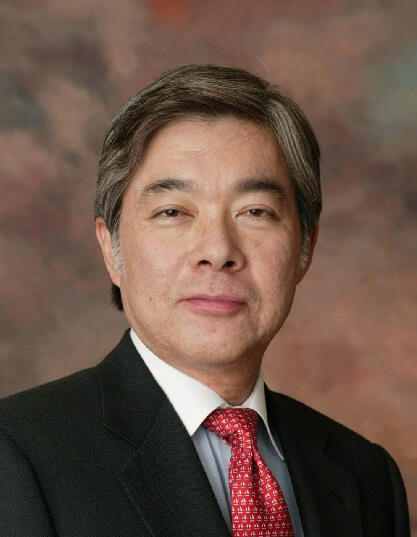
Dr. Stephan Haggard is the Lawrence and Sallye Krause Distinguished Professor of Korea-Pacific Studies and Director of Korea-Pacific Program (KPP) at the University of California, San Diego Graduate School of International Relations and Pacific Studies.
Stephan Haggard works on the political economy of developing countries, with a particular interest in Asia and the Korean peninsula. He is the author of Pathways from the Periphery: The Politics of Growth in the Newly Industrializing Countries (1990), The Political Economy of Democratic Transitions (1995, with Robert Kaufman), The Political Economy of the Asian Financial Crisis (2000) and Development, Democracy and Welfare States: Latin America, East Asia, Eastern Europe (2000, with Robert Kaufman). His current research focuses on the relationship between inequality, democratization and authoritarianism in developing countries.
Professor Haggard has written extensively on the political economy of North Korea with Marcus Noland, including Famine in North Korea: Markets, Aid, and Reform (2007) and Witness to Transformation: Refugee Insights into North Korea (2011). Haggard and Noland co-author the "North Korea: Witness to Transformation" blog at the Peterson Institute for International Economics.
Philippines Conference Room
Welfarenomics: The Road to a Sustainable Capitalism and Welfare State
Neo-liberalism, which became a dominant ideology in policy-making in many countries from the early 1980's, is now blamed for worsening inequality and the 2008 world financial crisis. As the recovery process is moving very slowly due to lingering uncertainties from the Euro crisis, going back to the European model of a welfare state is not a feasible policy direction for most countries. Thus, now is the time to seek a new paradigm for a sustainable capitalism and welfare state, Dr. Sang-Mok Suh argues. He proposes 'welfarenomics,' implying a better balance between economics and welfare.
Welfarenomics means promoting a sustainable calitalism through modifying the neo-classical market economy model in three ways: (1) strengthening the role of government in the areas of formulating & implementing national strategy; (2) increasing social values of business activities through developing new CSV (Creating Shared Value) activities; and (3) creating a habitat for co-development through activating civil society. Welfarenomics also implies promoting a sustainable welfare state through modifying the European welfare state model in three ways: (1) building a foundation for 'workfare' through developing customized job programs for welfare beneficiaries; (2) utilizing various welfare programs as means for social innovation; and (3) improving the effectiveness of welfare programs through applying various management concepts to the field of social welfare.
The presentation will cite some of the recent experiences in Korea, but the concept of welfarenomics can be applied to any country in need of achieving both economic growth and social equity.
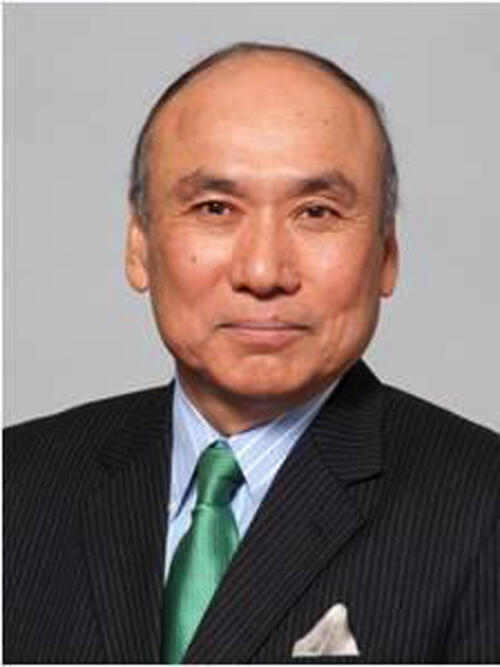
For the past four decades, Dr. Sang-Mok Suh has been a policy-making expert in both economics and social welfare. After receiving his PhD in economics from Stanford University in 1973, Professor Suh worked at the World Bank for five years and at the Korea Development Institute (KDI), a top South Korean think tank, for ten years as a researcher. His doctoral dissertation was on the relationship between economic growth and income distribution. In 1986, he led the research team at KDI for formulating the National Pension Scheme for Korea. He was vice president of KDI, 1984–1988. As a Korea National Assembly member, 1988–2000, Dr. Suh played the key role of coordinating economic and welfare policies between the ruling party, on the one hand, and the government and opposition parties, on the other. While he was Minister of Social Welfare, 1993–1995, Dr. Suh formulated a comprehensive welfare strategy for Korea for the first time and initiated the Osong Bio Industrial Complex.
Daniel and Nancy Okimoto Conference Room
Jun Lu
Shorenstein APARC
Encina Hall E301
616 Serra Street
Stanford, CA 94305-6055
LU Jun joins the Walter H. Shorenstein Asia-Pacific Research Center during the 2013-2014 academic year from the School of Government of Peking University where he serves as a full professor.
His research interests include urban and regional economics in China; international comparative studies of the spatial distribution of local public goods; and the developmental trends of local public finance. During his time at Shorenstein APARC, Lu Jun will do a comparative research between USA and China of how to eliminate the spatial mismatch effect of local public goods in the metropolitan area. In the meantime, he will collect valuable research materials for his forthcoming textbook of Local Government Economics.
Lu is director of Urban and Regional Management Department of School of Government, Peking University, vice director of Center for Chinese Urban and Regional Study and research fellow of Institute of Capital Development of Peking University. He is the anonymous referee of publication of Comparative Economic & Social Systems, European Studies and World Economics in China.
Other authored books by Lu include The Evolution of Urban External Space and Regional Economy(2002), Fiscal and Financial Policy Instruments in Regional development (2004). He is also the first author of Tax Competition and Regional Urbanization – An Example of Beijing, Tianjin and Hebei Province(2010)and Transformation & Redevelopment of Old Urban Industrial Areas(2011), Study on World cities(2011), and co-author of Spatial Agglomeration of Manufacturing Industry in Beijing Metropolitan Area(2011).
Lu Jun holds a PHD in Urban Economics from Nankai University and an MA in Real Estate Economics from Capital University of Economics and Business, and a postdoctoral researcher of the department of Urban and Environmental Sciences at Peking University.
Tun Wang
Tun Wang is a corporate affiliate visiting fellow at the Walter H. Shorenstein Asia-Pacific Research Center (Shorenstein APARC) for 2013-14. Wang has worked at the Industrial and Commercial Bank of China (ICBC) for 17 years. Currently, he is the deputy head of the Global Market Department in the head office in Beijing. He received his bachelor's degree in Electronics and IT Systems from Ocean University of China and his master's degree in Finance from the Graduate School of People's Bank of China. His work experience and research activities focus on financial market trading business.
Huihong Cai
Huihong Cai is a corporate affiliate visiting fellow at the Walter H. Shorenstein Asia-Pacific Research Center (Shorenstein APARC) for 2013-14. Cai has worked at the Industrial and Commercial Bank of China (ICBC) for 17 years - participating in a majority of the projects of IT infrastructure construction such as the project of Data Consolidation and the project of Recovery Data Center Construction. Currently, he is the Section Chief of the System Management Division of the IT Department at ICBC's head office in Beijing. Previously, he worked in other divisions & branches and served as the Deputy Mayor of Wanyuan in the Sichuan Province for one year. Cai received his bachelor's degree in Computer Science and Engineering form Zhejiang University and his MBA from the University of International Business and Economics (UIBE).
Katsunori Komeda
Katsunori Komeda is a corporate affiliate visiting fellow at the Walter H. Shorenstein Asia-Pacific Research Center (Shorenstein APARC) for 2013-14. Komeda has been working at Sumitomo Corporation, one of Japan's major trading and investment conglomerates. Komeda has approximately 10 years of experience in business development in the cinema and broadcasting business. Komeda graduated for The University of Tokyo with a bachelor's degree in economics.
Kensuke Itoh
Kensuke Itoh is a corporate affiliate visiting fellow at the Walter H. Shorenstein Asia-Pacific Research Center (Shorenstein APARC) for 2013-14. Itoh has over eight years of experience in the information technology arena at Sumitomo Corporation, one of the major trading and investment conglomerates in Japan, and its subsidiaries. His experience in the IT industry includes sales, strategy planning, M&A process and administration. While at Stanford, Itoh is researching the difference in the profitability and structure of IT businesses between the United States and Japan. Itoh is interested in applying his knowledge gained here to his work and overall helping to revise the economy in Asia. Itoh graduated from the Graduate School of Energy Science at Kyoto University with a degree in energy science and technology.
Tetsuo Ishiai
Tetsuo Ishiai is a corporate affilaite visiting fellow at the Walter H. Shorenstein Asia-Pacific Research Center (Shorenstein APARC) for 2013-14. He started his career in 1990 as a hardware engineer for Mitsubishi Electric Corporation, Tokyo, Japan. Ishiai has been engaged in designing and developing hardware components for several server computers and communication systems, as well as managing hardware development teams. His products include circuit boards for hardware sorting engines and small business computers. He graduated from Aoyama Gakuin University with a BS in electrical engineering and electronics.
Industrial Policy Reconsidered in a Digital World
In our current era, the advent of digital technologies and accelerating globalization is driving ever-faster commoditization of firms and products. With rapidly improving Information and Communications Technology (ICT) tools, manufacturing is decomposed with finer granularity, and corporate functions can be outsourced and offshored more than ever before. Services can be unbundled into activities that can be taken apart, reconfigured, and transformed with the application of algorithms. Overall, firms are experiencing accelerating shifts in the sweet-spot for markets and business models in their search for sustainable advantage.
As firms struggle to adjust in this global, digital world, governments are also under pressure to examine their options to retain value in their national contexts; wealthy nations face the challenge of how to remain wealthy.
Japan is no exception, and from this vantage it is worth reconsidering the potential role that industrial policy can play in its growth strategy. We will proceed in three sections, each of which builds from our previous research (indicated below the title), towards a set of recommendations for thinking about industrial policy in this digital, global era. Each point contributes something new to Japan’s discourse about a new growth strategy.