Science and Technology
616 Serra StreetEncina Hall E301Stanford, CA94305-6055
0
gilhong_kim.jpg Ph.D.

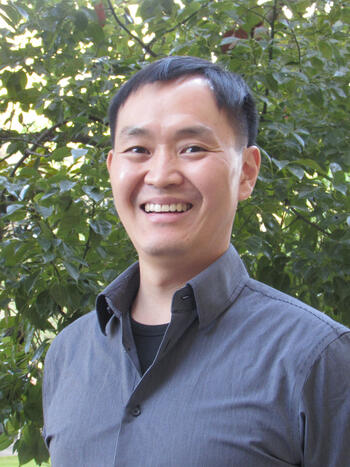
Dr. Gilhong Kim joins the Walter H. Shorenstein Asia-Pacific Research Center for the 2018 year as visiting scholar.  He currently serves as the Senior Director and Chief Sector Officer of the Sustainable Development and Climate Change Department at the Asian Development Bank.  He will be conducting research on technological development and impact in the Asia-Pacific.

Visiting Scholar at APARC
-

We have reached venue capacity.  RSVPs are no longer being accepted.

In China, Japan, and Korea, large companies have historically played predominant roles in their economies. However, with startups often driving disruptive innovation in the current digital global era, the question is how incumbent large firms can adapt, adjust, and harness the power of small firms while making use of their existing resources. This panel brings together perspectives from China, Japan and Korea. 

In China, we have seen the explosive growth of information technology firms such as Alibaba and Tencent, who are now at the technological forefront of several areas such as using data and artificial intelligence for financial tech (Fintech) offerings. What are the key features of China's entrepreneurship ecosystem and how do large firms work with new firms?

In Japan, a major challenge is how to unleash potential innovations currently held by large companies who are unable to capitalize on them. World Innovation Lab (WiL) is a Palo Alto and Tokyo based company structured as an investment fund, designed to assist large Japanese companies carve out potential intellectual property into startups, and to harness Silicon Valley startups through investments and partnerships. ANA is a large Japanese airline company that has partnered with WiL to find new strategies for driving its next wave of innovations.

South Korea is home to some of the most competitive firms in the high tech areas, and the question is to how to remain at the forefront of high value added activities in rapidly commoditizing offerings. Samsung Research America is focused on harnessing Silicon Valley through development of software, user experience, and services for the next generation of products. 

Panelists:

Image
Tao Li  Founder and Executive Director, APUS Group

Li is widely believed as an innovative visionary and highly strategic entrepreneur. Before founding APUS Group, Li served as senior Vice President of Qihoo 360 (QIHU NYSE), a major internet company player known for its antivirus software. Prior to that, Li has involved with several well-known companies like Datang Telcom, 3721. He is an internet expert with expert internet knowledge, distribution channels and marketing experience. Mr. Li is an active venture capitalist that has invested in dynamic startup companies from media and VR technology to video advertising companies, both domestically and abroad. Li received a Bachelor of Engineering degree from Zhengzhou University in 1998. Currently Li is a Finance EMBA student in Tsinghua University.


Image
Aki Koto, Partner,  World Innovation Lab (WiL)

Mr. Koto enjoys working with visionary entrepreneurs in frontier tech such as VR/AR, Bitcoin, IoT, and Autonomous Driving as the investment partner. He is also passionate about WiL’s corporate innovation efforts to bring WiL’s corporate partners’ organizational and corporate cultures more in line with Silicon Valley’s ethos. Through his facilitation of the Design Thinking Workshops and mentorship of the workshop facilitators, he has deepened his relationships with corporate executives which are influential in opening up business development opportunities between corporations and startup companies.


Image
Hideaki Matsumoto, Manager, Digital Design Lab, All Nippon Airways (ANA)

Mr. Matsumoto is in charge of researching and creating new business, service, and process innovation models. Currently, he is investigating new business paradigms in the areas of education and sports that fully leverage ANA's brand, assets, and strengths. He is actively researching startups and cutting-edge technology related to these two fields both in Japan and around the world. Prior to ANA, he worked in the R&D Center at Canon and was responsible for developing new recognition technologies like OCR, form recognition and face recognition. He holds both a BS and MS from Kyushu University.


Image
Pranav Mistry, Head of Think Tank Team and Senior Vice President, Samsung Research America

Pranav Mistry is a computer scientist and inventor. He is currently Head of Think Tank Team at Samsung Research America and is best known for his work on SixthSense, Samsung Galaxy Gear and Project Beyond. His research interests include Wearable Computing, Augmented reality, Ubiquitous computing, Gestural interaction, AI, Machine vision, Collective intelligence and Robotics. The World Economic Forum honored Mistry as one of the Young Global Leader in 2013. Prior to his current position, he has worked with Microsoft, Google, CMU, NASA, UNESCO and Japan Science & Technology, to name a few. Pranav was a PhD candidate at the MIT Media Lab and earned his MA in Media Arts and Sciences from MIT, MDES from IIT, Bombay and a BS in Computer Science and Engineering.
 

Image
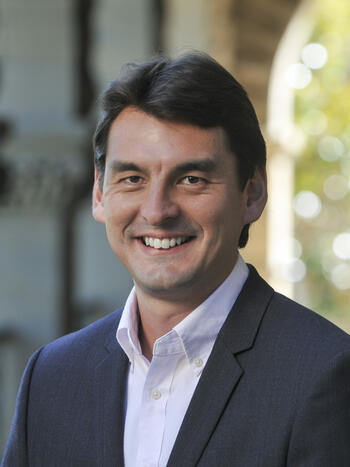
Portrait of Kenji Kushida
Kenji Kushida, Research Scholar, Japan Program, Shorenstein APARC, Stanford University (Moderator)

Kushida’s research interests are in the fields of comparative politics, political economy, and information technology. He has four streams of academic research and publication: political economy issues surrounding information technology such as Cloud Computing; institutional and governance structures of Japan’s Fukushima nuclear disaster; political strategies of foreign multinational corporations in Japan; and Japan’s political economic transformation since the 1990s.

Oksenberg Conference Room

Encina Hall, 3rd Floor

Panel Discussions
-

GROW is an automated solution to evaluate job candidates, developed by Tokyo-based people analytics startup, Institution for a Global Society (IGS). GROW was developed with the idea that the hiring process is often a missed opportunity to collect, utilize and exchange feedback that could change people’s behaviors for the better. The solution has developed into a tool that both helps students to understand their strengths and weaknesses, while at the same time assists HR in hiring based on competencies and personality traits. GROW uses artificial intelligence learning algorithms to analyze assessment data from both candidates and evaluators, looking for patterns to improve its ability to accurately screen candidates over time. In place of human intuition, GROW uses big data to develop a scientific, objective, and constantly-improving engine to recruit, screen, and develop human capital. In his presentation, Founder and CEO of IGS, Masahiro Fukuhara will speak about founding IGS, developing GROW, and the opportunities and challenges that its widespread interest has presented. 

Bio

Image

Masahiro Fukuhara is founder and CEO of Tokyo-based people analytics startup Institution for a Global Society (IGS), which he started in 2010. Prior to founding IGS, Fukuhara was managing director at asset management firm Barclays Global Investors (BGI) where he made investment decisions based on computer-driven models. Fukuhara earned his Bachelor’s degree in Economics from Keio University and MBA from INSEAD. He holds Master’s degree (with Honors) in International Finance from Grandes Ecoles HEC and Ph.D. from Tsukuba University Graduate School of Business Sciences (Ph.D. in Business Administration). He is currently a Visiting Professor at the center for FinTEK (Finance, Technology, and Economy) at Keio University as well as adjunct professor at Hitotsubashi University’s Graduate School of International Corporate Strategy.

Agenda

4:15pm: Doors open 
4:30pm-5:30pm: Talk and Discussion 
5:30pm-6:00pm: Networking

RSVP Required

 
For more information about the Silicon Valley-New Japan Project please visit: http://www.stanford-svnj.org/
 

NOTE: This event takes place during Stanford’s Homecoming Weekend. The parking slots in front of Encina Hall will not be available that day, and there may be higher demand than usual for parking on campus. Please take that into consideration when planning your travel.

Masahiro Fukuhara, Founder and CEO, Institution for a Global Society
Seminars
-

The conference is brought to you by the Shorenstein Asia-Pacific Research Center Japan Program's Stanford Silicon Valley-New Japan Project and Mistletoe, Inc.

This event is at full capacity. Please contact Amanda Stoeckicht at amst@stanford.edu if you have any questions.

As we enter the coming age of universal automation, this conference seeks to spark a discussion among thought leaders, technologists, and social entrepreneurs about the replacement of human labor by artificial intelligence and robotics and what that might mean for the future of human welfare and labor opportunities. There is increasing debate regarding the possibility of a new underclass of 'zero economic citizens.' How shall we address these challenges? Does the answer lie in lowering the cost of living? Is it the Universal Basic Income? Or something else? What might be the role of technologies for geographic mobility, sustainability, and community platforms.

Along with keynote presentations and panel discussions, the conference will also feature a startup showcase and participatory world-building exercise.

*The below program is subject to change.

Conference Program

8:30-9:00                  Registration and Breakfast

9:00-9:05                  Welcome

9:05-10:45                Keynote Presentations

Taizo Son (Mistletoe)

Marina Gorbis (Institute for the future)

Sam Altman (Y Combinator)

10:45-11:00              Coffee Break

11:00-12:15                Startup Showcase

Afero

Alesca Life

AstroScale

Binded

Cocoa Motors

Homma

Leomo

ModuleQ

Vivita

Wota

12:15-12:30              Break

12:30-13:00              Mistletoe Fellows Program Announcement

13:00-14:00              Lunch

14:00-15:15              Panel & Debate Sessions: Technology and Social Change in 2045                          

Panel 1: 

Cities of the Future: Removing Barriers to New Ideas with Innovation Districts and Regulatory Sandboxes

Moderator: Ashkan Soltani

Panelists:   Neal Gorenflo (Sheareable)

Taizo Son (Mistletoe)

           Joe Quirk (Seasteading Institute)

           Kaidi Ruusalepp (Funderbeam)           

Panel 2:

The Autonomous Lifestyle: Can Tech-Enabled Mobility Improve Welfare and Opportunity?

Moderator: Kenji Kushida (Stanford University)

Panelists:   Frances Colon (Cenadores Puerto Rico)

Steve Cousins (Savioke)

            Toshi Hoo (IFTF)        


Panel 3:

Reimagining Social Entrepreneurship: Designing Collaboration and Community

                                       Moderator:     Ernestine Fu (Alsop Louie Partners)

Panelists:    Anh Bui (Benetech)

  Chuck Eesley (Stanford University)   

  Daniel Goldman (Ignition Angels)

             Luan Niu (Enviu)


15:15-15:30             Break

15:30-17:30             Zero Economic Citizen in 2045: A World Building Exercise                  

Joshua McVeigh-Schultz (University of Southern California)

Karl Baumann (Univeristy of Southern California)

Elena Marquez Segura (UC Santa Cruz)                         

17:30-17:35             Closing Remarks

17:35-18:35             Cocktail Reception


Conferences
-
This event is co-sponsored by the Stanford Silicon Valley-New Japan Project and the Japan Society of Northern California.

When the Fukushima Daiichi Nuclear Power Plant experienced a meltdown after the Great East Japan Earthquake in March 2011, people scrambled to get accurate data on radiation. Geiger counters were suddenly a hot commodity. In that moment of crisis, a group of global citizens rose to the occasion to launch Safecast, an open data platform to track, monitor and share data on the radiation levels in Fukushima and throughout Japan. Safecast, a Japan Earthquake Relief Fund grantee, enlisted the help of volunteers who collected the data from all over Japan, and even built its own DIY Geiger counter kit. The Japan Society of Northern California and the Stanford Silicon Valley-New Japan Project are proud to present a program with Pieter Franken, the Co-Founder of Safecast, will look back at Safecast’s evolution—a prime example of citizen science embracing open data and open source—over the last six years and their plans to expand their data gathering efforts to take on new environmental challenges. 

Bio

Image
Pieter Franken's career spans over 25 years in Financial Services, specializing in O&T, Fintech, innovation and large-scale transformations. He has held C-level and executive positions with industry leaders such as Citigroup, Shinsei Bank, Aplus, Monex Securities and Monex Group. His hallmark is pioneering innovative services by implementing bleeding edge technologies while minimizing time-to-market and dramatically reducing costs. Versed in large scale IT transformation, bi-modal management, innovation, software development, datacenter operations, financial operations and FinTech, he is a much looked after advisor and speaker on a wide range of topics and is known for providing deep insights pulling from is wide experience in IT, financial services and innovation management. 

Pieter currently is Senior Advisor at Monex Group (a leading online securities and financial services company in Japan) where he focuses on the Future of Financial Services, Group IT Strategy, Fintech, and Blockchain. 

He is also a member of Monetary Authority of Singapore (MAS) International Technology Advisory Panel (ITAP) where he contributes in the transformation of Singapore as a leading Fintech Hub. In 2011 Pieter co-founded Safecast.org - a global volunteer initiative to collect citizen sourced environmental data. Pieter also advises startups, such as ModuleQ, an AI startup based in Silicon Valley. Pieter holds a MSc in Computer Science from Delft University (The Netherlands) and currently is a researcher with MIT Media Lab (US) and Keio University (Japan) where he contributes to the advancement in IoT, Digital Currencies, Block-chain technologies and Citizen Science. Pieter is based in Japan and frequently travels across Asia, North America and Europe.

Agenda

4:15pm: Doors open
4:30pm-5:30pm: Talk and Discussion
5:30pm-6:00pm: Networking

RSVP Required

 
For more information about the Silicon Valley-New Japan Project please visit: http://www.stanford-svnj.org/


Pieter Franken, Senior Advisor, Monex Group
Seminars
-

Chile, being positioned on the Pacific-facing rim of South America, has a natural tendency toward Asia, not only geographically, but also politically, culturally and economically. Mr. Maruicio Rodriguez from the Chile Pacific Foundation, a public-private partnership established by the Chilean government that seeks to deepen Chile’s ties with Asia, will discuss the country’s innovation and entrepreneurship ecosystem, including an analysis of promotion strategies, financing conditions and policy challenges.


Mauricio Rodriguez has been the head of projects and content at Chile Pacific Foundation since August 2016. He is responsible for managing contents produced by the Foundation, including research, digital strategy and conferences and events, overseeing both planning and production. He also serves as an ABAC-Chile staffer and often represents the Foundation as conference speaker/moderator. As a journalist and a communications professional, he has accumulated vast experience in the media industry and in the public relations/affairs industry, where he represented private interests before moving to public administration, the legislature and the judiciary. He has significant experience in the financial industry after working in the investment banking sector and being a financial journalist for almost two decades.


Mauricio Rodriguez <i>Chile Pacific Foundation</i>
Seminars
-

Image
Martin Kenney is a Distinguished Professor of Community and Regional Development at the University of California, Davis; a Senior Project Director at the Berkeley Roundtable on the International Economy; and Senior Fellow at the Research Institute for the Finnish Economy.  He has been a visiting scholar at the Copenhagen Business School, Cambridge, Hitotsubashi, Kobe, Stanford, Tokyo Universities, and UC San Diego. His scholarly interests are in entrepreneurial high-technology regions, technology transfer, the venture capital industry, and the impacts of online platforms on corporate strategy, industrial structures and labor relations. He co-authored or edited seven books and 150 scholarly articles. His first book Biotechnology: The University-Industrial Complex was published by Yale University Press. His most recent edited books Public Universities and Regional Growth, Understanding Silicon Valley, and Locating Global Advantage were published by Stanford University Press where he edits the book series Innovation and Technological Change in the Global Economy.  His co-edited book Building Innovation Capacity in China was published by Cambridge University Press in 2016 and has been translated into Chinese. He is a receiving editor at the world’s premier innovation research journal, Research Policy and edits a Stanford University book series.  In 2015, he was awarded University of California Office of the President’s Award for Outstanding Faculty Leadership in Presidential Initiatives.  His research has been funded by the NSF, the Kauffman, Sloan, and Matsushita Foundations, among others.  He has given over 500 talks at universities, government agencies, and corporations in Europe, Asia, and North and South America.

Agenda

4:15pm: Doors open
4:30pm-5:30pm: Talk and Discussion
5:30pm-6:00pm: Networking


Martin Kenney, Professor of Community and Regional Development, University of California, Davis and Senior Project Director, Berkeley Roundtable on the International Economy
Seminars
-

Over two billion adults in the world (38% of all adults) are unbanked. Several more are underbanked and may have basic accounts but do not have access to credit or insurance services and not ‘financially healthy’. Anju will share her insights on the financially underserved (unbanked and underbanked) in emerging markets and developed world and possible solutions that are emerging in the digital age to help the financially underserved, in a commercially viable manner. 

Speaker Bio

Image
Anju Patwardhan is a Fulbright Fellow and Visiting Scholar at Stanford University where her research is focused on Fintech and specifically on use of technology to support financial inclusion. Anju was in banking until July 2016 and has over 25 years of experience with Citibank and Standard Chartered Bank (SCB) in global leadership roles across Asia, Africa and the Middle East covering over 70 countries. She was a member of SCB’s global leadership team, global risk management group and global technology & operations management group. She has been a speaker on Fintech and Financial Inclusion at the United Nations, Asian Development Bank, World Economic Forum, SF Federal Reserve, nationally televised panel discussions in Singapore and China etc. Anju is currently a Partner with Credit Ease China for its Fintech Fund and Fund of Funds, a member of the Investment Committee. She is also a member of the World Economic Forum (WEF) Global Future Council on Blockchain and on the WEF steering committees for “Internet for All” and “Disruptive Innovation in Financial Services.” She is an alumnus of the IIT Delhi and IIM Bangalore and moved from Singapore to the Bay Area in August 2016.

Agenda

4:15pm: Doors open
4:30pm-5:30pm: Talk and Discussion
5:30pm-6:00pm: Networking

RSVP Required

 
For more information about the Silicon Valley-New Japan Project please visit: http://www.stanford-svnj.org/
Seminars
Authors
News Type
News
Date
Paragraphs

Stanford researcher Kenji Kushida says Japanese social norms are shifting from being highly unfavorable to a tech startup culture toward one much more supportive of it.

Japanese corporations are evolving and adopting a “startup culture” to boost their business creativity and country’s economic prospects, a Stanford expert says.

“We can see that over the past 15 years or so, changes to the overall Japanese political economic context as it undergoes gradual but substantive reform over the past couple decades have created a far more vibrant startup ecosystem in Japan than most people – both inside and outside Japan – realize,” said research associate Kenji Kushida of Stanford’s Walter H. Shorenstein Asia-Pacific Research Center.

Kushida wrote in a new research paper that, over the past decade, Japan has undertaken significant reforms that are now bearing fruit – reforms ranging from monetary and fiscal policy designed to encourage private investment to a range of regulations surrounding corporate law, university organization, labor mobility and financial market reforms.

As a result – and combined with changes and challenges facing Japan’s large company sector – the country’s people are embracing a “vibrant startup ecosystem,” Kushida said. He is optimistic that such a transformation can occur in a country where stability and corporate loyalty – not necessarily innovation or creativity – have long been dominant social and business values.

Now, large Japanese firms are adjusting to performance crises and uncertain futures. As a result, the Japanese people are learning that with economic opportunity – the kind that startups promise – there also comes the risk of failure.

“A generational shift is accompanying social normative changes that are becoming more supportive of entrepreneurship and high-growth startups. Entrepreneurs and high-growth startups are celebrated in the popular media and in major events more than ever before,” Kushida wrote.

Silicon Valley networking

The influence of California’s Silicon Valley is a factor. For instance, Japanese Prime Minister Shinzo Abe last year spoke at Stanford about how his country is learning the lessons of Silicon Valley and trying to build networks into the region. So Japan is likely to see an increase in the quality and quantity of high-growth startups, according to Kushida.

He said, “The current relationship between Japan and Silicon Valley is one in which Japanese firms, ranging from large firms to startups, are looking for ways to actively harness Silicon Valley. Large firms are trying by becoming investors in Silicon Valley venture capital firms, setting up their own venture capital arms, setting up branches in the valley, and trying to engage in ‘open’ innovation by entering into tie-ups and attempting to acquire select valley startups.”

A small but growing number of Japanese entrepreneurs visited Silicon Valley either to start their own companies or to grow firms that were started in Japan, Kushida said.

Still, Japan’s tech sector is a long way from what one finds in Silicon Valley, where many of the world’s most “disruptive” and game-changing firms are located. He wrote, “When compared to Silicon Valley, the ecosystem is still small in scale, but so is virtually every other startup ecosystem.”

A growing flow of Japanese entrepreneurs and CEOs is coming to Silicon Valley to get more of a sense of how things work, Kushida said, adding, “That is what we are helping through research at the StanfordSilicon Valley-New Japan Project as part of the Japan Program at the Shorenstein Asia-Pacific Research Center.”

Kushida said that if current estimates hold, Japan should expect successful startups, all supported by a “stronger ecosystem of startup-related players, combined with more open large firms.”

These large firms, he said, will spin off entrepreneurs who leave to launch other new companies, which will accelerate the startup cycle in Japan.

Spreading technology globally

Key challenges facing Japan’s startup culture, Kushida said, are the need for more entrepreneurial role models and the “overall lack of experience in creating followers.” On the latter, he explained that while Japan has excelled at producing tech products for use in its own markets, it would benefit by getting other firms and parts of the world to adopt its products and services.

“Think of the negotiations that Apple undertook with telecom carriers around the world to roll out the iPhone worldwide, or how Google is continually negotiating with governments such as those in the European Union to allow its services to be adopted broadly,” he said.

Other Stanford scholars, such as Takeo Hoshi, have recently written about the reasons Japan was not able to pull out of a long recession that resulted in virtually no growth in the 1990s. One problem, as Hoshi described it, was that the Japanese government was unable to introduce much-needed “structural reforms” to overhaul its economic structures to increase business competition – such as deregulation to cut operating costs for firms, a key attraction for startup-minded entrepreneurs.

Japan’s “lost decade” originally referred to the 1990s, though the country has still not regained the economic power it enjoyed in the 1970s and 1980s. Some say Japan has actually experienced two lost decades if the 2000s are counted as well.

Kushida’s paper, “Japan’s Startup Ecosystem: From Brave New World to Part of Syncretic New Japan,” was published in the Asia Research Policy journal.

Clifton Parker is a writer for the Stanford News Service.

Hero Image
startup entreprenuership japan Getty Images
All News button
1
-

For firms around the world, the question of how to harness Silicon Valley's innovation engine is increasingly important. The answers are not obvious, since the entrepreneurial dynamism and disruptive innovations and business models of Silicon Valley are often at odds with large firms' internal dynamics and processes. This is especially the case for firms that grew up outside Silicon Valley and began as outsiders here.

This panel brings together expertise from multiple vantages-- SAP from Germany, which has a major presence in Silicon Valley, World Innovation Lab (WiL) which works with large Japanese companies in a variety of ways, and Core Venture Group, a boutique San Francisco venture capital firm co-founded by a Japanese and our panelist with extensive experience working with Japanese firms.

Please join us to get both broad perspectives and specific insights into how large outside firms can harness Silicon Valley.

PANELISTS:

Joanna Drake Earl, General Partner, Core Ventures Group

Image
Joanna has been creating next-generation digital experiences at the intersection of media and technology for over 20 years. Currently Joanna is a General Partner at Core Ventures Group, a seed stage technology start-up fund, investing in serial entrepreneurs who are solving big problems with advanced technologies. Until December 2012, Joanna served as Chief Operating Officer for DeNA West. She oversaw operations outside of Asia for this $5B Japanese public mobile content company, working closely with the Founder and Board of Directors on international expansion and global operations.

After joining Vice President Gore and Joel Hyatt to co-found Current TV in 2001, Joanna spent 11 years with the company including stints as President of New Media, pioneering the world's first social media platform, as well as Chief Operating Officer and Chief Strategy Officer, overseeing Sales, Marketing, Distribution, Technology, and International Operations. Earlier Joanna held executive positions at several leading technology and media start-ups, including MOXI and ReacTV. She started her career at Booz Allen & Hamilton in the Media, Entertainment and Technology consulting practice, working closely with the world's leading entertainment conglomerates and the largest Silicon Valley technology companies.

Gen Isayama, Co-Founder and CEO, World Innovation Lab

Image
Gen is the CEO and Co-Founder of WiL, LLC (World Innovation Lab), an organization dedicated to accelerating and promoting open innovation in large corporations across Japan. Funded by enterprises from various industries, WiL provides investment capital and strategic guidance to Japanese startups entering the global market as well as overseas ventures entering the Japanese market. In addition, WiL incubates new businesses by leveraging unused IP and resources in large corporations, facilitating innovation and entrepreneurship. Born and raised in Tokyo, Gen joined IBJ (now Mizuho Financial Group) after graduating Tokyo University and moved to Silicon Valley in 2001 to attend Stanford Business School. After graduation, Gen joined DCM Ventures, one of the top-tier Silicon Valley venture capital firms, and worked as a partner until the summer of 2013.

Kenji Kushida, Research Associate, Stanford University

Image
Kenji E. Kushida is a Japan Program Research Associate at the Walter H. Shorenstein Asia-Pacific Research Center and an affiliated researcher at the Berkeley Roundtable on the International Economy. Kushida’s research interests are in the fields of comparative politics, political economy, and information technology. He has four streams of academic research and publication: political economy issues surrounding information technology such as Cloud Computing; institutional and governance structures of Japan’s Fukushima nuclear disaster; political strategies of foreign multinational corporations in Japan; and Japan’s political economic transformation since the 1990s. Kushida has written two general audience books in Japanese, entitled Biculturalism and the Japanese: Beyond English Linguistic Capabilities (Chuko Shinsho, 2006) and International Schools, an Introduction (Fusosha, 2008). Kushida holds a PhD in political science from the University of California, Berkeley. His received his MA in East Asian studies and BAs in economics and East Asian studies, all from Stanford University.

David Swanson, Executive Vice President, Human Resources, SAP SuccessFactors

Image
David Swanson has over 25 years of human resources management experience. He is currently the executive vice president of human resources for SAP SuccessFactors partnering with the company’s sales organization to showcase how SAP is using SAP HR. Most recently he was the CHRO for North America and prior to that the global head of HR for SAP’s products and innovation organization where he delivered the people strategy to drive business performance. In addition he has held executive human resources roles at a number of technology companies supporting global development, marketing, sales and service organizations. 

Swanson is a keynote speaker and panelist on the Future of HR focusing on how HR can make an impact in the business through analytics and big data not just activity reporting. He is actively involved in the human resources community as a board member of the Bay Area Human Resources Executive Council (BAHREC), on the innovation advisory board of HULT the global business school, an adjunct lecturer with the University of California, Santa Cruz Extension, and a regular presenter and facilitator with the Society of Human Resources Management (SHRM) and the Northern California Human Resources Association (NCHRA).

AGENDA:

4:15pm: Doors open
4:30pm-5:30pm: Panel Discussion
5:30pm-6:00pm: Networking

RSVP REQUIRED
 
For more information about the Silicon Valley-New Japan Project please visit: http://www.stanford-svnj.org/


Panel Discussions
Subscribe to Science and Technology