International Development

FSI researchers consider international development from a variety of angles. They analyze ideas such as how public action and good governance are cornerstones of economic prosperity in Mexico and how investments in high school education will improve China’s economy.

They are looking at novel technological interventions to improve rural livelihoods, like the development implications of solar power-generated crop growing in Northern Benin.

FSI academics also assess which political processes yield better access to public services, particularly in developing countries. With a focus on health care, researchers have studied the political incentives to embrace UNICEF’s child survival efforts and how a well-run anti-alcohol policy in Russia affected mortality rates.

FSI’s work on international development also includes training the next generation of leaders through pre- and post-doctoral fellowships as well as the Draper Hills Summer Fellows Program.

Paragraphs

The landscape within which Japanese companies innovate stands altered by
events of the past two decades. Buffeted and metamorphosed by the forces of a severe
asset value shock followed by a decade of economic malaise, then a decade of growth,
and now the recent financial crisis, Japanese firms are transforming their innovation
strategies because the institutional basis of those strategies seems to be altered by new
economic realities. Even though the basis of the strategies, and perhaps the strategies
themselves, are changing, Japan is maintaining its level of innovation according to recent
data. Small companies seem to be increasingly part of recent innovation. So we ask,
how is the level maintained given that the strategies that created Japan's acknowledged
industrial innovativeness seem to be transformed by events?

All Publications button
1
Publication Type
Working Papers
Publication Date
Authors
Paragraphs

Entrepreneurs and entrepreneurship played a critical role in transforming Japan’s telecommunications sector. Between the mid-1990s and mid-2000s, in a sector long dominated by a stable set of large actors with well-established patterns of interaction, entrepreneurs introduced new technologies, new business models, and new norms of interaction. The subsequent transformation of Japan’s telecommunications sector was dramatic, providing consumers with not only fast and sophisticated services but also low prices and an entire new ecosystem of mobile content—a considerable departure from Japan’s long track record of being known as producer- rather than consumer-oriented, with consumers enjoying high-end services and products, but at high prices. Yet, these transformative entrepreneurs were not acting in a vacuum. Regulatory shifts in telecommunications were critical in providing opportunities for entrepreneurs, while simultaneously protecting them from large incumbent firms. These regulatory shifts were driven by the political dynamics of the 1990s as Japan struggled through its post-bubble economic malaise and political changes.

All Publications button
1
Publication Type
Journal Articles
Publication Date
Journal Publisher
Social Science Japan Journal
Authors
Kenji E. Kushida
Paragraphs

In this paper, Martin Carnoy and Rafiq Dossani ask how the governance and objectives of Indian higher education have evolved, and whether changes in governance are consistent with changes in the system’s social objectives, and, in their turn, how the governance system, which is a “layered” product of past structures heavily influenced by a series of historical reforms, may impact how current social objectives are realized. These social objectives have included, at various times, at the least, equity, quality, cost effectiveness, and access. For private colleges and universities, historically always part of India’s higher education system, operating financial self-sufficiency is also an objective (a private objective).

All Publications button
1
Publication Type
Working Papers
Publication Date
Journal Publisher
Stanford University
Authors
Rafiq Dossani
Paragraphs
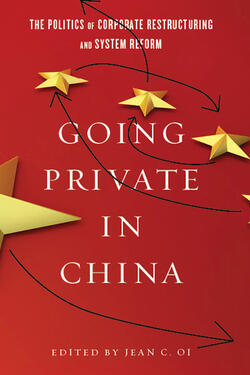
GoingPrivateinNEWSFEED1 0

As the Chinese Communist Party (CCP) set about reforming its centrally planned economy, it faced the thorny policy question of how to reform its state-owned enterprises (SOEs). Should it support a shift from public to private ownership of the means of production? Such a shift would challenge not only the CCP's socialist ideology but also its very legitimacy. Mixing the business of corporate restructuring with the politics of socialism presented nothing short of a policy nightmare.

With policy-relevant acuity, the contributors to this wide-ranging volume address the questions about reform programs that have plagued China—and East Asia more broadly—since the 1990s. While China, Japan, and South Korea have all been criticized for implementing reform too slowly or too selectively, this volume delves into the broader contexts underlying certain institutional decisions. The book seeks to show that seemingly different political economies actually share surprising similarities, and problems. While Going Private in China sheds new light on China's corporate restructuring, it also offers new perspectives on how we think about the process of institutional change.

Desk, examination, or review copies can be requested through Stanford University Press.

All Publications button
1
Publication Type
Books
Publication Date
Subtitle

The Politics of Corporate Restructuring and System Reform

Authors
Jean C. Oi
Book Publisher
Shorenstein APARC
Paragraphs

Consistent with the property rights theory of ownership incorporating soft budget constraints (SBCs), we find that controlling for SBCs, for-profit hospitals drop safety-net services more often and exhibit higher mortality rates, suggesting aggressive cost control that damages non-contractible quality.

All Publications button
1
Publication Type
Journal Articles
Publication Date
Journal Publisher
Elsevier
Authors
Karen Eggleston
Paragraphs

Over the past fifteen years Northeast Asia has witnessed growing intraregional exchanges and interactions, especially in the realms of culture and economy. Still, the region cannot escape from the burden of history.

This book examines the formation of historical memory in four Northeast Asian societies (China, Japan, South Korea, and Taiwan) and the United States focusing on the period from the beginning of the Sino-Japanese war in 1931 until the formal conclusion of the Pacific War with the San Francisco Peace Treaty of 1951.

The contributors analyse the recent efforts of Korean, Japanese, and Chinese scholars to write a ‘common history' of Northeast Asia and question the underlying motivations for their efforts and subsequent achievements. In doing so, they contend that the greatest obstacle to reconciliation in Northeast Asia lies in the existence of divided, and often conflicting, historical memories. The book argues that a more fruitful approach lies in understanding how historical memory has evolved in each country and been incorporated into respective master narratives. Through uncovering the existence of different master narratives, it is hoped, citizens will develop a more self-critical, self-reflective approach to their own history and that such an introspective effort has the potential to lay the foundation for greater self- and mutual understanding and eventual historical reconciliation in the region.

This book will be essential reading for students and scholars of Asian history, Asian education and international relations in East Asia.

All Publications button
1
Publication Type
Books
Publication Date
Journal Publisher
Routledge
Authors
Gi-Wook Shin
Number
978-0-415-60303-4
News Type
Q&As
Date
Paragraphs

The past year unfolded with Japan’s unprecedented triple disaster and closed with U.S. Secretary of State Hillary Clinton’s historic trip to Myanmar. Moving into 2012, Europe’s economy creaks along uncertainly and China gears up for a major leadership change. In an interview with the Ukranian magazine Glavred, political science professor Phillip Lipscy discusses landmark Asian economic and political events of 2011, and what they could mean in the coming year.

What was the most significant event in terms of Asia’s economy in 2011?

The March 11 Great Tohoku earthquake and tsunami: Besides the tragic loss of life and property, the disaster disrupted global supply chains and plunged the Japanese economy into a recession. The nuclear meltdown in Fukushima also led many countries to question the future of nuclear energy—this will have long-lasting consequences for global energy markets and efforts to deal with climate change.

What was the most significant political event?

Signs of political opening in Burma/Myanmar could have profound consequences not only for that country but for the rest of Asia as well. Hillary Clinton became the first U.S. Secretary of State to visit the country in 50 years. Aung San Suu Kyi has been released from detention and the National League for Democracy has re-registered as a political party. If this leads to democratization, it will be remembered as an important turning point.

What new policy and economic trends appeared in 2011? Which of them will continue into the coming year?

There seems to be a subtle shift in views towards China's economy. Chinese government officials are deeply concerned about the "middle income trap." China has reached a level of development where many countries saw their economic growth slow down sharply. Rising incomes are eroding China's advantage in low-cost manufacturing. There is much talk of multinational companies relocating their operations to even cheaper countries, such as Vietnam. This is an important transition for China, and it will remain an important issue in coming years.

In terms of people, who do you feel was the most notable, and who was
the most disappointing this past year?


The people of Japan, who responded with remarkable perseverance, order, and discipline to such a tragic natural disaster.  

The most disappointing were the political leaders of Japan, who could not set aside
their differences and come together for the sake of their country.

Will China continue to spread its influence in 2012, and might any countries oppose this process?

China is now the second largest economy in the world and an important military power. It is inevitable that China will rise in international stature and influence. However, Chinese leaders also face some important challenges—rising inequality, an overheated housing market, and bad loans in its financial system. The focus of international attention should be on integrating China into the world order as a peaceful, responsible stakeholder—not on confrontation.

What impact could the economic crisis in Europe have on the economics and international policy of the Asia-Pacific region?

If the financial crisis in Europe is mismanaged, nobody will escape the consequences. Europe is a crucial export market for Asian countries, and European financial institutions are major lenders to emerging economies in the region. Equally as important, repeated financial crises and political mismanagement in the United States, Japan, and Europe could begin to undermine perceptions of democratic government and capitalism.

What will be most important event in Asia next year?

China's leadership transition, particularly given the many immediate challenges the country faces.

Hero Image
ClintonAungNEWSFEED
U.S. Secretary of State Hillary Clinton visits Aung San Suu Kyi at her house in Rangoon, Myanmar, Dec. 2011.
Flickr/U.S. State Department
All News button
1

Information technology (IT) is one of the transformative forces in the world today. As an engine of innovation and growth, it has transformed the economic structure in a wide range of areas, and it has reorganized social activities in ways not yet completely understood. IT also raises critical policy issues, particularly around the role of information privacy, security, and networks. Japan’s IT sector has experienced major shifts in its regulatory and industry structure as it developed cutting-edge services but became isolated from global markets.

News Type
Q&As
Date
Paragraphs

Between 2008 and 2009, approximately 25 new private engineering colleges opened in India every week—adding 2500 schools in only two years. Engineering education is also on the rise in the other so-called BRIC countries (Brazil, Russia, and China). But does quantity guarantee quality? And what should government policymakers keep in mind to ensure that their higher education investments pay off?


Rafiq Dossani, a senior research scholar at the Shorenstein Asia-Pacific Research Center, recently collaborated with Stanford professor of education Martin Carnoy and a team of scholars in Russia, China, and India on a leading-edge comparative study of higher education systems in BRIC countries. Carnoy led the project, which focused on engineering education, and he, Dossani, and other researchers are currently writing a book coming out in 2012. Dossani speaks here about the project.


What is unique to the approach that you have taken with this study compared to anything similar previously conducted?

This is the first systematic study based on a large data collection. Over 7,000 students were surveyed in China and India respectively, and 2,300 students were surveyed in Russia. Brazil regularly collects detailed data on a very large nationwide sample of university students, and we have used this in our study. We also surveyed over 100 educational institutions, including several dozen face-to-face interviews with trustees, heads of institutions, heads of departments, faculty, administrators, and students.

We focus on engineering education in our study because it is the field that attracts the largest number of students. For example, in China, about 63% of students in 2009, or about 1.8 million students, entered through the science track, which is the route to an engineering degree. In India, 1.4 million freshmen engineering students were enrolled in 2011, which is over 40% of the total number of freshmen.

In our study, we ask how governance and finance affect outcomes in higher education. Every country’s educational system shares certain objectives: quality, access, and equity. What has not been studied for the BRIC countries is whether the governance and finance of higher education is consistent with some of these objectives but not others, and how this impacts the shape and effectiveness of the higher education system. The choice of governance and finance are themselves outcomes of the institutional settings in each country. For example, in India, the dramatic transfer of political power in the last two decades from the national government to the provinces has been the key driver of change.

As a result of this shift in political power, the states took charge of higher education and focused on increasing access and equity as their political goals. Given the extreme shortage of funds, they contracted out the actual provision of education to the private sector on attractive terms. The private sector responded briskly. Of the 1.4 million freshmen enrollees in engineering studies in 2011, 98% were enrolled in private institutions, compared with less than 5% in 1990. The rate of growth was so high that in just two years, 2008 and 2009, 2500 new engineering colleges opened their doors. That works out to about five new colleges for each working day!

There were upsides and downsides to this growth. On the positive side, the state offered attractive financial terms for new institutions located in underprivileged areas and mandated that about 50% of seats be reserved for underprivileged students (mostly identified by caste). It also kept tuition fees for the reserved seats very low at about $500 per student per year and allowed the colleges to recover costs and margins by charging a higher fee for the rest. The result was that growth has been geographically spread and access by underprivileged students is high—in our study, 55% of the students came from underprivileged categories.

The downside is that quality remains elusive. Although this does not show up in job placement rates due to pent-up demand, comparisons with the other BRIC countries suggest that the quality is low. The reason is that private providers, for the moment, find it more profitable to provide minimal infrastructure and employ inadequate faculty than to invest in building up quality for the long-term. In fact, given that the investment in long-term quality is likely to be unaffordable, one of our conclusions is that we question the sustainability of the Indian governance and finance model vis-à-vis the other countries in our study, particularly China, where the central government is taking an activist approach in trying to increase quality, at least in the elite universities.

How do your findings in India’s higher education system for engineering compare to the other BRIC countries, especially China as the study’s other Asian country?

In terms of sheer growth and the number of engineering freshmen, China exceeds India. The cost of education is lower in India. In terms of quality, China, Brazil, and Russia, do better. Part of the reason is a superior entering cohort in the case of China and Russia. But the main reason appears to be that governance in the other BRIC countries is more faculty-driven than driven by profit-oriented trustees. We found that the former model is more likely to deliver quality. In the case of China, for example, academic departments determine courses, course content, and the types of disciplines available, whereas in India, trustees make such choices, with poorer quality outcomes.

You have previously said that India’s higher education system is very politicized—how did it come to be this way?

The politicization began at the country’s independence in 1947. Prior to independence, higher education was managed by provinces to produce graduates from the upper classes who would join the colonial civil service. After independence, the state governments faced new demands for higher education from the middle classes. Since these were also important voting classes, the state responded by setting up a large number of public universities. The state controlled all aspects of the university to ensure that their priorities were met, in terms of location, fees, and personnel hired. For example, the state government was represented in the senate of every university and public college. Every senior-level hire needed to be approved by the state government. State government nominees on the senate also reviewed textbook selections and disciplinary choices.

As may be imagined, educational quality suffered and continues to do so in the public colleges. In the mid-1990s, the states faced demands from new voter categories, particularly lower-caste groups. These were earlier excluded from political power but acquired power in the federalization of politics that took place from 1990 onwards. This time around, though, the states decided to subcontract the work to the private sector rather than set up public colleges. This was largely a matter of cost management—the state thought that the private sector would respond to the incentive of providing technical education to those willing to pay full-cost, and invest the needed capital. This would free up the state’s capital for other demands, including for education, such as for primary and secondary education. To ensure that the lower-caste groups were part of the expansion, the state mandated quotas and subsidized fees. In the name of preserving quality—although, in fact, it preserves quality only at low levels—the state continued to exercise other controls. For example, it imposes common curricula and assessment, and, in most cases, certifies a private college only if it is part of a publicly owned university system.

The state’s policies also led to a shift in the profile of the graduates towards technical and professional education, since these were the fields in which the private sector was willing to establish new institutions. This was greatly stimulated by rising income payoffs to higher education engineering and business training. Private colleges account for 60% of the growth in educational provision between 1995 and 2011, and almost all of that growth is in engineering, management, and other professional fields. The value of this is debatable: it reflects the “market” but, deprived of state support, some fields that may be considered to be socially valuable, such as the liberal arts, are in steep decline.

Has the state of higher education in BRIC countries, such as India, led students to seek education opportunities abroad?

In China and India, these are important reasons for student migration to the West. For example, 500,000 students enroll as freshmen overseas from India alone every year. They come mostly from elite families, since the costs of an overseas education are very high.

What long-term policy changes are you hoping to influence through this study and your forthcoming book?

First, we show that the evolution of higher education in the BRICs can be explained by the role of the state (the government sector) and the policy choices it makes in governance and finance.

Second, we show that private provision can substitute for public provision, but with certain disadvantages in terms of quality and educational diversity. In this context, we show that state policy can still influence some outcomes positively, such as access, equity, and cost-control. However, the long-term implications for quality are much more negative through such a model. 

Third, we show that the provincial governance of education offers certain advantages and disadvantages over national regulation. This is a hotly debated topic in China and India. In India, the national regulators seek greater control out of concern about the implications of too politicized an environment created by the states and the poor quality emerging from private colleges. However, we argue that there may be downsides to centralized control, as was witnessed in an earlier period (during the tenure of Indira Gandhi).

Finally, we make the case that the current ”trend” among governments in developing countries of focusing on the creation of a few world-class universities can succeed in the limited sense of creating a few high-quality teaching and research institutions. However, it comes at a very high cost and in no sense guarantees a trickle-down of quality to the remaining institutions. This is particularly the case in the current model in China and Russia, where the emphasis on world-class universities is greatest and these high-cost elite institutions are given increasing funding per student. At the same time, mass universities absorb increasing numbers of students at low and possibly declining per-student funding.

Hero Image
BikanerRajasthan NEWSFEED
Students listen to a talk at the Engineering College of Bikaner in Jaipur, the capital city of the western Indian province of Rajasthan, October 30, 2009.
Flickr/Niyam Bhushan
All News button
1
Subscribe to International Development