International Development

FSI researchers consider international development from a variety of angles. They analyze ideas such as how public action and good governance are cornerstones of economic prosperity in Mexico and how investments in high school education will improve China’s economy.

They are looking at novel technological interventions to improve rural livelihoods, like the development implications of solar power-generated crop growing in Northern Benin.

FSI academics also assess which political processes yield better access to public services, particularly in developing countries. With a focus on health care, researchers have studied the political incentives to embrace UNICEF’s child survival efforts and how a well-run anti-alcohol policy in Russia affected mortality rates.

FSI’s work on international development also includes training the next generation of leaders through pre- and post-doctoral fellowships as well as the Draper Hills Summer Fellows Program.

News Type
News
Date
Paragraphs

As the new academic year gets underway, the Walter H. Shorenstein Asia-Pacific Research Center’s Corporate Affiliates Program is excited to welcome its new class of fellows to Stanford University.

The 2014-15 fellows and their affiliations are listed below:

  • Liang Fang, China Sunrain Solar Energy Co., Ltd.
  • Wataru Fukuda, Shizuoka Prefectural Government
  • Zhao Han, PetroChina
  • Yoshihiro Kaga, Ministry of Economy, Trade & Industry, Japan
  • Tsuyoshi Koshikawa, Ministry of Finance, Japan
  • Jaigeun Lim, Seoul Metropolitan Government
  • Yun Bae Lim, Samsung LIfe Insurance
  • Feng Lin, ACON Biotechnology
  • Yasunori Matsui, Mitsubishi Electric
  • Tatsuru Nakajima, Sumitomo Corporation
  • Shingo Nakano, Ministry of Economy, Trade & Industry, Japan
  • Ryuichi Ohta, Japan Patent Office
  • Jong Soo Paek, Samsung Electronics
  • Rajeev Prasad, Reliance Life Sciences
  • Ryuichiro Takeshita, Asahi Shimbun
  • Ryo Wakabayashi, Sumitomo Corporation
  • Changbao Zhang, PetroChina

At Stanford, the fellows will audit classes, work on English language skills, and conduct individual research projects. At the end of the year, they will give formal presentations on their research findings. At the Center, they will have the opportunity to consult with Shorenstein APARC's scholars and attend events featuring visiting experts from around the world. The fellows will also participate in special events and site visits to gain a firsthand understanding of business, society and culture in the United States.

Hero Image
corporate affiliates 2014 15
The 2014-15 Corporate Affiliate Visiting Fellows stand on the front steps of Encina Hall.
Rod Searcey
All News button
1
Paragraphs

This paper argues that game-theoretic approach is incomplete for institutional studies, because comparative institutions as well as institutional changes involve a possibility of multiple equilibria.  In order to solve the common knowledge problem, this paper proposes to unify game theoretic thought with an analysis of public representations/propositions to summarize salient features of the recursive/emergent states of play.  From this perspective the paper tries to reconcile differences in three accounts of institutions, endogenous outcome, exogenous rules and constitutive rules accounts.  Then, the unified approach is applied to comparative and historical cases of the Tokugawa Japan and the Qing China.  Specifically it sheds new light into the coalitional nature of Tokugawa Baku-Han regime nesting the fundamental Samurai-village pact as well as the tendency toward decentralization of political violence and fiscal competence to the provincial level toward the end of the Qing China.  From these new historical interpretations, endogenous strategic forces and associated public propositions leading to institutional changes through the Meiji Restoration and the Xinhai Revolution are identified and compared.

All Publications button
1
Publication Type
Working Papers
Publication Date
Authors
Masahiko Aoki
News Type
News
Date
Paragraphs

Stanford University seeks candidates for a tenured or tenure-track faculty position in the social sciences. The position would be a dual appointment in an academic department in the social sciences and the Freeman Spogli Institute for International Studies (FSI), affiliated with the Walter H. Shorenstein Asia-Pacific Research Center. The successful candidate will have an outstanding record in teaching and research with a focus on contemporary Korea. S/he would be expected to provide leadership for further development of the study of Korea at Stanford University. All applicants in the social sciences with expertise in Korea will be considered.

All qualified applicants should apply via the web by November 1, 2014, at: http://www.AcademicJobsOnline.com (listing under Stanford/Freeman Spogli Institute/Korea studies).

Junior applicants should submit a letter that includes a brief statement of research interest, curriculum vitae, and selected writing samples. In addition, junior applicants should arrange for submission of three confidential letters of recommendation sent directly to:

Belinda Byrne

Freeman Spogli Institute, Room C132

616 Serra Street, MC 6055

Stanford, CA 94305-6055

All other applicants should submit a letter that includes a brief statement of research interest, curriculum vitae, the names of three referees, and selected writing samples. Stanford University is an equal opportunity employer and is committed to increasing the diversity of its faculty. It welcomes nominations of and applications from women, members of minority groups, protected veterans and individuals with disabilities, as well as from others who would bring additional dimensions to the university’s research, teaching and clinical missions.

All other applicants should submit a letter that includes a brief statement of research interest, curriculum vitae, the names of three referees, and selected writing samples. Stanford University is an equal opportunity employer and is committed to increasing the diversity of its faculty. It welcomes nominations of and applications from women, members of minority groups, protected veterans and individuals with disabilities, as well as from others who would bring additional dimensions to the university’s research, teaching and clinical missions.

All News button
1
News Type
Commentary
Date
Paragraphs


On Sept. 3, Japanese Prime Minister Shinzo Abe reshuffled his cabinet, bringing more than double the number of female ministers on board, in line with his pledge to revive the economy based in part on increased participation of women in business and politics.

Traditionally, Japan has provided tax and pension incentives for women to stay at home or work part-time; however, Mr. Abe seeks to change this and has laid out a plan in the “third arrow” of his administration’s economic policy.

Takeo Hoshi, an economist and director of the Japan Program at the Shorenstein Asia-Pacific Research Center, spoke with Deutsche Welle about the administration’s leadership shift and policy goals.

“Relying on women to work more is an excellent idea because the Japanese economy has underutilized women’s talents in the past,” he says.

The full article is available on Deutsche Welle online.

Hero Image
flickr global panorama japan pm shinzo abe 2013
Japanese Prime Minister Shinzo Abe seen arriving at the Asia-Pacific Economic Cooperation meeting in 2013.
Flickr/Global Panorama
All News button
1
-

Image

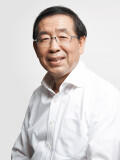
The Honorable Park Won Soon is the 35th mayor of Seoul, South Korea. He was initially elected in Oct. 2011, and recently reelected for another four-year term in June 2014. Park was elected as an indepedent candidate, with the support of the Democratic Party and Democractic Labor Party.

In his keynote speech, Mayor Park will share his philosophy on civic participation and local governance, reflecting on his career in- and outside government. He will explore communication strategies that local government can employ to better engage citizens and motivate collective action, using best practices from Seoul to illustrate his point.

Before assuming office, Park was a human rights lawyer and passionate activist who founded several NGOs. In his early university years at Seoul National University, Park was arrested and expelled for participating in a student rally against the military dictatorship of President Park Chung Hee, and was subsequently imprisoned for four months.

Park passed the state bar exam in 1980, and worked as a public prosecutor in the Daegu District Court in Gyeongsang Province (1982–3), afterward launching a private law practice in Seoul. In 2006, Park founded the Hope Institute, a think tank that aims to apply policy alternatives based on ideas generated by Korea’s citizens.

He also founded the People’s Solidarity for Participatory Democracy in 1994, a nonprofit organization dedicated to promoting justice and human rights in Korean society through civic participation.

In 2000, Park founded the Beautiful Foundation, a nonprofit organization that aims to promote a culture of philanthropy and a just society in Korea, and in 2002, the Beautiful Store, a secondhand store that raises funds for the Foundation’s initiatives.

Park holds a diploma in international law from the London School of Economics and Political Science and a bachelor’s degree in history from Dankook University. In 1993, he was a visiting research fellow in the Human Rights Program at the School of Law at Harvard University and from 2005-6 he was a distinguished practitioner at the Shorenstein Asia-Pacific Research Center, Stanford University.

This event is part of the Asia-Pacific Leaders Forum.

The video of this presentation is located on the Shorenstein APARC YouTube channel.


McCaw Hall

Stanford Alumni Association
Frances C. Arrillaga Alumni Center
326 Galvez Street
Stanford, CA 94305-6105
Parking, Map & Directions.


Park Won Soon Mayor of Seoul
Lectures
-

60 years have passed since Japan started its development cooperation in 1954.  Japan has undergone the process of a defeated country of World War II becoming an economic superpower in the 1970s-1980s to be stagnant in the succeeding two decades.  During these periods, Japan's financial contribution to development cooperation once reached the highest among the OECD countries in the 1990s. But recently Japan's financial contribution stays at 4th or 5th. How has the Japanese development cooperation evolved over the past six decades? What have been its characteristics? What are the current debates of future direction of Japan's development cooperation? What role does it play in overall Japan's diplomacy and international relations?


Mr. Ak

Image
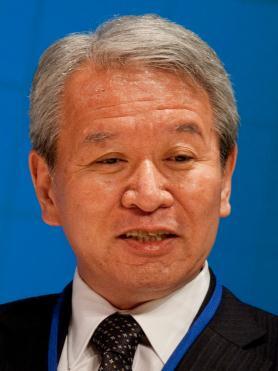
ihiko Tanaka is President of the Japan International Cooperation Agency (JICA). Before assuming the present post, he was Professor of International Politics at the Interfaculty Initiative in Information Studies and at the Institute for Advanced Studies on Asia, the University of Tokyo. Most recently he was Vice President of the University of Tokyo (2011-2012), Executive Vice President of the University of Tokyo (2009-2011), and Director of the Division of International Affairs of the University of Tokyo (2008-2010).

He obtained his B.A. in International Relations at the University of Tokyo in 1977 and his Ph.D. in Political Science at Massachusetts Institute of Technology in 1981.

Mr. Tanaka’s specialties include theories of international politics, contemporary international relations in East Asia, and Japan’s foreign policy. He has numerous books and articles in Japanese and English including the New Middle Ages: The World System in the 21st Century (Tokyo: The International House of Japan, 2002).

He received the Medal with Purple Ribbon for his academic achievements in 2012.


Akihiko Tanaka President Speaker President, Japan International Cooperation Agency
Seminars
Shorenstein APARCStanford UniversityEncina Hall, Room E301Stanford,  CA  94305-6055
0
Visiting Scholar
risa_toha_logo.jpg PhD

Risa J. Toha is a Visiting Scholar at the Walter H. Shorenstein Asia-Pacific Research Center (Shorenstein APARC). She is a Fellow at the Ash Center for Democratic Governance and Innovation at the Harvard Kennedy School, and starting from Fall 2014, she will be a Visiting Professor at Wheaton College, IL. 

Her research encompasses questions about democracy, development, ethnicity, and violence, with an area focus on Southeast Asia. At Shorenstein APARC, she will complete a few manuscripts on democratic transition, political inclusion, and riots in Indonesia, as well as participate actively in various interdisciplinary forums at the Center. 

Toha holds a Ph.D. and an MA in Political Science from the University of California, Los Angeles, and an AB in the Woodrow Wilson School of Public and International Affairs from Princeton University.

-

Since Kim Jong Un came to power, interest in North Korea (DPRK) has increased but it is difficult to judge whether the growing range of media reports and the commentaries based on them are accurate or not. Spending almost 30 months in the DPRK from March 2012, mainly in Pyongyang but also making visits outside, offered an opportunity to collect up-to-date materials, especially photographs, which may offer an insight into the changes taking place. These might offer a new angle to be considered and hopefully stimulate further discussion about what is really happening in the DPRK now.

Mike Cowin, former deputy head of mission at the British Embasy in Pyongyang, joined the Korea Program at Stanford's Shorenstein Asia-Pacific Research  Center as the 2014–15 Pantech Fellow. He is a specialist on Korea and Japan, has been a member of the Research Cadre of the Foreign & Commonwealth Office (FCO) of the United Kingdom since 1988. He has also served in the British embassies in Tokyo from 1992 to 1997, in Seoul from 2003 to 2007, and in Pyongyang as deputy head of mission since March 2012.

He has spent most of his career in London working on policy related research, providing advice to relevant policy desks and acting as the interface between the FCO and academic and research institutions.

Philippines Conference Room,
Encina Hall 3rd floor,
Stanford University

Shorenstein APARCStanford UniversityEncina Hall, Room E301Stanford,  CA  94305-6055
(650) 723-9404 (650) 723-6530
0
mike_cowin.jpg

Mike Cowin, former deputy head of mission at the British Embassy in Pyongyang, North Korea, joins the Korean Studies Program at the Shorenstein Asia-Pacific Research Center as the 2014–15 Pantech Fellow. Having spent twenty years covering Korean issues for the British Government, Cowin brings immense insight not only on North Korea but also on Northeast Asia. During his time at the Center, Cowin will focus his research on economic and social deverlpment that he has seen taking place in North Korea while serving there. Cowin, a specialist on Korea and Japan, has been a member of the Research Cadre of the Foreign & Commonwealth Office (FCO) of the United Kingdom since 1988. He has also served in the British embassies in Tokyo from 1992 to 1997, in Seoul from 2003 to 2007, and presently in Pyongyang, as deputy head of mission, since March 2012. He has spent most of his career in London working on policy related research, providing advice to relevant policy desks and acting as the interface between the FCO and academic and research institutions.

Pantech Fellow, 2014-2015
Speaker 2014-15 Pantech Fellow, Stanford University
Seminars
Paragraphs

Improving the environment for business is an important part of the growth strategy of Abenomics. As the goal for this effort, the Abe Administration aims to improve Japan’s rank in the World Bank Doing Business Ranking to one of the top three among OECD. This paper clarifies what it takes for Japan to achieve the goal. By looking at details of the World Bank Doing Business ranking, we identify various reforms that Japan could implement to improve the ranking. Then, we classify the reforms into six groups depending on whether the reform requires legal changes and on political resistance that the reform is likely to face. By just doing the reforms that do not require legal changes and are not likely to face strong political opposition, Japan can improve the ranking to 13th. To be in the top 3, Japan would need to implement all the reforms that are not likely to face strong political resistance. The conclusions, however, are based on the assumption that the conditions in the other countries do not change, which is unrealistic. Thus, Japan would need to carry out all the reforms including those with high political resistance to be among the top three.

All Publications button
1
Publication Type
Working Papers
Publication Date
Authors
Takeo Hoshi
Paragraphs
Image
Modes of Engagement front cover.

Of Asia’s 800 million Muslims, 215 million are minorities within their countries. These Muslim minorities have experienced a persistent decline in their socioeconomic and political status. Along with this decline, they are increasingly identified by their faith and largely accorded no other identity for civic relations. Why have these Muslim minorities been particularly affected during a time of unprecedented opportunities for the mainstream in Asia’s unprecedented era of growth and rising freedoms?

Using detailed analyses of China, India, and the Philippines, Modes of Engagement argues that key factors in this phenomenon include the linkage between socioeconomic decline, loss of political power, and narrowing of identity; nationalism and its associated connotations of the assimilation of minorities; the weakness of civil society generally in Asia; and the rise in regional and global alliances for security and trade.

Contributors include Wajahat Habibullah (National Commission for Minorities and National Institute of Technology, India), Rakesh Basant (Indian Institute of Management), Dru C. Gladney (Pomona College), and Joseph Chinyong Liow (Nanyang Technological University’s S. Rajaratnam School of International Studies, Singapore).

Rafiq Dossani is a senior economist at the RAND Corporation. His research interests include regional integration, security, and education. Previously, Dossani was a senior research scholar at the Shorenstein Asia-Pacific Research Center and director of the Stanford Center for South Asia.

Examination copies: Shorenstein APARC books are distributed by Stanford University Press. Contact them for information on obtaining examination copies.

All Publications button
1
Publication Type
Books
Publication Date
Subtitle

Muslim Minorities in Asia

Book Publisher
Shorenstein APARC
Subscribe to International Development