International Development

FSI researchers consider international development from a variety of angles. They analyze ideas such as how public action and good governance are cornerstones of economic prosperity in Mexico and how investments in high school education will improve China’s economy.

They are looking at novel technological interventions to improve rural livelihoods, like the development implications of solar power-generated crop growing in Northern Benin.

FSI academics also assess which political processes yield better access to public services, particularly in developing countries. With a focus on health care, researchers have studied the political incentives to embrace UNICEF’s child survival efforts and how a well-run anti-alcohol policy in Russia affected mortality rates.

FSI’s work on international development also includes training the next generation of leaders through pre- and post-doctoral fellowships as well as the Draper Hills Summer Fellows Program.

-
Flyer for a webinar about U.S.-China relations with portraits of speaker Laura Stone and moderator Jean Oi.

This event is part of APARC’s 2022 Fall webinar seriesAsian Perspectives on the US-China Competition.

The China Program brings Inaugural China Policy Fellow Laura Stone to provide on the ground views of what the U.S.-China competition means for the region. As Asia perspectives on U.S.-China competition and Chinese intentions in the region develop and change, Laura will give us insights into how Washington stakeholders’ understanding of these perspectives has shifted and evolved. In a complex iterative process, Chinese and U.S. actions — and the reactions from the countries and countries and entities in Asia — shape a dynamic policy process within the region.

Speaker

Image
Laura Stone2
Laura Stone joins the Walter H. Shorenstein Asia-Pacific Research Center (Shorenstein APARC) as Visiting Scholar and Inaugural China Policy Fellow for the 2022-2023 academic year. She was formerly the Acting Deputy Assistant Secretary for China and Mongolia, the Director of the Office of Chinese and Mongolian Affairs, and the Director of the Economic Policy Office in the Bureau of East Asia and Pacific Affairs. She served three tours in Beijing as well as tours in Bangkok, Tokyo, the Public Affairs Bureau, the Pentagon Office of the Secretary of Defense, and the Bureau of Intelligence and Research. Most recently, she serves the U.S. Department of State as Deputy Coordinator for the Secretary's Office for COVID Response and Health Security. While at APARC, she will be conducting research with the China Program and Professor Jean Oi regarding contemporary China affairs and U.S.-China policy.

Jean C. Oi

Virtual event via Zoom

Laura M. Stone
Seminars
Authors
Noa Ronkin
News Type
News
Date
Paragraphs

We are pleased to share that Professor of Sociology Kiyoteru Tsutsui, the Henri H. and Tomoye Takahashi Professor and Senior Fellow in Japanese Studies at the Walter H. Shorenstein Asia-Pacific Research Center (APARC), is the recipient of the 2022 Ishibashi Tanzan Award for his book Human Rights and the State: The Power of Ideas and the Realities of International Politics (Iwanami Shinsho, 2022).

Established in 1980 and presented by the Ishibashi Tanzan Memorial Foundation, the annual award recognizes excellence in the fields of politics, economics, international relations, society, and culture. It honors individuals who have contributed to advancing the legacy of former Japanese Prime Minister Ishibashi Tanzan and his ideas on liberalism, democracy, and international peace. Tsutsui’s book explores the paradox underlying the global expansion of human rights, examines Japan’s engagement with human rights ideas and instruments, and assesses their impacts on domestic politics around the world.

“I’m deeply honored to receive this prestigious award, especially in this historical moment in which commitment to the international liberal order is ever more critical,” says Tsutsui, who is also director of APARC’s Japan Program, APARC’s deputy director, a senior fellow at the Freeman Spogli Institute for International Studies, and the co-director of the Center for Human Rights and International Justice. “Among all the Japanese Prime Ministers in history, no one demonstrated a more unwavering commitment to liberalism than Ishibashi Tanzan, and I’m especially pleased that my book on global human rights has received this recognition bearing his name. There’s also a personal connection for me, as my father is the author of the first social science book on Ishibashi Tanzan and I helped with his research as a middle school student, making copies of relevant newspapers.”


Sign up for APARC newsletters to receive our experts' commentary and analysis.


In an APARC interview about the book, Tsutsui explains the tension inherent in the diffusion of global human rights, which is rooted in states’ embracing these universal rights although they are grounded in principles that constrain their sovereignty. “The end of the Cold War enabled the United Nations to engage in human rights activities free from Cold War constraints, and now those states that committed to human rights without thinking about the consequences have to face a world in which their violations can become a real liability for them,” he notes.

Tsutsui believes that Japan has an opportunity to become a global leader in human rights. “The more inwardly oriented United States is creating a vacuum in promotion and protection of liberal values, especially with China’s influence surging, and Japan should carry the torch taking the mantle of human rights, democracy, and rule of law,” he argues.

Tsutsui’s research interests lie in political and comparative sociology, social movements, globalization, human rights, and Japanese society. His current projects examine issues including changing conceptions of nationhood and minority rights in national constitutions and in practice, populism and the future of democracy, the global expansion of corporate social responsibility, and Japan’s public diplomacy and perceptions of Japan in the world.

Read More

Protesters hold signs and chant slogans during a Black Lives Matter peaceful march in Tokyo.
Q&As

New Book by Stanford Sociologist Kiyoteru Tsutsui Probes the Decoupling of Policy and Practice in Global Human Rights

In his new book, Shorenstein APARC’s Japan Program Director Kiyoteru Tsutsui explores the paradox underlying the global expansion of human rights and Japan’s engagement with human rights ideas and instruments. Japan, he says, has an opportunity to become a leader in human rights in Asia and in the world.
New Book by Stanford Sociologist Kiyoteru Tsutsui Probes the Decoupling of Policy and Practice in Global Human Rights
Shinzo Abe speaking from a lectern
Commentary

Reflections on the Assassination of Former Prime Minister of Japan Shinzo Abe

Abe was one of the most transformative political leaders in modern Japanese history, and his passing will change Japanese politics in a number of ways, most immediately shaking up internal politics within the ruling Liberal Democratic Party. To honor Abe’s legacy, we all need to reassert our resolve to protect our democracy in Japan, the United States, and all over the world.
Reflections on the Assassination of Former Prime Minister of Japan Shinzo Abe
Stanford campus archway and text about call for applications for APARC 2023-24 fellowships
News

APARC Invites Fall 2023 Asia Studies Fellowship Applications

The Center offers a suite of fellowships for Asia researchers to begin fall quarter 2023. These include postdoctoral fellowships on contemporary Japan and the Asia-Pacific region, inaugural postdoctoral fellowships and visiting scholar positions with the newly launched Stanford Next Asia Policy Lab, and fellowships for experts on Southeast Asia.
APARC Invites Fall 2023 Asia Studies Fellowship Applications
Hero Image
Kiyoteru Tsutsui and book cover of Human Rights and the State
All News button
1
Subtitle

The Ishibashi Tanzan Memorial Foundation recognizes Tsutsui, the Henri H. and Tomoye Takahashi Professor and Senior Fellow in Japanese Studies at the Shorenstein Asia-Pacific Research Center, for his book 'Human Rights and the State.'

Date Label
-

Image
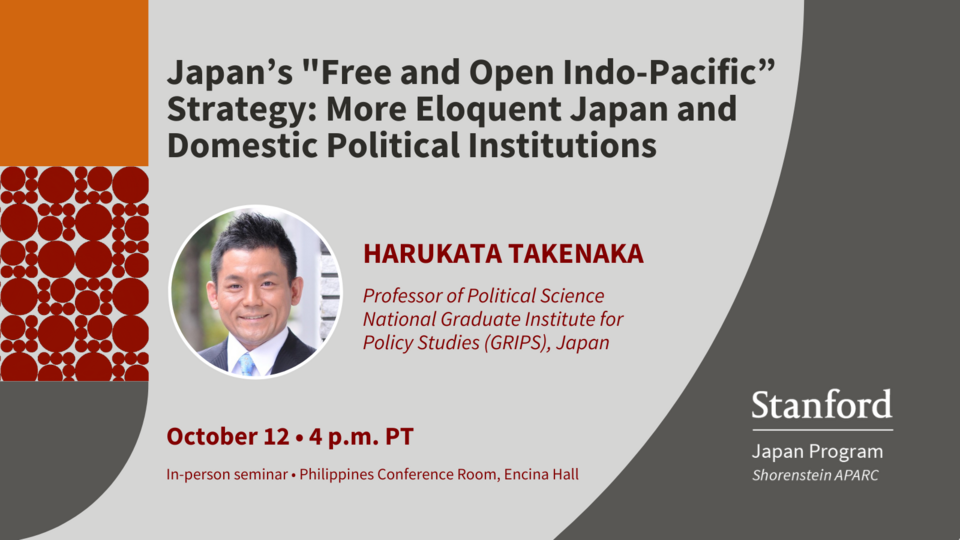
Visually banner card with the event title "Japan’s "Free and Open Indo-Pacific” Strategy: More Eloquent Japan and Domestic Political Institutions", and featuring a circle photo portrait of speaker Professor Harukata Takenaka

Since Prime Minister Shinzo Abe has advocated “Free and Open Indo-Pacific (FOIP)” Vision in 2016, various scholars have analyzed policy formulation process of FOIP. Most of them refer to the rise of China as an influential power in the Indo-Pacific region with its own initiative, namely, the Belt and Road Initiative as a major factor which prompted the Second Abe Administration to launch FOIP.

It is the contention of this presentation that the current configuration of the Japanese political institutions has made it possible for the Second Abe administration to launch and pursue such a comprehensive strategy while an international factor is important. It demonstrates that a series of political reforms since 1990s have strengthened the power of the prime minister as an institution to initiate key cabinet policies and coordinate policy formulation among different ministries. The strong institutional foundation of the Japanese prime ministerial power has made it possible for the Abe administration to effectively pursue such a broad vision, engaging various ministries and organizations.

The existing research on Japan's diplomacy often evaluates Japan as a passive state. It considers that in the past Japan only responded to foreign pressure while it did not proactively push forward its own policies. The presentation suggests that Japan has changed and become more eloquent as a result of changes in domestic political institutions.

Speaker

Image
Square photo portrait of Harukata Takenaka
Harukata Takenaka is a professor at the National Graduate Institute for Policy Studies (GRIPS) in Tokyo. He holds a PhD from Stanford University and a Bachelor of Laws from the University of Tokyo.

His key research areas are the role the prime minister in Japanese politics, changes in Japanese external policy, and democratization in Pre-war Japan.

Prof. Takenaka’s recent publications include: “Kyokoku Chugoku” to Taijisuru Indo-Taiheiyo Shokoku [Indo-Pacific Nations facing China aspiring to be a “Great Country”](edited) (Tokyo: Chikura Shobo, 2022), “Evolution of Japanese security policy and the House of Councilors,” Japanese Journal of Political Science, 22:2, (June 2021), 96-115, Korona Kiki no Seiji [Politics of Covid 19 Crisis](Tokyo: Chuo Koron Shinsha, 2020), “Expansion of the Japanese prime minister’s power in the Japanese parliamentary system: Transformation of Japanese politics and the institutional reforms,”Asian Survey,59:5:844-869 (September 2019); Futatsu no Seiken Kotai [Two Changes of Government] (edited) (Tokyo: Keiso Shobo, 2017); Failed Democratization in Prewar Japan (Stanford University Press 2014),

Harukata Takenaka Professor of Political Science National Graduate Institute for Policy Studies, Japan
-
Flyer for a talk by Jacques Bertrand with his portrait

In the years following the 2011 general election in Myanmar, there were reasons to think that the country might be growing more democratic, and that dialogue between rulers and ethnic minorities might alleviate the latter's long-standing rebellions against the state.  Instead, in 2021, a military coup ended democratic reform, triggered mass opposition, and plunged Myanmar back into civil war.  In ostensibly democratic Indonesia and the Philippines, on the other hand, rebellions respectively by the Moros and the Acehnese transitioned to peace.  Could one conclude, from this and other evidence, that autocracy engenders and prolongs ethnic civil war, and that, in contrast, democracy alleviates or even resolves it?  Jacques Bertrand, in two recent books (noted in his bio below), challenges the notion that democracy necessarily fosters peaceful outcomes.  He stresses the importance of interactive process between the state and its opponents and argues for a dynamic and contingent understanding of democracy’s impact. Although democratic institutions and negotiations can help to resolve deep and enduring conflicts, he concludes, they can also be used and have been used, mainly by the state, to manipulate and undermine insurgent ethnic minority groups.

Image
Bertrand 102422
Jacques Bertrand is a professor of political science at the University of Toronto, where he also directs the Collaborative Master’s Specialization in Contemporary East and Southeast Asian Studies at the Asian Institute in the Munk School of Global Affairs and Public Policy. He both founded and headed the institute’s Centre for Southeast Asian Studies and is a co-founder of the university’s Postcor Lab, a research hub for the study of civil wars and war-to-peace transitions.

Professor Bertrand has worked for many years on issues of ethnic conflict, nationalism, and secessionism in Southeast Asia.  His research has been funded by the Social Sciences and Humanities Research Council of Canada, the United States Institute of Peace, and the International Development Research Centre.  His latest book, just published in July 2022 and co-authored with Ardeth Thawnghmung and Alexandre Pelletier, is Winning by Process: The State and Neutralization of Ethnic Minorities in Myanmar. His sole-authored Democracy and Nationalist Struggles in Southeast Asia: From Secessionist Mobilization to Conflict Resolution appeared in 2021.

Discussant:

Image
Marciel 041922
Scot Marciel is Oksenberg-Rohlen Fellow at the Freeman Spogli Institute for International Studies, affiliated with the Walter H. Shorenstein Asia-Pacific Research Center. Previously, he was a 2020-22 Visiting Scholar and Visiting Practitioner Fellow on Southeast Asia at APARC.  A retired diplomat, Mr. Marciel served as U.S. Ambassador to Myanmar from March 2016 through May 2020, leading a mission of 500 employees during the difficult Rohingya crisis and a challenging time for both Myanmar’s democratic transition and the United States-Myanmar relationship.  Prior to serving in Myanmar, Ambassador Marciel served as Principal Deputy Assistant Secretary for East Asia and the Pacific at the State Department, where he oversaw U.S. relations with Southeast Asia.

Donald K. Emmerson

Via Zoom Webinar

0
Visiting Scholar at APARC, 2022-23
Lee Kong Chian NUS-Stanford Fellow on Contemporary Southeast Asia, 2022-23
jacques_bertrand.jpg Ph.D

Professor Jacques Bertrand joined the Walter H. Shorenstein Asia-Pacific Research Center (Shorenstein APARC) as Visiting Scholar and Lee Kong Chian NUS-Stanford Fellow on Contemporary Southeast Asia for the 2022-2023 fall quarter. He currently serves as Professor at the University of Toronto's Department of Political Science. While at APARC, he conducted research with Professor Donald Emmerson examining war-to-peace transitions in civil war, particularly in Southeast Asia.

Lee Kong Chian NUS-Stanford Fellow on Contemporary Southeast Asia, 2022-23
Seminars
-
Gita Wirjawan and text about his Oct 17, 2022 talk, "Whither Southeast Asia?"

What are Southeast Asia’s prospects?  How well equipped and prepared are its people to cope with current and future shocks from inside and outside their region?  With significant exceptions including the wars in Indochina after 1945 and the 1965-66 bloodshed in Indonesia, Southeast Asia’s modern history since World War II has been relatively peaceful.  In recent times the region has had its share of turbulence.  Nevertheless, the multidimensional 2022 Global Peace Index ranks nine of the ten Southeast Asian states as more peaceful than the United States.  On the 2021 Democracy Index, four of the Southeast Asian ten are outright “authoritarian,” while the other six join the US in being “flawed democracies.”  What do these and related trends imply?  In addition to politics and geopolitics, visiting scholar Gita Wirjawan’s view of Southeast Asia’s future will touch upon socioeconomic, cultural, and environmental aspects as well.

Image
Gita Wirjawan 101722
Gita Wirjawan is an Indonesian entrepreneur and philanthropist and a 2022-23 visiting scholar at APARC.  Having established a successful investment business in Indonesia, the Ancora Group, he created the Ancora Foundation.  The foundation has endowed scholarships for Indonesians to attend Stanford and other high-ranked universities around the world and has funded the training of teachers at hundreds of Indonesian kindergartens serving underprivileged children.  Wirjawan’s public service has included positions as Indonesia’s minister of trade, chairman of its Investment Coordinating Board, and chair of a 159-nation WTO ministerial conference in 2012 that focused on easing global trade barriers.  He led his country’s national badminton association in 2012-16 when Indonesia won four gold medals in the sport at world championships including the Olympics.  He advises Indonesia’s School of Government and Public Policy (SGPP) and Yale’s School of Management, among other institutions.  At SGPP he hosts a public-policy podcast called endgame, to which an estimated 471 thousand people subscribe.  His degrees are from the Harvard Kennedy School (MPA), Baylor University (MBA), and the University of Texas at Austin (BSc).

Donald K. Emmerson

Via Zoom Webinar

0
Visiting Scholar at APARC, 2022-24
Gita_Wirjawan.jpg

Gita Wirjawan joined the Walter H. Shorenstein Asia-Pacific Research Center (Shorenstein APARC) as a visiting scholar for the 2022-23 and 2023-2024 academic years. In the 2024-25 year, he is a visiting scholar with Stanford's Precourt Institute for Energy. Wirjawan is the chairman and founder of Ancora Group and Ancora Foundation, as well as the host of the podcast "Endgame." While at APARC, he researched the directionality of nation-building in Southeast Asia and sustainability and sustainable development in the U.S. and Southeast Asia.

Date Label
2022-23 Visiting Scholar, APARC
Seminars
News Type
News
Date
Paragraphs

APARC is pleased to announce the appointment of Jacques Bertrand, an associate professor of political science at the University of Toronto, and Reza Idria, an assistant professor in social anthropology at Ar-Raniry State Islamic University Banda Aceh, as our 2022-23 Lee Kong Chian National University of Singapore (NUS)-Stanford Fellows on Southeast Asia. Bertrand will begin his appointment at Stanford this coming fall quarter, Idria on February 1, 2023.

The Lee Kong Chian Fellowship is the core of the Lee Kong Chian NUS-Stanford Initiative on Southeast Asia, a joint effort established in 2007 by the National University of Singapore and Stanford University to raise the visibility, extent, and quality of scholarship on contemporary Southeast Asia. The infrastructure for research pursued through the fellowship is provided by the Faculty of Arts and Social Sciences at NUS and APARC’s Southeast Asia Program at Stanford.

Lee Kong Chian NUS-Stanford fellows spend three to four months at Stanford and two to four months at NUS, writing and conducting research on, or related to, contemporary Southeast Asia. Fellows have opportunities to present their research and participate in seminars and workshops organized by relevant campus units. Exposure to the two universities and their scholars and resources enriches and diversifies collegial feedback on the fellows’ research projects and facilitates intellectual exchange and networking on both sides of the Pacific.

Meet our new fellows:

Jacques Bertrand smiling

Jacques Bertrand is Professor of Political Science at the University of Toronto, as well as director of the Collaborative Master’s Specialization in Contemporary East and Southeast Asian Studies at the Asian Institute within the Munk School of Global Affairs and Public Affairs. He was the founding director of the Centre for Southeast Asian Studies at the Asian Institute. He is also the co-founder of the Postcor Lab at the University of Toronto, a research hub for the study of civil wars and war-to-peace transitions. 

Professor Bertrand has worked for many years on issues of ethnic conflict, nationalism, and secessionism in Southeast Asia. His research has been funded by the Social Sciences and Humanities Research Council of Canada, the United States Institute of Peace, as well as the International Development Research Centre. His most recent book, Winning by Process: The State and Neutralization of Ethnic Minorities in Myanmar, was published in July 2022 by Cornell University Press. Professor Bertrand is also the author of Democracy and Nationalist Struggles in Southeast Asia: From Secessionist Mobilization to Conflict Resolution (Cambridge University Press, 2021), Political Change in Southeast Asia (Cambridge, 2013), and Nationalism and Ethnic Conflict in Indonesia (Cambridge, 2004).

He is also the author of numerous articles and book chapters and co-editor of two volumes: Multination States in Asia: Accommodation or Resistance (Cambridge University Press, 2010) and Democratization and Ethnic Minorities: Conflict or Compromise? (Routledge, 2014).

Professor Bertrand is leading a new research team on a project entitled “Return to Civil War: Insurgent Groups and the Decision to Abandon Peace.” Funded by the Social Science and Humanities Research Council of Canada and the United States Institute of Peace, this project aims at understanding why rebel groups return to war after periods of relative peace. While the focus of civil war recurrence has often been on failures of peace agreements, this project will analyze rebel groups themselves and their strategic decisions to return to war or invest in peace. More specifically, it aims at better understanding how different legacies of war lead to varying trajectories in the post-war context. The bulk of the research involves a qualitative analysis of several cases in Southeast Asia. Bertrand builds on his vast experience of studying ethnic armed groups in Myanmar to lead new fieldwork focused on understanding variance among these groups.  
 

Reza Idria

Reza Idria is an Assistant Professor in Social Anthropology at the Universitas Islam Negeri (UIN) Ar-Raniry (Ar-Raniry State Islamic University) in Banda Aceh, Indonesia. He holds an MA and Ph.D. in Social Anthropology from Harvard University as well as an MA in Islamic Studies from Leiden University, The Netherlands. Born and raised in Aceh, the only province adopting Sharia Law in Indonesia, Reza’s research interests are at the intersection of legal anthropology and Islamic law.

During his LKC NUS-Stanford fellowship, he will turn his doctoral dissertation, “Tales of the Unexpected: Contesting Syari’ah Law in Aceh, Indonesia,” into a book manuscript. This work is an anthropological study that examines a wide range of social and political responses that have emerged with the state implementation of Sharia (Islamic law). The empirical data for this research project has been gathered in Aceh, the only Indonesian province that has adopted Sharia. Dr. Idria is also embarking on a new research project that focuses on the legal and socio-economic consequences of the local regulation on Islamic banking.  

Idria is a reviewer for the journals American Ethnologist, Asian Medicine, and Asia Pacific Studies. He publishes in national and international journals, edits and writes book chapters in scholarly publications, gives talks, and facilitates training on issues of his interests and expertise. Besides teaching and researching, Reza is renowned for his contributions as a human rights defender and a facilitator of several cultural communities and critical study groups in Aceh. He is the Chair of the Aceh Association of Oral Tradition, and a member of the Indonesian Young Academy of Science (ALMI).

Read More

Stanford campus archway and text about call for applications for APARC 2023-24 fellowships
News

APARC Invites Fall 2023 Asia Studies Fellowship Applications

The Center offers a suite of fellowships for Asia researchers to begin fall quarter 2023. These include postdoctoral fellowships on contemporary Japan and the Asia-Pacific region, inaugural postdoctoral fellowships and visiting scholar positions with the newly launched Stanford Next Asia Policy Lab, and fellowships for experts on Southeast Asia.
APARC Invites Fall 2023 Asia Studies Fellowship Applications
Portrait of Scot Marciel on background of Encina Hall with text "Oksenberg-Rohlen Fellow"
News

Scot Marciel Appointed Oksenberg-Rohlen Fellow at the Freeman Spogli Institute for International Studies

Marciel, a former senior U.S. diplomat, brings extensive experience in public policy focused on Southeast Asia. His appointment is based at FSI’s Walter H. Shorenstein Asia-Pacific Research Center.
Scot Marciel Appointed Oksenberg-Rohlen Fellow at the Freeman Spogli Institute for International Studies
Enze Han with background of Encina hall colonade
News

Rethinking China’s Influence in Southeast Asia: The Role of Non-State Actors and Unintended Consequences

Departing from international relations scholarship and popular media accounts that tend to portray China as a great power intent on establishing a sphere of influence in Southeast Asia, Lee Kong Chian NUS-Stanford Fellow on Southeast Asia Enze Han argues for conceptualizing China as an unconventional great power whose diverse actors, particularly non-state ones, impact its influence in the region.
Rethinking China’s Influence in Southeast Asia: The Role of Non-State Actors and Unintended Consequences
Hero Image
Stanford Arcade
All News button
1
Subtitle

Political scientist Jacques Bertrand and social anthropologist Reza Idria will join APARC as Lee Kong Chian NUS-Stanford Fellows on Southeast Asia for the 2022-23 academic year.

0
IreneKyoung_2023_Headshot

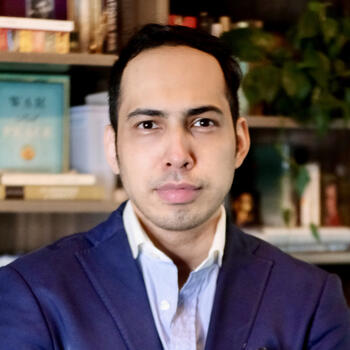
Irene Kyoung was a Research Associate for the Korea Program and Stanford Next Asia Policy Lab (SNAPL) at Shorenstein APARC, where she supported research projects regarding Korean politics and society and US-China relations. Irene received her MA in Political Science from Columbia University and graduated with honors in Government and Legal Studies from Bowdoin College. 

Former Research Associate, Korea Program
Date Label
0
Visiting Scholar at APARC, 2022-24
Gita_Wirjawan.jpg

Gita Wirjawan joined the Walter H. Shorenstein Asia-Pacific Research Center (Shorenstein APARC) as a visiting scholar for the 2022-23 and 2023-2024 academic years. In the 2024-25 year, he is a visiting scholar with Stanford's Precourt Institute for Energy. Wirjawan is the chairman and founder of Ancora Group and Ancora Foundation, as well as the host of the podcast "Endgame." While at APARC, he researched the directionality of nation-building in Southeast Asia and sustainability and sustainable development in the U.S. and Southeast Asia.

Date Label
1
Visiting Scholar at APARC, 2022-23, 2023-24
China Policy Fellow, 2022-23, 2023-24
Laura Stone.jpeg

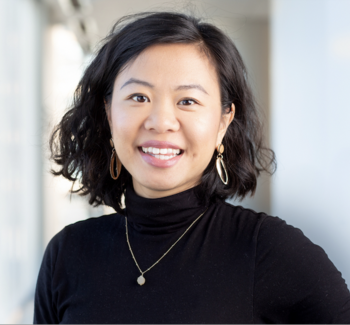
Laura M. Stone joined the Walter H. Shorenstein Asia-Pacific Research Center (Shorenstein APARC) as Visiting Scholar and China Policy Fellow for the 2022-2023 and 2023-2024 academic years. She currently serves the U.S. Department of State, recently as Deputy Coordinator for the Secretary's Office for COVID Response and Health Security. While at APARC, she conducted research with the China Program and Professor Jean Oi regarding contemporary China affairs and U.S.-China policy.

Date Label

Shorenstein APARC
Stanford University
Encina Hall, E301
Stanford,  CA  94305-6055

0
Visiting Scholar at APARC, 2022-23
Nirvikar_Singh.jpg Ph.D.

Professor Nirvikar Singh joined the Walter H. Shorenstein Asia-Pacific Research Center (Shorenstein APARC) as a Visiting Scholar for the 2022-2023 academic year. Singh serves as a Distinguished Professor in Economics at the University of California, Santa Cruz. While at APARC, he researched the political economic dynamics of India and the role of innovation in driving economic growth, especially in Asia.

Subscribe to International Development