International Development

FSI researchers consider international development from a variety of angles. They analyze ideas such as how public action and good governance are cornerstones of economic prosperity in Mexico and how investments in high school education will improve China’s economy.

They are looking at novel technological interventions to improve rural livelihoods, like the development implications of solar power-generated crop growing in Northern Benin.

FSI academics also assess which political processes yield better access to public services, particularly in developing countries. With a focus on health care, researchers have studied the political incentives to embrace UNICEF’s child survival efforts and how a well-run anti-alcohol policy in Russia affected mortality rates.

FSI’s work on international development also includes training the next generation of leaders through pre- and post-doctoral fellowships as well as the Draper Hills Summer Fellows Program.

616 Serra StreetEncina Hall E301Stanford, CA94305-6055
0
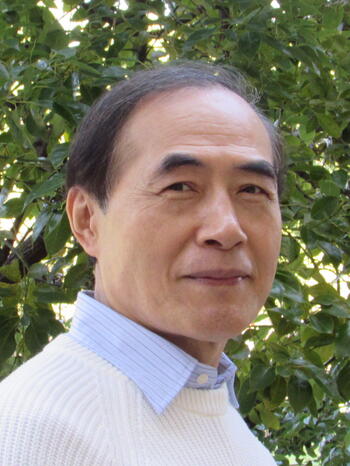
toshiaki_iizuka.jpg Ph.D.

Toshiaki Iizuka is Professor at Graduate School of Public Policy and Graduate School of Economics, the University of Tokyo. Before joining the University of Tokyo in 2010, he taught at Vanderbilt University (2001-2005), Aoyama Gakuin University (2005-2009), and Keio University (2009-2010). He served as Dean of Graduate School of Public Policy, the University of Tokyo, between 2016 and 2018. He is a recipient of Abe Fellowship (2018-2019). 

His research interests are in the field of health economics and health policy. He has written a number of articles on incentive and information in the health care markets. His research articles have appeared in leading professional journals, including American Economic Review, RAND Journal of Economics, Journal of Health Economics, and Health Affairs, among others. Dr. Iizuka holds a PhD in Economics from the University of California, Los Angeles, an MIA from Columbia University, and an ME and BE from the University of Tokyo.
Visiting Scholar, Asia Health Policy Program at APARC
Authors
News Type
Q&As
Date
Paragraphs


A Q&A with Paul Schuler

by Thom Holme

The start of a new academic year is always filled with excited anticipation by all of us at Shorenstein APARC. We're delighted to welcome a diverse cohort of accomplished postdoctoral fellows, research fellows, and visiting scholars to our research community for the 2018-19 academic year. Among them is Paul Schuler, who joins the Center as a Lee Kong Chian Fellow on Southeast Asia.

The Lee Kong Chian Visiting Fellowship on Southeast Asia is part of a joint initiative by the National University of Singapore (NUS) and Stanford, whose aim is to raise the visibility, extent, and quality of research on contemporary Southeast Asia. Here at Stanford, the infrastructures for research is supported by our Southeast Asia Program.

I recently spoke with Shuler about his research plans for the duration of his fellowship. An assistant professor at the University of Arizona's School of Government and Public Policy, Schuler specializes in institutions and public opinion within authoritarian regimes, with a particular focus on Vietnam. He was also a 2014-15 Shorenstein Postdoctoral Fellow on Contemporary Asia. The following conversation has been edited for clarity and length.

Q. Welcome back to Stanford! What's it like being at APARC once more?

A. It's great! It feels like I'm coming home again. It's very rare to have an institution with so much expertise on East Asia as APARC, and that contextual knowledge helps both inform the issues I'm working on and generate new research ideas. The opportunity to benefit from intellectual exchange with China experts at Stanford would be especially useful for me as I'm writing a book comparing the evolution of particular Vietnamese political institutions to those in China.

Q. What are some findings we might expect to see in this publication?

A. It is often assumed that, in China and in Vietnam, democratic politics and elections have been slowly becoming more meaningful, and that the forces that support or push for these quasi-democratic openings are the reform-minded people or the soft-liners in the regimes.

My argument is that the expansion of these democratic forces in Vietnam isn't always driven by soft-liners or reform-minded people wanting to open the institutions for democratic purposes. Oftentimes, the more conservative elements of authoritarian regimes are the ones looking to attack their more reform-minded rivals within the party. In some cases, it's actually the conservatives and the hardliners who increase the visibility of the democratic institutions for such short-term tactical reasons.

However, it's very hard to shut down the institutions once they open up. So, in some ways, conservatives facilitate democratization, but not because it was initially pushed by people supporting that process.

What trust actually does, in our opinion, is breed conservatism. If you happen to live in a democracy, then it's great because it helps breed support for that system; if you live in an autocracy, then it means that it is also hard to change that system...

Paul Schuler

Q. What drew you to research political behavior of institutions within authoritarian regimes, and specifically in Vietnam?

A: I’m fascinated by how political systems evolved the way they did. In the United States, people are largely drawn to politics because of the captivating figures and their personalities, the elections, the campaigns. By contrast, politics in Vietnam is very different. What you read in the newspapers is very much an attempt to play down the individual. In fact, many people in Vietnam have a hard time naming their politicians and top leaders.

And while this situation has changed somewhat in China with Xi Jinping, in Vietnam it's still the case that people don't have that high level of engagement with politicians that we see in democracies. And so I wondered, "How do people engage with politics? Is this, in fact, a better arrangement? Are the people satisfied with it, or just take it for granted? And, ultimately, what would it take to change that type of system?”

Q. You're working on a coauthored paper for the journal Comparative Politics on the link between trust and democratic regime change. What is the connection between the two, and how is it related to engagement with politicians—or lack thereof?

A. With counties like Vietnam, one of the topics that people are most interested in is if—and when—there will be a transition to a more democratic system. Vietnam, like China, has been shown to have a high-degree of social trust. Francis Fukuyama observed how trust helps facilitate democracy, given that people are willing to make compromises with others if they somehow trust them. Vietnam and China are anomalous in that regard because both exhibit high levels of this generalized trust, yet they are obviously not democracies. In our forthcoming paper, my coauthor and I theorize that trust does not facilitate democracy; rather, what it does is facilitate support for whatever the status quo happens to be. People who are highly trusting assume that whatever system is currently in place must be working.

What trust actually does, in our opinion, is breed conservatism. If you happen to live in a democracy, then it's great because it helps breed support for that system; if you live in an autocracy, then it means that it is also hard to change that system to something new, because generalized trust basically makes people adverse to change. We find that in Vietnam, people who score higher in this sort of trust are much less likely to advocate for regime reforms.

Q. You mentioned president Xi Jinping and the shift he represents for China. Do you see the Xi model as having influence on Vietnam’s evolution?

A. There is always a debate in Vietnam as to whether or not they should follow certain choices made by China. China, on average, has grown 2-3% faster than Vietnam annually. And while Vietnam has done very well, there is this sense for some that moving towards a system that looks more like China could actually help further increase their growth.

There are people, particularly in the Organization Committee in Vietnam and at higher levels in the Politburo, who are trying reduce the division between the party and the state; trying to centralize power in party institutions. It's not yet clear whether they'll be able to go as far as China did, let alone if they will be successful at putting forward the reforms they've already suggested.

One big difference is that in Vietnam, the president and the general secretary are different positions, whereas in China, Xi Jinping holds both roles. While there have been attempts by Vietnamese general secretaries to combine these positions, they have been rebuffed by the central committee, and I don't think that's going to happen. And while Vietnam is making changes elsewhere that mirror China, I think the greater degree of separation between the government and the party will probably survive.

Q. Social media’s impact on democracy and influence on the public’s trust in government are hotly debated issues today, both in the United States and in Southeast Asia. What have you observed in Vietnam in that regard?

A. It’s hard to study to the impact of social media on political attitudes, but one thing I've found through surveys is that people who are active online appear more likely to find their local government corrupt. They also tend to be more pessimistic about corruption.

In Vietnam, another thing we found is that social media may have different effects depending on whether one lives in an urban or rural area. There’s evidence that social media in rural areas might actually inhibit protests and social movements, because the central government is much more aware of what is happening in the countryside and can quickly launch a crackdown on protesters.

In urban areas, however, the dynamics are somewhat different: the conditions exist for more spontaneous protest, as horizontal communication overwhelms the central government’s ability to move in and stop it.

So yes, I believe social media is having an impact on people’s relationship to the government in Vietnam, but it's a complex impact. To some extent, it is inhibiting the possibilities for rural revolt, but at the same time it’s helping to facilitate spontaneous urban protest movements.

LKC Fellow Talk

On September 27, 2018, Paul Schuler delivers his seminar "Shadows on the Wall: Legislative Politics in Post-Reform Vietnam"


RSVP Now

Hero Image
A woman wearing Ao Dai culture traditional at Ho chi minh city hall in Vietnam. Natnan Srisuwan via iStock/ Getty Images Plus
All News button
1
-

Asia has achieved remarkable progress on economic development and poverty reduction over the past decades. It is now considered as the main driver of global economic growth and we are witnessing the shift of economic center of gravity toward Asia. Continued success is, however, not preordained or guaranteed. More specifically, the region has to manage several mega-challenges to realize the "Asian Century." These include remaining poverty incidence and increasing inequality, demographic changes, growing environmental pressure, climate change and disaster risk, rapid urbanization, and governance and institutional capacity concern. These increasingly complex challenges pressure Asian countries to take a more sustainable development path, moving away from more traditional development patterns. 

The world is experiencing various technological advancement —including digital and cloud technologies, big data, robotics, artificial intelligence, the internet of things, 3-D printing, blockchain, energy storage, and autonomous vehicles. These technologies will significantly change the way people live and also bring very broad and deep impact on economic and social development landscape. The progress and impacts of technological advancement may be different between developed and developing countries. Will disruptive technologies help developing countries in Asia and the Pacific to solve development challenges or harm their catch-up momentum? What are opportunities and risks posed by emerging technological changes to developing countries in that region? How will developing countries and the international development community prepare to fully harness technological advancements for sustainable development? These are some of the areas to be explored in this seminar.

Image
gilhong kim
Gilhong Kim is currently a visiting scholar in the Korea Program at Shorenstein APARC for the 2018 calendar year. Previously, he was Senior Director concurrently Chief Sector Officer of the Sustainable Development and Climate Change Department in Asian Development Bank (ADB). His research interests encompass technological development and impact on developing countries in Asia and the Pacific. Dr. Kim has more than 33 years of research and operational experience in country and regional development, sectoral strategies and operations covering clean energy, transport, water supply and sanitation, urban development, education, health and finance. Since 1996, Dr. Kim has worked for ADB in the areas of country economic assessment and country operational program development, corporate strategy and policy development, country field office head (in Lao PDR), sector operational strategy development, operational knowledge management, and promoted technology application and innovative approach.  Before joining ADB, he worked for Ministry of Finance in Korea for about 12 years in the areas of economic cooperation and international finance. He holds a PhD in economics from the University of Texas, Austin, and a BA in economics from Korea University in Korea. 

Philippines Conference Room Encina Hall, 3rd Floor 616 Serra Mall, Stanford, CA 94305


616 Serra StreetEncina Hall E301Stanford, CA94305-6055
0
gilhong_kim.jpg Ph.D.

Dr. Gilhong Kim joins the Walter H. Shorenstein Asia-Pacific Research Center for the 2018 year as visiting scholar.  He currently serves as the Senior Director and Chief Sector Officer of the Sustainable Development and Climate Change Department at the Asian Development Bank.  He will be conducting research on technological development and impact in the Asia-Pacific.

Visiting Scholar at APARC
<i>Visiting Scholar, Shorenstein APARC, Stanford University</i>
Seminars
-

Recent scholarship suggests that, under authoritarian regimes, quasi-democratic institutions such as elections and legislatures—the velvet gloves of autocratic rule—actually enable political stability and economic growth. The political economies of China and Vietnam are indeed remarkably stable and dynamic, and compared with China’s ostensibly democratic institutions, those in Vietnam are open and raucous. That makes Vietnam a likely place to find election and legislatures performing their hypothetically salutary functions.  But are they?

Even in Vietnam, Prof. Schuler will argue, the legislature’s main function is to convey regime strength and cow possible opposition.  Using evidence drawn from more than ten years of fieldwork, survey research, and close readings of legislative debates and the debaters’ lives, he finds that electoral and legislative activity reflect intra-party debates rather than genuine citizen opinion. His results should temper expectations that such institutions can serve either as safety valves for public discontent or as enablers of tangibly better governance. Single-party legislatures are more accurately seen as propaganda tools that reduce dissent while increasing disaffection. That said, Schuler will acknowledge that opponents of authoritarian rule may manage, under certain conditions, to repurpose seemingly democratic institutions toward undermining the regime whose longevity they were developed to prolong.

Image
schuler pic
Paul Schuler is an assistant professor at the University of Arizona, where he studies Southeast Asian politics, Vietnamese politics, and authoritarian institutions. He guest-lectures and publishes widely. His latest article is “Position Taking or Position Ducking? A Theory of Public Debate in Single-Party Legislatures,” Comparative Political Studies (March 2018). Earlier scholarship has appeared in the American Political Science Review and Comparative Politics, among other outlets. He is fluent in Vietnamese and has served as a UNDP consultant in Vietnam. His political science doctorate was earned with distinction at the University of California, San Diego.


Philippines Conference Room
Encina Hall, 3rd Floor
616 Serra Street, Stanford, CA 94305

Shorenstein APARC616 Serra StreetEncina Hall E301Stanford, CA 94305-6055
0
paul_schuler.jpg Ph.D.

Paul Schuler joins the Walter H. Shorenstein Asia-Pacific Research Center as a Lee Kong Chian Southeast Asia Fellow for 2018 from the University of Arizona's School of Government and Public Policy where he is an assistant professor. 

His research focuses on institutions and public opinion within authoritarian regimes, with a particular focus on Vietnam. During his fellowship, he will be completing a book project on the evolution of the Vietnam National Assembly since 1986, which he compares to the Chinese National People's Congress. During his fellowship, he will also begin projects examining public support in Vietnam for climate change mitigation policies as well as other research on the role of personality in determining regime support. For more information on these projects, see his website: www.paulschuler.me.

Schuler's other work has appeared in top-ranking journals such as American Political Science Review, Legislative Studies Quarterly, Comparative Political Studies, and the Journal of East Asian Studies. He holds a Ph.D in political science from the University of California, San Diego. 

2018-2019 Lee Kong Chian NUS-Stanford Fellow on Contemporary Southeast Asia, Visiting Scholar
2014-2015 Shorenstein Postdoctoral Fellow on Contemporary on Contemporary Asia
2018-19 Lee Kong Chian NUS-Stanford Fellow on Contemporary Southeast Asia
Seminars
-

Large Japanese firms have a long history of having offices in Silicon Valley, mostly starting in the 1980s and 1990s in the heyday of semiconductors, early computing, software, and communications industries. In the past couple decades, as the Silicon Valley ecosystem produced firms that become global giants with new technologies and disruptive business models, the question has become how to most effectively “harness” the Silicon Valley ecosystem. There is currently a surge of large Japanese companies into Silicon Valley, the latest of several surges and retreats. This time around, most firms are aiming to identify new opportunities to collaborate with the startup ecosystem in order to understand future technological and industry trajectories, to facilitate new forms of “open” innovation within the company, and in some cases to even redefine how to add value to their core offerings. However, given a vast differently economic context from their core operations in Japan, many of the large Japanese firms’ initial forays tend to fall into patterns of “worst practices” that are ineffective. Yet, a small but growing number of innovative Japanese companies are producing novel and valuable collaborations with a variety of Silicon Valley firms, investors, and ecosystem players. This talk will introduce the strategies, structures, and activities of Komatsu, Honda, Yamaha, and several other Japanese companies that are undertaking new forms of collaboration with Silicon Valley companies. The talk will survey a range of strategic options available to Japanese companies, with implications for how to better adapt companies from Japan to Silicon Valley, and more broadly from different political economic systems.

SPEAKER:

Kenji Kushida, Research Scholar, Shorenstein APARC Japan Program and Stanford Silicon Valley-New Japan Project Leader

BIO:

Kenji E. Kushida is the Japan Program Research Scholar at the Shorenstein Asia-Pacific Research Center at Stanford University (APARC), Project Leader of the Stanford Silicon Valley – New Japan Project (Stanford SV-NJ), research affiliate of the Berkeley Roundtable on the International Economy (BRIE), International Research Fellow at the Canon Institute for Global Studies (CIGS), and Visiting Researcher at National Institute for Research Advancement (NIRA). He holds a PhD in political science from the University of California, Berkeley, an MA in East Asian studies and BAs in economics and East Asian studies, all from Stanford University.

Kushida’s research streams include 1) Information Technology innovation, 2) Silicon Valley’s economic ecosystem, 3) Japan’s political economic transformation since the 1990s, and 4) the Fukushima nuclear disaster. He has published several books and numerous articles in each of these streams, including “The Politics of Commoditization in Global ICT Industries,” “Japan’s Startups Ecosystem,” “Cloud Computing: From Scarcity to Abundance,” and others. His latest business book in Japanese is “The Algorithmic Revolution’s Disruption: a Silicon Valley Vantage on IoT, Fintech, Cloud, and AI” (Asahi Shimbun Shuppan 2016).

He has appeared in media including The New York Times, Washington Post, Nihon Keizai Shimbun, Nikkei Business, NHK, PBS NewsHour, and NPR.

He is also a trustee of the Japan ICU Foundation, a fellow of the US-Japan Leadership Program, an alumni of the Trilateral Commission David Rockefeller Fellows, and a member of the Mansfield Foundation Network for the Future.

AGENDA:

4:15pm: Doors open
4:30pm-5:30pm: Talk and Discussion
5:30pm-6:00pm: Networking

RSVP REQUIRED:

Register to attend at http://www.stanford-svnj.org/92719-public-forum

For more information about the Silicon Valley-New Japan Project please visit: http://www.stanford-svnj.org/

PARKING ON CAMPUS:

Please note there is significant construction taking place on campus, which is greatly affecting parking availability and traffic patterns at the university. Please plan accordingly.

0
Former Research Scholar, Japan Program
kenji_kushida_2.jpg MA, PhD
Kenji E. Kushida was a research scholar with the Japan Program at the Walter H. Shorenstein Asia-Pacific Research Center from 2014 through January 2022. Prior to that at APARC, he was a Takahashi Research Associate in Japanese Studies (2011-14) and a Shorenstein Postdoctoral Fellow (2010-11).
 
Kushida’s research and projects are focused on the following streams: 1) how politics and regulations shape the development and diffusion of Information Technology such as AI; 2) institutional underpinnings of the Silicon Valley ecosystem, 2) Japan's transforming political economy, 3) Japan's startup ecosystem, 4) the role of foreign multinational firms in Japan, 4) Japan's Fukushima nuclear disaster. He spearheaded the Silicon Valley - New Japan project that brought together large Japanese firms and the Silicon Valley ecosystem.

He has published several books and numerous articles in each of these streams, including “The Politics of Commoditization in Global ICT Industries,” “Japan’s Startup Ecosystem,” "How Politics and Market Dynamics Trapped Innovations in Japan’s Domestic 'Galapagos' Telecommunications Sector," “Cloud Computing: From Scarcity to Abundance,” and others. His latest business book in Japanese is “The Algorithmic Revolution’s Disruption: a Silicon Valley Vantage on IoT, Fintech, Cloud, and AI” (Asahi Shimbun Shuppan 2016).

Kushida has appeared in media including The New York Times, Washington Post, Nihon Keizai Shimbun, Nikkei Business, Diamond Harvard Business Review, NHK, PBS NewsHour, and NPR. He is also a trustee of the Japan ICU Foundation, alumni of the Trilateral Commission David Rockefeller Fellows, and a member of the Mansfield Foundation Network for the Future. Kushida has written two general audience books in Japanese, entitled Biculturalism and the Japanese: Beyond English Linguistic Capabilities (Chuko Shinsho, 2006) and International Schools, an Introduction (Fusosha, 2008).

Kushida holds a PhD in political science from the University of California, Berkeley. He received his MA in East Asian Studies and BAs in economics and East Asian Studies with Honors, all from Stanford University.
Kenji Kushida Research Scholar Shorenstein APARC Japan Program
Seminars
Paragraphs

The era of globalization saw China emerge as the world's manufacturing titan. However, the "made in China" model—with its reliance on cheap labor and thin profits—has begun to wane. Beginning in the 2000s, the Chinese state shifted from attracting foreign investment to promoting the technological competitiveness of domestic firms. This shift caused tensions between winners and losers, leading local bureaucrats to compete for resources in government budget, funding, and tax breaks. While bureaucrats successfully built coalitions to motivate businesses to upgrade in some cities, in others, vested interests within the government deprived businesses of developmental resources and left them in a desperate race to the bottom.

In Manipulating Globalization, Ling Chen argues that the roots of coalitional variation lie in the type of foreign firms with which local governments forged alliances. Cities that initially attracted large global firms with a significant share of exports were more likely to experience manipulation from vested interests down the road compared to those that attracted smaller foreign firms. The book develops the argument with in-depth interviews and tests it with quantitative data across hundreds of Chinese cities and thousands of firms. Chen advances a new theory of economic policies in authoritarian regimes and informs debates about the nature of Chinese capitalism. Her findings shed light on state-led development and coalition formation in other emerging economies that comprise the new "globalized" generation.
 

About the Author

Ling Chen is an assistant professor in the School of Advanced International Studies at Johns Hopkins University. During the 2013-14 academic year, she was a Shorenstein Postdoctoral Fellow at Shorenstein APARC.
All Publications button
1
Publication Type
Books
Publication Date
Journal Publisher
Stanford University Press
Authors
Number
978-1-503604-7-97
News Type
News
Date
Paragraphs


Group Photo 1

On May 24, Shorenstein APARC hosted the final three research presentations by this year’s Corporate Affiliate Visiting Fellows. What had been months in preparation was at last over; any indications of nervousness or anxiety now gave way to jubilant smiles and celebratory thumbs-ups for cameras. The journey that began for many nearly a year ago had come to a successful end.

Established in 1982, the Corporate Affiliates Program introduces personnel of Asian organizations that have become APARC corporate affiliates to American life and institutions. Over the span of a year, Corporate Affiliate Visiting Fellows have the opportunity to immerse in daily interaction with specialists, students, and scholars from Stanford and abroad. In turn, the practical experience and international perspectives that Visiting Fellows bring with them enrich and inform intellectual exchange at both Shorenstein APARC and Stanford at large. 

The 2017-2018 Visiting Fellows came to APARC from 14 different organizations including government agencies, state-owned enterprises, and private sector industry corporations from four countries: China, India, Japan, and Korea.


Academic Engagement

Group Photo 2The Corporate Affiliates Program is ideal for mid-career professionals looking to expand their knowledge and international experience. Visiting Fellows participate in a structured, yet individualized year of academic exploration. Elements of the program include creating individual research projects, auditing classes, attending exclusive seminars, and visiting local companies and institutions.

Following summer intensives and orientation, Visiting Fellows embark on their nine-month research projects under the guidance of an APARC faculty advisor. Fellows are matched with an advisor based on the research project subject and/or their professional background and region of employment.

“The best thing about this program is that I have one entire year to focus and to manage my own time,” observed a previous Visiting Fellow.

The months of thorough research culminate in a paper and its public presentation. Fellows present their research findings before an audience of APARC faculty and researchers, Stanford community members, and their “fellow Fellows.” Over the course of five days in May, audiences heard presentations on a wide variety of subjects ranging from the impact of U.S. Supreme Court decisions on the AI Industry to regulatory requirements for bio-similar products, and from the role of large industries in Urban Air Transport to the benefits of shifting a government’s focus from economic growth to people’s happiness.

Presentations were well received by APARC faculty, though not before standing up to the rigorous follow-up questions from a highly engaged audience.


University Enrichment

For Corporate Affiliates, the year was not exclusively about their research. Fellows found ample opportunities to take advantage of non-academic pursuits, both on-campus and in the greater Bay Area.

Group Photo 3One way to further encourage exploration was a team-based activity designed by the program. Fellows were broken up into groups of five, each tasked with coordinating an excursion to take the rest on. Facilitated trips included a hike to Stanford’s famous radio telescope (“the Dish”), an exploration of the Berkeley neighborhood and its local industries, and a visit to NASA’s Ames Research Center at Moffett Field.

Stanford Jazz OrchestraIn addition to their professional experiences, Fellows also enriched the Center and university community through their personal pursuits. Takahito Inoshita, for example, brought his musical talent to Stanford along with an extensive experience in engineering. While researching how cities could identify policy needs via natural language data, he also performed with the Stanford Jazz Orchestra as lead trombonist at a November performance at Stanford’s Bing Concert Hall.

Next year’s Visiting Fellows are scheduled to begin arriving in mid-June, and include personnel from government, SOEs and private industries, but also the military and non-profit sector as well. For now, however, the Center is still saying goodbye to the 2017-2018 Fellows as they leave to join a distinguished, ever-growing alumni network of government and private sector professionals throughout Asia.

Hero Image
Corporate affiliate 2017 2018 stanford pride
All News button
1
Paragraphs

In the 1990s, rural youth from poor counties in China had limited access to college. After mass college expansion started in 1998, however, it was unclear whether rural youth from poor counties would gain greater access. The aim of this paper is to examine the gap in college and elite college access between rural youth from poor counties and other students after expansion. We estimate the gaps in access by using data on all students who took the college entrance exam in 2003. Our results show that gaps in access remained high even after expansion. Rural youth from poor counties were seven and 11 times less likely to access any college and elite Project 211 colleges than urban youth, respectively. Much larger gaps existed for disadvantaged subgroups (female or ethnic minority) of rural youth from poor counties. We also find that the gaps in college access were mainly driven by rural–urban differences rather than differences between poor and non-poor counties within rural or urban areas.

All Publications button
1
Publication Type
Journal Articles
Publication Date
Journal Publisher
The China Quarterly
Authors
Scott Rozelle
Paragraphs
This study describes the current teacher training system in China, including the prevalence of teacher training, the types of training, training content and the ways that training is delivered. The paper presents subjective evaluations of training for principals and teachers using four diverse datasets. The results show that the National Teacher Training Project (NTTP) deviates from offi cial policy objectives in several respects. The subjects of training programs and training content are not fully compliant with policy objectives. In addition, training opportunities are offered to a smaller proportion of rural teachers than urban teachers. It is found that the proportion of teachers and principals satisfied with the NTTP is lower than that for other types of training. Therefore, measures should be taken to increase training opportunities for rural teachers and to ensure the quality of training for all teachers.his study describes the current teacher training system in China, including the
prevalence of teacher training, the types of training, training content and the ways that
training is delivered. The paper presents subjective evaluations of training for principals
and teachers using four diverse datasets. The results show that the National Teacher
Training Project (NTTP) deviates from offi cial policy objectives in several respects. The
subjects of training programs and training content are not fully compliant with policy
objectives. In addition, training opportunities are offered to a smaller proportion of rural
teachers than urban teachers. It is found that the proportion of teachers and principals
satisfied with the NTTP is lower than that for other types of training. Therefore,
measures should be taken to increase training opportunities for rural teachers and to
ensure the quality of training for all teachers
All Publications button
1
Publication Type
Journal Articles
Publication Date
Journal Publisher
China & World Economy
Authors
News Type
News
Date
Paragraphs

On May 4, 2018, Asian Infrastructure Investment Bank (AIIB) President Jin Liqun delivered a talk titled “The AIIB After Two Years” to a Stanford audience of faculty, students, and community members. The event was sponsored by the China Program at the Shorenstein Asia-Pacific Research Center.

President Jin addressed the challenges of establishing the AIIB and shed light on the organization’s future goals. Following prepared remarks, President Jin conversed with moderator Thomas Fingar, before opening the floor to questions from the audience.

A recording of the event is now available online .

Read a full account of the event in The Stanford Daily News.

Read a transcript of President Jin's speech is available below.


Hero Image
AIIB President Jin Liqun
AIIB Presdent Jin Liqun addresses audience
Rod Searcy
All News button
1
Subscribe to International Development