The Fallout From the Bo Xilai Affair
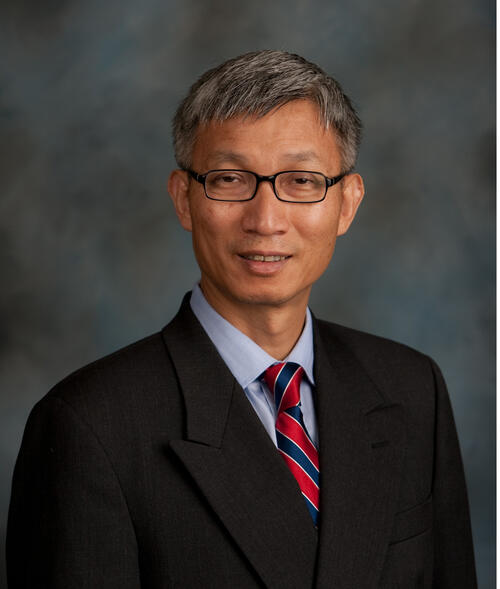
The fall of Bo Xilai is the most serious political crisis in China since Tiananmen in 1989. The leadership succession process was nearly derailed and a deep rift has opened up at the top of the Communist Party. While many critical details of this power struggle remain unknown, the effects of this incident are certain to be far-reaching. Many key questions have been raised, including: How will the fall of Bo affect the new leadership line-up and its policies? How will the rift affect the party's ability to maintain control over a society showing growing signs of defiance and tensions? What does the incident tell us about the systemic corruption at the core of the party's leadership? Professor Minxin Pei will address these and other issues during this timely seminar.
About the Speaker
Pei's research focuses on democratization in developing countries, economic reform and governance in China, and U.S.-China relations. He is the author of From Reform to Revolution: The Demise of Communism in China and the Soviet Union (Harvard University Press, 1994) and China’s Trapped Transition: The Limits of Developmental Autocracy (Harvard University Press, 2006). Pei’s research has been published in Foreign Policy, Foreign Affairs, The National Interest, Modern China, China Quarterly, Journal of Democracy, and many edited books.
He is a frequent commentator for BBC World News, Voice of America, and National Public Radio; his op-eds have appeared in the Financial Times, the New York Times, the Washington Post, Newsweek International, the International Herald Tribune, and other major newspapers.
Pei received his PhD in political science from Harvard University. He was on the faculty at Princeton University from 1992 to 1998, and he has received numerous prestigious fellowships, including the National Fellowship at the Hoover Institution at Stanford University, the McNamara Fellowship at the World Bank, and the Olin Faculty Fellowship of the Olin Foundation.
Philippines Conference Room
Xueguang Zhou
Shorenstein APARC
Stanford University
Encina Hall, E301
Stanford, CA 94305-6055
Xueguang Zhou is the Kwoh-Ting Li Professor in Economic Development, a professor of sociology, and a Freeman Spogli Institute for International Studies senior fellow. His main area of research is on institutional changes in contemporary Chinese society, focusing on Chinese organizations and management, social inequality, and state-society relationships.
One of Zhou's current research projects is a study of the rise of the bureaucratic state in China. He works with students and colleagues to conduct participatory observations of government behaviors in the areas of environmental regulation enforcement, in policy implementation, in bureaucratic bargaining, and in incentive designs. He also studies patterns of career mobility and personnel flow among different government offices to understand intra-organizational relationships in the Chinese bureaucracy.
Another ongoing project is an ethnographic study of rural governance in China. Zhou adopts a microscopic approach to understand how peasants, village cadres, and local governments encounter and search for solutions to emerging problems and challenges in their everyday lives, and how institutions are created, reinforced, altered, and recombined in response to these problems. Research topics are related to the making of markets, village elections, and local government behaviors.
His recent publications examine the role of bureaucracy in public goods provision in rural China (Modern China, 2011); interactions among peasants, markets, and capital (China Quarterly, 2011); access to financial resources in Chinese enterprises (Chinese Sociological Review, 2011, with Lulu Li); multiple logics in village elections (Social Sciences in China, 2010, with Ai Yun); and collusion among local governments in policy implementation (Research in the Sociology of Organizations, 2011, with Ai Yun and Lian Hong; and Modern China, 2010).
Before joining Stanford in 2006, Zhou taught at Cornell University, Duke University, and Hong Kong University of Science and Technology. He is a guest professor at Peking University, Tsinghua University, and the People's University of China. Zhou received his Ph.D. in sociology from Stanford University in 1991.
The Institutional Foundations of the Chinese Bureaucratic State
Learn more
Sumitomo's Yasunori Kakemizu discusses his Stanford experience
What do running a business and flying an airplane have in common?
“Starting a business is like takeoff and cruising,” says Yasunori Kakemizu, a Corporate Affiliates Visiting Fellow at Stanford’s Shorenstein Asia-Pacific Research Center (Shorenstein APARC). “But exiting from it is very difficult—like landing—because you need to try to make a profit.”
Kakemizu should know. He has spent over a decade promoting business development at Japan’s Sumitomo Corporation and its affiliate company Jupiter Telecommunications (J:COM). He is also currently training in his free time for his pilot’s license.
Assistant to the general manager of the Cable TV Department in Sumitomo’s Media Division, Kakemizu has spent the past year at Stanford studying the strategies of major American cable companies in adapting to industry changes like the rise of online streaming media. He has examined, for example, the launch of Comcast’s Xfinity streaming service, and how the company has successfully grown it into a profitable part of its business.
“I’m looking for lessons J:COM and other affiliates can use in the next steps of their own streaming services, which is still relatively new in Japan,” Kakemizu says.
Kakemizu is also taking advantage of Stanford’s close ties to Silicon Valley by attending entrepreneurship seminars and enrolling in classes like cloud computing and investment finance. He is fascinated by the opportunities Stanford students have to work on projects with Silicon Valley companies, and the important role Stanford plays in the regional and global business world.
“This university gathers people from around the world and educates them on how to create new companies,” he says. “They then transmit this knowledge globally.”
During the academic year, Kakemizu has enjoyed taking part in the Corporate Affiliates Program site visits to cutting-edge local tech companies, such as Facebook. He found the visit to Cypress Envirosystems, a company that merges digital technology with older HVAC analog technology, especially intriguing.
“Most businesses are ‘forward thinking,’ but they’re focusing on older technologies,” Kakemizu says. “As a result, they don’t have any market competitors. From a business point of view, their strategy is very clever.”
As the academic year winds down, Kakemizu will wrap up his research project and present the results at a seminar. He and the other Visiting Fellows will have a chance to receive feedback and respond to questions from Shorenstein APARC faculty.
Kakemizu will also finish up his pilot’s license training before he returns to Japan. If you hear an airplane flying over campus one day this spring, it might just be him.
“The view of Stanford from the air is very beautiful,” he says.
The Chinese Naval Role in the Pacific and the American Response
***PLEASE NOTE DATE CHANGE***
Maritime issues are increasingly at the heart of security issues between the United States and China. Historically, the Taiwan issue had dominated the relationship, but increasingly issues such as close in reconnaissance, the South China Sea, and different views on exclusive economic zone rights are shaping the security agenda. In each of these areas, the two sides are far apart. U.S. routine practices of air and sea-based reconnaissance well outside territorial waters is met with indignation by Chinese leaders. Chinese assertive policy regarding its claims of the Spratly islands has provoked several Southeast Asian nations and drawn U.S. diplomatic attentions to the region. Chinese claims on EEZ rights are outliers internationally, however the United States stands outside the key international treaty that governs such rights.
Overlaying these potentially conflicting national interests, both sides have engaged in military shifts. China has maintained double-digit growth in its military budget for nearly 20 years, with substantial attention to the naval realm. Chinese diesel submarines and advanced combat aircraft have brought the People’s Liberation Army to modern levels. New types of systems such as ballistic missile launching submarines and anti-ship ballistic missiles are changing the vary nature of China’s maritime capabilities. As the United States winds down two wars in the Middle East, its military remains attentive to these changes and includes doctrinal and force posture changes. New deployments in Singapore, Guam, and Australia supplement enhanced partnerships with the Philippines and Vietnam, and a reinvigoration of traditional alliances.
The interaction between potentially conflictual national interests and a dynamic military situation raises concerns about the future between the two giants astride the Pacific.
About the panelists
Roughead’s awards include the Defense Distinguished Service Medal, Navy Distinguished Service Medal, Defense Superior Service Medal, Legion of Merit, Meritorious Service Medal, Navy and Marine Corps Commendation Medal, Navy and Marine Corps Achievement Medal, and various unit and service awards.
Roughead became the 29th Chief of Naval Operations Sep. 29, 2007. He retired from active duty, Sept. 23, 2011.
His research interests center on security studies, Chinese foreign policy, general nuclear strategy, strategic culture, statecraft, and East Asian security in theory and practice.
Additional information about his research and teaching can be found here.
Philippines Conference Room
Thomas Fingar
Freeman Spogli Institute for International Studies
Stanford University
Encina Hall, C-327
Stanford, CA 94305-6055
Thomas Fingar is a Shorenstein APARC Fellow in the Freeman Spogli Institute for International Studies at Stanford University. He was the inaugural Oksenberg-Rohlen Distinguished Fellow from 2010 through 2015 and the Payne Distinguished Lecturer at Stanford in 2009.
From 2005 through 2008, he served as the first deputy director of national intelligence for analysis and, concurrently, as chairman of the National Intelligence Council. Fingar served previously as assistant secretary of the State Department’s Bureau of Intelligence and Research (2000-01 and 2004-05), principal deputy assistant secretary (2001-03), deputy assistant secretary for analysis (1994-2000), director of the Office of Analysis for East Asia and the Pacific (1989-94), and chief of the China Division (1986-89). Between 1975 and 1986 he held a number of positions at Stanford University, including senior research associate in the Center for International Security and Arms Control.
Fingar is a graduate of Cornell University (A.B. in Government and History, 1968), and Stanford University (M.A., 1969 and Ph.D., 1977 both in political science). His most recent books are From Mandate to Blueprint: Lessons from Intelligence Reform (Stanford University Press, 2021), Reducing Uncertainty: Intelligence Analysis and National Security (Stanford University Press, 2011), The New Great Game: China and South and Central Asia in the Era of Reform, editor (Stanford University Press, 2016), Uneasy Partnerships: China and Japan, the Koreas, and Russia in the Era of Reform (Stanford, 2017), and Fateful Decisions: Choices that will Shape China’s Future, co-edited with Jean Oi (Stanford, 2020). His most recent article is, "The Role of Intelligence in Countering Illicit Nuclear-Related Procurement,” in Matthew Bunn, Martin B. Malin, William C. Potter, and Leonard S Spector, eds., Preventing Black Market Trade in Nuclear Technology (Cambridge, 2018)."
China and the World
Learn more
Research Presentations (3 of 3) - Kakemizu, Koda, Li and Waseda
In this session of the Shorenstein APARC Corporate Affiliate Visiting Fellows Research Presentations, the following will be presented:
Yasunori Kakemizu, "Strategy of CATV in the Competitive TV Market: Open vs. Closed Models"
After prospering for more than a half-century in the United States, the cable industry is taking on a new competitor, Over-The-Top providers (OTT). OTT providers are a product of the information technology revolution that emerged from the invention of Internet protocol of the late 20th century. In his research presentation, Kakemizu tries to answer the question: What is the strategy of the cable industry in the United States and what will happen to it in the near future? Kakemizu analyzes the current threat and opportunity facing cable television companies, focusing on the strategies against OTT, such as Netflix and Hulu.
Hideaki Koda, "Driving the Electric Vehicle Forward: Reshaping Car Sharing with EV and ICT"
Should the all-electric vehicle challenge the traditional car head-on in the mainstream market? The answer may be "no" if you look back on the history of disruptive innovations. An innovative technology at its dawn often succeeds first in a smaller, untapped market where its strengths shine and its weaknesses are shadowed (or even turned into strengths). It then enters the mainstream market over time by achieving more maturity, as typically shown in the computer market. Then where is the market for the electric vehicle? It might be car sharing, which is thought to be a potentially large market. Koda discusses how to combine electric vehicles and car sharing with information and communications technology (e.g. Big Data processing) to achieve a win-win solution for all by taking advantage of the unique characteristics of the electric vehicle.
Haiming Li, "Competing Strategies for China's Large Commercial Banks"
Competing strategies are critical to China's large commercial banks, as they determine future direction of development for these banks. Research shows that following five strategies, namely a strategy for lead changes, a strategy for globalization, a strategy for diversification, a strategy for systematic risk management, as well as a strategy for establishing a decision-making support system, need to be adapted. Coordinated implementation of these strategies will enhance the competitiveness of China's large commercial banks both home and abroad.
Yoshimasa Waseda, "Nantotechnolgoy for Fuel Cells: The Impact and Analysis of the Status Using Patent Information"
Judging from the need to reduce increasing dangers of future global climate change, clean energy has become more important and is a key issue for future development. Fuel cells are a candidate for achieving clean energy in the future although they currently have some disadvantages. Many researchers study the application of nanotechnology for fuel cells to solve these disadvantages using the unique phenomena of nanomaterials. In this presentation, Waseda discusses the impact of nanotechnology for fuel cells and analyzes the status of each region using patent information.
Philippines Conference Room
Yasunori Kakemizu
Yasunori Kakemizu is a corporate affiliate visiting fellow at the Walter H. Shorenstein Asia-Pacific Research Center for 2011–12. Kakemizu has more than 12 years of experience in media markets working for Sumitomo Corporation, one of Japan's major trading and investment conglomerates. Most recently, Kakemizu worked for Jupiter Telecommunications Co., Ltd. (one of Sumitomo Corporation's affiliated companies), and was responsible for service and business development.
Kakemizu received his bachelor's and master's degree in engineering science from Osaka University.
Hideaki Koda
Hideaki Koda is a corporate affiliate visiting fellow at Shorenstein APARC for 2011-12. Prior to joining Shorenstein APARC, he had been working at Mitsubishi Electric Corporation for 15 years. Following the national policy called e-Japan Strategy, he had been engaged in designing, developing and deploying information systems for the Japanese Government and the Supreme Court of Japan, as well as coordinating with clients, engineers and vendors as a project manager. He obtained his bachelor's and master's degrees in Electric Engineering from Waseda University.
Haiming Li
Haiming Li is a corporate affiliate visiting fellow at the Walter H. Shorenstein Asia-Pacific Research Center for 2011–12.
Yoshimasa Waseda
Yoshimasa Waseda is a corporate affiliate visiting fellow at Shorenstein APARC for 2011-12. Prior to joining Shorenstein APARC, he has worked for the Japan Patent Office (JPO) since 1999. He has worked as a patent examiner, handling patent applications in the field of semiconductor device manufacturing. In 2010, he was in charge of policy planning of information searching. He obtained his BS and MS in Metallurgy and Ceramics Science from Tokyo Institute of Technology.