Foreign Policy
News Type
News
Date
Paragraphs

Former U.S. ambassador to South Korea Kathleen Stephens spoke on "Bloomberg Daybreak: Asia" about President Trump's Asia trip on the eve of his arrival in China.

Stephens noted that in canceling a trip to the DMZ--more or less a presidential tradition on visits to Korea--Trump did the "right thing" by instead focusing on the "must-do" on this first trip of reassuring South Koreans on the U.S. commitment to its alliance with the Republic of Korea.

Both North Korean and Trump administration rhetoric seems to have cooled off in recent days; Stephens noted that Trump seems to have "gotten the message" about the importance of the relationship with South Korea and the level of nervousness in the country. 

Ambassador Stephens commented on the feasibility of beginning talks with North Korea and what additional pressure might be required to get the North to the table. She noted that if denuclearizing were a precondition for talks, they wouldn't happen.

She speculated on what President Trump might ask the Chinese to do to up the pressure on North Korea, for example, cutting off oil exports. She also suggested that when it comes to talking about trade, the emphasis might be on announcing deals and Trump might act as "salesman-in-chief."

The full interview is available on Bloomberg TV.

All News button
1
-

Image
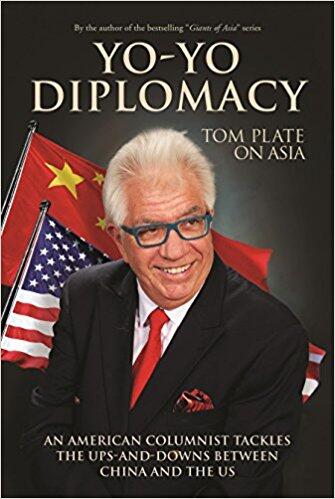
The third of the “Tom Plate on Asia” series, Yo-Yo Diplomacy compiles the compelling and insightful columns on Asia by award-winning journalist Tom Plate over the past two years. From tensions in the South China Sea to China’s stock market turbulence and Hong Kong’s bookseller saga, the veteran columnist continues to examine the rise of Asia and the role of America in this dynamic and diverse region.

The collection is enlivened with thoughtful retrospectives and personal comments providing vivid backstories. The result is an informative and readable anthology that would prove valuable not only political and current affairs commentators, but also to the layperson wishing to learn more about pivotal developments in the Asia-Pacific region.

Tom Plate is a university professor, a veteran columnist focused on Asia and America, and an educational innovator. A Los Angeles resident, this full-time Clinical Professor and Distinguished Scholar of Asian and Pacific Studies at Loyola Marymount University has orchestrated live interactive seminars with major universities across Asia, as part of LMU’s path-finding Asia Media International Center. He teaches courses on the United Nations, and on Asia and on its media, and is the author of 13 books, including the bestsellers Confessions of an American Media Man (2007) and four volumes in the ‘Giants of Asia’ series; and The Fine Art of the Political Interview (2015), all published by Marshall Cavendish Editions. 


Born in New York, he was educated at Amherst College, where he was Phi Beta Kappa, and Princeton University, where he was awarded his professional degree in public and international affairs. He has received a number of major journalistic recognitions, including from the American Society of Newspaper Editors its annual Deadline Writing Award.


Books will be available for sale at the event


Philippines Conference Room

Encina Hall, 3rd Floor, Central

Professor Tom Plate <i>Asian and Pacific Studies, Loyola Marymount University</i>
Seminars
Date Label
-

- To RSVP please click here -

Please note that this event will take place in Beijing, P.R.C. at the Stanford Center at Peking University.


Some of the world’s most critical flashpoints are concentrated in the Asia-Pacific today. The 2017 Lee Shau Kee World Leaders Forum will examine East Asia’s geopolitical volatilities in the context of China’s rapid rise while assessing the evolving role of the United States in the region. The Forum will first include remarks by the Director of FSI and former U.S. Ambassador to the Russian Federation, Michael A. McFaul, on the historical origins and contemporary consequences of President Trump’s worldview. A panel discussion will follow with leading policy experts, including the Director of the U.S.-Asia Security Initiative, Shorenstein APARC, and former U.S. Ambassador to Afghanistan, Karl Eikenberry; Associate Professor and Vice President of the Institute of International and Strategic Studies at Peking University, Yu Tiejun; William J. Perry Fellow in the Korea Program at Shorenstein APARC and former U.S. Ambassador to South Korea, Kathleen Stephens; Executive Director of the China Center for Collaborative Studies of the South China Sea and Dean of the School of International Relations at Nanjing University, Zhu Feng; and Shorenstein APARC Fellow at FSI and former chairman of the National Intelligence Council and Assistant Secretary of State of Intelligence and Research, Thomas Fingar.  The expert panel will examine the current state of U.S.-China relations in this increasingly turbulent region.


The Lee Shau Kee World Leaders Forum is an annual event established to raise public understanding of the complex issues China and other countries face in the course of rapid development. The purpose of the Lee Shau Kee World Leaders Forum is to foster engagement among government, academic, private sector and civil society leaders on pressing challenges of global importance that demand creative and innovative solutions.

This year’s event also marks the Tenth Anniversary of the China Program and the Fifth Anniversary of the Stanford Center at Peking University.


Agenda


2:00-2:15 PM                     Welcome remarks

2:15-3:15 PM                     Keynote Address: The Historical Origins and Contemporary Consequences of

                                               President Trump's Worldview, Ambassador Michael A. McFaul

3:15-3:30 PM                     Break

3:30-5:30 PM                     Panel Discussion: The United States, China, and the Asia-Pacific Region

                                                Amb. Karl Eikenberry

                                                Dr. Yu Tiejun

                                                Amb. Kathleen Stephens

                                                Dr. Zhu Feng

                                                Dr. Thomas Fingar


Please note that this event will take place in Beijing, P.R.C. at the Stanford Center at Peking University.

Stanford Center at Peking University (SCPKU),

The Lee Jung Sen Building,

Langrun Yuan, Peking University, Beijing, P.R.C.

<br><a href="https://fsi.stanford.edu/people/karl_eikenberry">Karl Eikenberry</a> <br><i>Former U.S. Ambassador to Afghanistan (2009-2011); Lt. Gen. of U.S. Army (retired); Director, U.S.-Asia Security Initiative, Shorenstein APARC</i>
<br><a href="https://aparc.fsi.stanford.edu/people/kathleen_stephens">Kathleen Stephens</a> <br><i>Former U.S. Ambassador to the Republic of Korea (2008-2011); William J. Perry Fellow, Shorenstein APARC</i>
<br>Yu Tiejun <br><i>Associate Professor and Vice President of the Institute of International and Strategic Studies, Peking University</i>
<br><a href="https://aparc.fsi.stanford.edu/people/thomas_fingar">Thomas Fingar</a> <br><i>Former chairman, National Intelligence Council; Former Assistant Secretary of State for Intelligence and Research; Shorenstein APARC Fellow</i>
<br>Zhu Feng <br><i>Executive Director, China Center for Collaborative Studies of the South China Sea; Director, Institute of International Studies, Nanjing University</i>
<br><a href="http://cddrl.fsi.stanford.edu/people/michael_a_mcfaul">Michael McFaul</a> <br><i>Former U.S. Ambassador to the Russian Federation (2012-2014); Director of FSI</i>
Panel Discussions
-

Abstract

Speculation about the course of cross-Strait relations after the upcoming 19th Chinese Communist Party Congress ranges from greater PRC flexibility to substantially increased pressure on Taiwan. The Mainland’s persistent suspicion about President Tsai Ing-wen’s motives has only deepened with her appointment of avowed independence supporter Lai Ching-te as premier, especially because of the prospect that Lai could eventually become president. As a result, once the internal tugging and hauling leading up to the Party Congress has been settled, some people predict that Beijing will resort to military intimidation or even actual use of force to bring Tsai to heel. What are the PRC’s goals? What are Taipei’s? What role can and should the United States play in seeking not only to avoid conflict but to reestablish a reliable level of stability in cross-Strait relations and to prevent Taiwan from once more becoming a highly divisive issue in U.S.-PRC relations? Alan Romberg will address these issues in his talk on October 30th.


Bio

Image
Alan Romberg

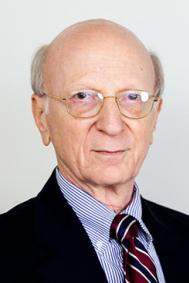
Alan Romberg is a Distinguished Fellow and the Director of the East Asia program at Stimson. Before joining Stimson in September 2000, he enjoyed a distinguished career working on Asian issues including 27 years in the State Department, with over 20 years as a U.S. Foreign Service Officer. Romberg was the Principal Deputy Director of the State Department's Policy Planning staff, Principal Deputy Assistant Secretary of State for Public Affairs and Deputy Spokesman of the department. He served in various capacities dealing with East Asia, including director of the Office of Japanese Affairs, member of the Policy Planning staff for East Asia, and staff member at the National Security Council for China. He served overseas in Hong Kong and Taiwan.

Additionally, Romberg spent almost 10 years as the CV Starr Senior Fellow for Asian Studies at the Council on Foreign Relations, and was special assistant to the secretary of the navy.

Romberg holds an M.A. from Harvard University, and a B.A. from the Woodrow Wilson School of Public and International Affairs at Princeton University.

This event is co-sponsored by the Taiwan Democracy Project in the Center on Democracy, Development, and the Rule of Law (CDDRL) and the U.S.-Asia Security Initiative in the Shorenstein Asia-Pacific Research Center (APARC), both part of the Freeman Spogli Institute for International Studies.

Alan Romberg Distinguished Fellow Stimson Center
Lectures
-

Abstract 

Scholars have credited a model of state-led capitalism called the developmental state with producing the first wave of the East Asian economic miracle. Using historical evidence based on original archival research, this talk offers a geopolitical explanation for the origins of the developmental state. In contrast to previous studies that have emphasized colonial legacies or domestic political factors, I argue that the developmental state was the legacy of the rivalry between the United States and Communist China during the Cold War. Responding to the acute tensions in Northeast Asia in the early postwar years, the United States supported emergency economic controls in Japan, South Korea, and Taiwan to enforce political stability. In response to the belief that the Communist threat would persist over the long term, the U.S. strengthened its clients by laying the foundations of a capitalist, export-oriented economy under bureaucratic guidance. The result of these interventions was a distinctive model of state-directed capitalism that scholars would later characterize as a developmental state.

I verify this claim by examining the rivalry between the United States and the Chinese Communists and demonstrating that American threat perceptions caused the U.S. to promote unorthodox economic policies among its clients in Northeast Asia. In particular, I examine U.S. relations with the Chinese Nationalists on Taiwan, where American efforts to create a bulwark against Communism led to the creation of an elite economic bureaucracy for administering U.S. economic aid. In contrast, the United States decided not to create a developmental state in the Philippines because the Philippine state was not threatened by the Chinese Communists. Instead, the Philippines faced a domestic insurgency that was weaker and comparatively short-lived. As a result, the U.S. pursued a limited goal of maintaining economic stability instead of promoting rapid industrialization. These findings shed new light on the legacy of statism in American foreign economic policy and highlight the importance of geopolitics in international development.


Bio

Image
James Lee

James Lee is a Ph.D. Candidate in the Department of Politics at Princeton University. He specializes in International Relations with a focus on U.S. foreign policy in East Asia and relations across the Taiwan Strait. James also serves as the Senior Editor for Taiwan Security Research, an academic website that aggregates news and commentary on the economic and political dimensions of Taiwan's security.


This event is co-sponsored by the Taiwan Democracy Project in the Center on Democracy, Development, and the Rule of Law (CDDRL) and the U.S.-Asia Security Initiative in the Shorenstein Asia-Pacific Research Center (APARC), both part of the Freeman Spogli Institute for International Studies.

James Lee Ph.D. Candidate Princeton University
Lectures
Authors
George Krompacky
News Type
Commentary
Date
Paragraphs

NBC Bay Area spoke with Shorenstein APARC director Gi-Wook Shin following a press conference held by DPRK foreign minister Ri Yong-Ho on September 25, in which Ri asserted that recent comments by President Donald Trump amounted to a "declaration of war."

The verbal barrage between North Korea and the United States has sharply escalated, with increased U.S. bomber flights near and around North Korea being met by North Korean threats to shoot down such flights, even those outside its borders.

While Shin still holds that the war of words will not turn into war, he is concerned that the escalation of rhetoric is dangerous.

"The South Korean people are really worried about the possibility of a military conflict," noted Shin. He further advised the president to deescalate personal attacks on Kim Jong-un, pointing out that Kim's "god-like" status in North Korea was effectively forcing the DPRK leader to respond to White House threats.

Hero Image
gettyimages 853681832
North Korea's foreign minister Ri Yong-Ho departs after speaking to reporters at the UN Millenium Plaza hotel on September 25, 2017 in New York City.
Amir Levy/Getty Images
All News button
1
-

Image
sook kim copy
North Korean leader Kim Jong-un now boasts that his country is in the final stages of completing a nuclear weapons development program, one capable of loading nuclear warheads on an ICBM that can reach the mainland United States.

Six years after his succession to power, Kim has continued to defy international pressure, conducting four nuclear tests and firing eighty-five ballistic missiles. Recently, the world has witnessed an extraordinary, high-intensity war of words between President Trump and the North Korean leader. Military tension mounts higher than ever as we enter a new phase, arguably the most serious one in decades, in dealing with a dangerous and bellicose North Korea.

There are many questions: Will North Korea conduct an atmospheric nuclear test? When will their weapons program really be capable of hitting the continental United States? How will the U.S. government respond to that capability? Will the likely result be war on the Korean Peninsula? What about the China factor?

Ambassador Kim will discuss some of these questions through his personal experiences at the Six-Party Talks, the UN Security Council and through his contacts with North Korean officials.

Philippines Conference Room
Encina Hall, 3rd Floor
616 Serra Street
Stanford, CA 94305
Directions

Kim Sook former South Korean Ambassador to U.N; 2014-15 Pantech Fellow at APARC, Stanford University <i>former South Korean Ambassador to U.N; 2014-15 Pantech Fellow at APARC, Stanford University</i>
Seminars
Authors
News Type
Commentary
Date
Paragraphs

In his Tuesday address at the United Nations General Assembly, President Donald Trump threatened to “totally destroy North Korea” if the U.S. is forced to defend itself or its allies. Over the past month, North Korea conducted its largest nuclear test and fired its longest-traveling missile. The tension between the United States and the East Asian country continues to intensify.

Stanford News Service interviewed two Stanford experts about the escalating situation between the two countries and what options leaders have on the table when it comes to North Korea.

Michael R. Auslin is the inaugural Williams-Griffis Research Fellow in Contemporary Asia at the Hoover Institution. He specializes in global risk analysis, U.S. security and foreign policy strategy, and security and political relations in Asia.

Gi-Wook Shin is a professor of sociology, a senior fellow at the Freeman Spogli Institute for International Studies and director of the Shorenstein Asia-Pacific Research Center.

Since North Korea conducted its first nuclear test in 2006, the United Nations and individual countries, including the U.S., have imposed several sanctions on the country. Despite those efforts to pressure North Korea to denuclearize, the country’s nuclear capabilities have steadily increased. Why do you think these previous efforts did not work?

Auslin: North Korea has been intent on getting a nuclear weapon for decades, so the basic premise that Pyongyang would bargain away its program was likely faulty. Serious, comprehensive sanctions were never tried, in part because of Chinese and Russian opposition. By effectively taking the threat of the use of force off the table, previous administrations gave Pyongyang no incentive to take negotiations seriously. Previous North Korean undermining of agreements resulted in no serious cost and instead spurred Washington and its allies to offer further negotiations.

Shin: I think that the main obstacles to the previous efforts to pressure North Korea were China and Russia’s partial support for, and not-so-full implementation of, the sanctions. For instance, despite Beijing’s announcement that it would uphold the sanctions, border trade and economic activities between China and North Korea continued, and Beijing knowingly allowed this to happen. Additionally, North Korea is so used to living under difficult economic circumstances that it has found ways to be less affected by sanctions, learning how to get around sanctions – e.g., through smuggling – instead.

What does North Korea hope to gain by amassing a nuclear arsenal?

Auslin: North Korea has wanted to prevent the possibility of any foreign attack and a nuclear capability is the best means of achieving that goal. It also seeks to use any means to intimidate its neighbors and prevent them from undertaking any anti-North Korean action. It also may hope to end its international isolation by fielding a nuclear arsenal so that it can no longer be “ignored” by the international community.

Shin: By amassing a nuclear arsenal, North Korea hopes to secure the Kim regime internally and externally. Nuclear development is a main pillar of Kim’s byeongjin policy, a policy of simultaneous development of nuclear weapons and the economy. Once North Korea obtains nuclear state status, it will try to negotiate with the U.S. and South Korea for what it really wants. This could be economic support, international recognition, a peace treaty with the U.S., etc.

Are there still diplomatic means of addressing this situation that have not been explored? What are they and what is the likelihood they would be effective?

Shin: I am a believer in diplomatic power and continue to think that we shouldn’t give up on diplomacy, but it’s true that all previous diplomatic efforts with North Korea have failed, and it is questionable whether any diplomatic approach will be effective at this point. But one possible – perhaps final – approach that has not yet been explored is a Trump-Kim summit at which the two leaders might make a “big deal” – that is, to get North Korea to denuclearize in exchange for a normalization of their relationship, i.e., a peace treaty, between North Korea and the U.S. But this would be an extremely difficult thing to pull off, both politically and diplomatically.

Auslin: No package of incentives has been effective for the past quarter-century, and both bilateral and multilateral negotiations have failed. There is little reason to believe that there are untried diplomatic means that can make a breakthrough where so many have failed.

Can a diplomatic solution be reached without the cooperation of China?

Shin: China has always advocated diplomacy with North Korea, and I believe that China’s cooperation is essential, but I would also caution against relying or counting on China too heavily. From China’s perspective, the main reason for North Korea’s nuclearization has to do with the American threat – perceived or real – to its national security.

Auslin: China has shown little appetite for constructively solving the North Korean crisis through diplomatic means. Moreover, it is unclear that China retains significant political influence in Kim Jong-un’s era, even given the importance of Chinese trade with North Korea. However, if Washington and Beijing decided that a more coercive approach was necessary, then China would have a major role to play.

What are the military options on the table for the U.S.?

Auslin: Very few, short of all-out war. The North Korean nuclear program is too advanced and dispersed to be taken out by pinpoint bombing, and its missiles are on road-mobile launchers when not hidden, making them difficult to track and destroy. Seoul remains at risk from thousands of conventional artillery launchers that would certainly be used in the event of an American strike inside North Korea.

Shin: There are a number of possibilities, including a surgical strike, but given that North Korea would most likely retaliate by attacking South Korea – an action that would lead to the deaths of hundreds of thousands of South Korean citizens, plus a good number of U.S. soldiers and citizens in the country – it’s not a tempting option. The U.S. government and its military are well aware that any military action would be very dangerous.

What potential actions could lead to even more destabilization and should be avoided?

Shin: Any major military action should be avoided, as it would put both South Korea and possibly the U.S. at great risk. Given that North Korea will continue its efforts to become a nuclear state, and given that military options are not viable, we may have to find a way to live with a nuclear North Korea. It is a reality that we have worked hard to avoid, but time is not on our side. I hear more and more South Koreans calling for South Korea to go nuclear now and a similar movement could begin in Japan. This would mean that the region is entering into a very unfortunate and dangerous situation.

Alex Shashkevich is a writer for the Stanford News Service.


All News button
1
News Type
News
Date
Paragraphs

As the war of words escalates between Donald Trump and North Korean leader Kim Jong-un amid a series of North Korean missile launches and a September 3 nuclear test, Gi-Wook Shin, director of the Shorenstein Asia-Pacific Research Center, expressed concern that what is happening "might be more than an escalation of rhetoric. . . there may be escalation of expectations." Read the news item in the Independent here. In an interview with Deutsche Welle, Shin said "one could argue that the [Trump administration's] contradictory messages fit well with its somewhat paradoxical North Korea policy, 'maximum pressure, maximum engagement.'"

In an appearance on PBS Newshour, Kathleen Stephens, former U.S. ambassador to South Korea and William J. Perry Fellow at Shorenstein APARC's Korea Program, expressed concern that the presidential brinkmanship was undermining diplomatic efforts to deescalate tensions on the Korean Peninsula. Stephens suggested the U.S. President "restrain from twittering" the war of words in a recent interview with Yonhap News.

Yong Suk Lee, deputy director of the Korea Program at the Shorenstein APARC, said "the harsh rhetorics going back and forth between Kim Jong Un and Donald Trump may indeed fuel the probability of military action. And it indeed seems like the hardliners are getting  a stronger voice domestically, not just in the U.S., but also in North Korea. However, the increased tension may actually serve as an opportunity. When the stakes are this high — with the possibility of a nuclear war, and for North Korea, an economy that is just starting to develop — the incentive to strike a deal may be higher." Listen to his interview with KCRW: To the Point here.


Hero Image
36267063956 8f90649b74 o
A U.S. Air Force B-1B Lancer prepares to take off for a 10-hour mission from Andersen Air Force Base, Guam, into Japanese airspace and over the Korean Peninsula, July 30, 2017.
Flickr/U.S. Air Force photo by Tech. Sgt. Richard P. Ebensberger
All News button
1
Paragraphs

The seventeenth session of the Korea-U.S. West Coast Strategic Forum held on June 29, 2017 in Seoul convened senior South Korean and American policymakers, scholars and regional experts to discuss North Korea policy and recent developments on the Korean Peninsula. Hosted by the Sejong Institute in association with the Shorenstein APARC, the forum continued its focus on Northeast Asian regional dynamics, the North Korea problem, and the state of the U.S.-Republic of Korea alliance. The participants engaged in candid, productive discussion about issues relating to these topics.

 
All Publications button
1
Publication Type
Policy Briefs
Publication Date
Subscribe to Foreign Policy