Security

FSI scholars produce research aimed at creating a safer world and examing the consequences of security policies on institutions and society. They look at longstanding issues including nuclear nonproliferation and the conflicts between countries like North and South Korea. But their research also examines new and emerging areas that transcend traditional borders – the drug war in Mexico and expanding terrorism networks. FSI researchers look at the changing methods of warfare with a focus on biosecurity and nuclear risk. They tackle cybersecurity with an eye toward privacy concerns and explore the implications of new actors like hackers.

Along with the changing face of conflict, terrorism and crime, FSI researchers study food security. They tackle the global problems of hunger, poverty and environmental degradation by generating knowledge and policy-relevant solutions. 

News Type
Commentary
Date
Paragraphs

Image

South Korean activists continue to send balloons into North Korea filled with leaflets that reportedly contain information that is critical of Kim Jong Un’s regime. The latest campaign coincided with the anniversary of the founding of the North’s ruling Worker’s Party. The Koreas exchanged gunfire over the incident in the first-ever North Korean attack after such a balloon launch.

“The possible benefits of sending such balloons into the North are far outweighed by giving North Korea a pretext to attack the South,” said David Straub, the associate of the Korea Program at the Walter H. Shorenstein Asia-Pacific Research Center (APARC), in an interview the Voice of America.

Straub’s commentary coincides with recommendations in “Tailored Engagement,” a policy report published in Sept. 2014 by Straub, Gi-Wook Shin, director of Shorenstein APARC and Joyce Lee, research associate for the Korea Program, which argues for increased engagement with the North through a series of precise steps taken on behalf of the South Korean government. Among those steps, the scholars recommend the South Korean government should not permit balloon launches.

The full article can be found on the Voice of America online, and the policy report can be found on the Shorenstein APARC website.

Hero Image
2011 David Straub 2 Web Rod Searcey
All News button
1
News Type
News
Date
Paragraphs


Gi-Wook Shin, director of the Walter H. Shorenstein Asia-Pacific Research Center,  and David Straub, associate director of the Korea Program, presented their new study "Tailored Engagement: Toward an Effective and Sustainable Inter-Korea Relations Policy" to a Washington, D.C. audience at the Brookings Institution on Sept. 29. The Voice of America wrote an article in Korean about the presentation, citing Shin saying, "Engagement is important and essential but it must be carefully tailored or fitted to changing political and security realities on and around the Peninsula." 

Hero Image
straub brookings 2 Seong-hyon "Sunny" Lee
All News button
1
News Type
News
Date
Paragraphs

As the new academic year gets underway, the Walter H. Shorenstein Asia-Pacific Research Center’s Corporate Affiliates Program is excited to welcome its new class of fellows to Stanford University.

The 2014-15 fellows and their affiliations are listed below:

  • Liang Fang, China Sunrain Solar Energy Co., Ltd.
  • Wataru Fukuda, Shizuoka Prefectural Government
  • Zhao Han, PetroChina
  • Yoshihiro Kaga, Ministry of Economy, Trade & Industry, Japan
  • Tsuyoshi Koshikawa, Ministry of Finance, Japan
  • Jaigeun Lim, Seoul Metropolitan Government
  • Yun Bae Lim, Samsung LIfe Insurance
  • Feng Lin, ACON Biotechnology
  • Yasunori Matsui, Mitsubishi Electric
  • Tatsuru Nakajima, Sumitomo Corporation
  • Shingo Nakano, Ministry of Economy, Trade & Industry, Japan
  • Ryuichi Ohta, Japan Patent Office
  • Jong Soo Paek, Samsung Electronics
  • Rajeev Prasad, Reliance Life Sciences
  • Ryuichiro Takeshita, Asahi Shimbun
  • Ryo Wakabayashi, Sumitomo Corporation
  • Changbao Zhang, PetroChina

At Stanford, the fellows will audit classes, work on English language skills, and conduct individual research projects. At the end of the year, they will give formal presentations on their research findings. At the Center, they will have the opportunity to consult with Shorenstein APARC's scholars and attend events featuring visiting experts from around the world. The fellows will also participate in special events and site visits to gain a firsthand understanding of business, society and culture in the United States.

Hero Image
corporate affiliates 2014 15
The 2014-15 Corporate Affiliate Visiting Fellows stand on the front steps of Encina Hall.
Rod Searcey
All News button
1
Authors
Gi-Wook Shin
News Type
News
Date
Paragraphs


With tensions between Japan and South Korea continuing over historical and territorial issues, Beijing is more than willing to use the history card to woo Seoul. In a recent visit to South Korea, Chinese President Xi Jinping said that "in the first half of the 20th century, Japanese militarists carried out barbarous wars of aggression against China and South Korea, swallowing up Korea and occupying half of China." Earlier this year, China opened an elaborate memorial hall in Harbin to honor Ahn Jung-geun, who killed Hirobumi Ito, the first Japanese resident-general of Korea. To Koreans, Ahn is a national hero; to Japanese, a terrorist. Xi's visit to Seoul was to repay South Korean President Park Geun-hye's own visit to Beijing last year. Neither Park nor Xi has visited Tokyo yet.

China is apparently seeking to pull South Korea over to its side in its widening strategic competition with the United States and Japan. Xi's "charm offensive" toward Seoul is based on the calculation that South Korea's strategic value will only increase in coming years.

For South Korea, there are compelling reasons to improve relations with China. Ties had been strained by Park's predecessor, Lee Myung-bak, emphasizing South Korea's alliance with the U.S. She must take into account that China is becoming ever more important to South Korea's economy. (Apart from Taiwan, South Korea enjoys the world's largest merchandise trade surplus with China, approaching $100 billion). Park also wants China to support her North Korea policy focused on ending Pyongyang's nuclear weapons program and preparing for unification. 

While China actively asserts its claim to leadership in Northeast Asia in courting South Korea, Japanese Prime Minister Shinzo Abe seems to deliberately ignore, if not dismiss, the importance of South Korea. Japanese policymakers argue, wrongly, that the Park government is "pro-China" and that Japan needs only to worry about China itself. Conservative Japanese media regularly bash the South Korean government and South Korea more broadly, and anti-Korean sentiments in Japan are on the rise.

Japanese focus is understandably on its alliance with the United States. But American policymakers openly worry that continuing tensions between its main allies in the region will undermine its strategic position regarding China and North Korea. President Barack Obama brought Abe and Park together in March on the sidelines of the Nuclear Security Summit, but with little to show for it. The United States is also concerned that the Abe government's nontransparent dealings with North Korea on the abductee issue could further damage Japanese-South Korean relations and vitiate U.S. efforts to press Pyongyang on the nuclear issue.

Northeast Asia is in flux. With its economic and military power growing, China is seeking to regain the dominant position in the region that it ceded to Japan over a century ago. In the process of reshaping a regional order, the Korean Peninsula will again be very important. Already, two major wars occurred over Korea when old and new powers competed for hegemony -- the Sino-Japanese War of 1894-95 and the Russo-Japanese War of 1904-05.  It is crucial for both Japan and South Korea to maintain friendly relations with a rising China, but it is just as important that they improve their own bilateral relationship. Both have much to lose if the current trajectory in the region is not corrected. Moreover, Japan and South Korea have much in common, from their social and economic systems to democratic values, much more in fact than either has with China.

So, what should be done?  Above all, both Japan and South Korea must work much harder to resolve the issues that continue to arise out of their shared history of colonial rule and war. South Korea needs to move beyond victim consciousness, and Japan needs to show more farsighted political leadership. Specifically, Japan should unequivocally reaffirm the Kono Statement regarding the "comfort women" issue, and Abe should make it clear that he won't visit Yasukuni Shrine again during his tenure as prime minister.

The 1993 statement was a key marker on the history question for South Koreans; the recent review of it sent the wrong message to Koreans. Japanese leaders are certainly entitled to honor those who sacrificed their lives for their country, but paying tribute also to convicted war criminals is an entirely different matter -- not only in the eyes of South Koreans but also of the international community as a whole. For its part, Seoul should make clear how much it values good relations with Japan and state that it is ready to work with Tokyo in a constructive fashion to fully and finally resolve the remaining historical issues.

Next year will be the 50th anniversary of the normalization of relations between Japan and South Korea. It should be an occasion to celebrate what that has meant for both countries -- regional peace and stability and economic prosperity. But even more importantly, both Tokyo and Seoul should also use the anniversary as a golden opportunity to develop a new vision for their relationship. The future of Northeast Asia will be brighter for all the countries in the region if its two major democracies show greater wisdom.

Gi-Wook Shin is a professor of sociology and director of the Walter H. Shorenstein Asia-Pacific Research Center (APARC) at Stanford University. Shin's article (with Daniel Sneider, the associate for resarch at Shorenstein APARC), "History Wars in Northeast Asia," appeared in Foreign Affairs (April 2014).

This article was originally carried by Nikkei Asian Review on 17 Sept. and reposted with permission.

Hero Image
9156445989 4898f6fb09 b
Chinese President Xi Jinping and other political leaders greet South Korean President Park Geun-hye during a welcome ceremony for President Park's state visit to China in June 2013.
Flickr/Korea.net (image crop applied)
All News button
1
Authors
Lisa Griswold
News Type
News
Date
Paragraphs

Stanford researchers have introduced a major new study on North Korea policy at a hearing at the South Korean National Assembly. Entitled “Tailored Engagement,” the report concludes that South Korea is the only country today that may be both willing and able to try a new approach toward the worsening North Korea problem.

“There is considerable urgency for Seoul to act,” according to the report released by the Korea Program at the Walter H. Shorenstein Asia-Pacific Research Center (APARC) in the Freeman Spogli Institute for International Studies, which comes in response to increasing tensions and heightened nationalism in Northeast Asia.

“Only the Republic of Korea has both the need and the potential influence to change this dangerous trajectory on the Korean Peninsula.”

Published by Gi-Wook Shin, the director of Shorenstein APARC; David Straub, the associate director of the Korea Program; and Joyce Lee, the research associate for the Korea Program, the report is the culmination of more than a year of intensive research activities at Stanford University, including three international conferences focused on Northeast Asia’s security and political situation.

During the past year, North Korea continued to develop nuclear weapons and North-South Korean relations worsened, while increasing U.S.-China strategic mistrust has made it less likely that those two countries can cooperate to change North Korea's behavior.

Image
national assembly presentation final
On Sept. 15, the authors presented the report at a public hearing of the Special Committee on Inter-Korean Relations, Exchange and Cooperation of the South Korean National Assembly in Seoul. They are also scheduled to discuss the study at the Brookings Institution in Washington D.C. on September 29.

“I was very impressed by the concern that the Korean Congressmen showed about the current situation on the Korean Peninsula and by their interest in our reasoning and recommendations,” Shin said. “Almost all of the Committee’s 18 members attended, and engaged in a lively exchange of views during the three-hour-long hearing.”

In their report, Shin, Straub and Lee propose a process that involves a series of increased exchanges with North Korea. This would be applied in a principled, systematic way, based largely on expanding a domestic consensus in South Korea that treats South Korean engagement of the North as necessary for improving the situation on the peninsula, not as incompatible with maintaining pressure on Pyongyang to abandon its pursuit of nuclear weapons.

The report lays out four main steps that South Korea can implement to reduce the risk of regional conflict, while also creating a foundation for peaceful unification with North Korea.

  • Focus on the pursuit of mutual interests and benefits rather than on symbolism and appeals to national sentiment.
  • Apply market principles and international standards in economic activities.
  • Collaborate with other countries and third-party companies in both economic and people-to-people projects.
  • Be pragmatic and flexible in pursuing engagement at both the state-to-state and grassroots levels in complementary ways. 
    Image
    national assembly room final 2

South Korea is well suited to engage the North because of their shared history, and its status as a major middle-power status has also increased its sway with both China and the United States.

No longer a “shrimp among whales,” South Korea has transformed since democratization, leaving that modest proverb behind and gaining an influential role in the region.

Now the country has an opportunity to begin to bridge the gap with North Korea, but first, it must create an internal structure that supports engagement.

In implementation

The North Korea problem is complex and wrapped in a varied history of engagement efforts by South Korea and other countries. Lessons of success and failure from past administrations provide important insight, the report says.

“The main impediment to South Korea’s assuming a greater international leadership role on the Korean question is not a lack of national power,” the report states, “but a lack of domestic political consensus about how to deal with North Korea and the consequent inconsistency in ROK policy across administrations.”

The South Korean government changes executive leadership every five years, and with it, there has been great inconsistency between conservative and progressive policies. The current administration that assumed office in 2013, led by President Park Geun-hye, pursues a North Korea policy of trustpolitik, wherein the government aims to build trust through a step-by-step process.

According to the report, the tailored engagement approach can inform and build on President Park’s policy. Three main actions can be taken by South Korea’s administration to implement productive engagement, the report states:

  • Reorganize the Korean government itself to facilitate a more coordinated formulation and implementation of North Korea policy.
  • Achieve much more consensus within South Korea on how to deal with North Korea.
  • Seek to win support of the major powers, especially the United States and China for its approach to North Korea.

Developing trust is essential to de-escalate tension between the Koreas. Without progress in confidence-building, the two countries can hardly collaborate on even straightforward projects, such as expanding the existing Kaesong Industrial Complex, a bi-lateral industrial park located just north of the North-South border.

Solving more basic issues and participating in joint initiatives can help pave the way toward inter-Korean reconciliation during President Park’s administration, and the next.

“Reconciliation and convergence would improve many aspects of the situation on the Korean Peninsula, including eventually facilitating North Korea’s abandonment of its nuclear weapons program and the achievement of unification,” the reports says.

Asia Economy Daily wrote an article (in the Korean language) about the research team's presentation. A version of this article was also carried as a news release by the Stanford News Service. NK News, a news oufit focused on North Korea-related news, also wrote an article (in the English language) and can be found on NKNews.org. The Voice of America covered the presentation by Shin and Straub at the Brookings Institution. The article, written in Korean, can be accessed on the Voice of America online.

Hero Image
rtr2nb2o 2
Participants tie ribbons for peace at the Imjingpak pavilion near the demilitarized zone separating the two Koreas in 2011.
Reuters/Jo Yong Hak
All News button
1
Paragraphs

"Tailored Engagement" is a result of research and an earlier report by faculty members and researchers at the Walter H. Shorenstein Asia-Pacific Research Center (APARC) at Stanford University. The authors, Gi-Wook Shin, the director the Shorenstein APARC; David Straub, the associate director of the Korea Program; and Joyce Lee, the research associate for the Korea Program, write that they "hope this study will serve as a useful reference for leaders and citizens of the Republic of Korea as well as contribute to the global discussion about how to ensure peace, security and prosperity in Northeast Asia."


Contents:

  • Introduction

  • Policy Parameters of Major Players

  • President Park's North Korea Policy

  • The Policy Context

  • Toward Tailored Engagement

  • Engaging North Korea


A summary of the report is also available in Korean.

All Publications button
1
Publication Type
Policy Briefs
Publication Date
Authors
Gi-Wook Shin
David Straub
Joyce Lee
-

Under the leadership of Prime Minister Shinzo Abe, Japan has embarked on a historically important shift in its defense policy, taking on a more active regional security role and re-interpreting the Japanese constitution to allow for the country to participate in acts that are no longer strictly defined as defense of Japan's own territory. What do these changes mean for Japan's relations with its neighbors? For the alliance with the United States? Are these changes truly within the bounds of the Japanese constitution? And what are the politics of the debate within Japan over this historic change in defense and security policy?


Panelist:
Ryo Sahashi - Visiting Associate Professor, Shorenstein APARC at Stanford University and Associate Professor of International Politics, Faculty of Law at Kanagawa University

Daniel C. Sneider - Associate Director for Research, Shorenstein APARC at Stanford University

Moderator:
Takeo Hoshi - Henri H. and Tomoye Takahashi Senior Fellow in Japanese Studies at FSI; Professor, by courtesy, of Finance, Graduate School of Business and Director, Japan Studies Program, Shorenstein APARC at Stanford University

0
Former Henri H. and Tomoye Takahashi Senior Fellow in Japanese Studies at the Freeman Spogli Institute for International Studies
Former Professor, by courtesy, of Finance at the Graduate School of Business
takeo_hoshi_2018.jpg PhD

Takeo Hoshi was Henri and Tomoye Takahashi Senior Fellow at the Freeman Spogli Institute for International Studies (FSI), Professor of Finance (by courtesy) at the Graduate School of Business, and Director of the Japan Program at the Shorenstein Asia-Pacific Research Center (APARC), all at Stanford University. He served in these roles until August 2019.

Before he joined Stanford in 2012, he was Pacific Economic Cooperation Professor in International Economic Relations at the Graduate School of International Relations and Pacific Studies (IR/PS) at University of California, San Diego (UCSD), where he conducted research and taught since 1988.

Hoshi is also Visiting Scholar at Federal Reserve Bank of San Francisco, Research Associate at the National Bureau of Economic Research (NBER) and at the Tokyo Center for Economic Research (TCER), and Senior Fellow at the Asian Bureau of Finance and Economic Research (ABFER). His main research interest includes corporate finance, banking, monetary policy and the Japanese economy.

He received 2015 Japanese Bankers Academic Research Promotion Foundation Award, 2011 Reischauer International Education Award of Japan Society of San Diego and Tijuana, 2006 Enjoji Jiro Memorial Prize of Nihon Keizai Shimbun-sha, and 2005 Japan Economic Association-Nakahara Prize.  His book titled Corporate Financing and Governance in Japan: The Road to the Future (MIT Press, 2001) co-authored with Anil Kashyap (Booth School of Business, University of Chicago) received the Nikkei Award for the Best Economics Books in 2002.  Other publications include “Will the U.S. and Europe Avoid a Lost Decade?  Lessons from Japan’s Post Crisis Experience” (Joint with Anil K Kashyap), IMF Economic Review, 2015, “Japan’s Financial Regulatory Responses to the Global Financial Crisis” (Joint with Kimie Harada, Masami Imai, Satoshi Koibuchi, and Ayako Yasuda), Journal of Financial Economic Policy, 2015, “Defying Gravity: Can Japanese sovereign debt continue to increase without a crisis?” (Joint with Takatoshi Ito) Economic Policy, 2014, “Will the U.S. Bank Recapitalization Succeed? Eight Lessons from Japan” (with Anil Kashyap), Journal of Financial Economics, 2010, and “Zombie Lending and Depressed Restructuring in Japan” (Joint with Ricardo Caballero and Anil Kashyap), American Economic Review, December 2008.

Hoshi received his B.A. in Social Sciences from the University of Tokyo in 1983, and a Ph.D. in Economics from the Massachusetts Institute of Technology in 1988.

Former Director of the Japan Program at the Shorenstein Asia-Pacific Research Center
CV
Moderator

Walter H. Shorenstein Asia Pacific Research Center
Freeman Spogli Institute for International Studies
Encina Hall, Rm. E313
616 Serra Street
Stanford, CA 94305-6055

(650) 725-5781
0
Visiting Associate Professor
ryo_sahashi.jpg PhD

Ryo Sahashi is a visiting associate professor of the Walter H. Shorenstein Asia-Pacific Research Center (Shorenstein APARC) from April 2014 to March 2015. He joins APARC from Kanagawa University, where he concurrently serves as an associate professor of international politics. He will be writing a book on U.S. strategy toward China, Taiwan, and Northeast Asia since the Cold War.

Sahashi is a specialist on the regional security architecture in East Asia and Japan’s international relations. His articles are published in Chinese, English, and Japanese, including “Security Arrangements in the Asia-Pacific: a Three-Tier Approach,” William T. Tow and Rikki Kerstain (eds.); Bilateral Perspectives on Regional Security: Australia, Japan and the Asia-Pacific Region, New York: Palgrave MacMillan, 2012, pp.214-240; “Security Partnership in Japanese Asia Strategy: Creating Order, Building Capacity, and Sharing Burden,” ifri Policy Papers, February 2013; “The rise of China and the transformation of Asia-Pacific security architecture,” William T. Tow and Brendan Taylor (eds.); Contending Cooperation: Bilateralism, Multilateralism, and Asia-Pacific Security, London and New York: Routledge, 2013, pp.135-156. His newest articles on Japan-Taiwan relations and on Japan’s foreign policy since DPJ era (2009-) will soon be available.

He also serves as Research Fellow at Japan Center for International Exchange. In the past, he was the visiting researcher at the Japanese House of Councilors and German Fund of the United States. His early academic career as faculty started with the University of Tokyo and Australian National University.

He is an active commentator and contributor to international media, including NHK (Asian Voice & Newsline), CCTV, APF, Newsweek, Defense News, Stars and Stripes, Global Times, China Dairy, Asia Pacific Bulletin, and East Asia Forum.

Sahashi is a graduate from International Christian University, spending junior year at University of Illinois at Urbana-Champaign, and earned his LL.M. and Ph.D. from the Graduate Schools for Law and Politics at the University of Tokyo.

Panelist
Panelist
Panel Discussions
-

Since Kim Jong Un came to power, interest in North Korea (DPRK) has increased but it is difficult to judge whether the growing range of media reports and the commentaries based on them are accurate or not. Spending almost 30 months in the DPRK from March 2012, mainly in Pyongyang but also making visits outside, offered an opportunity to collect up-to-date materials, especially photographs, which may offer an insight into the changes taking place. These might offer a new angle to be considered and hopefully stimulate further discussion about what is really happening in the DPRK now.
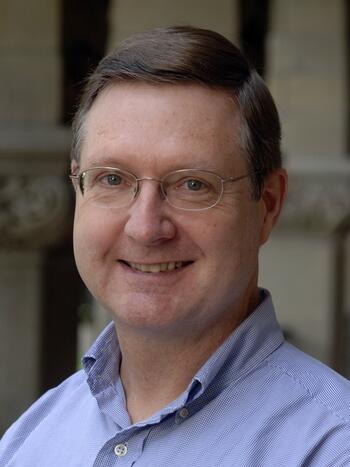
Mike Cowin, former deputy head of mission at the British Embasy in Pyongyang, joined the Korea Program at Stanford's Shorenstein Asia-Pacific Research  Center as the 2014–15 Pantech Fellow. He is a specialist on Korea and Japan, has been a member of the Research Cadre of the Foreign & Commonwealth Office (FCO) of the United Kingdom since 1988. He has also served in the British embassies in Tokyo from 1992 to 1997, in Seoul from 2003 to 2007, and in Pyongyang as deputy head of mission since March 2012.

He has spent most of his career in London working on policy related research, providing advice to relevant policy desks and acting as the interface between the FCO and academic and research institutions.

Philippines Conference Room,
Encina Hall 3rd floor,
Stanford University

Shorenstein APARCStanford UniversityEncina Hall, Room E301Stanford,  CA  94305-6055
(650) 723-9404 (650) 723-6530
0
mike_cowin.jpg

Mike Cowin, former deputy head of mission at the British Embassy in Pyongyang, North Korea, joins the Korean Studies Program at the Shorenstein Asia-Pacific Research Center as the 2014–15 Pantech Fellow. Having spent twenty years covering Korean issues for the British Government, Cowin brings immense insight not only on North Korea but also on Northeast Asia. During his time at the Center, Cowin will focus his research on economic and social deverlpment that he has seen taking place in North Korea while serving there. Cowin, a specialist on Korea and Japan, has been a member of the Research Cadre of the Foreign & Commonwealth Office (FCO) of the United Kingdom since 1988. He has also served in the British embassies in Tokyo from 1992 to 1997, in Seoul from 2003 to 2007, and presently in Pyongyang, as deputy head of mission, since March 2012. He has spent most of his career in London working on policy related research, providing advice to relevant policy desks and acting as the interface between the FCO and academic and research institutions.

Pantech Fellow, 2014-2015
Speaker 2014-15 Pantech Fellow, Stanford University
Seminars
Paragraphs
Image
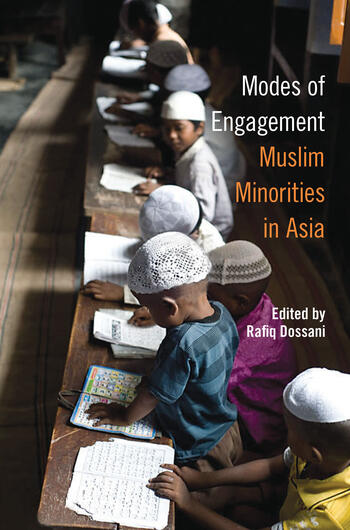
Modes of Engagement front cover.

Of Asia’s 800 million Muslims, 215 million are minorities within their countries. These Muslim minorities have experienced a persistent decline in their socioeconomic and political status. Along with this decline, they are increasingly identified by their faith and largely accorded no other identity for civic relations. Why have these Muslim minorities been particularly affected during a time of unprecedented opportunities for the mainstream in Asia’s unprecedented era of growth and rising freedoms?

Using detailed analyses of China, India, and the Philippines, Modes of Engagement argues that key factors in this phenomenon include the linkage between socioeconomic decline, loss of political power, and narrowing of identity; nationalism and its associated connotations of the assimilation of minorities; the weakness of civil society generally in Asia; and the rise in regional and global alliances for security and trade.

Contributors include Wajahat Habibullah (National Commission for Minorities and National Institute of Technology, India), Rakesh Basant (Indian Institute of Management), Dru C. Gladney (Pomona College), and Joseph Chinyong Liow (Nanyang Technological University’s S. Rajaratnam School of International Studies, Singapore).

Rafiq Dossani is a senior economist at the RAND Corporation. His research interests include regional integration, security, and education. Previously, Dossani was a senior research scholar at the Shorenstein Asia-Pacific Research Center and director of the Stanford Center for South Asia.

Examination copies: Shorenstein APARC books are distributed by Stanford University Press. Contact them for information on obtaining examination copies.

All Publications button
1
Publication Type
Books
Publication Date
Subtitle

Muslim Minorities in Asia

Book Publisher
Shorenstein APARC

Rapidly changing circumstances continue to shape relations on the Korean peninsula and in East Asia. North Korea has repeatedly engaged in provocative behavior, and the constant flux of political, social, and economic affairs in the region has also created challenges for long-standing alliances.

This research project seeks to examine the interests and policy environments of South Korea, North Korea, and their neighbors. Issues addressed will include the role of North Korea, nuclear proliferation, Japan’s economic future, the rise of China, and Korean reunification.

Subscribe to Security