Security

FSI scholars produce research aimed at creating a safer world and examing the consequences of security policies on institutions and society. They look at longstanding issues including nuclear nonproliferation and the conflicts between countries like North and South Korea. But their research also examines new and emerging areas that transcend traditional borders – the drug war in Mexico and expanding terrorism networks. FSI researchers look at the changing methods of warfare with a focus on biosecurity and nuclear risk. They tackle cybersecurity with an eye toward privacy concerns and explore the implications of new actors like hackers.

Along with the changing face of conflict, terrorism and crime, FSI researchers study food security. They tackle the global problems of hunger, poverty and environmental degradation by generating knowledge and policy-relevant solutions. 

Paragraphs

Speech excerpt:

The conference is designed to illustrate the scope and variety of the security challenges we face and I commend both the organizers and the presenters. I have learned much and am confident you have as well. Others have addressed specific challenges; my assignment is to provide a big picture perspective that will provide context and a framework for understanding the nature of the world we live in and the types of challenges we face.

Toward that end, I will organize my remarks around three interrelated questions:

Why do we characterize the world and our present era as turbulent?

Why do we consider the security challenges we face to be different, and perhaps more dangerous, than those confronted by previous generations of Americans?

And finally, which of the many perceived and proclaimed security challenges are most important, and what should we do about them?

Each of these questions warrants an entire lecture—or conference—but you don’t have that much time so I hope you will allow me to discuss them in highly abbreviated fashion. We can dig deeper in the question and answer period if you wish [...]

All Publications button
1
Publication Type
Commentary
Publication Date
Journal Publisher
Annual IAS Symposium
Authors
Thomas Fingar
News Type
News
Date
Paragraphs

Each year the Walter H. Shorenstein Asia-Pacific Research Center offers fellowship opportunities to recent graduates to further their research and engage with scholars at Stanford. Postdoctoral fellows have the opportunity to develop their dissertations for publication, present their research to the Stanford community, and participate in Center activities.

Fellows often go on to pursue teaching positions and advisory roles at top universities and research organizations around the world. Into the future, they remain engaged with the Center and continue to contribute to Shorenstein APARC publications, conferences and related activities.

Shorenstein APARC is pleased to welcome three postdoctoral fellows for the 2015-16 academic year:

Asia Health Policy Fellow

Image
darika profile
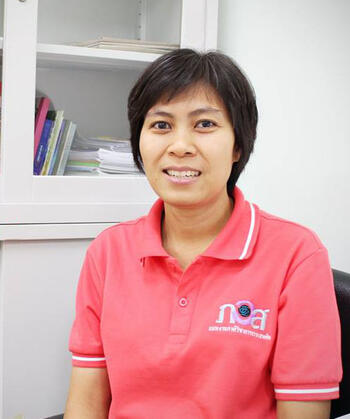
Darika Saingam

Saingam’s research interests are public health, substance abuse, drug policy and Southeast Asia. While at Shorenstein APARC, she will research the evolution of substance-abuse control measures and related policy in Thailand.

Saingam seeks to identify potentially effective policy directions suitable for Thailand, and other developing countries in Southeast and East Asia.

“There are a lot of lessons to be learned from substance abuse policy implementations in other countries…coping and dealing with substance abuse is a complex story and cannot respond successfully with only one strategy.”

Saingam completed her doctorate in epidemiology at the Prince of Songkla University in 2012, and has served as a researcher at the University’s epidemiology unit since, as well as a researcher at the Thailand Substance Abuse Academic Network since 2014.

Shorenstein APARC Postdoctoral Fellows

Image
chang profile
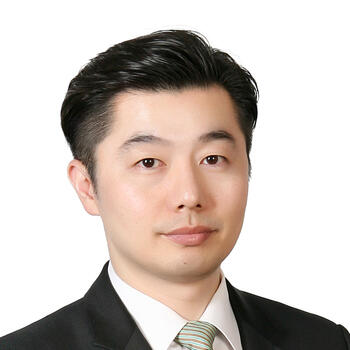
Booseung Chang

Chang’s research interests are comparative policy analysis and political institutions in East Asia, mainly South Korea and Japan. While at Shorenstein APARC, Chang will conduct research on how countries respond differently to the same external challenges, and how institutions are interpreted and applied in different ways.

His dissertation, which he seeks to build upon, is titled “The Sources of Japanese Conduct: Asymmetric Security Dependence, Role Conceptions, and the Reactive Behavior in response to U.S. Demands.” It is a qualitative comparative case study of how key U.S. allies in Asia – namely Japan and South Korea – and major powers in Europe - the United Kingdom and France responded to the U.S.-led Persian Gulf War and the Iraq War.

“East Asia is a treasure island of new theory building because some of the big challenges facing East Asia – finding a new role for Japan, denuclearization of North Korea, unification of the Korean peninsula, democratization of China and reconfiguration of its relations with the world, and development and integration of Southeast Asian countries – are truly new ones…”

Chang completed his doctorate in political science from the Paul H. Nitze School of Advanced International Studies at Johns Hopkins University in 2014.

Image
rnico profile
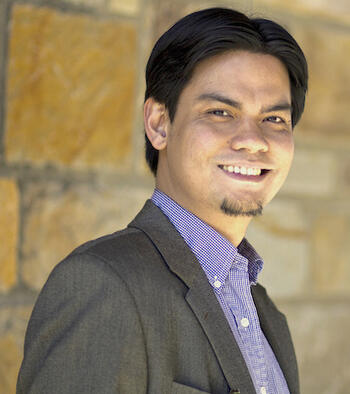
Nico Ravanilla

Ravanilla’s research interests are political economy and governance, comparative politics and Southeast Asia. While at Shorenstein APARC, Ravanilla will research how political selection impacts governance, and evaluate possible routes for incentivizing capable and virtuous citizens to run for public office.

His project titled “Nudging Good Politicians” looks at the case of the Sangguniang Kabataan, a governing body in the Philippines comprised of elected youth leaders. Ravanilla aims to apply his research to develop and scale up programs for politicians, especially those at the onset of their careers, which would include specialized leadership training and merit-based endorsement.

“If we could design a policy that screens-in and incentivizes competent and honest citizens to run for office, would it play a catalytic role in improving the quality of the political class, and ultimately, the quality of government?”

Ravanilla is also a Southeast Asia Research Group (SEAREG) Young Southeast Asia Fellow for 2015-16. He will complete his doctorate in political science and public policy from the University of Michigan in summer 2015.

Hero Image
hoover quad
View of Hoover Tower from Stanford's main quad.
Linda A. Cicero / Stanford News Service
All News button
1
-

Abstract

In late January this year, the news that two Japanese hostages were killed by ISIL (Islamic State of Iraq and the Levant) sent a shock wave all over Japan.  This was not the first time that Japanese citizens were killed by international terrorists, but the length of time that Japanese general public were exposed to the unfolding event (12 days) sets this apart from the other incidences.  Some argue that this would mark a turning point for Japan's approach against political terrorism abroad. In the statement following confirmation of the killings, Prime Minister Shinzo Abe stated “We will never forgive the terrorists.  We will collaborate with the world community to make them pay the price.”  The Japanese public also started to pay more attention to the issue of international terrorism.  In the latest survey on defense issues and SDF (Self Defense Forces) conducted by the Japanese Cabinet, 42.6% of the respondents answered that they are concerned about activities by international terrorists, up from 30.3% three years ago.  We ask experts in the Freeman Spogli Institute for International Studies to discuss the future of international terrorism and Japan’s responses.


Speaker Bios

Martha Crenshaw - Senior Fellow at the Freeman Spogli Institue for International Studies; Professor, by courtesy, of Political Science at Stanford University

Takeo Hoshi - Henri H. and Tomoye Takahashi Senior Fellow in Japanese Studies at FSI; Professor, by courtesy, of Finance, Graduate School of Business and Director, Japan Program, Shorenstein APARC at Stanford University

Daniel Sneider - Associate Director for Research, Shorenstein APARC at Stanford University

Nobuhiro Watanabe - Deputy Consul General, Consulate General of Japan in San Francisco


Philippines Conference Room
Encina Hall
616 Serra St, 3rd floor
Stanford University
Stanford, CA 94305

0
Former Henri H. and Tomoye Takahashi Senior Fellow in Japanese Studies at the Freeman Spogli Institute for International Studies
Former Professor, by courtesy, of Finance at the Graduate School of Business
takeo_hoshi_2018.jpg PhD

Takeo Hoshi was Henri and Tomoye Takahashi Senior Fellow at the Freeman Spogli Institute for International Studies (FSI), Professor of Finance (by courtesy) at the Graduate School of Business, and Director of the Japan Program at the Shorenstein Asia-Pacific Research Center (APARC), all at Stanford University. He served in these roles until August 2019.

Before he joined Stanford in 2012, he was Pacific Economic Cooperation Professor in International Economic Relations at the Graduate School of International Relations and Pacific Studies (IR/PS) at University of California, San Diego (UCSD), where he conducted research and taught since 1988.

Hoshi is also Visiting Scholar at Federal Reserve Bank of San Francisco, Research Associate at the National Bureau of Economic Research (NBER) and at the Tokyo Center for Economic Research (TCER), and Senior Fellow at the Asian Bureau of Finance and Economic Research (ABFER). His main research interest includes corporate finance, banking, monetary policy and the Japanese economy.

He received 2015 Japanese Bankers Academic Research Promotion Foundation Award, 2011 Reischauer International Education Award of Japan Society of San Diego and Tijuana, 2006 Enjoji Jiro Memorial Prize of Nihon Keizai Shimbun-sha, and 2005 Japan Economic Association-Nakahara Prize.  His book titled Corporate Financing and Governance in Japan: The Road to the Future (MIT Press, 2001) co-authored with Anil Kashyap (Booth School of Business, University of Chicago) received the Nikkei Award for the Best Economics Books in 2002.  Other publications include “Will the U.S. and Europe Avoid a Lost Decade?  Lessons from Japan’s Post Crisis Experience” (Joint with Anil K Kashyap), IMF Economic Review, 2015, “Japan’s Financial Regulatory Responses to the Global Financial Crisis” (Joint with Kimie Harada, Masami Imai, Satoshi Koibuchi, and Ayako Yasuda), Journal of Financial Economic Policy, 2015, “Defying Gravity: Can Japanese sovereign debt continue to increase without a crisis?” (Joint with Takatoshi Ito) Economic Policy, 2014, “Will the U.S. Bank Recapitalization Succeed? Eight Lessons from Japan” (with Anil Kashyap), Journal of Financial Economics, 2010, and “Zombie Lending and Depressed Restructuring in Japan” (Joint with Ricardo Caballero and Anil Kashyap), American Economic Review, December 2008.

Hoshi received his B.A. in Social Sciences from the University of Tokyo in 1983, and a Ph.D. in Economics from the Massachusetts Institute of Technology in 1988.

Former Director of the Japan Program at the Shorenstein Asia-Pacific Research Center
CV
Nobuhiro Watanabe
Panel Discussions
-

Co sponsored by the Center on Democracy, Development, and the Rule of Law

In Hanoi on November 2, 2010, a member of the Vietnam Communist Party (VCP) stood before the National Assembly (VNA) and on live television called for a vote of confidence in the prime minister—a sitting member of the Politburo. The speech immediately gained national attention, and the delegate’s face graced the front page of at least one prominent state-run news media outlet. Considering the docility of other communist legislatures, such as China’s, is the VNA unique in its influence? If so, how did it acquire such prominence?

Prof. Schuler will challenge existing theories on legislative institutionalization under authoritarian rule that emphasize the co-optation of opposition groups and the stabilization of internal power-sharing arrangements. He will argue instead that legislative institutionalization in this case was designed to professionalize the legislature to generate a more coherent legal code. In doing so, rather than providing more routinized avenues for participation among existing political forces, as existing theories suggest, the institutionalization of the VNA empowered a new, and sometimes unpredictable, set of actors. In his talk he will also pursue this insight comparatively in relation to China among other authoritarian polities.

Paul Schuler will be an assistant professor in government and public policy at the University of Arizona starting this fall. His publications have appeared in the American Political Science Review, the Legislative Studies Quarterly, and the Journal of East Asian Studies among other places. His researches focuses on institutions, elite politics, and public opinion in authoritarian regimes, particularly Vietnam.  His 2014 PhD in political science is from the University of California, San Diego.


Philippines Conference Room

Encina Hall 3rd Floor Central

616 Serra Street,

Stanford, CA 94305

Paul Schuler 2014-2015 Shorenstein Postdoctoral Fellow in Contemporary Asia
Seminars
News Type
Q&As
Date
Paragraphs

The attack on Mark Lippert, the American ambassador to South Korea, made headlines worldwide on Thursday. Since his arrival in Seoul last October, Lippert received high marks from the Korean people and the media for his accessibility to the public there. Lippert, a Stanford graduate, is a very close friend of President Obama, who has called him “brother,” and attended his ambassadorial swearing-in ceremony.

The Shorenstein Asia-Pacific Research Center asked David Straub to discuss the incident and its significance. The associate director of the Korea Program at Stanford, Straub served as a career diplomat at the U.S. embassy in Seoul from 1999 to 2002 and is the author of the forthcoming book about that period called Anti-Americanism in Democratizating South Korea.

What actually happened?

A South Korean extreme left-wing activist, Kim Ki-jong, slashed Ambassador Lippert with a kitchen knife Thursday morning at a public event in Seoul. Koreans at the event immediately wrestled the assailant to the floor, but not before he had inflicted several wounds on the ambassador: a long, deep gash on his cheek and cuts to his wrist and fingers. The ambassador was taken straightway to hospital, where surgeons repaired the damage in a three-hour operation. The prognosis is that he will regain the full use of his fingers in about six months, and that the scar on his face will be barely noticeable in one or two years. His doctors plan to remove the eighty stitches on his cheek on Monday, and, if all is well, release him from the hospital then. But it was a close call. Had the face wound extended only one inch farther down, it would have severed his carotid artery.

How is Ambassador Lippert doing?

He told his doctors on Friday that the facial wound was not bothering him particularly, but he did have some pain in his wrist and fingers. Doctors say he has some nerve damage there but the pain should ease soon. Ambassador Lippert’s response has been laudable. Consistent with the outstanding way he has comported himself in Korea since his arrival, he promptly tweeted on Thursday that he was “Doing well & in great spirits!” I am also aware that he was even responding to email wishes from some Stanford friends on Thursday.

Was Kim acting alone? How was it possible for him to perpetrate this attack?

Kim was the only person who attacked Ambassador Lippert, and he has stated that he acted alone.  Kim was a member of the organization that hosted Ambassador Lippert, but had not been invited to the function. The incident is still being investigated but Korean press reports say that the U.S. embassy declined South Korean police protection some time ago. Korea is considered a relatively safe country for American diplomats. This will all be sorted out in coming days and weeks, and U.S. and South Korean authorities will determine if other security arrangements are needed for Ambassador Lippert. In any event, it does not appear that this was an egregious security or intelligence failure on anyone’s part. Ambassadors are public figures and it’s not possible to provide them with perfect protection.

What was the assailant’s motivation?

Kim said that he wanted to emphasize that the United States is responsible for preventing improved inter-Korean relations because it does such things as participate in the ongoing combined military exercises with South Korean forces. North Korea cites the annual exercises as a pretext for not talking with the South, claiming each year that they are a prelude to an invasion. But Kim is a sad sack figure even within South Korea’s anti-American far left, which is a very small but vocal minority. Kim has been arrested many times in the past for outrageous and violent behavior, such as throwing pieces of concrete at the Japanese ambassador in 2010. He heads his own little NGO, but the Korean left has mostly avoided him because of his bizarre behavior. He even set himself on fire in 2007 near the Blue House to protest an alleged attack on an associate. Although I have never met him, it is my impression that Kim is clearly mentally and emotionally unstable.

How have the Korean government and people responded?

From the people who wrestled the assailant to the ground, to the surgeons and the thousands of people who are wishing Ambassador Lippert well, South Koreans have responded with an outpouring of support. Ambassador Lippert has already conveyed his deep gratitude for that on Twitter. President Park, who is currently on an official visit to the Middle East, telephoned Ambassador Lippert on Thursday; so did Foreign Minister Yun Byung-se. President Obama also called the ambassador to wish him a speedy recovery. Unfortunately, North Korea’s reaction has been very different: its official media applauded the attack as “deserved punishment” for “a warmongering United States.”

There are press reports that South Koreans are worried that this attack could hurt U.S.-Korean relations.

There is indeed considerable concern being expressed in South Korea at the moment that the incident could hurt bilateral relations, but there is no reason at all to believe that will be the case. Top U.S. officials have already stated that the incident will only strengthen U.S.-Korean relations. I recall the reaction in Seoul to the mass shooting by Seung-hui Cho at Virginia Tech in 2007. Cho had grown up in the United States but remained a Korean citizen. Many South Koreans were very fearful that the U.S. government would punish South Koreans, such as by not issuing visas, and that Americans would attack South Koreans on the streets in the United States. Of course, nothing like that happened. Americans understood the tragedy for what it was: not a “Korean” but a fellow human being with severe mental illness and access to guns.

You say that Kim appears to have a mental disability. But there are press reports that he lectured for the South Korean unification ministry’s education institute as well as at a major university in Seoul. How could such a person get those positions?

I am curious and concerned about those reports. For me, the bigger question about that is not Kim’s particular policy views but how someone with such obvious behavioral and apparently mental issues could receive such positions. But he held those jobs several years ago, so perhaps his behavior has become worse in the meantime.

I understand that Kim has already been charged with attempted murder and that Korean authorities are considering whether to charge him under the National Security Law owing to frequent travel to North Korea and possible other links with the North Korean government.

Unless Korean authorities find evidence that Kim was working for North Korea, which I doubt was the case (but which should of course be investigated due to his numerous trips to the country), it would be unfortunate for U.S.-South Korean relations to charge him under the controversial National Security Law. The U.S. government has criticized that law for decades for the McCarthyite way South Korean governments have sometimes implemented it to suppress alleged “pro-North Korean” thinking. Some South Korean leaders are calling the incident “pro-North Korean terrorism” and the work of “pro-North Korean forces.” That seems to me to be unwisely elevating the violent behavior of one deranged person and ascribing to it a significance it does not deserve.

Ambassador Lippert’s Twitter handle is @mwlippert.

Hero Image
obama lippert
In 2009, President Barack Obama confers with Mark Lippert, the then-National Security Council chief of staff. Since Oct. 2014, Lippert has served as the U.S. ambassador to South Korea.
Flickr/White House - Pete Souza
All News button
1
News Type
News
Date
Paragraphs

The human rights situation in North Korea has gained considerable attention lately, due in part to an official report released by the United Nations last year. The landmark report condemned North Korea for systematic and widespread human rights violations.

Now for three weeks in March, the UN human rights council meets in Geneva for its regular session. North Korea’s human rights situation is a top agenda item, marked by a rare appearance by North Korean Foreign Minister Ri Su Young. In Dec. 2014, the UN General Assembly urged the Security Council to take up the situation of North Korea, including a possible referral of those responsible for prosecution in the International Criminal Court.

Looking beyond UN – U.S. – North Korea engagement, the European Union and its members have long-raised similar concerns. In a new policy brief “North Korean Human Rights: A Long Journey with Little Progress,” Mike Cowin details the human rights situation and institutions involved from a British perspective.

“The DPRK will need to make considerable efforts if it is to undermine more than a handful of the hundreds of testimonies of abuse that have been collected and brought to the world’s attention,” writes Cowin, a former deputy chief of mission at the British Embassy in Pyongyang.

Cowin is the Pantech Fellow in the Korea Program at the Walter H. Shorenstein Asia-Pacific Research Center. Before coming to Stanford, he also served in the embassies in Seoul from 2003 to 2007, and in Tokyo from 1992 to 1997.

The EU and North Korea have held seemingly incompatible positions for the past 11 years, and the March council meetings are unlikely to change that impasse. However, Cowin suggests that the EU should seek ways to have more impact.

“Perhaps the EU, which has often led the world on human rights, could find some way to talk with the DPRK, establishing a mutually acceptable way to restart engagement,” he writes.

Cowin says restarting engagement may take the form of quiet, long-term confidence building.

The Korea Program has published additional works focused on human rights in North Korea, including a paper that looks at living with disabilities in North Korea by Katharina Zellweger and an op-ed by Gi-Wook Shin calling for international consensus on the North Korea problem. Engaging North Korea is also a research focus of the Korea Program, which last year produced a policy paper on North-South Korean relations and the prospect for unification.

Hero Image
un hrc 28th session Flickr/United Nations
All News button
1
-

Much of the world today is preoccupied with threats to non-traditional security (NTS): border-spanning challenges such as terrorism, pandemic disease, and environmental damage that defy traditional approaches to security focused on military conflicts between states. Despite their arguable gravity, NTS threats elicit a baffling array of policy responses, ranging from full-scale securitization and institutionalized management to no response at all. Despite their scope, NTS problems are rarely managed holistically through regional organizations. Instead they are addressed mainly by efforts to alter and enlarge—“rescale”—the authority of the apparatus of the national state to cover specific NTS issues in a variety of locations. The resulting process of state expansion if not transformation is promoted and resisted by domestically competing coalitions of socioeconomic and political forces. Regionalist theory and rhetoric notwithstanding, it is the intra-national struggles among such groups that dictate how these nascent modes of NTS-focused governance operate in practice.  Prof. Jones will illustrate his argument with particular reference to Southeast Asia.

Lee Jones is a senior lecturer in international politics at Queen Mary, University of London, and a research associate at the Asia Research Centre, Murdoch University, Perth, Australia. His work features the interaction between social conflict, state transformation, and international relations, with a focus on Southeast Asia. His many publications include Governing Borderless Threats: Non-Traditional Security and the Politics of State Transformation (co-authored) and Societies Under Siege: Exploring How International Economic Sanctions (Do Not) Work (both forthcoming in 2015). Earlier work includes ASEAN, Sovereignty and Intervention in Southeast Asia (2012). He has advised governmental and non-governmental agencies in Europe and Asia and regularly appears in British and international media. His DPhil and MPhil are from Oxford. His website is www.leejones.tk and he tweets @DrLeeJones.

Philippines Conference Room

Encina Hall 3rd. Floor Central

616 Serra Street

Stanford, CA 94301

Lee Jones 2014-15 Lee Kong Chian NUS-Stanford Distinguished Fellow on Southeast Asia
Seminars
News Type
News
Date
Paragraphs

The Shorenstein Asia-Pacific Research Center (APARC) hosted its inaugural event in New Delhi, a public seminar titled India’s Relations with its Northeast Asian Neighbors, in late 2014. Experts from Shorenstein APARC and the Brookings Institution’s India Center spoke about recent developments in India’s foreign policy under the nation’s new prime minister, Narendra Modi, and provided an outlook on where India fits in the context of an emerging Northeast Asia.

The panel consisted of Stanford scholars: Gi-Wook Shin, professor of sociology and director of Shorenstein APARC; Michael Armacost, a Shorenstein Distinguished Fellow; and Karl Eikenberry, a Shorenstein Distinguished Fellow; and Brookings scholars: Vikram S. Mehta, executive chairman; and W.P.S. Sidhu, a senior fellow.

Video and transcript of the event are available below. A list of key discussion points was also written up by Brookings India and is available by clicking here.


The seminar was one event in a larger visit by Shorenstein APARC to New Delhi. Armacost, Eikenberry, Shin, and Huma Shaikh, the associate director for administration, hosted a series of private roundtable discussions at two universities, Jawaharlal Nehru University and Delhi University.

Kathleen Stephens, the then-charge d’affaires for the United States in India, also hosted Shorenstein APARC at Roosevelt House, the official U.S. ambassadorial residence. There, at the entrance, the group was greeted with a Stanford “S” prepared in “rangoli” style, an Indian custom of welcoming guests with an intricate design made of colored rice and flowers.

On Twitter, Stephens (@AmbStephens) shared a series of tweets, a few are included below:


Image
stephens tweets


Stephens was the Koret Distinguished Fellow in the Korea Program at Shorenstein APARC from 2013-14; she served as U.S. ambassador to the Republic of Korea from 2008 to 2011, among other posts. 

The events were part of an effort to reinvigorate the South Asia Initiative, a Stanford program that seeks to conduct policy-relevant research and convene conferences on topics related to the United States and the nations of South Asia.

Hero Image
newdelhi headline
An entrance to the Taj Mahal in New Delhi, India.
All News button
1
-

In China’s and Vietnam’s latest party congresses, the candidates for promotion with the highest public profiles failed to advance. In China, neither the “populist” Bo Xilai nor the “liberal” Wang Yang won a seat in the Politburo Standing Committee. In Vietnam, the charismatic Da Nang party secretary Nguyen Ba Thanh also failed to win a new position. Dr. Schuler will present a theory with evidence showing that the link between these candidates’ visibility and non-promotion was not accidental. His finding that the public profile of a candidate has an independent effect on his or her chance of advancement improves an analytic debate hitherto focused mainly on loyalty and performance.

Paul Schuler will be an assistant professor in government and public policy at the University of Arizona starting this fall. His publications have appeared in the American Political Science Review, the Legislative Studies Quarterly, and the Journal of East Asian Studies among other places. His researches focuses on institutions, elite politics, and public opinion in authoritarian regimes, particularly Vietnam. His 2014 PhD in political science is from the University of California, San Diego.

Philippines Conference Room

Encina Hall 3rd Floor Central

616 Serra Street

Stanford, CA 94305

Paul Schuler 2014-15 Shorenstein Postdoctoral Fellow in Contemporary Asia, APARC
Seminars
Subscribe to Security