Security

FSI scholars produce research aimed at creating a safer world and examing the consequences of security policies on institutions and society. They look at longstanding issues including nuclear nonproliferation and the conflicts between countries like North and South Korea. But their research also examines new and emerging areas that transcend traditional borders – the drug war in Mexico and expanding terrorism networks. FSI researchers look at the changing methods of warfare with a focus on biosecurity and nuclear risk. They tackle cybersecurity with an eye toward privacy concerns and explore the implications of new actors like hackers.

Along with the changing face of conflict, terrorism and crime, FSI researchers study food security. They tackle the global problems of hunger, poverty and environmental degradation by generating knowledge and policy-relevant solutions. 

-

South Koreans will elect a new president on May 9 after months of political turmoil that led to the impeachment of their most recent president, Park Geun-hye. This panel will discuss Korea's politics and economics, and foreign policy under the new administration.

Panelists:

Daniel Sneider, Associate Director for Research, Shorenstein Asia-Pacific Center, Stanford University

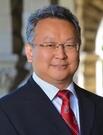
Yong Suk Lee, Center Fellow, FSI; Deputy Director of the Korea Program, Shorenstein Asia-Pacific Research Center, Stanford University

Gi-Wook Shin, Professor of Sociology; Director, Shorenstein Asia-Pacific Research Center, Stanford University

Kathleen Stephens, William J. Perry Fellow, Shorenstein Asia-Pacific Research Center, Stanford University; former U.S. Ambassador to South Korea


Paragraphs

Two events - the U.S. airstrike on an airbase in Syria following the regime's chemical weapons attack and the leaked reports about tensions between White House staff - shifted the agenda of the summit between U.S. President Donald Trump and Chinese President Xi Jinping, and sidelined, at least for now, talk of a trade war between China and the United States.

All Publications button
1
Publication Type
Commentary
Publication Date
Journal Publisher
Toyo Keizai Online (Tokyo Business Today)
Authors
News Type
Commentary
Date
Paragraphs

South Korean culture has long held ethnic homogeneity as an integral part of national identity, but attitudes toward multiculturalism are slowly beginning to change amid the country’s shifting demographics, Gi-Wook Shin, professor of sociology and director of the Shorenstein Asia-Pacific Research Center, said in an interview with Al Jazeera English. Read the article.

Hero Image
crowd seoul
People walking on the streets in Myeongdong, Seoul, South Korea.
iStock Editorial/Getty Images Plus
All News button
1
Paragraphs

Uneasy Partnerships presents the analysis and insights of practitioners and scholars who have shaped and examined China's interactions with key Northeast Asian partners. Using the same empirical approach employed in the companion volume, The New Great Game (Stanford University Press, 2016), this new text analyzes the perceptions, priorities, and policies of China and its partners to explain why dyadic relationships evolved as they have during China's "rise."

Synthesizing insights from an array of research, Uneasy Partnerships traces how the relationships that formed between China and its partner states—Japan, the Koreas, and Russia—resulted from the interplay of competing and compatible objectives, as well as from the influence of third-country ties. These findings are used to identify patterns and trends and to develop a framework that can be used to illuminate and explain Beijing's engagement with the rest of the world.

This book is part of the Studies of the Walter H. Shorenstein Asia-Pacific Research Center series at Stanford University Press.

All Publications button
1
Publication Type
Books
Publication Date
Journal Publisher
Stanford University Press
Authors
Thomas Fingar
News Type
Commentary
Date
Paragraphs

President Trump hosted Chinese President Xi Jinping last week at Mar-a-Lago for their first meeting which set out to address economic, trade and security challenges shared between the two countries. Shorenstein Asia-Pacific Research Center (APARC) experts offered analysis of the summit to various media outlets.

In advance of the summit, Donald K. Emmerson, an FSI senior fellow emeritus and director of the Southeast Asia Program, wrote a commentary piece urging the two leaders to prioritize the territorial disputes in the South China Sea in their discussions. He also suggested they consider the idea of additional “cooperative missions” among China, the United States and other countries in that maritime area.

“A consensus to discuss the idea at that summit may be unreachable,” Emmerson recognized in The Diplomat Magazine. “But merely proposing it should trigger some reactions, pro or con. The airing of the idea would at least incentivize attention to the need for joint activities based on international law and discourage complacency in the face of unilateral coercion in violation of international law.”

Kathleen Stephens, the William J. Perry Fellow in Shorenstein APARC’s Korea Program, spoke to the Boston Herald about U.S. policy toward North Korea and a potential role for China in pressuring North Korea to hold talks about denuclearization. She addressed the purported reports that the National Security Council is considering as options placing nuclear weapons in South Korea and forcibly removing North Korean leader Kim Jong-un from power.

“The two options have been on the long list of possible options for a long time and they have generally been found to have far too many downsides,” Stephens said in the interview.

Writing for Tokyo Business TodayDaniel Sneider, the associate director for research at Shorenstein APARC, offered an assessment of the summit. He argued that two events - the U.S. airstrike on an airbase in Syria following the regime's chemical weapons attack and the leaked reports about tensions between White House staff - shifted the summit agenda and sidelined, at least for now, talk of a trade war between China and the United States.

“Instead of a bang, the Mar-a-Lago summit ended with a whimper,” Sneider wrote in the analysis piece (available in English and Japanese). “On the economy, the summit conversation was remarkably business-as-usual, with President Trump calling for China to ‘level the playing field’ and a vague commitment to speed up the pace of trade talks. When it came to North Korea…the two leaders reiterated long-standing goals of denuclearization but ‘there was no kind of a package arrangement discussed to resolve this.”

Hero Image
xi tillerson
U.S. Secretary of State Rex Tillerson talks with Chinese President Xi Jinping upon his arrival on April 6, 2017, to West Palm Beach, Florida.
Getty Images/Joe Raedle
All News button
1
Authors
Lisa Griswold
News Type
News
Date
Paragraphs

The Association for Southeast Asian Nations (ASEAN), a coalition of 10 Southeast Asian countries formed to promote regional development and security, will mark its 50th anniversary this year. While ASEAN’s longevity is a cause for celebration, it also calls for creative introspection regarding what it can and should do, according to Southeast Asia Program Director Donald K. Emmerson.

“There is a lot that ASEAN cannot do in its present form, under its present leaders, and in presently China-challenged conditions. Yet no one could objectively scan ASEAN’s first fifty years and conclude that the organization has remained the same – once a cow, always a cow.

“Whatever ASEAN does become, its alternative futures should be considered now, carefully and creatively, while there is still time to prefer one scenario over the others and to follow up with steps that make it more likely,” he writes in a paper featured in the February edition of TRaNS: Trans-Regional and -National Studies of Southeast Asia.

ASEAN, he says, needs to reexamine its goals and consider new means to achieve them, to brainstorm better ways of protecting its region from external control, and to reevaluate the nature and efficacy of the “ASEAN Way,” including its self-paralyzing commitment to unanimity as a precondition for collective action.

That commitment has already been breached for economic policy arrangements that allow a “two-speed ASEAN” to exist, where for less developed members, deadlines for economic reform are postponed, while for all other members, the deadlines remain unchanged. So, why not adapt that idea to regional security initiatives as well?

According to Emmerson, the Southeast Asia region is being threatened by China’s efforts to control land features in the South China Sea for the purposes of projecting coercive power. China uses the ASEAN Way’s requirement of consensus by promising economic support to specific ASEAN members in hopes of coopting them into vetoing any move by ASEAN to counter China’s campaign in the South China Sea.

Abetting China’s expansion, he says, are the rival claims to maritime sovereignty by some of ASEAN’s own members. Their failure to settle their own disagreements precludes the bargaining power that a unified ASEAN might bring to the table in talks with China.

Emmerson, who addressed these matters at Stanford in March, argues that a more innovative ASEAN will lead to a more secure region.

Regarding the South China Sea, for example, ASEAN could encourage an effort by its four claimant members to settle their own differences first by drafting an ASEAN agreement, signing it and presenting it to China to sign as well. Even if China refuses, at least ASEAN would have established a common position among the ASEAN countries most directly concerned.

In the paper, he discusses several ways of restructuring ASEAN. They include:

  • ASEAN minus X: A subset of ASEAN members would move ahead on economic or security arrangements with the understanding that the remaining subset would join later.
  • ASEAN Pacific Alliance: ASEAN would work with Chile, Colombia, Mexico and Peru to create a coalition that would strengthen ASEAN’s trans-Pacific ties.
  • East Asia Summit (EAS): ASEAN would try to elevate this annual gathering of leaders, including China and the United States, into a capstone venue for cooperation on regional security.

Emmerson also urges outside observers to generate innovative policy proposals related to ASEAN and present them for discussion informally or in Track II dialogue formats.

“It’s time for ASEAN watchers to generate ideas for the grouping to consider, including initiatives that could be pursued by one, two or more member countries,” he said in a later interview. “The creative involvement of scholars, journalists, businesspeople and other analysts inside member states could socialize such proposals in local policy circles to make them better known and more feasible.”

In line with this vision, Emmerson is co-organizing a trilateral workshop on ASEAN reform, regional security, infrastructure building and economic regionalism. Hosted by the Shorenstein Asia-Pacific Research Center (APARC) and planned for this fall, it will evaluate proposals on these topics generated or compiled by Shorenstein APARC’s Southeast Asia Program and U.S.-Asia Security Initiative; the S. Rajaratnam School of International Studies in Singapore; and the Strategic and Defense Studies Centre in Canberra. Details about the conference will be posted in the coming months.

Hero Image
asean flags
Flags of member states of the Association of Southeast Asian Nations (ASEAN).
iStock/Getty Images
All News button
1
-

The format of this presentation is each of the three speakers will have approximately 15 minutes to present their research.  This will be followed by a short period of 5-10 minutes for any questions or comments from the audience.


In this session of the Corporate Affiliates Research Presentations, the following will be presented:


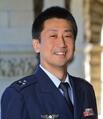
Daisuke Nakaya, Japan Air Self Defense Force, "Japan's Future Direction of Its Defense Program and the Strengthening of Japan-U.S. Alliance In Order to Deter Conflict" 

Image
rsz download5
Since the conclusion of the Japan-U.S. security treaty in 1960, Japan and the U.S. have built a robust alliance based on common value and interests and Japan has maintained its peace and security, centered on the Security Arrangement with the United States. On the other hand, security challenges and destabilizing factors in the Asia-Pacific region are becoming more serious. There has been a tendency towards an increase in and prolongation of so-called “gray-zone” situations, that is, neither pure peacetime nor contingencies, over territory, sovereignty, and maritime economic interests. In his research, Nakaya focuses on Japan’s ability to effectively deter conflict in this situation and shares insights on the future of Japan’s Defense Program and its effort to strength the Japan-U.S. alliance.


Shaofeng Zhang, PetroChina, "Risk Analysis on Project Finance for the Cross-border Infrastructure"

Image
rsz download6
Large infrastructures have huge influence on economic increase, social development and cultural development. With the increase of global integration, more and more cross-border large infrastructures have been developed, are under construction or planning to be constructed to enhance the regional corporations.

Project finance is the most frequently used way to finance large infrastructures, especially cross-border infrastructures, and risk is connected with every part. Risk analysis helps all parties involved to clarify the principles of risk allocation – allowing a reasonable amount of control on the whole. Therefore, these large cross-border infrastructures can be financed, constructed and operated smoothly to achieve their economic, social and cultural goals. In his research, Zhang shares how to analyze risks linked to the projects on the whole, the relationship between those risks, and how those risks can be best allocated to relevant parties and appropriately managed.


Xuan Zhang, Beijing Shanghe Shiji Investment Company,  "Future Education in China"

Image
rsz download7
Improvement science is a disciplined approach to educational innovation that supports teachers, leaders, and researchers in collaborating to solve specific problems of practice. It brings discipline and methods to different logics of innovation by integrating the following – problem analysis, user of research, development of solutions, measurement of processes and outcomes, and rapid refinement through plan-do-study-act cycles. For teachers, school leaders and system leaders, improvement science moves educational innovation out of the realm of “fad” and into the realm of research-based, evidence-driven continuous improvement with the goal of increasing the effectiveness and educational practice. Improvement science is explicitly designed to accelerate learning-by-doing and is a more user-centered and problem-centered approach to the future of education. Zhang will share a case study of how improvement science influences the future education innovation. In his presentation, Zhang focuses on networked improvement communities (NICs) which has been demonstrated to be the most benefitcial approach in improvement science.


0
Corporate Affiliate Visiting Fellow, 2016-17
daisuke_nakaya.jpg

Colonel Daisuke Nakaya is a corporate affiliate visiting fellow at the Walter H. Shorenstein Asia-Pacific Research Center (Shorenstein APARC) for 2016-17.  He is a member of the Japan Air Self Defense Force (JASDF), Ministry of Defense (MOD).  Prior to joining Shorenstein APARC, he worked in the Japan-U.S. Defense Cooperation Division, Bureau of Defense Policy (Internal Bureau).  His career includes varioius assignments in the Air Defense Command (e.g. Commander of PATRIOT Missile Squadron) and the Air Staff Office in addition to the Internal Bureau (e.g. the Aide-de-Camp to the Defense Minister, Minister's Secretariat).  Nakaya received his bachelor's degree of social science from the National Defense Academy in 1997. 

Date Label
Japan Air Self Defense Force
0
Corporate Affiliate Visiting Fellow, 2016-17
shaofeng_zhang.jpg MBA

Shaofeng (Sean) Zhang is a corporate affiliate visiting fellow at the Walter H. Shorenstein Asia-Pacific Research Center (Shorenstein APARC) for 2016-17.  Zhang works as the Chief Financial Officer of Trans-Asia Pipeline Company Ltd., an affiliate of PetroChina Company Ltd., since establishment of this company in 2007.  Before that Mr. Zhang worked for China National Petroleum Corporation since 1993.  Zhang has experience in finance, financial reporting, and internal control.  He earned his MBA degree at the Business School of Tsinghua University and Bauer College of Business at the University of Houston.  He is also a member of the Global Preparer Forum of International Accounting Standards Board.

Date Label
PetroChina
0
Corporate Affiliate Visiting Fellow, 2016-17
xuan_zhang.jpg MBA

Xuan Zhang is a corporate affiliate visiting fellow at the Walter H. Shorenstein Asia-Pacific Research Center (Shorenstein APARC) for 2016-17.  Zhang is the co-partner of Beijing Shanghe Shiji Investment Co. Ltd., where he has over ten years of experience in Private Equity and Venture Capital investment, investment banking and equity management.  Previously, he worked as the Vice President at CITIC Capital Holding Ltd., Hong Kong where he managed a 1.6 billion RMB private equity fund.  Prior to his entrance into working in the capital market, he worked for the Ministry of Foreign Affairs, China.  Zhang received his MBA degree from Peking University, a Masters Degree in Finance from Fordham University and his Bachelors Degree of Literature from Beijing Foreign Study University. 

Date Label
Beijing Shanghe Shiji Investment Company
Seminars
-

Expected dramatic shifts of foreign policy by leading democracies, including the U.S. and U.K., would shake a future of liberal international order, which has underpinned the stability even after the end of the Cold War. Since Mr. Donald Trump was elected as the 45th President of the U.S., abovementioned discourse is heard everywhere in Europe and Asia today.

It is not clear, if American leadership and military presence would in fact retreat, how American allies behave and whether they can work together to sustain the order. Among others, Japan has been the exceptionally strong believer of such postwar American leadership. It is doubtful that all American allies and friends share same views, having their own historical context with the U.S. and own ideas on order and principles. Hence, naturally they shall differ in losing the confidence on the durability of American leadership.

A new order will be shaped by many factors, but American allies’ perspectives should not be overlooked. Hegemon’s own reluctance for ruling is surely significant. So is other great power’s revisionism, making use of such strategic opportunities. However, American allies has the potential to shape the fate of the order: if they succeed in acting collectively, it shall underpin the global governance for a while, and ensue the order transformation process in rather slow and peaceful pace. 

Image
unknown

If they fail, it shall not only accelerate the U.S. retrenchment, but invite an emergence of divisive and competitive order. Sahashi shares the findings from the international study project which he leads, and argues the difficulty for US allies to unite themselves and the potential order transformation in the long term.

Ryo Sahashi is Associate Professor of International Politics and Director, Faculty of Law, Kanagawa University, Yokohama, and is leading the newly-launched international joint study “Worldviews on the United States.” From 2014-2015, he served as Visiting Associate Professor, Shorenstein APARC, Stanford University.


Ryo Sahashi Associate Professor, Kanagawa University
Seminars
-
Co-sponsored by the Center on Democracy, Development, and the Rule of Law and the Southeast Asia Program
 
The Philippines is typically characterized as a weak, even patrimonial, state in which powerful oligarchs and political families dominate politics and policymaking.  By implication, the elite should be able to easily suppress reform and the state should be unwilling or incapable of carrying out reforms.   Yet some efforts to achieve socioeconomic and governance reform have succeeded.  How and why is this the case?  And what does this suggest about the changing nature of the Philippine state?

This presentation will examine the dynamics and outcomes of three extended efforts at social, economic and governance reform in the Philippines:  1) agrarian reform; 2) liberalization of the telecommunications sector and 3) fiscal and budget reforms.

Theory and practice will be bridged in an examination of interlinked factors including the autonomy and capacity of the state, the limits on reform imposed by elite-dominated democracy, and the conditions and strategies that have enabled some reforms to succeed.
Particular questions to be addressed will include:
·       What are the political and institutional barriers to reform in the Philippines?  How have these changed over time?
·       How have these barriers been overcome in the cases of “successful” reform?  What does “successful” mean?  
·       How have attempts at reform strengthened or weakened the state?
·       Looking forward, will the typically partial or incremental character of reform result in transformational change, or deflect it?

David Timberman is a political analyst and development practitioner with 30 years of experience analyzing and addressing political, governance and conflict-related challenges, principally in Southeast and South Asia.  As a Visiting Scholar at Stanford/APARC he is working on a book on the contemporary Philippine political economy.  During 2015-2016 he was a Visiting Professor of Political Science at De La Salle University in Manila. He has lived and worked in the Philippines, Indonesia and Singapore, including experiencing first-hand the democratic transitions in the Philippines (1986-1988) and Indonesia (1998-2001). He has written extensively on political and governance issues in the Philippines and has edited or co-edited multi-author volumes on the Philippines, Cambodia, and economic policy reform in Southeast Asia.

David G. Timberman 2016-2017 Lee Kong Chian NUS-Stanford Fellow on Contemporary Southeast Asia
Seminars
Subscribe to Security