Security

FSI scholars produce research aimed at creating a safer world and examing the consequences of security policies on institutions and society. They look at longstanding issues including nuclear nonproliferation and the conflicts between countries like North and South Korea. But their research also examines new and emerging areas that transcend traditional borders – the drug war in Mexico and expanding terrorism networks. FSI researchers look at the changing methods of warfare with a focus on biosecurity and nuclear risk. They tackle cybersecurity with an eye toward privacy concerns and explore the implications of new actors like hackers.

Along with the changing face of conflict, terrorism and crime, FSI researchers study food security. They tackle the global problems of hunger, poverty and environmental degradation by generating knowledge and policy-relevant solutions. 

Authors
Lisa Griswold
News Type
News
Date
Paragraphs

North Korea’s economy continues to move ahead despite years of isolation and international trade restrictions. The economy is performing at a moderate rate with a mean GDP growth rate of 0.7 percent from 2004 to 2015, and appears to be a focus of the regime’s policy decision-making, researchers have found.

“The government has embraced markets as an acceptable and effective way to improve performance and enhance legitimacy but maintains the ability to regulate marketized activities,” SK Center Fellow Yong Suk Lee and Shorenstein APARC Fellow Thomas Fingar wrote in a joint report released today.

The report, available in English and Korean (forthcoming), is an outcome of research collaboration between the Shorenstein Asia-Pacific Research Center (APARC) and the Institute for National Security Strategy (INSS), a research body focused on national security policy that is part of the South Korean government.

Conducted over the course of six months, the collaboration included two roundtable meetings at Stanford and in Seoul with the report’s co-authors from the INSS, Kwang-Jin Kim and Hyung-Seog Lee, and Korea-focused scholars at Shorenstein APARC, including Gi-Wook Shin, director of the center; Kathleen Stephens, the William J. Perry Fellow; and Daniel Sneider, associate director for research.

“We set out with the research question ‘how is the current North Korean regime performing,’ and through our engagements with the INSS, were able to combine our expertise and look at the question from new and different angles,” said Shin, also a professor of sociology and director of the Korea Program, who initiated the collaboration.

The researchers participated in discussions and parsed through data and qualitative accounts, including surveys from the INSS and reporting by journalists. From their collaboration, they determined two approaches to understanding the country’s economic and institutional expansion since Kim Jong-un assumed power six years ago, both of which are outlined in the report.

Their first approach suggests that organizational and personnel changes in Kim Jong-un’s cabinet, key ministries and committees were undertaken, at least in part, to enact operational effectiveness and a more productive economy.

“There’s evidence that indicates new appointments by Kim Jong-un were intended to maintain or enhance the ability of the government to meet continuing and new policy objectives,” said Fingar, a political scientist with an emphasis on Northeast Asia.

Kim Jong-un has attempted to consolidate control by removing at least two-dozen officials in the government’s main governing body – the Korean Workers’ Party, and in some cases, promoting them to different positions.

In the report, the researchers mapped the systems of North Korea’s three rulers since its founding in 1948 and the significant leadership changes under Kim Jong-un, noting that recent vice-premier promotions have included new economic responsibilities.

Personnel changes in the military have also involved positions responsible for oversight of foreign relations, commerce, oil and statistics, which suggest that officials are judged not only on their loyalty to the regime, but also on their performance at the job, Fingar said.

Their second approach suggests that North Korea’s improved economic performance is linked to its expansion of markets, and since 2009, its increased trade and investment with China.

“While the government maintains the ability to regulate market activities, North Korea’s growing dependence on the ‘private sector’ is a sign of the priority assigned to it and of its movement away from a socialist-style economy,” said Lee, an economist and deputy director of the Korea Program.

Officially licensed markets in North Korea have been estimated to number in the hundreds and the government collects taxes from them. There also exists a similar estimate for unofficial markets operating in the country, according to data cited in the report.

The researchers said it is improbable that North Korea will abandon market-oriented activities and capital inflows from outside its borders, particularly from China, in a time of tightening sanctions from the U.N. Security Council and other countries in response to North Korea’s repeated nuclear and missile tests.

“Taken together or apart, the two approaches we’ve put forth provide a comprehensive puzzle for future study,” said Lee. “We hope this report brings additional lenses that researchers can apply to analyze the performance of the North Korean regime and that policymakers can use to assess the efficacy of international sanctions.”

Hero Image
nkorea china border
A Chinese soldier stands at a bridge over the Yalu River on the China-North Korea border facing a mineral mine in Linjiang, China, April 8, 2008.
Getty Images
All News button
1
Authors
Patrick Winstead
News Type
News
Date
Paragraphs

Colonel Patrick Winstead, the 2016-17 FSI senior military fellow at Shorenstein APARC, writes about the second annual orientation at U.S. Pacific Command headquarters

The mission of the Department of Defense (DoD) in the Indo-Asia-Pacific region recently became a bit clearer for 22 faculty and military fellows from Stanford, the Massachusetts Institute of Technology, the Naval Postgraduate School and the Daniel K. Inouye Asia-Pacific Center for Security Studies (APCSS). The U.S.-Asia Security Initiative at the Shorenstein Asia-Pacific Research Center (APARC) in the Freeman Spogli Institute (FSI) organized a group of faculty and fellows for a two-day orientation of United States Pacific Command (USPACOM) and its component military organizations in and around Honolulu, Hawaii, April 13-14, 2017. The purpose of the orientation was to provide researchers with a comprehensive understanding of how America’s armed forces both develop and implement U.S. national security strategy, doctrine and policy throughout Asia.

The trip began with a visit to the headquarters of USPACOM at Camp H.M. Smith. After receiving briefings about USPACOM's mission and operations, the group engaged in roundtable discussions with General Terrence O’Shaughnessy (Commander, U.S. Pacific Air Forces); Major General Kevin B. Schneider (Chief of Staff, USPACOM); Rear Admiral Mark Montgomery (Director for Operations, USPACOM); Major General Steven Rudd (Director for Strategic Planning and Policy, USPACOM); as well as other key joint directors and members of the command staff. The faculty and fellows provided short presentations on the situation in the South China Sea, U.S.-Philippine relations and cyber warfare to an audience of mid-grade military officers and civilian personnel assigned to USPACOM.

In addition to meeting with the leadership of USPACOM, the group was also afforded the opportunity to interact with personnel from the four separate component commands. Deputy Commanding General of U.S. Army Pacific, Major General Charlie Flynn, provided a command briefing at the U.S. Army Pacific headquarters at Fort Shafter. The briefing stimulated a wide-ranging discussion about Army initiatives and activities in support of USPACOM’s mission in the Indo-Asia-Pacific region. At Marine Corps Base Hawaii at Kaneohe Bay, under the guidance of trainers, the visitors took part in a hands-on experience operating Humvee simulators in a virtual-reality convoy setting and firing simulated weapons that Marines typically employ in combat operations. The first day of the trip ended with a working dinner at the historic Nimitz House with the Commander of the U.S. Pacific Fleet, Admiral Scott Swift, where the conversation ranged from Chinese military modernization to evolving U.S. naval doctrine.

Those themes carried into the second day, when the group met for several hours with faculty at APCSS for plenary presentations and multiple breakout sessions to facilitate in-depth dialogue on select topics including the threats posed by nuclear weapons on the Korean Peninsula and in South Asia. The day continued with a tour of the U.S.S Hopper, an Arleigh-Burke class guided missile destroyer, based at Pearl Harbor, Hawaii. Once onboard, the ship’s captain, Lieutenant Commander J.D. Gainey, provided briefings on Hopper’s mission and operational capabilities. In addition, the group spoke with members of the ship’s crew. The experience allowed the faculty and fellows to interact informally with sailors who serve in the Asia-Pacific theatre and to candidly discuss issues of concern. The second day of the orientation ended with a visit to the headquarters of U.S. Pacific Air Forces and a dialogue with O’Shaughnessy and his staff about the unique security challenges of the Indo-Asia-Pacific region, such as tyranny of distance, limited support bases and multiple emerging threats, and how those challenges impact the Air Force and the entire U.S. military’s preparations for contingencies in the region.

Overall, the orientation provided a unique opportunity to engage directly with high-level leaders of USPACOM and to learn first-hand about the challenges faced by those who serve in the armed forces. The orientation also provided a forum to discuss the United States’ national security interests in the region and its efforts to maintain peace and stability in the Indo-Asia-Pacific and to help maintain a rules-based, liberal democratic order.

Related links:

Photo gallery

Hero Image
uspacom trip headline
A group of 22 faculty and military fellows participate in an orientation at U.S. Pacific Command headquarters, Honolulu, Hawaii, April 13-14, 2017, organized and sponsored by the U.S.-Asia Security Initiative.
Courtesy of the U.S.-Asia Security Initiative
All News button
1
Paragraphs
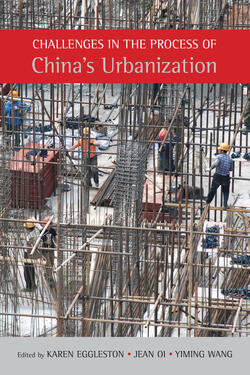
urbanization cover

The same institutions that enabled China’s massive urbanization and spurred its economic growth now require further reform and innovation.

To address the issues facing the next phase of the nation’s transformation, the National New Urbanization Plan (2014–20) set ambitious targets for sustainable, human-centered, and environmentally friendly urbanization. This volume explores the key institutional and governance challenges China will face in reaching those goals. Its policy-focused contributions from leading social scientists in the United States and China explore aspects of urbanization ranging from migration and labor markets to agglomeration economies, land finance, affordable housing, and education policy. Subjects covered in the eleven chapters include:

  • Institutional problems leading to fiscal pressures on local governments and unequal provision of social services to migrant families
  • The history of land financing and threats to its sustainability
  • The difficulty of sorting out property rights in rural China
  • How administrative redistricting has allowed the urbanization of geographical administrative places to outpace the urbanization of populations within those areas
  • How the hukou system may not be the sole, or even primary, mechanism restricting migrants from public goods, such as their childrens’ education
  • Whether the nation’s food security is threatened by its ongoing urbanization
  • The current state of the provision of low-income housing, and future challenges
 
Karen Eggleston is the director of the Asia Health Policy Program at the Shorenstein Asia-Pacific Research Center (Shorenstein APARC). She is a fellow at Stanford's Center for Health Policy/Primary Care and Outcomes Research and a faculty research fellow of the National Bureau of Economic Research.
Jean C. Oi is the William Haas Professor in Chinese Politics in the department of political science and a senior fellow of the Freeman Spogli Institute for International Studies at Stanford University. Oi is the founding director of the China Program at Shorenstein APARC and the Lee Shau Kee Director of the Stanford Center at Peking University.
Wang Yiming is vice president and senior research fellow at the Development Research Center of the State Council, People’s Republic of China. Previously he was with the National Development and Reform Commission (NDRC), where he served for many years as executive vice president of the Academy of Macroeconomics Research and deputy secretary general of the NDRC.
 

Examination copies: Shorenstein APARC books are distributed by Stanford University Press. You can obtain information on obtaining an examination copy at their website.


All Publications button
1
Publication Type
Books
Publication Date
Authors
Karen Eggleston
Jean C. Oi
Book Publisher
Shorenstein APARC
Authors
News Type
News
Date
Paragraphs

Emily Tuong-Vi Nguyen, a Stanford student studying human biology, writes about the Asia Health Policy Program’s international conference on diabetes

The Asia Health Policy Program at the Shorenstein Asia-Pacific Research Center hosted the Net Value in Diabetes Management Workshop in March to discuss progress on an international research collaboration. Research teams from Hong Kong, Singapore, China, Taiwan, South Korea and the United States convened at the Stanford Center at Peking University (SCPKU) in Beijing to work on research that compares utilization and spending patterns on diabetes across different countries and to develop a method for measuring the net value of diabetes internationally, based on previous methods discussed in a Eggleston and Newhouse et al. 2009 study with Mayo Clinic Data for Type 2 diabetes.

The research teams from various Asian countries are attempting to calculate the net value of diabetes in those countries by observing the changes in diabetes value and spending. These calculations include monetizing the value of health benefits of new treatments and improvements in health, as well as avoided spending on treatments when prevention was effective, and associated mortality and probability of survival. Previous models used to measure diabetic values and risks, such as the United Kingdom Prospective Diabetes Study (UKPDS) risk engine that was created from U.K. data and populations, are not very relevant for Asian populations. The goal is to create separate risk models specifically suited for populations from Hong Kong, Singapore, China, Taiwan and South Korea.

During the workshop that spanned two days, the research teams had an opportunity to share updates on their individual projects and to discuss methods and ideas for future collaboration.

On the first day, each research team presented its work, describing data sets and explaining the risk models that were used or developed. Karen Eggleston, director of the Asia Health Policy Program, delivered introductory remarks and shared current progress by the Japan and Netherlands research teams on calculating value and risk for diabetes with data from the Netherlands and Japan. The data sets from those two countries were best estimated by the JJ Risk Engine for the Japan data and the UKPDS model for the Netherlands data.

Chao Quan of the University of Hong Kong presented the risk model used for Hong Kong populations. His work primarily looked at how the UKPDS risk engine predicted risk in Hong Kong populations as compared to a local Hong Kong risk engine and how to best calibrate the Hong Kong risk engine. His next step will be to monetize the value for improved survival in diabetes in Hong Kong. He offered to re-estimate the model using the risk factors available on others’ datasets so that the Hong Kong risk model could potentially be used by other teams as well.

Stefan Ma and Zheng Li Yau of the Ministry of Health of Singapore discussed the 5-year prediction model and statistical methods they used for all-cause mortality of Singaporean individuals with diabetes. Their work is based on Singapore’s extensive administrative and claims data as well as data provided by the national health surveys conducted every six years by the National Health Service of Singapore. The researchers plan to look into how their overall risk model compares with models for specific subpopulations, such as Chinese, Malay and Indian populations in Singapore.

Katherine Hastings from the Stanford University team, led by principal investigator Latha Palaniappan, presented preliminary ideas about measuring cardiovascular risk with the Atherosclerotic Cardiovascular Disease Risk Score in analyses of Stanford health system diabetic patients. The researchers are collaborating with a clinical bioinformatics team at Stanford to use machine learning to expedite the analysis.

Min Yu and Haibin Wu of the Zhejiang Center for Disease Control and Prevention shared results from their analysis of health data collected from community health centers for diabetes management, diabetes surveillance data, cause of death data and insurance claims data that showed relationships between different patient characteristics and insurance types. The researchers then estimated the annual cost of Type 2 diabetes and its complications in Tongxiang province, China.

Hai Fang and Huyang Zhang of Peking University worked with claims data of diabetic patients insured by the New Cooperative Medical Scheme in Beijing, and at the workshop, shared regression analyses on the relationship between outpatient visits and inpatient admissions.

Jianqun Dong of the People’s Republic of China Center for Disease Control and Prevention presented ongoing research about diabetes management in China, including preliminary results of a randomized control trial of diabetes self-management strategies.

Wankyo Chung of Seoul National University shared preliminary estimates of a risk model for mortality among diabetic patients in South Korea and discussed next steps for estimating net value of diabetes management using the detailed clinical and claims data available in South Korea.

On the second day, the workshop concluded with a videoconference between workshop participants in Beijing and collaborators at Stanford Graduate Business School, including Stanford professor Latha Palaniappan and Harvard visiting professor Joseph P. Newhouse, using the Highly Immersive Classroom.

The workshop was a good opportunity for the research teams to discuss preliminary models, to offer each other suggestions regarding research methods, and to discuss the future direction of the international collaboration on the net value of diabetes. All research teams are preparing comparative research papers that will be included in the working paper series of the Asia Health Policy Program. A follow-up event will be held at Stanford in November 2017 in recognition of World Diabetes Day.

Hero Image
diabetes conference beijing
A group of participants from the workshop, “Net Value in Diabetes Management,” at Stanford Center at Peking University, March 24, 2017, from left to right: Zheng Yi Lau from the Ministry of Health of Singapore; Chao Quan (University of Hong Kong); Jui-fen Rachel Lu (Chang Gung University); Emily Nguyen, Karen Eggleston, and Katie Hastings (Stanford); and Stefan Ma (Ministry of Health of Singapore).
Courtesy of Emily Tuong-Vi Nyugen
All News button
1
-

Co-organized with the Mr. and Mrs. S. H. Wong Center for the Study of Multinational Corporations

First proposed by President Xi Jinping in Indonesia in 2013, China’s Maritime Silk Road Initiative (MSRI) aims to finance and build infrastructure—roads and railroads, ports and pipelines, power grids and telecom networks—that will link China southwestward through Southeast Asia and on across the Indian Ocean, the Red Sea, and the Mediterranean to Europe.  In the near term, the initiative may unfold fairly smoothly to the benefit of China’s economic and political stature and influence.  In the longer run, however, the success of the project may limit or even undercut China’s gains.  Capitalizing on American withdrawal from global leadership, Beijing wants the MSRI and its sister scheme—the Silk Road Economic Belt—to lay the sea-and-ground-work for a new Asian-Indo-Pacific order that China would launch and manage.  But will China be able to supplant US power and articulate the values necessary to underwrite this new order?  Professors Blanchard and Zhao will explore this and other questions raised by the MSRI.  Stanford’s Don Emmerson will moderate their discussion within the panel and with the audience.

Jean-Marc F. Blanchard is Distinguished Professor in the School of Advanced International and Area Studies at East China Normal University (Shanghai).  He has edited, co-edited, or contributed to 13 edited volumes and special issues of journals; written more than 50 other articles and book chapters; and is the co-author of Economic Statecraft and Foreign Policy (2013).  He has been a visiting professor/scholar at Shorenstein APARC twice, in 2013 and 2014.

Suisheng Zhao is Professor in the Josef Korbel School of International Studies at the University of Denver.  The founder and chief editor of the Journal of Contemporary China, he has written or edited more than a dozen books and dozens of articles in scholarly and policy journals.  Previous positions include residence at Stanford as a Campbell National Fellow at the Hoover Institution and two elective terms as a member of the Board of Governors of the US Committee for Security Cooperation in the Asia Pacific.
 

Jean-Marc F. Blanchard Executive Director, Mr. & Mrs. S. H. Wong Center for the Study of Multinational Corporations, Los Gatos, CA
Suisheng Zhao Professor, the Josef Korbel School of International Studies, the University of Denver
Seminars
News Type
Commentary
Date
Paragraphs

Moon Jae-in was elected South Korea’s president on a pledge to address domestic inequality and to renew dialogue with North Korea. In the midst of Tuesday’s vote, Shorenstein APARC scholars offered insight to local and international media outlets.

Gi-Wook Shin, professor of sociology and director of Shorenstein APARC’s Korea Program, provided comment to The Economist about the challenges facing an administration led by Moon, a progressive candidate who is assuming power when an active conservative camp remains. He is also cited in an article in the New York Times focused on Moon's economic agenda and featured in a video from a Korea Society event that examines next steps for the new president.

Rennie Moon, the Koret Fellow in the Korea Program, co-authored an analysis piece on the East Asia Forum with Shin analyzing recent polls and the Moon administration's economic and security agenda.

Daniel Sneider, associate director for research at Shorenstein APARC, wrote an analysis piece for The National Bureau of Asian Research. In the piece, he explores how the election could impact the U.S.-Republic of Korea alliance amid escalating tensions on the Korean Peninsula.

Kathleen Stephens, the William J. Perry Fellow at Shorenstein APARC, appeared in a live interview on CNBC. In the taping, she discusses the significance of the vote and the new administration’s priorities as Moon swiftly takes office following the removal of his predecessor.

Hero Image
moon election
South Korean presidential candidate Moon Jae-in of the Democratic Party of Korea, is greeted by his supporters during a presidential election campaign on May 4, 2017, in Goyang, South Korea.
Chung Sung-Jun/Getty Images
All News button
1
-

Image
Michael Chase

This event is co-sponsored by the Taiwan Democracy Project and the U.S.-Asia Security Initiative.


Abstract

Taiwan's defense policy faces several daunting challenges. President Tsai has inherited a complex security situation from her predecessors. The DPP's defense policy blue papers, published prior to Taiwan's January 2016 election, and Taiwan's newly published Quadrennial Defense Review (QDR) outline President Tsai's plans for Taiwan's defense policy. Some of the major defense policy issues Taiwan must face under President Tsai include uncertainties about US Asia policy and Trump's approach to handling relations with China, growing Chinese military capabilities and increasing Chinese air and naval activities around Taiwan, defense budget constraints, and problems associated with Taiwan's attempt to transition to an all-volunteer military. Taiwan's proposed responses as outlined in the 2017 QDR include a defense strategy of "Resolute defense, multi-domain deterrence" and strengthening the island's domestic defense industries, a project that has both defense policy and economic implications. This presentation will assess Taiwan's approach and consider the implications for US policy in Asia.


Bio

Michael S. Chase is a senior political scientist at RAND, a professor at the Pardee RAND Graduate School, and an adjunct professor in the China Studies and Strategic Studies Departments at Johns Hopkins University's School of Advanced International Studies (SAIS) in Washington, D.C.

A specialist in China and Asia-Pacific security issues, he was previously an associate professor at the U.S. Naval War College (NWC) in Newport, Rhode Island, where he served as director of the strategic deterrence group in the Warfare Analysis and Research Department and taught in the Strategy and Policy Department. Prior to joining the faculty at NWC, he was a research analyst at Defense Group Inc. and an associate international policy analyst at RAND. He is the author of the book Taiwan's Security Policy and numerous chapters and articles on China and Asia-Pacific security issues. His work has appeared in journals such as Asia Policy, Asian Security, China Brief, Survival, and the Journal of Strategic Studies.

His current research focuses on Chinese military modernization, China's nuclear policy and strategy and nuclear force modernization, Taiwan's defense policy, and Asia-Pacific security issues. Chase holds a Ph.D. in international affairs and M.A. in China Studies from SAIS and a B.A. in politics from Brandeis University. In addition, he studied Chinese at the Hopkins-Nanjing Center in Nanjing, China.

Goldman Room, 4th Floor

Encina Hall

616 Serra St.

Michael S. Chase Professor Pardee RAND Graduate School
Lectures
News Type
Commentary
Date
Paragraphs

Uncertainty about U.S. intentions in Northeast Asia has increased fear that events could spin out of control in the region due to American disengagement. That engagement cannot be taken for granted, Shorenstein Fellow Thomas Fingar writes on the Stanford University Press blog, and it remains to be seen just how well regional political leaders adjust to the Trump administration’s evolving foreign policy.

The blog post highlights themes from his book Uneasy Partnerships: China’s Engagement with Japan, the Koreas, and Russia in the Era of Reform (Stanford, April 2017).

Hero Image
tillerson beijing
U.S. Secretary of State Rex Tillerson meets with Chinese Foreign Minister Wang Yi during a bilateral meeting in Beijing, China, on March 18, 2017.
Flickr/U.S. Department of State
All News button
1
Subscribe to Security