Security

FSI scholars produce research aimed at creating a safer world and examing the consequences of security policies on institutions and society. They look at longstanding issues including nuclear nonproliferation and the conflicts between countries like North and South Korea. But their research also examines new and emerging areas that transcend traditional borders – the drug war in Mexico and expanding terrorism networks. FSI researchers look at the changing methods of warfare with a focus on biosecurity and nuclear risk. They tackle cybersecurity with an eye toward privacy concerns and explore the implications of new actors like hackers.

Along with the changing face of conflict, terrorism and crime, FSI researchers study food security. They tackle the global problems of hunger, poverty and environmental degradation by generating knowledge and policy-relevant solutions. 

-

This event is part of Shorenstein APARC's fall webinar series "Shifting Geopolitics and U.S.-Asia Relations."

This panel will review and assess various aspects of the relationship between the United States and South Korea under the leadership of President Donald Trump and President Moon Jae-in. The two leaders appeared able to work together quickly and make some bold moves on issues like North Korea, but the differences between the two have been stark on issues such as military burden sharing and policies toward China. The discussion will also compare the current dynamics of U.S.-ROK relations with that of during the George W. Bush and Roh Moo-hyun period (2003-2008), which is often referred to as the most turbulent yet the most transformative era in the history of the security relationship between the two countries.

Panelists:

Image
Laura Bicker
Laura Bicker, BBC Seoul Correspondent
Ms. Bicker has been a BBC Correspondent for 20 years. She is currently based in Seoul where she reports on both North and South Korea. She is known for her interviews with President Moon Jae-in and her coverage of the inter-Korean and US-North Korean summits. This year she has produced a number of reports on South Korea’s battle with Covid19 including the documentary "How to Fight Coronavirus." In her previous role as North America Correspondent she followed Donald Trump’s election to the White House and his first years in office, as well as a host of deployments covering a number of issues and breaking news across the United States.

Image
Mark Lippert
Mark Lippert, former US Ambassador to South Korea
A graduate of Stanford (BA, MA), Ambassador Lippert served as the United States ambassador extraordinary and plenipotentiary to the Republic of Korea from 2014-2017. He previously held positions in the Department of Defense, including as chief of staff to Secretary of Defense Chuck Hagel (2013-2014) and as assistant secretary of defense for Asian and Pacific Security Affairs (2012-2013). Lippert also worked in the White House as chief of staff to the National Security Council in 2009. Lippert served in the uniformed military as an intelligence officer in the United States Navy, he mobilized to active duty from 2009 to 2011 for service with Naval Special Warfare (SEALs) Development Group that included deployments to Afghanistan and other regions. From 2007 to 2008, he deployed as an intelligence officer with Seal Team One to Anbar Province, Iraq in support of Operation Iraqi Freedom.

Image
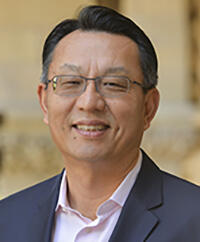
Myung Hwa Yu
Myung Hwan Yu, former Minister of Foreign Affairs, South Korea
Minister Yu has 37 years of distinguished service with the Ministry of Foreign Affairs and Trade, including Minister of Foreign Affairs and Trade from 2008 to 2010.  Minister Yu started his foreign service in Japan in 1976 as a young diplomat and returned as Ambassador to Japan in 2007. He advised on various political and economic issues concerning both the private and public sector with a view to revamp bilateral relation until his departure from Japan to join President Lee Myung Bak’s administration as a cabinet minister in 2008. He also served as Ambassador to the State of Israel; Ambassador for Anti-Terrorism and Afghanistan Issues; and also Minister of the Permanent Mission to the United Nations in New York. His experience extends across a broad range of issues in the international relations including trade and security issues, and negotiations with North Korea in particular.

Moderator:

Image
Gi-Wook Shin
Gi-Wook Shin, Director of Shorenstein APARC, Stanford University
Gi-Wook Shin is the William J. Perry Professor of Contemporary Korea; the founding director of the Korea Program; a senior fellow of the Freeman Spogli Institute for International Studies; and a professor of sociology, all at Stanford University. As a historical-comparative and political sociologist, his research has concentrated on social movements, nationalism, development, and international relations.

Webinar: Register at https://bit.ly/3j7fIHa

Panel Discussions
Authors
Oriana Skylar Mastro
News Type
Commentary
Date
Paragraphs

This essay by Oriana Skylar Mastro originally appeared in Cato Unbound.


In his lead essay, Eric Gomez cites profound technological changes as the main reason why the United States should rethink its nuclear policy. However, there is one drastic change he does not adequately take into account: the rise of China. This response essay, therefore, focuses on the China factor in U.S. nuclear policy.

Chinese Nuclear Modernization

Since the turn of the century, China has been modernizing its nuclear forces in earnest. Currently, Beijing’s nuclear arsenal is estimated to number in the 200s. From 2017 to 2018, warheads increased by ten, and the Pentagon anticipates that the stockpile will double over the next ten years. These modernization efforts, such as moving from silo-based liquid-fueled ICBMs to mobile solid-fueled delivery vehicles, have focused mainly on improving force survivability. China also added a sea leg to its nuclear deterrent in 2016 with the introduction of submarine-launched ballistic missiles (JL-2) on its Jin-class ballistic missile submarine.

Additionally, China is producing ballistic missile systems with multiple independently targetable reentry vehicle (MIRV) and maneuverable reentry vehicle (MaRV) technologies that enhance missiles’ effectiveness. To this end, China has launched more ballistic missiles for testing and training in 2019 than the rest of the world combined. Meanwhile, the PLA’s new hypersonic cruise missiles supposedly are capable of piercing existing missile defense systems. Furthermore, structural reforms in China’s military reveal the critical role nuclear weapons play in Chinese strategy. In 2016, the branch in charge of China’s nuclear deterrent, the Second Artillery, was upgraded to a service, the People’s Liberation Army Rocket Force. Its commander was added to China’s highest military body, the Central Military Commission.

[Sign up for our newsletters to get the latest from APARC's scholars.]

China’s drive to modernize, diversify, and expand its nuclear forces may cause some to argue with Gomez’s essential premise that new thinking is needed. This week, U.S. Strategic Commander Adm. Charles Richard remarked that China’s nuclear weapons buildup is “inconsistent” with their long-held no-first-use policy, emphasizing the need for the United States to pursue nuclear modernization. Indeed, there has been a resurgence in Cold War thinking about nuclear deterrence. For example, Former Senator Jon Kyl and Michael Morell argued for more low-yield nuclear warheads as part of an “escalate to deescalate” strategy. Similarly, Bret Stephens raised concerns that the U.S. arsenal is insufficient to prevent Chinese aggression.

However, I agree with Gomez that we need to rethink U.S. nuclear policy to ensure it can better meet contemporary challenges. Specifically, I argue that to best suit U.S. foreign policy interests, U.S. nuclear policy needs to minimize the role of nuclear weapons in U.S.-China great power competition and pave the way for arms control.

Continue reading Oriana Mastro's response essay in Cato Unbound >>

Read More

Portrait of Oriana Skylar Mastro and a 3D cover of her book, 'The Costs of Conversation: Obstacles to Peace Talks in Wartime'
News

FSI Center Fellow Wins Best Book in Security Studies Award

The American Political Science Association recognizes Oriana Skylar Mastro for her work on military strategy and mediation.
FSI Center Fellow Wins Best Book in Security Studies Award
Portrait of Oriana Mastro with text: "Q&A with Oriana Skylar Mastro"
Q&As

FSI’s Incoming Center Fellow Oriana Skylar Mastro Discusses Chinese Ambitions, Deteriorating U.S.-China Relations

Mastro, whose appointment as a Center Fellow at Shorenstein APARC begins on August 1, considers the worsening relations between the world’s two largest economies, analyzes Chinese maritime ambitions, and talks about her military career and new research projects.
FSI’s Incoming Center Fellow Oriana Skylar Mastro Discusses Chinese Ambitions, Deteriorating U.S.-China Relations
Hero Image
A missile display in the Military Museum in Beijing, China.
Guang Niu, Getty Images
All News button
1
Subtitle

Oriana Skylar Mastro explains why U.S. nuclear policy needs to minimize the role of nuclear weapons in the U.S.-China great power competition and pave the way for arms control.

-

This event has been rescheduled to October 14, 2020

It is a good time to be interested in Southeast Asia-China relations. In addition to the three new books referenced in this webinar, additional books on the subject are forthcoming from other authors.  The timing is all the more propitious in view of the current animosity between Beijing and Washington as it may implicate Southeast Asia and American policy toward the region, depending in part on who wins the 3 November US election.  These books are both sweeping and granular.  Hiebert’s and Strangio’s country-focused chapters cover all ten members of the Association of Southeast Asian Nations (ASEAN), while Emmerson and his co-authors mix country studies with thematic arguments about China’s relations with its neighbors.

Given China’s clearly superior size and power, is Beijing’s incremental domination of its neighbors foreordained? Strangio says no: “Southeast Asia’s future will not be one of linear and inexorable Chinese advance, but rather one in which past dynamics and contradictions reproduce themselves over time at varying pitches of tension.” Is he right? Hiebert calls for the US “to support the region as it faces a rising and more assertive China”—to “remain an actively engaged partner that shows up, brings some resources, and rewrites the perception that it is often unreliable and missing in action.” Is that good advice?  For Emmerson, “strategic autonomy necessarily begins at home. Outsiders can help or hurt. But nothing can substitute for the creativity of Southeast Asian states in individual and joint pursuit of their own and their region’s security.” Is that true, and even if it is, so what?

The webinar will explore these and other aspects of Sino-Southeast Asian relations.

Image
Murray Hiebert 100520
Murray Hiebert, in addition to his position at CSIS, is research director for BowerGroup Asia. Before joining CSIS, he was senior director for Southeast Asia at the U.S. Chamber of Commerce. Earlier, he was a journalist in the China bureau of the Wall Street Journal. Prior to his posting to Beijing, he reported from Washingon on US-Asia relations for the Wall Street Journal Asia and the Far Eastern Economic Review. In the 1990s he worked for the Review while based in Kuala Lumpur and, earlier, in Hanoi, having joined the Review's Bangkok bureau in 1986 to cover developments in Vietnam, Cambodia, and Laos. He is also the author of two books on Vietnam, Chasing the Tigers (1996) and Vietnam Notebook (1993). He has a master’s degree in news media studies from American University.


Image
Sebastian Strangio 100520
Sebastian Strangio has written from and on Southeast Asia for many publications including Al Jazeera, The Atlantic, The Economist, Forbes, Foreign Policy, and The New York Times. In addition to living and working in Cambodia, where he spent three years with The Phnom Penh Post, he has reported from Indonesia, Laos, Myanmar, Thailand, Vietnam, and China, among other countries. Other previous affiliations include New America’s International Reporting Project; the Future Forum, a policy institute in Phnom Penh; and Chiang Mai University’s Regional Center for Social Science and Sustainable Development. Foreign Affairs named his first book, Hun Sen’s Cambodia, a 2015 Book of the Year. He has a master’s degree in international politics from the University of Melbourne.


Image
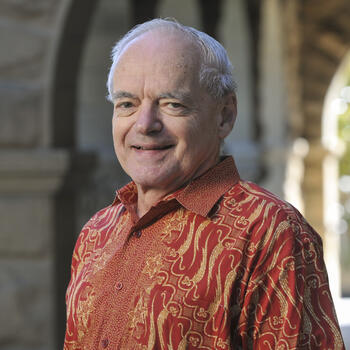
don emmerson 2
Donald K. Emmerson, in addition to his position in APARC, is a faculty affiliate of Stanford’s Center on Democracy, Development, and the Rule of Law. So far in 2019-2020 he has spoken on Southeast Asian topics to audiences in Bangkok, Hanoi, Kuala Lumpur, New York, Singapore, and Washington, DC.  Recent publications include “‘No Sole Control’ in the South China Sea,” Asia Policy (2019) and ASEAN @ 50, Southeast Asia @ Risk: What Should Be Done? (edited, 2018). Before moving to Stanford in 1999, he taught political science at the University of Wisconsin-Madison.  He has held visiting positions at the Institute for Advanced Studies and the Australian National University, among other institutions.  His doctorate in political science is from Yale University.

Via Zoom Webinar

Register at https://bit.ly/35WOb7o

Murray Hiebert senior associate, Southeast Asia Program, Center for Strategic and International Studies (CSIS), Washington, DC, and author of <i>Under Beijing’s Shadow: Southeast Asia’s China Challenge</i> (2020)
Sebastian Strangio journalist, analyst, Southeast Asia editor of The Diplomat, and author of <i>In the Dragon’s Shadow: Southeast Asia in the Chinese Century</i> (2020)
0
Senior Fellow Emeritus at the Freeman Spogli Institute for International Studies
Affiliated Faculty, CDDRL
Affiliated Scholar, Abbasi Program in Islamic Studies
aparc_dke.jpg PhD

At Stanford, in addition to his work for the Southeast Asia Program and his affiliations with CDDRL and the Abbasi Program in Islamic Studies, Donald Emmerson has taught courses on Southeast Asia in East Asian Studies, International Policy Studies, and Political Science. He is active as an analyst of current policy issues involving Asia. In 2010 the National Bureau of Asian Research and the Woodrow Wilson International Center for Scholars awarded him a two-year Research Associateship given to “top scholars from across the United States” who “have successfully bridged the gap between the academy and policy.”

Emmerson’s research interests include Southeast Asia-China-US relations, the South China Sea, and the future of ASEAN. His publications, authored or edited, span more than a dozen books and monographs and some 200 articles, chapters, and shorter pieces.  Recent writings include The Deer and the Dragon: Southeast Asia and China in the 21st Century (ed., 2020); “‘No Sole Control’ in the South China Sea,” in Asia Policy  (2019); ASEAN @ 50, Southeast Asia @ Risk: What Should Be Done? (ed., 2018); “Singapore and Goliath?,” in Journal of Democracy (2018); “Mapping ASEAN’s Futures,” in Contemporary Southeast Asia (2017); and “ASEAN Between China and America: Is It Time to Try Horsing the Cow?,” in Trans-Regional and –National Studies of Southeast Asia (2017).

Earlier work includes “Sunnylands or Rancho Mirage? ASEAN and the South China Sea,” in YaleGlobal (2016); “The Spectrum of Comparisons: A Discussion,” in Pacific Affairs (2014); “Facts, Minds, and Formats: Scholarship and Political Change in Indonesia” in Indonesian Studies: The State of the Field (2013); “Is Indonesia Rising? It Depends” in Indonesia Rising (2012); “Southeast Asia: Minding the Gap between Democracy and Governance,” in Journal of Democracy (April 2012); “The Problem and Promise of Focality in World Affairs,” in Strategic Review (August 2011); An American Place at an Asian Table? Regionalism and Its Reasons (2011); Asian Regionalism and US Policy: The Case for Creative Adaptation (2010); “The Useful Diversity of ‘Islamism’” and “Islamism: Pros, Cons, and Contexts” in Islamism: Conflicting Perspectives on Political Islam (2009); “Crisis and Consensus: America and ASEAN in a New Global Context” in Refreshing U.S.-Thai Relations (2009); and Hard Choices: Security, Democracy, and Regionalism in Southeast Asia (edited, 2008).

Prior to moving to Stanford in 1999, Emmerson was a professor of political science at the University of Wisconsin-Madison, where he won a campus-wide teaching award. That same year he helped monitor voting in Indonesia and East Timor for the National Democratic Institute and the Carter Center. In the course of his career, he has taken part in numerous policy-related working groups focused on topics related to Southeast Asia; has testified before House and Senate committees on Asian affairs; and been a regular at gatherings such as the Asia Pacific Roundtable (Kuala Lumpur), the Bali Democracy Forum (Nusa Dua), and the Shangri-La Dialogue (Singapore). Places where he has held various visiting fellowships, including the Institute for Advanced Study and the Woodrow Wilson International Center for Scholars. 


Emmerson has a Ph.D. in political science from Yale and a BA in international affairs from Princeton. He is fluent in Indonesian, was fluent in French, and has lectured and written in both languages. He has lesser competence in Dutch, Javanese, and Russian. A former slam poet in English, he enjoys the spoken word and reads occasionally under a nom de plume with the Not Yet Dead Poets Society in Redwood City, CA. He and his wife Carolyn met in high school in Lebanon. They have two children. He was born in Tokyo, the son of U.S. Foreign Service Officer John K. Emmerson, who wrote the Japanese Thread among other books.

Selected Multimedia

Date Label
Moderator/Discussant director, Southeast Asia Program, Shorenstein Asia Pacific Research Center (APARC), Stanford University, and editor/co-author of <em>The Deer and the Dragon: Southeast Asia and China in the 21st Century</em> (2020)
Seminars
Authors
Noa Ronkin
News Type
News
Date
Paragraphs

The Walter H. Shorenstein Asia-Pacific Research Center (APARC) invites applications for three types of postdoctoral fellowship in contemporary Asia studies for the 2021-22 academic year. Appointments for all three fellowship offerings are for one year beginning in fall quarter 2021.

APARC is committed to supporting junior scholars in the field of Asia studies to the greatest extent possible and that has become even more important during COVID-19, as graduate students are especially vulnerable to the adverse impacts of the pandemic, facing the loss of funding opportunities and access to field research.

The Center offers postdoctoral fellowships that promote multidisciplinary research on contemporary Japan, contemporary Korea, and contemporary Asia broadly defined. Learn more about each fellowship and its eligibility and specific application requirements:

Postdoctoral Fellowship on Contemporary Japan

The fellowship supports multidisciplinary research on contemporary Japan in a broad range of disciplines including political science, economics, sociology, law, policy studies, and international relations. The application deadline is January 4, 2021.

Korea Foundation-APARC Korea Program Postdoctoral Fellowship

The fellowship supports rising Korea scholars in the humanities and social sciences. The application deadline is January 20, 2021.

Shorenstein Postdoctoral Fellowship on Contemporary Asia

APARC offers two postdoctoral fellowship positions to junior scholars for research and writing on contemporary Asia. The primary research areas focus on political, economic, or social change in the Asia-Pacific region (including Northeast, Southeast, and South Asia), or international relations and international political economy in the region. The application deadline is January 4, 2021.

Read More

A young men sitting at a desk in front of computer monitors
News

Student Documentary Celebrates Transnational Brain Linkages

‘Brain Bridges,’ a documentary produced by senior Dexter Sterling Simpson, illustrates the positive gains of global talent flows.
Student Documentary Celebrates Transnational Brain Linkages
(Left) Yuen Yuen Ang; (Right) Congratulations Yuen Yuen Ang, Winner of the Theda Skocpol Prize from the American Political Science Association
News

Dr. Yuen Yuen Ang Awarded Theda Skocpol Prize for Emerging Scholars

Former China Program postdoc and Stanford Ph.D alumna Yuen Yuen Ang has received the Theda Skocpol Prize for Emerging Scholars from the American Political Science Association for her scholarship on China’s transformation into a global superpower.
Dr. Yuen Yuen Ang Awarded Theda Skocpol Prize for Emerging Scholars
Portrait of Oriana Skylar Mastro and a 3D cover of her book, 'The Costs of Conversation: Obstacles to Peace Talks in Wartime'
News

FSI Center Fellow Wins Best Book in Security Studies Award

The American Political Science Association recognizes Oriana Skylar Mastro for her work on military strategy and mediation.
FSI Center Fellow Wins Best Book in Security Studies Award
Hero Image
Encina Hall
All News button
1
Subtitle

The Center’s commitment to supporting young Asia scholars remains strong during the COVID-19 crisis.

Authors
News Type
Commentary
Date
Paragraphs

This analysis by Arzan Tarapore was originally published at The Monkey Cage by The Washington Post.


Last week, the India-China border standoff came the closest it has yet to war. As Taylor Fravel explained, the long-standing border dispute dates from the 1962 Sino-Indian War. The dispute came to a boil in May when a large force of Chinese soldiers crossed the Line of Actual Control (LAC), the disputed border between the two countries since 1962. A deadly skirmish in June temporarily raised tensions, but it was the result of tragic happenstance rather than large and risky military maneuvers.

Tensions have escalated more seriously since late August because both sides have jostled for tactical advantage, creating incentives for each side to outflank or even fight the other.

Here’s where things stand in this crisis.

Aggressive tactical maneuvers led to rising tensions

A new phase of the four-month-long border crisis opened when Indian special forces quietly occupied several peaks in the mountainous Chushul sector of Ladakh during the night of Aug. 29-30. These peaks sit on India’s side of the LAC, just south of a divided lake — Pangong Tso — but had been left unoccupied in accordance with confidence-building agreements. They were the site of tenacious fighting in the 1962 border war and hold particular tactical significance because they overlook an important pathway through the mountains between India and China.

Occupying the high ground in Chushul was designed to prevent Chinese forces from establishing an even stronger position. India also may have calculated that it could negotiate a withdrawal from those tactically valuable peaks in return for a Chinese withdrawal from areas seized after May.

Tensions rose. Indian and Chinese troops also scrambled to secure high ground overlooking new Chinese fortifications on the north bank of Pangong Tso. They reinforced their positions with additional aircraft and armor and accused each other of firing the first gunshots on the LAC since 1975. Some Indian analysts warned that China might risk war to reverse India’s occupation of the Chushul peaks.

Continue reading Arzan's full analysis on Monkey Cage at The Washington Post >>

[Subscribe to our newsletters to get the latest commentary from APARC scholars.]

Read More

A regiment of the Indian Army practices in dress uniform for Republic Day
Commentary

Rethinking the Defense Doctrine of India

The security threats India faces along its borders require new strategies, and in order to manage and prevent future risks, the military needs to overhaul its traditional playbook of deterring and defending against conventional attacks says Arzan Tarapore.
Rethinking the Defense Doctrine of India
An Indian Army soldier looking through a military monocular over hills in the background
News

U.S. Policymakers Cannot Assume the Fixity of Indian Strategic Preferences, Argues South Asia Research Scholar Arzan Tarapore

In a special report published by the National Bureau of Asian Research, Tarapore analyzes possible scenarios for India’s strategic future that expose risks and tensions in current U.S. policy.
U.S. Policymakers Cannot Assume the Fixity of Indian Strategic Preferences, Argues South Asia Research Scholar Arzan Tarapore
Hero Image
An Indian army soldier watches a fighter plane from a convoy of trucks in Gagangir, India.
An Indian army soldier watches fighter plane from a convoy of trucks in Gagangir, India.
Yawar Nazir / Stringer, Getty Images
All News button
1
Subtitle

Will diplomacy help defuse the current tensions brewing along the India-China border? Arzan Tarapore analyzes why restoring peace between the two countries may prove difficult.

0
APARC Predoctoral Fellow, 2020-2021
anna_zhang.jpg

Anna Zhang joined the Walter H. Shorenstein Asia-Pacific Research Center (APARC) as APARC Predoctoral Fellow for the 2020-2021 academic year. She is a PhD candidate at the political science department. Her research interests include civil conflict, state building, and internal migration. Her dissertation studies China's institutional solution to the challenges of territorial control. 

Authors
News Type
Commentary
Date
Paragraphs

This op-ed by Arzan Tarapore originally appeared in The Hindu.


Over four months ago, the Chinese army entered territory that India has long considered its own, and never left. In effect, the multiple incursions have changed the Line of Actual Control (LAC) and India has lost territory, at least for the time being. How could this happen?

In part, it was a failure of the warning-intelligence system. Either Indian intelligence services did not collect sufficient data of Chinese intentions and early moves, or they did not interpret it correctly, or their policy and military customers failed to take the warning seriously. Wherever the fault lay, the system apparently failed.

In part, however, the problem also lay in the Army’s concepts for defending the country’s borders. It is, as the current crisis shows, simply not postured or prepared for the type of security threat China presents. (Continue reading the full article in The Hindu.)

[Subscribe to our newsletters to get the latest commentary from APARC scholars.]

Read More

An Indian Army soldier looking through a military monocular over hills in the background
News

U.S. Policymakers Cannot Assume the Fixity of Indian Strategic Preferences, Argues South Asia Research Scholar Arzan Tarapore

In a special report published by the National Bureau of Asian Research, Tarapore analyzes possible scenarios for India’s strategic future that expose risks and tensions in current U.S. policy.
U.S. Policymakers Cannot Assume the Fixity of Indian Strategic Preferences, Argues South Asia Research Scholar Arzan Tarapore
Portrait of Arzan Tarapore and text: "Q&A with Arzan Tarapore"
Q&As

Internal Balancing Will Determine India’s Relationships with the US and China, Argues APARC’s Newest Research Scholar

Indo-Pacific security expert Arzan Tarapore, whose appointment as a research scholar at APARC begins on September 1, discusses India’s military strategy, its balancing act between China and the United States, and his vision for revitalizing the Center’s research effort on South Asia.
Internal Balancing Will Determine India’s Relationships with the US and China, Argues APARC’s Newest Research Scholar
Hero Image
A regiment of the Indian Army practices in dress uniform for Republic Day
A regiment of the Indian Army practices in dress uniform for Republic Day.
Mitul Gajera, Unsplash
All News button
1
Subtitle

The security threats India faces along its borders require new strategies, and in order to manage and prevent future risks, the military needs to overhaul its traditional playbook of deterring and defending against conventional attacks says Arzan Tarapore.

Authors
Noa Ronkin
News Type
News
Date
Paragraphs

U.S. policymakers are counting on India as a natural strategic partner. They focus on India’s increasing national power and its enticing potential as a counterbalance to China. But what happens if India’s strategic preferences shift? Will it fulfill its potential so that the U.S. strategic bet pays off?

In a special report, Exploring India's Strategic Futures, published by the National Bureau of Asian Research (NBR), APARC South Asia Research Scholar and NBR Nonresident Fellow Arzan Tarapore identifies a set of challenges for American strategists, illustrating alternative futures of India as a strategic actor and focusing on futures that may pose challenges to U.S. security interests.

Tarapore uses a novel method of major/minor trends to demonstrate that India’s strategic preferences are not fixed but could vary discontinuously under different environmental conditions. Based on detailed historical analysis, this method offers a powerful tool to sensitize decision makers to a range of possible futures. He analyzes three plausible scenarios:

First, a revisionist India driven by Hindu-nationalist ideology to settle the score with Pakistan, which will require it to keep the China front quiet and accommodate China’s Belt and Road Initiative in Eurasia. This scenario may severely complicate U.S. strategy in the Indo-Pacific and its efforts to counterbalance China.

Second, a risk-acceptant Indian military that engages in brinkmanship, which may endanger strategic stability with both Pakistan and China. In this scenario, rather than keeping the Chinese military in check, India may paradoxically have the opposite effect.

Third, an India that expands its competition with China into continental Eurasia, making common cause with U.S. rivals such as Russia and Iran. This scenario illustrates the tensions in a U.S. global strategy that lacks prioritization and prompts Washington to more carefully consider its preferences in Central Asia.

Tarapore by no means suggests that such futures are likely — they are decidedly unlikely — but rather that U.S. strategists should consider them plausible. Indeed, the three scenarios are all grounded in political processes that have long existed in India, from communalism to military adaptation, to the balancing of external threats. Therefore, argues Tarapore, U.S. policymakers should not assume Indian strategic preferences are stable. They must consider scenarios in which India might challenge U.S. security interests.

Read More

Portrait of Arzan Tarapore and text: "Q&A with Arzan Tarapore"
Q&As

Internal Balancing Will Determine India’s Relationships with the US and China, Argues APARC’s Newest Research Scholar

Indo-Pacific security expert Arzan Tarapore, whose appointment as a research scholar at APARC begins on September 1, discusses India’s military strategy, its balancing act between China and the United States, and his vision for revitalizing the Center’s research effort on South Asia.
Internal Balancing Will Determine India’s Relationships with the US and China, Argues APARC’s Newest Research Scholar
Japanese Prime Minister Shinzo Abe speaks at a podium with audience seen at the front
Commentary

Three Hits and Three Misses: What is Prime Minister Abe’s Legacy?

Despite this long period as prime minister, it is not entirely clear that Abe accomplished major policy goals.
Three Hits and Three Misses: What is Prime Minister Abe’s Legacy?
Leaders from the ASEAN league gather onstage at the 33rd ASEAN Summit in 2018 in Singapore.
Commentary

Southeast Asia's Approach to China and the Future of the Region

In an interview with The Diplomat, Donald Emmerson discusses how factors like the South China Sea, U.S.-China competition, and how COVID-19 are affecting relations between Southeast Asia, China, and the United States.
Southeast Asia's Approach to China and the Future of the Region
Hero Image
An Indian Army soldier looking through a military monocular over hills in the background
An Indian Army soldier guards the line dividing Kashmir between India and Pakistan.
Farooq Khan-Pool/ Getty Images
All News button
1
Subtitle

In a special report published by the National Bureau of Asian Research, Tarapore analyzes possible scenarios for India’s strategic future that expose risks and tensions in current U.S. policy.

-

This event is part of Shorenstein APARC’s fall webinar series "Shifting Geopolitics and U.S.-Asia Relations"

REGISTRATION LINK: https://bit.ly/3gPVXlt

Chair/discussant:  Donald K. Emmerson, director, Southeast Asia Program, Shorenstein Asia-Pacific Research Center, Stanford University

Topic:  Analysts of Southeast Asia, struggling to find commonalities that its eleven diverse countries share, have long distinguished the region’s mainland from its maritime portions. Aspects of the contrast include the mainland’s greater proximity to China. A controversial hypothesis follows: that subcontinental Myanmar, Laos, Cambodia, and possibly Thailand (but arguably not Vietnam) are more likely to become peninsular parts of a sphere of influence overseen by China than are the region’s more insular or archipelagic countries—Malaysia, Singapore, Brunei, Indonesia, the Philippines, and Timor-Leste. In support of the mainland versus maritime distinction, historical, cultural, and socioeconomic differences can also be cited. But how much do they really matter? Does the mainland-maritime contrast, for example, enhance or impede the ability of Southeast Asian countries to retain national independence and fashion a common front in defense of the autonomy of their region?  Or is location irrelevant?  And if other factors matter more, which ones, how, and why? The webinar will offer and explore answers to these and related questions.

Image
richard_heydararian_090220
Richard Heydarian is an Asia-based academic and columnist, who most recently was a Visiting Fellow at National Chengchi University, and formerly an Assistant Professor in political science at De La Salle University. As a columnist, he has written for the world’s leading publications, including The New York Times, The Guardian, Foreign Affairs, and is a regular contributor to Aljazeera English, Nikkei Asian Review, South China Morning Post, and the Straits Times. He is the author of, among other books, The Rise of Duterte: A Populist Revolt against Elite Democracy (Palgrave Macmillan, 2017) and The Indo-Pacific: Trump, China, and the New Struggle for Global Mastery (Palgrave Macmillan, 2019). As a policy adviser, he has advised Philippine presidential candidates, presidential cabinet members, senators, and the Armed Forces of the Philippines, and is also a television host in GMA Network in the Philippines.

Image
Ann Marie Murphy 090120
Ann Marie Murphy is Professor at the School of Diplomacy and International Relations, Seton Hall University, Senior Research Scholar at the Weatherhead East Asian Institute, Columbia University, and 2019-2010 ASEAN Research Program Fulbright Scholar.

Dr. Murphy's research interests include international relations and comparative politics in Southeast Asia, U.S. foreign policy toward Asia, and governance of non-traditional security issues.  She is co-author (with Amy Freedman) of Non-Traditional Security Issues in Southeast Asia: the Transnational Dimension, (2018) and co-editor (with Bridget Welsh) of Legacies of Engagement in Southeast Asia (2008). Dr. Murphy’s articles have appeared in journals such as Asian Security, Contemporary Southeast Asia, Orbis, Asia Policy, World Politics Review and PS: Political Science & Politics.  Dr. Murphy is a founding partner of the New York Southeast Asia Network and is currently completing a book on the impact of democracy on Indonesian foreign policy with the generous support of the Smith Richardson Foundation.

Image
Thitinan Pongsudhirak 090120
Thitinan Pongsudhirak is the Director of the Institute of Security and International Studies and Professor at Bangkok’s Chulalongkorn University. He has authored articles, books, book chapters and over 1,000 op-eds in media outlets. His sought-after views have appeared on CNN, BBC, Bloomberg, among others. Thitinan has provided briefings to diplomatic missions, investors, and business conferences on Thai domestic politics and regional geopolitics. In 2015, he was awarded an op-ed prize from the Society of Publishers in Asia. Subsequently, he was appointed ASEAN@50 Fellow by New Zealand’s Minister of Foreign Affairs & Trade; and Australia-ASEAN Fellow by Sydney’s Lowy Institute.  He completed his M.A. at Johns Hopkins School of Advanced International Studies and Ph.D. at the London School of Economics, having lectured internationally and held visiting positions at renowned universities, including Stanford University, while serving on several editorial boards of academic journals. 

Via Zoom Webinar

Register at https://bit.ly/3gPVXlt


Richard Javad Heydarian Independent Scholar, Author, and Columnist for the Philippine Daily Inquirer, Manila
Ann Marie Murphy Professor and Director, Center for Emerging Powers and Transnational Trends, Seton Hall University, New Jersey
Thitinan Pongsudhirak Professor and Director, Institute of Security and International Studies, Chulalongkorn University, Bangkok
Seminars
Authors
Kiyoteru Tsutsui
News Type
Commentary
Date
Paragraphs

On August 28, Japan’s Prime Minister Shinzo Abe announced that he will step down from the position, citing serious health concerns. What is his legacy and what lies ahead? Below, I list his three major accomplishments (hits) and disappointments (misses) and consider who is likely to succeed him.

Hit: Abe’s greatest accomplishment is that he kept winning elections and stayed in power, becoming the longest-serving prime minister in Japanese history. In a country where only one prime minister (Koizumi) lasted more than two years in the last three decades, this is a significant achievement. He started his (second) term in 2012 when Japan was still reeling from the triple disaster of 2011 and the mismanagement by the then-ruling Democratic Party of Japan (DPJ). He initially restored confidence in Japan, energized the economy with bold policies, and brought stability to Japanese politics. The weakening and eventual disintegration of the DPJ facilitated his streak of electoral victories, but he deserves credit for launching several policy initiatives to revitalize the stagnant and aging economic giant and for incorporating social welfare policies – many of which were proposed by opposition parties – to stave off dissatisfaction among voters. He raised the consumption tax rate twice and still won six straight elections, an amazing feat considering how past prime ministers faired after a tax hike.

Miss: Despite this long period as prime minister, it is not entirely clear that he accomplished major policy goals. Abenomics – Abe’s signature economic policy – reinvigorated the Japanese economy, shooting stocks up to great heights, but the economy as a whole did not grow any faster under his watch and per capita GDP shrank, exacerbating economic inequality. Revising the Constitution, widely seen as his ultimate goal as prime minister, did not come close to being a reality, even though he launched a number of trial balloons. Abe also proposed many new policy initiatives with catchy phrases – womanomics, work-life balance reform, reviving rural Japan, etc. – but was often criticized for producing only an impression that he is doing something (yatterukan) rather than actually getting things done.


Sign up for APARC newsletters to receive our experts' commentary and analysis.


Hit: Foreign policy was Abe’s strong suit. Having outserved most G7 leaders, his stature at international meetings rose to a height few Japanese prime ministers reached before. Overcoming the initial perception as a hawkish nationalist ideologue, he demonstrated savvy pragmatism in foreign affairs, developing strong relationships with the United States, particularly with President Trump, and recovering from the rocky start with President Xi to forge a practical partnership with China. His administration also passed a series of legislation that advanced realist security policies and popularized a vision of Free and Open Indo-Pacific, which other countries including the United States bought into. Furthermore, despite the U.S. withdrawal from the Trans-Pacific Partnership (TPP), Abe marched on and led the charge toward the Comprehensive and Progressive Agreement for Trans-Pacific Partnership (CPTPP), a rare example of Japan leading a multilateral agreement without support from the United States.

Miss: Yet, Abe failed to achieve some key foreign policy goals. The issue of abduction of Japanese by North Korea, which prompted him to national prominence when he was a young cabinet member under Prime Minister Koizumi, did not see any progress, nor did territorial negotiations with Russia – another foreign policy issue he expended a good deal of capital on. South Korea was another thorn on his side: the “comfort women” agreement could have been Abe’s major accomplishment, but domestic political turmoil in South Korea led to President Moon’s scuttling of the agreement, which sent the Japan-South Korea relations into a downward spiral. This development had more to do with South Korean politics than Abe, but he still could have tried to repair the damage. Instead, he threw in a towel on Moon and escalated tensions with South Korea, when the two countries should be close allies collaborating to cope with China’s assertiveness and the North Korean nuclear threat.

Hit: Abe’s cabinet accumulated enormous power over bureaucrats by holding authority on personnel decisions, which is critical in controlling them. This shift of power from bureaucrats to politicians was what the DPJ advocated when it became the ruling party. Abe nearly perfected this transfer of power and established a system under which the prime minister can take the initiative for new policies, going over opposition from career bureaucrats, and seek voters’ judgment about the merits of the policy in subsequent elections. This departs from decades of political practice in Japan, whereby bureaucrats set major policies, and most politicians merely parrot policy goals, which is unconducive to major policy changes needed to energize the stagnant economy and society. Abe leaves in place the cabinet apparatus that could empower the next prime minister to launch major policy initiatives.

Miss: The downside of the concentration of power is corruption. A series of scandals that revealed excessively cozy relationships between Abe and his supporters threatened Abe’s hold on power in the last few years. As is often the case, the coverup was worse than the initial infraction in the major financial scandals, and other transgressions challenged the public’s sense of fairness as Abe’s supporters – politicians, government officials, business leaders, journalists, or celebrities – allegedly received special treatment. The lack of accountability undermined Abe’s credibility toward the end, and the weakened administration struggled to handle the coronavirus crisis. Despite the relatively low numbers of coronavirus cases and victims in Japan, Abe received few applauses for his handling of the crisis. Even though his health was the main reason for his resignation, all these recent developments sapped the energy out of his cabinet, setting the stage for his resignation.

Who’s Next?

Abe’s abrupt departure prompted a number of party leaders to jockey for the successor position. As of this writing, Chief Cabinet Secretary Yoshihide Suga has all but secured the position, having picked up support from key factions within the ruling LDP. Fumio Kishida and Shigeru Ishiba will remain on the ballot but other major candidates such as Defense Minister Taro Kono have decided not to run this time.

Suga has been the most important partner for Abe in the cabinet along with Deputy Prime Minister Aso, contributing to the consolidation of power in the cabinet and executing various policy initiatives and legislative successes. Suga would likely carry forward many of Abe’s key policies, and with his tactical savvy and the potent cabinet apparatus that he helped create, has the potential to become a powerful prime minister. On the other hand, he would only have a year before the next election for LDP presidency (because he would be filling Abe’s remaining term) and he would have to account for Abe’s negative legacies, in some of which he is seen as complicit. These factors lead many observers to predict a short stint for him, but Suga is a scrappy self-made man who rose from a modest background, and his political instincts and already strong hold on power are not to be underestimated.

Read More

Shinzo Abe speaking from a lectern
Commentary

Reflections on the Assassination of Former Prime Minister of Japan Shinzo Abe

Abe was one of the most transformative political leaders in modern Japanese history, and his passing will change Japanese politics in a number of ways, most immediately shaking up internal politics within the ruling Liberal Democratic Party. To honor Abe’s legacy, we all need to reassert our resolve to protect our democracy in Japan, the United States, and all over the world.
Reflections on the Assassination of Former Prime Minister of Japan Shinzo Abe
The Japanese delegation onboard the USS Missouri during the surrender ceremony on September 2, 1945.
Q&As

How WWII Continues to Shape Regional and International Relations in Asia

In an interview with Stanford News, Gi-Wook Shin, the director of APARC and the Korea Program, describes how divergent perspectives on the legacies of WWII continue to shape different understandings of history and impact inter-Asia and U.S.-Asia relations.
How WWII Continues to Shape Regional and International Relations in Asia
A young boy prays after releasing a floating lantern onto the Motoyasu River in front of the Atomic Bomb Dome in Hiroshima, Japan.
Commentary

Why the US-Japan Partnership Prospered Despite Hiroshima and Nagasaki

There has been little diplomatic conflict between the United States and Japan over the atomic bombings of Hiroshima and Nagasaki during WWII, but that stability could change in the future, writes Japan Program Director Kiyoteru Tsutsui in an op-ed for The Hill.
Why the US-Japan Partnership Prospered Despite Hiroshima and Nagasaki
Hero Image
Japanese Prime Minister Shinzo Abe speaks at a podium with audience seen at the front
TOKYO, JAPAN - AUGUST 28: Japanese Prime Minister Shinzo Abe speaks during a press conference at the prime minister official residence on August 28, 2020 in Tokyo, Japan. Prime Minister Shinzo Abe announced his resignation due to health concerns.
Franck Robichon - Pool/Getty Images
All News button
1
Subtitle

Despite this long period as prime minister, it is not entirely clear that Abe accomplished major policy goals.

Subscribe to Security