International Relations

FSI researchers strive to understand how countries relate to one another, and what policies are needed to achieve global stability and prosperity. International relations experts focus on the challenging U.S.-Russian relationship, the alliance between the U.S. and Japan and the limitations of America’s counterinsurgency strategy in Afghanistan.

Foreign aid is also examined by scholars trying to understand whether money earmarked for health improvements reaches those who need it most. And FSI’s Walter H. Shorenstein Asia-Pacific Research Center has published on the need for strong South Korean leadership in dealing with its northern neighbor.

FSI researchers also look at the citizens who drive international relations, studying the effects of migration and how borders shape people’s lives. Meanwhile FSI students are very much involved in this area, working with the United Nations in Ethiopia to rethink refugee communities.

Trade is also a key component of international relations, with FSI approaching the topic from a slew of angles and states. The economy of trade is rife for study, with an APARC event on the implications of more open trade policies in Japan, and FSI researchers making sense of who would benefit from a free trade zone between the European Union and the United States.

-

**WE ARE AT FULL CAPACITY - PLEASE ARRIVE EARLY FOR A SEAT**

Japan has long been known as a technology giant, and remains highly entrepreneurial, despite slowed competiveness in the years following the financial crisis of the 1990s. How can Japan continue to reinvigorate its economy? What steps can Japanese and Silicon Valley-based actors take to facilitate long-term, beneficial partnerships?

Ambassador John Roos, who served as U.S. ambassador to Japan from 2009-13, will explore trends of entrepreneurship in Japan, and compare it to those in Silicon Valley. Roos will address the networks, knowledge sharing patterns, and key challenges, such as political and societal barriers to growth, that both Japan and the United States face. During his tenure as ambassador, Roos focused on innovation and trade issues, including Japan’s announcement to join the Trans-Pacific Partnership (TPP). He built many relationships and established constructed dialogue surrounding those issues.

This event will feature Roos in conservation with Ambassador Michael H. Armacost, a Shorenstein Distinguished Fellow, who also served as a U.S. ambassador to Japan (1989-1993).


Image

Ambassador John Victor Roos was the U.S. Ambassador to Japan from August 2009-13, a pivotal period in U.S.-Japan relations. Shortly after presenting his credentials to Japan's emperor, power shifted from the Liberal Democratic Party to the Democratic Party of Japan for essentially the first time in 50 years, and Roos played a key role in managing the U.S.-Japan relationship through the transition. Three and a half years later, power shifted back to the LDP, and once again, Roos was called upon to help manage the relationship through a major shift in government.

During his almost four years in Japan, Roos built relationships and established a rich and active dialogue with government leaders, businesspeople, media, and students over the course of his travels through all 47 of Japan's prefectures. In addition to addressing the security, economic, and global challenges that Japan and the United States faced, Roos put specific focus on innovation and entrepreneurship as well as trade issues, including Japan's announced intent to join the TPP. Roos' work with the business sector resulted in his being recognized, along with his wife Susie, as the 2012 American Chamber of Commerce Japan's Persons of the Year.

Prior to his ambassadorial appointment, Roos served as Chief Executive Officer and Senior Partner at Wilson, Sonsini, Goodrich, & Rosati, a leading law firm in the United States in the representation of technology, life sciences, and emerging growth companies. There he helped lead his firm through multiple waves of innovation in Silicon Valley, from the growth of software and communications, to the Internet Age, to the emergence of biotechnology, clean technology and renewable energy, and to the social media revolution.

Roos is a graduate of Stanford University and Stanford Law School.

Bechtel Conference Center
Encina Hall
616 Serra St., 1st floor
Stanford University
Stanford, CA 94305

Ambassador John Roos Former U.S. Ambassador to Japan
Seminars
News Type
News
Date
Paragraphs


The 40-day disappearance from public view of North Korea's young leader Kim Jong Un and his sudden reappearance on Monday, walking with a cane but otherwise apparently well, made headlines around the world. International media ran countless reports that Kim was either seriously ill or had even been deposed. Why was this such a big story, and why did so many get it wrong?

David Straub, a Korea expert at Stanford University's Shorenstein Asia-Pacific Research Center who formerly served as the State Department’s Korean affairs director, was one observer who consistently challenged that media narrative. In the following interview, he offers his analysis of both the North Korean situation and the way it was misinterpreted by a majority of the media.

Why didn’t you give credence to the reports that Kim Jong Un was seriously ill or had lost out in a power struggle?

I've been following North Korea professionally on and off since 1978. Looking at similar incidents, I've grown wary of poorly sourced reports about North Korea, and especially speculation, even when it comes from so-called “experts.” Because North Korea is a black box, mostly closed to outside view, almost anyone can get away with claiming that he or she is an expert. There are also many governments, groups and individuals that have axes to grind. Ignorance, wishful thinking and even disinformation are all too common when reporting on North Korea.

What was the evidence that led you to believe that Kim Jong Un wasn’t seriously ill, much less deposed?

There were only a few facts that we actually knew to be true during his absence. His last public appearance was on Sept. 3. In July and August, there was video of Kim Jong Un walking with a pronounced limp. Later in Sept., North Korean media reported that he was suffering an uncomfortable physical condition. Kim is now quite overweight, and there are also photographs of him wearing platform shoes. Therefore, the most likely explanation for his disappearance from public view was that he was receiving treatment for whatever caused the limp, and that he needed to stay off his feet until he was better. At age 31, it was unlikely that he was suffering from a more serious ailment. Moreover, just like his grandfather and father, Kim has previously dropped out of public view for many weeks at a time.

What about the reports that Kim was deposed?

There were zero credible sources that Kim had been deposed or that his leadership position had even been challenged. And, a great deal of speculation existed about the Oct. 4 visit of three top North Korean officials to South Korea, who attended the closing ceremony of the Asian Games there. But if there had actually been trouble in Pyongyang, the last thing one would have expected is for those officials to visit South Korea in such a manner. Meanwhile, one North Korean defector has been arguing for a long time that Kim has only been a figurehead and that real power in North Korea is wielded by officials in his party. The issue of just how much power Kim actually holds is an important one. The answer remains unclear to observers outside North Korea, and is a different issue from the stories about Kim's health and whether he had been overthrown.

Why did Kim suddenly reemerge?

The short answer is probably that his physical condition had improved enough. The photographs that North Korea media published on Monday show him walking with a cane but otherwise apparently in good health and in good spirits, and leading some of the same North Korean officials who recently visited South Korea, speculated by the media to be the ones who encouraged a coup.

Do you think that North Korea felt the need to show that Kim was still in charge after the media attention?

That too is speculation, but it is quite plausible. It is likely that Kim wanted to show not only the international community, but even more so, his own people that his physical condition is not serious. Ordinary North Koreans were of course not able to access international reports about Kim, but they knew that he was not appearing in their national media and presumably were wondering how he was.

But isn't it a problem for Kim to be seen in a weakened physical condition?

Kim's power and legitimacy in North Korea derive from the fact that his grandfather Kim Il Sung was the country's first leader, not from his physical condition or personal qualities. It’s no longer taboo in North Korea to show the top leader suffering from ailments. In fact, Kim's father Kim Jong Il was shown repeatedly looking extremely unwell after his stroke in 2008. Similarly, Kim Jong Un himself had already been shown in July and August on North Korean television suffering from the limp. In both cases, the North Korean media characterized the two Kims as hardworking leaders even when they were unwell. Moreover, as Yonsei University Professor John Delury has pointed out, actually showing Kim using a cane may be intentional because it makes him look a bit older and more mature.

What are we to make of the attention on Kim’s absence over the past several weeks?

I think it would be valuable if the international media would begin to apply better standards for its reporting on North Korea. North Korea poses important challenges to the international community, and citizens need to be informed about what's actually happening there, not what people imagine or those with ulterior motives would have us believe.

There is another, even more basic lesson to be drawn from this episode. With the rise of the Internet, information and misinformation have proliferated about North Korea, along with the ability to store and recall all of that information quickly. In addition, in popular imagination, the end of the Cold War transformed North Korea from an adjunct of the Soviet Union to an entity in itself, one that is both abhorrent and ridiculous. The result has been an exponential increase in the number of people throughout the world producing, circulating and consuming any information even remotely plausible about North Korea, and the established media in turn report on what those people are saying.

An increase in global attention to all things North Korea is important because it means North Korea can no longer hide itself from the international community. Already, this has contributed to the United Nation’s current consideration of legal action against the regime and its leaders over the human rights situation in the North. That is what North Korea’s leaders must have been worrying about over the past month as they watched the media reports—not Kim Jong Un’s bad leg.


Straub also spoke with Public Radio International (PRI) just before Kim’s reemergence, audio from “The World” radioshow is available on the PRI website.

Hero Image
rtr4a39s
North Korean leader Kim Jong Un gives field guidance at the newly built Wisong Scientists Residential District in this undated photo released by the Korean Central News Agency in Pyongyang on Oct. 14, 2014.
Reuters/KCNA
All News button
1
News Type
Commentary
Date
Paragraphs

Image

South Korean activists continue to send balloons into North Korea filled with leaflets that reportedly contain information that is critical of Kim Jong Un’s regime. The latest campaign coincided with the anniversary of the founding of the North’s ruling Worker’s Party. The Koreas exchanged gunfire over the incident in the first-ever North Korean attack after such a balloon launch.

“The possible benefits of sending such balloons into the North are far outweighed by giving North Korea a pretext to attack the South,” said David Straub, the associate of the Korea Program at the Walter H. Shorenstein Asia-Pacific Research Center (APARC), in an interview the Voice of America.

Straub’s commentary coincides with recommendations in “Tailored Engagement,” a policy report published in Sept. 2014 by Straub, Gi-Wook Shin, director of Shorenstein APARC and Joyce Lee, research associate for the Korea Program, which argues for increased engagement with the North through a series of precise steps taken on behalf of the South Korean government. Among those steps, the scholars recommend the South Korean government should not permit balloon launches.

The full article can be found on the Voice of America online, and the policy report can be found on the Shorenstein APARC website.

Hero Image
2011 David Straub 2 Web Rod Searcey
All News button
1
-

Following the end of World War II, Japan achieved remarkable economic growth, rising to be on par with the levels of the United States and Europe. With particular strength in manufacturing, Japan attracted much attention from around the world for its technological capabilities and ability to produce high quality products. Can Japan restore its glories such as those that garnered global attention in the 1980s? In 2006, Bill Emmott, a former editor of The Economist, published "Hi wa Mata Noboru (The Sun Also Rises)", which predicts that someday Japan will restore its competitiveness by increasing productivity through economic structural reforms.

However, so far, we do not see the clear picture of The Sun’s rising again. This talk is based on Motohashi’s new book, “Hi ha Mata Takaku (The Sun Rises Again)” from Nikkei, for explaining the way Japan should proceed to regain its industrial competitiveness. He has analyzed the shift of sources of industrial competitiveness, taking into account science revolutions (IT, life science etc.) and growing presence of emerging economies such as China and India, and explained new model of innovation lead growth by the concept of “science based economy”. His talk also touches on the subject of differences of economic institutions among nations, and proposes new model of Japanese innovation system in 21st century with the importance of labor market liberalization to proceed structural reforms to adjust new environment. Please refer to the following link for more detail description of the book. http://www.rieti.go.jp/en/columns/a01_0391.html

Image
motohashi
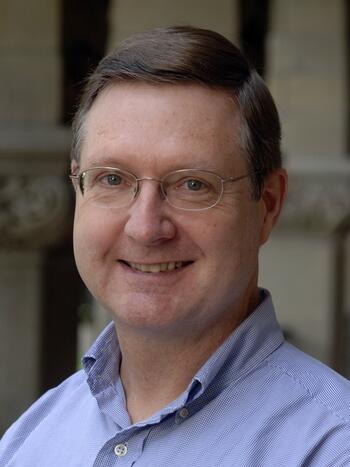
Kazuyuki Motohashi joins the Walter H. Shorenstein Asia-Pacific Research Center (Shorenstein APARC) during the period of September 2014 to March 2015 as Sasakawa Peace Fellow, from the University of Tokyo where he serves as a professor at the Department of Technology Management for Innovation, Graduate School of Engineering. Until this year, he had taken various positions at the Ministry of Economy, Trade and Industry of the Japanese Government, economist at OECD and associate professor at Hitotsubashi University.

His research interest covers a broad range of issues in economic and statistical analysis of innovation, including economic impacts of information technology, international comparison of productivity, national innovation system focusing on science and industry linkages and SME innovation and entrepreneurship policy. He has published several papers and books on above issues, including Productivity in Asia: Economic Growth and Competitiveness (2007). At Shorenstein APARC, he conducts research project, “New Channles: Reinventing US-Japan Relationship”, particularly focusing on innovation in silicon valley and its linkage with Japanese innovation system.

Mr. Motohashi was awarded Master of Engineering from University of Tokyo, MBA from Cornell University and Ph.D. in business and commerce from Keio University.

Slides_The Sun Rises Again? Regaining INdustrial Competitiveness of Japan in Science Based Economy Era
Download pdf

Philippines Conference Room

Encina Hall
616 Serra St., 3rd floor
Stanford University
Stanford, CA 94305


Shorenstein Asia-Pacific Research CenterEncina Hall E301616 Serra StreetStanford, CA 94305-6055
(650) 723-1434 (650) 723-6530
0
kazuyuki_motohashi.jpg Ph.D.

Kazuyuki Motohashi joins the Walter H. Shorenstein Asia-Pacific Research Center (Shorenstein APARC) during the period of September 2014 to March 2015 as this year's Sasakawa Peace Fellow, from the the University of Tokyo, where he serves as a professor at the Department of Technology Management for Innovation, Graduate School of Engineering. Until this year, he had taken various positions at the Ministry of Economy, Trade and Industry of the Japanese Government, economist at OECD, and associate professor at Hitotsubashi University.

His research interest covers a broad range of issues in economic and statistical analysis of innovation, including economic impacts of information technology, international comparison of productivity, national innovation systems focusing on science and industry linkages, and SME innovation and entrepreneurship policy. He has published several papers and books on the above issues, including Productivity in Asia: Economic Growth and Competitiveness (2007). At Shorenstein APARC, he is conducting the research project, “New Channles: Reinventing US-Japan Relationship”, particularly focusing on innovation in Silicon Valley and its linkage with the Japanese innovation system.

Mr. Motohashi was awarded his Master of Engineering degree from the University of Tokyo, MBA from Cornell University, and Ph.D. in business and commerce from Keio University.

Sasakawa Peace Fellow, 2014-2015
Seminars
News Type
News
Date
Paragraphs


Gi-Wook Shin, director of the Walter H. Shorenstein Asia-Pacific Research Center,  and David Straub, associate director of the Korea Program, presented their new study "Tailored Engagement: Toward an Effective and Sustainable Inter-Korea Relations Policy" to a Washington, D.C. audience at the Brookings Institution on Sept. 29. The Voice of America wrote an article in Korean about the presentation, citing Shin saying, "Engagement is important and essential but it must be carefully tailored or fitted to changing political and security realities on and around the Peninsula." 

Hero Image
straub brookings 2 Seong-hyon "Sunny" Lee
All News button
1
News Type
News
Date
Paragraphs


The Walter H. Shorenstein Asia-Pacific Research Center at Stanford University is pleased to announce its search for two 2015–16 Shorenstein Postdoctoral Fellows in Contemporary Asia. The award will be given to two junior scholars, who have completed their Ph.D. (with degree conferral and approval by August 31, 2015).

The primary focus of the fellowship is to conduct research and writing on contemporary political, economic or social change in the Asia-Pacific region (including Northeast, Southeast and South Asia), or topics related to international relations and international political economy.

The fellowship provides the postdoctoral fellows an opportunity to expand their dissertation, explore new topics and work alongside the Center’s distinguished scholars.

Postdoctoral fellows are required to be in residence at Stanford University for the duration of the appointment, and take part in Center activities throughout the academic year. Fellows are also required to present their research findings in seminars, and participate in the Center’s publication program.

The fellowship is a 10-month appointment with a salary rate of $50,000, plus $3,000 for research expenses. Appointments will begin in the fall quarter of the 2015–16 academic year.

The fellowship is made possible through the generosity of Walter H. Shorenstein, the benefactor for whom the Center is named.

Please access the fellowship posting for complete details and how to apply. The application deadline is December 19, 2014.

Hero Image
Encina Hall arches
All News button
1
News Type
News
Date
Paragraphs

As the new academic year gets underway, the Walter H. Shorenstein Asia-Pacific Research Center’s Corporate Affiliates Program is excited to welcome its new class of fellows to Stanford University.

The 2014-15 fellows and their affiliations are listed below:

  • Liang Fang, China Sunrain Solar Energy Co., Ltd.
  • Wataru Fukuda, Shizuoka Prefectural Government
  • Zhao Han, PetroChina
  • Yoshihiro Kaga, Ministry of Economy, Trade & Industry, Japan
  • Tsuyoshi Koshikawa, Ministry of Finance, Japan
  • Jaigeun Lim, Seoul Metropolitan Government
  • Yun Bae Lim, Samsung LIfe Insurance
  • Feng Lin, ACON Biotechnology
  • Yasunori Matsui, Mitsubishi Electric
  • Tatsuru Nakajima, Sumitomo Corporation
  • Shingo Nakano, Ministry of Economy, Trade & Industry, Japan
  • Ryuichi Ohta, Japan Patent Office
  • Jong Soo Paek, Samsung Electronics
  • Rajeev Prasad, Reliance Life Sciences
  • Ryuichiro Takeshita, Asahi Shimbun
  • Ryo Wakabayashi, Sumitomo Corporation
  • Changbao Zhang, PetroChina

At Stanford, the fellows will audit classes, work on English language skills, and conduct individual research projects. At the end of the year, they will give formal presentations on their research findings. At the Center, they will have the opportunity to consult with Shorenstein APARC's scholars and attend events featuring visiting experts from around the world. The fellows will also participate in special events and site visits to gain a firsthand understanding of business, society and culture in the United States.

Hero Image
corporate affiliates 2014 15
The 2014-15 Corporate Affiliate Visiting Fellows stand on the front steps of Encina Hall.
Rod Searcey
All News button
1
News Type
News
Date
Paragraphs

Japan is often cited for failing to capitalize on its innovative technologies and design aesthetics in global markets, but the advent of cloud computing provides new opportunities, says Kenji Kushida, the research associate for the Japan Program at the Walter H. Shorenstein Asia-Pacific Research Center (APARC), in a new coauthored op-ed.

In Nikkei Asian Review, Kushida writes with Martin Kenney, a professor of community and regional development at the University of California, Davis, that Japan’s market has a strong record of developing high-quality hardware and services, particularly in the consumer electronics and digital content industries, but a majority remains domestic.

Often referred to as the “Galapagos syndrome,” Japan is a technology leader but its output is largely confined to its own borders. The term compares the country’s industry to the Galapagos Islands, located off the coast of Ecuador, where geographic isolation has led to unique evolutionary development.

Kushida, who heads a new research project on Silicon Valley-Japan relationships, and Kenney note that many of the high-end core components in products from U.S. and Asian manufacturers are Japanese, despite loss of visibility on the final product.

The authors also say the rise of global cloud-computing services offers an immense opportunity for Japan, and a way to escape the Galapagos syndrome and enhance its global competitiveness.

The full op-ed can be found on Nikkei Asian Review online.

Hero Image
flickr ken lee keio technology mall
A "Techno-Mall" highlighting various technology developments in Japan is held at the The Tokyo International Forum in Dec. 2013.
Flickr/Ben Lee
All News button
1
-

[[{"fid":"215851","view_mode":"crop_870xauto","fields":{"format":"crop_870xauto","field_file_image_description[und][0][value]":"","field_file_image_alt_text[und][0][value]":"","field_file_image_title_text[und][0][value]":"","field_credit[und][0][value]":"","field_caption[und][0][value]":"","field_related_image_aspect[und][0][value]":"","thumbnails":"crop_870xauto","pp_lightbox":false,"pp_description":true},"type":"media","attributes":{"height":1126,"width":870,"style":"width: 500px; height: 647px;","class":"media-element file-crop-870xauto"}}]]

Philippines Conference Room

Encina Hall, 3rd Floor, Central

Stanford University

Shorenstein Asia-Pacific Research CenterEncina Hall E301616 Serra StreetStanford, CA 94305-6055
(650) 723-1434 (650) 723-6530
0
kazuyuki_motohashi.jpg Ph.D.

Kazuyuki Motohashi joins the Walter H. Shorenstein Asia-Pacific Research Center (Shorenstein APARC) during the period of September 2014 to March 2015 as this year's Sasakawa Peace Fellow, from the the University of Tokyo, where he serves as a professor at the Department of Technology Management for Innovation, Graduate School of Engineering. Until this year, he had taken various positions at the Ministry of Economy, Trade and Industry of the Japanese Government, economist at OECD, and associate professor at Hitotsubashi University.

His research interest covers a broad range of issues in economic and statistical analysis of innovation, including economic impacts of information technology, international comparison of productivity, national innovation systems focusing on science and industry linkages, and SME innovation and entrepreneurship policy. He has published several papers and books on the above issues, including Productivity in Asia: Economic Growth and Competitiveness (2007). At Shorenstein APARC, he is conducting the research project, “New Channles: Reinventing US-Japan Relationship”, particularly focusing on innovation in Silicon Valley and its linkage with the Japanese innovation system.

Mr. Motohashi was awarded his Master of Engineering degree from the University of Tokyo, MBA from Cornell University, and Ph.D. in business and commerce from Keio University.

Sasakawa Peace Fellow, 2014-2015
Subscribe to International Relations