International Relations

FSI researchers strive to understand how countries relate to one another, and what policies are needed to achieve global stability and prosperity. International relations experts focus on the challenging U.S.-Russian relationship, the alliance between the U.S. and Japan and the limitations of America’s counterinsurgency strategy in Afghanistan.

Foreign aid is also examined by scholars trying to understand whether money earmarked for health improvements reaches those who need it most. And FSI’s Walter H. Shorenstein Asia-Pacific Research Center has published on the need for strong South Korean leadership in dealing with its northern neighbor.

FSI researchers also look at the citizens who drive international relations, studying the effects of migration and how borders shape people’s lives. Meanwhile FSI students are very much involved in this area, working with the United Nations in Ethiopia to rethink refugee communities.

Trade is also a key component of international relations, with FSI approaching the topic from a slew of angles and states. The economy of trade is rife for study, with an APARC event on the implications of more open trade policies in Japan, and FSI researchers making sense of who would benefit from a free trade zone between the European Union and the United States.

-

The U.S.-Japan relationship has grown from strength to strength, benefitting both countries in terms of diplomacy, security and trade. Now, at a time when China is moving forward with its policy of expansionism in the East and South China Seas, and North Korea continues to threaten both the U and Japanese mainland, how can the two countries best work together to ensure regional stability? At this seminar, up-and-coming scholars from Japan and the United States will explore the potential opportunities and challenges for the U.S.-Japan relationship under the new Trump administration.


Panelists:

Phillip Lipscy
The Thomas Rohlen Center Fellow at the Freeman Spogli Institute for International Studies and Assistant Professor of Political Science at Stanford University. His fields of research include international and comparative political economy, international security, and the politics of East Asia, particularly Japan.

Satoru Mori
Professor, Hosei University.  Former official at the Ministry of Foreign Affairs of Japan, Dr. Mori holds a PhD in Law from the University of Tokyo. His research interests include contemporary American diplomacy, especially with Asian countries.  Previously he was a visiting researcher at Princeton University and George Washington University. He has delivered remarks at the U.S. Department of State, CSIS, the Carnegie Endowment for International Peace and other symposiums in the U.S.

Shino Watanabe
Associate Professor, Sophia University.  Dr. Watanabe obtained her PhD in International Relations from the University of Virginia, followed by a Master’s degree from Tufts University. She also studied at School of International Studies, Peking University in China.  Her main research interests are Chinese foreign policy and international relations of East Asia. She published a number of articles on China’s foreign economic policy and foreign relations.

Moderated by Daniel Sneider, Associate Director, Shorenstein Asia-Pacific Research Center, Stanford University


*Refreshments will be served*

Panel Discussions
-

In the two decades since the countries of Central Asia declared independence, China has become one of their main partners, eclipsing many other actors. This has impacted the international relations of the new states, and structured their economic development. China's influence in the region has, however, raised many questions, ranging from issues of national integrity to economic stability and geopolitical policies.

In terms of economics, hydrocarbons and trade are at the forefront of Chinese activity in the region. Beijing has become a key positive element in the development of a service economy and new technologies, while China's geographical proximity has supported regional development and the insertion of Central Asian countries into world markets. However, Beijing also has played a negative role by using the local economies as mere sources for raw materials and by destroying, through dominating competition, the already very fragile post-Soviet industrial fabric.

On the geopolitical level, how does Central Asia handle its relations with a diverse array of international actors and thus competing interests in order to achieve a positive balance? Central Asian governments have been playing a careful balancing game between the two main actors, Beijing and Moscow. However, many Central Asians argue for countering what they see as an impasse in their countries' partnerships with Russia and China by developing relations with other actors, particularly Muslim countries (such as Turkey, Iran or the UAE) and Western countries. This presentation will address questions at both the economic and geopolitical levels, where Beijing has made it possible to act as a catalyst for political debates about the choices made by Central Asia governments. 


Image
Peyrouse

Sebastien Peyrouse is the Research Professor of International Affairs at the Elliott School of International Affairs of The George Washington University. He was a doctoral and postdoctoral Fellow at the French Institute for Central Asia Studies in Tashkent (1998-2000 and 2002-2005), a Research Fellow at the Slavic Research Center, Hokkaido University in Sapporo (2006), and a Research Fellow at the Woodrow Wilson International Center for Scholars in Washington (2006-2007). In 2008-2012, he was a Senior Research Fellow with the Central Asia-Caucasus Institute & Silk Road Studies Program (SAIS, Johns Hopkins University, Washington D.C.) and with the Institute for Security and Development Policy (Stockholm). He is an Associated Scholar with the Institute for International and Strategic Relations (IRIS, Paris), and with the Fundación para las Relaciones Internacionales y el Diálogo Exterior (FRIDE, Madrid) and a member of the Brussels-based EUCAM (Europe-Central Asia Monitoring). 

p.p1 {margin: 0.0px 0.0px 0.0px 0.0px; font: 16.0px Garamond; -webkit-text-stroke: #000000} span.s1 {font-kerning: none}

Dr. Peyrouse is the author of Turkmenistan. Strategies of Power, Dilemmas of Development (M. E. Sharpe, 2011), and the co-author of The 'Chinese Question' in Central Asia. Domestic Order, Social Changes, and the Chinese Factor (Hurst, Columbia University Press, 2012) and of Globalizing Central Asia. Geopolitics and the Challenges of Economic Development (M.E. Sharpe, 2012). He has also co-edited China and India in Central Asia. A new "Great Game"? (Palgrave Macmillan, 2010), and Mapping Central Asia: Indian Perceptions and Strategies (Ashgate, 2011). His articles have appeared in Europe Asia Studies, Problems of Post-Communism, Nationalities Papers, China Perspectives, Religion, State & Society, Journal of Church and State. He has authored or co-authored seven books on Central Asia in French.


This event is co-sponsored by the Shorenstein APARC's China Program and The Forum for American/Chinese Exchange at Stanford (FACES).

This event is part of the winter colloquia series entitled "China: Going Global" sponsored by Shorenstein APARC's China Program.

Image

China: Going Global

Beijing’s new Silk Road initiative links old trade corridors from Asia to Africa and Europe. Many perceive that President Xi Jinping’s “One Belt, One Road” initiative as well as China’s many other trade, investment and finance projects transcend their economic calculus and reflect Beijing’s geopolitical ambitions to reposition China’s standing on the global stage. The China Program brings leading experts to explore the drivers and motivators of China’s international initiatives, their reach and scope as well as the implications of China’s increasing activism on the world stage.

http://aparc.fsi.stanford.edu/research/china-going-global

Sebastien Peyrouse <i>Research Professor of International Affairs, Elliott School of International Affairs, The George Washington University</i>
Seminars
-

Since assuming the presidency of the Philippines in June 2016 Rodrigo Duterte has been the focus of considerable international attention because of his brusque personality and two dramatically new policies: 1) a take-no-prisoners war on illegal drugs that has resulted in the deaths of over 6,000 alleged drug pushers and users; and 2) an abrupt distancing of relations with the United States coupled with an enthusiastic embrace of China. But considerably less attention is being paid to the Duterte government’s other policies or to the underlying political dynamics that will determine the efficacy of his government and, perhaps, the future of liberal democracy in the Philippines. The speaker will situate the Duterte government in the context of Philippine’s democratic experience, identify the political dynamics that are likely to determine its future, and assess the multiple threats to liberal democracy in the Philippines.

Image
david timberman 4x6
David Timberman is a political analyst and development practitioner with 30 years of experience analyzing and addressing political, governance and conflict-related challenges, principally in Southeast and South Asia.  As a Visiting Scholar at Stanford/APARC he is working on a book on the contemporary Philippine political economy.  During 2015-2016 he was a Visiting Professor of Political Science at De La Salle University in Manila. He has lived and worked in the Philippines, Indonesia and Singapore, including experiencing first-hand the democratic transitions in the Philippines (1986-1988) and Indonesia (1998-2001). He has written extensively on political and governance issues in the Philippines and has edited or co-edited multi-author volumes on the Philippines, Cambodia, and economic policy reform in Southeast Asia.


David G. Timberman 2016-2017 Lee Kong Chian NUS-Stanford Fellow on Contemporary Southeast Asia
Seminars
-

Due to venue capacity limits, we are no longer accepting RSVPs for this event.


India prides itself on being the "world's largest democracy". In some respects it is certifiably democratic; as in the regular conduct of free and fair elections. But in other respects there are deficits. One such area is freedom of expression. While Indian writers, artists and film-makers are certainly freer than their counterparts in totalitarian countries such as China, they are less free when compared to their colleagues in democracies such as Sweden or the United States. This lecture identifies eight distinct threats to freedom of expression in India, the most important of which are the presence of archaic colonial laws and the rise of identity politics.


Image
 Guha is a historian and biographer based in Bangalore. He has taught at the universities of Yale and Stanford, held the Arné Naess Chair at the University of Oslo, and been the Indo-American Community Visiting Professor at the University of California at Berkeley. In the academic year 2011-2012 he served as the Philippe Roman Professor of History and International Affairs at the London School of Economics.

Guha’s books include a pioneering environmental history, The Unquiet Woods (University of California Press, 1989), and an award-winning social history of cricket, A Corner of a Foreign Field (Picador, 2002). India after Gandhi (Macmillan/Ecco Press, 2007) was chosen as a book of the year by the Economist, the Washington Post, the Wall Street Journal, the San Francisco Chronicle, Time Out, and Outlook, and as a book of the decade in the Times of India, the Times of London, and The Hindu. His most recent book is Gandhi Before India (Knopf, 2014), which was chosen as a notable book of the year by the New York Times.

Apart from his books, Guha also writes a syndicated column, that appears in six languages in newspapers with a combined readership of some twenty mllion. Guha’s books and essays have been translated into more than twenty languages. The New York Times has referred to him as ‘perhaps the best among India’s non fiction writers’; Time Magazine has called him ‘Indian democracy’s pre-eminent chronicler’.

Ramachandra Guha’s awards include the Leopold-Hidy Prize of the American Society of Environmental History, the Daily Telegraph/Cricket Society prize, the Malcolm Adideshiah Award for excellence in social science research, the Ramnath Goenka Prize for excellence in journalism, the Sahitya Akademi Award, and the R. K. Narayan Prize. In 2009, he was awarded the Padma Bhushan, the Republic of India’s third highest civilian honour. In 2008, and again in 2013, Prospect Magazine nominated Guha as one of the world’s most influential intellectuals. In 2014, he was awarded an honorary doctorate in the humanities by Yale University. In 2015, he was awarded the Fukuoka Prize for contributions to Asian studies.


About the colloquia:

In 2014, Indian voters gave Narendra Modi and the BJP a mandate to accelerate India’s economic reforms and revitalize its foreign relations, in particular with the United States and with partners in East Asia. But the pace and depth of reforms and economic transformation have not met the high expectations, despite strong GDP performance. Economic growth remains uneven, job creation sluggish, and massive infrastructural and administrative problems continue to trouble many sectors of the economy. After twenty-five years of economic reforms, India’s potential as a new global industrial hub has still not been realized and its vast resources of labor and talent remain underdeveloped.

During the 2017 winter and spring quarters Shorenstein APARC and the Center for South Asia will host a series of lectures and discussions that explore what makes India democratic and dynamic, and the obstacles that prevent the country from realizing its enormous potential.

Also, in 2017, the next Global Entrepreneur Summit will be in India, sequel to the 2016 Stanford-hosted Summit. This colloquium will help prepare for that event by reaching out to scholars, students, interested stakeholders, business leaders and others in the Bay Area.

This colloquia is co-sponsored with the Stanford Center for South Asia 

Image
csa logorust cropped

Seminars
-

Since its independence, India’s statesmen, policymakers and social scientists all firmly believed that the entrenched hierarchical caste order and the deep divisions between religious communities would become less salient, and perhaps wither away, as the country developed a modern economy and a new division of labor based on skill and merit rather than a ‘traditional’ inherited status. Today, after seven decades of democracy and steady economic growth, it is clear that both caste and religious community are as important as ever. Rather than disappearing, these cultural identities and social networks have evolved along with the economy. A closer look at how the Indian economy is organized reveals that caste and community fundamentally shape how labor is organized, how markets function, how urban development happens, and how industry is owned and organized. Two case studies, one of skilled labor in South India and another of the structure of industrial growth in a city in central India, will illustrate how India actually works.

Image
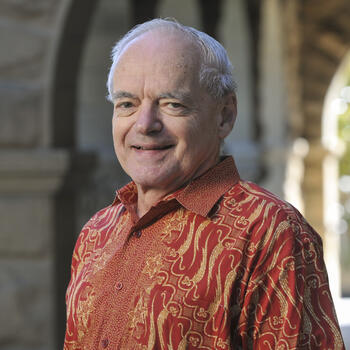
Thomas Blom HansenDirector, Center for South Asia; Reliance-Dhirubhai Ambani Professor in South Asian Studies; Professor in Anthropology, Stanford University

As the Director of Stanford’s Center for South Asian Studies, Hansen is charged with building a substantial new program. He has many and broad interests spanning South Asia and Southern Africa, several cities and multiple theoretical and disciplinary interests from political theory and continental philosophy to psychoanalysis, comparative religion and contemporary urbanism..


Image
Aruna Ranganathan, Assistant Professor of Organizational Behavior, Stanford University

Aruna Ranganathan studies questions of work and employment in the context of economic development. By applying novel methods that combine field-experimental and quantitative research designs with ethnography and interviews, Aruna's research investigates how low-income occupations in developing countries are governed, organized, seek meaning through their work and navigate the market. Through her research, Aruna strives to advance our theoretical understanding of work, while informing the design of labor-market institutions and policy for the developing world. In previous projects based in India, Aruna has studied the boom of IT and business process outsourcing, the professionalization of plumbing, price-setting behavior among handcraft artisans and the transition of women into formal employment in garment factories.


About the colloquia:

In 2014, Indian voters gave Narendra Modi and the BJP a mandate to accelerate India’s economic reforms and revitalize its foreign relations, in particular with the United States and with partners in East Asia. But the pace and depth of reforms and economic transformation have not met the high expectations, despite strong GDP performance. Economic growth remains uneven, job creation sluggish, and massive infrastructural and administrative problems continue to trouble many sectors of the economy. After twenty-five years of economic reforms, India’s potential as a new global industrial hub has still not been realized and its vast resources of labor and talent remain underdeveloped.

During the 2017 winter and spring quarters Shorenstein APARC and the Center for South Asia will host a series of lectures and discussions that explore what makes India democratic and dynamic, and the obstacles that prevent the country from realizing its enormous potential.

Also, in 2017, the next Global Entrepreneur Summit will be in India, sequel to the 2016 Stanford-hosted Summit. This colloquium will help prepare for that event by reaching out to scholars, students, interested stakeholders, business leaders and others in the Bay Area.


This colloquia is co-sponsored with the Stanford Center for South Asia 

Image
csa logorust cropped

Seminars
-

Long a laggard on human rights, the Association of Southeast Asian Nations (ASEAN) is being pressed from within to reconsider its indifference. In 2009 an ASEAN Human Rights Commission (AICHR) was created and tasked with promoting (not protecting) human rights in Southeast Asia. In 2012 its members agreed to issue a first-ever ASEAN Human Rights Declaration. Most observers dismissed these moves as symbolic—an effort mainly to assuage foreign critics and  gain international legitimacy. Prof. Jetschke differs.  She will argue that the AICHR’s formation was prompted in part by the swelling flows of refugees across borders inside Southeast Asia, especially from Myanmar, and the problems thereby created for the region’s states and societies. She will also explore the extent to which these factors have eroded one of ASEAN’s strongest regional norms—the taboo on interfering in members’ domestic affairs. That erosion could strengthen ASEAN as something more than the sum of its sovereign members.

Image
anja jetschke 4x6
Anja Jetschke is Professor of International Relations at the University of Göttingen’s political science department since 2012. Her Comparative Regional Organizations Project has developed the world’s largest database on regional organizations. Previously she headed a research program on international governance at the German Institute of Global and Area Studies (Hamburg) and was an assistant professor at the University of Freiburg. She also held research fellowships at Ohio State University and the University of Berlin. Her publications include many articles and chapters on comparative regionalism, ASEAN, and the AICHR, and a prize-winning book, Human Rights and State Security: Indonesia and the Philippines (2011). Her doctorate is from the European University (Florence).

Anja Jetschke Professor of International Relations, University of Göttingen
Seminars
News Type
News
Date
Paragraphs

Karen Eggleston has been named deputy director of Stanford’s Shorenstein Asia-Pacific Research Center (APARC) in the Freeman Spogli Institute for International Studies (FSI), effective Jan. 9, 2017.

Eggleston, an FSI senior fellow and director of the Asia Health Policy Program, studies comparative health policy and the economics of demographic transition in Asia, with a focus on China.

“Karen’s record of scholarship and astute ability to work across research, teaching and administration will support Shorenstein APARC as it continues to grow. We’re very fortunate to have someone of her caliber ready to help oversee the center’s operations,” Shorenstein APARC Director Gi-Wook Shin said.

Eggleston first came to Stanford as a center fellow in 2007 to lead the Asia Health Policy Program and was promoted to senior fellow in 2015. Now in its 10th year, the program maintains a robust research agenda, supports an annual postdoctoral fellowship, and convenes conferences in the United States and Asia.

Eggleston teaches students through the East Asia studies program on-campus, and has published over 50 peer-reviewed articles in economics, medicine, demography and health policy journals such as Journal of Economic Perspectives, Journal of Health Economics, Population Studies, Lancet and Health Affairs. She has also written and edited several books, most recently Policy Challenges from Demographic Change in China and India (2016), part of Shorenstein APARC’s publishing program.

“I am honored to serve Shorenstein APARC in this new capacity and look forward to working with Professor Shin and my colleagues to find innovative ways to strengthen the center and promote our intertwined missions of research, education and policy engagement,” said Eggleston, who is also a faculty research fellow at the National Bureau of Economic Research.

The deputy director position was created to accommodate the increasing size and scope of the center. The deputy director works closely with the director on strategic vision and objectives.

Hero Image
Portrait of Karen Eggleston Rod Searcey
All News button
1
News Type
News
Date
Paragraphs

India is a focus of colloquia at the Shorenstein Asia-Pacific Research Center during the next few months. A seminar series entitled “A New India? The Impact of 25 Years of Reform” will explore the country’s economic growth and efforts to revitalize its foreign relations.

The colloquia, co-sponsored by Stanford’s Center for South Asia, will include lectures from scholars, policymakers and other thought leaders on India’s democratic system and society, and provide a forum to discuss how the country can overcome obstacles to long-term prosperity.

Kathleen Stephens, the William J. Perry Fellow at Shorenstein APARC and former U.S. ambassador to the Republic of Korea, has organized and will moderate the colloquia. She served as the chargé d'affaires at the U.S. Embassy in New Delhi in 2014.

Stephens said, “Now is the right time and Stanford is the right place for a renewed focus on India, its daunting challenges and its extraordinary potential. This series will consider the strategic bet U.S. policymakers have made on India's rise, and India's own aspirations to play a bigger global role, particularly in Asia.

“In this series and beyond, we want to knit together the expertise and resources at Stanford and in Silicon Valley with policy leaders from India and elsewhere to expand our understanding of India in all its contemporary complexity and importance.”

From 1999 to 2013, Shorenstein APARC had a prolific initiative that supported scholarly work related to South Asia. The center envisions the colloquia will be some of many activities about the region going forward.

A listing of the seminars and related multimedia can be accessed here; more information will be added as it becomes available.

Hero Image
ellis bridge gujarat india
A rickshaw is driven across Ellis Bridge in Ahmedabad, Gujarat, India.
siraanamwong/Getty Images
All News button
1
-

WE HAVE REACHED VENUE CAPACITY AND ARE NO LONGER ACCEPTING RSVPS


PLEASE NOTE VENUE CHANGE TO ENCINA HALL,

BECHTEL CONFERENCE CENTER, 1ST FLOOR

The election of Donald Trump has introduced a big question mark into America’s relations with China. Will the new president start a trade war with the world’s second biggest economy? Will Trump attempt to refashion America’s relations with Taiwan and thus infuriate Beijing? Will Trump’s vow to build more U.S. naval vessels place the United States and China on a path to conflict in the South China Sea? How will Trump handle the prospects of a North Korea armed with nuclear weapons and an intercontinental ballistic missile with which to deliver them? As for China, how will it react to this new administration, which espouses a decidedly different view of China than the one that predominated in Washington over the past several decades? Will China adopt the role of “responsible [global] stakeholder” in contrast to Trump’s “America first” ideology? Or will China join the United States in a race to the bottom, precipitating further ideological, economic and geostrategic competition that pulls the world down with it?

A book signing will follow. Copies of Mr. John Pomfret’s book will be available for purchase 


Image
pomfret
John Pomfret is the author of the recently-published The Beautiful Country and the Middle Kingdom: America and China from 1776 to the Present (2016). He is also the author of the best-seller Chinese Lessons: Five Classmates and the Story of the New China (2007) and an award-winning journalist who spent decades as a foreign correspondent with The Washington Post. He has lived in China for 20 years since the early 1980s and has also covered U.S.-China relations from Washington, DC. As The New York Times said of The Beautiful Country, “Donald Trump (or his next secretary of state) would be well advised to read this timely and comprehensively informative book.”


This event is co-sponsored by Shorenstein APARC's China Program and the Center for East Asian Studies

 
John Pomfret former foreign correspondent for <i>The Washington Post</i>; author of <i>The Beautiful Country and the Middle Kingdom: America and China from 1776 to the Present</i>
Seminars
Subscribe to International Relations