International Relations

FSI researchers strive to understand how countries relate to one another, and what policies are needed to achieve global stability and prosperity. International relations experts focus on the challenging U.S.-Russian relationship, the alliance between the U.S. and Japan and the limitations of America’s counterinsurgency strategy in Afghanistan.

Foreign aid is also examined by scholars trying to understand whether money earmarked for health improvements reaches those who need it most. And FSI’s Walter H. Shorenstein Asia-Pacific Research Center has published on the need for strong South Korean leadership in dealing with its northern neighbor.

FSI researchers also look at the citizens who drive international relations, studying the effects of migration and how borders shape people’s lives. Meanwhile FSI students are very much involved in this area, working with the United Nations in Ethiopia to rethink refugee communities.

Trade is also a key component of international relations, with FSI approaching the topic from a slew of angles and states. The economy of trade is rife for study, with an APARC event on the implications of more open trade policies in Japan, and FSI researchers making sense of who would benefit from a free trade zone between the European Union and the United States.

News Type
Commentary
Date
Paragraphs

"With the current affairs such as the financial crisis and the Iraq War," Gi-wook Shin says, "the new Obama administration may not have the North Korea issues on its priority list for a while.  Lee Myung-bak administration, meanwhile,  is urged to revisit the workable policies of the past as well as to initiate the pragmatic diplomacy towards the collaboration between South Korea and the U.S."

All News button
1
Authors
Phillip Lipscy
News Type
Commentary
Date
Paragraphs
Professor Phillip Lipscy discusses the current international financial crisis and provides insight for future reforms. "The IMF and World Bank should be reformed to better reflect the interests and concerns of rising economic powers. Voting shares need to be further redistributed to reflect underlying economic realities. Decision making rules should be modified to give greater weight or agenda-setting authority to regional actors -- the US may have a strong interest in loans to Mexico, but Japan may have a greater stake in Indonesia. Assignment of the top positions should be made truly competitive. Core functions should be decentralized -- both institutions are headquartered in Washington, impeding employment of top talent from Asia and limiting intellectual exchange."

Major international crises often produce tectonic shifts in international relations. Under pressure from key European counterparts, President Bush has agreed to a "new Bretton Woods" summit on Nov. 15.

It would be hard to overstate the potential significance of this meeting. The first Bretton Woods, in 1944, set the rules for monetary relations among nations, and it created the International Monetary Fund (IMF) and the World Bank.

While European leaders are pushing for greater regulation and a major overhaul of the international financial order, US policymakers have been lukewarm, emphasizing the preservation of free-market capitalism. This transatlantic drama has obscured the more fundamental problem—how to accommodate the historic shift of economic power away from the West toward Asia.

Including India, broader East Asia encompasses more than half of the world's population. The region already accounts for about one-third of global economic output, oil consumption, and CO2 emissions, and this is only likely to grow in the future. Over the course of the 21st century, Asia's economic and geopolitical weight in the world will, in all likelihood, come to rival that of Europe in the 19th century. Asian problems will become increasingly indistinguishable from global problems.

In the face of such dramatic change, the IMF and World Bank are becoming relics of a bygone era. At the time of their creation, by US and European negotiators, the major challenge was to get capital flowing from the US to war-ravaged Europe. The days of the US as creditor state are long gone—our massive current account deficit is financed by importing nearly $1 trillion in foreign capital every year. Major US banks are being rescued by sovereign wealth funds and financial institutions from the Middle East and East Asia. China and Japan alone held over $600 billion of securities issued by Fannie Mae and Freddie Mac, making the bailout of those institutions a major foreign policy issue.

Despite these changed realities, both Bretton Woods institutions remain dominated by the West. By convention, the IMF is led by a European, the World Bank by a US national. The US is the only country with veto power over important decisions in either body.

My analysis of voting shares in the IMF indicates that the Allied powers of World War II have been consistently overrepresented compared to Axis powers despite the passing of more than 60 years since the end of that war. Studies show that IMF lending is biased in favor of recipients with strong economic and diplomatic ties to the US and key European states at the expense of other members.

This unbalanced representation had real consequences during the Asian Financial Crisis of 1997-98, when the IMF, as part of its rescue operation, implemented policies widely viewed as contrary to Asian interests. During the crisis, Japanese financial authorities proposed an Asian Monetary Fund as a potential alternative source of liquidity. This proposal was rejected by US officials, who feared dilution of IMF authority. However, over the past decade, East Asian states have stockpiled foreign currency reserves and developed regional cooperation that may eventually develop into a credible alternative to the IMF.

The IMF and World Bank should be reformed to better reflect the interests and concerns of rising economic powers. Voting shares need to be further redistributed to reflect underlying economic realities. Decisionmaking rules should be modified to give greater weight or agenda-setting authority to regional actors—the US may have a strong interest in loans to Mexico, but Japan may have a greater stake in Indonesia. Assignment of the top positions should be made truly competitive. Core functions should be decentralized—both institutions are headquartered in Washington, impeding employment of top talent from Asia and limiting intellectual exchange.

An international financial architecture that fragments or remains centered on the West as Asia rises will probably prove grossly ineffective. Europe attempted much the same during the turbulent period between the two World Wars, resurrecting a system based on British hegemony even as Britain was in relative decline. Those were scary times, with free riding and beggar-thy-neighbor policies feeding mutual distrust and economic catastrophe.

This will not be the last financial crisis we face. Next time, ad hoc cooperation by the US and Europe may prove insufficient. Franklin Roosevelt had the foresight to include China on the United Nations Security Council long before that nation became a geopolitical heavyweight. Similar foresight should be brought to bear as world leaders debate the future of the international financial architecture.

All News button
1
-

Despite early talk of being able to “decouple” itself from the U.S. financial crisis and accompanying credit crunch, the damage has spread to Asia. Collapsing export markets, currency instability and stock market collapses are plaguing all of Asia, not least China, Japan and South Korea. At the same time, China and Japan are major financiers of the United States federal government and newly nationalized financial firms Fannie Mae and Freddie Mac.

Two leading economic experts on Japan and China will discuss the impact of the U.S. financial crisis on Asia. Does Japan’s experience with banking collapse bear any lessons for the United States today? Will China continue to finance the United States government? How will a U.S. recession affect the prospects for economic growth in Asia?

Richard Katz has taught about Japan’s economy as an Adjunct Associate Professor at the New York University Stern School of Business. Previously, and as a Visiting Lecturer in Economics at the State University of New York (SUNY) at Stony Brook.  Mr. Katz is the author of two books on Japan's economic trvails; The System That Soured--The Rise and Fall of the Japanese Economic Miracle (M.E. Sharpe 1998) and Japanese Phoenix: The Long Road to Economic Revival (M.E. Sharpe 2002).  He has twice testified about Japan and Asia before Congress, in 1998 and 2005. Both times the hearings were held by the Asia-Pacific Subcommittee of the House International Relations Committee. In the year 2000, he served on the Council of Foreign Relations' Task Force on the Japanese economy.  Having received his B.A. degree in History from Columbia University in 1973, Mr. Katz went on to obtain his M.A. in Economics at New York University (NYU) in 1996.
 
Mark Spiegel served as an assistant professor in the Department of Economics at New York University.  He has served as a visiting professor in the Economics Department of U.C. Berkeley, as well as a lecturer at the Haas School of Business at U.C. Berkeley.  He has also served as a consultant at the World Bank, as a visiting scholar at the Bank of Japan, and as Chairman of the Federal Reserve System Committee on International Economic Analysis.  Dr. Spiegel received his Ph.D. in economics from the University of California at Los Angeles and his B.A. in economics from the University of California at Berkeley.  Dr. Spiegel has published numerous articles in both academic and policy-oriented journals on international financial issues and on economic issues associated

Philippines Conference Room

Richard Katz Co-Editor Speaker The Oriental Economist Report
Mark Spiegel Vice President, International Research and Director Speaker Center for Pacific Basin Studies at the Federal Reserve Bank of San Francisco
Seminars
Paragraphs

Somewhere on the long list of problems that President Barack Obama will inherit next January will be the ongoing negotiations to roll back North Korea’s nuclear weapons program. The announcement on October 11, removing North Korea from the U.S. list of state sponsors of terrorism in exchange for a verification mechanism, has the virtue of keeping the diplomatic
avenue open. But if we look carefully at what it took even to get to this interim point,
there should be no illusions about the difficulties of finishing the job.

The latest deal merely closes the second phase of an agreement that was originally signed in February 2007. This phase was supposed to be completed in 60 days. Instead it has taken 19 months. This 19-month saga of negotiation over what may be the easiest step in the process—freezing the status quo—should caution against any expectation that the next administration can easily step in and pick up the negotiating reins.

There are three options it can reasonably consider come January. One would be to try to regain what has been given away in these talks—the inclusion of undeclared sites and proliferation activities—by returning to tactics of international sanctions and Chinese pressure. Japan, which is unhappy with the deal, may be ready for this but there is no evidence that Beijing or even the conservative Lee Myung-Bak government in South Korea is interested in returning to confrontation. At the other end of the spectrum would be an effort to leapfrog the drawn-out phases by offering Pyongyang most of what they claim to want—normalization of relations, economic aid, security assurances, a formal peace treaty to end the Korean war—in a "grand bargain."

Finally, there is the least attractive but most likely course: to lock in the gains of plutonium containment and to continue the diplomatic slog into the dismantling phase, albeit with a more rigorous approach. The U.S. could also try to encourage regime transformation in the North through both engagement and pressure. Given the uncertainties over the health of North Korean dictator Kim Jong Il, this may be the only viable path to ending the North Korean nuclear threat.

All Publications button
1
Publication Type
Journal Articles
Publication Date
Journal Publisher
The Oriental Economist
Authors
Paragraphs

Hard Choices offers a most rewarding perspective on how Southeast Asian states straddle the ongoing tensions among three rarely compatible goals—security, democracy, and regionalism. Empirically rich and topically diverse, [the book] is broad in scope and full of deep analytic insights. It will be appreciated well beyond Southeast Asia." — T. J. PEMPEL, University of California, Berkeley

Southeast Asia faces hard choices. The region’s most powerful organization, ASEAN, is being challenged to ensure security and encourage democracy while simultaneously reinventing itself as a model of Asian regionalism.

Should ASEAN’s leaders defend a member country’s citizens against state predation for the sake of justice—and risk splitting ASEAN itself? Or should regional leaders privilege state security over human security for the sake of order—and risk being known as a dictators’ club? Should ASEAN isolate or tolerate the junta in Myanmar? Is democracy a requisite to security, or is it the other way around? How can democratization become a regional project without first transforming the Association into a “people centered” organization? But how can ASEAN reinvent itself along such lines if its member states are not already democratic?

How will its new Charter affect ASEAN’s ability to make these hard choices? How is regionalism being challenged by transnational crime, infectious disease, and other border-jumping threats to human security in Southeast Asia? Why have regional leaders failed to stop the perennial regional “haze” from brush fires in democratic Indonesia? Does democracy help or hinder nuclear energy security in the region?

In this timely book—the second of a three-book series focused on Asian regionalism—ten analysts from six countries address these and other pressing questions that Southeast Asia faces in the twenty-first century.

Recent Praise for Hard Choices

“In this delightful volume, a diverse, fresh, and talented group of authors shed new light on Southeast Asia and speak engagingly to wider scholarly questions.  Emmerson's introduction sets the tone for an unusually creative edited collection.”
 —Andrew MacIntyre, Australian National University
“In Hard Choices, Donald Emmerson has brought together a remarkable group of leading young scholars to write on Southeast Asian regionalism from political-security, economic, and sociological perspectives. His introductory chapter defines the dimensions of regionalism on which the other contributors elaborate in a series of fine essays examining ASEAN’s past, present, and alternative futures. Hard Choices is a landmark study that will be consulted for years to come by scholars and practitioners. Highly recommended.”
—Sheldon Simon, Arizona State University

Examination copies: Desk, examination, or review copies can be requested through Stanford University Press.

All Publications button
1
Publication Type
Books
Publication Date
Subtitle

Security, Democracy, and Regionalism in Southeast Asia

Authors
Donald K. Emmerson
Book Publisher
Shorenstein APARC
Paragraphs

Will China come to dominate global high-tech innovation?

In the future, perhaps. Today, however, Greater China—Mainland China, Taiwan, and Hong Kong—is focused on the quest for innovation. The dominant paradigm on the Mainland is one of execution, not innovation. Beijing now aims to turn China—historically an adopter of technologies from elsewhere—into a major technology creator. Self-reliance has become the government’s watchword and its ultimate goal.

The talents and resources available are impressive. More Chinese young people are well-educated, international patents and research and development (R&D) spending are on the rise, and China boasts a growing presence in world scientific literature.

Still, negatives remain. China must overcome the legacies of a top-down, state-run research system that is largely disconnected from commerce, and an academic system not always supportive of independent scholarly inquiry. The government is working to change these outdated institutions, but such shifts do not occur overnight.

Taiwan and Hong Kong have followed different paths to high-tech innovation. Taiwan’s route has been dominated by government but implemented by mostly small- and medium-sized firms, with help from its Industrial Technology Research Institute (ITRI), a model for moving concepts to commerce. Significantly, Taiwan’s companies maintain strong links to multinational firms both in the United States and in Mainland China. Taiwan’s Hsinchu Science-based Park is seen as a model high-tech cluster throughout Asia and beyond.

Hong Kong has taken another road. While its formal R&D activity is small, it innovates in business models, particularly in logistics chains that reach into the Mainland and globally. It is a (largely unheralded) story of great success.

The big question is: When will Greater China’s high-tech innovation have a major impact on the world economy?

Examination copies: Desk, examination, or review copies can be requested through Stanford University Press.

All Publications button
1
Publication Type
Books
Publication Date
Authors
Henry S. Rowen
Book Publisher
Shorenstein APARC
-

Capital in its many facets is variable.  Like quicksilver, it can divide, reunite, and metamorphose seamlessly across a spectrum of ownerships by foreigners, the state, and domestic private
entrepreneurs.  

What does variable capital mean in and for Vietnam?  Who are the different investors?  How do they respond to state efforts to attract investments from overseas Vietnamese?  How do global supply chains—corporate buyers, contract factories, and subcontractors—shape the changing nature and impacts of capital in Vietnam?  How does a self-described socialist state use policies on investment, employment, and the privatization of state-owned factories to control the relations between workers and owners?  What roles in this mix are played by journalists who can ignore neither the party line nor the workers who protest in spite of it?  

In addition to addressing these questions, Prof. Tran will argue that workers in Vietnam are not resigned to being squeezed between morphing capital and state control.  They defend their interests flexibly in diverse forms of protest, overt and covert, including appeals to the state’s own socialist vision.  Fresh from extensive fieldwork in labor-intensive industries such as textiles, garments, and footwear, Prof. Tran will show how Vietnamese workers use origin, class, gender, and ethnicity to mobilize collective action against morphing capital in a one-party state.

Angie Ngoc Tran is a professor of political economy at California State University, Monterey Bay.  Her latest publications include articles in the Labor Studies Journal (2007) on labor media and labor-management-state relations in Vietnam.  Her PhD is from the University of Southern California (1996).

Philippines Conference Room

Shorenstein APARC
Stanford University
Encina Hall E301
Stanford, CA 94305-6055

(831) 582-3753 (650) 723-6530
0
Lee Kong Chian NUS-Stanford Distinguished Fellow on Southeast Asia
Angie_BioPhoto_Adjusted.jpg MA, PhD

Angie Ngoc Trần is a professor in the Division of Social and Behavioral Sciences and Global Studies at California State University, Monterey Bay (CSUMB).  Her plan as the 2008 Lee Kong Chian National University of Singapore-Stanford University Distinguished Fellow is to complete a book manuscript on labor-capital relations in Vietnam that highlights how different identities of investors and owners—shaped by government policies, ethnicity, characteristics of investment, and the role they played in global flexible production—affect workers’ conditions, consciousness, and collective action differently.

Tran spent May-July 2008 at Stanford and will return to campus for the second half of November 2008.  She will share the results of her project in a public seminar at Stanford under SEAF auspices on November 17 2008.

Prof. Trần’s many publications include “Contesting ‘Flexibility’:  Networks of Place, Gender, and Class in Vietnamese Workers’ Resistance,” in Taking Southeast Asia to Market (2008); “Alternatives to ‘Race to the Bottom’ in Vietnam:  Minimum Wage Strikes and Their Aftermath,” Labor Studies Journal (December 2007); “The Third Sleeve: Emerging Labor Newspapers and the Response of Labor Unions and the State to Workers’ Resistance in Vietnam,” Labor Studies Journal (September 2007); and (as co-editor and author) Reaching for the Dream:  Challenges of Sustainable Development in Vietnam (2004).  She received her Ph.D. in Political Economy and Public Policy at the University of Southern California in 1996 and an M.A. in Developmental Economics at USC in 1991.

Angie Ngoc Tran 2008 Lee Kong Chian NUS-Stanford Distinguished Fellow Speaker
Lectures
-

In addition to Iraq, Afghanistan, Pakistan, the financial crisis, and the housing crisis (as if that were not enough!), the next American president will have his hands full with matters on the Korean peninsula.  What will be the future of Six Party talks?  What is the status of the leadership in Pyongyang?  How do changes in leadership in Washington (and potentially in Pyongyang) affect outcomes?  What are the prospects for US-ROK relations?  And what of the KORUS FTA?  Victor Cha, former director of Asian affairs at the White House, will lead a discussion on these issues.

Professor Cha is director of Asian Studies and holds the D.S. Song Chair in the Department of Government and School of Foreign Service at Georgetown University.  He left the White House in May 2007 after serving since 2004 as Director for Asian Affairs at the National Security Council.  At the White House, he was responsible primarily for Japan, the Korean peninsula, Australia/New Zealand and Pacific Island nation affairs.   Dr. Cha was also the Deputy Head of Delegation for the United States at the Six Party Talks in Beijing, and received two Outstanding Service commendations during his tenure at the NSC.  

He is the award-winning author of Alignment Despite Antagonism: The United States-Korea-Japan Security Triangle (Stanford University Press) (winner of the 2000 Ohira Book Prize) and co-author of Nuclear North Korea: A Debate on Engagement Strategies (Columbia University Press, 2004).  He has written articles on international relations and East Asia in journals including Foreign Affairs, International Security, Political Science Quarterly, Survival, International Studies Quarterly, and Asian Survey.   Professor Cha is a former John M. Olin National Security Fellow at Harvard University, two-time Fulbright Scholar, and Hoover National Fellow,  CISAC Fellow, and William J. Perry Fellow at Stanford University.

Image
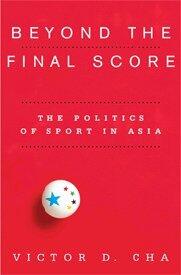
beyond the final score
He serves as an independent consultant, and has testified before Congress on Asian security issues.  He has been a guest analyst for various media including CNN, ABC Nightline, NBC Today Show, CBS Morning Show, Fox News, MSNBC, CNBC, BBC, ESPN, Sports Illustrated, and National Public Radio.

His new book Beyond the Final Score: The Politics of Sport in Asia (Columbia University Press, 2008) looks at the politics of sports and the Beijing Olympics. Cha holds a BA and Ph.D. from Columbia University, MA from University of Oxford.

This event is sponsored by the Pantech Group in Korea.

Philippines Conference Room

Victor D. Cha Director of Asian Studies Speaker Georgetown University
Seminars
Authors
News Type
Commentary
Date
Paragraphs

In the waning days of the Clinton administration, the momentum for engagement with North Korea, building from the earlier agreement to freeze its nuclear program and a moratorium on ballistic missile launches, accelerated to the brink of full-scale normalization of relations. The U.S. presidential election in 2000 brought that diplomatic freight train to an abrupt halt.

Will the 2008 election bring yet another dramatic change in U.S. Korea policy?

The answer, based on the published positions of the two candidates and conversations with his senior Asia policy advisors, seems to be NO. There are important differences of emphasis in the approaches of both candidates, which I will discuss, but the bottom line is that both men are likely to pick up where President George W. Bush leaves off.

There are two fundamental reasons why U.S. policy toward Korea – and more broadly in Northeast Asia --- will not change dramatically. First, Asia will continue to suffer from a deficit of presidential attention. The arc of crisis – Iraq, Iran, Afghanistan and Pakistan -- will necessarily still command, as it has for almost 8 years, the attention of senior American policymakers. Even that will have to fight for space with the growing global financial crisis.

Second, both candidates agree on the broad outlines of an Asia policy, one that does not depart radically from the one pursued by the Bush administration. As a senior McCain advisor put it to me: “There is not a huge difference on Asia between Obama and McCain.” Privately, Obama advisors also stress that there will not be a huge break with current U.S. policy.

Both campaigns are critical of the lack of attention paid to Asia and the need for the U.S. to be more proactive to strengthen existing alliances and to join the discussion about new forms of regional integration. Both candidates support the need to engage, rather than confront, a rising China. Both men call for the U.S. to pay more attention to management of our alliances with South Korea and Japan. And both Obama and McCain support the North Korean nuclear negotiations carried out by President Bush in his second term, although privately both campaigns are critical of the deal that has been struck.

If there are differences, they can be found in two areas – support for the Korea US free trade agreement and the willingness to directly engage North Korea and its regime.

Free Trade and the KORUS Free Trade Agreement

If there is one single issue regarding Korea on which Senators Obama and McCain clearly part company, it is the future of the free trade agreement negotiated with the Bush administration. Senator McCain is an unambiguous supporter of the FTA, not only as a trade pact but also as a symbol of the broader partnership between the U.S. and South Korea.

Senator Obama also supports free trade but is critical of this and other agreements, such as NAFTA, for failing to ensure market access and the protection of labor rights and the environment. Privately, Obama’s advisors understand the symbolic value of the FTA to the alliance, but they plan to ask Seoul to reopen talks on market access, particularly for the automobile industry. Their position reflects the importance of trade unions and the role of some key states – Michigan most of all – in the election outcome. Even if Obama loses, the Democrats are likely to strengthen their control of Congress, making approval of the FTA difficult under any circumstances.

Negotiating with Pyongyang: Back to the Future?

Both the McCain and the Obama camps publicly back the Bush administration’s negotiations with Pyongyang, but both are also privately critical, though for different reasons.

The Obama team is heavily populated by former Clinton administration officials who were involved in the negotiation of the 1994 Agreed Framework with North Korea. They see the current deal as an inevitably flawed bargain, the result of the refusal of the administration to seriously engage the North directly until it had crossed the red line of nuclear weapons testing. With little leverage, not least the credible threat of coercion, we are left with containing the plutonium production of the North, and hoping that a grand bargain down the line can yield full denuclearization.

Obama recognizes the need for “close coordination and consultation with our allies South Korea and Japan,” as one of his advisors put it in a published interview, and supports continuing the Six Party Talks. But the emphasis is clearly on direct talks with North Korea, though conducted with a principled toughness that the Bush administration has not exhibited in its final months in office.

That readiness to conduct direct negotiations, up to conclusion of a peace treaty with Pyongyang and full normalization of relations, is where the two candidates part company. The Republican nominee is clearly uncomfortable with direct dealings with Pyongyang – his position resembles the first term of the Bush administration more than the second in that respect. His advisory team combines realists, mainly veterans of the Powell State Department, and neoconservatives, reproducing the divisions that thwarted coherent policy-making in that first Bush term.

In the end, the views of McCain himself may be decisive. He was an opponent of the Agreed Framework, an agreement he characterized as “appeasement.” He maintained this stance into the Bush administration, vocally opposing any direct negotiations with the North Koreans as long as they maintained the right to develop nuclear weapons. He has been critical as well of the main deal struck by President Bush in his second term – “I didn’t believe in the KEDO agreement that President Clinton made and I don’t believe in this one,” he said in January.

McCain, according to an interview with one of his senior Asia advisors, would “seek a return to the core principles of denuclearization known as CVID, or complete, verifiable, irreversible, dismantlement.” The demand for CVID was the watchword of the Bush administration’s earlier stance, in effect a call for Pyongyang to abandon its nuclear option as a first step. But that demand was dropped after Pyongyang called the Bush administration’s bluff by exploding a nuclear device in October, 2006.

McCain also wants to “broaden our policy goals related to North Korea” beyond nuclear issues, to including human rights, economic and political reform, and reduction of the conventional military threat from North Korea, goals also set out at the outset of the Bush administration. McCain has repeatedly referred to the North Korean regime, and its leader, Kim Jong Il, in harsh terms and embraced a policy of “rogue state rollback.”

Realistically, however, McCain offers no credible, practical means to reach these goals. He reserves, as does Obama, the option to use force. But concretely he comes back to the strategy of pressing China to bring North Korea to heel. Unfortunately the Bush administration also relied on China and found there were clear limits to Beijing’s ability to control or its willingness to press its North Korean client. In the end, McCain may have little option but to follow Bush to Pyongyang’s doorstep.

One Caveat – Events Matter

Despite the powerful impetus to maintain continuity in U.S. policy toward the Korean peninsula, no matter whom is elected in November, there is one important caveat to keep in mind – events matter. Unplanned, and unforeseen, developments could force Korea to the top of the President’s agenda. Already we have seen the reports of Kim Jong Il’s serious illness trigger fresh concerns about a possible collapse of political authority in Pyongyang. A simultaneous rush by China, South Korea and the United States to fill a vacuum of power in the North could upset all calculations. For South Korea, and President Lee Myung-bak, it is always best to prepare for the unexpected.

Hero Image
sneider
All News button
1

An international conference will be convened on February 11-12, 2008 at Stanford University at the Walter H. Shorenstein Asia-Pacific Research Center to examine the role of high school history textbooks in the formation of historical memory regarding the events of the Sino-Japanese and Pacific wars and their outcome. Shorenstein APARC researchers have looked at the treatment of those events, in the period from 1931-1951, in the most widely circulated high school history textbooks (national and world history), including those used in college preparatory course, in China, Japan, South Korea, Taiwan and the United States. Translations of those textbooks into English have been prepared for use by historians and other scholars, allowing a comparative study of how historical memory is being shaped in the school systems.

The conference will have three main goals: first it will ask historians to comment and analyze the treatment of history in those textbooks, comparing it to accepted historical understanding. Second, it will look at the process of textbook writing and revision – in some cases (China and Taiwan particularly), the main textbooks have undergone significant revision recently and our data set includes the old and new versions of history textbooks in use in schools. Third, the conference will examine how the formation of divided memories impacts international relations in East Asia and between the United States and Asia and how this effort to understand this process may aid the goal of reconciliation.

The proceedings of this conference will be the basis of an edited volume, including comparative excerpts from the textbooks themselves, to be published by an academic press in the United States and hopefully in Asia as well. Participants will be asked to prepare a written paper for presentation and for publication.

Daniel and Nancy Okimoto Conference Room

Shorenstein APARC
Encina Hall E301
616 Jane Stanford Way
Stanford, CA 94305-6055
(650) 724-8480 (650) 723-6530
0
Senior Fellow at the Freeman Spogli Institute for International Studies
Professor of Sociology
William J. Perry Professor of Contemporary Korea
Professor, by Courtesy, of East Asian Languages & Cultures
Gi-Wook Shin_0.jpg PhD

Gi-Wook Shin is the William J. Perry Professor of Contemporary Korea in the Department of Sociology, senior fellow at the Freeman Spogli Institute for International Studies, and the founding director of the Korea Program at the Walter H. Shorenstein Asia-Pacific Research Center (APARC) since 2001, all at Stanford University. In May 2024, Shin also launched the Taiwan Program at APARC. He served as director of APARC for two decades (2005-2025). As a historical-comparative and political sociologist, his research has concentrated on social movements, nationalism, development, democracy, migration, and international relations.

In Summer 2023, Shin launched the Stanford Next Asia Policy Lab (SNAPL), which is a new research initiative committed to addressing emergent social, cultural, economic, and political challenges in Asia. Across four research themes– “Talent Flows and Development,” “Nationalism and Racism,” “U.S.-Asia Relations,” and “Democratic Crisis and Reform”–the lab brings scholars and students to produce interdisciplinary, problem-oriented, policy-relevant, and comparative studies and publications. Shin’s latest book, The Four Talent Giants, a comparative study of talent strategies of Japan, Australia, China, and India to be published by Stanford University Press in the summer of 2025, is an outcome of SNAPL.

Shin is also the author/editor of twenty-seven books and numerous articles. His books include The Four Talent Giants: National Strategies for Human Resource Development Across Japan, Australia, China, and India (2025)Korean Democracy in Crisis: The Threat of Illiberalism, Populism, and Polarization (2022); The North Korean Conundrum: Balancing Human Rights and Nuclear Security (2021); Superficial Korea (2017); Divergent Memories: Opinion Leaders and the Asia-Pacific War (2016); Global Talent: Skilled Labor as Social Capital in Korea (2015); Criminality, Collaboration, and Reconciliation: Europe and Asia Confronts the Memory of World War II (2014); New Challenges for Maturing Democracies in Korea and Taiwan (2014); History Textbooks and the Wars in Asia: Divided Memories (2011); South Korean Social Movements: From Democracy to Civil Society (2011); One Alliance, Two Lenses: U.S.-Korea Relations in a New Era (2010); Cross Currents: Regionalism and Nationalism in Northeast Asia (2007);  and Ethnic Nationalism in Korea: Genealogy, Politics, and Legacy (2006). Due to the wide popularity of his publications, many have been translated and distributed to Korean audiences. His articles have appeared in academic and policy journals, including American Journal of SociologyWorld DevelopmentComparative Studies in Society and HistoryPolitical Science QuarterlyJournal of Asian StudiesComparative EducationInternational SociologyNations and NationalismPacific AffairsAsian SurveyJournal of Democracy, and Foreign Affairs.

Shin is not only the recipient of numerous grants and fellowships, but also continues to actively raise funds for Korean/Asian studies at Stanford. He gives frequent lectures and seminars on topics ranging from Korean nationalism and politics to Korea's foreign relations, historical reconciliation in Northeast Asia, and talent strategies. He serves on councils and advisory boards in the United States and South Korea and promotes policy dialogue between the two allies. He regularly writes op-eds and gives interviews to the media in both Korean and English.

Before joining Stanford in 2001, Shin taught at the University of Iowa (1991-94) and the University of California, Los Angeles (1994-2001). After receiving his BA from Yonsei University in Korea, he was awarded his MA and PhD from the University of Washington in 1991.

Selected Multimedia

Director of the Korea Program and the Taiwan Program, Shorenstein Asia-Pacific Research Center
Director of Stanford Next Asia Policy Lab, APARC
Date Label
Gi-Wook Shin Speaker
0
Visiting Scholar
Peattie_web.jpg PhD

Mark R. Peattie was a visiting scholar at the Walter H. Shorenstein Asia-Pacific Research Center and a research fellow at the Hoover Institution. He was a professor of history emeritus at the University of Massachusetts at Boston, and was the John A. Burns Distinguished Visiting Professor of History at the University of Hawai'i in 1995.

Peattie was a specialist in modern Japanese military, naval, and imperial history. His current research focused on the historical context of Japanese-Southeast Asian relations. He was also directing a pioneering and international collaborative effort of the military history of the study of the Sino-Japanese war of 1937–45 being sponsored by the Asia Center at Harvard University.

He is editor, with Peter Duus and Ramon H. Myers, of the Japanese Wartime Empire, 1937–1945 (Princeton University Press, 1996). Peattie is the author of the Japanese Colonial Empire: The Vicissitudes of Its Fifty-Year History (Tokyo: Yomiuri Press, 1996).

He coauthored, with David Evans, Kaigun: Strategy, Tactics and Technology in the Imperial Japanese Navy, 1887–1941 (Naval Institute Press, 1997), winner of a 1999 Distinguished Book Award of the Society for Military History. A sequel, Sunburst: The Rise of Japanese Naval Air Power, 1909–1941, was published by the Naval Institute Press in 2001.

Peattie is also the author of the monograph A Historian Looks at the Pacific War (Hoover Essays in Public Policy, 1995).

Peattie was a reader for Columbia University, University of California, University of Hawai'i, Stanford University, University of Michigan, and U.S. Naval Institute Presses.

Peattie frequently served as lecturer in the Stanford University Continuing Studies Program and in the Stanford Alumni Travel Program.

He was named an associate in research at the Edwin O. Reischauer Institute of Japanese Studies at Harvard University from 1982 to 1993.

He was a member of the U.S. Information Agency from 1955 to 1968 with service in Cambodia (1955–57), in Japan (Sendai, Tokyo, Kyoto, 1958–67), and in Washington, D.C. (1967–68).

Peattie held a PhD in Japanese history from Princeton University.

Mark Peattie Speaker
Li Weike Director, History Department Speaker People's Education Press, Beijing
Hsin-Huan Michael Hsaio Center for Asia-Pacific Area Studies Speaker Academica Sinica
Peter Duus Department of History Speaker Stanford University
Tohmatsu Haruo Speaker Tamagawa University
Chung Jae-Jung Speaker City University of Seoul
Mitani Hiroshi Speaker Tokyo University
Chen Qi Speaker People's Education Publishing House, China
Chou Liang-kai Speaker Feng Chia University, Taiwan
Kim Do-Hyung Speaker Yonsei University
Bert Bower Speaker Teachers' Curriculum Institute, California
Daniel C. Sneider Speaker
Daniel Chirot Speaker University of Washington
Park Soon-Won Speaker George Mason University
Gary Mukai Speaker
Conferences
Subscribe to International Relations