International Relations

FSI researchers strive to understand how countries relate to one another, and what policies are needed to achieve global stability and prosperity. International relations experts focus on the challenging U.S.-Russian relationship, the alliance between the U.S. and Japan and the limitations of America’s counterinsurgency strategy in Afghanistan.

Foreign aid is also examined by scholars trying to understand whether money earmarked for health improvements reaches those who need it most. And FSI’s Walter H. Shorenstein Asia-Pacific Research Center has published on the need for strong South Korean leadership in dealing with its northern neighbor.

FSI researchers also look at the citizens who drive international relations, studying the effects of migration and how borders shape people’s lives. Meanwhile FSI students are very much involved in this area, working with the United Nations in Ethiopia to rethink refugee communities.

Trade is also a key component of international relations, with FSI approaching the topic from a slew of angles and states. The economy of trade is rife for study, with an APARC event on the implications of more open trade policies in Japan, and FSI researchers making sense of who would benefit from a free trade zone between the European Union and the United States.

-

In this talk, Professor Han will examine the implications for the Zainichi (people of Korean ethnicity who have lived in Japan since the colonial period) of choosing between identifying themselves as either Chōsen or Kankoku for Japan's alien registration purposes. Chōsen is a historic name for Korea now also used by North Korea in its official name, while Kankoku, which also means Korea, refers to the Republic of Korea (South Korea). 

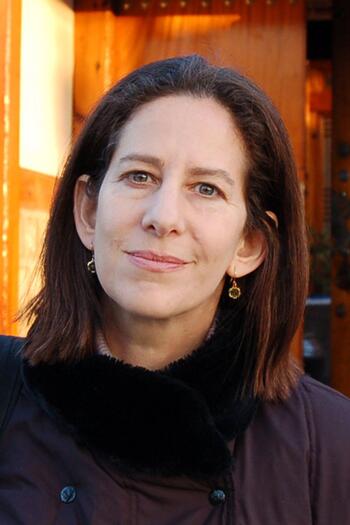
Young-Hae Han is a visiting professor at the Walter H. Shorenstein Asia-Pacific Research Center (Shorenstein APARC) for the 2012–13 academic year. She is also a professor at the Graduate School of International Studies at Seoul National University (SNU). Her research and education focuses on contemporary Japanese society. She has conducted field research on Japanese grassroots social movements in cities such as Kawasaki, Kunidachi, Kobe, Yamagata, Kanazawa, and Oita. After the Great East Japan Earthquake in 2011, she organized a team and conducted research in the damaged area. Han is also involved in researching another topic that is of great interest to her: ethnic minorities in contemporary Japan. For this topic, her research has been focused on the identity issues of Zainichi Koreans, particularly on the changing relationship of the Zainichi with their "homeland" in the post-cold war period.

Han served as the director of the Institute for Japanese Studies at SNU from 2006 to 2012 before she joined Shorenstein APARC. She also served as the chair of the Exchange Committee of KSA-AJS at the Korean Sociological Association from 2008 to 2011.

Han is the author of numerous publications, such as the books: Understanding Contemporary Japanese Society (in Korean); Japanese Community and Grassroots Social Movements (in Korean); Multi-Cultural Japan and Identity Politics (co-author, in Korean). Her recent publications include Institutionalization of East Asian Studies and New Dilemmas: With a Focus on Japanese Studies (in English); New Relationship between Zainichi Koreans and the Homeland: Through the Journeys of the Former 'Chosen Nationals' Living in Korea (in Japanese); The Meaning of 'Seikatsu' (Life) in the Citizens' Movement in Contemporary Japan (in Korean); and The Inheritance of the Korean Dance and Identity in the Ethnic Korean Community (in Korean).  
Philippines Conference Room

Walter H. Shorenstein

Asia-Pacific Research Center
Encina Hall, Room E310
616 Serra St.
Stanford, CA 94305-6055

(650) 725-9623
0
2012-2013 Visiting Professor
Young-Hae_Han_3x4.jpg

Young-Hae Han is a visiting professor at the Walter H. Shorenstein Asia-Pacific Research Center (Shorenstein APARC) for the 2012–13 academic year. She is also a professor at the Graduate School of International Studies at Seoul National University (SNU). Her research and education focuses on contemporary Japanese society. She has conducted field research on Japanese local-level grassroots social movements in cities such as Kawasaki, Kunidachi, Kobe, Yamagata, Kanazawa, and Oita. After the Great East Japan Earthquake in 2011, she organized a team and conducted research in the damaged area. Han is also involved on researching another topic that is of great interest to her: ethnic minorities in contemporary Japan. For this topic, her research has been focused on identity issues of Zainichi Koreans, particularly on the new relation of Zainichi with their “homeland” in the post-cold war period.

Han served as the director of the Institute for Japanese Studies at SNU from 2006 to 2012 until just before she joined Shorenstein APARC. She also served as the chair of the Exchange Committee of KSA-AJS at the Korean Sociological Association from 2008 to 2011.

Han is the author of numerous publications, such as the books: Understanding Contemporary Japanese Society (in Korean); Japanese Community and Grassroots Social Movements (in Korean); Multi-Cultural Japan and Identity Politics (co-author, in Korean). Her recent publications include Institutionalization of East Asian Studies and New Dilemmas: With a Focus on Japanese Studies (in English); New Relationship between Zainichi Koreans and the Homeland: Through the Journeys of the Former ‘Chosen Nationals’ Living in Korea (in Japanese); The Meaning of ‘Seikatsu’ (Life) in the Citizens’ Movement in Contemporary Japan (in Korean); and The Inheritance of the Korean Dance and Identity in the Ethnic Korean Community (in Korean).  

CV
Younghae Han 2012-2013 Visiting Professor at Shorenstein APARC Speaker
Seminars
-

North Korea, arguably the most isolated country in the world, poses unique challenges for journalists. Access to the country is severely limited and even when a journalist is able to gain entry, the secretive and repressive nature of the state significantly limits what can be learned. Still, despite these difficult conditions, the realities of North Korean life are increasingly finding their way into various media, from newspaper reporting and on-line media to thinly fictionalized accounts.

This panel will take a multi-faceted look at the coverage of North Korea through the journalist (represented by 2012 Shorenstein Journalism Award winner Barbara Demick), the editor, the development/relief worker, and the novelist.

Panelists include:

Image
Barbara Demick
Barbara Demick, has been Beijing bureau chief for the Los Angeles Times since 2008. She has focused on human trafficking, corruption, and minorities, as well as North Korea. Demick is the author of two books -- Nothing to Envy: Ordinary Lives in North Korea and Logavina Street: Life and Death in a Sarajevo Neighborhood. Her work has won awards from the Asia Society, the Overseas Press Club, the American Academy of Diplomacy, among others. Her North Korea book, which has been translated into more than 20 languages, recently won the International Book Award on Human Rights. She is a graduate of Yale and taught a seminar on coverage of repressive regimes at Princeton University. She lives in Beijing with her son Nicholas.

Image
Susan Chira
Susan Chira, was named assistant managing editor for news for the New York Times in September 2011. Previously, she had served as foreign editor (since January 2004), and as editorial director of book development (since September 2002). Before that, Chira was the editor of the "Week in Review" section at the Times (since October 1999), after having served as deputy foreign editor of the newspaper (since February 1997). Earlier, she served in a variety of reporting positions including national education correspondent, Tokyo correspondent (from October 1984 until February 1989), metropolitan reporter in the Albany and Stamford bureaus, and reporter for the "Business Day" section.
 

Image
Katharina Zellweger
Katharina Zellweger, a Pantech Fellow, joined the Korean Studies Program at the Walter H. Shorenstein Asia-Pacific Research Center after five years of living in Pyongyang where she has served as the North Korea country director for the Swiss Agency for Development and Cooperation (SDC). Through her SDC and earlier work, she has witnessed modest economic and social changes not visible to most North Korea observers. Her research at the Center has drawn on her over 15 years of humanitarian work in North Korea and explore how aid intervention can stimulate positive sustainable change there


Image
Adam Johnson
Adam Johnson is an associate professor of English, with emphasis in creative writing, at Stanford University. A Whiting Writers’ Award winner, his fiction has appeared in Esquire, Harper's, Playboy, Paris Review, Granta, Tin House, and Best American Short Stories. He is the author of Emporium, a short-story collection, and the novel Parasites Like Us, which won a California Book Award. His novel The Orphan Master's Son, a novel set in North Korea, has just been published by Random House. His books have been translated into sixteen languages. Johnson was a 2010 National Endowment for the Arts Fellow.

Bechtel Conference Center

Conferences
-

United Nations Secretary-General Ban Ki-moon presented a free public talk at Stanford on Thursday, Jan. 17.

Ban, who is the eighth secretary-general of the UN, will speak about the UN's role in creating opportunities out of the challenges posed by today's rapidly transitioning world.

"Times of transition are times of profound opportunity," he recently said during his acceptance speech for the Seoul Peace Prize. "The decisions we make in this period will have an impact for generations to come.”

Ban's initiatives as UN secretary-general have focused on promoting sustainable development; empowering women; supporting countries in crisis or instability; generating new momentum on disarmament, arms control, and nonproliferation; and strengthening the UN. Among his many activities as secretary-general, he has successfully raised major pledges and financing packages for aid and crisis response, established the agency UN Women, and introduced new measures to promote UN transparency and efficiency.

Ban was born in the Republic of Korea in 1944, and he served for 37 years with the ROK Foreign Ministry, in roles including that of minister of foreign affairs and trade, foreign policy adviser to the president, and chief national security adviser to the president. He took office as UN secretary-general in January 2007, and was re-elected for a second term by the UN General Assembly in June 2011. Ban will serve as secretary-general until December 2016.

The Walter H. Shorenstein Asia-Pacific Research Center (Shorenstein APARC) and the Freeman Spogli Institute for International Studies are co-sponsoring the event. Ban's talk, part of the Asia-Pacific Leaders Forum, will kick off a series of activities commemorating Shorenstein APARC's thirtieth anniversary.

Founded in 2005, Shorenstein APARC's Asia-Pacific Leaders Forum regularly convenes senior leaders from across Asia and the Pacific to exchange ideas on current political, economic, and social dynamics in the region.

RELATED Resources

Speech transcript

Stanford News Service

San Jose Mercury News

Stanford Daily

U.N. News Centre


Dinkelspiel Auditorium
471 Lagunita Drive
Stanford Campus

Ban Ki-moon Secretary-General of the United Nations Speaker
Conferences

In the ninth session of the Strategic Forum, former senior American and South Korean government officials and leading experts focused on leadership changes on and around the Korean Peninsula and the possible implications for North Korea policy, the U.S.-South Korea alliance, and Northeast Asia. They analyzed North Korean behavior under its new leader Kim Jong-un and the likelihood his regime would continue nuclear and missile development. Participants also compared and contrasted the North Korea and alliance policies of South Korea’s leading candidates in the December 19 presidential election. The session was hosted by the Sejong Institute, a top South Korean think tank, in Seoul, in association with the Korean Studies Program at the Shorenstein Asia-Pacific Research Center.


PARTICIPANTS

Republic of Korea:

Chul Hyun Kwon, Chairman of the Board, The Sejong Foundation

Dae Sung Song, President, The Sejong Institute

Sang Woo Rhee, President, New Asia Research Institite

Jae Chang Kim, Co-Chairman, Council on US-Korea Security Studies

Myung Hwan Yu, Former Minister, Foreign Affairs & Trade Ministry

Yong Ok Park, Governor, PyungAn Nam-do Province (North Korea territory)

Se Hee Yoo, Chairman, Daily NK; Hanyang University

Ho Sup Kim, Professor, Chung-ang University; Chairman, KPSA (2012)

Young Sun Ha, Chairman, East Asia Institute

Jung Hoon Lee, Professor, Yonsei University

Seong Whun Cheon, Chief, North Korea Studies Center, KINU

Chol Ho Chong, Research Fellow, The Sejong Institute

United States:

Gi-Wook Shin, Director, Shorenstein APARC, Stanford University

Michael Armacost, Distinguished Fellow, Shorenstein APARC

Bruce Bennett, Senior Research Fellow, RAND Cooperation

Karl Eikenberry, Distinguished Fellow, Shorenstein APARC

Thomas Fingar, Distinguished Fellow, Shorenstein APARC

David Kang, Director, Korean Studies Institute, University of Southern California

T.J. Pempel, Professor, Political Science Dept., University of California, Berkeley

Daniel C. Sneider, Associate Director for Research, Shorenstein APARC

David Straub, Associate Director, Korean Studies Program, Shorenstein APARC

Joyce Lee, Research Associate, Korean Studies Program, Shorenstein APARC 

Seoul, Korea

Workshops
Paragraphs

This paper investigates whether agricultural households in the rural Philippines insure their consumption against income shocks and whether they use migration, remittances, informal loans, or assets as ex post risk-coping mechanisms. Since these households have limited access to formal insurance and credit markets, any shocks to their volatile income can have substantial impacts. Using panel data, and rainfall shocks as the instrumental variable for income shocks, this paper finds little evidence of effective risk-sharing within the networks of family and friends. 2SLS, OLS, and SUR estimates show that only about 16 percent of consumption is insured. While domestic remittances from other families replace about 51 percent of income decline, informal loans decrease by about 34 percent. Additional tests, however, reveal that agricultural households
engage in entrepreneurial activity when rainfall increases and children are somehow protected from the adverse effects of rainfall shocks. Hours spent on own family-operated businesses likewise increase.

Published:  Pajaron, Marjorie C. Remittances, informal loans, and assets as risk-coping mechanisms: evidence from agricultural households in rural Philippines. No. 2014-16. Discussion Paper, School of Economics, University of the Philippines, 2014.

All Publications button
1
Publication Type
Working Papers
Publication Date
Journal Publisher
Asia Health Policy Program working paper # 32
Authors
News Type
News
Date
Paragraphs

Education, fundamental to economic growth and development, has become an arena for global competition in the digital information age. As in the United States, many Asian policymakers are now pushing for higher education reform in the belief that strong, innovative higher education systems will pave the way for their countries’ future economic and political strength.

Looking comparatively at situations across Asia and in the United States, the fourth annual Stanford Kyoto Trans-Asian Dialogue considered possible solutions to the challenges of reforming higher education today.

Scholars and top-level administrators from Stanford and universities across Asia, as well as policymakers, journalists, and business professionals, met in Kyoto on September 6 and 7, 2012. In the discussion sessions following the presentations, participants raised a number of key, policy-relevant points, which are highlighted in the Dialogue’s final report. These include:

All countries face the challenge of preparing students to find meaningful employment, yet there is a lack of clarity in educational goals. Several participants felt the political expediency of government funding aiming for world university rankings must be balanced with the less politically attractive but potentially more critical vocational needs of economic development.

University administrators and government policymakers need to define their goals for “globalization” or “internationalization” as they launch new initiatives and policies. Participants noted that, while few are opposed to the principle of internationalization, without a sense of concrete and realistic goals, the cost-benefit of various measures may not make sense.

Online education promises great potential innovation in education, but it is still at a very early stage. While potentially valuable in enhancing traditional learning and research, serious challenges remain. There was a sense that far more needs to be done than simply taking existing forms of education and putting them online in order to truly harness the potential offered by online education.

The Stanford Kyoto Trans-Asian Dialogue series is made possible through the generosity of the City of Kyoto, the Freeman Spogli Institute for International Studies at Stanford University, and Yumi and Yasunori Kaneko. The final report from the 2012 Dialogue, and previous years, is available for download from the Shorenstein APARC website.

Hero Image
CollegeStKolkata LOGO
Booksellers on College Street in Calcutta, India.
Flickr user flippy whale
All News button
1
Subscribe to International Relations