


Obama administration will give diplomacy a chance to deal with the North Korean nuclear problem
News Type
Commentary
Date
Paragraphs
David Straub, the acting director of Korean Studies Program, argues that Obama administration will finally give diplomacy a chance to deal with the North Korean nuclear problem. He stresses that Senator Obama understands the difficulties of dealing with North Korea and will proceed carefully. If North Korea does not respond to this more nuanced American approach, he concludes, the international community is likely to be more supportive of U.S. efforts to constrain North Korean behavior.
Among conservatives in Korea and other American allied countries, there seems to be some anxiety about the election of a relatively unknown, young African-American liberal as the next American president. Typically, when a new U.S. president is elected, American diplomats seek to reassure allies by telling them that the incoming president will pursue fundamentally the same policies as the outgoing president. However, President Obama clearly will adopt a significantly different foreign policy than President Bush, including toward North Korea.
Obama’s soaring rhetoric has led to a widespread (and correct) impression of him as idealistic, but the long presidential campaign also revealed him to be a disciplined politician and a skillful manager. His foreign policy will be much closer to the prudent realpolitik of President Bush’s father than it will be to the “neo-con” approach of President Bush himself.
And while it is true that Obama does not have deep experience in foreign affairs, his youthful years spent in Indonesia and Hawaii, taken together with his successful navigation of American society as a young African-American man, have given him a genuine empathy for different peoples and cultures. He has the self-confidence and intelligence to listen with an open mind to others and then carefully to make his own decisions.
President Obama’s policy toward North Korea will defy stereotypes of the past. In some ways he will be “softer” on North Korea than President Bush; in other ways, he will be “tougher.” Like President Bush and his predecessors, President Obama will take the position that he can never accept a North Korea with nuclear weapons. On the other hand, Obama will not engage in bluster such as “all options are on the table,” which most South Koreans reject and which only plays into the DPRK’s hands.
Instead, Obama will finally give diplomacy a fighting chance. Even during the past couple of years, President Bush remained very reluctant to engage fully in negotiations with North Korea. President Obama will order that a policy review be conducted expeditiously, and he will probably appoint a very senior special envoy to take charge of negotiations with North Korea. While maintaining the framework of the Six-Party Talks and consulting very closely with the Republic of Korea and Japan, he will also authorize meaningful bilateral negotiations with North Korea. If those negotiations bear real fruit, he may even visit Pyongyang himself if he is confident that he will be able to strike a deal completely ending North Korea’s nuclear ambitions.
President Obama will probably offer North Korea a “more for more” deal. In other words, compared to President Bush he will propose a much more detailed and concrete series of steps to be taken by North Korea, the United States, and other members of the Six-Party Talks. The aim will be agreement on an early end to North Korea’s nuclear weapons programs.
The North Koreans should not think that President Obama will be “easier” than President Bush. If, as may well be the case, the North Koreans reject President Obama’s approach or drag their feet in responding to it, he, unlike President Bush, will have the international credibility to work more effectively with other members of the Six-Party Talks and the international community to limit North Korea’s options.
Moreover, as a hardheaded domestic politician, President Obama will be careful to avoid situations in which the Republican opposition could credibly criticize him as being naïve about North Korea. Indeed, Obama’s team recognizes clearly that, having declared itself a nuclear weapons state and tested a nuclear device, North Korea may not be prepared to verifiably give up its nuclear weapons ambitions.
In formulating and conducting his policy toward North Korea, President Obama will have access to many trusted experts on North Korea, beginning with Vice President Biden and his staff. Obama is also advised by a number of experienced officials from the Clinton administration, from former Defense Secretary Bill Perry to former career diplomat Jeffrey Bader.
U.S. relations with the Republic of Korea are key to any successful American policy toward North Korea. Obama and his team fully appreciate the importance of U.S.-ROK relations and the security alliance. They will coordinate very closely with the Lee Myung-bak administration and never sacrifice the interests of the Republic of Korea, which is immeasurably more important to the United States than the DPRK is or ever will be.
President Obama will support the implementation of the agreements President Bush reached with the Republic of Korea on the realignment of U.S. Forces of Korea and the transfer of wartime operational control, as befits the ROK’s military and economic might.
Under President Obama, the United States will also aim to approve, with some adjustments, the U.S.-ROK Free Trade Agreement, although it may take a year or so to do so as he perforce deals first with the global financial and economic crises and wars in Iraq and Afghanistan. President Obama must be cognizant of the viewpoint of leading congressional Democrats and the constituencies they represent. It may be counterproductive if the ROK pushes too hard, too fast for U.S. approval of the FTA.
Obama’s inauguration will also open up new possibilities for U.S.-ROK coordination and cooperation on global issues. Unlike President Bush, whose early unilateralist mindset and specific policies caused dismay among international friends and foes alike, President Obama begins with a vast reservoir of sympathy and respect throughout the world. That will make it easier, and more useful, for the Republic of Korea to cooperate globally more with the United States.
In short, South Koreans should be reassured, not that President Obama’s foreign policy will be like that of President Bush, but that it will be different. Perhaps South Koreans will even begin to feel that their alliance with the United States is not just one that they feel they must have for their country’s long-term interests – but also one of which they can feel proud.
All News button
1
Korea and the Next American Presidency
-
In addition to Iraq, Afghanistan, Pakistan, the financial crisis, and the housing crisis (as if that were not enough!), the next American president will have his hands full with matters on the Korean peninsula. What will be the future of Six Party talks? What is the status of the leadership in Pyongyang? How do changes in leadership in Washington (and potentially in Pyongyang) affect outcomes? What are the prospects for US-ROK relations? And what of the KORUS FTA? Victor Cha, former director of Asian affairs at the White House, will lead a discussion on these issues.
Professor Cha is director of Asian Studies and holds the D.S. Song Chair in the Department of Government and School of Foreign Service at Georgetown University. He left the White House in May 2007 after serving since 2004 as Director for Asian Affairs at the National Security Council. At the White House, he was responsible primarily for Japan, the Korean peninsula, Australia/New Zealand and Pacific Island nation affairs. Dr. Cha was also the Deputy Head of Delegation for the United States at the Six Party Talks in Beijing, and received two Outstanding Service commendations during his tenure at the NSC.
He is the award-winning author of Alignment Despite Antagonism: The United States-Korea-Japan Security Triangle (Stanford University Press) (winner of the 2000 Ohira Book Prize) and co-author of Nuclear North Korea: A Debate on Engagement Strategies (Columbia University Press, 2004). He has written articles on international relations and East Asia in journals including Foreign Affairs, International Security, Political Science Quarterly, Survival, International Studies Quarterly, and Asian Survey. Professor Cha is a former John M. Olin National Security Fellow at Harvard University, two-time Fulbright Scholar, and Hoover National Fellow, CISAC Fellow, and William J. Perry Fellow at Stanford University.
Image
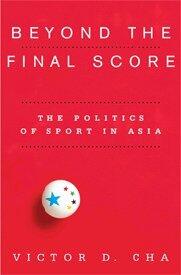
His new book Beyond the Final Score: The Politics of Sport in Asia (Columbia University Press, 2008) looks at the politics of sports and the Beijing Olympics. Cha holds a BA and Ph.D. from Columbia University, MA from University of Oxford.
This event is sponsored by the Pantech Group in Korea.
Philippines Conference Room
Victor D. Cha
Director of Asian Studies
Speaker
Georgetown University
Seminars
U.S. Policy in Korea after the elections
News Type
Commentary
Date
Paragraphs
In the waning days of the Clinton administration, the momentum for engagement with North Korea, building from the earlier agreement to freeze its nuclear program and a moratorium on ballistic missile launches, accelerated to the brink of full-scale normalization of relations. The U.S. presidential election in 2000 brought that diplomatic freight train to an abrupt halt.
Will the 2008 election bring yet another dramatic change in U.S. Korea policy?
The answer, based on the published positions of the two candidates and conversations with his senior Asia policy advisors, seems to be NO. There are important differences of emphasis in the approaches of both candidates, which I will discuss, but the bottom line is that both men are likely to pick up where President George W. Bush leaves off.
There are two fundamental reasons why U.S. policy toward Korea – and more broadly in Northeast Asia --- will not change dramatically. First, Asia will continue to suffer from a deficit of presidential attention. The arc of crisis – Iraq, Iran, Afghanistan and Pakistan -- will necessarily still command, as it has for almost 8 years, the attention of senior American policymakers. Even that will have to fight for space with the growing global financial crisis.
Second, both candidates agree on the broad outlines of an Asia policy, one that does not depart radically from the one pursued by the Bush administration. As a senior McCain advisor put it to me: “There is not a huge difference on Asia between Obama and McCain.” Privately, Obama advisors also stress that there will not be a huge break with current U.S. policy.
Both campaigns are critical of the lack of attention paid to Asia and the need for the U.S. to be more proactive to strengthen existing alliances and to join the discussion about new forms of regional integration. Both candidates support the need to engage, rather than confront, a rising China. Both men call for the U.S. to pay more attention to management of our alliances with South Korea and Japan. And both Obama and McCain support the North Korean nuclear negotiations carried out by President Bush in his second term, although privately both campaigns are critical of the deal that has been struck.
If there are differences, they can be found in two areas – support for the Korea US free trade agreement and the willingness to directly engage North Korea and its regime.
Free Trade and the KORUS Free Trade Agreement
If there is one single issue regarding Korea on which Senators Obama and McCain clearly part company, it is the future of the free trade agreement negotiated with the Bush administration. Senator McCain is an unambiguous supporter of the FTA, not only as a trade pact but also as a symbol of the broader partnership between the U.S. and South Korea.
Senator Obama also supports free trade but is critical of this and other agreements, such as NAFTA, for failing to ensure market access and the protection of labor rights and the environment. Privately, Obama’s advisors understand the symbolic value of the FTA to the alliance, but they plan to ask Seoul to reopen talks on market access, particularly for the automobile industry. Their position reflects the importance of trade unions and the role of some key states – Michigan most of all – in the election outcome. Even if Obama loses, the Democrats are likely to strengthen their control of Congress, making approval of the FTA difficult under any circumstances.
Negotiating with Pyongyang: Back to the Future?
Both the McCain and the Obama camps publicly back the Bush administration’s negotiations with Pyongyang, but both are also privately critical, though for different reasons.
The Obama team is heavily populated by former Clinton administration officials who were involved in the negotiation of the 1994 Agreed Framework with North Korea. They see the current deal as an inevitably flawed bargain, the result of the refusal of the administration to seriously engage the North directly until it had crossed the red line of nuclear weapons testing. With little leverage, not least the credible threat of coercion, we are left with containing the plutonium production of the North, and hoping that a grand bargain down the line can yield full denuclearization.
Obama recognizes the need for “close coordination and consultation with our allies South Korea and Japan,” as one of his advisors put it in a published interview, and supports continuing the Six Party Talks. But the emphasis is clearly on direct talks with North Korea, though conducted with a principled toughness that the Bush administration has not exhibited in its final months in office.
That readiness to conduct direct negotiations, up to conclusion of a peace treaty with Pyongyang and full normalization of relations, is where the two candidates part company. The Republican nominee is clearly uncomfortable with direct dealings with Pyongyang – his position resembles the first term of the Bush administration more than the second in that respect. His advisory team combines realists, mainly veterans of the Powell State Department, and neoconservatives, reproducing the divisions that thwarted coherent policy-making in that first Bush term.
In the end, the views of McCain himself may be decisive. He was an opponent of the Agreed Framework, an agreement he characterized as “appeasement.” He maintained this stance into the Bush administration, vocally opposing any direct negotiations with the North Koreans as long as they maintained the right to develop nuclear weapons. He has been critical as well of the main deal struck by President Bush in his second term – “I didn’t believe in the KEDO agreement that President Clinton made and I don’t believe in this one,” he said in January.
McCain, according to an interview with one of his senior Asia advisors, would “seek a return to the core principles of denuclearization known as CVID, or complete, verifiable, irreversible, dismantlement.” The demand for CVID was the watchword of the Bush administration’s earlier stance, in effect a call for Pyongyang to abandon its nuclear option as a first step. But that demand was dropped after Pyongyang called the Bush administration’s bluff by exploding a nuclear device in October, 2006.
McCain also wants to “broaden our policy goals related to North Korea” beyond nuclear issues, to including human rights, economic and political reform, and reduction of the conventional military threat from North Korea, goals also set out at the outset of the Bush administration. McCain has repeatedly referred to the North Korean regime, and its leader, Kim Jong Il, in harsh terms and embraced a policy of “rogue state rollback.”
Realistically, however, McCain offers no credible, practical means to reach these goals. He reserves, as does Obama, the option to use force. But concretely he comes back to the strategy of pressing China to bring North Korea to heel. Unfortunately the Bush administration also relied on China and found there were clear limits to Beijing’s ability to control or its willingness to press its North Korean client. In the end, McCain may have little option but to follow Bush to Pyongyang’s doorstep.
One Caveat – Events Matter
Despite the powerful impetus to maintain continuity in U.S. policy toward the Korean peninsula, no matter whom is elected in November, there is one important caveat to keep in mind – events matter. Unplanned, and unforeseen, developments could force Korea to the top of the President’s agenda. Already we have seen the reports of Kim Jong Il’s serious illness trigger fresh concerns about a possible collapse of political authority in Pyongyang. A simultaneous rush by China, South Korea and the United States to fill a vacuum of power in the North could upset all calculations. For South Korea, and President Lee Myung-bak, it is always best to prepare for the unexpected.
Hero Image

All News button
1
Opportunities And Challenges In India, Pakistan, And Afghanistan
-
The election of a new American president is an event of great importance to the entire world, not just the United States. From Japan to Afghanistan, the United States plays a crucial role in the security, political, and economic affairs of the region. America's 44th president will face many challenges once in office including rebuilding trust in America, reviving the American economy without protectionism, and how to combat terrorism. Ultimately, the United States must effectively utilize and support multilateral institutions to uphold international law and foster the common interests such as international justice. Future relations with Northeast, Southeast, and South Asia depend on how these efforts unfold.
Levinthal Hall
The Honorable Karl F. Inderfurth
Former Assistant Secretary of State for South Asian Affairs and U.S. Representative for Special Political Affairs to the United Nations
Speaker
The Honorable Teresita Schaffer
Former U.S. Ambassador to Sri Lanka and Former Deputy Assistant Secretary of State for South Asian Affairs
Speaker
The Honorable Theodore L. Eliot, Jr.
Former U.S. Ambassador to Afghanistan and Former Executive Secretary and Inspector General of the State Department
Speaker
Seminars
US-Japan Relations with the US Ambassador to Japan, Tom Schieffer
-
John Thomas "Tom" Schieffer was sworn in as the 27th U.S. Ambassador to Japan on April 1, 2005, and presented his credentials to the Emperor on April 11, 2005. Since arriving in Japan, he has worked to strengthen the U.S.-Japan alliance, increase trade, and facilitate the realignment of U.S. forces stationed in Japan, among other issues.
Before being appointed Ambassador to Japan, Schieffer served as the U.S. Ambassador to Australia from July 2001 until February 2005. During his tenure in Canberra, he coordinated closely with the government of Australia on efforts to fight global terrorism and helped to deepen cooperation on rebuilding efforts in Afghanistan and Iraq. He was also heavily involved in the conclusion of a free trade agreement between the U.S. and Australia in May 2004.
Prior to his diplomatic service, Ambassador Schieffer was an investor in the partnership that bought the Texas Rangers Baseball Club in 1989, with George W. Bush and Edward W. "Rusty" Rose. He served as team president for eight years, was responsible for day-to-day operations of the club and overseeing the building of The Ballpark in Arlington, Texas. Ambassador Schieffer has also had a long involvement in Texas politics. He was elected to three terms in the Texas House of Representatives and has been active in many political campaigns.
The Ambassador attended the University of Texas, where he earned a B.A., and a M.A. in international relations, and studied law. He was admitted to the State Bar of Texas in 1979. He is married to Susanne Silber of San Antonio, Texas, and they have one son, Paul.
Daniel and Nancy Okimoto Conference Room
John Thomas Schieffer
United States Ambassador to Japan
Speaker
Seminars
Japan wants to do its part to help global security
News Type
Commentary
Date
Paragraphs
Within weeks of 9/11, Japan dispatched ships to the Indian Ocean to provide fuel and other support to the Western forces waging the war in Afghanistan.
It was the first time since World War II that Japan sent forces abroad to support an overseas military conflict, although in a noncombat role. American policymakers hailed Japan as a loyal ally, willing to put "boots on the ground."
Come Nov. 1, however, the Japanese ships will be heading home.
American officials worry that, after taking steps to shed its postwar pacifism, Japan will now shirk its role as an ally in international security.
But these concerns are alarmist. The Japanese government, even its liberal opposition party, has shown a desire and commitment to contribute to global security.
A renewal of the law authorizing the mission in Afghanistan is now increasingly unlikely, since the opposition Democratic Party of Japan (DPJ), which opposes the measure, won a shocking victory in last summer's elections for the upper house of parliament. While the ruling conservative Liberal Democratic Party (LDP) is still determined to reauthorize the military role, it faces significant public opposition and a tough road in the parliament.
Some American officials and experts have issued bellicose warnings that not renewing the mission would signal a dangerous retreat from Japan's responsibilities in the world and undermine the security alliance. Others accused DPJ leader Ozawa Ichiro of being irresponsible, even "anti-American."
These remarks are clumsy and unfair. The possibility of Japan's return to a lesser security role is real enough, but its mission in Afghanistan is the wrong test of the country's reliability as an ally.
In reality, the maritime mission has become largely symbolic. As for Mr. Ozawa, if Americans would listen carefully to his arguments, they would find that he seeks to expand, not contract, Japan's global security role.
What the US sees as backtracking on global responsibility is actually something else --opposition, shared by Japan's liberal and conservative parties, to the American decision to invade Iraq. Once carefully buried behind the appearance of alliance solidarity, it is now surfacing.
Ozawa and his party have been unusually open in questioning the Iraq war, characterizing it as a war without clear international justification. According to reliable accounts, Japanese Prime Minister Fukuda Kazuo privately shares that view, as do others in the LDP.
US officials critical of the DPJ for avoiding a greater security role for Japan should remember that the party supported the antiterrorism law when it was passed in 2001. But they refused to support its renewal later after the Iraq war began. Over time, senior DPJ members say, the mission's original purpose got muddied with military operations in Iraq. Japanese and American officials deny that any diversion took place, but the Pentagon admits that ships engage in multiple missions and there is no way to segregate how fuel is used.
The new version of the law proposed by the LDP explicitly narrows the role of the Navy to supporting antiterrorist interdiction operations, a backhanded acknowledgment that there was no clear separation from the Iraq war.
Ozawa has long advocated a more visible security role for Japan outside its borders, calling on the government to send forces to aid the Gulf War in 1991 and pushing through legislation allowing Japanese participation in UN peacekeeping operations.
Japanese peacekeepers, however, are restricted to noncombat missions. Despite inching toward a larger security role, the government stands by an interpretation of Japan's American-authored antiwar clause in its Constitution that bars the use of force for anything other than to respond to an attack on themselves. But Ozawa has long contended that the constitutional bar should not extend to UN activities.
This month, Ozawa proposed that instead of the maritime force, Japan should send peacekeepers to Afghanistan under the auspices of the UN-authorized international security forces, and to Sudan as well.
Ironically, the ruling conservatives reject that as unconstitutional, arguing it would be an act of collective defense rather than self-defense.
"If Japan is to really be an ally of the US ..." Ozawa wrote, "it should hold its head up high and strive to give proper advice to the US." And in order to do that," he continued, "Japan had to be willing to put itself more on the line by sharing responsibility for peacekeeping, not just sending a few boats out of harm's way."
These are ideas that should be embraced, rather than denounced, by American officials.
Reprinted by permission by the Christian Science Monitor.
All News button
1
Japanese voters express desire for change by delivering a historic win to the opposition party in the July 29 Upper House elections.
News Type
Commentary
Date
Paragraphs
Japan's ruling party suffered a historic defeat Sunday. For the first time since the conservative Liberal Democratic Party (LDP) was formed in 1955, an opposition party has become the largest party in the upper house.
The powerful message delivered by Japanese voters has significant implications not only for Japan but also for the rest of the world, not least for its close ally, the United States.
The election result revives momentum in Japan toward creation of a viable two-party system, potentially ending the conservative postwar monopoly on power. Japanese voters expressed deep anxiety about the impact of economic change upon their treasured social order. They embraced the campaign of the Democratic Party (the main opposition) against growing income inequality and the failure of the state to take care of an aging population.
Equally important, the vote was a humiliating defeat for Prime Minister Shinzo Abe's agenda of giving priority to revising Japan's antiwar Constitution and allowing its military to take on a global role in support of the US. Democratic Party leader Ichiro Ozawa effectively portrayed Mr. Abe as a man out of touch with the concerns of ordinary Japanese. But he also articulated an alternative vision of Japan's international role, calling for closer ties to its Asian neighbors and sending troops overseas only under the auspices of United Nations peacekeeping missions.
Since 9/11, Japan has been among the most loyal, if not unquestioning, of US allies. It sent troops to Iraq, provided logistical support to the war in Afghanistan, and outdid the US in putting pressure on North Korea. Most recently, Abe echoed the rhetoric of the Bush administration, calling for formation of a "values-based" alliance of democracies along with India and Australia, implicitly aimed at containing a rising China. The election results will certainly slow, if not reverse, this tight synchronization.
For the business community, the vote will raise concerns that needed economic policy actions such as fiscal reforms will get stalled in a gridlocked parliament. The vote reminds politicians that the economic recovery has left an awful lot of Japanese behind, with real wages falling, youth unemployment high, and the elderly drawing down their savings to survive. Abe's feel-good rhetoric and focus on security just angered those Japanese.
There remains strong support for gradual change. Most Japanese want the country to take on a more "normal" security role, but one that will stop far short of overdrawn fears of a remilitarized Japan. And many Japanese, particularly in the younger generation, back economic reform, though not at the expense of social stability.
The most intriguing question is the future of Japan's democracy. Abe is resisting calls for his resignation, attributing the vote to a series of scandals in his Cabinet and most of all to the revelation that the government's national pension system had lost the records of some 50 million people. The election result was bad luck, Abe claimed, not a repudiation of his administration's overall policies -- a view shared by Washington policymakers.
Exit polls do confirm that voters were strongly motivated by these issues. But they also express little faith in the personal leadership of Abe, who tried to cover up the pension debacle. He suffered from an unfavorable comparison to his predecessor, Junichiro Koizumi, one of Japan's most popular postwar leaders.
But the election suggests that Mr. Koizumi's personal charisma only temporarily reversed a longer trend of drift away from the ruling conservatives, particularly by unaffiliated swing voters in Japan's cities and suburbs. Mr. Ozawa, one of Japan's most brilliant politicians, managed to both regain those voters and steal away traditional conservative backers in rural areas among farmers and pensioners worried about their future.
Ozawa, whom I have known for more than two decades, is a man of uncommon political vision. He is a former LDP stalwart who has relentlessly pursued the goal of creating a clearly defined two-party system that can create real competition. He was the architect of a split in the LDP that briefly brought the opposition to power in the early 1990s.
Over dinner last fall, Ozawa laid out to me what seemed then like an incredibly audacious plan to regain power. First to win a series of local elections, leading up to a defeat of the LDP in the upper house election, forcing in turn the dissolution of the lower house and new elections. He clearly hopes to split the LDP again and pry away its coalition partner, the New Komeito Party, as part of his strategy of realignment.
The Democratic Party has yet to demonstrate its own ability to rule, but it would be unwise to underestimate Ozawa. And it would be foolish to dismiss the desire for change delivered by Japanese voters on Sunday.
Reprinted with permission by the Christian Science Monitor.
All News button
1
Pakistan: the Limits of Islamization
-
The islamization process in Pakistan is at the core of the contradictions and identity conflict of Pakistan. It is the permanent attempt to rewrite the history whose founding fathers intended to make the homeland for the Muslims of the Indian Subcontinent, much the against the will of the clergy. However it is also an instrument of perpetuation in power of a largely secular military, which constantly manipulates Islamic symbols.
Although widely discussed, the process of islamization in Pakistan has remained relatively limited. No elected legislature went beyond the expression of the idea of the supremacy of the Islamic law. No elected legislature ever passed a somewhat substantial provision. Despite an increasingly strong, or at least vocal religious pressure, the constitution and the legislation of the Pakistani state are still based on a compromise between modernist institutions and ever more pressing religious demands, yet still limited. The supremacy of the Sharia is regularly reaffirmed, yet its implementation does not progress.
The presentation will analyze the impact of the islamization policies, less however on the legal and constitutional system than on the economic, political and social life of Pakistan. Starting from the observation that the islamization process is more limited that it may seem, the presentation will draw on to say that this process reinforces more than it challenges the existing political and social order, and its most salient political expression, the current military regime, by preventing, on the one side the emergence of any real alternative political project and, although in a more pragmatic manner, by bringing back in mainstream politics the fraction of the social body which could possibly be tempted by more radical means of actions.
In this perspective, four dimensions will be more specifically studied: 1) The evolution of the role of religious movements and parties within the Pakistani state; 2) The relationship between these same religious movements and parties and the Pakistani establishment; 3) The specific role of the madrasas in this relation; 4) The relation the religious parties entertains with democracy.
Frederic Grare is a visiting scholar with the Carnegie Endowment for International Peace. He will lead a project assessing U.S. and European policies toward Pakistan and, where appropriate, recommending alternatives with Ashley J. Tellis and George Perkovich. Grare will focus on the tension between stability and democratization in Pakistan, including challenges of sectarian conflict, Islamist political mobilization, and educational reform. Grare also will facilitate interactions between U.S. experts and officials and European counterparts on the main policy challenges in South Asia.
Grare is a leading expert and writer on South Asia, having served most recently in the French embassy in Pakistan and from 1999 to 2003 in New Delhi as director of the Centre for Social Sciences and Humanities. Grare has written extensively on security issues, Islamist movements, and sectarian conflict in Pakistan and Afghanistan. He also has edited the volume, India, China, Russia: Intricacies of an Asian Triangle.
His most recent publications include: "India, China, Russia: Intricacies of an Asian Triangle, with Gilles Boquerat"(eds), (New Delhi, India Research Press, 2003); "Pakistan and the Afghan Conflict, 1979-1985: At the Turn of the Cold War" (Karachi, Oxford University Press, 2003); "Political Islam in the Indian Subcontinent: The Jamaat-i-Islami" (New Delhi, Manohar, 2001)
Grare has an advanced degree from Paris Institut d'Etudes Politiques and received his Ph.D. from the Graduate Institute of International Studies.
Dr. Grare's talk is the first seminar of the winter quarter South Asia Colloquium Series.
Philippines Conference Room
Frederic Grare
Visiting Scholar
Speaker
Carnegie Endowment for International Peace
Seminars