Stanford's Eikenberry discusses the future of China's national security strategy
On May 18, 2012, the Pentagon released its annual report about the People’s Republic of China’s (PRC) recent military developments. The PRC Ministry of Defense has sharply criticized the report, saying it portrays China as rapidly building up its military for non-defense purposes.
Military strength is only one part of the national security strategies of both countries and stable U.S.-China relations are an important factor for the overall peace and prosperity of the Asia-Pacific region, said Karl Eikenberry during the annual Oksenberg lecture, held May 14 at Stanford.Eikenberry, FSI’s Payne Distinguished Lecturer and a Shorenstein APARC affiliate, discussed key factors shaping China’s national security strategy and corresponding developments in the People’s Liberation Army (PLA); constraints on China’s military capabilities; and implications of China’s economic and political growth for U.S. defense strategy.
In his opening remarks, Eikenberry, who served as U.S. ambassador to Afghanistan from 2009 to 2011 and whose distinguished military career included three decades of significant China experience, described Shorenstein APARC senior fellow Michel Oksenberg’s passionate commitment to teaching Stanford students about China. The annual lecture, established by Shorenstein APARC in 2002, honors the memory of Oksenberg’s academic career and the major role he played in normalizing and strengthening U.S.-China relations.
The key drivers behind the PRC’s current national security strategy, Eikenberry said, include preserving the legitimacy and power of the Chinese Communist Party (CCP), resolving territorial and sovereignty issues, and maintaining China’s rapid economic growth. The PLA, which has watched its budget grow at an annual rate of 10 percent nearly every single year since 1989, exists to support the goals of the CCP. Its own tasks are, in turn, driven by the most urgent needs of the CCP, including protecting China’s economic and territorial interests in the Asia-Pacific region, bringing it into potential conflict with the United States. A major goal of the PLA at present, Eikenberry said, is to develop its technological capabilities, in areas such as space and naval defense, to prevail in regional conflicts if peaceful resolution is not possible. He said China’s immediate motive, however, is less about driving the United States out of the Asia-Pacific as it is about reconfiguring the region’s—and the overall U.S.—power paradigm, which has remained unchanged since World War Two.
China’s defense budget is second in the world only to the United States—approximately 1.3 percent of the country’s GDP—but it faces several potential challenges to its continued rapid expansion and operational capabilities, Eikenberry said. Maintaining economic growth and social stability are likely to tax the CCP in the coming years, he said, and domestic security concerns could constrain the pace of Chinese defense modernization. In addition, issues within the PLA itself, such as corruption and the over-centralization of its command, could hold China’s military capabilities back.
Eikenberry concluded his remarks with thoughts on how the United States should respond to China’s “rise” and increasing military strength. An important first step, he said, is to address U.S. domestic issues, including balancing the national budget while still allowing significant resources for military R&D and personnel training. Eikenberry also advocated supporting regional and global institutions, both economic and security oriented, in which China can participate as a responsible stakeholder. He further stressed the importance of improved engagement with U.S. regional allies. Finally, he emphasized the significance of developing processes of dialogue for avoiding and managing future conflicts between the United States and China.
Eikenberry’s remarks were followed by a lively question-and-answer session with the audience, which included numerous China experts from the Stanford community, students, and members of the general public.
Eikenberry makes the case for invigorating Taiwan-U.S. relations
The Eighth Korea-U.S. West Coast Strategic Forum
In this eighth session of the Forum, former senior government officials and other leading experts from the United States and South Korea will discuss current developments in North Korea and North Korea policy, the future of the U.S.-South Korean alliance, and a strategic vision for Northeast Asia. The session is hosted by the Korean Studies Program at the Shorenstein Asia-Pacific Research Center, in association with the Sejong Institute, a top South Korean think tank.
Bechtel Conference Center
Asia "pivot" emphasizes security over economy, says Stanford's Emmerson
Scarborough Shoal, a tiny rocky outcropping and lagoon off the west coast of the Philippines, sits at the center of the latest South China Sea tug-of-war. Protesters took to the streets in Manila on May 11 to criticize China’s support of fishermen who entered the disputed territory a month ago and sparked a yet unresolved naval standoff between the Philippines and China. On May 9, while ships from both sides maneuvered in the area, Manila's secretary of defense assured Filipinos that if Beijing attacked, Washington would come to the country’s defense.
That expectation had been strengthened in Manila in November 2011 when the visiting American secretary of state, Hillary Clinton, referred to the South China Sea as the “West Philippine Sea.” Clinton’s slip of the tongue was not a major diplomatic incident. But some Flipinos saw it as a sign of U.S. support for their government's maritime claims.
Washington’s refusal to side with any of the claimant states had not changed. What had changed was the level of American concern. In the November 2011 issue of Foreign Policy Clinton had defended the idea of a “pivot” toward Asia, meaning a renewed U.S. focus on Asia after a decade of intense military activity in Afghanistan and Iraq.
The term “pivot” has fallen out of favor in Washington, but the Obama administration’s heightened interest in Asia is real and ongoing, says Donald K. Emmerson, director of Stanford’s Southeast Asia Forum. He recently discussed the nuances of what he describes as an important but “lopsided pivot.”
How does the pivot fit into the larger global picture?
In the continuing debate as to whether the United States is in decline, the key question is: relative to what? Certainly, if we compare the situation now with the period immediately after World War II, the United States is less powerful relative to the power of other states. But 1945 ushered in a uniquely unipolar moment in American history. Americans had escaped the physical devastation wreaked on Europe and much of Asia. Germany and Japan lay in ruins. Twenty million Russians were dead. China’s long-running civil war would soon resume. Suddenly America had no credible competitors for global power.
Today? Conventional wisdom holds that Asia has become the center of gravity in the global economy. Yet even if we use purchasing power parity rather than exchange rates to measure the American share of world GDP, that share has only modestly decreased. Meanwhile, China’s remarkable rise may be leveling off. The evidence is less that the United States is in secular decline than that the world is changing in ways to which Americans need to adapt if they are to regain economic health. If the pivot facilitates that adaptation, it will have been a success.
Do you interpret the pivot to the Asia-Pacific as more hype or reality?
The pivot is definitely a reality, but the reality is partly about symbolism and atmospherics. The pivot conveys reassurance, particularly to Southeast Asia, that the United States cares about the Asia-Pacific region and that it is willing to cooperate more than before with the Association of Southeast Asian Nations (ASEAN). Part of that is simply “showing up”—a willingness to attend ASEAN regional meetings. Another part of the pivot, however, involves raising the American security profile in the region, which has so far strengthened ASEAN’s diplomatic hand in dealing with China’s sweeping claim to the South China Sea.
How has the pivot been received and interpreted in Asia?
Generally speaking, the pivot has been welcomed in Southeast Asia, despite worries that if it becomes an effort to contain China, a Sino-American cold war could result. The specific responses of Southeast Asian governments have differed, however, on a spectrum from passive acquiescence to active support.
In Japan, the rotation of prime ministers in and out of office has understandably focused that country’s politics more on domestic concerns, and the still not fully resolved disposition of U.S. forces on Okinawa has drawn energy from the bilateral relationship.
As a “middle power,” South Korea has been supportive of multilateral frameworks and solutions. Seoul is pleased to see a renewed American interest in working with Asians in multilateral settings such as ASEAN and the East Asia Summit.
China’s response has varied between cool and hostile. The foreign ministry has treated the pivot with some equanimity compared with the hostility of those in the People’s Liberation Army who view increased American involvement in Asia as a threat to Chinese aims and claims, especially regarding the South China Sea. China’s foreign policy is the outcome of contestation between various groups inside the country that do not necessarily see eye to eye on how best to handle the United States.
What do you see as the main implications, repercussions, and complications of the pivot?
The pivot, as Hillary Clinton advertised it in her Foreign Policy article, signals a shift in U.S. priorities away from Iraq and Afghanistan. For a time following the 9/11 attacks on America in 2001, the United States tended either to neglect Southeast Asia or to treat it as a second front in the “war on terror.” Economically, the pivot implies an acknowledgment that if America is to prosper in this century it will have to pay closer attention to Asia as an engine of global economic growth. Diplomatically, the pivot implies that with regard to Asian states, Washington cannot merely manage its relations bilaterally as the hub where their spokes meet, but must cultivate multilateral diplomacy as well. Militarily, the pivot implies that even while the American global force posture is drawn down in some parts of the world, it needs to be upgraded in Asia in response to Asian and American concerns over the terms on which China’s rise will take place.
A major constructive repercussion of the pivot has been the evolution of China’s own diplomacy in Southeast Asia. Previously China had disavowed multilateral diplomacy with Southeast Asians over claims to the South China Sea—a bilateralist strategy that in Southeast Asian eyes resembled an effort to “divide and rule.” America’s willingness to reach out to ASEAN and take part in ASEAN events has helped diplomats in any one Southeast Asian country to resist having to face China alone. Multilateral discussions, involving China and meant to prepare the way toward an eventual Code of Conduct, are now underway.
But as we saw recently during Hillary Clinton’s visit to the Philippines, it is important for Washington to maintain its independence and impartiality while facilitating peace in the region.
Complications? Yes, there is a danger that Washington could be dragged into supporting, or appearing to support, the claims of one of the Southeast Asian parties to the dispute. The Obama administration is aware of this risk, however, and I strongly doubt that an American official will again refer to the “West Philippine Sea.”
A more serious complication in the longer run may arise from the pivot’s emphasis to date on Asian-Pacific security, and its relative lack of attention to creating and cultivating American economic opportunities in Asia.
China’s economic footprint in Asia is large and growing. It has moved up to become the main trading partner of many countries that used to trade proportionally more with the United States. An unbalanced relationship in which China saves and lends what Americans borrow and spend is unhealthy for both countries, and it cannot last. The pivot should forestall an invidious division of labor whereby Washington through the Seventh Fleet subsidizes the regional peace that enables Asians to prosper doing business with China. A higher priority needs to be placed on promoting American trade and investment in Asia, including China.
The Obama administration is hoping to persuade more Asian economies to join an arrangement called the Trans-Pacific Strategic Economic Partnership (TPP), but the bar that it sets is high. The TPP’s strict protections for the environment, labor, and intellectual property rights and its comprehensive cuts in both tariff and non-tariff barriers to trade have raised its quality but lowered its appeal, especially to the region’s larger economies. Meanwhile, anticipated cuts in American budgets for defense will only intensify the need to refocus the pivot on economic as well as military access to Asia.
Related Resources
Foreign Policy: “America’s Pacific Century”
November 2011 article by Hillary Clinton introducing the concept of the "Asia pivot."
Stanford Daily: "Obama pivots policy toward Asia"
Summary of Donald K. Emmerson's May 1, 2012 talk.
LinkAsia: "Treat Scarborough Shoal Incident as a 'Wake Up Call'"
Fingar on contemporary U.S.-China relations
Thomas Fingar, who has observed developments in U.S.-China relations since "ping-pong diplomacy" in the early 1970s, spoke with China-based Leaders Magazine about the significance of—and hype surrounding—the Obama administration's "Asia pivot." The following is an edited version of the interview transcript.
President Obama recently announced a new military strategy, in which he stated that budget cuts will not weaken the U.S. presence in the Asia-Pacific. How do you interpret this?
The Asia-Pacific is the most economically dynamic region in the world, and it has the largest military forces and the most nuclear powers. U.S. interest has always been there. Our interest, our stake, and our involvement as a Pacific power is very great.
President Obama has been talking about our overall budget deficit and the need to reduce spending, including on defense. Some savings have already come from ending the war in Iraq and winding down the war in Afghanistan, which then increases the relative percentage of the military budget for East Asia. In the process of balancing its budget, the United States is not going to do anything to destabilize the region.
Is this just the policy of the Obama administration, or is it a longer-term strategic shift that could lead to a cold war?
I would distinguish between the rhetoric of "pivoting" toward Asia and the fact that the United States never left Asia. The George W. Bush administration did not send representatives to a number of ASEAN meetings and that troubled people in the region. But U.S. economic and political involvement and military deployments in the region, as well as the alliance structure, have not changed for decades.
American engagement has been important to the threat of nuclear weapons and to the freedom of the seas in the Asia-Pacific. Our allies and China can be confident that this policy is not aimed against anybody—it is not a cold war.
Some experts say that relations between Washington and Beijing are actually doing much better than the media portrays. Do you agree with this perspective?
I do agree with it. I have been involved in U.S.-China relations since "ping-pong diplomacy" in 1972, and we still have ups and downs and swings in our relationship, but the pattern is clear and the magnitude of the swing is much smaller than it used to be. In recent years, we have bumped up against one another in more places around the world, on more issues, because we are both global players. Most issues are handled pretty smoothly, however, and in a pretty routine fashion. The strength of the bilateral relationship—the depth of the interdependence—keeps growing.
From your experience, will there be a big impact on bilateral relations when the new Chinese leadership takes office later this year?
I think it used to be the case that personalities mattered a great deal, but it does not make so much of a difference now in both countries. I do not expect China’s policies and objectives to change, or its perceptions of the United States. In addition, if we elect a new presidential administration, I also do not expect a change in American perceptions of the opportunities and challenges China poses.
Which issue in U.S.-China relations most concerns you?
Mutual suspicion concerns me the most. Some people in China believe the United States will attempt to stop China’s rise or to contain it at some point. In the United States, the things we do not understand about China's intentions and aspirations lead to a similar kind of “worst case” thinking. I think the two countries need to do more to talk directly to one another about their concerns, and to find new approaches. For example, China does not like the bilateral alliance structure the United States has in Northeast Asia. The United States is quite prepared to acknowledge it is an arrangement that was developed for a different time and conditions. What kind of a new collective security arrangement can we have in the region that then? We are a long way from figuring it out, but we need to start talking about it together.
Original article
"American experts discuss the significance and outcomes of the 'Asia pivot'"
(in Chinese)
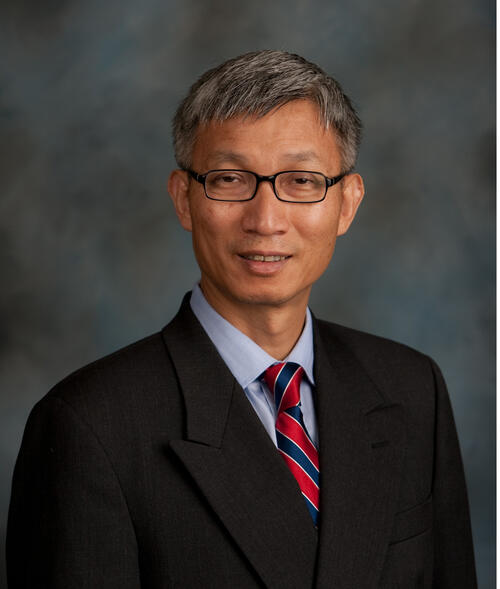
Qiang Mai
Walter H. Shorenstein
Asia-Pacific Research Center
616 Serra St C332
Stanford University
Stanford, CA 94305-6055
Mai Qiang joins the Walter H. Shorenstein Asia-Pacific Research Center (Shorenstein APARC) during the 2012–13 academic year from the Harbin Institute of Technology’s Management School where he serves as an associate professor.
His research interests encompass the process of reform in Chinese state-owned enterprises; decision making in hierarchical organization structures; evolution mechanisms underlying risk decisions; and operations research. During his time at Shorenstein APARC, Mai will participate in an interdisciplinary study evaluating the degree of internationalization that occurs in transnational enterprises in China and the United States.
Mai holds a PhD in management science and engineering from Harbin Institute of Technology.
Looking at future relations with North Korea