-

Abstract 

Scholars have credited a model of state-led capitalism called the developmental state with producing the first wave of the East Asian economic miracle. Using historical evidence based on original archival research, this talk offers a geopolitical explanation for the origins of the developmental state. In contrast to previous studies that have emphasized colonial legacies or domestic political factors, I argue that the developmental state was the legacy of the rivalry between the United States and Communist China during the Cold War. Responding to the acute tensions in Northeast Asia in the early postwar years, the United States supported emergency economic controls in Japan, South Korea, and Taiwan to enforce political stability. In response to the belief that the Communist threat would persist over the long term, the U.S. strengthened its clients by laying the foundations of a capitalist, export-oriented economy under bureaucratic guidance. The result of these interventions was a distinctive model of state-directed capitalism that scholars would later characterize as a developmental state.

I verify this claim by examining the rivalry between the United States and the Chinese Communists and demonstrating that American threat perceptions caused the U.S. to promote unorthodox economic policies among its clients in Northeast Asia. In particular, I examine U.S. relations with the Chinese Nationalists on Taiwan, where American efforts to create a bulwark against Communism led to the creation of an elite economic bureaucracy for administering U.S. economic aid. In contrast, the United States decided not to create a developmental state in the Philippines because the Philippine state was not threatened by the Chinese Communists. Instead, the Philippines faced a domestic insurgency that was weaker and comparatively short-lived. As a result, the U.S. pursued a limited goal of maintaining economic stability instead of promoting rapid industrialization. These findings shed new light on the legacy of statism in American foreign economic policy and highlight the importance of geopolitics in international development.


Bio

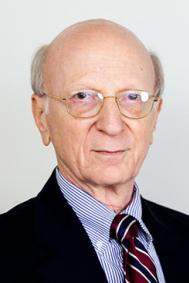
Image
James Lee

James Lee is a Ph.D. Candidate in the Department of Politics at Princeton University. He specializes in International Relations with a focus on U.S. foreign policy in East Asia and relations across the Taiwan Strait. James also serves as the Senior Editor for Taiwan Security Research, an academic website that aggregates news and commentary on the economic and political dimensions of Taiwan's security.


This event is co-sponsored by the Taiwan Democracy Project in the Center on Democracy, Development, and the Rule of Law (CDDRL) and the U.S.-Asia Security Initiative in the Shorenstein Asia-Pacific Research Center (APARC), both part of the Freeman Spogli Institute for International Studies.

James Lee Ph.D. Candidate Princeton University
Lectures
Paragraphs

The most dangerous impact of North Korea’s long-range missile test this past week may not have been the one in the Sea of Japan, felt in Washington, Seoul and Tokyo. It was in Moscow where Chinese leader Xi Jinping and Russian President Vladimir Putin locked arms in a united front on how to respond to the growing North Korea crisis. The target of this front was not, however, North Korea. It was the United States, who the Sino-Russian axis accused of pursuing a military “buildup” in the region.

All Publications button
1
Publication Type
Commentary
Publication Date
Journal Publisher
Tokyo Business Today
Authors
News Type
Commentary
Date
Paragraphs

South Korean President Moon Jae-in and U.S. President Donald Trump recently held a summit in Washington, their first face-to-face meeting in a time of heightened tensions on the Korean Peninsula. Experts from the Shorenstein Asia-Pacific Research Center offered insights in a series of publications and press interviews.

In advance of the summit, William J. Perry Fellow Kathleen Stephens spoke on Bloomberg television about the challenges facing the United States and South Korea, and how those challenges would be prioritized during the bilateral meeting.

Moon would be bringing the message that the U.S.-South Korea alliance is a “strong one and that he remains committed to it,” and that, “only by working transparently and closely together” could the two countries address areas of concern, Stephens said.

“Only when Washington and Seoul are able to talk very frankly to each other and come up with a coordinated plan do we have any chance of making some progress on North Korea,” she added.

Stephens joined the program from Seoul, where a group of Shorenstein APARC faculty and fellows participated in a public seminar and the Korea-U.S. West Coast Strategic Forum, a biannual conference that seeks to foster dialogue about issues affecting the Korean Peninsula and the U.S.-South Korea alliance.

The seminar, held in conjunction with The Sejong Institute, received press coverage; such articles can be read on the Voice of America website (in Korean) and Sisa Journal website (in Korean).

In an analysis piece for Tokyo Business Today, Associate Director for Research Daniel Sneider assessed the outcomes of the summit between Moon and Trump, suggesting that their meeting was satisfactory – without signs of major discord.

“For the most part, this display of calculated pragmatism worked well. There was no visible daylight between the two leaders over how to handle the North and THAAD totally disappeared from the summit talk, at least in public and in the joint statement issued by the two governments.”

The summit, however, may prove to be a “temporary gain,” Sneider added. “Beneath the smiles, there was plenty of evidence of the gaps, and even the tensions, that exist between a progressive government in Seoul, one that echoes the views of its ideological predecessors of a decade ago, and a nationalist, conservative regime in Washington.”

Read the piece in English and Japanese.

Days after the summit, North Korea test-launched an intercontinental ballistic missile (ICBM), which the United States and South Korea followed by hosting joint military exercises.

Stephens spoke on WBUR radio about the ICBM test launch and the initial reactions of the Trump administration.

“If [President Trump’s] agenda is to take stronger defensive measures against North Korea, I think he will find strong partners in Japan and South Korea,” she said, noting that other measures, such as diplomacy and economic sanctions, have also been used to affect pressure on the regime.

Responding to a question about China’s relationship with North Korea, Stephens said Beijing has not exhausted all possible tools in its efforts to persuade Pyongyang to slow or abandon its nuclear and missile activities. This is because China fears a collapse of the regime and “takes a long view” in its calculus, she said.

This news item has been updated.

Hero Image
trump moon summit
U.S. President Donald Trump and South Korean President Moon Jae-in come out from the Oval Office to deliver joint statements in the Rose Garden at the White House on June 30, 2017, in Washington, DC.
Getty Images - Alex Wong
All News button
1
Paragraphs

Rising powers often seek to reshape the world order, triggering confrontations with those who seek to defend the status quo. In recent years, as international institutions have grown in prevalence and influence, they have increasingly become central arenas for international contestation. Phillip Y. Lipscy examines how international institutions evolve as countries seek to renegotiate the international order. He offers a new theory of institutional change and explains why some institutions change flexibly while others successfully resist or fall to the wayside. The book uses a wealth of empirical evidence - quantitative and qualitative - to evaluate the theory from international organizations such as the International Monetary Fund, World Bank, European Union, League of Nations, United Nations, the International Telecommunications Satellite Organization, and Internet Corporation for Assigned Names and Numbers. The book will be of particular interest to scholars interested in the historical and contemporary diplomacy of the United States, Japan, and China.

All Publications button
1
Publication Type
Books
Publication Date
Journal Publisher
Cambridge University Press
Authors
Phillip Lipscy
Authors
Patrick Winstead
News Type
News
Date
Paragraphs

Colonel Patrick Winstead, the 2016-17 FSI senior military fellow at Shorenstein APARC, writes about the second annual orientation at U.S. Pacific Command headquarters

The mission of the Department of Defense (DoD) in the Indo-Asia-Pacific region recently became a bit clearer for 22 faculty and military fellows from Stanford, the Massachusetts Institute of Technology, the Naval Postgraduate School and the Daniel K. Inouye Asia-Pacific Center for Security Studies (APCSS). The U.S.-Asia Security Initiative at the Shorenstein Asia-Pacific Research Center (APARC) in the Freeman Spogli Institute (FSI) organized a group of faculty and fellows for a two-day orientation of United States Pacific Command (USPACOM) and its component military organizations in and around Honolulu, Hawaii, April 13-14, 2017. The purpose of the orientation was to provide researchers with a comprehensive understanding of how America’s armed forces both develop and implement U.S. national security strategy, doctrine and policy throughout Asia.

The trip began with a visit to the headquarters of USPACOM at Camp H.M. Smith. After receiving briefings about USPACOM's mission and operations, the group engaged in roundtable discussions with General Terrence O’Shaughnessy (Commander, U.S. Pacific Air Forces); Major General Kevin B. Schneider (Chief of Staff, USPACOM); Rear Admiral Mark Montgomery (Director for Operations, USPACOM); Major General Steven Rudd (Director for Strategic Planning and Policy, USPACOM); as well as other key joint directors and members of the command staff. The faculty and fellows provided short presentations on the situation in the South China Sea, U.S.-Philippine relations and cyber warfare to an audience of mid-grade military officers and civilian personnel assigned to USPACOM.

In addition to meeting with the leadership of USPACOM, the group was also afforded the opportunity to interact with personnel from the four separate component commands. Deputy Commanding General of U.S. Army Pacific, Major General Charlie Flynn, provided a command briefing at the U.S. Army Pacific headquarters at Fort Shafter. The briefing stimulated a wide-ranging discussion about Army initiatives and activities in support of USPACOM’s mission in the Indo-Asia-Pacific region. At Marine Corps Base Hawaii at Kaneohe Bay, under the guidance of trainers, the visitors took part in a hands-on experience operating Humvee simulators in a virtual-reality convoy setting and firing simulated weapons that Marines typically employ in combat operations. The first day of the trip ended with a working dinner at the historic Nimitz House with the Commander of the U.S. Pacific Fleet, Admiral Scott Swift, where the conversation ranged from Chinese military modernization to evolving U.S. naval doctrine.

Those themes carried into the second day, when the group met for several hours with faculty at APCSS for plenary presentations and multiple breakout sessions to facilitate in-depth dialogue on select topics including the threats posed by nuclear weapons on the Korean Peninsula and in South Asia. The day continued with a tour of the U.S.S Hopper, an Arleigh-Burke class guided missile destroyer, based at Pearl Harbor, Hawaii. Once onboard, the ship’s captain, Lieutenant Commander J.D. Gainey, provided briefings on Hopper’s mission and operational capabilities. In addition, the group spoke with members of the ship’s crew. The experience allowed the faculty and fellows to interact informally with sailors who serve in the Asia-Pacific theatre and to candidly discuss issues of concern. The second day of the orientation ended with a visit to the headquarters of U.S. Pacific Air Forces and a dialogue with O’Shaughnessy and his staff about the unique security challenges of the Indo-Asia-Pacific region, such as tyranny of distance, limited support bases and multiple emerging threats, and how those challenges impact the Air Force and the entire U.S. military’s preparations for contingencies in the region.

Overall, the orientation provided a unique opportunity to engage directly with high-level leaders of USPACOM and to learn first-hand about the challenges faced by those who serve in the armed forces. The orientation also provided a forum to discuss the United States’ national security interests in the region and its efforts to maintain peace and stability in the Indo-Asia-Pacific and to help maintain a rules-based, liberal democratic order.

Related links:

Photo gallery

Hero Image
uspacom trip headline
A group of 22 faculty and military fellows participate in an orientation at U.S. Pacific Command headquarters, Honolulu, Hawaii, April 13-14, 2017, organized and sponsored by the U.S.-Asia Security Initiative.
Courtesy of the U.S.-Asia Security Initiative
All News button
1
Authors
News Type
News
Date
Paragraphs

Emily Tuong-Vi Nguyen, a Stanford student studying human biology, writes about the Asia Health Policy Program’s international conference on diabetes

The Asia Health Policy Program at the Shorenstein Asia-Pacific Research Center hosted the Net Value in Diabetes Management Workshop in March to discuss progress on an international research collaboration. Research teams from Hong Kong, Singapore, China, Taiwan, South Korea and the United States convened at the Stanford Center at Peking University (SCPKU) in Beijing to work on research that compares utilization and spending patterns on diabetes across different countries and to develop a method for measuring the net value of diabetes internationally, based on previous methods discussed in a Eggleston and Newhouse et al. 2009 study with Mayo Clinic Data for Type 2 diabetes.

The research teams from various Asian countries are attempting to calculate the net value of diabetes in those countries by observing the changes in diabetes value and spending. These calculations include monetizing the value of health benefits of new treatments and improvements in health, as well as avoided spending on treatments when prevention was effective, and associated mortality and probability of survival. Previous models used to measure diabetic values and risks, such as the United Kingdom Prospective Diabetes Study (UKPDS) risk engine that was created from U.K. data and populations, are not very relevant for Asian populations. The goal is to create separate risk models specifically suited for populations from Hong Kong, Singapore, China, Taiwan and South Korea.

During the workshop that spanned two days, the research teams had an opportunity to share updates on their individual projects and to discuss methods and ideas for future collaboration.

On the first day, each research team presented its work, describing data sets and explaining the risk models that were used or developed. Karen Eggleston, director of the Asia Health Policy Program, delivered introductory remarks and shared current progress by the Japan and Netherlands research teams on calculating value and risk for diabetes with data from the Netherlands and Japan. The data sets from those two countries were best estimated by the JJ Risk Engine for the Japan data and the UKPDS model for the Netherlands data.

Chao Quan of the University of Hong Kong presented the risk model used for Hong Kong populations. His work primarily looked at how the UKPDS risk engine predicted risk in Hong Kong populations as compared to a local Hong Kong risk engine and how to best calibrate the Hong Kong risk engine. His next step will be to monetize the value for improved survival in diabetes in Hong Kong. He offered to re-estimate the model using the risk factors available on others’ datasets so that the Hong Kong risk model could potentially be used by other teams as well.

Stefan Ma and Zheng Li Yau of the Ministry of Health of Singapore discussed the 5-year prediction model and statistical methods they used for all-cause mortality of Singaporean individuals with diabetes. Their work is based on Singapore’s extensive administrative and claims data as well as data provided by the national health surveys conducted every six years by the National Health Service of Singapore. The researchers plan to look into how their overall risk model compares with models for specific subpopulations, such as Chinese, Malay and Indian populations in Singapore.

Katherine Hastings from the Stanford University team, led by principal investigator Latha Palaniappan, presented preliminary ideas about measuring cardiovascular risk with the Atherosclerotic Cardiovascular Disease Risk Score in analyses of Stanford health system diabetic patients. The researchers are collaborating with a clinical bioinformatics team at Stanford to use machine learning to expedite the analysis.

Min Yu and Haibin Wu of the Zhejiang Center for Disease Control and Prevention shared results from their analysis of health data collected from community health centers for diabetes management, diabetes surveillance data, cause of death data and insurance claims data that showed relationships between different patient characteristics and insurance types. The researchers then estimated the annual cost of Type 2 diabetes and its complications in Tongxiang province, China.

Hai Fang and Huyang Zhang of Peking University worked with claims data of diabetic patients insured by the New Cooperative Medical Scheme in Beijing, and at the workshop, shared regression analyses on the relationship between outpatient visits and inpatient admissions.

Jianqun Dong of the People’s Republic of China Center for Disease Control and Prevention presented ongoing research about diabetes management in China, including preliminary results of a randomized control trial of diabetes self-management strategies.

Wankyo Chung of Seoul National University shared preliminary estimates of a risk model for mortality among diabetic patients in South Korea and discussed next steps for estimating net value of diabetes management using the detailed clinical and claims data available in South Korea.

On the second day, the workshop concluded with a videoconference between workshop participants in Beijing and collaborators at Stanford Graduate Business School, including Stanford professor Latha Palaniappan and Harvard visiting professor Joseph P. Newhouse, using the Highly Immersive Classroom.

The workshop was a good opportunity for the research teams to discuss preliminary models, to offer each other suggestions regarding research methods, and to discuss the future direction of the international collaboration on the net value of diabetes. All research teams are preparing comparative research papers that will be included in the working paper series of the Asia Health Policy Program. A follow-up event will be held at Stanford in November 2017 in recognition of World Diabetes Day.

Hero Image
diabetes conference beijing
A group of participants from the workshop, “Net Value in Diabetes Management,” at Stanford Center at Peking University, March 24, 2017, from left to right: Zheng Yi Lau from the Ministry of Health of Singapore; Chao Quan (University of Hong Kong); Jui-fen Rachel Lu (Chang Gung University); Emily Nguyen, Karen Eggleston, and Katie Hastings (Stanford); and Stefan Ma (Ministry of Health of Singapore).
Courtesy of Emily Tuong-Vi Nyugen
All News button
1
Authors
Lisa Griswold
News Type
News
Date
Paragraphs

At the annual Oksenberg Lecture, Max Baucus, former U.S. ambassador to China, says the U.S.-China relationship is steady, highlights need for greater U.S. engagement on areas of trade and the South China Sea

Despite talk of potential conflict between China and the United States, Max Baucus, who served as U.S. ambassador to the People's Republic of China from 2014 until 2017, said the bilateral relationship is stable and that its long-term management will determine the future quality of life in both countries.

“Essentially, it’s sound,” Baucus said of the relationship. “China and the United States both need each other.”

As the world’s largest economies, China and the United States are vital to each other’s success, and that makes the Thucydides Trap far from inevitable, said Baucus, who spoke at the annual Oksenberg Lecture hosted by the Shorenstein Asia-Pacific Research Center (APARC) as part of the China Program’s 10th Anniversary celebration last week.

The Thucydides Trap, a term used to describe a pattern in history where conflict resulted from tension between a rising power and a ruling power, has been applied in theory to the U.S.-China relationship by experts, but Baucus expressed doubt that the two countries would fall into it.

Baucus’ remarks at the annual event, named in honor of the late Michel Oksenberg, were followed by comments from Michael Armacost, Shorenstein APARC Fellow; Daniel Russel, senior fellow at the Asia Society Policy Institute; and Kathleen Stephens, the William J. Perry Fellow at Shorenstein APARC; moderated by Jean C. Oi, political science professor and director of the China Program.

Baucus said that, despite the draw to succumb to the idea of the Thucydides Trap, what reassured him of the contrary were the many examples of Chinese and American leaders working together on areas of collaboration that he witnessed throughout his term as ambassador.

Russel, a former U.S. assistant secretary of state for East Asian and Pacific Affairs, also cautioned about the dangers of applying the comparison of the Thucydides Trap to the U.S.-China relationship, and emphasized that the role of human agency - both positive and negative - can shape the course of events.

“As important as it is to learn from history, it can be a bit treacherous if we apply it as a law of physics,” said Russel. “In 2017, we see that, on the one hand, there are structural factors that drive a strategic rivalry, and on the other hand, there are modern factors like globalization that drive tremendous interdependence.”

One challenge that flared during Baucus’ tenure was the territorial disputes in the South China Sea, and he said he believes that, had the United States been more forward, it could have accomplished more of its strategic objectives on the issue.

Only after a summit was held between President Obama and President Xi Jinping in September 2015, where the U.S. government delivered a clear message that land reclamation and construction are unacceptable under international law, did Baucus see signs that the Chinese government took notice.

“Frankly, I believe we should have acted sooner,” Baucus said, suggesting that freedom of navigation operations by the United States in the South China Sea should be conducted more often and in concert with other countries.

Another challenge that Baucus encountered was the Trans-Pacific Partnership (TPP), a trade pact led by the United States and put forth under the Obama administration, which he described as an “economic compliment” to the U.S. military presence in the region.

Baucus, a former senator from Montana who spent time on Capitol Hill speaking about the merits of the TPP as ambassador, said the pact’s eventual abandonment by President Trump was a “huge mistake.”

On the future of the U.S.-China relationship, Baucus called for greater engagement, including additional summits between policymakers and with a more candid format that would allow participants to ask questions in addition to reading prepared statements.

“We need constant, repetitive and comprehensive engagement,” Baucus said.

The United States needs to take more thoughtful risks in its engagement with China and to build a vision and strategy that it could “stick with,” he said.

The United States must also find “that delicate balance” between its relationships with China as well as Japan and South Korea, according to Armacost, who served for two decades in the U.S. government.

Armacost noted that every U.S. administration weighs its strategic interests against the geopolitical context and that the Trump administration has yet to make clear how it intends to approach such a balance.

Stephens, a former U.S. ambassador to South Korea, agreed that long-term strategic planning would be constructive, and that the Chinese and U.S. governments would benefit from taking a step back to think about where each sees their own role in the world.

“As the world has flattened, I think our understanding and appreciation for the depth of differences that exist at the high policy levels and at a cultural level has dimmed a bit,” she said.

More emphasis on learning historical, cultural and political factors could serve to enhance understanding between people in China and the United States and help address bilateral challenges, Stephens said.

“It’s going to take a little more focus and more resources,” said Baucus. “But I do think that American resilience is going to find an answer to these challenges.”

Related links:

Photo gallery from the 2017 Oksenberg Lecture

China Program's 10th Anniversary Conference: Panelists exchange views on China's future

Brochure: Celebrating the First 10 Years of the China Program

Hero Image
oksenberg 1
Former U.S. Ambassador to the People's Republic of China Max Baucus delivers the annual Oksenberg Lecture, "On U.S.-China Relations: Avoiding the Trap," on May 11, 2017.
Rod Searcey
All News button
1
News Type
News
Date
Paragraphs

Researchers urge Moon Jae-in to form a close working relationship with Donald Trump and to establish a new special envoy role for North Korea policy emulating the “Perry Process”

Researchers from the Shorenstein Asia-Pacific Research Center (APARC) said they are optimistic about the election of South Korean president Moon Jae-in who assumed office last week following waves of protest across the country.

Now that the vacancy left in the wake of former President Park Geun-hye’s impeachment has been filled, the South Korean government needs to work to strengthen bilateral relations with the United States amid escalating tensions in Northeast Asia, they said.

The Moon administration should immediately engage U.S. President Donald Trump and his senior staff at the White House and government agencies, said Kathleen Stephens, the William J. Perry Fellow at Shorenstein APARC.

“Moon would do well to establish a personal relationship with Trump,” said Stephens, who was U.S. ambassador to South Korea from 2008 to 2011. “The new administration must set up a meeting as early as possible and be ready to engage on a range of issues.”

“In a sense, Moon has to play catch-up,” said Shorenstein APARC Director Gi-Wook Shin, who noted that Trump already held in-person meetings with other Asian heads of state in the United States, including summits with Chinese President Xi Jinping and Japanese Prime Minister Shinzo Abe.

Shin added that a coherent U.S. strategy toward Asia and senior staff appointments in the State and Defense Departments would also aid in supporting the foundation upon which the South Korean and American governments work together on policy challenges, especially North Korea.

North Korea’s nuclear and missile capabilities have become more and more advanced over the past few months, and provocations have continued to ratchet up, including its firing of a ballistic missile that landed in the sea near Russia on Sunday and repeat threats to conduct a sixth nuclear test.

The Moon administration must focus on establishing trust and cooperation with the Trump administration because it is the only pathway to finding a resolution to North Korea’s program, said Siegfried Hecker, a senior fellow at the Center for International Security and Cooperation, an additional center in the Freeman Spogli Institute.

“Any solution must be compatible with the interests of Seoul, but it has to be done in concert with Washington to get Pyongyang’s attention,” said Hecker, who served as director of the Los Alamos National Laboratory and has traveled to North Korea seven times since 2004 to survey its nuclear facilities.

During the campaign, Moon repeatedly spoke of his proposals to reengage the North Korean regime, such as holding talks with its leader Kim Jong-un and re-opening Kaesong Industrial Complex, a joint economic zone on the North Korean side of the border.

Stephens and Shin said Moon’s proposals for North Korean engagement would be a step in the right direction if pursued in due time and led under the direction of a special envoy from South Korea emulating the American “Perry Process.”

The Perry Process, proposed by former U.S. Secretary of Defense William Perry and implemented in the late 1990s under the Clinton administration, entails the appointment of a senior-level, bipartisan representative to pursue a two-track approach of engagement through joint projects and of continued dialogue on denuclearization with North Korea.

Appointing one person in South Korea to lead North Korea policy would help centralize and streamline its organization, which currently requires coordination of activities across dozens of government agencies, the two researchers noted.

“We recognize that establishing such a position and filling the position would be far from easy,” said Shin, co-author of the study Tailored Engagement. “But the magnitude of the nuclear crisis requires restructuring the way in which the South Korean government deals with North Korea, achieving domestic consensus, and shoring up international support for its efforts.”

The United States, China, Japan and Russia are the key international countries concerned with the peace and stability of Northeast Asia, yet South Korea has both an acute need and the potential to assume greater leadership of North Korea policy, said Shorenstein APARC Fellow Thomas Fingar.

China, as North Korea’s largest trade partner, exercises influence over North Korea by maintaining a commercial relationship in the hope of avoiding a collapse of the regime. Yet, its leverage only goes so far, he added.

The Moon administration should consider the limits of Chinese influence before making policy decisions regarding North Korea, Fingar said, for example, whether to freeze or remove the U.S. anti-ballistic missile system, Thermal High Altitude Area Defense (THAAD), deployed last April in South Korea, which the Chinese government strongly opposed.

“There is little that Beijing can or will do that would persuade Pyongyang to be more receptive to initiatives from Seoul than it would otherwise be,” said Fingar, a China specialist who served as chairman of the U.S. National Intelligence Council. “Seoul should not ‘pay’ much to obtain Chinese assistance because China already supports reengagement and would not do more no matter what Seoul offered as an inducement.”

It is of vital importance the Moon administration seeks to strengthen trilateral cooperation between South Korea, Japan and the United States, and to consider holding a summit to address areas of collaboration, all of which would function alongside the China-Japan-South Korea trilateral structure toward creating stability in the region, according to Daniel Sneider, associate director for research at Shorenstein APARC.

“Such cooperation is essential to the security of the region – without it, the United States cannot fulfill its obligation to defend South Korea against the threat posed by North Korea,” said Sneider, who leads the Divided Memories and Reconciliation research project. “Moreover, it’s in the interest of all three countries to tighten such cooperation to balance the rise of China.”

The Moon administration should, above all else, take time to consider its first steps despite pressures to perform early, said Michael Armacost, a fellow at Shorenstein APARC who held a 24-year career in the U.S. government.

“Getting things right is more important than making a quick splash,” said Armacost, a former U.S. undersecretary of state for political affairs. “I would advise any new president to proceed at a deliberate pace, focusing particularly on the key personal issues first, and consulting widely before enunciating major policy departures.”

Related links:

South Korea's election: Shorenstein APARC scholars offer insight

Yonhap News: 미 한반도 전문가 그룹 "한국형 페리 프로세스 필요" (May 16, 2017)

VOA: 미 전문가들 "한국 정부, 미국과 북 핵 협력 중요...대북특사도 임명해야" (May 17, 2017)

Hero Image
moon jaein election
South Korea's new President Moon Jae-In and his wife Kim Jung-Suk salute at a ceremony on May 10, 2017 in Seoul, South Korea.
Kim Hong-Ji-Pool/Getty Images
All News button
1
Date Label
News Type
Commentary
Date
Paragraphs

Moon Jae-in was elected South Korea’s president on a pledge to address domestic inequality and to renew dialogue with North Korea. In the midst of Tuesday’s vote, Shorenstein APARC scholars offered insight to local and international media outlets.

Gi-Wook Shin, professor of sociology and director of Shorenstein APARC’s Korea Program, provided comment to The Economist about the challenges facing an administration led by Moon, a progressive candidate who is assuming power when an active conservative camp remains. He is also cited in an article in the New York Times focused on Moon's economic agenda and featured in a video from a Korea Society event that examines next steps for the new president.

Rennie Moon, the Koret Fellow in the Korea Program, co-authored an analysis piece on the East Asia Forum with Shin analyzing recent polls and the Moon administration's economic and security agenda.

Daniel Sneider, associate director for research at Shorenstein APARC, wrote an analysis piece for The National Bureau of Asian Research. In the piece, he explores how the election could impact the U.S.-Republic of Korea alliance amid escalating tensions on the Korean Peninsula.

Kathleen Stephens, the William J. Perry Fellow at Shorenstein APARC, appeared in a live interview on CNBC. In the taping, she discusses the significance of the vote and the new administration’s priorities as Moon swiftly takes office following the removal of his predecessor.

Hero Image
moon election
South Korean presidential candidate Moon Jae-in of the Democratic Party of Korea, is greeted by his supporters during a presidential election campaign on May 4, 2017, in Goyang, South Korea.
Chung Sung-Jun/Getty Images
All News button
1
Subscribe to Taiwan