-

The Shorenstein Asia-Pacific Research Center at Stanford University, the Center for Pacific and Asian Studies at The University of Tokyo and the Department of Area Studies at The University of Tokyo will present a 3 part discussion comparing the formation of divided memories in Japan, China, South Korea, Taiwan and the United States.

The aim of this research is that it puts Japanese textbooks in a comparative framework, and changes the nature of the dialogue about these issues as a result. We will NOT focus on Japanese textbooks per se but rather on the comparative analysis.

Part 1. Comparative Analysis of High School History textbooks in China, Japan, South Korea, Taiwan and the United States

  • Professor Gi-Wook Shin (Director, Shorenstein APARC): an overview of our project
  • Professor Peter Duus (Stanford University): the comparative analysis of historical narratives presented in the textbooks of China, Japan and the U.S.
  • Professor Jae-Jung Chung (The University of Seoul) : the comparative analysis of textbooks in South Korea and Japan
  • Dr. Weike Li (Editor, Peoples Education Press, Beijing): on Chinese textbooks
  • Professor Haruo Tohmatsu (Tamagawa University): the comparative analysis of Japanese textbooks with other textbooks

Part 2. Textbooks as an International Relations issue

  • Dr. Daniel Sneider (Shorenstein APARC): the history of textbooks as an international issue and the different approaches to solving it
  • Professor Hiroshi Mitani (The University of Tokyo): the personal experiences with Sino-Japanese and Korean-Japanese historical Dialogue
  • Professor Shinichi Kitaoka (The University of Tokyo, former ambassador to UN): the experience of official joint committee between Japan and China

Part 3. General Discussions

  • Professor Tatsuhiko Tsukiashi (The University of Tokyo, Korean history)
  • Professor Shin Kawashima (The University of Tokyo, Chinese history)

The University of Tokyo
Komaba Hall 1F, 18th bldg.

Shorenstein APARC
Encina Hall E301
616 Jane Stanford Way
Stanford, CA 94305-6055
(650) 724-8480 (650) 723-6530
0
Senior Fellow at the Freeman Spogli Institute for International Studies
Professor of Sociology
William J. Perry Professor of Contemporary Korea
Professor, by Courtesy, of East Asian Languages & Cultures
Gi-Wook Shin_0.jpg PhD

Gi-Wook Shin is the William J. Perry Professor of Contemporary Korea in the Department of Sociology, senior fellow at the Freeman Spogli Institute for International Studies, and the founding director of the Korea Program at the Walter H. Shorenstein Asia-Pacific Research Center (APARC) since 2001, all at Stanford University. In May 2024, Shin also launched the Taiwan Program at APARC. He served as director of APARC for two decades (2005-2025). As a historical-comparative and political sociologist, his research has concentrated on social movements, nationalism, development, democracy, migration, and international relations.

In Summer 2023, Shin launched the Stanford Next Asia Policy Lab (SNAPL), which is a new research initiative committed to addressing emergent social, cultural, economic, and political challenges in Asia. Across four research themes– “Talent Flows and Development,” “Nationalism and Racism,” “U.S.-Asia Relations,” and “Democratic Crisis and Reform”–the lab brings scholars and students to produce interdisciplinary, problem-oriented, policy-relevant, and comparative studies and publications. Shin’s latest book, The Four Talent Giants, a comparative study of talent strategies of Japan, Australia, China, and India to be published by Stanford University Press in the summer of 2025, is an outcome of SNAPL.

Shin is also the author/editor of twenty-six books and numerous articles. His books include Korean Democracy in Crisis: The Threat of Illiberalism, Populism, and Polarization (2022); The North Korean Conundrum: Balancing Human Rights and Nuclear Security (2021); Superficial Korea (2017); Divergent Memories: Opinion Leaders and the Asia-Pacific War (2016); Global Talent: Skilled Labor as Social Capital in Korea (2015); Criminality, Collaboration, and Reconciliation: Europe and Asia Confronts the Memory of World War II (2014); New Challenges for Maturing Democracies in Korea and Taiwan (2014); History Textbooks and the Wars in Asia: Divided Memories (2011); South Korean Social Movements: From Democracy to Civil Society (2011); One Alliance, Two Lenses: U.S.-Korea Relations in a New Era (2010); Cross Currents: Regionalism and Nationalism in Northeast Asia (2007);  and Ethnic Nationalism in Korea: Genealogy, Politics, and Legacy (2006). Due to the wide popularity of his publications, many have been translated and distributed to Korean audiences. His articles have appeared in academic and policy journals, including American Journal of SociologyWorld DevelopmentComparative Studies in Society and HistoryPolitical Science QuarterlyJournal of Asian StudiesComparative EducationInternational SociologyNations and NationalismPacific AffairsAsian SurveyJournal of Democracy, and Foreign Affairs.

Shin is not only the recipient of numerous grants and fellowships, but also continues to actively raise funds for Korean/Asian studies at Stanford. He gives frequent lectures and seminars on topics ranging from Korean nationalism and politics to Korea's foreign relations, historical reconciliation in Northeast Asia, and talent strategies. He serves on councils and advisory boards in the United States and South Korea and promotes policy dialogue between the two allies. He regularly writes op-eds and gives interviews to the media in both Korean and English.

Before joining Stanford in 2001, Shin taught at the University of Iowa (1991-94) and the University of California, Los Angeles (1994-2001). After receiving his BA from Yonsei University in Korea, he was awarded his MA and PhD from the University of Washington in 1991.
Selected Multimedia

Director of the Korea Program and the Taiwan Program, Shorenstein Asia-Pacific Research Center
Date Label
Gi-Wook Shin Speaker
Daniel C. Sneider Speaker
Conferences
-

This talk will examine the phenomenon of anti-Americanism in the Republic of Korea (South Korea).  Contrary to widespread perception, the speaker argues that anti-Americanism in South Korea has a deep-rooted history, the expression of which was suppressed during decades of authoritarian rule.  Anti-Americanism in South Korea involves a sophisticated ideology, constituting a kind of belief system.  Kim will trace the history of such anti-Americanism from 1945 until the present.

Hakjoon Kim is a Distinguished Practitioner at Center for East Asian Studies at Stanford.  He is Chairman of the Dong-A Ilbo, one of South Korea's largest and most influential newspapers with a circulation of over two million.  He has served as President of the University of Inchon, the Korean Political Science Association, and the Korean Federation of Teachers' Associations.  He was a scholar at the Alexander-von-Humboldt Foundation in Germany and a guest scholar at the Woodrow Wilson International Center for Scholars in Washington, D.C.  He received his B.A. from Seoul National Univeristy, M.A. from Kent State Universiy, and Ph.D. from University of Pittsburgh.


This event is supported by the generous grant from Academy of Korean Studies in Korea.

Philippines Conference Room

No longer in residence.

0
Distinguished Practitioner, 2008-09

Hakjoon Kim was a Distinguished Practitioner at Center for East Asian Studies at Stanford. He is chairman of the Dong-A Ilbo, one of South Korea's largest and most influential newspapers with a circulation of over two million. He has served as president of the University of Inchon, the Korean Political Science Association, and the Korean Federation of Teachers' Associations. He was a scholar at the Alexander-von-Humboldt Foundation in Germany and a guest scholar at the Woodrow Wilson International Center for Scholars in Washington, D.C.

Hakjoon Kim Distinguished Practitioner Speaker Center for East Asian Studies, Stanford University
Seminars
-

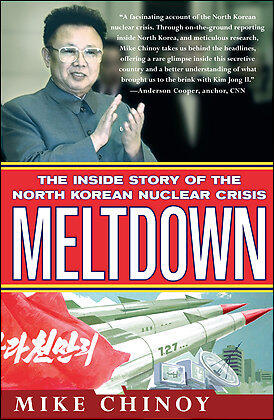
Mike Chinoy, the Pacific Council’s Edgerton Senior Fellow for Asia and author of the just-published and critically-received book, Meltdown: The Inside Story of the North Korean Nuclear Crisis will discuss the main themes in his book, update us on the recent developments in the Bush administration’s policy toward North Korea and assess what other policy options the next U.S. president might pursue.

Image
MELTDOWN The Inside Story of the North Korean Nuclear Crisis
Drawing on over 200 interviews conducted in Washington, Seoul, Tokyo and other Asian capitals – as well as insights gained from Mr. Chinoy’s 14 trips to Pyongyang – Meltdown provides a detailed account of the behind-the-scenes policy debates within the Bush administration and other governments that drove the recent confrontation over North Korea’s nuclear weapons program.  It also offers important new details of the impact the crisis had on U.S. relations with its key regional allies – Japan and South Korea – and on Washington’s fraught relationship with Beijing. 

» Washington Post’s review of the "Meltdown: The Inside Story of the North Korean Nuclear Crisis"

Mike Chinoy is one of America’s keenest observers of Asian affairs, having reported on the most important events in the region for almost thirty years. He previously served as CNN’s senior Asia correspondent (2000-06), its Hong Kong bureau chief (1996-2000), and Beijing bureau chief (1987-95).  Earlier, he spent four years as a reporter with NBC’s Hong Kong Bureau, and from 1975-78 he was a Hong Kong-based freelance reporter, contributing to CBS News as well as Newsday, The Far Eastern Economic Review and other publications.

Mr. Chinoy received an Emmy Award, an ACE Award, a Dupont Award and a Peabody Award for his coverage of the 1989 Tiananmen Square crisis.  His critically-acclaimed reporting during those weeks has been credited with strengthening CNN as an authoritative force in international news coverage. Mr. Chinoy has also covered North Korea extensively, traveling there 14 times since 1989.  In April 1994, he became the first broadcaster to file live TV reports from North Korea, and was the only journalist to travel with former U.S. President Jimmy Carter on his historic trip to Pyongyang in June of that year.

Philippines Conference Room

Mike Chinoy Edgerton Senior Fellow Speaker Pacific Council on International Policy
Seminars

Shorenstein APARC
Stanford University
Encina Hall E301
Stanford, CA 94305-6055

(650) 724-5648 (650) 723-6530
0
POSCO NGO Fellow, 2008-09
Hye-Jeong_Kim.JPG

Hey-jeong Kim joined Korea Federation for Environment Movement in 1989 and worked for 18 years in establing the grass root environmental NGO in South Korea. She became the Secretary General of the organization, and has been working as a committee member of the Ministry of Environment in Korea.

Paragraphs

In February 2008, an international conference was convened at Stanford University at the Shorenstein Asia-Pacific Research Center to examine the role of high school history textbooks in the formation of historical memory regarding the events of the Sino-Japanese and Pacific wars and their outcome. “Divided Memories: History Textbooks and the War in Asia,” as the conference was titled, was a remarkable gathering of historians and textbook writers, along with other scholars, from China, Japan, South Korea, Taiwan and the United States.

The conference marked the culmination of the first year of Shorenstein APARC’s three-year research project on the formation of historical memory. The project flows from the understanding that unresolved historical issues continue to bedevil present relations in the region. We have seen this most recently in a revived clash between South Korea and Japan over rival claims to a group of islets, an issue left unresolved by the peace treaty that concluded the war in Asia. The United States was drawn directly into this dispute when its geographical name bureau was perceived as offering support for Japan’s territorial claim.
Beyond governments, these disputes over past wrongs continue to occupy the pages of newspapers throughout the region, show up on the screens of movie houses and shape the curriculum of school children. The question of history taps into sensitive and deeply rooted issues of national identity. And rising nationalism feeds on the unresolved problems of the past, undermining the efforts of governments to restore damaged relations.

There is recognition of the need for reconciliation and the resolution of long-standing historical injustices. But the barrier to reconciliation lies, in the view of the scholars of Shorenstein APARC, in the existence of divided, and often conflicting, historical memories. Attempts to create common histories, both through the non-government efforts of historians and through official committees formed between Japan and China and between Japan and South Korea, have had limited success, at best. The Divided Memories project aims to further reconciliation through a comparative study of how the main actors in Northeast Asia—China, Japan, South Korea and Taiwan—along with the United States, form their view of the past. Recognizing how each society selectively creates its own, divided memory can lead to mutual understanding.

All Publications button
1
Publication Type
Working Papers
Publication Date
Journal Publisher
Shorenstein APARC
Authors
Gi-Wook Shin
-

This talk will examine the challenges and problems that South Korea faces on its way to full-fledged democracy. The ideological composition of Korean society, the role of political parties, civil society and media as well as the attitude of public intellectuals will be assessed.

Se Il Park is a 2008-09 visiting scholar at APARC’s Korean Studies Program, and a professor of law and economics in the Graduate School of International Studies at Seoul National University. He is the founder and the chairman of the board of Hansun Foundation for Freedom and Happiness, an independent, non-partisan think tank based in Seoul devoted to providing innovative and practical public policy recommendations to South Korean society at large.

Park is the author of many books, including Communitarian Liberalism (2008); National Strategy for Sunjinwha in Korea (National strategy to make Korea a world-class nation) (2006); Blueprint for Tertiary Education Reform in Korea (2003); Strategy for Presidential Success: Authority, Role, and Responsibility (2002); Growth, Productivity, and Vision for Korean Economy (2001); Reforming Labor Management Relations: lessons from the Korean experience: 1996-1997 (2000); and Law and Economics (2000).

Park served as Senior Secretary to the President for policy planning and social welfare in the Office of the President of the Republic of Korea from 1995 to 1998, and was a member of National Assembly of the Republic of Korea from 2004 to 2005. He also worked at the Korea Development Institute as a Senior Fellow from 1980 to 1985. Park received his B.A. from Seoul National University and his M.S. and Ph.D. from Cornell University.

This event is supported by the generous grant from Academy of Korean Studies in Korea.

Philippines Conference Room

Shorenstein APARC
Stanford University
Encina Hall,Room E301
Stanford, CA 94305-6055

(650) 724-5668 (650) 723-6530
0
Visiting Scholar, 2008-09
Seil_Park.JPG PhD

Park, Se-Il is a professor of law and economics in the Graduate School of International Studies at Seoul National University. He is the founder and chairman of the board of Hansun Foundation for Freedom and Happiness, which is an independent, non-partisan think tank based in Seoul devoted to high-quality public policy research. The Foundation works to provide innovative and practical policy recommendations to the South Korean government.

Dr. Park is the author of many books including Communitarian Liberalism (2008); National Strategy for Sunjinwha in Korea (National strategy to make Korea to become a world class nation)(2006); Blueprint for Tertiary Education Reform in Korea (2003); Strategy for Presidential Success: Authority, Role, and Responsibility (2002); Growth, Productivity, and Vision for Korean Economy (2001); Reforming Labor Management Relations: lessons from the Korean experience: 1996-1997 (2000); Law and Economics
(2000).

Park is currently writing a book on globalization in which he plans to research several important political, social, and economic challenges, stemming from globalization. Based on that research he hopes to make comprehensive strategic recommendations for Korea to become a successful advanced nation in the age of globalization. The tentative title is Creative Globalization: Korean strategy for globalization.

Park has taught for more than 20 years at Seoul National University, College of Law and Graduate School of International Studies. He served as Senior Secretary to the president for policy planning and social welfare in the Office of the President of the Republic of Korea
from 1995 to 1998, and was a member of National Assembly of the Republic of Korea from 2004 to 2005. He also worked at the Korea Development Institute as a Senior Fellow from 1980 to 1985. He received the Chung-Nam Award from the Korean Economic Association in 1987 for his outstanding publications in economics. He served as President of the Korean Labor Economic Association (2001-2002), President of the Korean Law and Economic Association (2000-2003), and President of the Korean Institutional Economic Association (2002-2003). Park received his BA from Seoul National University and his MS and PhD from Cornell University.

Se-Il Park Visiting Scholar, APARC Speaker
Seminars

Shorenstein APARC
Stanford University
Encina Hall,Room E301
Stanford, CA 94305-6055

(650) 724-5668 (650) 723-6530
0
Visiting Scholar, 2008-09
Seil_Park.JPG PhD

Park, Se-Il is a professor of law and economics in the Graduate School of International Studies at Seoul National University. He is the founder and chairman of the board of Hansun Foundation for Freedom and Happiness, which is an independent, non-partisan think tank based in Seoul devoted to high-quality public policy research. The Foundation works to provide innovative and practical policy recommendations to the South Korean government.

Dr. Park is the author of many books including Communitarian Liberalism (2008); National Strategy for Sunjinwha in Korea (National strategy to make Korea to become a world class nation)(2006); Blueprint for Tertiary Education Reform in Korea (2003); Strategy for Presidential Success: Authority, Role, and Responsibility (2002); Growth, Productivity, and Vision for Korean Economy (2001); Reforming Labor Management Relations: lessons from the Korean experience: 1996-1997 (2000); Law and Economics
(2000).

Park is currently writing a book on globalization in which he plans to research several important political, social, and economic challenges, stemming from globalization. Based on that research he hopes to make comprehensive strategic recommendations for Korea to become a successful advanced nation in the age of globalization. The tentative title is Creative Globalization: Korean strategy for globalization.

Park has taught for more than 20 years at Seoul National University, College of Law and Graduate School of International Studies. He served as Senior Secretary to the president for policy planning and social welfare in the Office of the President of the Republic of Korea
from 1995 to 1998, and was a member of National Assembly of the Republic of Korea from 2004 to 2005. He also worked at the Korea Development Institute as a Senior Fellow from 1980 to 1985. He received the Chung-Nam Award from the Korean Economic Association in 1987 for his outstanding publications in economics. He served as President of the Korean Labor Economic Association (2001-2002), President of the Korean Law and Economic Association (2000-2003), and President of the Korean Institutional Economic Association (2002-2003). Park received his BA from Seoul National University and his MS and PhD from Cornell University.

Professor Thompson builds on Barrington Moore's insight that there are different "paths to the modern" world. Thompson's manuscript explores alternatives to the familiar South Korean-and Taiwan-based model of "late democratization." According to that model, political pluralism follows a formative period of economic growth during which labor is demobilized and big business, religious leaders, and professionals depend upon and are co-opted by the state.

The Vietnamese government legalized strikes in 1995. Since then Vietnamese workers have gone on strike more than 1,500 times. Most of these actions have erupted in factories established by capital investments from South Korea and Taiwan. Far fewer have been reported in factories relying on private investments from other countries or in publicly funded and state-owned enterprises (SOEs). When labor protests do occur in SOEs, they tend to be less confrontational, involving petitions and letters of complaint sent to local labor newspapers and relevant officials.

Authors
Donald K. Emmerson
News Type
News
Date
Paragraphs

As a 2007-08 Shorenstein Fellow at Shorenstein APARC, John D. Ciorciari pursued a full and varied agenda of research and writing on Southeast Asia.

Fellowships are more often won on the promise of completing a book than books are finished before the fellowships end. Dr. John Ciorciari broke this “rule” by completing his book manuscript in Spring 2008 and submitting it to a university press for possible publication.

Based on his Oxford dissertation, the work is provisionally entitled “Hedging: Using Southeast Asian States as Case Studies.” In it, he examines the range of options that secondary states possess between outright alignment with and neutrality toward the great powers. He argues that secondary states normally seek to "hedge" by limiting their alignments. They do so to avoid the risks of tight security cooperation with the great powers, including diminished autonomy and entrapment, while reaping sufficient rewards in the form of protection. He presented his findings at a Southeast Asia Forum seminar on May 28, 2008 titled “Dating but Not Married: Southeast Asian Security Responses to the Rise of China.” See the link below for an audio file of the seminar.

In addition to finishing his book on hedging, Ciorciari used his fellowship period to pursue his research interest in Asian financial cooperation, which is increasingly central to broader political relations in the region. He focused on the Chiang Mai Initiative (CMI), an effort by China, Japan, South Korea, and the ten members of the Association of Southeast Asian Nations (ASEAN) to develop economic resilience by establishing regional mechanisms for balance-of-payments support.

Ciorciari collaborated on this study with Jennifer Amyx, a professor of political science at the University of Pennsylvania and herself a former Shorenstein Fellow and speaker for the Southeast Asian Forum (SEAF) at Shorenstein APARC. Ciorciari and Amyx acknowledge that establishing an effective financing mechanism under the CMI has proven to be a challenging task. Nevertheless, by fostering regular interaction among Asian central bankers and finance ministry officials, the CMI has begun to yield a range of spillover benefits conducive to regional financial resilience. (Schedules permitting, Ciorciari and Amyx may present some of their findings at a SEAF seminar at Stanford in the upcoming academic year.)

As a Shorenstein Fellow in 2007-08 Ciorciari also worked on two projects on Cambodia: a book chapter on the international politics surrounding the long-delayed and finally ongoing Khmer Rouge Tribunal, and an article on China’s relations with the Khmer Rouge regime during the late 1970s. The article argues that the Pol Pot regime effectively punched above its weight in an otherwise asymmetrical relationship by exploiting China's rigid conception of its security interest in Indochina. In studying the Sino-Cambodian alliance, Ciorciari was able to test and illustrate some of the arguments in his book manuscript as to how small states pursue leverage and autonomy in their relations with major powers.

All News button
1
Subscribe to South Korea