News Type
Commentary
Date
Paragraphs

Uncertainty about U.S. intentions in Northeast Asia has increased fear that events could spin out of control in the region due to American disengagement. That engagement cannot be taken for granted, Shorenstein Fellow Thomas Fingar writes on the Stanford University Press blog, and it remains to be seen just how well regional political leaders adjust to the Trump administration’s evolving foreign policy.

The blog post highlights themes from his book Uneasy Partnerships: China’s Engagement with Japan, the Koreas, and Russia in the Era of Reform (Stanford, April 2017).

Hero Image
tillerson beijing
U.S. Secretary of State Rex Tillerson meets with Chinese Foreign Minister Wang Yi during a bilateral meeting in Beijing, China, on March 18, 2017.
Flickr/U.S. Department of State
All News button
1
-

South Koreans will elect a new president on May 9 after months of political turmoil that led to the impeachment of their most recent president, Park Geun-hye. This panel will discuss Korea's politics and economics, and foreign policy under the new administration.

Panelists:

Daniel Sneider, Associate Director for Research, Shorenstein Asia-Pacific Center, Stanford University

Yong Suk Lee, Center Fellow, FSI; Deputy Director of the Korea Program, Shorenstein Asia-Pacific Research Center, Stanford University

Gi-Wook Shin, Professor of Sociology; Director, Shorenstein Asia-Pacific Research Center, Stanford University

Kathleen Stephens, William J. Perry Fellow, Shorenstein Asia-Pacific Research Center, Stanford University; former U.S. Ambassador to South Korea


News Type
Commentary
Date
Paragraphs

South Korean culture has long held ethnic homogeneity as an integral part of national identity, but attitudes toward multiculturalism are slowly beginning to change amid the country’s shifting demographics, Gi-Wook Shin, professor of sociology and director of the Shorenstein Asia-Pacific Research Center, said in an interview with Al Jazeera English. Read the article.

Hero Image
crowd seoul
People walking on the streets in Myeongdong, Seoul, South Korea.
iStock Editorial/Getty Images Plus
All News button
1
Paragraphs

Uneasy Partnerships presents the analysis and insights of practitioners and scholars who have shaped and examined China's interactions with key Northeast Asian partners. Using the same empirical approach employed in the companion volume, The New Great Game (Stanford University Press, 2016), this new text analyzes the perceptions, priorities, and policies of China and its partners to explain why dyadic relationships evolved as they have during China's "rise."

Synthesizing insights from an array of research, Uneasy Partnerships traces how the relationships that formed between China and its partner states—Japan, the Koreas, and Russia—resulted from the interplay of competing and compatible objectives, as well as from the influence of third-country ties. These findings are used to identify patterns and trends and to develop a framework that can be used to illuminate and explain Beijing's engagement with the rest of the world.

This book is part of the Studies of the Walter H. Shorenstein Asia-Pacific Research Center series at Stanford University Press.

All Publications button
1
Publication Type
Books
Publication Date
Journal Publisher
Stanford University Press
Authors
Thomas Fingar
-

One prominent feature of South Korea, as well as other countries in East Asia, is citizens’ strong preference to work for large conglomerates or the government, as opposed to startups or small and medium enterprises (SMEs). Relative to the United States, choosing entrepreneurship or working for a young firm are less desired in Korea, especially among highly skilled individuals. This talk will examine how beliefs about corruption and trust in institutions affect an individual’s occupational preferences. A main challenge of examining personal beliefs and their impact on occupational preference is their relation to a host of other individual characteristics such as willingness to accept risk, optimism, patience, education level and family background. Center Fellow Yong Suk Lee will discuss his research on this area, including his focus on the events surrounding the impeachment of South Korea's previous president, Park Geun Hye, and his surveys of South Koreans before the impeachment rulings by the constitutional court and after impeachment. He will talk about (1) whether the impeachment process changed beliefs in the rule of law and societal trust; and (2) whether and how any change in beliefs and trust affect occupational preference. 

 
Yong Suk Lee <i>Deputy Director of Korea Program, APARC; Center Fellow, FSI, Stanford University</i>
Seminars
News Type
Commentary
Date
Paragraphs

U.S. Secretary of State Rex Tillerson announced in Seoul “the policy of strategic patience has ended” and “all options were on the table” regarding the United States’ efforts to address the North Korean nuclear threat. Kathleen Stephens, the William J. Perry Fellow in Shorenstein APARC’s Korea Program, spoke on PBS NewsHour about Tillerson’s remarks, the viability of tougher sanctions against North Korea, and deployment of the U.S. ballistic missile defense system (THAAD) to South Korea.

Watch and read about the interview here.

Hero Image
north korea missile newspaper
A member of the public reads a newspaper report regarding a North Korea test-fired missile.
Chung Sung-Jun/Getty Images
All News button
1
-

South Korea's persistent economic growth combined with a democratic political system has transformed the country into a developed nation. While research has often highlighted the role of industrial policies, technological growth and international trade as imperative to Korea’s developmental success, this talk will instead focus on the role that human capital has played. Professor Ju-Ho Lee will discuss how the accumulation of human capital has aided Korea’s transformation and examine the policies, strategies and challenges that the country faces into the future.

Image
ju ho lee
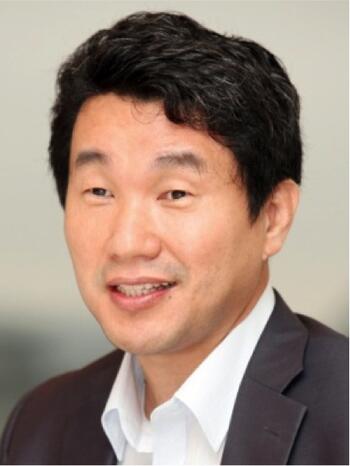
Before returning to the KDI School of Public Policy and Management in 2013, Professor Lee served as Minister of Education, Science and Technology (2010-13) where he had previously served as Vice Minister (2009). He has been noted for his endeavor to reform education, and for active lawmaking as a member of the National Assembly (2004-08). Utilizing his nine years of experience as a policy maker, he actively resumed his academic research on human capital and innovation policies at KDI. Professor Lee's  recent research has covered a wide range of issues including the measurement of 21st century skills, changes in pedagogies, opening-up strategies in education reforms, and innovation ecosystems. Currently he is also working for the international community as a Commissioner of the International Commission on Financing the Global Educational Opportunities.

Professor Lee received his BA and MA from Seoul National University, and PhD from Cornell University, all in economics.

This lunch time keynote address is part of the ninth annual Koret Workshop, "Korea's Migrants: From Homogeneity to Diversity," and open to the general public.

This event is made possible through the generous support of the Koret Foundation.

Ju-Ho Lee <i>Professor, KDI School of Public Policy and Management; former Minister of Education, Science and Technology, South Korea </i>
Seminars
News Type
News
Date
Paragraphs
South Korea’s Constitutional Court upheld a parliamentary decision to impeach President Park Geun-hye on Friday. She becomes the country’s first democratically elected leader to be forcibly removed from power, following allegations of corruption that have incited widespread protests for months.
 
Gi-Wook Shin, director of the Shorenstein Asia-Pacific Research Center, answers some questions about the impact of Park’s impeachment and path ahead for South Korea.
 
What happens next?
 
The ruling declares that President Park is no longer president and that she must vacate Blue House, the official residence of the South Korean head of state. Indeed, she returned to the residence where she had lived before assuming the presidency. A presidential election will be held within 60 days, most likely on May 9. In the meantime, South Korean Prime Minister Hwang Kyo-ahn, who was appointed as acting president, will continue in that role until the election. 
 
The decision made by the court was only one part of the investigation into Park’s political scandals and alleged corruption. The verdict delivered on March 10 states that Park committed a grave violation of constitutional law. Park could still face charges for corruption and cronyism, as a separate legal process is ongoing, and she could be put into jail.
 
How are people in South Korea responding to the ruling so far?
 
Most people are accepting the ruling. The decision to confirm Park’s impeachment was largely expected. One noteworthy aspect of the ruling, though, was its unanimity – all eight judges on the court voted to confirm her impeachment. This collective stance aimed to message an agreement that ‘it’s time to move on’ and to minimize the potential for discord in government and society.
 
Following months of protests in Seoul, the reactions on the streets have been fairly restrained. However, there is a contingent that supported Park throughout the trial and they still refuse to accept the ruling. Park herself also expressed defiance, rather than accepting the verdict, reportedly saying, “It will take time, but the truth will eventually be revealed.” Political tensions will continue, perhaps even after the upcoming election.
 
What motivated the protests and impeachment process, and what does it represent?
 
Beyond the political scandals, the protests are more broadly an expression of popular discontent over a range of issues. Following two decades of rapid modernization, South Koreans are experiencing growing inequality, high youth unemployment, and fatigue over two presidential terms by conservative parties. Civic participation was a main driver behind the protests. The protests were large scale and prolonged but certainly not unusual for South Korea. Historically speaking, South Korea has a pattern of a strong state setting itself against a contentious civil society. As was evident in 2016-17, political parties, instead of addressing the issues and public opinion, were being led by the movements themselves.
 
The impeachment trial and civic activism represent neither a crisis of politics nor a crisis of democracy for South Korea. Rather, it shows that Korean democracy has progressed since it accelerated its democratic transition in the late 1980s. Throughout Park’s case, democratic procedures were followed by the National Assembly, special prosecutor and the Constitutional Court – and that’s a good sign. Nonetheless the real test for Korean democracy may yet have to come, as some supporters of Park and perhaps she herself have indicated that the verdict is unfair and unconstitutional. Going forward, I am still optimistic that these events will encourage the government to be more careful with exercise of power and more attentive to societal issues.
 
What are the main issues that the government now faces?
 
National unity and stability will be the main priorities of the next president of South Korea. He or she will have to find a way to bridge the deep divide between progressives and conservatives, and work on the issues that have motivated such wide unrest across the country. An orderly presidential election and transfer of power from the Park administration to the next are equally essential. The next president faces a unique circumstance, however, in that the new administration will begin its work the day following the election, without the typical transition period.
 
These events also underscore the limitations of the current single five-year term presidential system in South Korea. While the Korean presidency is still powerful, the current system has proved to be ineffective as the president becomes a 'lame duck' after 3 or 4 years into office, making it difficult to pursue any long-term policy agenda. Korea needs constitutional reform to enact a greater balance of power and policy continuity.

Read more about this topic in a paper featured in the academic journal Asian Survey and an analysis piece in The Diplomat by Gi-Wook Shin and Rennie J. Moon, or watch a video featuring a panel discussion from earlier this year.


Hero Image
seoul protest candle
Activists of all ages gather in Seoul city center for a candlelight rally on Dec. 10, 2016.
Chung Sung-Jun/Getty Images
All News button
1
Paragraphs

South Korean President Park Geun-hye faced a leadership crisis after revelations that she relied on a confidant with no official position for key decision-making in state affairs. Heavy industry met with serious financial difficulties, and a strong anti-corruption law was enacted. North Korea tested more nuclear weapons and missiles. Controversy over the deployment of Terminal High Altitude Area Defense strained South Korea’s relations with China.

All Publications button
1
Publication Type
Journal Articles
Publication Date
Journal Publisher
Asian Survey
Authors
Gi-Wook Shin
Rennie Moon
Number
1
Subscribe to South Korea