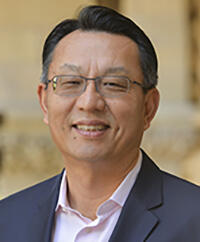
Authors
Gi-Wook Shin
News Type
Commentary
Date
Paragraphs

There is a Korean expression that means “to become soaked by a drizzle without noticing.” This metaphor is a timely warning against the gradual decline of democratic norms. Though some of the changes underlying this global phenomenon are subtle, they are producing creeping, piecemeal erosions of democracy and pluralism. The signs of democratic backsliding are now emerging everywhere in South Korean society, and a failure to recognize and robustly counter their effects may create future costs that prove unbearable. 

My new article, “Korean Democracy Is Sinking Under the Guise of the Rule of Law,” published in the April 2020 issue of the South Korean magazine Shindonga (New East Asia, the oldest monthly in Korea), examines how the Moon administration is sinking into a democratic recession and considers its actions as a case study with lessons for averting broader, global trends in democratic decline.

In all corners of the world, we witness freely elected leaders gradually dismantle democratic institutional safeguards, fuse political polarization with chauvinistic populism, and focus on narrow interpretations of the national interest just as China and Russia expand their scope of influence via “sharp power,” subversive means.

Image
Chairman of the South Korean National Assembly Moon Hee-sang (second from the left of the chairman's seat) enacts a draft amendment to the election law amid vigorous resistance by members of the opposition –December 23, 2019. 
South Korea is no exception to these currents. A politics of extreme confrontation and polarizing rhetoric of "us" and "them" are becoming the country’s new normal. The Moon administration’s aggressive assertion of a Manichean logic of good and evil that justifies their vitriolic attacks on perceived opposition is evidenced in its campaign of “eradicating deep-rooted evils” from Korean society and politics.

As my analysis shows, this crusading mindset has insinuated itself into more concrete actions by the Moon government, such as the calculated blurring of the separation of powers through political interference in the courts, deliberate changes to longstanding election laws that damage the spirit of democracy, and the blatant use of double standards and ideological loyalty in the execution of national policies. Similar patterns are taking hold in populist governments the world over, and – perhaps most disconcertingly – they transpire not through the strong-arming of a military coup or violent political disruption but through the legal procedures and policies meant to keep such canker in check.

To overcome its wave of democratic recession South Korea must cast away political polarization and demonstrate a firm resolve to act in accordance with democratic norms. The upcoming April 15 legislative election must sound a clear alarm against all actors who damage these core principles, regardless of their party affiliation and irrespective of their ideology. 

Read the complete English translation of my article or the original Korean version here:

Hero Image
Opposing political rallies converge in South Korea
Pro- and anti-Moon protests in Seocho-dong, South Korea – October 5, 2019.
Dong-a Ilbo, Shindonga
All News button
1
Authors
Noa Ronkin
News Type
Q&As
Date
Paragraphs

North Korea continues to declare that it has not had a single case of COVID-19, but health experts find it inconceivable that the infectious disease would not be in the country given its proximity to China and South Korea, two early victims of the pandemic. A coronavirus outbreak in the North could be devastating, says Asian affairs and security expert Victor Cha, as it would act on an extremely vulnerable population with already-compromised immune systems and outdated health care infrastructure.

Cha, professor of government and holder of the D.S. Song-KF Chair in Government and International Affairs at Georgetown University, has joined Shorenstein APARC as the Koret Fellow in Korean Studies for the winter quarter of 2020. He spoke with APARC via videoconferencing about the threat of COVID-19 to North Korea, the deadlock in the diplomacy of denuclearization, and the North Korean human rights problem.

COVID-19 or not, the Kim regime has recently stepped up again its weapons testing. The North typically resorts to missile tests, notes Cha, in periods of non-dialogue with the United States, and the data also shows that North Korea will bolster weapons testing before and after U.S. presidential elections.

[To get more stories like this delivered to your inbox, sign up for our newsletters]

What is to be done about engagement with the North? Cha believes that any new U.S. administration should prioritize three areas: first, focus not only on North Korea’s nuclear program but also on its ballistic missile delivery capability; second, enable the flow of humanitarian assistance into the country; and third, genuinely work with our allies and partners in the region, “who have tended to be neglected lately and seen in largely transactional terms.”

While at Stanford, Cha has been researching a project that he calls “Binary Choices” and that examines how U.S. allies and partners in Asia react when they are forced to choose between the United States and China over various issues. Regardless of how one feels about the U.S.-China trade war, Cha concludes, the question is if we are “calculating the other externalities, in terms of how our allies make choices, into our net assessment of whether a policy towards China is working or not.”

Watch the Q&A with Cha above or on our YouTube channel:

Hero Image
A woman holding a balloon with Korean writing on it
A North Korean defector, now living in South Korea, prepares to release balloons carrying propaganda leaflets denouncing North Korea's nuclear test, near the Demilitarized Zone (DMZ) on September 15, 2016 in Paju, South Korea. The leaflets also denounce the North Korean government for their human rights abuses.
Chung Sung-Jun/Getty Images
All News button
1
-

This event is made possible by generous support from the Korea Foundation and other friends of the Korea Program.

Asia has made remarkable progress over the past decades and is now at the forefront of the global economy in growth terms. That said, there are several near-term risks that could derail Asia’s growth momentum, including trade tensions and too-low-for-long global interest rates. In this talk, Changyong Rhee will discuss the Asian economic outlook, focusing on Korea in the context of regional and global challenges.

Image
Changyoung Rhee

Rhee is the Director of the Asia and Pacific Department at the International Monetary Fund (IMF), where he oversees the Fund’s work on the region, including its lending operations and bilateral and multilateral surveillance of economies ranging from China, Japan, and India to the Pacific Islands. Prior to joining the IMF in 2014, Rhee was Chief Economist of the Asian Development Bank (ADB); Secretary General and Sherpa of the Presidential Committee for the 2010 G-20 Seoul Summit; Vice Chairman of the Financial Services Commission (FSC) and Chairman of the Securities and Futures Commission of Korea; professor of economics at Seoul National University and the University of Rochester. He has also been a frequent policy advisor to the government of Korea, including in the Office of the President, the Ministry of Finance and Economy, the Bank of Korea, the Korea Securities Depository, and the Korea Development Institute. Rhee has published widely in the fields of macroeconomics, financial economics, and on the Korean economy. He holds a PhD from Harvard University and an undergraduate honors degree from Seoul National University, both in economics.


Changyong Rhee <i>Director, Asia and Pacific Department, IMF</i>
Seminars
Shorenstein APARCStanford UniversityEncina Hall E301Stanford, CA 94305-6055
0
Visiting Scholar at APARC, 2019-2020
Mira Yoo.jpg

Mira Yoo joined the Walter H. Shorenstein Asia-Pacific Research Center (APARC) as a visiting scholar for the winter and spring quarters of 2020 from the Constitutional Court of the Republic of Korea, where she serves as rapporteur judge, as well as director of the Basic Rights Research Team at the Constitutional Court's Research Institute.  At APARC, she will be conducting research on Korea's domestic and international political relations, particularly with North Korea, through the lens of Korea's legislation and constitutional adjudication.

-

Moon Jae-in administration increased South Korea’s minimum wage by nearly 30 percent in 2018 and 2019 under its political slogan of "income-led growth." The idea was that the higher minimum wage would boost low-wage earners’ earnings, thus the income inequality would be reduced while promoting economic growth with increased labor income and expenditure of low-wage workers and their households. This idea was, however, heavily criticized by those who argued that the minimum wage could not be a tool for economic growth and there could be a negative effect on employment.

Lee will discuss empirical findings from his research on the Korean minimum wage including the effect of the recent wage hikes. Using employer-employee matched data and longitudinal data on the universe of establishments, he estimated the effect of the minimum wage on net job growth and tried to decompose the effect into job creation and destruction by existing establishments as well as by establishment entry and exit. He found a significant negative effect of the minimum wage on employment growth; and also that ignoring the minimum wage’s effect on the self-employed could underestimate the adverse effect on total employment. To explain the mechanism, he focuses on the Korean labor market's unique feature—a high share of the self-employed in the workforce and their financial marginality. His findings demonstrate that the minimum wage’s effect and its channels should differ across countries depending on labor market institutions and structure.

Image
Jungmin Lee
Jungmin Lee is a professor of economics at Seoul National University in Korea, and also a Research Fellow at the Institute for the Study of Labor in Germany and at the Center for Research & Analysis of Migration at University College London in UK. Previously, he was an assistant professor at University of Arkansas and Florida International University, and an associate professor at Sogang University in Korea. His current research focuses on Korean labor market and education policies, interactions between health and labor market outcomes, and North Korean refugees. He has been a member of editorial board of many economics journals in Korea. He was the chief editor for the Korean Journal of Labor Economics and he is currently a Co-Editor for the Korean Economic Review; and was a member of the committee on youth employment of the Korea Tripartite Commission. He has published more than 50 papers in academic journals, mostly about the Korean economy. He received a bachelor’s degree in international economics from Seoul National University and PhD in economics from the University of Texas at Austin.

Jungmin Lee <i>Professor of Economics, Seoul National University</i>
Seminars
Authors
Noa Ronkin
News Type
News
Date
Paragraphs

Using a dynamic microsimulation model, a research team, including APARC Deputy Director and Asia Health Policy Program Director Karen Eggleston, shows that there are differentially positive health gains of smoking reduction among subgroups of smokers in South Korea, Singapore, and the United States.

Tobacco use is responsible for the death of approximately eight million people worldwide, estimates the World Health Organization, and countries are increasingly making tobacco control a priority. Indeed the relationship between smoking and the burden of chronic diseases such as cancer, lung disease, and heart disease, and, in turn, premature mortality, is well documented. Yet little is known about the health effects of smoking interventions among subgroups of smokers.

Do interventions targeted at heavy smokers relative to light smokers lead to disproportionately larger improvements in life expectancy and prevalence of chronic diseases? And how do these effects vary across populations? In today’s rapidly aging world, it is crucial to understand the potential health gains resulting from interventions to reduce smoking, a leading preventable risk factor for healthy aging.

That’s why a research team, including APARC Deputy Director and Asia Health Policy Program Director Karen Eggleston as well as Stanford Health Policy faculty member Jay Bhattacharya, set out to examine the health effects of smoking reduction. To do so, the team simulated an elimination of smoking among subgroups of smokers in South Korea, Singapore, and the United States.

[To receive more stories like this directly to your inbox subscribe to our newsletters.]

The team’s findings, discussed in a new paper published by the journal Health Economics, show that smoking reduction can achieve significant improvements in lifetime health as measured by survival while also reducing the prevalence of major chronic diseases, though the effects are heterogeneous. Whereas interventions in both subgroups and in all three countries led to an increased life expectancy and decreased prevalence of chronic diseases, the life-extension benefits were greatest – 2.5 to 3.7 years – for those who would otherwise have been heavy smokers, compared with gains of 0.2 to 1.5 years among light smokers.

The team developed a dynamic microsimulation model to estimate the health gains of reducing smoking among heavy smokers and light smokers. Microsimulation models are powerful tools for assessing the value of health promotion: they model individual health trajectories while accounting for competing risks, thus providing valuable information about the impact of interventions and how they may interact with the changing demographics and socioeconomic profile of a population to determine future health. The team’s study applied microsimulation models tailored to the demographic and epidemiological context in the three countries, then compared the gains in survival and reduction in chronic disease prevalence from a given reduction in smoking and how these impacts vary depending on initial smoking intensity.

The team’s findings indicate that there are differentially positive health effects from smoking reduction. The life‐year gain among heavy smokers quitting well exceeds that of light smokers quitting in each country, but the magnitudes differ substantially: 11.2 times for South Korea, 6.8 times for Singapore, and 1.7 times for the United States. The lower life expectancy among Americans is related to the greater extent in which they suffer from risk factors, such as obesity, relative to the Asian counterparts in the study.

The findings illustrate how smoking interventions may have significant economic and social benefits, especially for life extension, that vary across countries. They are particularly important for aging societies that are concerned about the sustainability of their health insurance systems in the face of increasing burden of chronic disease.

Hero Image
A man smokes in the street in Seoul, South Korea. Chung Sung-Jun/ Getty Images
All News button
1
Paragraphs

Shorenstein APARC's annual overview for academic year 2018-19 is now available.

Learn about the research, events, and publications produced by the Center's programs over the last twelve months. Feature sections look at U.S.-China relations and the diplomatic impasse with North Korea, and summaries of current Center research on the socioeconomic impact of new technologies, the success of Abenomics, South Korean nationalism, and how Southeast Asian countries are navigating U.S.-China competition. Catch up on the Center's policy work, education initiatives, and outreach/events.

Read online:

All Publications button
1
Publication Type
Annual Reports
Publication Date
Paragraphs

The substantial social and economic burden attributable to smoking is well‐known, with heavy smokers at higher risk of chronic disease and premature mortality than light smokers and nonsmokers. In aging societies with high rates of male smoking such as in East Asia, smoking is a leading preventable risk factor for extending lives (including work‐lives) and healthy aging. However, little is known about whether smoking interventions targeted at heavy smokers relative to light smokers lead to disproportionately larger improvements in life expectancy and prevalence of chronic diseases and how the effects vary across populations.

Using a microsimulation model, the authors examine the health effects of smoking reduction by simulating an elimination of smoking among subgroups of smokers in South Korea, Singapore, and the United States. They find that life expectancy would increase by 0.2 to 1.5 years among light smokers and 2.5 to 3.7 years among heavy smokers. Whereas both interventions led to an increased life expectancy and decreased the prevalence of chronic diseases in all three countries, the life‐extension benefits were greatest for those who would otherwise have been heavy smokers. The authors' findings illustrate how smoking interventions may have significant economic and social benefits, especially for life extension, that vary across countries.

All Publications button
1
Publication Type
Journal Articles
Publication Date
Journal Publisher
Health Economics
Authors
Karen Eggleston
-

U.S.-China relations have evolved from past templates of  "responsible stakeholder" and "G2" to new ones emphasizing strategic competition.  What is the impact of this competition for broader stability in East Asia?  How does the ongoing U.S.-China trade war impact U.S. allies in Asia?   In particular, how does strategic competition between these two power affect the choices of key allied states like Korea?  Professor Cha will present some research-in-progress on these topics that seeks a broader conceptualization of the costs and benefits behind the latest turn in U.S.-China relations.

Image
victor cha small 1 3x2
Victor Cha is a 2019-20 Koret Fellow at Stanford's Shorenstein Asia-Pacific Research Center during the winter quarter.  He is Vice Dean and holds the D.S. Song-KF Chair in Government and International Relations at Georgetown University, and is also Senior Adviser at the Center for Strategic and International Studies (CSIS) in Washington D.C. He formerly served on the National Security Council staff and as the US Deputy head of delegation for the Six Party talks. Professor Cha received a PhD in political science and a master's in international affairs from Columbia University; an MA in philosophy, politics, and economics from the University of Oxford; and an AB in economics from Columbia University.

Victor Cha <i>Professor of Government, Georgetown University</i>
Seminars
-

Panelists:

Young-Sun Ha, Chairman, East Asia Institute, South Korea; Professor emeritus, Political Science and International Relations, Seoul National University

Wang Hwi Lee, Professor, Political Science, Ajou University, South Korea

Thomas Fingar, Shorenstein APARC Fellow, Freeman Spogli Institute for International Studies, Stanford University

Gi-Wook Shin (moderator), Director, Shorenstein APARC;  William J. Perry Professor of Contemporary Korea, Stanford University


Panel Discussions
Subscribe to South Korea