616 Serra StreetEncina Hall E301Stanford, CA94305-6055
(650) 736-9958 (650) 723-6530
0
anju_patwardhan.jpg

Anju Patwardhan is a Fulbright Fellow and Visiting Scholar at Stanford. Her research is focused on the use of technology and innovation to support financial inclusion, especially small business lending.

She is also a Venture Partner with CreditEase Fintech Fund from China (fund of c.USD 1 billion). She is a member of the World Economic Forum (WEF) Global Future Council on Blockchain and on the WEF steering committees for “Internet for All” and “Disruptive Innovation in Financial Services”. 

She has been appointed as a FinTech Industry Expert with UC Berkeley (SCET) and an Innovation Fellow with the NUS.  She serves on the advisory board of Government of Estonia’s e-residency program

She was in banking until July 2016 and has over 25 years of experience with Citibank and Standard Chartered Bank (SCB) in global leadership roles across Asia, Africa and Middle East.  She was a member of SCB’s global leadership team, global risk management group and global technology & operations management group. She was also a Director on various banking subsidiaries and non-profits boards.

She is an alumnus of the IIT Delhi and IIM Bangalore, and holds further professional qualifications is board directorship and art appreciation.

She moved from Singapore to the Bay Area in August 2016 with her family. 

Fulbright Fellow
Visiting Scholar
News Type
Commentary
Date
Paragraphs

Donald Emmerson joined KQED’s radioshow “Forum” to discuss U.S. President Barack Obama’s final trip to Asia, where the president met with world leaders in various forums including the G-20 in Hangzhou and, in Vientiane, the East Asia Summit among other meetings related to the Association of Southeast Asian Nations.

Emmerson, who directs the Southeast Asia Program at the Shorenstein Asia-Pacific Research Center, said the tour represented Obama’s commitment to a vision of U.S. engagement in the region and to supporting multilateral institutions—cornerstones of the administration’s “pivot to Asia” strategy.

“No American president has ever had the kind of interaction with Southeast Asia that President Obama has,” said Emmerson, noting the president’s frequent visits to the region and many sessions with its leaders.

Along with three other guests on the show, Emmerson also responded to questions on North Korea and the territorial disputes in the South China Sea.

Listen to the full program here.

Hero Image
Flickr DOS East Asia Summit
U.S. President Barack Obama participates in a meeting at the East Asia Summit in Phnom Penh, Cambodia, in November 2012. | Flickr/Department of State – William Ng
All News button
1
Authors
Lisa Griswold
News Type
News
Date
Paragraphs

South Korea is facing a number of challenges. Not unlike other advanced economies in Asia, the country is confronted with a declining working-age population, reduction in birth rates, and risk of long-term stagnation.

A team of Stanford researchers at Stanford’s Shorenstein Asia-Pacific Research Center (APARC), in collaboration with other scholars from around the world, is increasingly thinking about those challenges and is working on a number of research initiatives that explore potential solutions in leveraging benefits from globalization.

The researchers propose that Korea can extract value from two major movements of people – outflows of its own population (diaspora) and inflows of foreigners (immigrants and visitors), all of whom hold the capacity to build social capital – a network of people who have established trust and in turn spread ideas and resources across borders.

Engaging diaspora

Emigration is traditionally viewed as a loss of human capital – ‘brain drain’ – movement of skills out of one country and into another, but Stanford professor Gi-Wook Shin and Koret Fellow Joon Nak Choi support an alternative view of outward flows of citizens.

Shin and Choi suggest that people who leave their countries of origin but never return can still provide value to their home country through ‘brain linkage,’ which advocates that there is economic opportunity in cross-national connections despite a lack of physical presence. This concept is a focus of their research which was recently published in the book Global Talent: Skilled Labor and Mobility in Korea.

“What we’re trying to do is to extend the thinking – to not just look at potential losses of having your people go abroad but also the potential gains,” Choi said. “Previous studies have found that if you have more of these relationships or ‘brain linkages,’ you have more trade and more flow of innovations between countries.”

People who stay in a host country become participants in the local economy and often conduct influential activities such as starting companies, providing advice and sitting on boards of directors, Choi said, and these transactions enact flows of resources from home country to host country and vice versa.

Choi, who outside of his fellowship is an assistant professor at Hong Kong University of Science and Technology, said that this way of thinking pulls away from a zero-sum view of the world and instead sees it as “more globalized, cosmopolitan and diffuse.”

He leads a research project with Shin focused on global talent and cultural movement in East Asia, and over the past quarter, taught a graduate seminar on the Korean development model.

“Cross-national ties are harder to establish than those that are geographically close, but they provide invaluable means of sharing information and brokering cooperation that may otherwise be impossible on other levels,” said Shin, who is also the director of Shorenstein APARC. “In many ways, social ties can be a good strategy to gain a competitive edge. This is an area we endeavor to better understand through our research efforts on Korea.”

Shin has described his own identity of being a part of the very system they are studying. He grew up in Korea, arrived in the United States as a graduate student and has since stayed for three decades and frequently engages the academic and policy communities in Korea.

One cross-national initiative that he recently started is a collaborative study between scholars at Shorenstein APARC and Kyung Hee University in Seoul. The two-year study evaluates the social capital impact of a master’s degree program at the Korean university that trains select government officials from developing countries.


Image
internationalization embed 1

An international cohort including many researchers from Stanford’s Shorenstein Asia-Pacific Research Center have been conducting group interviews with international students at Korean and Japanese universities to better understand their motivations to stay or go following their completion of a degree or non-degree program at Korean universities. Their initial results reveal that gaps in cross-cultural understanding and opportunities cause feelings of disassociation, but recent internationalization efforts are helping to address those gaps and support innovation, knowledge sharing and local economic growth. An op-ed on the topic authored by Stanford professor Gi-Wook Shin and Yonsei University associate professor Rennie Moon can be viewed here. Credit: Flickr/SUNY – Korea/crop and brightness applied


Harnessing foreign skilled labor

Globalization has also led to migration of people to regions that lack an adequate supply of skilled workers in their labor force. This new infusion of people is an opportunity to bridge the gap, according to the researchers.

“In order to be successful, countries need a large talented labor pool to invest in,” said Yong Suk Lee, the SK Center Fellow in the Freeman Spogli Institute for International Studies and affiliate of the Korea Program. “Innovation is not something like a technology ladder which has a more obvious and strategic trajectory, it’s more about investing in people and taking risks on their ideas.”

Korea currently has a shortage of ‘global talent’ – individuals who hold skills valuable in the international marketplace. Yet, Korea is well positioned to reduce the shortage.

The country produces a vast amount of skilled college graduates. Nearly 70 percent of Koreans between the age of 25 and 34 have the equivalent of a bachelor’s degree. Korea has the highest percentage of young adults with a tertiary education among Organisation for Economic Co-operation and Development (OECD) countries. Another study found that the foreign student population in Korea has risen by 13 percent in the past five years.

Universities are moving to “internationalize” in seeking to both recruit faculty and students from abroad and to retain them as skilled workers in the domestic labor force. A new book published by Shorenstein APARC Internationalizing Higher Education in Korea: Challenges and Opportunities in Comparative Perspective assesses efforts by institutions in Korea, China, Japan, Singapore and the United States through nine separately authored chapters.


[[{"fid":"223565","view_mode":"crop_870xauto","fields":{"format":"crop_870xauto","field_file_image_description[und][0][value]":"","field_file_image_alt_text[und][0][value]":false,"field_file_image_title_text[und][0][value]":false,"field_credit[und][0][value]":"","field_caption[und][0][value]":"","field_related_image_aspect[und][0][value]":"","thumbnails":"crop_870xauto"},"type":"media","field_deltas":{"2":{"format":"crop_870xauto","field_file_image_description[und][0][value]":"","field_file_image_alt_text[und][0][value]":false,"field_file_image_title_text[und][0][value]":false,"field_credit[und][0][value]":"","field_caption[und][0][value]":"","field_related_image_aspect[und][0][value]":"","thumbnails":"crop_870xauto"}},"link_text":null,"attributes":{"width":"870","class":"media-element file-crop-870xauto","data-delta":"2"}}]]


Shin and Yonsei University associate professor Rennie Moon, who served as book editors and chapter authors, found that Korea has on average more outbound students (students who leave Korea to study elsewhere) than inbound students (international students who come to Korea to study). The figure above compares five countries and finds that Korea and China are more outbound-driven while Singapore, Japan and the United States are more inbound-driven.

“For most national and private universities in Korea, internationalization is more inbound-oriented—attracting foreign students, especially from China and Southeast Asia,” said Yeon-Cheon Oh, president of Ulsan University and former Koret Fellow at Shorenstein APARC who co-edited Internationalizing Higher Education in Korea. “In many ways, it’s about filling up students numbers. There needs to be a balance in inbound and outbound student numbers in order for internationalization to have an optimal effect.”

International students that do come to Korea are on average not staying long after graduation, though. The researchers identify reasons being difficulty in adapting to the local culture, inability to attain dual citizenship, language barriers, and low wages in comparison to that of native Koreans; in short – it is not easy to assimilate fully.

These and other barriers facing foreigners in Korea are a focus of a broader research project led by Shin and Moon that aims to propose functional steps for policymakers striving to internationalize their countries and to shift the discourse on diversity.

Developing a narrative

The Korean government has expanded efforts to recruit foreign students to study at Korean universities – many of which now rank in the top 200 worldwide – but addressing education promotion is only one area.

“The challenge is to propose a pathway that rallies around a general narrative,” Lee said, citing a need for internationalization to be coordinated across immigration policy, labor standards, and social safety nets.

An international group of experts in Korean affairs gathered at Stanford earlier this year at the Koret Workshop to address the challenge of creating a cohesive narrative, focused on Korea as the case study. The Koret Foundation of San Francisco funds the workshop and fellowship in its mission to support scholarly solutions to community problems and to create societal and policy change in the Bay Area and beyond.


Image
internationalization embed 3

The Koret Workshop brings together an international panel of experts on Korean affairs at Stanford. From 2015-2016, the workshops focused on higher education, globalization and innovation in Korea. Above, Michelle Hsieh (far right) speaks during a question and answer session following her presentation on Korean and Taiwanese small and medium enterprises, next to her is former U.S. Ambassador to the Republic of Korea Kathleen Stephens, Stanford consulting professor Richard Dasher, former U.S. foreign affairs official David Straub, and Korea University professor Myeong Hyeon Cho.


The interdisciplinary nature of the workshop was an important aspect, according to Lee, and Michelle Hsieh, one of 27 participants of the conference that covered a range of areas from entrepreneurship to export promotion policies in Korea.

“The workshop demonstrated how internationalization of higher education – and academic research in general – can be achieved by constructing cross-cutting ties,” said Hsieh, who was a postdoctoral fellow at Shorenstein APARC from 2006-07 and is now an associate research fellow at Academia Sinica in Taiwan.

“Participating in the workshop made me realize I really miss the lively and rigorous discussions at Shorenstein APARC, where researchers are interdisciplinary with diverse backgrounds yet focused on a common research interest,” Hsieh said. “I think debate and discussion in that kind of setting can illuminate a completely different take.”

The workshop will result in a book that features multiple areas and policy directions for Korea’s development. The lessons included are also envisioned to apply to other emerging countries facing similar trends of demographic change and economic slowdown. Shorenstein APARC expects to publish the book next year.

Hero Image
internationalization headline
Getty Images
All News button
1
-

The 8th Annual Koret Workshop

South Korea has become an economic powerhouse, but faces multiple challenges. The conference will focus on four areas that South Korea needs to turn its attention to: 1) the higher education and development; 2) entrepreneurship and innovation; 3) global competitiveness; and 4) demographic changes and immigration policy.

During the conference, a keynote speech is open to the public. Please click here for more information about the public keynote.

The Koret Workshop is made possible through the generous support of the Koret Foundation.

Workshops
Encina Hall E301616 Serra StreetStanford, CA94305-6055
(650) 796-3699 (650) 723-6530
0
david_lee.png Ph.D.

David LEE Kuo Chuen joins the Walter H. Shorenstein Asia-Pacific Research Center (APARC) as visiting scholar for the fall of 2015.  He is currently the Director of Sim Kee Boon Institute for Financial Economics.  He holds the appointment of Practice Professor of Quantitative Finance, Lee Kong Chian School of Business, in Singapore Management University.  He is also the founder of Ferrell Asset Management Group.

His research interests encompass digital and Internet finance, digital banking, Asia finance, impact investing, financial inclusion and asset allocation. During his time as a Fulbright Scholar at Shorenstein APARC, his research will focus on harnessing Silicon Valley technology for connectivity and financial inclusion in ASEAN and Singapore.

David is also an Independent Director of two SGX-listed companies and sits on the Investment Committee and Council of two charitable organizations. He is the Vice President of the Economic Society of Singapore.  He was the Founding Vice Chairman of the Alternative Investment Management Association (Singapore Chapter), a member of the SGX Security Committee, and MAS Financial Research Council.  He was also the Group Managing Director of OUE Limited and Auric Pacific Limited, as well as the Non-Executive Chairman of MAP Technology Limited.

David speaks frequently in international conferences with occasional appearances in Bloomberg, Reuters and Channel NewsAsia.  He has published in Financial Analyst Journal, Journal of Investing, Journal of Wealth Management, Journal of Statistical Computation and Simulation, Applied Financial Economics, and several books and chapters on Household Economics and Hedge Funds.  His two books on Asia Finance focus on Banking, Sovereign Wealth Funds, REITs, Financial Trading & Markets, and Fund Performance. His latest book is on Digital Currency.

He graduated from the London School of Economics and Political Science with a BSc (Econs), MSc (Mathematical Economics and Econometrics) and a PhD in Econometrics and Mathematical Economics.

Visiting Scholar, Fulbright Fellow
-

Abstract:

Authoritarian ruling parties are expected to resist democratization, often times at all costs. And yet some of the strongest authoritarian parties in the world have not resisted democratization, but have instead embraced it. This is because their raison d’etre is to continue ruling, though not necessarily to remain authoritarian. Put another way, democratization requires ruling parties hold free and fair elections, but not that they lose them. Authoritarian ruling parties can thus be incentivized to concede democratization from a position of exceptional strength. This alternative pathway to democracy is illustrated with Asian cases – notably Taiwan – in which ruling parties democratized from positions of considerable strength, and not weakness. The conceding-to-thrive argument has clear implications with respect to “candidate cases” in developmental Asia, where ruling parties have not yet conceded democratization despite being well-positioned to thrive were they to do so, such as the world’s most populous dictatorship, China.


Bio:

Joseph Wong is the Ralph and Roz Halbert Professor of Innovation at the Munk School of Global Affairs, University of Toronto, and Professor of Political Science and Canada Research Chair in Democratization, Health and Development. Professor Wong was the Director of the Asian Institute at the Munk School from 2005 to 2014. In addition to academic articles and book chapters, Professor Wong has published four books: Healthy Democracies: Welfare Politics in Taiwan and South Korea (2004) and Betting on Biotech: Innovation and the Limits of Asia’s Developmental State (2011), both published by Cornell University Press, as well as Political Transitions in Dominant Party Systems: Learning to Lose, co-edited with Edward Friedman (Routledge, 2008), and Innovating for the Global South: Towards a New Innovation Agenda, co-edited with Dilip Soman and Janice Stein (University of Toronto Press, 2014). He is currently working on a book monograph with Dan Slater (University of Chicago) on Asia’s development and democracy, which is currently under contract with Princeton University Press. Professor Wong earned his Hons. B.A from McGill University (1995) and Ph.D. from the University of Wisconsin-Madison (2001). 

Philippines Conference Room, 3rd Floor, Encina Hall

616 Serra St., Stanford, CA

Joe Wong Professor and Canada Research Chair in Political Science University of Toronto
Seminars
News Type
News
Date
Paragraphs

A middle class is emerging in China, and simultaneously, its population is rapidly aging. These two phenomena are impacting the country’s traditional consumer habits, including spending on healthcare. Experts say private-sector services are one important part of the future of China’s healthcare system, and perhaps also a sign of what’s to come for other countries in the region. Entrepreneurs can provide innovative services that cater widely to consumers and support a shift toward integrated care for health promotion and long-term management of chronic disease, also supplementing resources available in traditional public facilities.

Three experts visited the Walter H. Shorenstein Asia-Pacific Research Center and shared perspectives on those trends at the panel discussion, “Healthcare Entrepreneurs in East Asia: Innovations in Primary Care and Beyond,” hosted by the Asia Health Policy Program.

Historically, healthcare services in China have been almost entirely government-run. A patient would go to a public clinic, stand in a queue, and receive treatment within a few hours – being referred elsewhere if additional treatment was required.

Now, the private sector is growing, based on the promise of improved care and an enhanced experience, both removing the waiting line and ushering in new technologies. The government has also issued several policies encouraging “social capital” investment in health and fitness services.

The private sector for preventative care services now holds around fifteen percent of the entire marketplace in China, and “is expected to get much bigger over the next five years,” said Lee Ligang Zhang, the founding chairman and chief executive officer of iKang, a healthcare group based in Beijing.

Zhang oversees the company’s operation of 50 self-owned healthcare centers and an extended network of 300 affiliates. iKang is one of many groups catering to a growing consumer base of corporate workers and senior managers seeking care outside of the public system.

Comparative view

Increased development of premium healthcare facilities is not only emerging in China, but also in neighboring Taiwan. Since 1995, Taiwan implemented a national health insurance system, and has been lauded for its success in service provision.

Taiwan transitioned its healthcare market to universal coverage. Under this system, a patient can essentially “shop around” and select where to go for services, most of which are covered under the country’s insurance collective system at public or private providers.

“On average, every Taiwanese goes to see a doctor 14 times a year, compared to five times a year in the United States, and two times [a year] in China,” said Dr. Fred Hun-Jean Yang, a physician and chairman of MissionCare, Inc.

Such numbers reflect the higher availability of services compared to China, he said. Even as a small island, Taiwan has over 15,000 clinics and the price for services is generally affordable for the average citizen. Despite this availability of public and private services, Taiwan’s newer healthcare entrepreneurs seek to fill a market demand shaped by similar factors as in China. Yang says technology and the efficiency of the private sector healthcare system is attracting new consumers.

Missioncare is headquartered in northern Taiwan’s Taoyuan City and consists of four community hospitals with a larger network of clinics across the country as well as coordinated long-term care services for the elderly and those with chronic disease. The group has already expanded into China, and plans to integrate healthcare innovations, such as wearable monitoring and mobile payment.

Patient-centric service

Chinese citizens, particularly those with greater expendable income, are more willing to pay out-of-pocket for an improved patient experience, the panelists said.

“The consumer psyche is important,” said Dr. Wei Siang Yu, the founder of the Borderless Healthcare Group (BHG), a group of companies based in Singapore that focuses largely on health telecommunications.

One perspective is that consumers desire a “high-end” environment made possible by tailored design aesthetics and effective branding. Guided by this trend, Yu, a business executive and physician by training, started the “smart cities, smart homes” initiative at BHG.

BHG is now launching an incubator model in Shanghai, which combines intelligent design aesthetics with patient care, and is planning to localize such centers across China. The model is referred to as an “experience center,” rather than a hospital or clinic, and healthcare services – examinations, operations and value-added activities like wellness and education activities – are all centralized in one location.

Looking ahead, Yu said healthcare is likely to move even further away from the traditional hospital setting, and more toward experiential and home-based care models.

Hero Image
entrepreneurs panel
(L to R): Wei Siang Yu, founder of Borderless Healthcare Group; Lee Ligang Zhang, chairman and CEO of iKang Healthcare Group; and Fred Hung-Jen Yang, chairman of Missioncare, Inc. discuss healthcare innovation at the Walter H. Shorenstein Asia-Pacific Center.
All News button
1
Paragraphs
Image
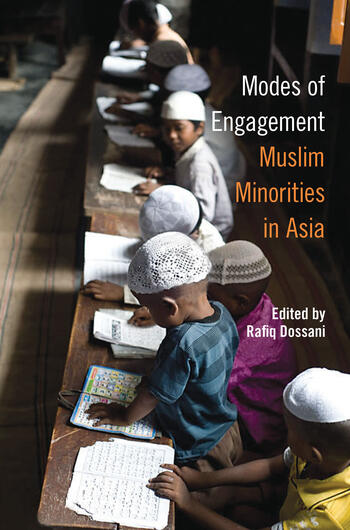
Modes of Engagement front cover.

Of Asia’s 800 million Muslims, 215 million are minorities within their countries. These Muslim minorities have experienced a persistent decline in their socioeconomic and political status. Along with this decline, they are increasingly identified by their faith and largely accorded no other identity for civic relations. Why have these Muslim minorities been particularly affected during a time of unprecedented opportunities for the mainstream in Asia’s unprecedented era of growth and rising freedoms?

Using detailed analyses of China, India, and the Philippines, Modes of Engagement argues that key factors in this phenomenon include the linkage between socioeconomic decline, loss of political power, and narrowing of identity; nationalism and its associated connotations of the assimilation of minorities; the weakness of civil society generally in Asia; and the rise in regional and global alliances for security and trade.

Contributors include Wajahat Habibullah (National Commission for Minorities and National Institute of Technology, India), Rakesh Basant (Indian Institute of Management), Dru C. Gladney (Pomona College), and Joseph Chinyong Liow (Nanyang Technological University’s S. Rajaratnam School of International Studies, Singapore).

Rafiq Dossani is a senior economist at the RAND Corporation. His research interests include regional integration, security, and education. Previously, Dossani was a senior research scholar at the Shorenstein Asia-Pacific Research Center and director of the Stanford Center for South Asia.

Examination copies: Shorenstein APARC books are distributed by Stanford University Press. Contact them for information on obtaining examination copies.

All Publications button
1
Publication Type
Books
Publication Date
Subtitle

Muslim Minorities in Asia

Book Publisher
Shorenstein APARC
Authors
Lisa Griswold
News Type
News
Date
Paragraphs

The Obama administration’s policy of “re-balance” toward Asia, that began as early as 2009, is now increasingly under stress, as those in the region question American staying power and China emerges as a challenger to U.S. dominance. As the territorial disputes in the East and South China Seas in recent months have demonstrated, China’s relations with the region and the United States have become visibly strained, bringing the U.S. re-balance policy into question and raising concerns about security tensions and the danger of conflict. 

U.S.-China relations are heading, for the foreseeable future, into “a very scratchy time,” predicted Kenneth Lieberthal, a respected senior China scholar at The Brookings Institution, in his keynote speech delivered at the annual Oksenberg Lecture on June 3 at the Shorenstein Asia-Pacific Research Center.

Lieberthal told a standing room audience in Encina Hall that while the U.S. attempt to temper its relations with China and others has “worked quite well over time,” now, “at a geostrategic level, we seem to be sliding with increasing speed toward an inflection point in U.S.-China relations.”

Lieberthal was joined by a panel of China experts, including Cui Liru of the China Institutes of Contemporary International Relations (CICIR), and Stanford’s Karl Eikenberry and Thomas Fingar, distinguished fellows at the Freeman Spogli Institute for International Studies, and Jean C. Oi, director of the Stanford China Program.

The discussion was part of the Oksenberg Lecture, an annual dialogue that functions as a policy workshop on U.S.-Asia relations, named in honor of late professor and senior fellow Michel Oksenberg (1938–2001). Oksenberg was a noted China specialist, who served as a senior member of the National Security Council and is credited as the architect of the normalization of relations with China under the Carter administration in the late 1970s.

Points of tension in the U.S.-China relationship have been increasingly visible. Senior American officials have assailed China for its aggressive actions toward its neighbors over the Diaoyu/Senkaku Islands and in South China Sea, including its latest altercations with Vietnam and the Philippines. The United States recently indicted five members of China’s People’s Liberation Army for carrying out cyber espionage against U.S. technology companies.

Incidents like these have prompted both countries to throw harsh words at each other, leading to a situation of brinkmanship. However, Lieberthal pointed out that tense relations between the United States and China are certainly not new. Most notably, relations took a nosedive in 1989 when China cracked down on democratization protests at Tiananmen Square, in 1999 after the accidental bombing of the Chinese Embassy in Serbia, and in 2008, in response to the global financial crisis.

The U.S.-China relationship has been riddled with periods of distrust in the past. But now, “the speed and scale of China’s economic growth, especially over the last two decades, has also increased concerns, on all sides, that the evolving distribution of power may create new frictions and suspicions,” Lieberthal said.

Yet, refusing to work with each other is not an option, the senior scholar, who also served in the Clinton administration, told the audience. Without the United States and China in conversation, progress in multilateral areas such as climate change and trade would falter, he argued. Given the two countries’ position as the world’s largest economies, the international system would effectively be constrained if the two were entrenched in long-term bitterness.

Lieberthal recognized the common admonition, “if we treat China as an enemy, it will surely become one,” saying this warning could be applied to both sides. China and the United States must make greater efforts to manage and mitigate tensions.

“The question is whether we can prevent bad things, not only specific conflicts, but the political tensions and politics that make cooperation on major issues very, very difficult at best.”

He then outlined a few steps that could help China and the United States sort out their disputes. His recommendations began with the need for strong determination on the part of top political leaders to move things forward and the importance of clear, consistent use of vocabulary when discussing issues.

As a final point, but one that was offered as a contingent factor to success, Lieberthal said U.S.-China relations and both countries’ roles in greater Asia will depend on “how effective each of us is in dealing with domestic reforms,” because, “that will determine how dynamic, how vibrant, how innovative, and how secure we feel.”

______________________________________________________ 

During the lecture, Ret. Lt. Gen. Karl Eikenberry shared his observations from the Shangri-La Dialogue, an inter-governmental security forum held from May 30 – June 1 in Singapore. The Dialogue has in recent years become a gathering of premiere defense ministers to discuss security issues in Track I and “quasi-track” meetings.

Afterward, Eikenberry talked with Shorenstein APARC about key highlights and implications that emerged from the Dialogue:


IISS Photo KEikenberry Gallery Shangri-La Dialogue

Photo credit: Flickr/The International Institute for Strategic Studies 

Media reported a tense environment overlaid the Dialogue. What was the general atmosphere there?

The remarks at the Shangri-La Dialogue by Japanese Prime Minister Abe and U.S. Defense Secretary Hagel on the one hand, and Chinese General Wang Guanzhong, made clear very different views on the causes for tension surrounding various maritime sovereignty claims in the East and South China Seas. Still, if you read the full text of all three speeches and the Q&As that followed, there is still great emphasis placed on dialogue and common interests. And in the many meetings that took place between national delegations on the margins of the conference events, the emphasis was on cooperation. 

What revelations at the Dialogue were surprising?

I think the degree to which dissatisfaction with China’s assertive behavior in pursuing its maritime claims was expressed by many of the participants – not just the United States and Japan. Vietnam, the Philippines and India were explicit. Analysts have said the only China (through threatening behavior) could contain China by catalyzing a counterbalancing response. From the results of the Dialogue, I think this is correct.   

Japanese Prime Minister Shinzo Abe emphasized values and international law throughout his keynote speech. What is your take on this?

The Prime Minister did emphasize both democracy and rule of law during his prepared remarks and answers to questions from conference participants. He was drawing an obvious distinction between Japan’s and China’s political systems and commitment to approaches to resolving territorial disputes. I think the Prime Minister is trying to establish Japan as a leader in East and Southeast Asia, and wanted to make clear what he views as important differences between the Japanese and Chinese “models.” 

U.S. Defense Secretary Chuck Hagel referenced China’s suspension of the U.S.-China Cyber Working Group. What direction do you think the cybersecurity dialogue will go now?

It was unfortunate that China suspended its participation in the U.S.-China Cyber Working Group after the U.S. Government’s indictment of five People’s Liberation Army officers for alleged cyber theft. The U.S. Government has been providing the PRC Government with evidence of cyber theft being conducted by entities in China and has failed to receive any meaningful response so the indictments seem warranted. It would seem that the Cyber Working Group is precisely the forum to discuss this matter and the many related to managing the cyber domain with agreed rules and procedures. Working Groups provide a forum to address disagreement and disputes. I think China’s response was counterproductive and hope the government will indicate a willingness to resume the dialogues in the near future.

Where do you see the regional security conversation heading next?

The risk is that security dialogues will be divided into two camps – one led by the United States and its close allies and partners, and the other by China – somewhat isolated at this time but seeking to entice Asian nations to bandwagon to its side. Perhaps further regional economic integration can facilitate a more common approach to security, but this year’s Shangri-La Dialogue is perhaps a warning that trends, for now, are not heading in a positive direction.

Hero Image
oksenberg lecture 2014 headline 2
Kenneth Lieberthal of The Brookings Institution delivered the keynote speech at the annual Oksenberg Lecture on June 3. | Irene Bryant/Debbie Warren
All News button
1
Authors
Lisa Griswold
News Type
News
Date
Paragraphs

Nearly forty-four percent of Indonesia’s population is living on less than $2 a day, making it near impossible for some to seek proper health treatment. One way to improve this situation is through Indonesia’s conditional cash transfer (CCT) programs, Margaret Triyana says.

The CCT program, first piloted by the World Bank in 2007 and expanded from 2009–10, encourages Indonesia’s most destitute to pursue health-seeking behaviors by reducing barriers to health care through cash incentives. Payment is given for receiving treatments at a local clinic. Essentially, the poor are reimbursed simply for “showing up” for health services.

Image
triyana margaret crop 113015a 4x6
Triyana, a Jakarta native and postdoctoral fellow in the Asia Health Policy Program, has been in residence at the Shorenstein Asia-Pacific Research Center in the Freeman Spogli Institute for International Studies studying the effects of the CCT program on Indonesia’s poor. She has been evaluating the household CCT program’s two-year implementation, focusing on the maternal and child health initiatives.

She plans to produce multiple papers that focus on issues related to CCT interventions and its impact on mothers and children. Triyana will continue this research after leaving Shorenstein APARC this July, accepting an academic teaching position at Nanyang Technological University in Singapore. 

Recently, Triyana discussed her research with Shorenstein APARC. 

What types of health initiatives does the CCT program sponsor, and for whom?

The CCT program targets Indonesia’s most poverty-stricken by selecting approximately the bottom 30 percent of the poorest households, with preference toward households with pregnant women or school-aged children. Eligibility depends on socioeconomic factors per district such as expenditure, education and asset ownership. The program stretches the rural-urban divide, covering people in and off Java (this is the main island where 60 percent of the population resides). Many initiatives in the household CCT program are focused on child and maternal health. For mothers, they include a series of prenatal care visits, an iron tablet prescription, childbirth assistance and postnatal care. For children, they cover vaccinations, monthly height and weight measurements at the clinic and vitamin A pills. Overall the CCT program is a combination of poverty reduction and human capital investments, attempting to induce good behavior that instills long-term health in low resource settings.

Who is the typical primary care provider in Indonesia?

The primary care provider is often a midwife. This is because Indonesia doesn’t have enough trained doctors to support the growing demand. Clinics operate at the sub-district level, which comprise of 10-15 villages each. Every village is assigned one midwife. Midwives can perform most procedures just short of surgery. For example, midwives offer typical delivery services but refer patients to a district-level hospital for a Caesarean section. This system, for the most part, functions well, but midwives do have an expanded scope of care that can be unsettling. Children have their cuts taken care of by midwives; adults can get antibiotics through them. This diffused system is perhaps more efficient, but it can call into question the legitimacy of their authority. Midwives receive only three years of training for their certification. This is something the Indonesian government intends to inspect and will likely restructure.

What behavior changes do you see as a result of the CCT program?

My initial findings show there is increased utilization of health care programs. The CCT program incentivizes certain behaviors – attending the clinic for a test or retrieving medication – which then, in theory, leads to better health. “Showing up” doesn’t automatically correlate with improved health, but if we think about the population at hand, it would in most cases. People who weren’t using health services before now are. Everyone that was offered the program signed up. Monthly attendance to CCT-linked programs is reported at a rate of 85 percent. In particular to maternal health, I noted a 10 percent increase in delivery fees. This trend follows what we would expect to see – because of increased utilization, there is a natural rise in price for the service. On the demand-side, I found a 40 percent increase in the use of midwives, and a rise in fees paid to providers for maternal and child services. These factors indicate with a high level of certainty that the CCT program lowers barriers to health care. 

Since health is effectively its own market, will increased demand for services cause a rise in price?

Yes, health care is its own market so the supply-demand relationship is relevant. My research looks at the local market because it depends upon the price being offered at the local clinic. Indonesia’s health care system is a public-private mixture, therefore public fees are regulated while private fees are less so. Indonesia now offers universal care, but people can pay a few for services beyond basic coverage. I saw a change in the private domain in terms of demand for services. The “demand shock” caused a bit of a higher price for services. It costs about $80 to meet all of the program requirements. Payment to midwives increased, while a slight decrease occurred for traditional birth attendants. I find no significant change in birth outcomes, and the quality provided by midwives does not appear to be affected by the program. These outcomes are exactly what we’d expect to see; it is consistent with the puzzle in the literature and economics, showing more women and children in the CCT program are seeking care from health care providers, but no change in health outcomes.

Can we expect increased utilization of health services in the long-run?

I anticipate there will be long-term increased utilization. The CCT program seeks to create habit formation by focusing on youth and pregnant mothers. For example, we can see this when expectant mothers attended the clinic for prenatal care, delivery assistance and postnatal care. With cost and travel barriers eliminated or reduced, participants should find it easier to initially come and then return. I did see repeat visits in my research as a positive outcome of the CCT program. A technique used to encourage commitment is a public education program as part of the program. Participants get a group briefing on how the program works, so that they are fully introduced to the incentives and guarantees of the program. 

Does Indonesia plan to extend this into a national program?

Yes, the CCT program is planned to go national later this year. The research shows that the benchmark of high attendance was met, program participants did “show up.” Next steps are to analyze health outcomes in maternal and child health, and then look at policy implications. Indeed, the Indonesian government is seeking ways to better target and deliver health services; it will be interesting to see the long-term effects of this program.

Hero Image
worldbank indonesia nurse training 2011
Nursing students are trained in Yogyakarta, Indonesia, part of the World Bank's Health Professional Education Quality Project. | Flickr/WorldBank
All News button
1
Subscribe to Singapore