Authors
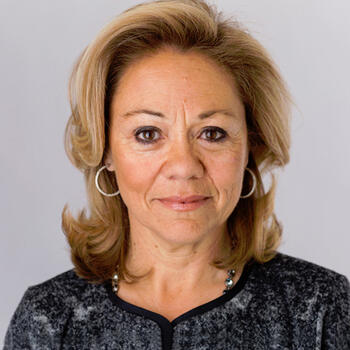
Noa Ronkin
News Type
News
Date
Paragraphs

In summer 2019, Burmese journalist and human rights defender Swe Win had to flee Myanmar with his family, fearing for their safety after surviving an assassination attempt coordinated by an army chief. The attack came after Myanmar Now, the Yangon-based, independent news outlet that Swe Win leads, had published investigative reports on the business interests of Min Aung Hlaing, Myanmar's armed forces commander-in-chief.

The COVID-19 pandemic derailed Swe Win’s plans to return to the country ahead of the national elections the following year. Then, on February 1, 2021, everything changed when the military seized power in a coup, ousting the democratically-elected government led by Aung San Suu Kyi. “The coup has put an abrupt end to Myanmar people’s hopes for liberty and democracy,” said Swe Win, the recipient of APARC’s 2021 Shorenstein Journalism Award, at the award ceremony. “Every form of free speech is brutally suppressed. There is no space left for any freedom.”

Transcript of Swe Win's award acceptance remarks.
Download pdf

[Watch more APARC events and subscribe to our YouTube channel.


One victim of the coup has been Myanmar’s independent press. Like other news organizations and publications, Myanmar Now saw its newsroom raided, its operating license revoked, and its website blocked, and most of its staff were forced to flee to territories alongside the country's border areas. Swe Win leads the news outlet from exile while his team, in hiding, courageously continues to report on what is happening in the country.

The future of the media in Myanmar is bleak. State-run news outlets have now begun to support military propaganda. There are no options left for professional reporters to work independently under the junta.
Swe Win
2021 Shorenstein Journalism Award Recipient

Speaking at the Shorenstein award’s twentieth annual discussion, which was held virtually on October 12, 2021, Swe Win described Myanmar’s post-coup assault on the free press. “Newsgathering on the ground, in Yangon and other parts of the country, is very dangerous,” he said. Reporters inside the country are subject to an unprecedented level of surveillance, can no longer identify themselves as working with Myanmar Now or other news organizations, and risk their lives with every interview they conduct.

Any criticism of the military junta, even a mere suggestion of sympathy with the resistance movement, is easily interpreted as indicating dissidence and leads to immediate arrests. “The future of the media in Myanmar is bleak,” Swe Win said. “Under the military junta, there are no options left for professional reporters to work independently.”

The award event also included a discussion with Eileen Donahoe, the executive director of the Global Digital Policy Incubator (GDPI) at Stanford’s Cyber Policy Center, and Scot Marciel, a career diplomat, former U.S. ambassador to Myanmar, and currently a visiting practitioner fellow on Southeast Asia at APARC. Southeast Asia Program Director Donald K. Emmerson chaired the discussion.

Unflinching Pursuit of Truth

The Shorenstein Journalism Award recognizes accomplished journalists who have significantly contributed to a greater understanding of the complexities of Asia. It alternates between recipients affiliated mostly with American news media and those primarily affiliated with Asian news media, who often also work on the frontline of the battle to defend press freedom in their home countries. The 2019 awardee in that category is Maria Ressa, winner of the 2021 Nobel Peace Prize.

“The Shorenstein Award has put a spotlight on courageous journalists around the world for a long time, and our honoree this year richly deserves its recognition,” noted Raju Narisetti, director of global publishing at McKinsey & Company and a member of the selection committee for the Shorenstein Journalism Award, as he introduced Swe Win. “From a very young age, he set off on a path to speaking truth to power — something that he has passionately done at a heavy price.”

To us, journalism is like science, its power is in the truth – that is what’s driving us.
Swe Win
2021 Shorenstein Journalism Award Recipient

Swe Win launched his journalism career after being held for seven years as a political prisoner on national security-related charges for joining the democracy movement as a college student. Throughout his career, Swe Win has shined a light on human rights cases that involve physical injury, death, unlawful detention, and miscarriage of justice in Myanmar. Under his leadership, Myanmar Now has gained recognition for its unflinching reports of crimes against the Rohingya and spotlights on the lives of Myanmar’s impoverished communities, for criticizing ultranationalist Buddhist monks, and for its bold coverage of Aung San Suu Kyi’s administration and the Myanmar military, the Tatmadaw.

On multiple occasions, Swe Win had to defend himself against physical attacks and frivolous litigation intended to derail the reporting of Myanmar Now. “To us, journalism is like science, its power is in the truth – that is what’s driving us […] We do not mix activism with journalistic work, but rather let the facts tell the story,” he replied when asked how he balances the roles of a journalist and a human rights defender.

Eileen Donahoe and Scot Marciel

The Rise of Digital Authoritarianism

Donahoe, who served in the Obama administration as the first U.S. ambassador to the UN Human Rights Council in Geneva during the period when Myanmar seemed as if it was transitioning to a functioning democracy, described the sense of hope and optimism at that time and how disheartening it is “to recognize how much we can go backward in just a decade of time.”

In her current role, Donahoe leads GDPI’s efforts to advance policies that reinforce human rights and democratic values in a digitized society. She emphasized the need to recognize both the risks of digital disinformation and techno-authoritarianism, on the one hand, and the importance of digital technologies for human rights defenders, journalists, and civil society actors, who depend on them to do their work. “The problem is that the same tools that serve very beneficial purposes in society are now being weaponized by maligned actors. Unfortunately, this is a geopolitical trend, what I would call digital authoritarianism.”

The Myanmar Coup: Regional and International Implications

The coverage of the Myanmar coup and its aftermath has rightly focused on the suffering and the lost freedoms of Myanmar’s people, but, more broadly, the crisis profoundly impacts other countries in the region as well as the United States.

The coup has failed in the sense that the Myanmar military has not been able to control and govern the country.
Scot Marciel
Career Diplomat, Former U.S. Ambassador to Myanmar; Visiting Practitioner Fellow on Southeast Asia, Shorenstein APARC

Within Southeast Asia, explained Ambassador Marciel, the coup has become a complex challenge for the Association of Southeast Asian Nations (ASEAN), which has been unable to figure out how to address the crisis. By creating massive regional instability, the coup has also put the two giants on Myanmar’s borders — India and China — in a situation they dislike. “The coup has failed in the sense that the Myanmar military has not been able to control and to govern the country,” Marciel said.

As for the United and its engagement with Southeast Asia, the coup and Myanmar’s current descent further into violence are a major setback. Marciel highlighted the role the United States can play in the upcoming ASEAN summit to advance solutions to the crisis. Donahoe also emphasized the opportunity to put Myanmar at the top of the agenda of the Biden administration’s upcoming Summit for Democracy, whose three pillars are combating authoritarianism, combating kleptocracy, and protecting human rights. “These are highly relevant to the case of Myanmar, and digital technology runs through all three,” said Donahoe.

At the close of the discussion, both Donahoe and Marciel underscored the need for and opportunity in funding and training independent media groups in Myanmar, like Myanmar Now.

Despite the enormous difficulties and risks ahead, Swe Win emphasized that he and his colleagues believe the current crisis is an opportunity for greater and better changes in Myanmar. He ended the conversation on an optimistic note: “You may be depressed about what is happening in our nation and in other places, but the people of Myanmar are not depressed. As long as we are with the truth, we are always winning.”

Read More

Forest fires burn
News

Ban Ki-moon Urges Global Cooperation to Address Twin Crises of Climate Change, COVID-19

“We need an all hands on deck approach underpinned by partnership and cooperation to succeed...we must unite all global citizens and nations...indeed we are truly all in this together.”
Ban Ki-moon Urges Global Cooperation to Address Twin Crises of Climate Change, COVID-19
Mongolian parliamentary delegation
News

Mongolian Parliamentary Delegation Discusses the Nation's Democratic Future

At an in-person address to a panel of parliament members and Stanford scholars, Speaker Gombojav Zandanshatar assessed the nation's experiment in deliberative democracy and offered reflections on the challenges that face maturing democracies.
Mongolian Parliamentary Delegation Discusses the Nation's Democratic Future
Gi-Wook Shin presents the 2020 Shorenstein Journalism Award to Tom Wright at a virtual event
News

Shorenstein Journalism Award Winner Tom Wright Recounts Story of Global Financial Scandal

Wright, who led the investigation that unveiled the Malaysian 1MDB scandal, one of the largest-ever financial frauds, highlighted how Western institutions enable global corruption and undermine democracy in foreign countries with poor rule of law.
Shorenstein Journalism Award Winner Tom Wright Recounts Story of Global Financial Scandal
Hero Image
Burmese journalist Swe Win
Swe Win, chief editor of Myanmar Now, gives remarks upon receiving the Shorenstein Journalism Award, October 12, 2021.
All News button
1
Subtitle

Amidst the crisis in Myanmar, Burmese investigative journalist Swe Win, editor-in-chief of the independent news outlet Myanmar Now, continues to lead the newsroom from exile while his team is in hiding.

-

This event is available through livestream only. Please register in advance to receive a personalized link to watch the webinar:  https://bit.ly/3tNN7wG

Myanmar Back into Darkness: 2021 Shorenstein Journalism Award Recipient Swe Win to Headline Award Panel Discussion

The military coup in February 2021 put an abrupt end to hopes of democracy and liberty in Myanmar.  With every form of free speech now brutally suppressed, one of the major victims of the coup has been the independent press. Newsrooms were raided and dozens of journalists have been arrested. Several publications, including Myanmar Now, had their operating licenses revoked and their websites blocked. Most of the staff of the news outlets targets by the junta were forced to flee to territories along the country's border areas controlled by ethnic armed organizations. From there, they continue their professional work despite the threats to their lives and logistical difficulties.  
 

Join APARC as we honor Burmese investigative journalist Swe Win, editor-in-chief of Myanmar Now and winner of the 2021 Shorenstein Journalism Award. In his award keynote address, Swe Win will speak about journalism under threat in Myanmar, what it is like to report on the crisis in the country from outside while in exile, and Myanmar’s future.

The keynote will be followed by a conversation with Swe Win and two experts: Scot Marciel, a career diplomat, former U.S. ambassador to Myanmar, and currently a visiting practitioner fellow on Southeast Asia at APARC, and Eileen Donahoe, executive director of the Global Digital Policy Incubator at Stanford.

The event will conclude with an audience Q&A session moderated by Donald K. EmmersonDirector of the Southeast Asia Program at APARC.

Follow us on Twitter and use the hashtag #SJA21 to join the conversation.

Speakers:

Image
Photo of Swe Win, winner of 2021 Shorenstein Journalism Award
Swe Win is a Burmese journalist, human rights defender, and the chief editor of Yangon-based news outlet Myanmar Now. He has survived an assassination attempt and detention by his own government. Now he leads Myanmar Now from exile and his newsroom is in hiding.

Swe Win has written extensively on human rights cases that involve physical injury or death, unlawful detention or miscarriage of justice in Myanmar. He is the recipient of the 2019 Ramon Magsaysay Award for Emergent Leadership, which is regarded as Asia's equivalent of the Nobel Prize, the 2017 European Union’s Schuman Award for Human Rights, and the 2016 Presidential Certificate of Honor for Social Service through Journalism from the Myanmar Ministry of Information for his groundbreaking investigation into years-long abuse of domestic workers at a Yangon tailor shop.

Previously, he worked as a senior reporter for the Irrawaddy Magazine and freelanced for international publications such as the New York Times. From 1998 to 2005, he spent seven years in jail for distributing anti-junta material.

Photograph: Thet Htoo for the Mekong Review - https://mekongreview.com/cause-and-karma


Image
Photo of Eileen Donahoe
Eileen Donahoe is the executive director of the Global Digital Policy Incubator (GDPI) at the Cyber Policy Center at Stanford University’s Freeman Spogli Institute for International Studies. GDPI is a global multi-stakeholder collaboration hub for development of policies that reinforce human rights and democratic values in digitized society. Areas of current research include AI and human rights, combating digital disinformation, and governance of digital platforms.

Donahoe served in the Obama administration as the first U.S. Ambassador to the UN Human Rights Council in Geneva, at a time of significant institutional reform and innovation. After leaving government, she joined Human Rights Watch as director of global affairs, where she represented the organization worldwide on human rights foreign policy, with special emphasis on digital rights, cybersecurity, and internet governance. Earlier in her career, she was a technology litigator at Fenwick & West in Silicon Valley.

She serves on the National Endowment for Democracy Board of Directors; the Transatlantic Commission on Election Integrity; the World Economic Forum Future Council on the Digital Economy; University of Essex Advisory Board on Human Rights, Big Data and Technology; NDI Designing for Democracy Advisory Board; Freedom Online Coalition Advisory Network; and Dartmouth College Board of Trustees.


Image
Photo of Scot Marciel
Scot Marciel is a career diplomat with 35 years of experience in Asia and around the world. He is currently a visiting practitioner fellow on Southeast Asia at Shorenstein APARC.

Mr. Marciel served as U.S. Ambassador to Myanmar from March 2016 through May 2020, leading a mission of 500 employees during the difficult Rohingya crisis and a challenging time for both Myanmar’s democratic transition and the United States-Myanmar relationship. Prior to serving in Myanmar, Ambassador Marciel served as Principal Deputy Assistant Secretary for East Asia and the Pacific at the State Department, where he oversaw U.S. relations with Southeast Asia.

In previous roles, he served as U.S. ambassador to Indonesia, the first U.S. ambassador for ASEAN Affairs, deputy assistant secretary of state for Southeast Asia, at U.S. missions in Turkey, Hong Kong, Vietnam, Brazil and the Philippines, and at the State Department in Washington in multiple positions.


About the Shorenstein Journalism Award:

The Shorenstein Journalism Award, which carries a cash prize of US $10,000, recognizes outstanding journalists who have spent their careers helping audiences around the world understand the complexities of the Asia-Pacific region, defined broadly to include Northeast, Southeast, South, and Central Asia and Australasia. Award recipients are veteran journalists with a distinguished body of work. News organizations are also eligible for the award.

The award is sponsored and presented by the Walter H. Shorenstein Asia-Pacific Research Center (Shorenstein APARC) at Stanford University. It honors the legacy of the Center’s benefactor, Mr. Walter H. Shorenstein, and his twin passions for promoting excellence in journalism and understanding of Asia. It also symbolizes the Center’s commitment to journalism that persistently and courageously seeks accuracy, deep reporting, and nuanced coverage in an age when attacks are regularly launched on the independent news media, on fact-based truth, and on those who tell it.

An annual tradition, the Shorenstein Journalism Award alternates between recipients whose work has mostly been conveyed through American news media and recipients whose work has mostly been conveyed through news media in one or more parts of the Asia-Pacific region. Included among the latter candidates are journalists who are from the region and work there, and who, in addition to their recognized excellence, may have helped defend and encourage free media in one or more countries in the region.

Learn more at https://aparc.fsi.stanford.edu/events/shorenstein-journalism-award.

Virtual Webinar Via Zoom

Register at: https://bit.ly/3tNN7wG

Swe Win <br><i>Editor-in-Chief, Myanmar Now; 2021 Shorenstein Journalism Award Winner </i><br><br>
Eileen Donahoe <br><i> Executive Director, Global Digital Policy Incubator, Stanford University </i><br><br>
Scot Marciel <br><i> Career Diplomat, Former U.S. Ambassador to Myanmar; Visiting Practitioner Fellow on Southeast Asia, Shorenstein APARC, Stanford University </i><br><br>
Panel Discussions
Authors
News Type
Q&As
Date
Paragraphs

Vietnam and China are frequently referred to as 'authoritarian regimes,' but in history, political practice, and social governance these two countries are starkly different. This is particularly true of how each government responds to social pressure and civil unrest. Nhu Truong, one of APARC's 2020-21 Shorenstein Postdoctoral Fellows, is researching the root causes of these differences, what they reveal about the specific contexts of each nation's political trajectory, and how they can inform academic discussions of authoritarianism.

Nhu Truong’s dissertation explains how and why the two most similar communist, authoritarian regimes of China and Vietnam differ in their responsiveness to mounting unrest caused by government land seizures. Despite their many similarities, Vietnam has exhibited greater institutionalized responsiveness, whereas China has been relatively more reactive. While at APARC, Nhu has been refining 16 months of fieldwork into a book manuscript. Following her tenure as a Shorenstein Fellow at APARC, she will join the Council for Southeast Asian Studies and the Council for East Asian Studies at Yale University as a postdoctoral associate and has accepted a position as an assistant professor at Denison University starting in 2022.

Nhu sat down to talk more about her research and how the ongoing pandemic has heightened the need to better understand the ways in which different governments implement policy and address social issues. She also shares how she's stayed grounded and positive during an unusual year of change and being a long-distance fellow.

1. Can you give us an overview of your research and the topics you’re investigating?

My research addresses the following question: Why are some authoritarian regimes more responsive to social unrest than others? While it might seem counterintuitive to think of authoritarian regimes in this light, repression and responsiveness often occur in tandem under authoritarian rule. Centered on a comparison between Vietnam and China, I document the steps that each has taken to address social discontent fueled by pervasive government seizures of rural land. In response to societal input between 2003 and 2017, Vietnam enacted comprehensive and programmatic reforms to reduce the permissible scope for government land expropriation whereas those enacted by China were relatively marginal and piecemeal. At the subnational level, this difference has had important implications for land rights and the security of villagers in both countries. In summary, despite their many similarities, the manner and degree of their responsiveness have varied. My research then traces the historical origins that undergird the political development and institutional character of Vietnam and China’s divergent responsiveness to social unrest. 

2. How did you first become interested in these topics?

My interest in the repressive-responsive character of authoritarian regimes stems from my preoccupation with questions of political legitimacy, societal resistance, and institutional dynamics in authoritarian contexts. One particular experience that stoked my interest was my visit to Wukan, Guangdong in 2016. Wukan was once hailed as an emblematic case of grassroots democracy and accommodation by the Chinese state, when villagers’ outcries against the local government’s seizure of their land resulted in the re-election of the village committee in 2012. Yet, when I visited in 2016, villagers expressed that nothing had changed, and that “everything that could be done has already been done.” This experience led me to question what responsiveness means in authoritarian contexts.

3. During the last year, the world has changed significantly because of the pandemic and fluctuating politics in many nations. Have these changing global situations given you any new insights into your research?

The pandemic has underscored the need for a nuanced and contextual understanding of democracies and non-democracies. For instance, the variation in state responses to COVID-19 suggests that there is no clear correlation between responsiveness or the effectiveness of government responses to COVID-19 and regime types. Consider Vietnam’s proactive approach and success at containing the pandemic as opposed to the US. Other recent developments such as the crackdowns on pro-democracy protests in Thailand and mass protests against the recent military coup in Myanmar showcase how quickly state responsiveness to social demands can erode, even in multi-party states.

4. What has your experience as one of our Shorenstein Fellows been like during this unusual period of time when we haven’t physically been together at APARC?

My fellowship has been remote, and I have therefore needed to be much more proactive to stay as engaged as possible. I have consulted with my mentor often over Zoom, and reached out to other scholars for their feedback and advice on my research. I have also especially appreciated the chance to participate in the China Social Science Workshop, where I've shared my work and learned from other presenters. Other postdoctoral fellows at APARC and I have also gotten together virtually to exchange stories and to share our experiences from this unusual year.  

5. What are some of the things you've done during this past year to give yourself a break from work and have some fun?

Due to the pandemic, I have been living back home to Austin, Texas, since March of last year. The last time that I was home for this long must have been after I graduated from college. So, for the first time in a long time, I've planted tomatoes, eggplants, and sunflowers in our garden, and I've really enjoyed watching them bloom and ripen. With everything growing, it feels like I've spent most of my break in our backyard defending our flowers, fruits, and vegetables from squirrels and bunnies! But luckily I also have our two dogs, Wishie and Sushi, to help me!

6. As the state of the pandemic changes and things in academia and our communities, what are some things you are looking forward to both professionally and personally?

I'm certainly looking forward to having conferences in person again! I'm also still not sure when it will be possible and safe for me to visit Asia again, especially Vietnam and China, but I have missed these places. I'm also learning Khmer this summer, and I'm excited to eventually visit Cambodia to pursue my research there.

Read More

[Left] Hong Kong skyline; [Right] Encina Hall, Stanford
Q&As

Predoctoral Spotlight: Shan Huang on Development and Urban Politics in Hong Kong

Meet Shan Huang, a Stanford doctoral candidate in anthropology and a 2020-21 APARC predoctoral fellow, whose dissertation provides an ethnographic account of Hong Kong’s political culture in the post-Handover era.
Predoctoral Spotlight: Shan Huang on Development and Urban Politics in Hong Kong
[Left] Postdoc Spotlight, Jeffrey Weng, Shorenstein Postdoctoral Fellow in Contemporary Asia, [Right] Jeffrey Weng
Q&As

Postdoc Spotlight: Jeffrey Weng on Language and Society

Shorenstein Postdoctoral Fellow in Contemporary Asia Jeffrey Weng shares insights from his research into how language and society shape one another, particularly how the historical use of Mandarin affects contemporary Chinese society and linguistics.
Postdoc Spotlight: Jeffrey Weng on Language and Society
Hero Image
Postdoc Spotlight on Nhu Truong, 2020-21 Shorenstein Fellow
All News button
1
Subtitle

2020-21 Shorenstein Postdoctoral Fellow Nhu Truong, who studies how authoritarian regimes like China and Vietnam respond to social pressure, explains why understanding differences in governance is crucial in an era of fluctuating politics and pandemic.

Authors
Noa Ronkin
News Type
News
Date
Paragraphs

STANFORD, CA, April 27, 2021 — Stanford University’s Walter H. Shorenstein Asia-Pacific Research Center (APARC) announced today that Burmese journalist Swe Win is the recipient of the 2021 Shorenstein Journalism Award. An acclaimed investigative journalist and human rights defender, Swe Win is the co-founder and editor-in-chief of Myanmar Now, an independent news agency that produces features, analysis, and investigative reports on life in the country in both Burmese and English. Presented annually by APARC, the Shorenstein award is conferred upon a journalist who has contributed significantly to a greater understanding of Asia through outstanding reporting on critical issues affecting the region. Swe Win will receive the award in fall quarter 2021.

Throughout his journalistic career, Swe Win has focused on underreported cases involving physical injury, wrongdoing, and miscarriage of justice in Myanmar. Under his leadership, Myanmar Now has gained recognition for its in-depth, unflinching reports of crimes against the Rohingya and spotlights on the lives of Myanmar’s impoverished communities, for criticizing ultranationalist Buddhist monks, and for its bold coverage of Aung San Suu Kyi’s administration and the Myanmar military, the Tatmadaw. Since the February 1, 2021 military coup, the Myanmar Now team has continued its brave coverage amid physical threats, violence, police raids, and arrests. Swe Win currently leads the Yangon-based Myanmar Now 40-member editorial team from exile and his newsroom is in hiding.

Swe Win has set a shining example to others with his undaunted commitment to advancing human rights and freedom of expression in Myanmar. His work demonstrates the moral force of independent, investigative journalism to speak truth to power.
Gi-Wook Shin
Director, Shorenstein APARC

Swe Win has faced multiple encounters with the military due to his investigative journalism work. In August 2019, soon after Myanmar Now published exposés of the vast business interests of top generals including Min Aung Hlaing, the commander-in-chief of the country’s armed forces, he sustained a gunshot wound while traveling in Rakhine State, a targeted shooting attack in which both civilian and military officials seem to have been involved. Two years earlier, he was arrested and had to defend himself against defamation charges for a Facebook post critical of U Wirathu, a fundamentalist Buddhist monk known for his anti-Muslim rhetoric. In 1998, as a college student during the time of Myanmar’s military regime, he was apprehended for joining the democracy movement and held for seven years as a political prisoner on national security-related charges.

Following his release from prison, Swe Win earned a Master’s degree in journalism from the University of Hong Kong, then worked for the Irrawaddy Magazine and freelanced for international publications including The New York Times and Al Jazeera. When the junta-era media censorship was lifted in 2012, he set up an independent newspaper, The Yangon Globe, and in 2015 cofounded Myanmar Now.

“Swe Win has set a shining example to others with his undaunted commitment to advancing human rights and freedom of expression in Myanmar,” said Gi-Wook Shin, Shorenstein APARC director. “His work demonstrates the moral force of independent, investigative journalism to speak truth to power, and he now leads a courageous, resilient fight for press freedom in the face of brutal attacks on democracy and liberty. It is our honor to recognize him with the Shorenstein Journalism Award.”

Swe Win is the recipient of the 2019 Ramon Magsaysay Award for Emergent Leadership, which is regarded as Asia's equivalent of the Nobel Prize, the 2017 European Union’s Schuman Award for Human Rights, and the 2016 Presidential Certificate of Honor for Social Service through Journalism from the Myanmar Ministry of Information for his groundbreaking investigation into years-long abuse of domestic workers at a Yangon tailor shop.

The Shorenstein Journalism Award, which carries a $10,000 cash prize, honors the legacy of APARC’s benefactor, Mr. Walter H. Shorenstein, and his twin passions for promoting excellence in journalism and understanding of Asia. “This year marks the twentieth anniversary of the Shorenstein Award,” noted Shin. “At a time when the Asia-Pacific region has the biggest number of ‘Predators of Press Freedom,’ to quote Reporters Without Borders, we are grateful more than ever to the Shorenstein family for its support of our Center’s mission and the journalism award program, and to the members of the award selection committee for their expertise and service.”

The selection committee for the Shorenstein Journalism Award includes Wendy Cutler, Vice President and Managing Director, Washington, D.C. Office, Asia Society Policy Institute; James Hamilton, Hearst Professor of Communication, Chair of the Department of Communication, and Director of the Stanford Journalism Program, Stanford University; Raju Narisetti, Publisher, McKinsey Global Publishing, McKinsey and Company; Philip Pan, Weekend Editor and former Asia Editor, The New York Times; and Prashanth Parameswaran, Senior Columnist, The Diplomat.

Nineteen journalists have previously won the Shorenstein award, including most recently Tom Wright, the co-author of the bestseller Billion Dollar Whale and a long-time Asia reporter; the internationally-esteemed journalist and press freedom champion Maria Ressa, CEO and executive editor of the Philippine news platform Rappler; Anna Fifield, formerly the Washington Post’s Beijing Bureau Chief and a veteran North Korea watcher; and Siddharth Varadarajan, the founding editor of the Wire and former editor of The Hindu.

APARC will share information about the 2021 Shorenstein Journalism Award program featuring Swe Win in the fall quarter.

Read More

People holding up images in protest
News

Terms of Engagement: Ambassador Scot Marciel on U.S.-Southeast Asia Relations

The book Ambassador Marciel is writing at Stanford examines policy issues from the implications of the Myanmar crisis to the future of America’s relations with other Southeast Asian nations and the prospects for a U.S. strategic regional focus.
Terms of Engagement: Ambassador Scot Marciel on U.S.-Southeast Asia Relations
[Top left] Gi-Wook Shin; [top right] Roberta Cohen; [bottom left] Tomás Ojea Quintana; [bottom right] Joon Oh
News

Using the UN to Create Accountability for Human Rights Crimes in North Korea

Experts on human rights agree that the UN needs to work through multiple channels to support ongoing investigations and build evidence for future litigations in order to create accountability and pressure the DPRK to desist in committing human rights crimes.
Using the UN to Create Accountability for Human Rights Crimes in North Korea
President Biden and President Suga walk through the Rose Garden colonnade at the White House
Commentary

U.S. and Japan Gear Up for a New Era of Competition with China

The time is near when other Asian nations will have to pick a side in the great power competition between the United States and China, says Japan Program Director Kiyoteru Tsutsui.
U.S. and Japan Gear Up for a New Era of Competition with China
Hero Image
Portrait of Swe Win with text "2021 Shorenstein Journalism Award Recipient" Photograph: Thet Htoo for the Mekong Review - https://mekongreview.com/cause-and-karma
All News button
1
Subtitle

An esteemed investigative journalist and human rights defender, Swe Win is the recipient of the twentieth Shorenstein Award. He currently leads the editorial team of the independent news agency Myanmar Now from exile and his newsroom is in hiding.

Authors
Donald K. Emmerson
News Type
Commentary
Date
Paragraphs

This op-ed by Donald K. Emmerson first appeared in The Jakarta Post.

Above all, Trump wanted to be a winner. History granted his wish. He is the first president in the 245-year life of his country to have been impeached twice. By that standard, he won the title of America’s Worst President (AWP)—worse than any of the 44 presidents who preceded him.

AWP rhymes with 'gawp,' and that’s what he also wanted: to be stared at, talked about, catered to, the center of fawning attention, unforgettably present, dominating the news, astride the world in which the news is made. He wanted applause. His ravenous insecurity—narcissism—inflated his ego to continental size. In effect, in his authoritarian imagination, the “extremely stable genius” that he called himself deserved to be the indispensable “me” in “America,” without which the country’s name and the country itself would crumble.

The roars and chants of Trump’s crowds slaked his thirst for veneration. But they imprisoned him in his “base.” By satisfying his craving to be idolized, they gave him no reason to convince the unimpressed. How much more gratifying it must have been for him to bask in mass flattery at rallies than to engage in the difficult business of persuading the uncommitted. That would have taken assets he lacked: empathy, knowledge, intelligence, and a willingness not to lie.

[Subscribe to APARC's newsletters to get regular updates on our scholars.]

So how could Americans have elected such a demagogue? Trump was corrupt but charismatic. He broke the rules. He said whatever was on his mind. He appealed to the streak of individualism in American culture. He ran his campaign and his presidency as a mass entertainment featuring a lone patriot fighting a “deep state” controlled by globalist elites. Especially in rural areas between Silicon Valley and the Boston-to-Washington corridor, millions of white Americans felt threatened by the transfer of jobs from physical toward mental labor in a computerized society whose racial make-up was increasingly non-white. Globalization fed those anxieties. Trump stoked them. He promised to end them and “make America great again.”

Joe Biden defeated Trump in both the popular vote and the Electoral College—respectively by 4.4 and 13.7 percent. Biden’s margins were narrower than one might have wished, given the blatant flaws in Trump’s character, including the 30,573 false or misleading claims that he made during his presidency as tracked and noted by The Washington Post . The egregiousness of his behavior is, however, a double testament to America’s democratic system: to its failure to select a less despicable leader, yes, but also to its success in providing the lawful framework within which his desperate effort to stage what in Latin America would be called an autogolpe or “self-coup” could be and was overcome.

On 1 February 2021, watching television at his 126-room estate in Palm Beach, Florida, ex-president Trump would have learned of the coup in Myanmar and might have envied Senior General Min Aung Hlaing. Both men had been banned by Facebook for inciting violence in their respective countries—Trump in 2021, the general in 2018. Both had suffered defeats in elections held just five days apart in 2020—3 November in the US, 8 November in Myanmar. Both had rejected the voters’ verdict, claiming fraud. But whereas Trump’s frantic and deadly effort to subvert the US election and retain power failed, Min Aung Hlaing’s self-coup has succeeded, at least for now. The general quickly seized full power despite his party’s massive embarrassment at the polls in November, Aung San Suu Kyi’s party having won 83 percent of the available seats. In contrast, Trump could not reverse his exit from power despite a far slimmer margin of electoral defeat. To the extent that the ex-president was even aware of the difference, it could have fanned what angry envy of the general he may have felt.

Trump failed mainly due to the checks and balances that generally call government to account in America. Min Aung Hlaing succeeded in no small part thanks to the checks and balances in the bank accounts of the generals who have compromised Myanmar’s transition to democracy and helped make it the second most corrupted country in Southeast Asia (after Cambodia) as measured by the Corruption Perceptions Index.

Among the many reactions to the Burmese coup, several stand out for their courage and creativity. UN Secretary General António Guterres was unequivocal. "It's absolutely unacceptable,” he said, “to reverse the result of the elections and the will of the people.” Presumably speaking on behalf of the UN, its secretariat, or himself, or all three, he went further: "We'll do everything we can to mobilize all the key actors of the international community to put enough pressure on Myanmar to make sure that this coup fails." 

This notable response came from Indonesia’s former foreign minister Marty Natalegawa: “Deafening silence in the face of assaults against democratic principles [has] increasingly become the norm,” he said. He urged ASEAN to “demonstrate its relevance: It must speak urgently for the respect of constitutional process and rule of law in Myanmar, and call for the immediate release of those unlawfully detained.”

In the days immediately following the coup, ASEAN’s Bruneian secretary general said nothing about it, preferring to remain, in the Indonesian expression, “silent in a thousand tongues.” Speaking for ASEAN as its current chair, however, Brunei’s government did at least encourage a “return to normalcy in accordance with the will and interests of the people of Myanmar,” noting that the group charter’s called for adherence to “democracy, the rule of law” and “human rights and fundamental freedoms.”

As for ASEAN’s next chair, Cambodia, its strongman Hun Sen did speak, but only to say that "Cambodia does not comment on the internal affairs of any country at all.” Hun Sen’s restraint made historical sense. Had Cambodia’s old despot chosen to criticize Myanmar’s new despot, observers could have noted that Min Aung Hlaing had only done what Hun Sen himself had bloodily accomplished in 1997 by seizing full control over Cambodia in a self-coup of his own that had enabled him to become the longest-serving prime minister in the world.

Critical Southeast Asian voices, unconstrained by look-the-other-way diplomacy, have been heard. The chairman of the ASEAN Parliamentarians for Human Rights, Charles Santiago, has urged ASEAN to send a high-level delegation to Myanmar to tell Min Aung Hlaing that his coup “violates ASEAN principles and the ASEAN charter” and is “not acceptable.” “If Myanmar does not turn around,” he added, “there should be proceedings to expel Myanmar out of ASEAN.”

Who is better positioned to deal with this crisis than ASEAN’s largest and debatably least authoritarian member country? It was Indonesia’s Natalegawa who patched up ASEAN’s consensus after Hun Sen damaged it on China’s behalf in 2012. And it is Natalagewa who believes, with the Myanmar coup in mind, that “at this critical juncture for the region, Indonesia must demonstrate its leadership within ASEAN.”

Indonesia’s president Jokowi, rather than trying to rally the region against the coup, will likely continue to focus on domestic economic growth. Not to mention the existential priority that COVID-19 also warrants on his agenda.

So why not task Natalegawa with a damage-control trip around the region comparable the one he took with some success in 2012? He could start with fact-finding in Myanmar. He could then explore an intra-ASEAN understanding that would reassert the core democratic values in the ASEAN Charter while lessening, if possible, the chance that Myanmar will revert to entrenched and fully authoritarian rule. That may be a lost cause. But nothing ventured, nothing gained.

Although Donald Trump is no longer in office, America is still not safe from Trumpism. But America’s system—democracy—is working as it should. Is ASEAN really a dictators’ club? Or does it, too, when threatened from within, have a system that can at least manage and minimize the damage that is, in Myanmar as I write this, being done?

Read More

Protesters opposing the February 1 coup in Myanmar
Q&As

The Myanmar Coup Is a Major Setback, but the Story of Myanmar's Struggle for Democracy Is Not Over

According to Scot Marciel, former U.S. ambassador to Myanmar and Stanford visiting scholar at APARC, building a democracy is a difficult process that can be upended, particularly when the military is politicized and has its own agenda.
The Myanmar Coup Is a Major Setback, but the Story of Myanmar's Struggle for Democracy Is Not Over
President Biden walks past a row of Chinese and American flags.
News

APARC Experts on the Outlook for U.S.-Asia Policy Under the Biden Administration

Ahead of President-elect Biden’s inauguration and on the heels of the attack on the U.S. Capitol by a pro-Trump mob that has left America shaken, an APARC-wide expert panel provides a region-by-region analysis of what’s next for U.S. policy towards Asia and recommendations for the new administration.
APARC Experts on the Outlook for U.S.-Asia Policy Under the Biden Administration
Barack Obama addresses a crowd of young leaders from ASEAN nations.
Commentary

A Global Town Hall Welcomes America Back

Despite the reversals of the Trump era, a flurry of online diplomacy served as a reminder that the U.S. is welcome in Southeast Asia writes Donald K. Emmerson in The Diplomat.
A Global Town Hall Welcomes America Back
Hero Image
Protesters in Myanmar stand on a picture of General Min Aung Hlaing
Chung Sung-Jun, Getty Images
All News button
1
Subtitle

Southeast Asia Program Director Donald K. Emmerson compares responses across Southeast Asia to the February coup in Myanmar and reflects on the parallels and differences between the state of democracy there and in the United States.

Authors
News Type
Q&As
Date
Paragraphs

This article was originally written by Melissa De Witte on behalf of Stanford News.

As Monday’s coup in Myanmar demonstrates, democracy is often fragile and subject to setbacks, says former U.S. ambassador to Myanmar and Stanford visiting scholar, Scot Marciel.

Here, Marciel discusses how in a country like Myanmar (formerly Burma), which was under military rule from 1962 to 2011, establishing a democracy takes time. Despite democratic reforms over the past decade, the military in Myanmar has held onto a considerable amount of power, said Marciel, noting that it is difficult to build not only a representative parliament but other democratic institutions including an independent judicial system, a fair police force and a free press.

While Monday’s coup is a major setback in Myanmar’s fight for democracy, Marciel said that there are many people in the country who will do what they can to restore their elected government and build the foundations of democracy.

Marciel is a visiting scholar at the Walter H. Shorenstein Asia-Pacific Research Center (APARC), Stanford’s hub for interdisciplinary research, education and engagement on contemporary Asia that is run under the auspices of the Freeman Spogli Institute for International Studies. Marciel served as U.S. Ambassador to Myanmar from March 2016 through May 2020. From 2010 to 2013, Scot Marciel served as U.S. Ambassador to Indonesia.

[Subscribe to APARC's newsletters to get the latest updates from our scholars.]


What do people who have not spent extensive time studying or living in Myanmar need to know about its history to better understand Monday’s coup?

A couple of things. First, as historian Thant Myint-U has written, Myanmar is an unfinished nation, in the sense that the diverse communities that make up the country have never truly solidified as a unified nation. The country has been in near-constant conflict, mostly between the majority Bamar ethnic group and the many ethnic minority communities that inhabit much of Myanmar’s border areas. Second, the military staged a coup in 1962 and ran the country for nearly 50 years before allowing some movement toward representative democracy beginning in 2011-2012. So the military has long been a dominant force in the country, and – even after the reforms of the past decade – retained substantial power.

Is there anything that is often misunderstood about its history and its people?

In the West, many people have tended to view Myanmar mostly through the prism of a struggle for democracy between the military and the civilian opposition, led by Aung San Suu Kyi. That is a critically important part of the story, for sure. Perhaps equally important, however, has been the struggle of the many ethnic minority communities for equality, a degree of autonomy, and respect for their own histories, cultures and languages. This struggle has produced widespread conflict, significant human rights abuses, and large numbers of refugees and displaced people for decades.

What are some of the difficulties in establishing, and maintaining, democratic rule in a country like Myanmar?

First, persuading the military to give up power, depart from politics, and play a more appropriate role in the country. Second, it is very difficult to build the institutions of democracy, including not only parliament, but also a strong, independent judicial system, an effective and fair police force, and respect for the critical role of civil society and the independent media. In Myanmar, another essential aspect is to shift from historically centralized rule to a federal structure that would allow the various communities across the country to have more of a say in how they are governed.

As ambassador to Myanmar, what was it like working with not only the country’s policymakers but also its people? What did you learn from them about how democracy is established? And how did those experiences shape your perspective?

In Myanmar, I met so many people, all over the country, from many different walks of life, who had sacrificed and continued to sacrifice to try to build democracy and respect for human rights. Some operated at the national level, others at the local level. It was a good reminder that democracy isn’t just imposed from the top; it requires careful building at the community and state level, with intensive involvement by the various communities. It also takes time and, as we have seen this week, is often fragile and subject to setbacks. In other words, it is a long-term effort that requires persistence, courage, and participation by large numbers of people. Establishing a democracy is a lengthy, painstaking effort that can be upended, particularly if the armed forces are politicized and pursue their own agenda.

Is there anything else you would like to add? 

This week’s military takeover constitutes a major setback, but the story of Myanmar’s struggle for democracy is not over. Many people there will continue to do what they can to restore elected government and build, brick by brick, the foundations of democracy.

Read More

Portrait of Paul Schuler and the cover of his book, 'United Front'
Q&As

A Balance of Power: The Role of Vietnam’s Electoral and Legislative Institutions

As the 13th National Congress of Vietnam's Communist Party is selecting a new leadership team that will set the country’s course for the next five years, Vietnamese politics expert Paul Schuler discusses his new book on the state’s single-party legislature.
A Balance of Power: The Role of Vietnam’s Electoral and Legislative Institutions
President Biden walks past a row of Chinese and American flags.
News

APARC Experts on the Outlook for U.S.-Asia Policy Under the Biden Administration

Ahead of President-elect Biden’s inauguration and on the heels of the attack on the U.S. Capitol by a pro-Trump mob that has left America shaken, an APARC-wide expert panel provides a region-by-region analysis of what’s next for U.S. policy towards Asia and recommendations for the new administration.
APARC Experts on the Outlook for U.S.-Asia Policy Under the Biden Administration
Stanford campus, main quad with cloudy sky
News

APARC Offers Fellowship and Funding Opportunities to Support, Diversify Stanford Student Participation in Contemporary Asia Research

The Center has launched a suite of offerings including a predoctoral fellowship, a diversity grant, and research assistant internships to support Stanford students interested in the area of contemporary Asia.
APARC Offers Fellowship and Funding Opportunities to Support, Diversify Stanford Student Participation in Contemporary Asia Research
Hero Image
Protesters opposing the February 1 coup in Myanmar
People protest the February 1 coup in Myanmar outside the Myanmar embassy in Bangkok, Thailand.
Lauren DeCicca, Getty
All News button
1
Subtitle

According to Scot Marciel, former U.S. ambassador to Myanmar and Stanford visiting scholar at APARC, building a democracy is a difficult process that can be upended, particularly when the military is politicized and has its own agenda.

News Type
Q&As
Date
Paragraphs

We sat down with our 2018-19 Koret Fellow in Korean Studies Andray Abrahamian to discuss North Korea denuclearization and the approaching Trump-Kim second summit in Hanoi; Abrahamian's work with the nonprofit organization Choson Exchange that took him to North Korea nearly thirty times; his book that compares North Korea and Myanmar; and his fellowship experience. Watch: 


Hero Image
Andray Abrahamian sitting down for an interview at Stanford.
All News button
1
-

Image
andray book cover

The stories of North Korea and Myanmar (Burma) are two of Asia’s most difficult. For decades they were infamous as the region’s most militarized and repressed, self-isolated and under sanctions by the international community while, from Singapore to Japan, the rest of Asia saw historic wealth creation. Andray Abrahamian, author of the recent book North Korea and Myanmar: Divergent Paths (McFarland, 2018), examines and compares the recent histories of North Korea and Myanmar, asking how both became pariahs and why Myanmar has been able to find a path out of isolation while North Korea has not. 

Abrahamian finds that both countries were faced with severe security threats following decolonization. Myanmar was able to largely take care of its main threats in the 1990s and 2000s, allowing it the space to address the reasons for its pariah status. North Korea's response to its security threat has been to develop nuclear weapons, which in turn perpetuates and exacerbates its isolation and pariah status. In addition, Pyongyang has developed a state ideology and a coercive apparatus unmatched by Myanmar, insulating its decision makers from political pressures and issues of legitimacy to a greater degree.

Dr. Andray Abrahamian is currently the 2018-19 Koret Fellow in Korea Program at Stanford. He is a member of the US National Committee on North Korea and an Adjunct Fellow at Pacific Forum and at Griffith University. Working for a non-profit, Choson Exchange, has taken him to the DPRK nearly 30 times; he has also lived in Myanmar.

Philippines Conference Room Encina Hall, 3rd Floor 616 Serra Mall, Stanford, CA 94305
0
Lecturer
Koret Fellow, 2018-19
andray_abrahamian.jpg Ph.D.
Andray Abrahamian was the 2018-19 Koret Fellow at Stanford University. He is also an Honorary Fellow at Macquarie University, Sydney and an Adjunct Fellow at the Griffith Asia Institute. He is an advisor to Choson Exchange, a non-profit that trains North Koreans in economic policy and entrepreneurship. He was previously Executive Director and Research Director for Choson Exchange. That work, along with supporting sporting exchanges and a TB project, has taken him to the DPRK nearly 30 times. He has also lived in Myanmar, where he taught at Yangon University and consulted for a risk management company. He has conducted research comparing the two countries, resulting in the publication of "North Korea and Myanmar: Divergent Paths" (McFarland, 2018). Andray has published extensively and offers expert commentary on Korea and Myanmar, including for US News, Reuters, the New York Times, Washington Post, Lowy Interpreter and 38 North.  He has a PhD in International Relations from the University of Ulsan, South Korea and an M.A. from the University of Sussex where he studied media discourse on North Korea and the U.S.-ROK alliance, respectively. Andray speaks Korean, sometimes with a Pyongyang accent.
<i>2018-19 Koret Fellow, APARC, Stanford University</i>
Seminars
News Type
News
Date
Paragraphs

In October 2017, twenty-two scholars from eight countries attended a workshop titled “ASEAN @ 50, Southeast Asia @ Risk: What should be done?” The workshop was designed to facilitate a frank and creative discussion of policy recommendations, with the intention of providing the resulting proposals to ASEAN member states and other regional powers. Following two days of discussion and debate, the attendees produced a series of specific policy recommendations (SPRs).

Four sets of Southeast Asia-related topics were covered during the workshop: regional security, regional infrastructure, regional economy, and improving ASEAN. The attending scholars—which included Director of the U.S.-Asia Security Initiative Karl Eikenberry and Director of the Southeast Asia Program Donald Emmerson—submitted 24 SPRs for discussion.

Over two-and-a-half days, the group evaluated each SPR for its effectiveness, significance, specificity, and feasibility. The intention was to produce specific proposals addressing some of the main challenges facing Southeast Asia. So as to encourage openness in the dialogue, the workshop was held under the Chatham House Rule.

The Southeast Asia Program and the U.S.-Asia Security Initiative in the Walter H. Shorenstein Asia-Pacific Research Center prepared this program and final publication in cooperation with multiple partners. Their final recommendations have been included in the 20-page report which is now available online.

Hero Image
asean 50 group photo overlay custom resize crop
All News button
1
Subscribe to Burma