-

The lost decades for China in the 1950s, 1960s and 1970s look remarkably like the lost decades of Africa in the 1980s and 1990s. Poor land rights, weak incentives, incomplete markets and inappropriate investment portfolios. However, China burst out of its stagnation in the 1980s and has enjoyed three decades of remarkable growth. In this talk Rozelle examines the record of the development of China’s food economy and identifies the policies that helped generate the growth and transformation of agriculture. Incentives, markets and strategic investments by the state were key. Equally important, however, is what the state did not do. Policies that worked and those that failed (or those that were ignored) are addressed. Most importantly, Rozelle tries to take an objective, nuanced look at the lessons that might be learned and those that are not relevant for Africa. Many parts of Africa have experienced positive growth during the past decade. Rozelle examines if there are any lessons that might be helpful in turning ten positive years into several more decades of transformation.

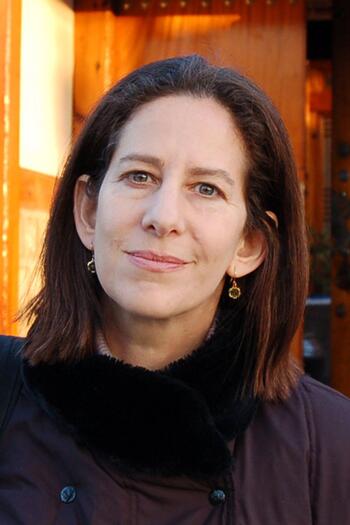
Scott Rozelle (main speaker). Scott Rozelle is the Helen F. Farnsworth Senior Fellow and the co-director of the Rural Education Action Program in the Freeman Spogli Institute for International Studies at Stanford University. His research focuses almost exclusively on China and is concerned with: agricultural policy, including the supply, demand, and trade in agricultural projects; the emergence and evolution of markets and other economic institutions in the transition process and their implications for equity and efficiency; and the economics of poverty and inequality, with an emphasis on rural education, health and nutrition.

Alain de Janvry (commentator). Alain de Janvry is an economist working on international economic development, with expertise principally in Latin America, Sub-Saharan Africa, the Middle-East, and the Indian subcontinent. Fields of work include poverty analysis, rural development, quantitative analysis of development policies, impact analysis of social programs, technological innovations in agriculture, and the management of common property resources. He has worked with many international development agencies, including FAO, IFAD, the World Bank, UNDP, ILO, the CGIAR, and the Inter-American Development Bank as well as foundations such as Ford, Rockefeller and Kellogg. His main objective in teaching, research, and work with development agencies is the promotion of human welfare, including understanding the determinants of poverty and analyzing successful approach to improve well-being and promote sustainability in resource use.

Bechtel Conference Center

Encina Hall East, E404
Stanford, CA 94305-6055

0
Faculty Co-director of the Stanford Center on China's Economy and Institutions
Helen F. Farnsworth Endowed Professorship
Senior Fellow at the Freeman Spogli Institute for International Studies
Senior Fellow at the Stanford Institute for Economic Policy Research
scott_rozelle_new_headshot.jpeg PhD

Scott Rozelle is the Helen F. Farnsworth Senior Fellow and the co-director of Stanford Center on China's Economy and Institutions in the Freeman Spogli Institute for International Studies and Stanford Institute for Economic Policy Research at Stanford University. He received his BS from the University of California, Berkeley, and his MS and PhD from Cornell University. Previously, Rozelle was a professor at the University of California, Davis and an assistant professor in Stanford’s Food Research Institute and department of economics. He currently is a member of several organizations, including the American Economics Association, the International Association for Agricultural Economists, and the Association for Asian Studies. Rozelle also serves on the editorial boards of Economic Development and Cultural Change, Agricultural Economics, the Australian Journal of Agricultural and Resource Economics, and the China Economic Review.

His research focuses almost exclusively on China and is concerned with: agricultural policy, including the supply, demand, and trade in agricultural projects; the emergence and evolution of markets and other economic institutions in the transition process and their implications for equity and efficiency; and the economics of poverty and inequality, with an emphasis on rural education, health and nutrition.

Rozelle's papers have been published in top academic journals, including Science, Nature, American Economic Review, and the Journal of Economic Literature. His book, Invisible China: How the Urban-Rural Divide Threatens China’s Rise, was published in 2020 by The University of Chicago Press. He is fluent in Chinese and has established a research program in which he has close working ties with several Chinese collaborators and policymakers. For the past 20 years, Rozelle has been the chair of the International Advisory Board of the Center for Chinese Agricultural Policy; a co-director of the University of California's Agricultural Issues Center; and a member of Stanford's Walter H. Shorenstein Asia-Pacific Research Center and the Center on Food Security and the Environment.

In recognition of his outstanding achievements, Rozelle has received numerous honors and awards, including the Friendship Award in 2008, the highest award given to a non-Chinese by the Premier; and the National Science and Technology Collaboration Award in 2009 for scientific achievement in collaborative research.

Faculty affiliate at the Center on Democracy, Development, and the Rule of Law
Faculty Affiliate at the Walter H. Shorenstein Asia-Pacific Research Center
Date Label
Scott Rozelle Speaker
Alain de Janvry Professor of Agricultural and Resource Economics, Goldman School of Public Policy, UC-Berkeley Speaker
Symposiums
Date Label
-

This conference will bring together scholars of North Korea who will debate various aspects of North Korean culture from historical, comparative, and multidisciplinary perspectives.  The prominence of North Korea in world news and the media cannot be understated; yet at a time when much of the analytic energy goes into trying to predict North Korea’s next political move, to assess its military and economic strategies, or to determine the extent of an ever-growing Chinese influence, more attention needs to be paid to its expressions of art, literature, and performance culture that continues to be produced for both internal and external consumption. The presentations in this conference engage with music, graphic novels, art, science fiction, film, and ego-documents with an attempt to illuminate the ways in which North Korea remembers its past, asserts itself in the present, and imagines its future even while outside influences increasingly disrupt its once-hermetically sealed borders.

This event is co-sponsored by the Korean Studies Program at APARC and the Center for East Asian Studies (CEAS). RSVP Required.

Please register at http://ceas.stanford.edu/events/event_detail.php?id=2969.

For questions and details, please contact Marna Romanoff at romanoff@stanford.edu.


Philippines Conference Room

Conferences
News Type
News
Date
Paragraphs
Thomas Fingar, who leads the China and the World research initiative, examines the policy implications of China's view of the global order. He shares his thoughts in a new publication on security in Asia.
Hero Image
GreatHall LOGO
Ceiling of the Great Hall of the People in Beijing, the seat of China's government.
Flickr user kevinbeijing
All News button
1

Walter H. Shorenstein
Asia-Pacific Research Center
Encina Hall, Room E301
616 Serra St.
Stanford, CA 94305-6055

(650) 724-5647 (650) 723-6530
0
Takahashi Pre-doctoral Fellow
Huiyu_Li_3x4.jpg

Huiyu Li is the 2012–13 Takahashi Pre-doctoral Fellow at the Walter H. Shorenstein Asia-Pacific Research Center (Shorenstein APARC). She is a PhD candidate in the Department of Economics at Stanford University, expecting to graduate in 2014. Prior coming to Stanford, she attended high school in Australia and graduated with the State Ministerial Award for her performance in the state-wide high school certificate examination. She then received a BA and an MA in economics from the University of Tokyo, where she was awarded the university's Presidential Award for her academic achievements in undergraduate studies. Li also held the Japanese Government Scholarship and the Japan Society for the Promotion of Science Research Fellowship for Young Scientists. She is fluent in Chinese, English, and Japanese. 

Her research interests are: 1) the impact of firm bankruptcy procedures on macroeconomic performances and the design of efficient procedures; 2) the impact of financial frictions on innovation and long-run economic growth; and 3) the interaction between economic development and the entry costs of firms. At Shorenstein APARC, she will be working on a comparative study of bankruptcy procedures and macroeconomic performance in China, Japan, and the United States.

Li has presented at many major economic conferences, such as the 10th World Congress of the Econometric Society. She has also co-authored work with researchers at the Federal Reserve Bank of Atlanta. Her research on computational economics has been published in Mathematics of Operations Research.

Paragraphs

China has benefited from the liberal international order led by the United States. However, China is uncomfortable with aspects of the current system and will seek to change them as part of a broader effort to reform global institutions to reflect its perception of 21st-century realities. One set of shaping factors—China’s assessment of the current world order—identifies much that Chinese leaders would be reluctant to change because they want to continue to reap benefits without assuming greater burdens. A second set of factors includes traditional Chinese or Confucian concepts of world order. A third set of factors comprises the attitudes and actions of other countries. China’s rise has been achieved by accepting greater interdependence, and its ability to exert influence depends on the responses of other nations.

Policy Implications

  • China appears to want to maintain most elements of the current global order, including U.S. leadership. But it also wants the United States to allow other nations, specifically China, to have a greater voice in decisions affecting the international system.
  • China is more interested in improving and establishing rules and institutions needed to meet 21st-century challenges than in wholesale replacement of existing mechanisms. This makes China a willing as well as necessary partner in the remaking of institutions to meet shared international challenges.
  • Despite incurring Beijing’s disapproval, the United States must continue to hedge against uncertainties by maintaining the collective security arrangements and institutions that have contributed to global stability and the security of individual nations.

Appears in Strategic Asia 2012–13: China's Military Challenge, Ashley J. Tellis and Travis Tanner, eds.

All Publications button
1
Publication Type
Books
Publication Date
Journal Publisher
National Bureau of Asian Research
Authors
Thomas Fingar
Number
978-0-9818904-3-2

Walter H. Shorenstein
Asia-Pacific Research Center
Encina Hall, Room E301
616 Serra St.
Stanford, CA 94305-6055

(650) 798-9129 (650) 723-6530
0
Visiting Scholar
James_Chen_3x4.jpg

James (Mingjian) Chen is the chairman of Hollyhigh International Capital, the first investment banking firm specializing in mergers and acquisitions (M&As) in Mainland China. He is also an adviser of the Beijing Olympics organization. Chen is a member of the liaison committee in the China National Democratic Construction Association, the chairman of the M&A Elite Club, as well as a member of the Fuping Foundation for poverty alleviation. He also serves as the chief editor of the China M&A Review, and has published Winning the Deal and M&A Revolution.

Chen graduated from Tsinghua University’s Department of Economics and Management in 1993. After graduation, he worked as a trader at China Great Wall Financial Company for several years. He then established Tsinghua Unisplendour and Hollyhigh Investment Company, in 1997 and in 1998 respectively. In addition to his work at Hollyhigh, Chen is actively engaged in M&A projects for international corporations, such as Lafarge, Shell, SK, and Scottish & Newcastle.

Chen’s deal between Teda and the Meilun Group was used as the first M&A case study at Tsinghua University. He has lectured at many renowned institutions, including Harvard University and the Economist Intelligence Unit.

-

From 18 to 20 November 2012 Phnom Penh in Cambodia will be the summit capital of the world. President Obama and the heads of nearly 20 other countries will gather there for a series of high-level meetings organized by the Association of Southeast Asian Nations (ASEAN). Events will include the ASEAN Summit, the ASEAN Plus Three Summit, and the East Asia Summit (EAS). Obama will attend the EAS and the US-ASEAN Leaders Summit as well.

Here at Stanford the issues at stake in these summits will be assessed in conversation among the ambassadors to the United States from five ASEAN member countries—Indonesia, Malaysia, the Philippines, Singapore, and Viet Nam—and the president of the US-ASEAN Business Council. How will the ASEAN Community planned for 2015 affect economy, security, and democracy in Southeast Asia? What are China’s intentions in East Asia?  How should ASEAN respond to Chinese behavior? Will a Code of Conduct in the South China Sea be announced in Phnom Penh? What can we expect from Indonesia’s leadership of the Asia-Pacific Economic Cooperation (APEC) forum in 2013? Is protectionism in Southeast Asia on the rise? Has Europe’s recent experience discredited economic regionalism? Is the US-backed Trans-Pacific Strategic Economic Partnership (TPP) good or bad for Southeast Asia? Should the controversial American “rebalance” toward Asia be rebalanced? How reversible are the reforms in Myanmar (Burma)? What changes inside ASEAN will make the organization more effective? What is the single change in US policy that each ambassador would most like to see?


Bechtel Conference Center

H.E. Dino Patti Djalal Indonesian Ambassador to the US Speaker
H.E. Datuk Othman Hashim Malaysian Ambassador to the US Speaker
H.E. Jose Cuisia, Jr. Philippine Ambassador to the US Speaker
H.E. Ashok Kumar Mirpuri Singaporean Ambassador to the US Speaker
H.E. Nguyen Quoc Cuong Vietnamese Ambassador to the US Speaker
Alexander Feldman President of the US-ASEAN Business Council Speaker
0
Senior Fellow Emeritus at the Freeman Spogli Institute for International Studies
Affiliated Faculty, CDDRL
Affiliated Scholar, Abbasi Program in Islamic Studies
aparc_dke.jpg PhD

At Stanford, in addition to his work for the Southeast Asia Program and his affiliations with CDDRL and the Abbasi Program in Islamic Studies, Donald Emmerson has taught courses on Southeast Asia in East Asian Studies, International Policy Studies, and Political Science. He is active as an analyst of current policy issues involving Asia. In 2010 the National Bureau of Asian Research and the Woodrow Wilson International Center for Scholars awarded him a two-year Research Associateship given to “top scholars from across the United States” who “have successfully bridged the gap between the academy and policy.”

Emmerson’s research interests include Southeast Asia-China-US relations, the South China Sea, and the future of ASEAN. His publications, authored or edited, span more than a dozen books and monographs and some 200 articles, chapters, and shorter pieces.  Recent writings include The Deer and the Dragon: Southeast Asia and China in the 21st Century (ed., 2020); “‘No Sole Control’ in the South China Sea,” in Asia Policy  (2019); ASEAN @ 50, Southeast Asia @ Risk: What Should Be Done? (ed., 2018); “Singapore and Goliath?,” in Journal of Democracy (2018); “Mapping ASEAN’s Futures,” in Contemporary Southeast Asia (2017); and “ASEAN Between China and America: Is It Time to Try Horsing the Cow?,” in Trans-Regional and –National Studies of Southeast Asia (2017).

Earlier work includes “Sunnylands or Rancho Mirage? ASEAN and the South China Sea,” in YaleGlobal (2016); “The Spectrum of Comparisons: A Discussion,” in Pacific Affairs (2014); “Facts, Minds, and Formats: Scholarship and Political Change in Indonesia” in Indonesian Studies: The State of the Field (2013); “Is Indonesia Rising? It Depends” in Indonesia Rising (2012); “Southeast Asia: Minding the Gap between Democracy and Governance,” in Journal of Democracy (April 2012); “The Problem and Promise of Focality in World Affairs,” in Strategic Review (August 2011); An American Place at an Asian Table? Regionalism and Its Reasons (2011); Asian Regionalism and US Policy: The Case for Creative Adaptation (2010); “The Useful Diversity of ‘Islamism’” and “Islamism: Pros, Cons, and Contexts” in Islamism: Conflicting Perspectives on Political Islam (2009); “Crisis and Consensus: America and ASEAN in a New Global Context” in Refreshing U.S.-Thai Relations (2009); and Hard Choices: Security, Democracy, and Regionalism in Southeast Asia (edited, 2008).

Prior to moving to Stanford in 1999, Emmerson was a professor of political science at the University of Wisconsin-Madison, where he won a campus-wide teaching award. That same year he helped monitor voting in Indonesia and East Timor for the National Democratic Institute and the Carter Center. In the course of his career, he has taken part in numerous policy-related working groups focused on topics related to Southeast Asia; has testified before House and Senate committees on Asian affairs; and been a regular at gatherings such as the Asia Pacific Roundtable (Kuala Lumpur), the Bali Democracy Forum (Nusa Dua), and the Shangri-La Dialogue (Singapore). Places where he has held various visiting fellowships, including the Institute for Advanced Study and the Woodrow Wilson International Center for Scholars. 


Emmerson has a Ph.D. in political science from Yale and a BA in international affairs from Princeton. He is fluent in Indonesian, was fluent in French, and has lectured and written in both languages. He has lesser competence in Dutch, Javanese, and Russian. A former slam poet in English, he enjoys the spoken word and reads occasionally under a nom de plume with the Not Yet Dead Poets Society in Redwood City, CA. He and his wife Carolyn met in high school in Lebanon. They have two children. He was born in Tokyo, the son of U.S. Foreign Service Officer John K. Emmerson, who wrote the Japanese Thread among other books.

Selected Multimedia

Date Label
Donald K. Emmerson Director, Southeast Asia Forum, Shorenstein Asia-Pacific Research Center Moderator Stanford University
Conferences
-

Since Thailand’s coup of September 2006, which forced the controversial government of billionaire businessman Thaksin Shinawatra out of office, pro- and anti-Thaksin forces have waged an intense battle for control of the government. Rural people in Thailand have played an important role in this struggle, but the nature of their politics is poorly understood. On the one hand there are breathless accounts of agrarian class struggle, while on the other hand rural protest is dismissed as the product of elite manipulation and financial inducement. These paradigms are unhelpful because they ignored the emergence of a new political relationship between the state and the rural population. Sustained economic growth since the 1960s had lifted rural households to levels of income and consumption previously unimagined. They are no longer mainly challenged by food insecurity but by the need to diversify economically and improve productivity. The state plays a key role in addressing these challenges through an array of subsidy, welfare, and community development schemes. Modern peasant politics in Thailand are motivated not by an antagonistic relationship with the state but by a desire to draw the state into mutually beneficial transactions. The classic frameworks for explaining peasant political behavior, based on rebellion or resistance, are impediments to understanding this new style of political behavior. Prof. Walker will propose instead an alternative model of rural “political society” based on the relationship between a persistent peasantry and a subsidizing state.  Copies of Thailand's Political Peasants will be available for signing and sale by the author following his talk.

Andrew Walker is an anthropologist who has worked in northern Thailand since the early 1990s. His latest book is Thailand’s Political Peasants: Power in the Modern Rural Economy (2012). His many earlier publications include “Royal Succession and the Evolution of Thai Democracy,” in Montesano et al., eds, Bangkok May 2010: Perspectives on a Divided Thailand (2011); Tai Lands and Thailand: Community and State in Mainland Southeast Asia (edited, 2009); Forest Guardians, Forest Destroyers: The Politics of Environmental Knowledge in Northern Thailand (co-authored, 2008); and The Legend of the Golden Boat: Regulation, Trade and Traders in the Borderlands of Laos, Thailand, China and Burma (1999). He also co-founded and co-convenes New Mandala, a widely read and highly regarded blog that offers fresh perspectives, both analytic and anecdotal, on mainland Southeast Asia.


Daniel and Nancy Okimoto Conference Room

Andrew Walker Deputy Dean, College of Asia and the Pacific Speaker The Australian National University
Seminars
-

About the Topic: The Tiananmen Square massacre of June 1989 remains a taboo topic in the People’s Republic of China (PRC); the ruling Chinese Communist Party (CCP) still detains participants and suppresses online, popular, and scholarly discussions of it.  The twentieth anniversary of the end of the transatlantic Cold War, however, saw the release of new sources from high-level contacts between the CCP and foreign leaders. These new sources, combined with older ones, show the extent to which Chinese political leaders were obsessed with the democratic changes in Eastern Europe and were willing to take violent action to prevent similar events on their territory.

About the Speaker: Mary Sarotte is professor of history and professor of international relations at the University of Southern California. Her most recent book, 1989: The Struggle to Create Post-Cold War Europe, was called a new "classic" by Foreign Affairs and selected as a Book of the Year by the Financial Times. It received the DAAD Prize for Distinguished Scholarship in German and European Studies and became the first book to win both the Ferrell Prize for the best book on US foreign policy and the Shulman Prize for the best book on Communist foreign policy. Professor Sarotte received her PhD in History from Yale. She has been a White House Fellow and a member of the Institute for Advanced Study in Princeton. Professor Sarotte is also a member of the Council on Foreign Relations.

CISAC Conference Room

Mary Sarotte Professor of History and Professor of International Relations, University of Southern California Speaker
Seminars
Subscribe to China