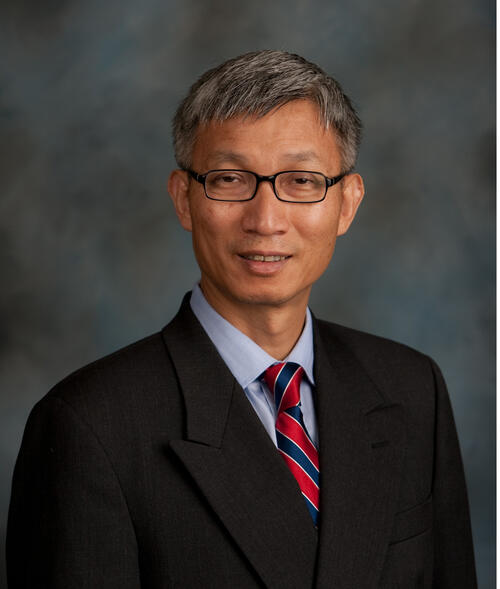
-

Showing some of his "home movie" footage of U.S. President Richard Nixon's trip to the People's Republic of China (PRC), film of family and diplomatic events, and reading from his memoir, Nicholas Platt will talk about life in China in 1973. As a former president of the Asia Society, which oversees numerous contacts and exchanges with China, and as a frequent visitor and lecturer in the PRC, Platt is in a unique position to compare those early days of diplomatic contact to relations with the West today, as China now emerges as a major player on the world stage and an economic power house.

Nicholas Platt, long-time China specialist, three-time U.S. ambassador (Pakistan, Zambia, and the Philippines), and author of the recently published memoir China Boys, will share his
experiences and insights gained from a long and distinguished career in the diplomatic service and as president of the Asia Society in New York for 12 years.

As a young diplomatic officer in the early 1960s, when China was firmly closed to the West, Platt took the unusual step of studying Mandarin. This put him in a key position when U.S. relations to China suddenly opened. Platt was one of the State Department officials chosen to accompany President Nixon on his historic visit to China in 1972. The following year he and his family were stationed in Beijing with the opening of a U.S. Liaison Office, the forerunner of the U.S. Embassy in the PRC.

Philippines Conference Room

Nicholas Platt President Emeritus Speaker Asia Society
Seminars
Date Label
News Type
News
Date
Paragraphs
Stanford experts recently came together with colleagues from across Asia for two Shorenstein APARC conferences at the new Stanford Center at Peking University. China and the World examined China’s contemporary interactions with its neighbors, and Cigarette Production Before, During, and After Liberation explored China’s cigarette industry over the past 100 years.
Hero Image
BeijingUniversity LOGO
Late imperial-era pillar on the Peking University campus.
Flick/Ryan_xm
All News button
1

Over the last hundred years, the cigarette has become a pillar of consumer life in China and many parts of the world. In 2010, the Chinese tobacco industry produced over two trillion cigarettes, generating over U.S. $90 billion in taxes and profits. Over 300 million Chinese citizens now use cigarettes every day, and tobacco kills 90 times more people each year than HIV/AIDS in China.

How has the cigarette become so integrated into the fabric of everyday life across the People’s Republic of China?

The importance of answering this question is unmistakable, but very little historical research and writing has examined China’s cigarette industry from the mid-20th century to the present. To get to the heart of this question, historians, health policy specialists, sociologists, anthropologists, business scholars, and other experts will meet Mar. 26 and 27 at the new Stanford Center at Peking University for a conference organized by the Asia Health Policy Program. They will examine connections intricately woven over the past 60 years between marketing and cigarette gifting, production and consumer demand, government policy and economic profit, and many other dimensions of China’s cigarette culture.

Stanford Center at Peking University

Conferences
-

China's defense budget has grown over the past two decades to become the second largest in the world, though still far below that of the United States. The steady growth of the People's Liberation Army's (PLA) capabilities and effectiveness influence not only Beijing's security policies, but the behavior of states within, and increasingly beyond, East Asia, including the United States. Ambassador Karl Eikenberry, whose experience with the Chinese military includes assignments as the U.S. defense attaché and assistant army attaché to the People's Republic of China (PRC), will discuss the PLA's modernization efforts and address the evolving role of the military in the PRC's comprehensive national security strategy.

Karl Eikenberry is the Payne Distinguished Lecturer at the Freeman Spogli Institute for International Studies at Stanford University (FSI). Within FSI he is an affiliated faculty member with the Center for International Security and Cooperation and the Shorenstein Asia-Pacific Research Center. He is also and an affiliated researcher with the Europe Center. Prior to his arrival at Stanford, he served as the U.S. ambassador to Afghanistan from May 2009 until July 2011, where he led the civilian surge directed by President Obama to reverse insurgent momentum and set the conditions for a transition to full Afghan sovereignty.


**Please note: All remarks are off the record.**

Philippines Conference Room

Karl Eikenberry Payne Distinguished Lecturer, Freeman Spogli Institute for International Studies Speaker Stanford University
Lectures
-

Life expectancy at aged 65 is remarkably similar in the three Chinese cities of Hong Kong, Shanghai, and Taipei, even though the cities differ in levels of socioeconomic development, health systems, and other factors. Edward Jow-Ching Tu will discuss research that aims to understand this phenomenon. Despite unprecedented increases in life expectancy and attainment of similar current levels of life expectancy, the cities differ in the contributions of changes in major causes of death to the improvements in life expectancy among the elderly. Tu and colleagues have explored several possible determinants of these different patterns and trends in the three cities, including socioeconomic development, health service delivery systems, cause-of-death classification systems, and competing risks from cardiovascular disease and other diseases. Their analysis suggests that the effect of equity of health service delivery has become more important over time.

Edward Jow-Ching Tu is a senior lecturer of demography in the Division of Social Science at Hong Kong University of Science and Technology. His work is focused on the impact of fertility, mortality, and migration on socio-economic changes in East Asia countries with special emphasis on nations experiencing a transition from planned economy to market economy; on causes and impacts of mortality changes and health transition on aging societies; and on the causes of lowest-low fertility in many East Asia countries. He has several active research projects ongoing in China, Japan, Taiwan, Hong Kong, and Singapore. He holds graduate degress from West Virginia University, the University of Pennsylvania, and the University of Tennessee (Knoxville). Tu has worked extensively in Asia, and has served as an adjunct professor and taught in many universities in China, including Peking University, Peoples University, Nankai Univerity, and Fudan University. He had served as a senior research scientist at the New York State Health Department and as a research fellow (full professor) at the Institute for Social Sciences and Philosophy at Academia Sinica. Tu has also taught at the State University of New York in Albany.

Philippines Conference Room

Edward Jow-Ching Tu Senior Lecturer of Demography at the Division of Social Science Speaker Hong Kong University of Science and Technology
Seminars

China’s “rise” has elicited envy, admiration, and fear among its neighbors and more distant countries. Much of what has been written about the modalities and impact of China’s increased activism on the world stage comes close to depicting what has happened (and what presumably will happen in the future) as determined almost entirely by goals, approaches, and instruments conceived in Beijing and implemented as designed by their Chinese authors. Such descriptions and explanations minimize or ignore the other side of the equation, namely, what individuals, corporate actors, and governments in other countries do to attract, shape, exploit, or deflect Chinese involvement. The "China and the World" project will redress the imbalance by examining the actions of China’s partners and ways in which initiatives and reactions from partners have shaped Chinese policy and the outcome of engagements with other countries.

The ultimate objective of this study is to understand and anticipate China’s behavior on the world stage. But China’s objectives, methods, and impacts vary from one region to another, and differences between regions are as interesting and as important as are practices and patterns common to all parts of the globe. Describing and explaining regional differences (as well as differences among countries in the same region) is therefore a useful, if not necessary, prerequisite for examining behavior and interactions at the global level.

North America, to be sure, is arguably the most important partner and shaper of China’s international behavior in the decades since Deng Xiaoping launched the policy of “reform and opening” that has transformed China. The reason for not focusing specifically on the United States in this study is that U.S.-China relations have been studied more extensively than any other Chinese relationship. However, the extent and nature of U.S. relations with countries in all regions make it imperative to consider U.S.-China relations in each region and their role, if any, in shaping China’s relationships with other countries.

The “China and the World” project will focus initially on Northeast Asia and Southeast Asia.  China has a long history and deeply varied relationship with these two regions. At the next stage, the project will examine China’s relationship with South Asia. Additional regions, such as Central Asia, may be added.

The project will begin with a one-and-a-half day workshop on March 19–20, 2012, convened in Beijing at the new Stanford Center at Peking University. It will focus on China’s relationships with Japan, Korea, and Russia in Northeast Asia. The participation of scholars from Southeast Asia and North America will help ensure that the core questions developed at the workshop are broadly applicable to other regions as well.

Stanford Center at Peking University

Workshops
Authors
News Type
News
Date
Paragraphs

Newly printed “no smoking” signs went up across China when the government rolled out a nationwide public indoor smoking ban in May 2011. A sticky gray layer of smoke residue now coats many signs, representing the challenges China’s growing tobacco-control movement faces against a multibillion-dollar government-run industry and deeply embedded social practices.

How has the cigarette become so integrated into the fabric of everyday life across the People’s Republic of China (PRC)?

To get to the heart of this question, historians, health policy specialists, sociologists, anthropologists, business scholars, and other experts met Mar. 26 and 27 in Beijing for a conference organized by Stanford’s Asia Health Policy Program. They examined connections intricately woven over the past 60 years between marketing and cigarette gifting, production and consumer demand, government policy and economic profit, and many other dimensions of China’s cigarette culture.

Anthropologist Matthew Kohrman, a specialist on tobacco in China, led the conference, which was held at the new Stanford Center at Peking University. In an interview, he spoke about the history of China’s cigarette industry, cigarettes and society, and the tobacco-control movement.

The early years

Tobacco first entered China through missionary contact in the 1600s, says Kohrman, but it was not until the early 20th century when cigarettes began gaining popularity. The first cigarette advertising was a “confused tapestry” of messages as marketers figured out what spoke to the public. “There were just as many images of neo-Confucian filial piety as there were of cosmopolitan ‘modern women,’” says Kohrman.

Through improved marketing and aggressive factory building, British American Tobacco and Nanyang Brothers, China’s two largest pre-war firms, helped increase the demand for cigarettes. The Sino-Japanese War (1937–1945) disrupted the cigarette supply, but their popularity had taken hold. Some cigarette firms shifted during the war to the relative safety of southwest China, where tobacco production has remained concentrated ever since.

Post-1949

After the founding of the PRC in 1949, the tobacco industry was nationalized and strong relationships between the central government and cigarette manufacturers in the provinces were formed. Cigarettes also began to be viewed as a part of everyday life. “Ration coupons for cigarettes were issued alongside grain, sugar, and bicycle coupons,” says Kohman. “The Maoist regime legitimized cigarettes as the right of every citizen."

During the Deng Xiaoping era (1978–1997), China’s cigarette industry really took off as manufacturers competed with one another for foreign currency to purchase cutting-edge European equipment and newer varieties of tobacco seed stock. Increased production and the return of full-scale advertising fueled greater consumer demand, and manufacturers began producing more and more varieties of cigarette. Vendors displayed glass cases filled with a colorful patchwork of cigarette packs bearing names like Panda, Double Happiness, and Red Pagoda.

The tobacco industry remained under government control as other industries privatized in the 1980s and 1990s. Party-state management of the cigarette became even more centralized in the early 1980s with the creation of the China Tobacco Monopoly Administration and its parallel external counterpart, the China Tobacco Corporation.

Since 1949, provincial protectionism has marked the cigarette market. It is now possible to purchase Beijing cigarettes in Kunming, Chengdu brands in Shanghai, and so on, but to distribute cigarettes in another province, a manufacturer must cut a deal with provincial government officials. Provincial administrations are loath to cut such deals because central government policy dictates that the portion of cigarette sales tax which does not go to the central government always is channeled to the finance bureau of the province of original production. China’s 2001 entry into the World Trade Organization opened the market ever so slightly to international brands like Marlboro and Kent, but domestic brands continue to dominate because of fierce protectionism.

...If it chooses to do so, China is in a position to lead and change the landscape in a very profound way.
-Matthew Kohrman, Professor of Anthropology, Stanford

A new era

In 2003, the World Health Organization established the first global health treaty, the Framework Convention on Tobacco Control (FCTC). Although the United States still has not yet ratified the FCTC, China signed the treaty in 2003 and ratified it in 2005. Kohrman says China’s tobacco industry giants fear competition from international cigarette brands more than they worry about tobacco-control measures related to the FCTC.

Nonetheless, the FCTC ushered in a new era of public health research about tobacco and has helped increase public awareness about the dangers of smoking. New restrictions have been imposed on print and television advertising for cigarettes, and international organizations, such as the Bloomberg Family Foundation, have begun funding anti-tobacco work in China.

A big challenge to tobacco-control campaigns, says Kohrman, is the sheer amount of money that tobacco companies have available for marketing. “In 2010, China’s tobacco industry posted profits in excess of U.S. $90 billion—that’s huge. Tobacco control research and advocacy now annually receive a few million dollars, and much of that is coming through outside funders, which have very specific projects in mind.”

China’s tobacco advertisers have adapted to the new restrictions that prevent them from openly promoting cigarettes in the media. They have instead moved to point-of-sale and soft-marketing tactics, including misinformation campaigns about the “dangers” of quitting smoking. “The actual expenditure on marketing probably hasn’t dropped very much,” says Kohrman.

Cigarettes and society

Strong marketing and the legitimization of cigarettes as a part of everyday life have led to the deep integration of cigarettes into Chinese society. While only 3 to 4 percent of women in China smoke, cigarettes are an important part of male identity and social mobility. The wide range of cigarette brands has led to the growth of high-end varieties favored by businessmen and politicians, with some brands costing as much as $50 a pack. The custom of cigarette gifting has existed in China for decades, and it is difficult for a young man to turn down a package of cigarettes from a senior colleague or supervisor.

There is also the fact that nicotine is highly addictive, and quitting is difficult in an environment where smoking cigarettes is socially sanctioned. Kohrman says, “When you take an incredibly addictive substance like nicotine and throw it into the mix of all of these norms and customs, it creates a pretty toxic brew.”

The future?

Tobacco control presents a formidable challenge in China, one that requires understanding the historical context and complex dimensions of the cigarette industry. “Cigarettes have been insinuated into so many aspects of daily life across China, and the market for this product has now become so closely enmeshed with matters of government finance and operations,” says Kohrman.

What happens in China could have implications for the entire world. “There’s a tobacco-induced human annihilation unfolding right now in almost every country and questions about how society and Big Tobacco are enmeshed, and how cigarette culture and government finance have become mutually supportive are pivotal,” says Kohrman. “Every country except Bhutan has legalized cigarette sales and is subject to many of the same general issues as China—only in China they’re on a much larger scale. But if it chooses to do so, China is in a position to lead and change the landscape in a very profound way.”   

Hero Image
PandaCigarettes NEWSFEED
Premium Chinese cigarette brand Panda for sale in a duty-free shop at Dubai's airport.
Flickr/Bernard Oh
All News button
1
Subscribe to China