Providing an ethnographic account of the Islamic Party of Malaysia (PAS) and its Youth Wing (Dewan Pemuda PAS), this book analyses the genesis and role of Islamic movements in terms of their engagement in mainstream politics. It explores the party’s changing approach towards popular culture and critically investigates whether the narrative of a post-Islamist turn can be applied to the PAS Youth.
The book shows that in contrast to the assumption that Islamic marketization and post-Islamism are reinforcing each other, the PAS Youth has strategically appropriated and integrated Islamic consumerism to pursue a decidedly Islamist – or ‘pop-Islamist’ – political agenda. The media-savvy PAS Youth elites, which are at the forefront of implementing new outreach strategies for the party, categorically oppose tendencies of political moderation among the senior party. Instead, they are most passionately calling for the establishment of a Syariah-based Islamic order for state and society, although these renewed calls are increasingly expressed through modern channels such as Facebook, YouTube, rock music, celebrity advertising, branded commodities and other market-driven forms of social movement mobilization.
A timely and significant contribution to the literature on Islam and politics in Malaysia and beyond, this book sheds new light on widespread assumptions or even hopes of "post-Islamism." It is of interest to students and scholars of Political Religion and Southeast Asian Politics.
Contents
Introduction
Conceptual Framework: Islamism, Post-Islamism or Pop-Islamism?
The Politics of Islam in Malaysia
The Islamic Party of Malaysia (PAS) and its youth wing
The Pop-Islamist reinvention of PAS: Anthropological observations
Conclusions
Dominik Müller was a visiting scholar at Shorenstein APARC in 2013. His anthropological research focuses on Muslim politics and popular culture in Southeast Asia. Müller is now a postdoctoral fellow at Goethe-University Frankfurt, Germany.
Asked to summarize his biography and career, Donald K. Emmerson notes the legacy of an itinerant childhood: his curiosity about the world and his relish of difference, variety and surprise. A well-respected Southeast Asia scholar at Stanford since 1999, he admits to a contrarian streak and corresponding regard for Socratic discourse. His publications in 2014 include essays on epistemology, one forthcoming in Pacific Affairs, the other in Producing Indonesia: The State of the Field of Indonesian Studies.
Emmerson is a senior fellow emeritus at the Freeman Spogli Institute for International Studies (FSI), an affiliated faculty member of the Center on Democracy, Development and the Rule of Law, an affiliated scholar in the Abbasi Program in Islamic Studies, and director of the Southeast Asia Program at the Shorenstein Asia-Pacific Research Center. Recently he spoke with Shorenstein APARC about his life and career within and beyond academe.
Your father was a U.S. Foreign Service Officer. Did that background affect your professional life?
Indeed it did. Thanks to my dad’s career, I grew up all over the world. We changed countries every two years. I was born in Japan, spent most of my childhood in Peru, the USSR, Pakistan, India and Lebanon, lived for various lengths of time in France, Nigeria, Southern Rhodesia (now Zimbabwe) and the Netherlands, and traveled extensively in other countries. Constantly changing places fostered an appetite for novelty and surprise. Rotating through different cultures, languages, and schools bred empathy and curiosity. The vulnerability and ignorance of a newly arrived stranger gave rise to the pleasure of asking questions and, later, questioning the answers. Now I encourage my students to enjoy and learn from their own encounters with what is unfamiliar, in homework and fieldwork alike.
Were you always focused on Southeast Asia?
No. I had visited Southeast Asia earlier, but a fortuitous failure in grad school play a key role in my decision to concentrate on Southeast Asia. At Yale I planned a dissertation on African nationalism. I applied for fieldwork support to every funding source I could think of, but all of the envelopes I received in reply were thin. Fortunately, I had already developed an interest in Indonesia, and was offered last-minute funding from Yale to begin learning Indonesian. Two years of fieldwork in Jakarta yielded a dissertation that became my first book, Indonesia’s Elite: Political Culture and Cultural Politics. I sometimes think I should reimburse the African Studies Council for covering my tuition at Yale – doubtless among the worst investments they ever made.
In the early 1980s, I took two years of leave from the University of Wisconsin-Madison to become a visiting scholar at Stanford, and later I returned to The Farm for shorter periods. At Stanford I enjoyed gaining fresh perspectives from colleagues in the wider contexts of East Asia and the Asia-Pacific region. In 1999, I accepted an appointment as a senior fellow in FSI to start and run a program on Southeast Asia at Stanford with initial support from the Luce Foundation.
As a fellow, most of your time is focused on research, but you also proctor a fellowship program and have led student trips overseas. How have you found the experience advising younger scholars?
In 2006, I took a talented and motivated group of Stanford undergrads to Singapore for a Bing Overseas Seminar. I turned them loose to conduct original field research in the city-state, including focusing on sensitive topics such as Singapore’s use of laws and courts to punish political opposition. Despite the critical nature of some of their findings, a selection was published in a student journal at the National University of Singapore (NUS). NUS then sent a contingent of its own students to Stanford for a research seminar that I was pleased to host. I encouraged the NUS students to break out of the Stanford “bubble” and include in their projects not only the accomplishments of Silicon Valley but its problems as well, including those evident in East Palo Alto.
That exchange also helped lay the groundwork for an endowment whereby NUS and Stanford annually and jointly select a deserving applicant to receive the Lee Kong China NUS-Stanford Distinguished Fellowship on Contemporary Southeast Asia. The 2014 recipient is Lee Jones, a scholar from the University of London who will write on regional efforts to combat non-traditional security threats such as air pollution, money laundering and pandemic disease.
Where does the American “pivot to Asia” now stand, and how does it inform your work?
Events in Iran, Iraq, Afghanistan, Syria and now in Crimea as well, have pulled American attention away from Southeast Asia. Yet the reasons for priority interest in the region have not gone away. East Asia remains the planet’s most consequential zone of economic growth. No other region is more directly exposed to the potentially clashing interests and actions of the world’s major states – China, Japan, India and the United States. The eleven countries of Southeast Asia – 630 million people – could become a concourse for peaceful trans-Pacific cooperation, or the locus of a new Sino-American cold war. It is in that hopeful yet risky context that I am presently researching China’s relations with Southeast Asia, especially regarding the South China Sea, and taking part in exchanges between Stanford scholars and our counterparts in Southeast Asia and China.
Tell us something we don’t know about you.
Okay. Here are three instructive failures I experienced in 1999, the year I joined the Stanford faculty. I was evacuated from East Timor, along with other international observers, to escape massive violence by pro-Indonesian vigilantes bent on punishing the population for voting for independence. The press pass around my neck failed to protect me from the tear gas used to disperse demonstrators at that year’s meeting of the World Trade Organization – the “Battle of Seattle.” And in North Carolina in semifinal competition at the 1999 National Poetry Slam, performing as Mel Koronelos, I went down to well-deserved defeat at the hands of a terrific black rapper named DC Renegade, whose skit included the imaginary machine-gunning of Mel himself, who enjoyed toppling backward to complete the scene.
The Faculty Spotlight Q&A series highlights a different faculty member at Shorenstein APARC each month giving a personal look at his or her teaching approaches and outlook on related topics and upcoming activities.
Southeast Asia Program director Donald K. Emmerson's essay by the above title appears in the just-published volume, Producing Indonesia: The State of the Field of Indonesian Studies, ed. Eric Tagliacozzo, available for purchase at the Cornell University Press.
The book's authors, to quote the publisher, reflect on "the development of Indonesian studies over recent tumultuous decades...Not everyone sees the development of Indonesian studies in the same way. Yet one senses—and this collection confirms—that disagreements among its practitioners have fostered a vibrant, resilient intellectual community."
The disagreements featured in Emmerson's chapter, to quote him, "arose over how to interpret two consequential changes of regime in Indonesia," namely, "the demise of liberal democracy and the rise of President Sukarno's leftward 'Guided Democracy' in 1959, and the latter's replacement by General Suharto's anti-leftist 'New Order' starting in 1965." At stake in these controversies were facts, minds, and formats: "perspectival commitments developed inside the minds, disciplines, and careers of professional analysts of Indonesia."
At the center of his essay lies a consequential question of choice: whether to maintain or to change one's argument in the face of evidence against it. The issue is framed at the outset of the essay by two contrasting quotations:
“When the facts change, I change my mind. What do you do, sir?”
-- John Maynard Keynes on the Great Depression
"I didn't change. The world changed."
-- Dick Cheney on 9/11
About the Essay
The 26 scholars contributing to this volume, Producing Indonesia: The State of the Field of Indonesian Studies, ed. Eric Tagliacozzo, have helped shape the field of Indonesian studies over the last three decades. They represent a broad geographic background—Indonesia, the Netherlands, the United Kingdom, Australia, the United States, Canada—and have studied in a wide array of key disciplines—anthropology, history, linguistics and literature, government and politics, art history, and ethnomusicology. Together they reflect on the “arc of our field,” the development of Indonesian studies over recent tumultuous decades. They consider what has been achieved and what still needs to be accomplished as they interpret the groundbreaking works of their predecessors and colleagues.
This volume is the product of a lively conference sponsored by Cornell University, with contributions revised following those interactions. Not everyone sees the development of Indonesian studies in the same way. Yet one senses—and this collection confirms—that disagreements among its practitioners have fostered a vibrant, resilient intellectual community. Contributors discuss photography and the creation of identity, the power of ethnic pop music, cross-border influences on Indonesian contemporary art, violence in the margins, and the shadows inherent in Indonesian literature. These various perspectives illuminate a diverse nation in flux and provide direction for its future exploration.
Since the democratization of Indonesia began in 1998, the country’s military has been undergoing major change. It has significantly altered or is preparing to change its organizational structure, doctrinal precepts, education and training formats, and personnel policies. Partly to acquire advanced weaponry, its budget has more than tripled in the past decade. Why? Is Indonesia preparing to become a regional military power? Answering a growing potential threat from China in the South China Sea? Compensating for the loss of military influence under democratic reform? And how will the military fare under new national leadership following this year’s elections?
Evan A. Laksmana is a doctoral candidate in political science at the Maxwell School, a researcher with the Centre for Strategic and International Studies (Jakarta), and a non-resident German Marshall Fund fellow. He has taught at the Indonesian Defense University (Jakarta) and has held research and visiting positions at the S. Rajaratnam School of International Studies (Singapore) and the Asia Pacific Center for Security Studies (Honolulu). Journals that have published his work include Asian Security, Contemporary Southeast Asia, Defence Studies, the Journal of the Indian Ocean Region, Harvard Asia Quarterly, and the Journal of Strategic Studies. He tweets @stratbuzz.
Daniel and Nancy Okimoto Conference Room
Evan A. Laksmana
Fulbright Presidential Scholar, Maxwell School of Citizenship and Public Affairs
Speaker
Syracuse University
As the world is distracted by events in Crimea and the missing Malaysian jet, Donald K. Emmerson says that China could hardly have chosen a better time to blockade Phillipine ships and extend its hold over disputed territories. He argues that China is reinforcing its two-track approach: hosting futile discussions in ASEAN, while simultaneously, changing conditions in the South China Sea.
This study analyzes the effects of Indonesia's conditional cash transfer program on the local health care market in terms of price, utilization, and quality of care. The CCT program is associated with increased delivery fees and increased utilization of prenatal care and trained attendants for delivery assistance. Consequently, program participants experience improvements in prenatal care quality.
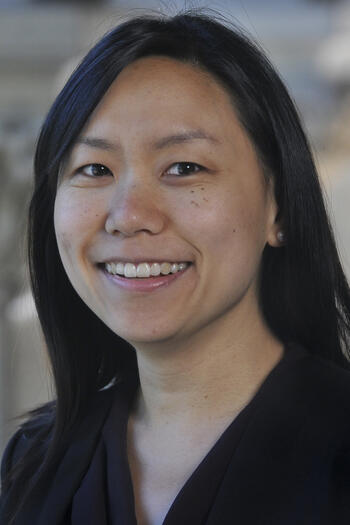
Margaret Triyana is the Asia Health Policy Post-doctoral fellow. Her main interests are inequality and human capital investments, particularly early health investments in developing countries.
Shorenstein APARC
Encina Hall C331
616 Serra Street
Stanford, CA 94305-6055
(650) 724-5656
(650) 723-6530
0
mtriyana@stanford.edu
2013-2014 Asia Health Policy Postdoctoral Fellow
triyana_photo.jpg
PhD
Margaret (Maggie) Triyana’s main research interests are inequality and human capital investments in developing countries. In particular, she is interested in the effects social policy changes on children’s health outcomes. As a Postdoctoral Fellow, she will analyze the effects of rural-urban migration in Indonesia and China, as well as the impact of health insurance expansion in Indonesia and Vietnam.
Triyana received a PhD in Public Policy from the University of Chicago in 2013.
Working Papers
“Do Health Care Providers Respond to Demand-Side Incentives? Evidence from Indonesia“
“The Effects of Community and Household Interventions on Birth Outcomes: Evidence from Indonesia”
“The Longer Term Effects of the ‘Midwife in the Village’ Program in Indonesia”
“The Sources of Wage Growth in a Developing Country” (with Ioana Marinescu)
Margaret Triyana
Postdoctoral Fellow in Asia Health Policy
Speaker
Stanford University
Myanmar's opening to the outside world and the country's tentative steps from military rule to democracy has captivated many observers of the region. But Aung Zaw, an exiled Burmese journalist pushing for democratic change, warns that the image of rapid reform does not necessarily match reality these days.
“What we see now is serious backsliding,” Zaw told a packed house at the Bechtel Conference Center on March 6. “The changes have become more superficial; the changes are not real.”
Zaw, the founding editor of The Irrawaddy newsmagazine, delivered these remarks at Stanford upon receiving the Shorenstein Journalism Award. This annual award is conferred upon a journalist who promotes mutual understanding between the U.S. and Asia, and also honors Asian journalists who have been at the forefront of the effort to create an independent media in the Asia-Pacific.
Zaw, who was forced into exile after the abortive democratic revolt of 1988, described Myanmar’s dynamic history as “up and down.” During the long period of military rule in the country, “Burma was a pariah,” he observed. The military government repressed all opposition, enriching itself while Burma slide into deep poverty, while the country was largely cut off from the outside world except for a trickle of tourists. But the regime made a clear decision to open the doors to the outside and, in response to international and domestic pressure, take tentative steps toward political change, including releasing political prisoners and allowing the media to operate more freely.
The panelists agreed that the uprisings within Burma, such as the Buddhist monk led revolt in 2007, and the leadership of Burmese human rights activist Aung San Suu Kyi pushed the regime toward change. In addition, Chanda and Emmerson pointed to the geopolitics of Burma, the desire of the regime to free itself from isolation and dependence only on China and North Korea as backers.
Zaw credited these changes with bringing some semblance of “communal balance” to the society. Emmerson argued, however, that the West has colored their view of Burma with a romantic notion of democratization that tends to overlook the still tentative, and somewhat transient, nature of the changes to date.
“The regime has carefully manipulated… international [public] opinion in trying to open the doors to the international community,” Zaw said. Especially in the past year, there have been efforts by the government to curb public protest and censorship has become pervasive once again. A commentary piece written by Zaw provides an analysis of the contemporary media environment in Myanmar.
The panel members pointed in particular to the rise of tensions between the Buddhist Burmese majority and ethnic and religious minorities in the country. In particular, they expressed concern over the discrimination against and violence suffered by minority Muslims, the ethnic Rohingya who live along the border with Bangladesh, often taking place with the complicity of government officials, or at least with their indifference. They suggested the government played upon anti-Muslim feelings to boost its popularity among the majority Buddhist populace.
With elections looming in 2015, the government may now feel it has been “moving too fast” toward reform and begun to ratchet back, warned Zaw. Conservative factions in Myanmar’s leadership who fear losing power may be gaining influence.
Nayan Chanda, the former editor of the Far Eastern Economic Review and a previous recipient of the Shorenstein Award, pointed to Myanmar’s long tradition of despotism. “Burmese rulers have had a way of governing the country that is still present among the generals we see in Burma today,” he said.
Emmerson focused his remarks on the significance of the changes in Burma to American foreign policy in the region. The Burmese shift away from Chinese domination and its opening to the West has been seen as a key part of the so-called U.S. “pivot” to Asia and its attempts to balance Chinese influence in East Asia. These changes allowed Myanmar to assume its role as chairman of the Association of Southeast Asian Nations (ASEAN), an annual rotation in leadership. But it is far from clear if the Burmese leadership is prepared to go toward a deeper democratic transformation. The upcoming presidential elections in 2015 remain an uncertainty. Aung San Suu Kyi is still constitutionally barred from running for president but she has been allowed to resume a powerful role in the system itself, no longer simply a “Joan of Arc” symbol of purity sitting on the outside.
In all this, the role of a free press in Burma is even more vital than ever. After his arrest in 1988 for his role in the uprising against General Ne Win’s regime, Zaw had to flee to neighboring Thailand where he has spent 25 years in exile. Zaw created The Irrawaddy, an émigré-based publication that is widely acclaimed for its on-the-ground analysis of Myanmar. In 2012, the publication reopened offices in Burma.
The Irrawaddy’s diverse contributors offer an independent platform to unravel the complex developments within the country. The Shorenstein Award given to Zaw recognizes his history of leadership as a journalist in Burma.
“It is very exciting for us this year to give this award to Aung Zaw,” said Sneider, a member of the jury that selects the awardees. “He has been intimately involved in the process of not only creating independent media for Burma but also in the process of independent change itself, starting with his own activism in the 1980s.”
Zaw received the award at a dinner ceremony later on March 6 attended by students, faculty and prominent members of the Stanford community. “I feel very humbled,” Zaw told the Voice of America in an interview. “It is an acknowledgement to our work, our commitment and our independent journalism as we try to make things different [in Myanmar].”
The video and transcript of the event, and the original press release on Zaw being named the 2013 Award recipient are posted below.
An article was published by The Irrawaddy on Zaw’s acceptance of the award. Interviews conducted with Voice of America's Kyaw Zan Thaw in Burmese and Kaye Lin in English aired internationally on March 13 and are posted below. An interview was also conducted with LinkAsia and is scheduled to air in the upcoming week and will be subsequently posted online.
In the next 20 years, the middle class in Asia is projected to swell from 600 million to 3.2 billion. If managed successfully, this could not merely be the single largest reduction in poverty in human history, but it could also substantially improve the fortunes of many non-Asian nations, especially the U.S. Ambassador Bleich’s remarks will discuss the planning of America’s economic, diplomatic, and security rebalance to Asia, its progress to date, and the challenges that will ultimately determine whether Asia rises peacefully and successfully or whether it fails to meet its promise or worse. Ambassador Bleich will address in particular the choice of Australia as the focal point for the rebalance, and how the U.S. alliance with Australia and leveraging of that relationship with other allies and partners in Southeast Asia are critical elements of ensuring a successful Indo-Pacific century.
Ambassador Jeffrey Bleich served as United States Ambassador to Australia from 2009-2013. His tenure in Australia was marked by a commitment to expanding Australia and the United States’ broad alliance by promoting security, advancing free trade, promoting human rights and expanding collaboration in education, space, energy and technology. He recently received the State Department's highest award for a non-career ambassador, the Sue Cobb Prize for Exemplary Diplomatic Service. Immediately prior to his nomination for ambassador in 2009, Ambassador Bleich served as Special Counsel to President Obama in the White House.
Ambassador Bleich recently rejoined Munger Tolles & Olson as a partner resident in the San Francisco office and will focus on international and domestic litigation and counseling, with a particular focus on privacy and data security, investigations, trade and cross-border disputes.
Ambassador Bleich received his law degree in 1989 from the University of California at Berkeley, Boalt Hall School of Law, where he was editor-in-chief of the California Law Review and Order of the Coif. He graduated from Amherst College magna cum laude with a B.A. in political science and holds a masters degree from Harvard University’s School of Government. He has also been awarded honorary doctorates from both U.S. and Australian universities.
Philippines Conference Room
Jeffrey Bleich
Former Ambassador to Australia
Speaker
Masahiko Aoki has been engaged with Stanford University for over four decades. He has witnessed the roots of Silicon Valley grow and seen the many successes of students who formerly passed through his classroom. Selected academic papers written over his 40-year academic career have recently been published.
Aoki is the Henri and Tomoye Takahashi professor emeritus of Japanese Studies in the department of economics and a senior fellow at the Stanford Institute for Economic Policy Research (SIEPR) and the Freeman Spogli Institute for International Studies (FSI), in residence at Shorenstein APARC.
You have been at Stanford since 1967 in different capacities – what has changed since then? Can you share some memories with us?
I first came to Stanford as an assistant professor in 1967. Campus and the surrounding environment were different then – there were series of apricot orchards along El Camino to the south and my office was located in a wooden building – the old president’s house where the engineering buildings stand today. Changes at the university and in Silicon Valley have been fascinating to witness. I was away from Stanford in the 1970s, but when I came back in the 1980s, I had over 200 students at a time in my classes. This was because of widespread interest in Japan’s economic performance, which was then challenging American industries. Now students are inclined to be more interested in the rise of China. I share the same interest.
What has been most interesting for me is collaboration with graduate students and faculty to develop institutional studies. In the 1990s, I worked with Paul Milgrom, Avner Greif and Marcel Fafchamps among others, to initiate the field of comparative institutional analysis in the economics department. Greif and Fafchamps now have appointments in FSI like myself. Our research worked to understand why and how institutions matter to economic performance. However, my interests have expanded since then. I aim to understand relations between economic and demographic variables as well as institutional complementarities between economic institutions, social norms and political governance. As for my former students, many of them can now be found in important academic, government and private sector roles across the world.
What particular “lens” do you use to conduct your research?
Some influential economists understand that the nature of polity determines economic performance. They say this correlation is obvious if we compare the exploitative political regime like North Korea with that of a democratic political regime like South Korea. But this “lens” is a bit too simplistic for me. Why do ‘bad’ political regimes persist in some countries? The relationship between political governance and economic performance is more complex than “the former simply causes the latter.”
To understand the relationship between political governance and the economy, I use game-theoretic concepts. While I am not a game theorist, I still believe that human interaction – whether economic, political or social – is a kind of game. People form beliefs based on how others play societal games. One of the important insights derived from these ideas is that political governance and economic institutions actually co-evolve. Furthermore, we need to look at the historical context to understand the present.
How have you applied these theories to the cases of Japan and the United States?
One of my major research interests has been the comparison of corporate governance across countries. Financial economists view the corporation as the property of stockholders. But we can also view the corporation as a system of distributed cognition. That is, the corporation is a group of people who have different cognitive roles and capabilities. Individuals can be organized to achieve economic value using physical assets as tools for respective cognitions.
By looking at corporations in this reversed way, we can identify different types of organizational architecture and their comparative advantages. In short, my research has found that managers’ cognitive assets are prioritized in U.S. corporate model, while workers’ entrepreneurial cognitive assets are prioritized in Silicon Valley’s model. In contrast, Japan favors a model where manager and workers’ cognitive assets are more interdependent.
You emphasize the connection between economics and demographics. What can be done about Japan and greater Asia’s rising demography problems?
Human capital is very valuable, but cultivating human capital is quite costly. Due to this constraint, the total fertility rate of women has declined as the economy develops. Scholars call this phenomenon the demographic transition. In addition, as economies further develop, people live longer and the working age population in the total population declines. Japan, Singapore and Taiwan are experiencing this phenomenon. Korea will follow this trend soon and at an even faster rate than Japan. Even if China modifies the one-child policy, the demographic dilemma cannot be escaped. And even for California, which is typically considered to be the youngest state in the U.S., a study predicts it will become the oldest state around year 2030.
So, what can be done to cope with this phenomenon? One option to raise the retirement age. Over two decades ago, Japan started this policy and has seen noted, positive effects. Another option is to increase and secure participation of women in the workforce. Across Asia, total populations are still rising due to immigration. Japan should consider liberalizing immigration. It is interesting to note that in the past 1,500 years Japan’s cultural development benefitted greatly from migration and assimilation of people, such as monks, political refugees and artists from Korea and China.
With the recent execution of Abenomics, what performance can we expect to see from Japan’s economy in year 2014?
Abenomics has only been assessed in terms of short-term effects on the economy. Instead, my view is that Japan is now in the process of longer-term institutional change. Lifetime employment was the core of Japan’s overall institutional arrangement until some twenty years ago. The main banking system and government-industry relationship complemented and mutually reinforced lifetime employment. Though, with the demographic transition, the Japanese government has found it increasingly difficult to sustain. However, Japan’s institutional arrangements are normally very resilient. I think institutional transformation fitting this new demographic phenomena will require the duration of one generation. Institutions cannot be changed overnight by a revolution or government decree.
Of course, Abe could accelerate institutional adaptation by expanding the roles and opportunities for women and young people and creating more open foreign policy. This policy agenda may be related to the so-called “third arrow” of Abenomics, a period of structural reform following monetary easing and fiscal stimulus. But what Abe can do and has the willingness to do has yet to be fully seen. Thus, if we believe that Japan started the process of institutional change in the early 1990s and requires one generation to attain visible outcomes, the next several years are crucial. Tokyo has been chosen as the host city for the 2020 summer Olympics. I hope this event will act as Japan’s opportunity to display its changes to the international audience.
The Faculty Spotlight Q&A series highlights a different faculty member at Shorenstein APARC each month giving a personal look at his or her teaching approaches and outlook on related topics and upcoming activities.
The number of obese and overweight people continues to rise in developing countries – Cambodia is no exception. Obesity and being overweight are in turn associated with a higher risk of chronic non-communicable diseases like diabetes. However, the relationship between body weight and disease risk may not be the same in different countries. If Asian populations show an elevated risk of disease at a lower body weight than in the west, policy recommendations based on western body mass index (BMI) standards may not be appropriate.
How should healthcare providers counsel patients and policymakers design policies to reduce risk and create prevention strategies in Cambodia, as well as elsewhere across the Asia-Pacific?
Former Developing Asia Heath Policy Fellow Siyan Yi, joined by other global health experts, considered these questions and recently published his findings in “Appropriate Body Mass Index and Waist Circumference Cutoff for Overweight and Central Obesity among Adults in Cambodia” in PLOSOne, Vol. 8, Issue 10, (October 2013).
Using cross-sectional data from a national survey conducted by the World Health Organization and Ministry of Health in Cambodia, the study aimed to identify the appropriate BMI and waist circumference (WC) cutoff to understand which individuals are considered overweight and thus have an elevated risk of disease.
For both men and women, significant associations were found between individuals who had diabetes, hypertension, and high cholesterol and a WC of greater than/equal to 80.0 cm and a BMI of greater than/equal to 23.0 kg/m2. Therefore, the study suggests that relevant cutoff to determine obesity designation is a WC 80.0 cm and a BMI 23.0 kg/m2, which is lower than the standard cut-off in the west.
The article findings may be particularly helpful to health policymakers in Cambodia. It is the first study of its kind – using nationwide data to suggest specific WC and BMI cutoff among Cambodian adults. The cutoff can act as a benchmark for health care providers to administer proper diagnosis. Furthermore, national public health programs could be developed to better target this population for health improvement.
Yi is now the Research Director of Population Health & Development at Khmer HIV/AIDS NGO Alliance (KHANA), an NGO in Cambodia that provides integrative HIV/AIDS prevention and support services.