
Inaugural Stanford Summer Juku on Japanese Political Economy
From August 18-22, the Japan Studies Program welcomed scholars of political science and economics to the Oksenberg conference room in Encina Hall for the first annual Stanford Summer Juku on the Japanese Political Economy.
The main goal of the program is to attract young researchers who will go on to become leaders in the study of Japanese politics and Japanese economy in the near future. The Summer Juku is distinctive by allowing ample time for informal discussions and interactions beyond the standard presentations and discussions. Juku is a word most commonly associated with the modern Japanese cram schools, but here it actually refers to the private schools at the end of the Edo period, which attracted young, motivated students and ended up producing numerous leaders of the Meiji Restoration.

The first two days focused on political science, while the second two days were on economics.
In the first session, Yusaku Horiuchi from Dartmouth College presented a coauthored paper analyzing the role of the U.S.-Japan security alliance on Japan’s postwar economic growth. They employed a novel statistical method relatively new to political science called the synthetic control method to contend that the acceleration of Japan’s economic growth from 1958 coincided with the consolidation of the alliance. Discussants were Amy Catalinac (Australian National University) and William Grimes (Boston University).
In the second session, Shorenstein APARC fellow and political science faculty Phillip Lipscy presented part of his book project on the question of what explains cross-national variation in energy policy. He contended that electoral incentives best explained variation in energy efficiency policies. Using a new dataset of transportation trends in OECD countries and an in-depth examination of the impact of Japan’s 1994 electoral reform, he finds that energy efficiency-enhancing policies are more feasible in non-majoritarian systems, which allow the imposition of high, diffuse costs on the general public. Discussants were Gregory Noble (University of Tokyo) and Yusaku Horiuchi (Dartmouth College).
In the final session on the first day, Amy Catalinac presented her paper that poses the question of what led to the dramatic rise in conservative Japanese politicians’ attention to national security since 1997. She argued that electoral reform in 1994 led to new incentives for conservative politicians to focus on national security. Her analysis involved applying a statistical model called latent Dirichlet allocation to over 7000 election manifestoes over 8 House of Representatives elections. Discussants were Saori Katada (University of Southern California) and Christina Davis (Princeton University).
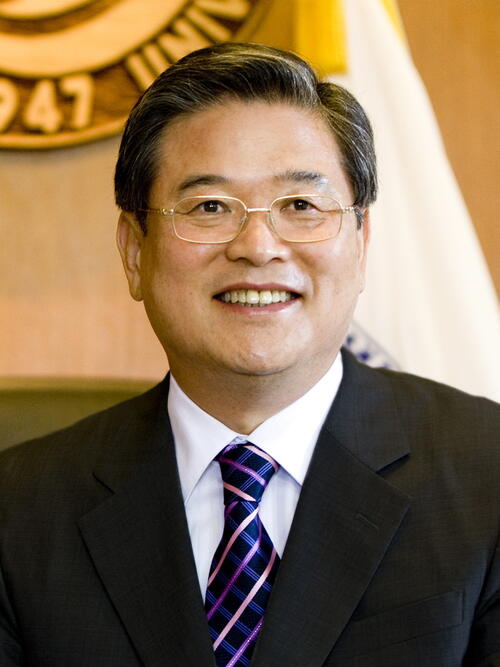
Kenji Kushida, research associate at Shorenstein APARC, started off the second day by presenting the main argument of his book project on understanding why Silicon Valley companies have continually disrupted the global information and communications technology (ICT) industry. Analyzing the case of Japan’s ICT sector in comparative international context, he showed that national political settlements at initial stages of liberalization shaped industry structures, which in turn shaped global markets characterized by rapid commoditization. Discussants were Gregory Noble (University of Tokyo) and Ulrike Schaede (University of California, San Diego).
The second presenter was Kay Shimizu from Columbia University, who presented her book project analyzing distributive politics under conditions of fiscal austerity. Focused on the question of what happens to personalistic politics when resources run low, she argued that budget-constrained politicians work to find new resources locally and to secure votes by creating more personal linkages to voters. Her study is based on an analysis of Japan between 1991 and 2011, showing how subnational politicians sought to influence lending practices of private regional banks through publicly funded credit guarantees. Discussants were Steven Vogel (UC Berkeley) and Jonathan Rodden (Stanford University).
The third presenter, Saadia Pekkanen (University of Washington), presented the introduction of her edited volume explaining the construction of external institutions by Asian states. She explained how the project was motivated by the desire to better understand how and why Asian states might shape the contemporary world order, and what kinds of institutionalized rules and structures they might bring into play, along with the consequences for global patterns of governance. She presented a typology of external institutional designs based on formal/informal underlying organizational structures, and hard/soft underlying legal rules, based on a new database of over 6000 international institutions covering Asia’s economic, security, and transnational human security institutions. Discussants were William Grimes (Boston University) and Christina Davis (Princeton University).
Following the second day, a conference dinner was joined by both political science and economics segment participants.

The third day began the economics-focused segment of the Summer Juku, beginning with Ulrike Schaede (UC San Diego) presenting a co-authored paper with Tatsuo Ushijima (Aoyama Gakuin University) analyzing the economic role and valuation effects of subsidiary M&A in Japan between 1996 and 2010. They conducted an event study, pairing and analyzing both sides to the deal, finding that abnormal returns to buyers and sellers both increase with deal size. They find that Japanese firms selling core business subsidiaries lead to negative returns, accentuated in larger deals. They interpret that this penalty was either an uncertainty discount or a signaling effect that the firm was in distress. Discussants were Robert Eberhart (Santa Clara University) and Ayako Yasuda (University of California, Davis).
The second presentation by Hitoshi Shigeoka examined the effects of school entry cut-off ages for children on the timing of births. Given the tradeoff for parents to time births just before and after cutoff dates, his analysis of births from 1974-2010 in Japan led to his finding that more than 1800 births per year were shifted roughly a week before the cut-off date to the week following the cut-off date. He went on to analyze the heterogeneity in responses among mothers along dimensions including work, baby gender, income and skill levels. Discussants were Karen Eggleston (Stanford FSI) and Toshiaki Iizuka (University of Tokyo).
In the third session, Thomas Cargill (University of Nevada) presented a paper co-authored with Jennifer Holt Dwyer (City University of New York) examining the concept of central bank independence and the case of Japan. Their core contention was that the postwar evolution of Bank of Japan policy reveals that de facto central bank independence was neither necessary nor sufficient for price stability. They argue that the causal association between central bank independence and price stability is a myth, with the broader implication that less time should be spent measuring central bank independence in correlation with inflation measures, with efforts instead focused on understanding the political and economic conditions under which central banks are most likely to contribute to price stability and how to design operating frameworks that facilitate this. Discussants were Helen Popper (Santa Clara University) and Ken Kuttner (Williams College)
The fourth day opened with Koichiro Ito (Boston College) presenting his paper co-authored with Takanori Ida (Kyoto University) and Makoto Tanaka (GRIPS) that investigates how consumer responds to marginal prices of dynamic electricity pricing. Their randomized field experiments yield various findings including consumers’ reduction of consumption facing hourly marginal price changes, the effectiveness of dynamic pricing with certain parameters over conservation warnings, and differences across factors such as income levels and the level of electricity usage. Discussants were Aoki Masahiko (Stanford Shorenstein APARC) and Matthew Kahn (University of California, Los Angeles).
The second presentation was by Satoshi Koibuchi (Chuo University) of a paper co-authored with Takatoshi Ito (RIETI), Kiyotaka Sato (Yokohama National University), and Junko Shimizu (Gakushuin University). The paper examined the choice of invoicing currency for Japanese export firms based on an extensive questionnaire. Key findings included variation of yen-invoicing according to arms-length versus intra-firm trade, size and trade type, and the extent of currency hedging that the firm engages in. Discussants were Katheryn Russ (University of California, Davis) and Mark Spiegel (Federal Reserve Bank of San Francisco).
The final presentation was by David Vera (California State University, Fresno) of a paper co-authored with Kazuki Onji (Australian National University) and Takeshi Osada (Bunri University of Hospitality), which examines how capital injections into Japanese banks triggered labor force rejuvenations at those banks. Using a difference-in-difference analysis of a panel of Japanese banks from 1990-2010, they find that for banks receiving public capital injections, the average age of employees got younger. They also find that the number of employees of those banks was reduced on a stand-alone basis, but on a consolidated basis including subsidiaries, the number of employees was not reduced. Their findings suggest that lifetime employment survived, though in a limited form, among restructured banks. Discussants were Masami Imai (Wesleyan University) and Kelly Wang (Federal Reserve Board).
Each day, the sessions finished shortly after two o’clock, leaving ample time for informal discussion and networking. Summer Juku participants could be found around Encina Hall and other parts of campus working on collaborative projects, exchanging information, and discussing ideas for future collaboration. We look forward to future collaborations hatched at this event, and are committed to further developing this Stanford Summer Juku as an ongoing activity at the Shorenstein APARC Japan Studies Program.
 2008的6月,超过1000万的考生参加了高考,以竞争570个进入大学的名额。尽管高考的初衷是给予每个学生平等的机会,但严重的不平等依然存在着。同等条件下,北京的考生相对于陕西的考生就有更多的上大学的机会,因为北京有更多大学和招生名额。同世界上其他地方一样,中国的大学也倾于照顾本地的生源。


